A pacifist’s guide to military aircraft: Warplanes as a guilty pleasure

Image
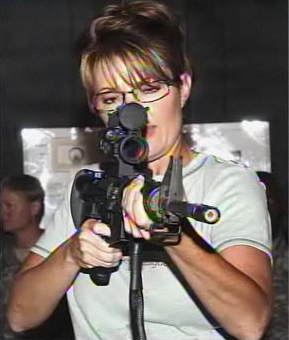
The M16 assault rifle, good enough for Goldie Hawn.

Have you ever seen a homemade gun? At the National Army Museum in Chelsea, London, there is a fascinating display of guns made for the IRA. These were not factory produced but cobbled together in sheds and workshops.

They are brutal and naïve looking tools, quite unlike the mass-produced weapons familiar to our eyes. They are made by an individual, for the killing of other individuals and are freed from the normalising effect of mass-production. Though I know what an M16 rifle is made for, it is also a design classic. It is the product of science, engineering and marketing. It has the legitimacy of being a product.
Image
A tool legitimised by media exposure.

The M16 is iconic and familiar and looks right. For someone who grew up in the Cold War on a cinematic diet of exciting propaganda films, it is the weapon of the goodie. It is carried by Goldie Hawn in Private Benjamin. The improvised IRA weapons are cut free from this happy cultural baggage and are starkly visible as killing tools.
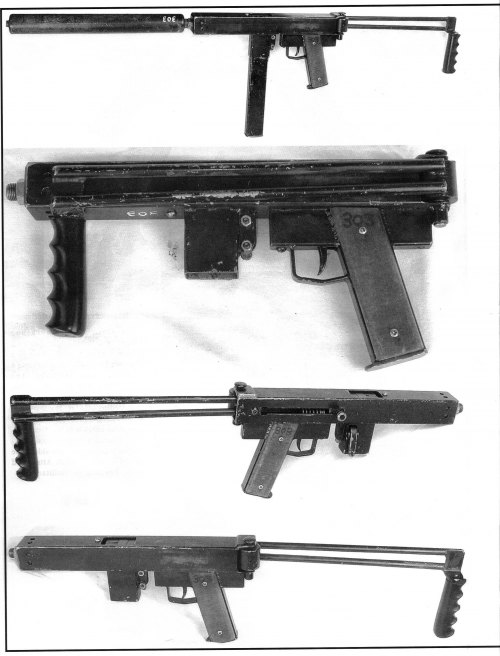
Both the IRA and Loyalists produced ‘home-made’ weapons. This is the ‘Avenger’ submachine gun, made for use by the Loyalists.

I love military aircraft, and I’m not quite sure why. Like guns, fighter and bomber aircraft are killing tools, and they tend to be very effective ones too. Like everybody else, I have seen photographs of children’s corpses following airstrikes. I have read about Guernica and the Blitz and Dresden. I’ve heard blood-curdling accounts of the Highway of Death and the long-term effects of depleted uranium A-10 rounds.

My grown-up head understands the ugly actions made possible by air power. But I am excited by the sight of fighter aircraft in flight. I love the noise of fighter planes, the shapes of them. I love reading about the technology of fighter aircraft. Stories of how aircraft designers pushed the limits of technology, the innovative thinking, the differences between rival fighters. I like particular aircraft in the way a football fan likes a particular team. I follow aircraft programmes like a fashionista follows a designer’s seasons and collections. When the Indian air force turned down the Eurofighter Typhoon, I was ready to kick a cat.

Perhaps there is no contradiction in hating war and loving warplanes. Observer’s Book of Aircraft, Jane’s, Battle of Britain films-  all of these fed and nurtured my childish enthusiasm. It is a normal part of British culture. It is normal to like aeroplanes; today air-shows are the second largest outdoor spectator sport in the UK!
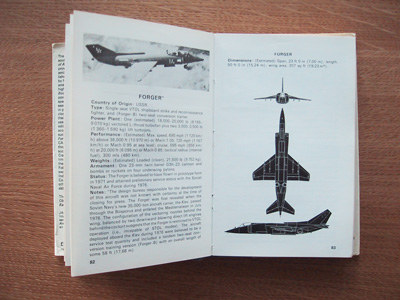
The Observer’s Book of Aircraft reveals the ‘Forger’s art.

In film military aircraft are most commonly presented as cartoons, embodying masculine powers, more than any man could. The relationship between pilot and aeroplane is similar to Robin Hood’s relationship with his bow. Robin Hood is skilled because he is good and is good because he is skilled. Maverick from Top Gun is the best, his excellence and moral fibre amount to the same thing. His F-14 Tomcat makes him super human. But his superpowers are the result of perseverance and technology. They are a more useful moral lesson than him merely being an alien, born with the ability to fly. Tom Cruise spoke this week about Top Gun 2, which is still in the scriptwriting phase. It is likely that Top Gun 2 will see Maverick return as a test pilot for the Lockheed Martin F-35C Lightning II. The aircraft choice is very significant and telling of changing times.

Image
The second time Hushkit has used a picture of Errol Flynn and unlikely to be the last.

The first Top Gun featured the F-14, a frontline type that had been operational for twelve years when the film was released in 1986. The enemy in Top Gun is left non-specific, but is clearly a kind of hybrid of Libya and the USSR. The enemy aircraft described as ‘MiGs’ are black and marked with a red star, the symbol of communism. The climax of the film features a dogfight which has echoes of the 1981 Gulf of Sidra incident, where US Navy F-14s shot down two Libyan Su-22 fighter-bombers.
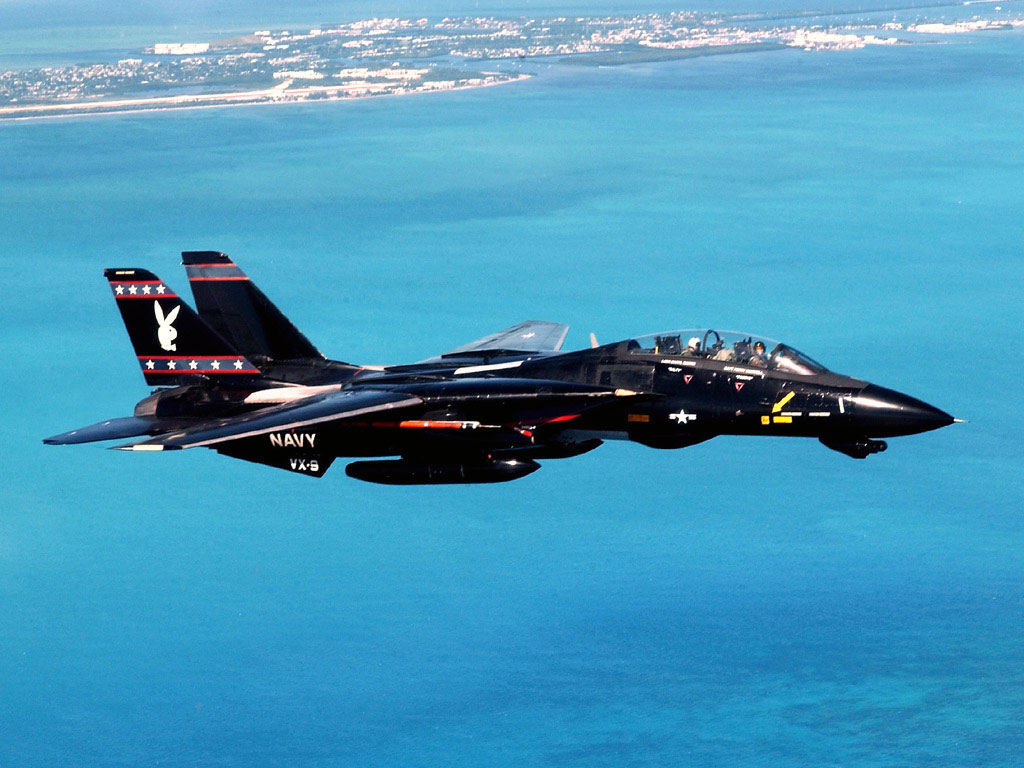
More of a man than any man, the F-14 Tomcat.

The film was a gloriously unabashed piece of propaganda. So much so, that when the Top Gun production team asked the US Navy if they would like a recruitment advert to be shown in conjunction with the movie, they said no, as the film was already a recruitment advert in itself. Applications to fly with the US Navy soared after the film. Tellingly, Canadian rock star Bryan Adams, refused to contribute to the soundtrack, as he believed the film glorified war. The choice of aircraft for Top Gun was simple, the F-14 was the biggest, fastest and most capable fighter the Navy had. It was an exciting symbol of US power during the last section of the Cold War. The choice of the F-35 for Top Gun 2 is a very different thing. All fighter aircraft programmes exceed their predicted budgets, but even in this arena, where an extra billion here and there is expected, the F-35’s development costs have been spectacularly awful. The aircraft is nowhere near to being ready to be sent to war. If Top Gun 2 takes another year to enter the production stage, then two years to make, it would be out in 2015. In 2015, the F-35C (the naval variant) will not be combat capable. So in celebrating the F-35, the film will not be sending out a US Navy message like the first Top Gun film, it will be sending out a Lockheed Martin message. It will be validating the trillion dollar Lightning II.

Top Gun director Tony Scott committed suicide (by jumping from a bridge in Los Angeles) in August 2012.

The F-35C: You’ve lost that loving feeling (for the Military-Industrial complex).

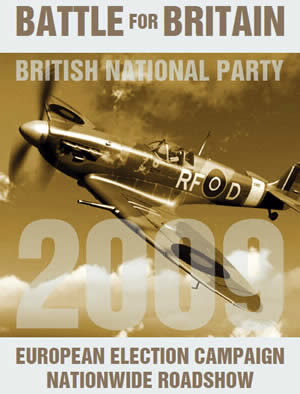
There is always a political aspect to ‘casting ‘an aeroplane. In 2009, the BNP (an extremely right-wing and racist British political party), used the image of a Spitfire in their ‘Battle for Britain’ anti-immigration campaign. In a wonderful piece of inadvertent comedy, historians noted that the aircraft shown was flown by the celebrated No.303 Squadron– an RAF unit made up of Polish airmen.
Image
The BNP accidently celebrating the contribution of Polish servicemen to the defence of Britain in World War II.

Politics is not the only consideration in choosing an aircraft for film or advertising use, aesthetics is also of prime importance. However, aesthetics does not live in a cultural vacuum. For example, the British Avro Lancaster is seen as looking heroic, as it is perceived (at least by many mainstream British films and books) as having performed heroic work. Seeing the aircraft ‘in the flesh’, in the low-lighting of the RAF Museum Hendon, the Lancaster is an intimidating machine.
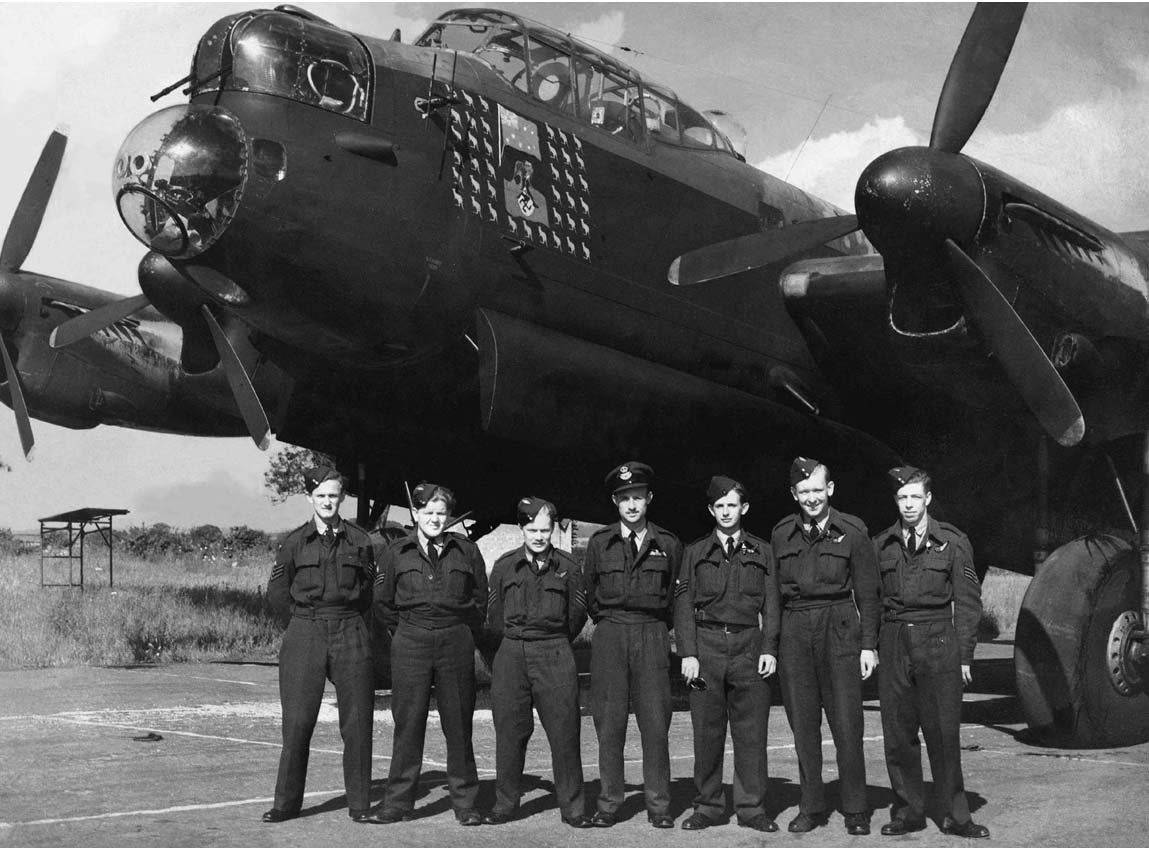
The Avro Lancaster: A sinister giant coach of death.

Sometimes the very menace of an aircraft is part of the appeal. The Lancaster bomber (as aviation journalist Paul Eden pointed out- Lancaster is always suffixed with ‘bomber’, yet you don’t refer to ‘Spitfire fighters’) is an incredible example of this menacing appeal.

Though the B-17 is named the Flying Fortress, this name betters suits the Lancaster. As a Boeing product, the B-17 contains many civil design memes, with the result that it looks like a weaponised airliner. An airliner covered in gun-turrets. The Lancaster is much more of a ‘flying fortress’, a sinister giant coach of death. Whereas the B-17 used aerodynamics to get bombs to Berlin, the Lancaster looks like a high-walled bomb suitcase that happened to fly. It is an architectural shape, with all the nasty dark blockiness of the 20th Century forts of Northern Ireland.

Image
The front cover of Castles of Ulster, a book of photographs by Jonathan Olley showing the fortified police stations, army barracks and watchtowers in Northern Ireland.

This cannot be fully appreciated in film or photograph and I would encourage those who doubt me to look at one in a museum.

As a child, I took part in CND marches and also delighted in memorising the maximum weapon load of every fighter and bomber. Moral repulsion and aesthetic appreciation often co-exist. The innocence of ‘train-spotting’ is the feeling of safety which arises approaching a subject in a simple way. It is about removing the subject from complicated ambiguity. Train-spotting is not about trains. Maybe the same is true of any mono-mania. As long as this moral vacuum does not cross the line into the actively vocational, it may be a positive thing.

Adult and child interests cannot be neatly delineated and I see my fascination with military aircraft as being akin to the feminist who doodles idealised girls. But it is not only as a train-spotter that I like military aircraft.

Military aircraft can be represented in many ways, and the demonising of unmanned aircraft in anti-war posters, seems as binary and simple as a Spitfire on a Commando front cover. As objects they are good and they are awful and they are neutral. A noisy, fast, powerful object is exciting- and as a super-stimulus, its power to evoke reaction is great.

A Commando front cover.

What I would like is to see fighters represented in more interesting ways, and at the forefront of this are artists like Fiona Banner. These awe-inspiring machines deserve more than quaint paintings in country pubs, jingoistic films and left-brained magazines (though all of these are great in their own way).

On second thoughts, I just like them, and I wish that was cooler.

SAVE HUSH-KIT. Hush-Kit needs donations to continue, sadly we’re well behind our targets, please donate using the buttons above or below. Many thanks. I really hope Hush-Kit can continue as it’s been a fascinating experience to research and write this ridiculously labour-intensive blog.

You may also enjoy A B-52 pilot’s guide to modern fighters, Flying and fighting in the Lightning: a pilot’s guide, Interview with a Super Hornet pilot, Trump’s Air Force Plan, 11 Worst Soviet Aircraft, 10 worst US aircraft, and 10 worst British aircraft

Is this cool?


safe_image.jpg

“If you have any interest in aviation, you’ll be surprised, entertained and fascinated by Hush-Kit – the world’s best aviation blog”. Rowland White, author of the best-selling ‘Vulcan 607’

I’ve selected the richest juiciest cuts of Hush-Kit, added a huge slab of new unpublished material, and with Unbound, I want to create a beautiful coffee-table book. Pre-order your copy now right here  


TO AVOID DISAPPOINTMENT PRE-ORDER YOUR COPY NOW

From the cocaine, blood and flying scarves of World War One dogfighting to the dark arts of modern air combat, here is an enthralling ode to these brutally exciting killing machines.

The Hush-Kit Book of Warplanes is a beautifully designed, highly visual, collection of the best articles from the fascinating world of military aviation –hand-picked from the highly acclaimed Hush-kit online magazine (and mixed with a heavy punch of new exclusive material). It is packed with a feast of material, ranging from interviews with fighter pilots (including the English Electric Lightning, stealthy F-35B and Mach 3 MiG-25 ‘Foxbat’), to wicked satire, expert historical analysis, top 10s and all manner of things aeronautical, from the site described as:

“the thinking-man’s Top Gear… but for planes”.

The solid well-researched information about aeroplanes is brilliantly combined with an irreverent attitude and real insight into the dangerous romantic world of combat aircraft.

FEATURING

        • Interviews with pilots of the F-14 Tomcat, Mirage, Typhoon, MiG-25, MiG-27, English Electric Lighting, Harrier, F-15, B-52 and many more.
        • Engaging Top (and bottom) 10s including: Greatest fighter aircraft of World War II, Worst British aircraft, Worst Soviet aircraft and many more insanely specific ones.
        • Expert analysis of weapons, tactics and technology.
        • A look into art and culture’s love affair with the aeroplane.
        • Bizarre moments in aviation history.
        • Fascinating insights into exceptionally obscure warplanes.

The book will be a stunning object: an essential addition to the library of anyone with even a passing interest in the high-flying world of warplanes, and featuring first-rate photography and a wealth of new world-class illustrations.

Rewards levels include these packs of specially produced trump cards.

Pre-order your copy now right here  


I can only do it with your support.

HUSH-KIT EXCLUSIVE: No.1(F) Squadron RETURNS AS TYPHOON UNIT!

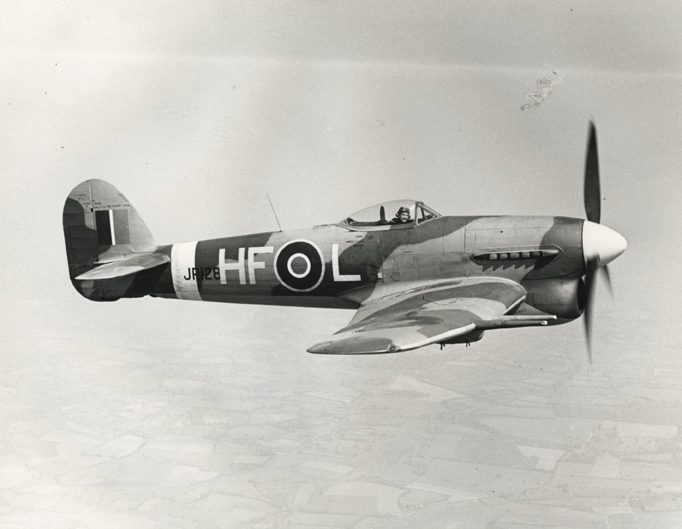
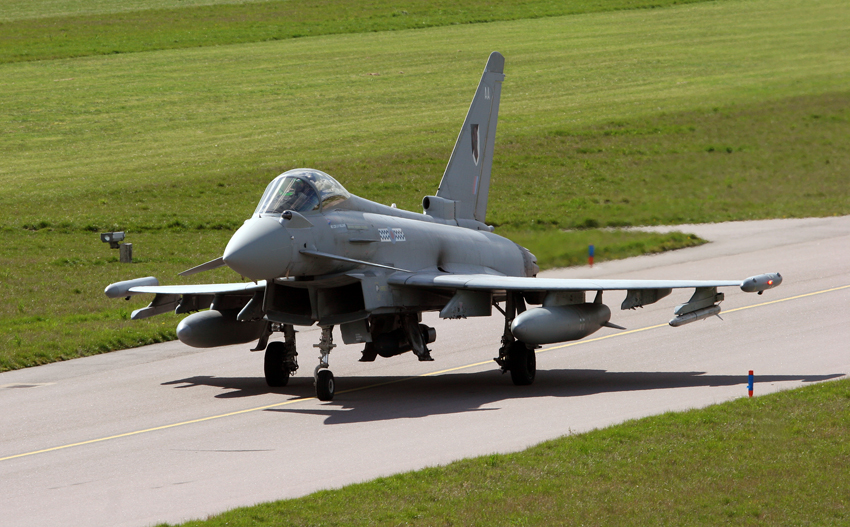
What’s in a name? The Hawker Typhoon was loud and powerful with a big gob, and so is the Eurofighter Typhoon.

Number 1 (Fighter) Squadron received its first Hawker Typhoon in 1943, in 2012 it will receive its first Eurofighter Typhoon (the multi-role FGR.4).

The Royal Air Force announced yesterday that this 100 year old unit, which has served in almost every campaign featuring British forces for a century, will become the fourth frontline Eurofighter Typhoon squadron. On September 15 at the Leuchars Jubilee Air Show, No.1 (Fighter) Squadron will officially stand up. It will be the second Typhoon Squadron based in Scotland, following the stand up of No.6 Squadron at Leuchars in 2010.

Fighter legacy

No.1 will be the second RAF Squadron to have operated both generations of Typhoon, the first being No.3(F) Squadron, which flew the mighty Hawker Typhoon from 1943-1944.  No.29, today the RAF’s Typhoon Operational Conversion Unit, was flying de Havilland Mosquitos in 1943, whereas No.6 Squadron was equipped with the tank-busting Hurricane Mk. IID (it would later get Spitfires and Tempests). No.11 Squadron was also a Hurricane unit in 1943 and was based in Burma.

No.17 Squadron, the current Typhoon Operational Evaluation Unit was under the banner of No. 691 Squadron in 1943 flying Fairey Barracudas and later Boulton Paul Defiants.

Israeli Stunner: The future of US AAMs?

Image

This week (25/11/2012) Israel and the US  deployed the David’s Sling defence system. The system is intended to destroy air-threats (both aircraft and missiles) and features an IAI phased array radar. David’s Sling uses the Stunner interceptor missile, in  launchers of 16 missiles. In the test, a David’s Sling battery stationed in Southern Israel fired the two-stage interceptor missile and stopped an incoming missile. The weapon system is slated to become fully operational in 2014.

Air-to-air future?

Never mind the Meteor, the air-to-air missile (AAMs) that will shake up the future will be based on the Israeli-American Rafael/Raytheon Stunner. Presently in development as a surface-to-air missile (SAM), the Stunner (part of the Israeli Sling of David defence system) uses a dual-band optical/radar guidance system. Its dual-band guidance is unusual, as is the fact it is ‘hit-to-kill’, and that it is starting life as a SAM (normally AAMs evolve a SAM variant, not the other way around).

The Gripen Demo fitted with Meteor (dummy round) and IRIS-T missiles. Europe has never been stronger in the development and production of air-to-air missiles than it is now.

A new AIM?

The death of the AMRAAM replacement (the next generation missile or NGM) combined with the approaching arrival of Europe’s Meteor, and China’s limitless research budget all combine to threaten the US’ commercial and technological lead in the AAM field. The European IRIS-T short-range missile, superior to the US AIM-9X in some respects, has made an impressive in-road into the AAM market with ten nations using the weapon. Though both the AIM-120 AMRAAM and AIM-9X sidewinder remain the most widely exported air-to-air weapons, the development potential of both designs is limited.

A Stunner AAM produced in the US, may offer the US the best chance to dominate future AAM sales.

Image

Eurofighter World undressed: Part 1

|A 17 Sqn Typhoon at RAF Coningsby fitted with one AIM-132 and the LITENING targeting pod.

There’s a famous joke in the movie Annie Hall: “Boy, the food at this place is really terrible.” to which the reply is “Yeah, I know, and such small portions.” . I believe that there is a similarly confusing sentiment in the latest edition of Eurofighter World, which I will deal with in Part 3. EW (Eurofighter World) is a magazine published by Eurofighter GmbH to document and promote the Eurofighter Typhoon fighter aircraft and its associated programmes. These are some of my opinions on the most recent edition, dated 2012/01 (there’s a link at the bottom if you wish to download a free copy).

EuroPizza

The title is presented as a rather tacky typographical logo- the silhouette of a Eurofighter swooping out of a colour picture of the world is painfully literal. Added to this is the inherent naffness of the company name ‘Eurofighter’. As many Europeans will remember, the prefix ‘Euro’ was applied willy-nilly to everything in the 1990s (I can remember a EuroPizza on Ballard’s Lane, Finchley) and retains a connotation of tackiness.

Image

Though this maybe a little unfair, as Eurofighter formed in 1986 and was among the first to use the prefix.

This aside, the cover is instantly appealing, thanks to a menacing portrait of a bombed-up Typhoon. To emphasize the multi-role capabilities, Eurofighter rarely misses an opportunity to show the aircraft carrying Paveway bombs. The front aspect of the aircraft shows off the big, glowing green HUD ( looking like a cat’s eye), and the weird curves of the PIRATE IRST ( like the staring black eye of a reptile). Beneath the gaping mouth of the intake, on the centreline point can be seen the LITENING EF targeting pod, underwing are EPW II bombs and under-fuselage four AIM-120 AMRAAMs.

Two rather tantalising coverlines promise one feature about the type’s use over Libya, another titled ‘Stealth Design: A real history of success?’. I wonder if this will conform to Betteridge’s Law of Headlines; “Any headline which ends in a question mark can be answered by the word ‘no’”. I already have my suspicions..

ImageImage

Next up is the ‘Editorial’ with Eurofighter CEO Enzo Casolini, a former Italian air force officer, who looks a bit like a haunted Henry Winkler. He starts by acknowledging that this is a “challenging time” for Eurofighter. This is probably a tacit reference to the following: Eurofighter’s failure to export to Japan (who chose the F-35), failure to export to India (who chose the Rafale) and the leak of the Swiss air force evaluation report that proved damning of Typhoon. The report makes startlingly reading and can be viewed in full here (I will come back to this later): http://www.scribd.com/doc/85849045/Swiss-Air-Force-Evaluation-of-Gripen-Rafale-Typhoon

This 2008 report was based on thorough evaluation of the SAAB Gripen, Dassault Rafale and Eurofighter Typhoon. Despite it being the most costly of the three fighters, Typhoon was placed second in most assessment criteria, with Rafale generally coming first and the cheaper Gripen coming last. Switzerland went for the Gripen (going for the improved E/F version, powered by the F414G engine).

It does indeed appear to be ‘challenging times’ for Eurofighter, but this message does not acknowledge that Typhoons are being produced at a faster rate than other fighter in the world and have a larger confirmed order book than any other current military aircraft (we’ll cover the subject of the F-35 later).

Why is Enzo using the word ‘challenging’? We reveal more in part two.

Coming in Part 2: Stealth-bashing, double-think and how to smash Rafale

If you like, you can download a free copy of Eurofighter World from here:

Confessions of a pteromerhanophobic

I maintain a fear of flying is normal and anyone who claims to enjoy it is lying. Virgin’s choc-ices aren’t that great. Aerodynamics isn’t that fascinating. I mean, please: sitting up in a truly weighty metal tube thousands of feet up in the sky being driven by someone you’ve never met? Jesus. The irony is, from the age of 16 to 21, I lived in Chard, a small town in Somerset which happens to be the birthplace of powered flight after inventor, John Stringfellow, flew a model plane in a disused lace mill in 1848. Whoopydoo, Icarus, because having lived there, I can safely say that Chard is crap and ugly and nothing good came of it. Not even planes. I haven’t always been afraid of flying. As a child, sure. I would hysterically sniff Chanel no 5 from a hankie for entire flights. But as a teenager, I was fine. So fine in fact that in my early twenties, when I lived in Italy, I virtually commuted from London to Turin on a monthly basis. Then, 9/11 happened (see above), I went to Morocco, and, like a nostalgic dormant STD, my fear re-found me My symptoms are similar to those experienced during a panic attack. Heavy heart thumping, fast, hard, tight breathing, a dry mouth and a general sense of impending doom during which I whine like a small dog. Suffice to say; I know my fears are illogical. It’s not the claustrophobia, the vertigo (two very real fears which make sense), which scares me. It’s not even the lack of control – I’m a trusting person. It’s the FEAR that I fear. A mid-air explosion? What can you do? One engine failing when three will more than efficiently get us to B and then being told this? Fuck Me. My fear pans out fivefold. Firstly, for around 48 hours before departure. To wit: I recently fainted in Clarins and sicked up some French toast out of pure terror. Then, en plane, as we journey from the slow runway to the fast runway. Then, as we begin our super fast runway bit (the WORST), followed by takeoff and finally throughout turbulence, a vile, vile thing, which usually makes me cry. Naturally I turned to Dr Alan Carr, a man who really gave it his all in helping me overcome my fear, and who rather romantically calls turbulence ‘the potholes of the skies.’ (I try to remind myself but more often forget). Alan wrote a very good book – much better than the smoking one – about flying. He aims to make you not only NOT fear flying, but actually enjoy it. A little optimistic, Alan, but still, there are some great facts (and I paraphrase): ‘there are half a million planes in the sky at any one time and none of them have crashed to earth’, and, some woefully ineffective ones: ‘Lockerbie was a one-off’. We sell fantastic high quality aviation-themed gifts here
Got you there, Alan! Because it wasn’t, was it? We all saw The Towers! We all remember Richard and his shoes! We’ve all seen United 93 – and it must be a trend if they made it into a film, right? Why else do we have to decanter our toothpaste in Departures? Because somewhere, out there, loads of people want to blow up planes. And for any number of causes! The EDL (swathes of Europe), The Fundamentalists (everywhere else) and narcissists (all of us). Everyone. So, you ask, why fly? The problem is I have to fly a bit for work. Generally to cool stuff – interviews, press trips – but still, I have to go. And trains are apparently too Medieval for journalists. Quite frankly, I find this ludicrous but whatever. I remember going on a press trip to a six star hotel in Croatia last October. The kind PR put us up in the business suite of Radisson Blue (no ‘e’) with wide views of Stansted airport. Wicked, I thought, and slept for about 23 minutes. And yet, it’s never stopped me. I’ve tried to remedy it: pre-flight acupuncture (no); ear beads inserted to treat anxiety (nope) and hypnotherapy (which helped for, like, a minute). How do I cope? Valium, primarily. I’m now on repeat prescription, which is great. 1 x glass on wine + 1 x 5mg pill = a blissful disinterest in either living or dying. During the flight, equally, I sustain myself on cockpit communication. El Capitaine can discuss anything: crap, mountains, wee, marital problems, so long as he sounds calm. I also stare at the air stewardesses, searching for signs of content. They smile, I smile. They laugh, I laugh. If they look worried I deem that a pretty serious breach of trust. Sometimes they see me looking at them, unblinking, over the blue lights flickering from the sleeping screens at 3am. It’s pretty awkward but I don’t care. That said, I hate the young ones. They lack life experience. If shit literally went down they would suck. I plan to take a Fear of Flying course. Chances are it won’t work. But anyway, I’m off to Berlin next week. By plane. (A disclaimer: I’m actually brilliant at flying when I’m by myself. If there’s no one to listen to my fears, those fears, unobserved, cease to exist. But otherwise I’m truly shit at it.) By Morwenna Ferrier Features Editor at Grazia If you enjoyed this, have  a little peek at Amber Jane Butchart’s fantastic piece on Amelia Earhart and how she still navigates the catwalk