Hush-Kit Top Ten: The ten best-looking Belgian aircraft

belgfinal
                                                              Normal aeroplanes are too practical for the surreal Belgians to spend too much time on.
 Image
             
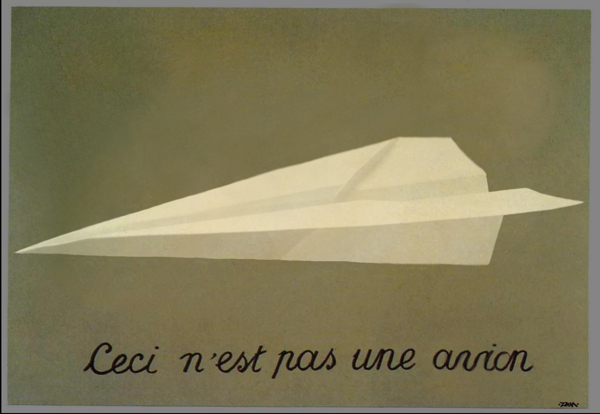
From the death of  birdman Vincent de Groof in 1874 to the nightmarish flyers of Magritte (above)..through the sporty motifs of Hergé’s planes to the escapist wonder-machines of the artist Panamarenko (below) most of the finest Belgian flying machines were imagined. Luckily some did escape into the real world. Here are ten pretty Belgian aeroplanes for your enjoyment.
Image
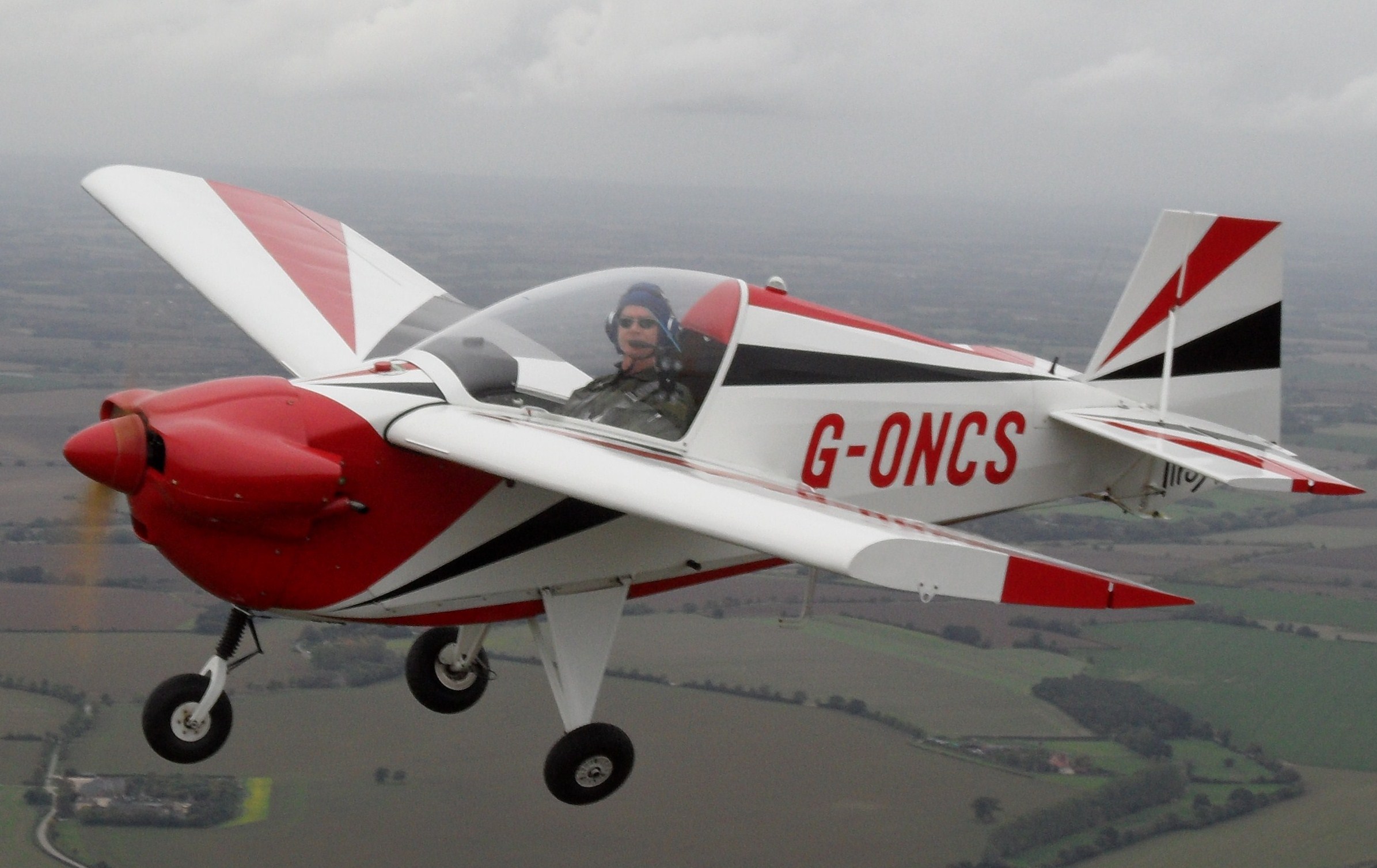
10. Tipsy Nipper
Image
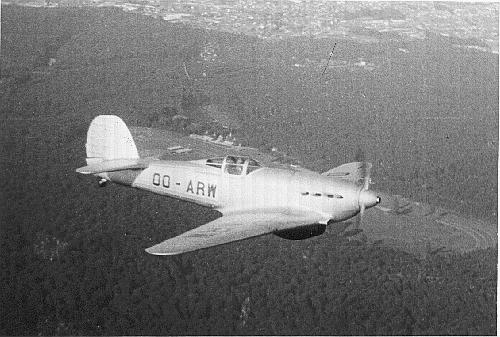
 9. Renard R35
Image
 
 
8. Stampe et Vertongen SV.5 Tornado
Image
 
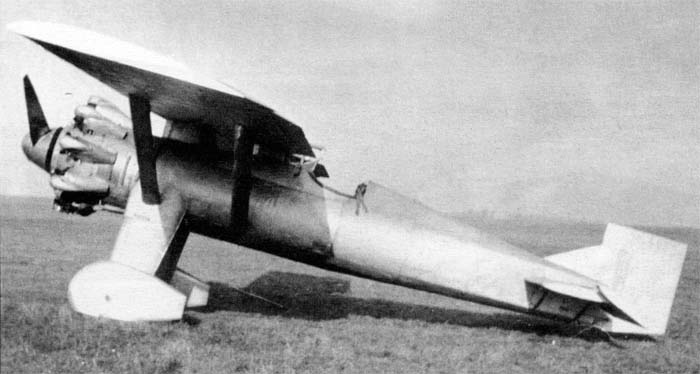
7. Renard Epervier
Image
 
6. Avions Fairey Fox
Image
 
5.Tipsy Belfair
Image
 
4. Stampe et Vertongen SV.4 
Image
 
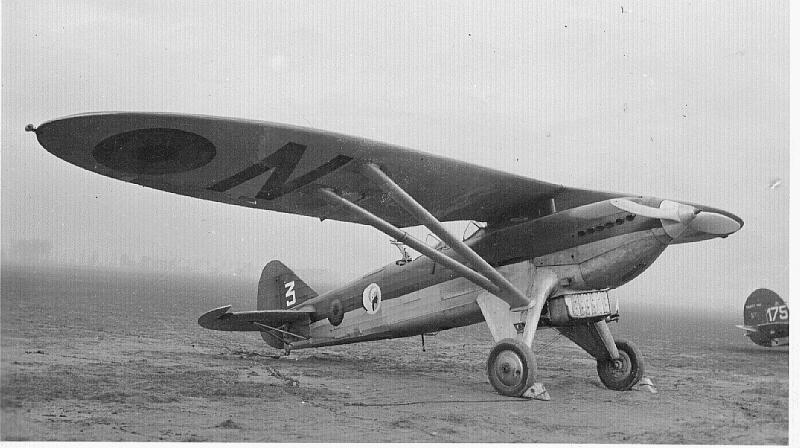
3. Renard R.36
Image
 
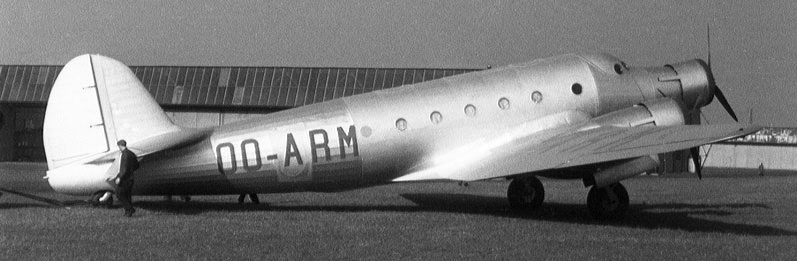
2. Renard R.31
Image.
 
1. Avions Fairey Firefly II

Image

Follow my vapour trail on Twitter: @Hush_kit

Panamerenko

Type selection by Ed Ward. If you enjoyed this, have  a look at the top ten British, French, Swedish, Australian,  Japanese and German aeroplanes.

Follow my vapour trail on Twitter: @Hush_kit

Thank you for reading Hush-Kit. Our site is absolutely free and we have no advertisements. If you’ve enjoyed an article you can donate here– it doesn’t have to be a large amount, every pound is gratefully received. If you can’t afford to donate anything then don’t worry.

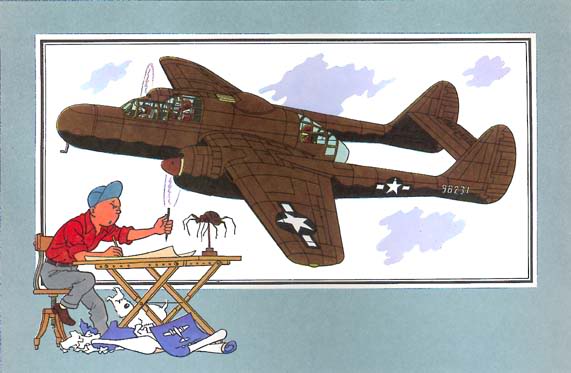
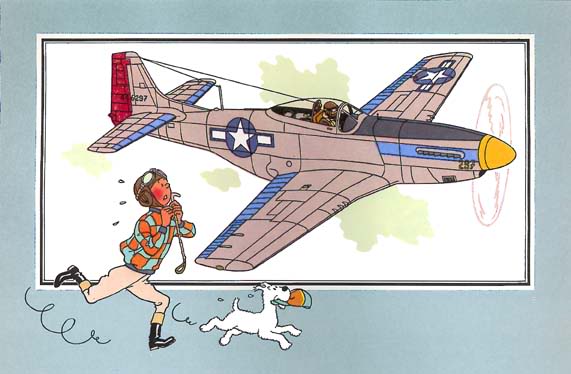
Tintin and planes

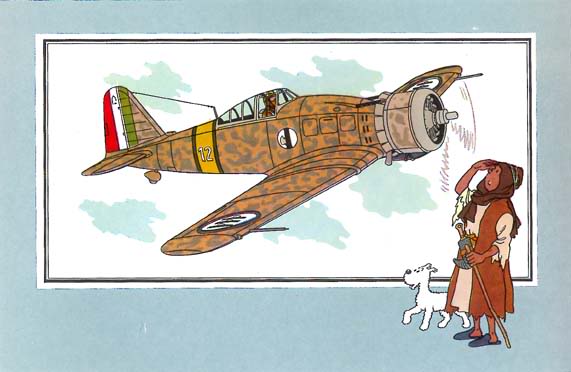
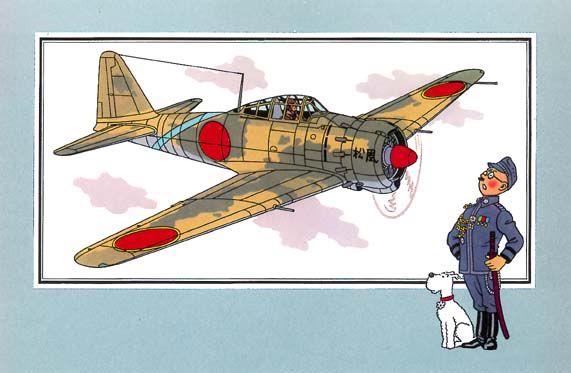
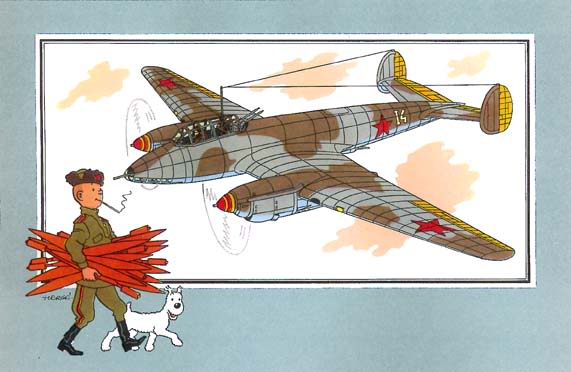
ImageHave a gander at these, aircraft pictures by Herge with appropriate Tintins and Snowys (of varying levels of racism/taste). Beautifully drawn though. Hitler Youth Tintin is…erm…troubling (though oddly unsurprising). ImageImageImageImageImageImageImageImageImageImageImageImageImageImageImageImageImageImage

The inexplicable popularity of British Cold War jets in Japanese animation

Who needs Bikini? We've got Grapple.
Who needs Bikini? We’ve got Grapple.
We've got 160 of these. We got them cheap from a bloke in Riyadh.
We’ve got 160 of these. We got them cheap from a bloke in Riyadh.

The shapes created on the drawing boards and in the wind tunnels of English Electric, Vickers, Avro and BAC have ended in some pretty strange places. Bryl-creemed and tweeded up, the pipe-smoking aeronautic engineers of the 50s could not have predicted the future fictional life of their creation.

We have all penned an infamous White Paper.

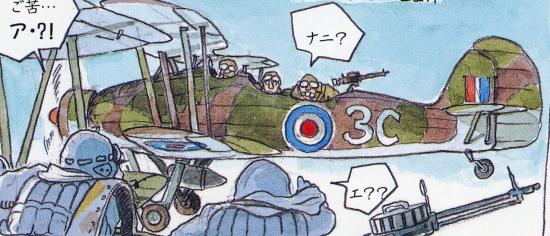
Often piloted by overly-sexualised teenagers in spacesuits, many British Cold war aircraft have earned starring roles in Japanese cartoons. Kind of mental, but I like it. Speaking of mental, this ‘Super Lightning’ is pretty insane.

If you like Japanese aeroplanes, you’ll go crazy for this

This boundary layer control works wonders for my miniskirt
My favourite colour is red. My favourite shape is the triangle. My favourite material is tin. My favourite activity is inappropriately attired skydiving

Joe Coles & Ed Ward

If you enjoy this, have a look at the wildly luscious top ten British, French, Australian, Soviet and German aeroplanes. 

Hush-kit is reminding the world of the beauty of flight.

follow my vapour trail on Twitter: @Hush_kit

Do you have an idea for a Hush-Kit article you would like to write? Contact: hushkiteditorial@gmail.com

Image

Will modern fighters, like the Super Hornet, win over potential F-35 operators?

Image

Despite the large sums invested in developing them, nobody seems to want modern Western fighters. By modern, I mean operationally active, in production and with a first flight after 1990. This definition would include the Typhoon, Rafale, Gripen and the Super Hornet (the newer variants of the F-15 and F-16s are either virtually aerodynamically identical to their 1970s forebears or, in the case of Silent Eagle, uncompleted). The Lockheed Martin F-22 is no longer in production, and when it was, export was banned.

With all the hype surrounding these types it’s easy to overlook how poorly they’ve done in the export markets. But let’s look at the figures:

Fighter                              Total numbered delivered to export customers by February 2013

F/A-18 Super Hornet             24

Dassault Rafale                      0

Saab Gripen                          circa 61 (included leases)

Eurofighter Typhoon            circa 39

Though more export orders have been announced, the numbers above reflect what has actually happened so far (I’ve used best available information, I’m happy to adjust numbers if any readers have better,verifiable, data).

 Image

Compare these figures with earlier aircraft: F-16 (well over 2000 exported), F/A-18 Hornet (391, not including secondhand aircraft) and Mirage 2000 (293). Even the Panavia Tornado, an aircraft that was difficult to sell, managed to notch up a total of 120. This is not even taking into account F-15s which have been sold by the hundreds. There is of course another dimension to this, and it should be noted that the F-15 and F-16 ‘exports’ have been propped up and organised under the Foreign Military Sales programme. The aggressive, politically-supported F-35 sales drive is comparable to FMS.

Image

The modern generation of Western fighters are all very capable, but seem to be a victim of bad timing, arriving while fourth generation fighters were still relevant, through to today where many air forces are holding out for the F-35. Modern F-16 variants, exemplified by the Block 50+ and 60, combine a proven airframe and global logistics network, with modern avionics and weapons. Late Block F-16s offer what is seen as a relatively low-cost and low-risk option. As well as lower risk rivals being readily available, Generation 4.5 have spent most of their lives in times when militaries are facing reduced budgets. Some air forces wish to cling onto their existing fighter types, knowing that each fighter procurement is smaller than the last and will involve shedding manpower and force size.

The use of ‘Generation X or Y’ terms are not always useful and tend, like I have here, to be manipulated to show an opinion.

Unlike the 5th Generation F-22 and F-35, all of the West’s Generation 4.5 fighters have seen war, even the Gripen (which was used for reconnaissance missions over Libya) and they are all capable of performing both the fighter and bomber mission. Despite tiny export figures, they are sought after, if not by those who make procurement choices, then certainly by many in air forces around the world.

I spoke to two people this week with interesting views on this subject. The first was a high-ranking member of a european air force:

“ ..what happens in five years time? We’ll be waiting for new platforms..what we’ve got now can do the job today, and the crews are great, but the hours are accumulating and we’re putting everything on a new type (F-35) that we will only be able to afford in limited numbers..already smaller air forces cannot fight alone, but take our numbers down to unsustainable numbers and we effectively lose indigenous air power. I would not want to disagree with the air force’s choice, but it is easy to see that going for one of the types available today would give us greater flexibility and would arrive sooner.”

The second person I spoke to, who has been studying US military procurement for more than three decades, commented:

“There appears to be a move towards monolithic military procurement, the ideal situation for defense contractors. With only one shop to go to, it effectively moves out of the competition system of the 1970s-80s. This isn’t just the case in the US, it can be seen in the Russia Federation too. Europe’s big mistake was not providing an answer to the F-35, by doing this they have allowed a monopoly where the military will have no leverage to attain good value… many in Europe hopes that it will be able to gain ground on the UCAV market, but it appears that European nations have not adopted the Lockheed Martin model  of how to run an international project- with one hugely dominant leader nation” (editor notes: could this not be France?) “ ..without this the projects will flounder- they will be too slow and too expensive and lack a big enough initial order to give a genuine economy of scalethe last hope for the current European fighters are sales to Islamic countries that the US or Israel does not trust with F-35”

Image

The current generation of fighters is important for several reasons. It is the only insurance the West has if the F-35 fails. Accepting the now commonly-used generation terminology, the F-35 will be the only 5th Generation Western fighter available. This is a unique situation, as since 1914 air forces have always had options, now if they wish to buy into the idea of ‘5th Generation’ and keep their allegiances with the West, they have no choice. The success of the current generation of fighters will be in its abilities to thrive in the F-35’s shadow, to supply to nations unable to order F-35s as they are too poor, politically black-listed or needing aircraft sooner. More significantly, they need nations to reject the dogma of stealth.

Generation 4.5’s biggest strength is that it’s ready now, with each delay to the F-35, another sales possibility opens up. Many believe that further delays may see stop-gap procurements (like Australia’s Super Hornets) staying longer and being ordered in bigger numbers than first anticipated. Canada is also a nation, that given the political flexibility, would seem a natural customer to jump ship and order Super Hornet to replace its existing Hornets.

The modern generation’s existence does have ripple effects; nations without a 4.5 Generation fighter (as pointed out by Combat Aircraft’s Thomas Newdick), such as Israel, Japan and Norway are among the most committed to F-35. Though the sale of second-hand aircraft does not increase the total of the type produced, it can hinder the sales of new-built rival aircraft. European air forces have more Typhoons than they can afford to operate and are offering them at attractive prices, it will be interesting what happens regarding this, especially as the F-16 production line is expected to close in the next few years.

Hush-kit is reminding the world of the beauty of flight.

What was Italy’s ultimate fighter?

follow my vapour trail on Twitter: @Hush_kit

Do you have an idea for a Hush-Kit article you would like to write? Contact: hushkiteditorial@gmail.com
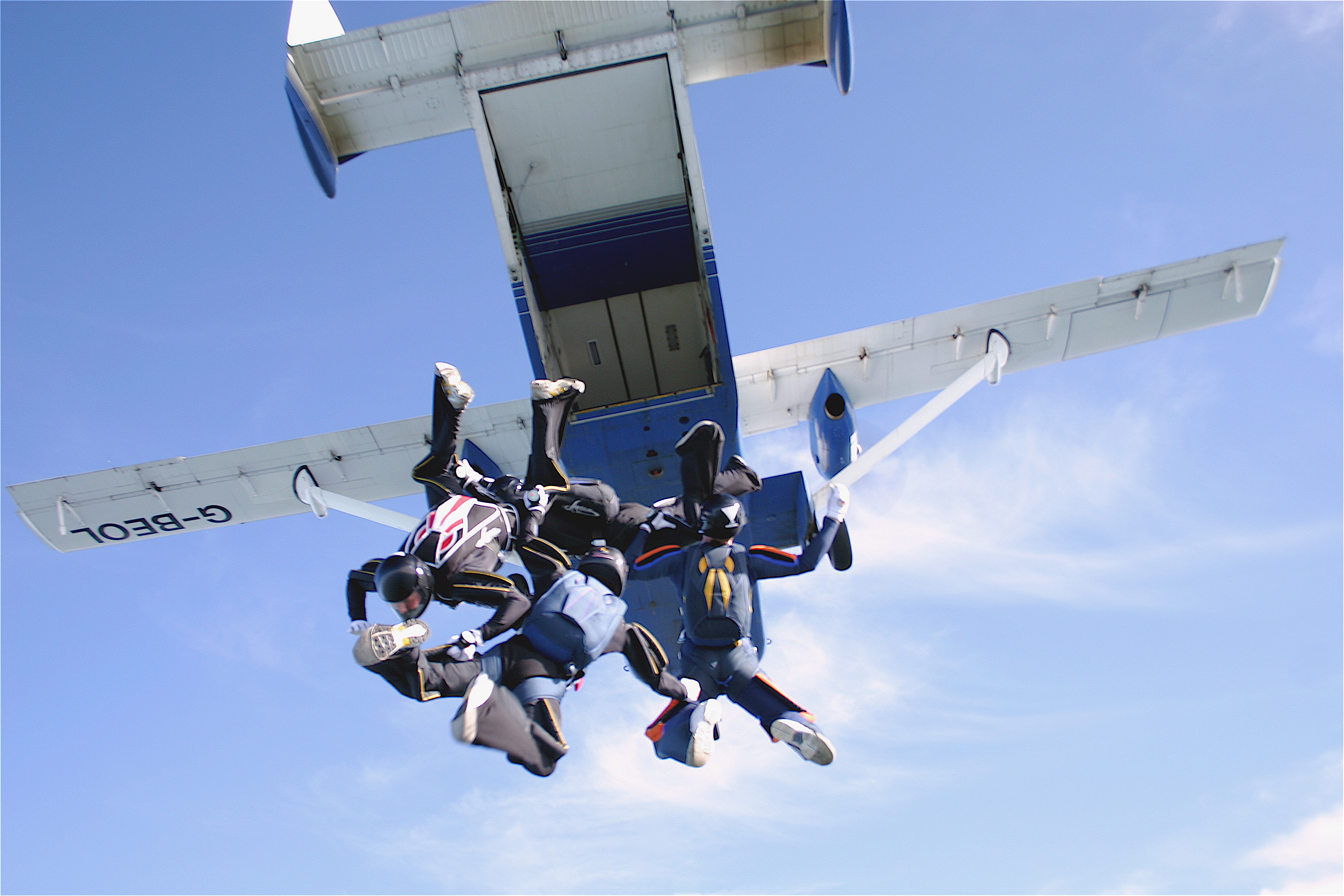
Hush-Kit Top Ten: Top 10 planes I have jumped out of! A skydiver’s guide.
A Gratuitous photo of the 'Dada Baroness', Baroness Elsa von Freytag-Loringhoven

There’s a few things you look for in a ‘jump-ship’. A fast climb -rate helps so you get up quick, turbroprops help with that, especially so above 10,000 feet. A low stall speed is desirable, so the run in is nice and slow. High-mounted wings are a bonus, as the jumper will encounter less turbulence. Twin engines are great, as one of the engines can be feathered. Some planes have lots of centre of gravity issues which can be scary at slow airspeeds. with a full load onboard. 

The really good ones have big rails on the outside of the fuselage to hang onto and a step to stand on if the door is quite short. I’ve stopped skydiving now, as I started getting really scared after 600 jumps, but I still remember the smell of Jet-A burning in the morning. Smells of free fall…
If you enjoy this, have  a look at the top ten French, Swedish, Australian,  Soviet and German aeroplanes. Wanting Something a little more exotic? Try the top ten fictional aircraft.


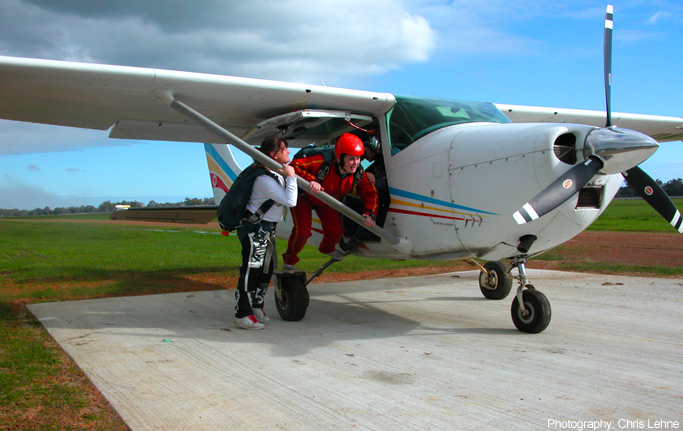
10. Cessna 182 – Small. Slow. Cramped. Piston engine. Though you get to hang off the strut and stand on the wheel. The pilot better have put the brakes on though, or you won’t be standing on the wheel for long!

Image

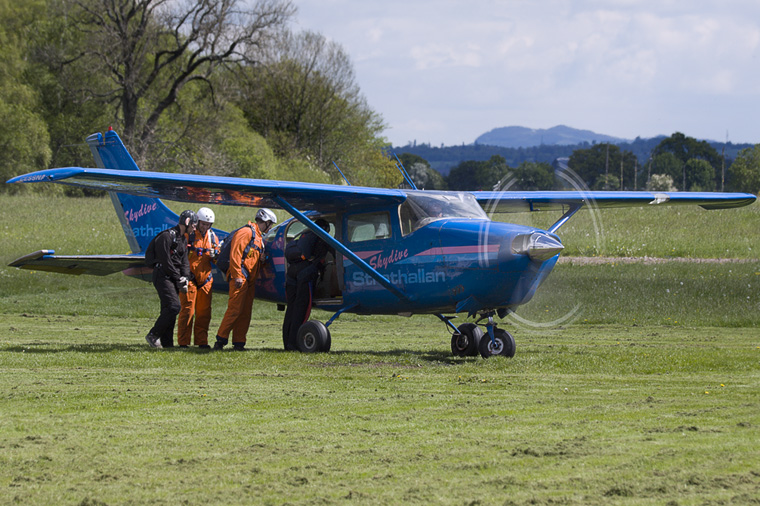
9. Cessna 206 - First plane I ever jumped out of at Skydive Strathallan. In fact, my first plane ride ever. What’s more I flew it for a bit too. Very cold as some bugger had taken the doors off so people could fall out of it.

Image

8. Britten-Norman BN-2 Islander – Twin piston. It was very cramped and only marginally faster than the Cessna 206. It had a door though, which was a bonus, especially in Scotland in winter. It’s always nice to be able to feel your hands! Image

7. PAC P-750 XSTOL– Turbine conversion of a crop sprayer. Terrible jump aircraft. Small cabin. Small door. Low wing. Lots of prop blast and turbulence coming off the wing. The horizontal stabiliser was a bit close for comfort too… Fast though, which is why it gets this high in the list.

Image

6. de Havilland Canada DHC-2 Turbo Beaver – A black one. I can’t remember much. I was probably still drunk as it was at a collegiate meet (sorry!). The t-shirt was good though (Work it out).  Note from Ed: I have a feeling that doing this drunk is not a good idea.

Image

 5. Cessna 208 Caravan. Jumped a few of these. 1 was at Skydive Langer and another two at Spa in Belgium. Nice plane but lots of prop blast when climbing out. Not that fast a climb rate either. If you hang around outside for too long you end up sliding down the rail.

 Image

4. Technoavia SMG-92 Turbo Finist. Turboprop conversion. High wing always a bonus. Single engine, so a bit more prop blast. Nice big step and a massive rail. Fairly cramped inside but pretty quick. I liked these but beaten out by the top three. Image

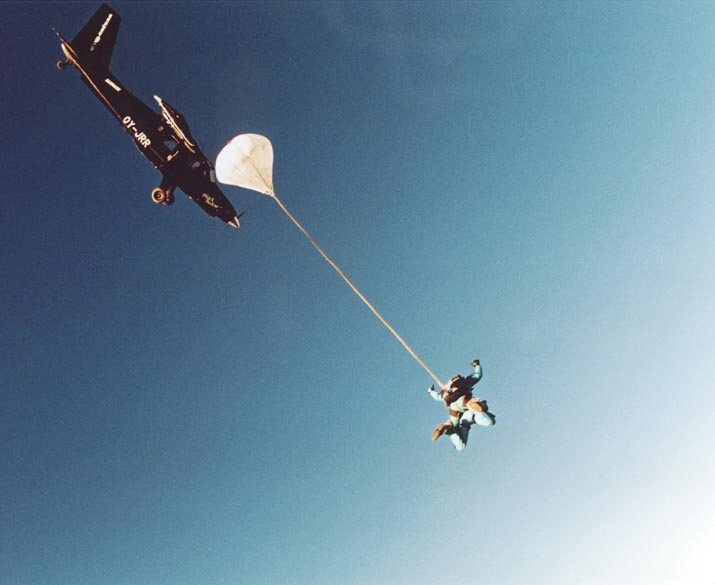
3. Shorts SC.7 Skyvan. Bit bizarre jumping out of the back of an aircraft. Ugly thing and poor C of G. Not that fast! You go out of the back into dead air and then wham get hit by the airstream. You can run straight out the back though which is fun.

Image

2. de Havilland Canada DHC-6 Twin Otter. Nice big plane and very comfy. Reasonably fast depending on model. High wing and stabilisers and twin engines help too. Very nearly my favourite…

Image

1. Dornier Do-28 G92. This thing is awesome. It’s a turbine conversion of the venerable Do-28. Fastest jump-ship I ever got out of. Felt like you were sliding down the bench during climb. Massive door you can stand up in. Great big rail to hang onto. Twin turbine engines so the pilot can feather the door side engine to reduce prop blast. No C of G issues either. Lovely! Plus I had lots of fun in one during an after-party! 😉Image

by Tom Hibberd

Find out about the latest Hush-Kit articles on Twitter: @Hush_kit

Want to see more stories like this: Follow my vapour trail on Twitter: @Hush_kit

Thank you for reading Hush-Kit. Our site is absolutely free and we have no advertisements. If you’ve enjoyed an article you can donate here. At the moment our contributors do not receive any payment but we’re hoping to reward them for their fascinating stories in the future.

The more you give, the more we can give you 🙂

Follow Paul’s aviation adventures on his blog here

Have a look at How to kill a Raptor, An Idiot’s Guide to Chinese Flankers, the 10 worst British military aircraft, The 10 worst French aircraft,  Su-35 versus Typhoon, 10 Best fighters of World War II , top WVR and BVR fighters of today, an interview with a Super Hornet pilot and a Pacifist’s Guide to Warplanes. Was the Spitfire overrated? Want something more bizarre? The Top Ten fictional aircraft is a fascinating read, as is The Strange Story and The Planet Satellite. The Fashion Versus Aircraft Camo is also a real cracker. Those interested in the Cold Way should read A pilot’s guide to flying and fighting in the Lightning. Those feeling less belligerent may enjoy A pilot’s farewell to the Airbus A340. Looking for something more humorous? Have a look at this F-35 satire and ‘Werner Herzog’s Guide to pusher bi-planes or the Ten most boring aircraft. In the mood for something more offensive? Try the NSFW 10 best looking American airplanes, or the same but for Canadians. 

Hush-Kit review: The Aviation Historian: Issue 1

Image

There often seems to be an unoccupied space in many academic disciplines, particularly so in historical research. There are, as Hush-kit readers are probably aware, a number of highly specialist academic journals which deal largely with the technical aspects of aviation: engineering, aeronautical design and ergonomics.  Fewer cover Aviation History, but where they do exist there is a stress on military and strategic history rather than the cultural, visual and social elements of the subject.


Thank you, you keep this site going! If you’ve enjoyed an article you can donate here. 

At the other end of the scale, a scan of the shelves of any decent newsagents reveals a large number of titles for the hobbyist and enthusiast. However, whilst these also fulfill a useful role, they can lack depth of research and be limited in their scope; they do after all exist to make money for their commercial publishers.

There is in addition a large amount of valuable ‘grey literature’ contained in the newsletters of smaller groups and societies internationally which often fall beneath the radar. A new journal: ‘The Aviation Historian’ appears to be an attempt to fill the vacuum between dry academia and hobbyist periodical.

‘The Aviation Historian’ is undeniably research rich, factually dense and of academic value but is also produced with a level of pictorial illustration and in a format that should draw in readers who might be alienated by a drier formal format. As the Editor declares (in somewhat messianic style) in his introduction it is a publication intended for:

 ‘historic aviation’s “true believers”; those of us with a deep abiding passion for man’s glorious triumphs – and calamitous failures – in the quest to master the air above us and the universe around us.’

As such, it lacks some of the traditional elements of an academic journal; there are for example no long bibliographies or citations. However, the editors are contactable and anyone using the journal for research purposes could no doubt obtain sources and contact the authors. The editor also mentions in his introduction that he wants the readership to engage with the journal and perhaps draw in some of those readers producing work for the hundreds of newsletters and small pamphlets produced on the subject.

Being the first edition (No.2 is now also on sale) there are naturally no letters or conference proceedings although there is a very useful book review section.  Conversely the first issue is extremely rich in graphic information, particularly photographic material.  In fact, the graphic design of the issue is impressive not only in terms of the size and quality of the images. but in the dynamic typography and lay-out employed. It invites you to have a ‘conversation’ with the topic matter and is lively and engaging. That is not to say it is compromising the depth of information provided but merely that it is presented in a more accessible manner than most purely academic journals which is often one of their major faults.  Aeroplanes look good; a publication about them has no excuse not to look equally as stylish.

Image

Having clarified that the journal is well designed, I should move on to the content.

That is where this reviewer hits rocky ground, being a cultural/design historian the technical specifics and design of aircraft are not a personal strong point.

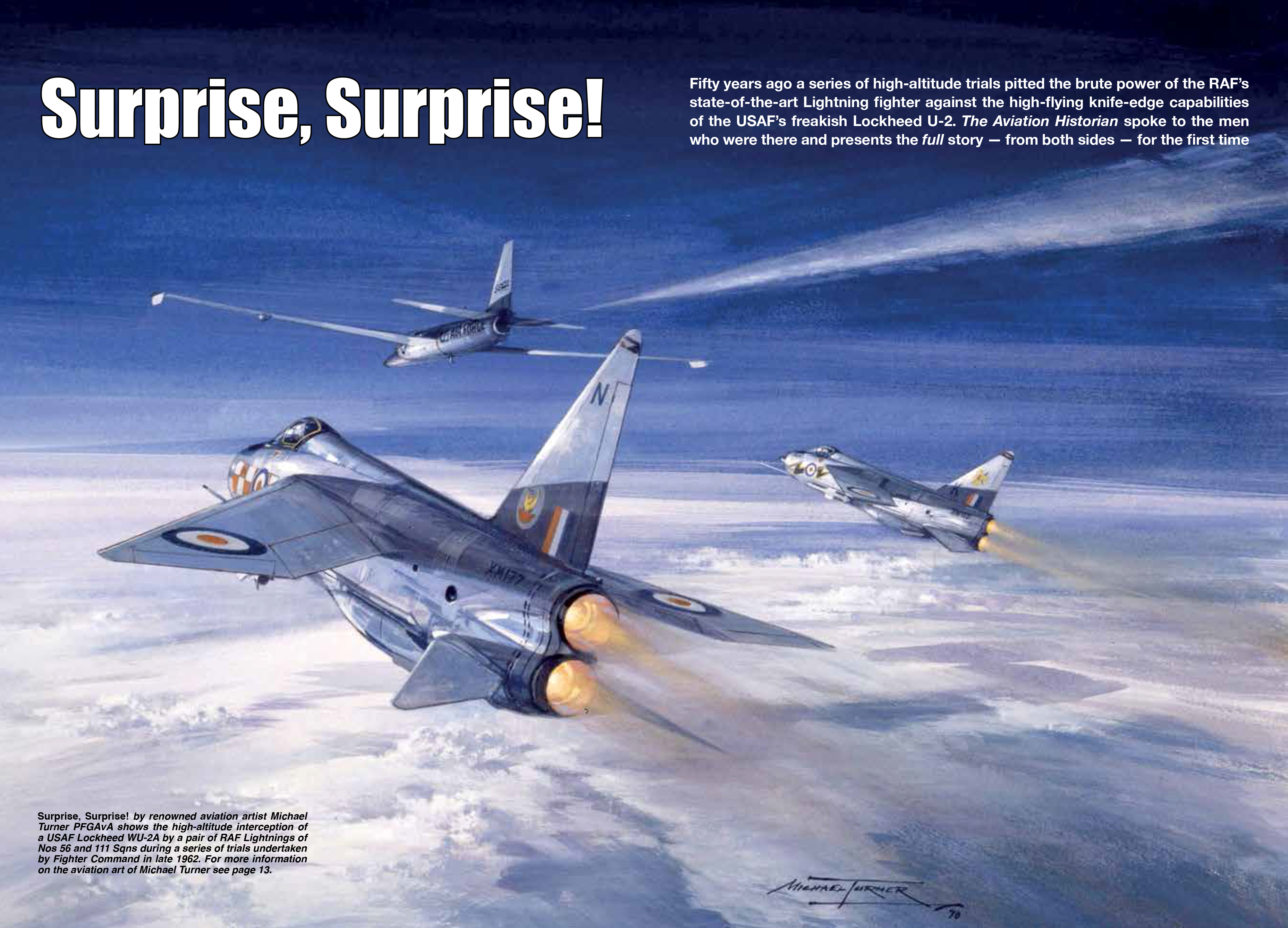
When reading the articles however it became clear that there are certainly enough of the technical and engineering elements of aviation history here to keep any ‘tech-head’ content. This engineering-resistant reader however was still able to read and enjoy and even comprehend the meaning of an article comparing the RAF’s Lightning fighter to the USAF’s Lockheed U-2 or a review of the history of the Bristol Mercury.

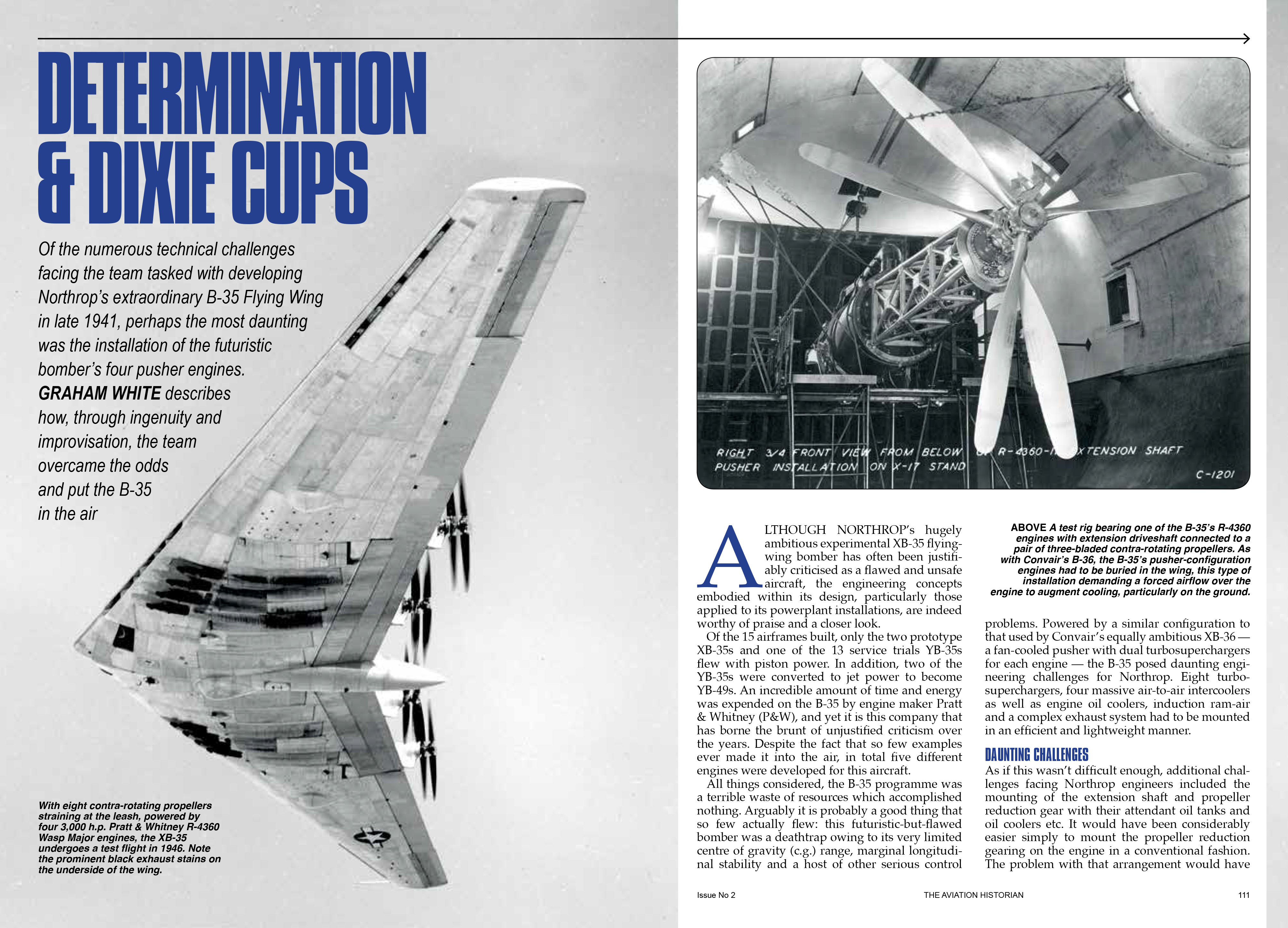
My point being that if you are the kind of person who shrinks from a diagram of an engine but you still find yourself gripped by such articles, a genuine enthusiast should relish them.

Image

There were a couple of articles in the first edition that were also strong on the cultural/social history front. Particularly enjoyable was ‘The Tragedy of Flight Three’ (this journal employs catchy titles for its content) in which Michael O’ Leary examines the DC-3 crash that killed Hollywood Film Star Carole Lombard in 1942. The article not only discusses the details and causes of the crash, the plane and the details of the flight but contextualises it socially and historically, a particular strength of this journal.  In this case there is information about War Bond drives, Carole Lombard’s role as part of a Hollywood ‘golden couple’ and her husband, Clark Gable’s subsequent war service. The Editor, Nick Stroud’s article ‘Hef and the big bunny’ on the Playboy supremo’s private jet was fascinating and frankly brilliantly illustrated. This reviewer would really like to obtain one of those Jet Bunny uniforms (anyone who can help please contact Hush-kit!). There were also articles that seemed upon a cursory glance eccentric, flying billboards anyone? Yet upon reading the article the inherent interest of the mechanics and thought involved in designing such a distinctive aircraft became clear.

Image

A perusal of the list of contents should be enough to reel any fan of the history and romance of flying in with titles such as: ‘Messerschpitts at Five 0’Clock!’ (intentional spelling), ‘One Furious Summer’ and ‘Ryan and the Flying Pterodactyls’. Aviation is about design, mechanics, propulsion, science, chemistry and engineering. However these activities are undertaken by individuals. The motivations are human and driven by imagination, ambition, hope, greed and sometimes aggression. The results are similarly diverse.

Image

At the Goodwood Revival last year what struck this reviewer were the stories behind the aircraft on display, their physical beauty and the sheer exhilaration of seeing a formation of World War II aircraft speed through the sky. It seems that ‘The Aviation Historian’ is seeking to condense these elements onto its pages in a lively, informative, accessible and engaging manner.

Review by Minerva Miller, M.A.hons (Cantab)  Msc (City)- University Librarian at the University of London

Click here for a subscription to The Aviation Historian

Hush-Kit is reminding the world of the beauty of flight.

follow my vapour trail on Twitter: @Hush_kit

Thank you, you keep this site going! If you’ve enjoyed an article you can donate here. 

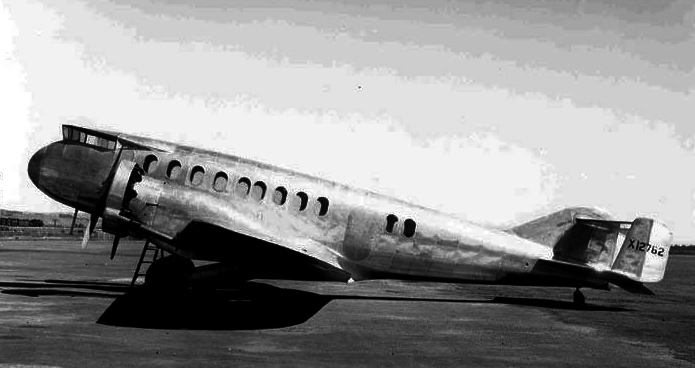
MY FAVOURITE AEROPLANE IN 200 WORDS #37 Capelis XC-12 by Nick Pardo

Image

It seems unsporting to mock anything Greek at the moment. But, this is about a Greek-American ‘achievement’.. and I’m half-Greek, so I guess it’s OK.

The Capelis XC-12 of 1933 was described in a 1973 letter to Air Enthusiast from John H.Murphy thus “The airplane was designed by Greeks, built by Greeks, and the venture was promoted by a Greek- and every Greek restaurateur on the West Coast stuck a few bucks in.. it succeeded in breaking just about every law of common sense, the Aeronautics Bureau of the Department of Commerce, and those of nature, including gravity” self-tapping screws were used, which shook themselves loose during flight “And its performance? Lousy- depending on how many screws were loose”.


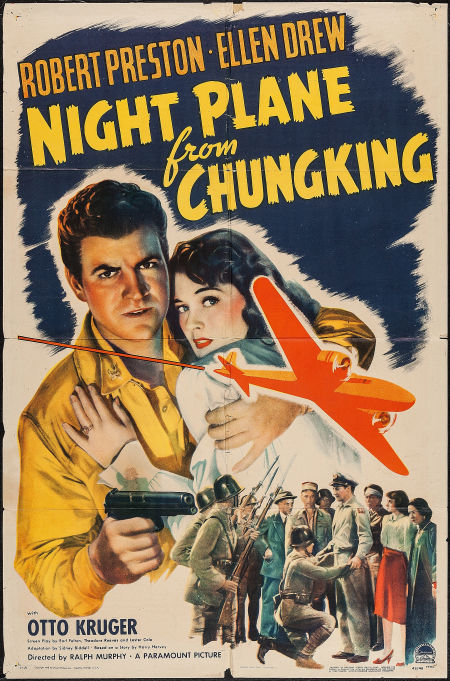
But it had unexpected glory.. as a film star! It featured in the following films: Five Came Back (1939) Flying Tigers (1942), flown by John Wayne, Invisible Agent (1942), Night Plane from Chungking (1943), Action in Arabia (1944) and Dick Tracy’s Dilemma 1947 (models of it featured in even more films).

Image

If the Capelis XC-12 teaches us anything- it’s that success sometimes come in unexpected ways. Alternatively, it may teach us that when designing an aeroplane, it’s probably best to use an experienced team of aeronautical engineers.


Nick Pardo

Film aficionado and reluctant Capricorn, he strongly recommend you check out this blog

Find out about the latest Hush-Kit articles on Twitter: @Hush_kit

Who was Sweden’s flying farm girl?

Want to submit an article for Hush-Kit? Contact: hushkiteditorial@gmail.com

Vapour trail: a very short story by Polly Malone

Image

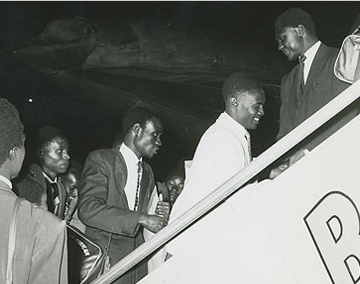
You get off the plane.  It’s hot and your feet smell.  Baobab trees boggle your brain.  The spices hit you and your feet recede.  The guy who sat next to you is looking shifty as he moves to the airport building.  He’s not staying long, he’s only got hand luggage.  He’d talked Tory at you all the way from Nairobi and you hope he’s delayed going through customs.  You wait by the plane while your bags are hurled down.  There’s no carousel here.

Image

Your friends asked you to bring cheese – they are starved of it.  ‘And bring extra for the people at customs.’  You can picture the scene when they open your case.  One swimsuit and forty packs of Cheddar.  Stilton by the dozen.  And Camembert.

Image

From inside the plane had seemed small.  Now it looms above you bigger than your life.  The sun is so bright it goes right through the metal, into your mind and out the other side.  Photon feasting – yeah, that’s what you came for.  But the shade of the plane is a cradle, a grave.

Polly Malone, February 2013

Image

Image

Find out about the latest Hush-Kit articles on Twitter: @Hush_kit

Who was Sweden’s flying farm girl?

Want to submit an article for Hush-Kit? Contact: hushkiteditorial@gmail.com

Iran unveils Qaher-313 (Conqueror-313) fighter design

Image
Today Iran unveiled what it describes as a ‘super advanced’ fighter design.  President Ahmadinejad described it “as among the most advanced fighter jets in the world ” a statement which is unlikely to be true considering Iran’s technology base. He added that it had been test-flown for “thousands of hours” by pilots who are “very satisfied with its performance.”
931740_orig
q-313-2The aircraft appears to embody a reduced radar cross section design, including unusual dorsal intakes and downward drooping wingtips. It is a canard delta with twin tails and overall  ‘stealth’ faceting. It is likely to be powered by a single engine based on the Russian RD-33. Several years ago Iran publicly displayed a mock-up of a stealth design with some similarities to this design. (see the latest F-35 feature here)
Q-313-4
Of the film footage, some doubt that this is a real aircraft and believe it is a remote controlled  model. The construction is certainly primitive in appearance, and this may be more of a mock-up or technology demonstrator than a fighter prototype. So far none of the flying footage is close enough to show a pilot , leading some to speculate that this is a remote-controlled model. The timing of the unveiling is interesting, coming in the same week as Iran’s ‘monkey in space’ and Israel’s bombing of Syria. One British aeronautical engineer commented “Super thick wing, single piece un-reinforced canopy – I could be wrong but its main advantage may be delivering the killer blow whilst the opposing pilot is laughing at it.”
It should also be noted that new aircraft from secretive countries are often met with skepticism, with many doubting both China’s  J-20 and J-31 when images first appeared. Iran’s public display of a US RQ-170 was also suspected of being fake at the time. Statements from Israeli officials are categorical, stating it is a fake, and may even be based on a film prop. (Like to know about the MiG-37 and Russian stealth? Click here)
Q-313-cockpit

This follows the Azarakhsh (Lightning) and Saeqeh (Thunderbolt) fighter jets which are modified variants of the US F-5 design.

Image

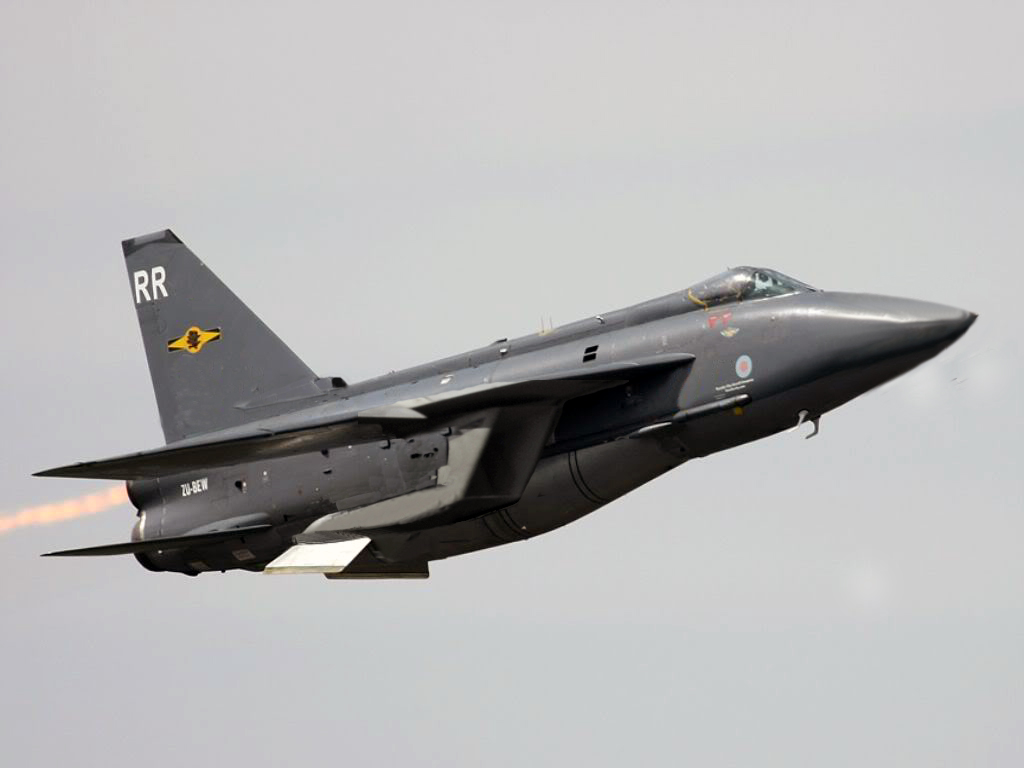
The Ultimate What-if: British Aerospace Super Lightning

??????????????????????????

Following the cancellation of the Tornado ADV, BAe proposed an enhanced Lightning as an interim fighter/interceptor for the RAF until a longer term solution was found. The initial proposal included the replacement of the AI.23 radar with the notional AI.25 based on the Sea Harrier’s Blue Fox, and the integration of AIM-9L Sidewinder and Sky Flash missile capability. Encouraged by trials of the ECL (Enhanced Capability Lightning) test aircraft (XL629), BAe proposed a far more radical upgrade. The greatest limitation of the Lightning was its fuel-thirsty Avon engines, replacing these with modern engines would have two major advantages. Firstly, new engines would be far more efficient and use less fuel, secondly, they would be smaller and create plenty of new internal volume for extra fuel or avionics. By moving the engines air intake location from the nose to below the wings, room was created for a larger radar, and the obvious candidate was the AI.24 Foxhunter that had been conceived for the aborted Tornado ADV. The Turbo Union RB.199 was fitted to the ECL in 1984, but results were discouraging.

General Electric proposed an uprated version of the F404 (the engine used by the F/A-18 Hornet). This engine, named the Wye, was tested on a modified F/A-18 and later on ECL-2 (XR763). Integration of the Wye into ECL-2 proved harder than anticipated, but once fitted the results were remarkably good. The project received a great deal of criticism, with many asking why the project was happening when a modern off the shelf system (such as the F-15) would be cheaper, superior and have a longer service life. But by this time, as the Royal Saudi Air Force was to a large degree funding the project, it grew more and more ambitious (this included a greatly improved wing and ECM suite). The first production aircraft flew from Warton in 1988, and deliveries to the RAF and RSAF began in 1990.

Such was the RAF’s confidence in the type that it deployed a combat evaluation detachment to Saudi Arabia during Operation Granby (Desert Storm). During this operation a  lone Super Lightning destroyed two Iraqi air force MiG-21s (one with Sky Flash, and one with AIM-9L).

The 25-mm Aden cannon proved unreliable and were replaced by 27-mm Mausers, giving commonality with the Tornado force.

Like to know about the MiG-37 and Russian stealth? Click here.

Specifications

British Aerospace Super Lightning F.Mk 1

Type: Single-seat fighter/ interceptor
Crew: 1
Length: 55 ft 3 in (16.8 m)
Wingspan: 34 ft 10 in (10.6 m)
Height: 19 ft 7 in (5.97 m)
Wing area: 551 sq ft, 51.2 m²
Empty weight: 31,068 lb (14092 kg)
Max. take-off weight: 61,700 lb (28000 kg)
Powerplant: 2 × General Electric/Rolls-Royce  F414-RR545 Wye turbofans,
maximum thrust: 13,000 lbf (62.3 kN) in mil power, 22,000 lbf (97.9 kN) (with reheat)
Performance:
Maximum speed: High altitude: Mach 2.5+ (1,650+ mph, 2665+ km/h)
Low altitude: Mach 1.2 (900 mph, 1450 km/h)
Standard armament: One 25- mm Aden cannon with 140 rounds,
four Sky Flash and two AIM-9L Sidewinder

Find out about the latest Hush-Kit articles on Twitter: @Hush_kit

Who was Sweden’s flying farm girl?