MY FAVOURITE AEROPLANE IN 200 WORDS #12 McDonnell Douglas/Boeing F-15C Eagle by Scott Bachmeier

Image

Hush-kit is reminding the world of the beauty of flight.

follow my vapour trail on Twitter: @Hush_kit

Do you have an idea for a Hush-Kit article you would like to write? Get in touch.

What is wrong with you Europeans? Half of the airplanes written about here as favorites are ‘quirky’ or ‘flawed’? I like things because they’re the best, not because they’re crap.

The F-15 Eagle has been the world’s best fighter since it entered frontline USAF service in 1976… I hear you spitting out your martinis as you read that. You leap to your feet. “RAPTOR!” you scream, the buttons on your cardigan exploding off in fury.

I disagree.

The F-22 is the flash, top-of-the-range guitar hanging on a $900 rack on the wall of a wannabe rockstar. It’s too pricey to be played, what if it was scratched?

The F-15 on the other hand is the battered old Fender that has proved time and time again its power to rock the joint. The F-15 is longer-ranged than the F-22, it has better short-range air-to-air missiles (X-Rays)..more vitally, it has a helmet system that can target designate- an entry-level technology that even F-16s have. It has an unprecedented kill-to-loss ratio of 104/0. Nothing else has anything approaching that.

Viva La Eagle!

PS my wife is European.

Come join the fun! Submit your ‘Favourite aeroplane in 2oo words’ entry to hushkiteditorial@gmail.com

Image

MY FAVOURITE AEROPLANE IN 200 WORDS #11 Bristol 188 by Alexander Shchemelev

   “ When I want to stop feeling inadequate, I think of pole vaulters. Most of us don’t want to be found out to be rubbish, so we stick to the things we’re good at. But pole vaulters, whose only job is to vault over a pole, repeatedly don’t…their only job”  Armando Iannucci

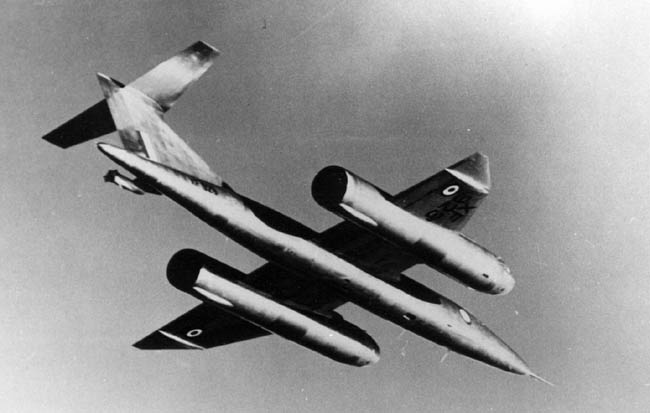
The 188 was built to fulfil requirement ER.134. This was intended to support a very high-speed bomber, the Avro 730. When the 730 was cancelled in 1957, work on the 188 continued.

I love the incapable and that’s why I love the Bristol 188. Britain’s ‘SR-71’, was a ‘double-barrelled’ monster made to explore prolonged flight at over Mach 2.6. Aluminium cannot tolerate the heats experienced at such high speeds, so what material should be used?

Faced with the same problem, the US chose titanium for the triumphant SR-71 Blackbird.

Britain had better ideas, and built the 188 from far heavier stainless steel. Instead of adapting the powerful Olympus engine, the rather weedy Gyron was selected.

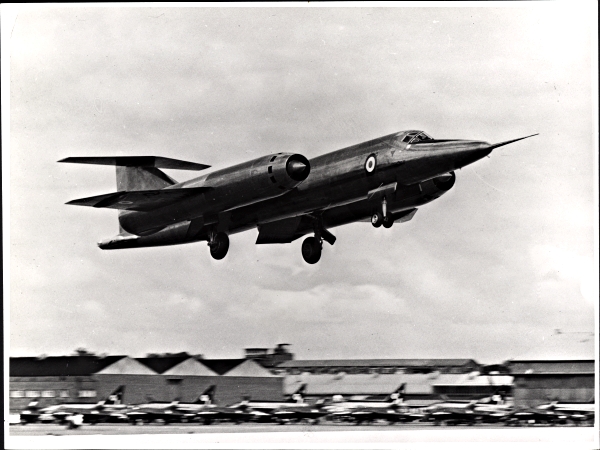
The Bristol 188 was slower than the RAF's top fighter of the time the EE Lightning (lined up on the ground). If the 188 had been built from titanium and powered by the Olympus or Avon it may have achieved its goals. The US' SR-71was built to spy on the Soviet Union, ironically the titanium it was built from was secretly-sourced from the very country it was made to spy on!
The Bristol 188 was slower than the RAF’s top fighter of the time the EE Lightning (lined up on the ground). If the 188 had been built from titanium and powered by the Olympus or Avon it may have achieved its goals. The US’ SR-71was built to spy on the Soviet Union, ironically the titanium it was built from was secretly-sourced from the very country it was made to spy on!

It didn’t fly until 14 April 1962 (twelve days before the Lockheed A-12, precursor to the SR-71). The 188 proved barely able to get to Mach 2, let alone flying for extended periods at 2.6. Since its commission in 1954 the project had become the most expensive British research aircraft ever made. It failed to carry out its only job.

Alexander Shchemelev is an engineering historian

Follow my vapour trail on Twitter: @Hush_kit


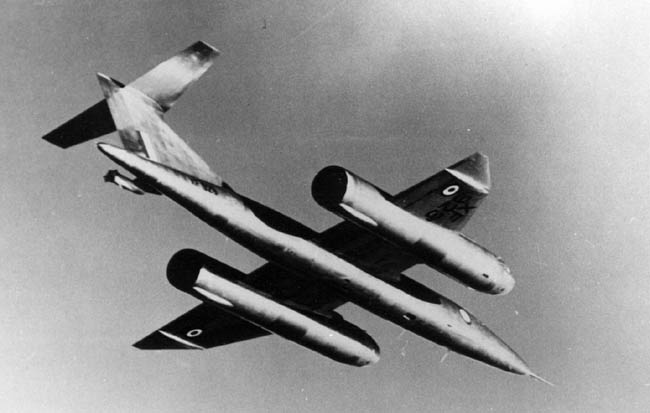
The Bristol 188 in flight. Two years after the 188's first flight, the USSR succeeded in producing a high-speed aircraft from steel; the MiG-25 was capable of flight at speeds exceeding Mach 2.8.
The Bristol 188 in flight. Two years after the 188’s first flight, the USSR succeeded in producing a high-speed aircraft from steel; the MiG-25 was capable of flight at speeds exceeding Mach 2.8.


MY FAVOURITE AEROPLANE IN 200 WORDS #10 de Havilland Vampire by Luke Holt


Image
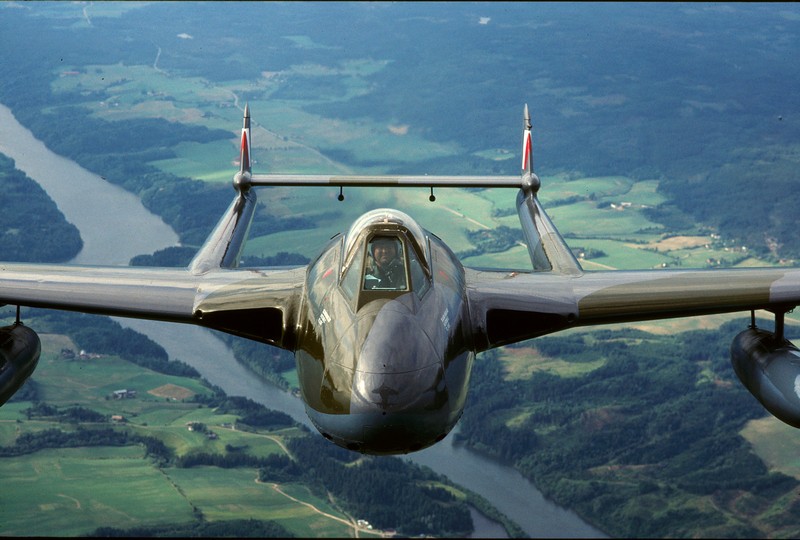
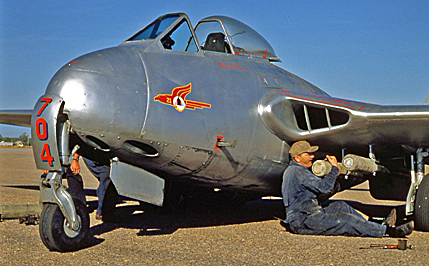
Fighter jets should inspire fear; their vicious appearance should carry some of the beastliness of their task. The Messerschmitt Me 262- a shallow-water killer, looked every inch the flying shark. The F-4 Phantom II was a flying ironclad, billowing satanic black smoke behind it. The de Havilland Vampire..well, it was cute. It didn’t look like it was going to kill anything, if anything it looked like it needed looking after.

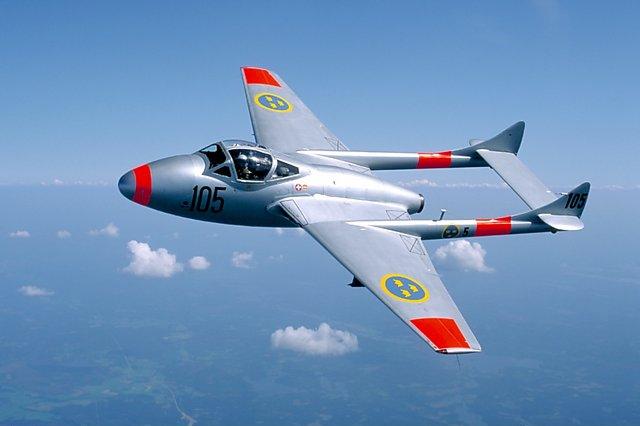
Stand next to one and it will cower in your shadow: it is tiny. The happy dog-like nose, jelly bean of a fuselage and fragile twin-boom, give it a very friendly appearance. Over 3,000 were built and today over 20 remain displayed in public places. The eccentric little Vampire seems to enjoy these retirement shows, and even in these conditions it retains its perkiness. Some aircraft become sad lonely hulks when consigned to a life on a display pole, but the plucky Vampire has enough personality to remain positively zingy. I was delighted to stumble upon one in a small park in Switzerland in 1988.

Image

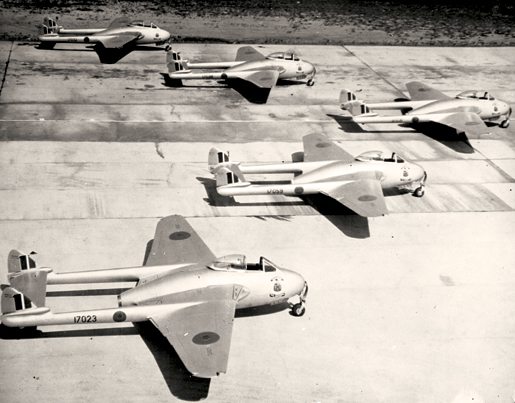
The Vampire was more agile, cheaper and longer-ranged than the Meteor. More importantly, the Vampire was the cheekiest little jet fighter ever made.

MY FAVOURITE AEROPLANE IN 200 WORDS #9 Lockheed SR-71 Blackbird by Tim Robinson

Image

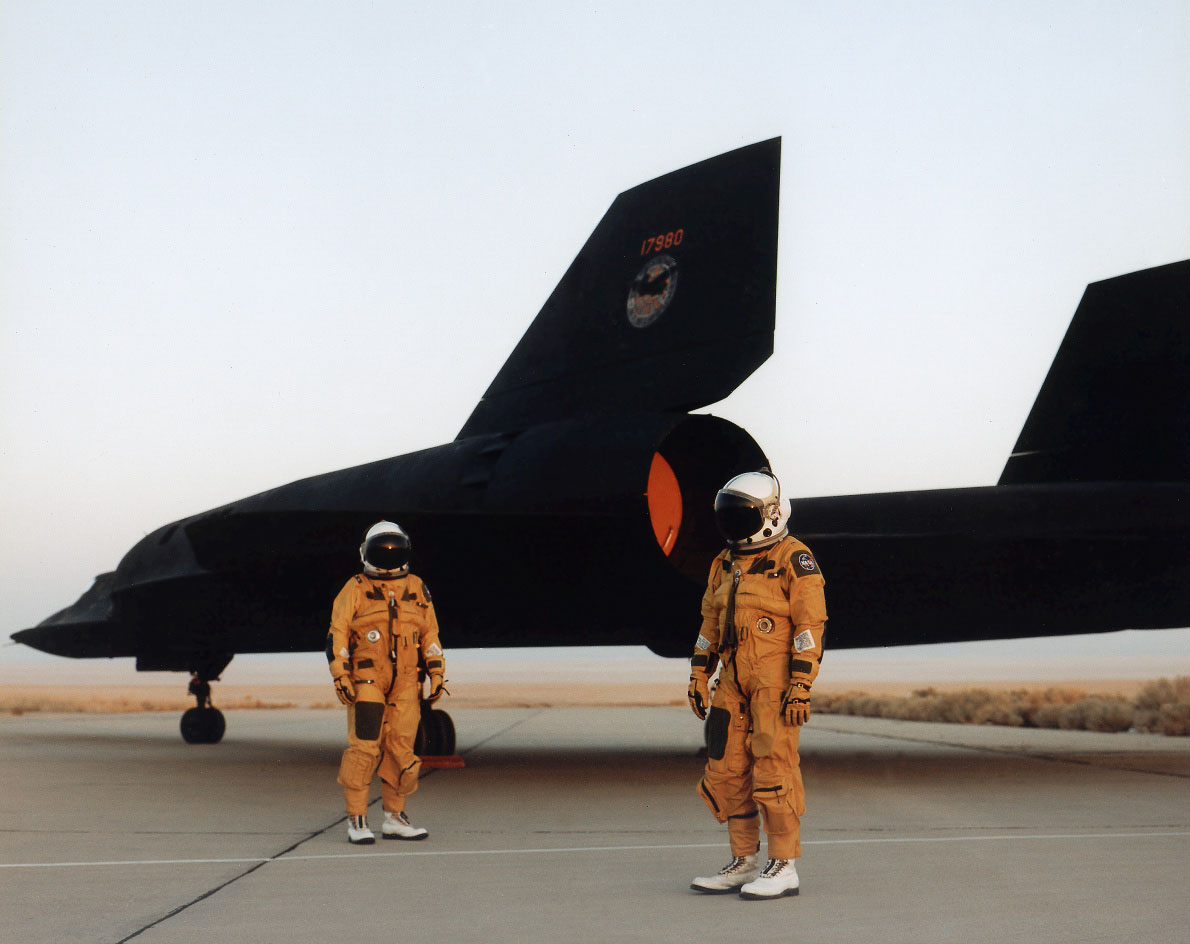
Sleek, supersonic and superbly sinister the Lockheed  SR-71 reconnaissance aircraft is in a class of its own in aviation terms.

Incredibly, its Mach 3+ performance at the edge of space (85,000ft) came nearly 20 years after 400mph propeller fighters were state-of-the-art in WW2 (its predecessor, the even faster A-12 , first flew in 1962). No wonder people thought we’d be living on Mars by 1980.

Even more astoundingly, this record-beating aircraft was designed using slide-rules, pencils and notepads. CFD computer analysis was unknown and that goes for all the aerodynamics, thermodynamics and one-off systems that the Blackbird incorporated. Pure engineering genius.

Today the US struggles to get a hypersonic scramjet to ignite and run for more than a few seconds at a time. But in the 1970s – Mach 3+ flight was routine for the Blackbird’s highflying spy missions, taunting Cold War enemies with its swiftness. Plus, just LOOK at it – from all angles it looks like an alien spaceship, not of this planet.

Other aircraft may be national icons, or perhaps have greater historical significance, but the SR-71 still looks like it belongs in the future. One day we’ll catch up with it.

By Tim Robinson, Aviation Journalist

 http://media.aerosociety.com/aerospace-insight/

Image

MY FAVOURITE AEROPLANE IN 200 WORDS #8 Westland Wyvern by Ed Ward

ImageLike all the most interesting aircraft, the Wyvern was slightly obscure, not particularly successful, and quite dangerous. Weighing 650 pounds shy of a loaded Dakota it was nonetheless expected to operate off dinky 1950s RN carriers. Tellingly, its main claim to aviation immortality derives not from any superlative quality of the aeroplane itself but a desperate desire to escape it: the world’s first underwater ejection was from a Wyvern. Suffering from the standard post-war British aircraft ailments of lengthy development and unrealised potential but unlike such ‘world-beaters’ as the perennially overrated TSR.2, it did make it into service. Wyverns even flew strike missions over Suez.
But this is by the by, for the Wyvern remains the most fantastic looking airscrew driven aircraft ever to fly, a nose that goes on forever surmounted by contra-props, an elliptical Spitfire-esque wing, slightly cranked a la Corsair, a massive, elegantly curved fin and rudder that is impossible to draw properly (try it) combined with pretty elliptical tailplanes topped off with finlets. (Finlets!) Also it is a post-war FAA aircraft and therefore blessed with the most attractive camouflage scheme ever to grace a military aircraft.
Like its namesake, the Wyvern is unlikely, brutish and wonderful.
Ed Ward is an illustrator, writer, historian and regular Hush-Kit contributor (like the Wyvern, he is unlikely, brutish and wonderful)
See his fantastic artwork 
Donating to Hush-Kit will help us.The button is above and below. Thank you.
Image

MY FAVOURITE AEROPLANE IN 200 WORDS #7 Lockheed Martin F-35 Lightning II by Jack Luttrell

Image

The Producers tells the story of a theatrical producer and an accountant who want to produce a Broadway flop. They borrow outrageous amounts from investors, knowing that nobody ‘follows the money’ after a failure. Following this, they planned to abscond to Brazil as millionaires.

The plan went badly wrong when the show turned out to be a surprise hit. Despite a pro-nazi theme and a terrible cast, it succeeded. How did they get wrong so wrong? Lockheed Martin and the Pentagon would take no such risks …

It must be made to fail, mustn’t it? Here are the golden rules of making a fighter, they have been proven repeatedly over the last 90 years (with few exceptions):

  1. Fighters must be fast and agile
  2. Never plan any aircraft as ‘multi-role’
  3. You can’t make a fighter out of a bomber
  4. Never rely on one unproven technology as a lynchpin

Space limits me from listing the others…the F-35 has broken ALL of them.

Has the F-35 been schemed by a joker seeking to high-light the insanity of military procurement? Or maybe somewhere there are two men in Hawaiian shirts packing suitcases? Either way the F-35 is my favourite comedy.

Hush-kit is reminding the world of the beauty of flight.

follow my vapour trail on Twitter: @Hush_kit

Do you have an idea for a Hush-Kit article you would like to write? Contact: hushkiteditorial@gmail.com

Image

Jack Luttrell is a US defence analyst, he used to work for a major defence contractor

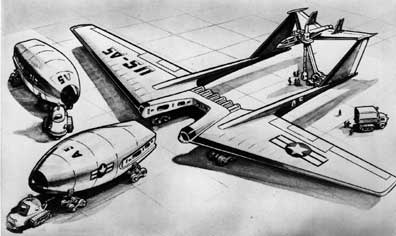
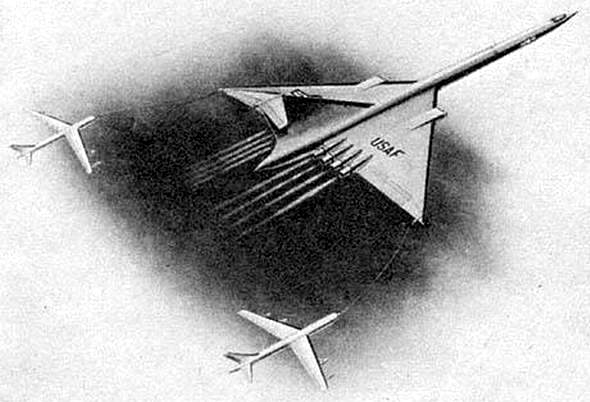
NUCLEAR POWERED AEROPLANES: A GALLERY

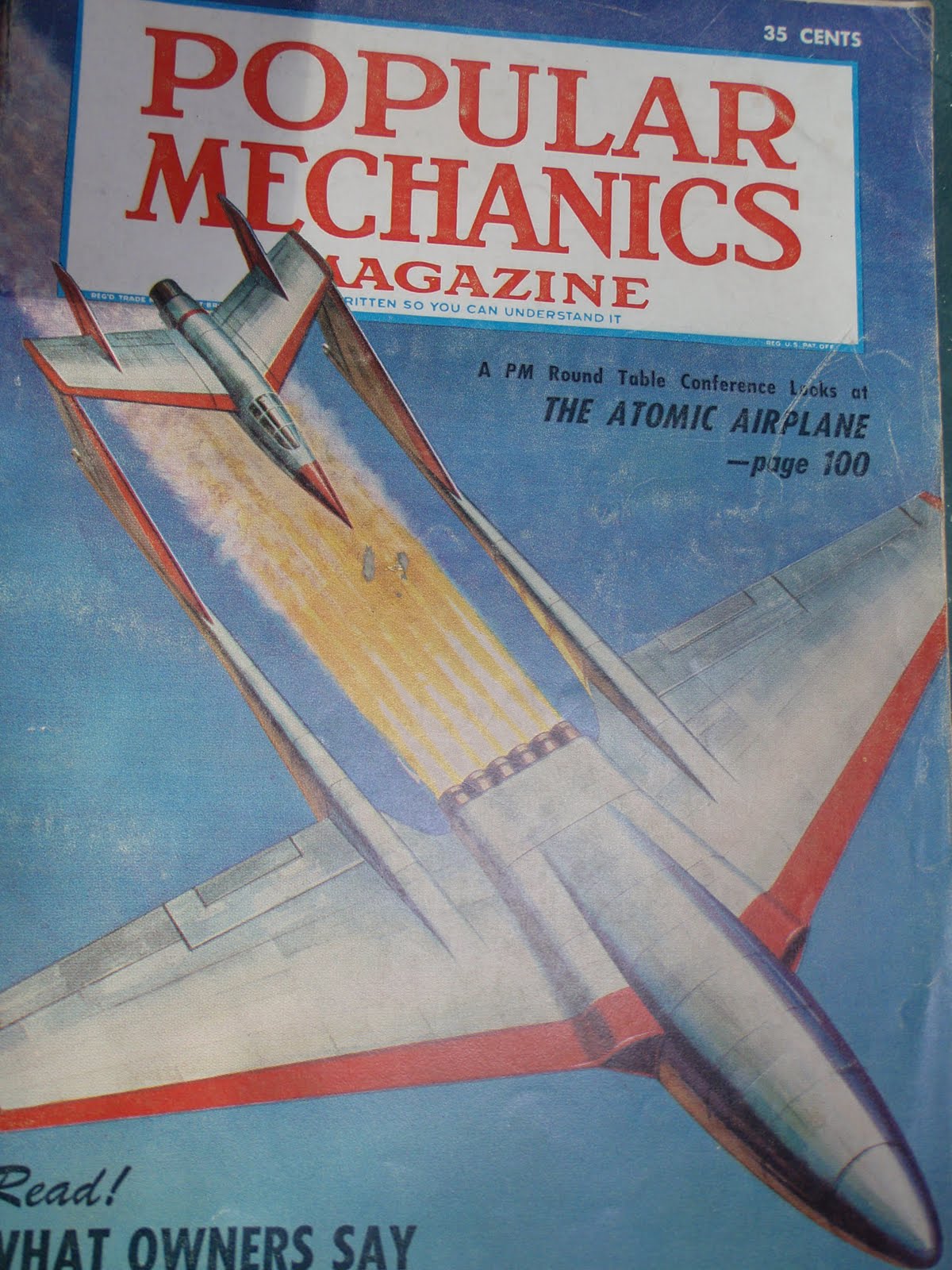
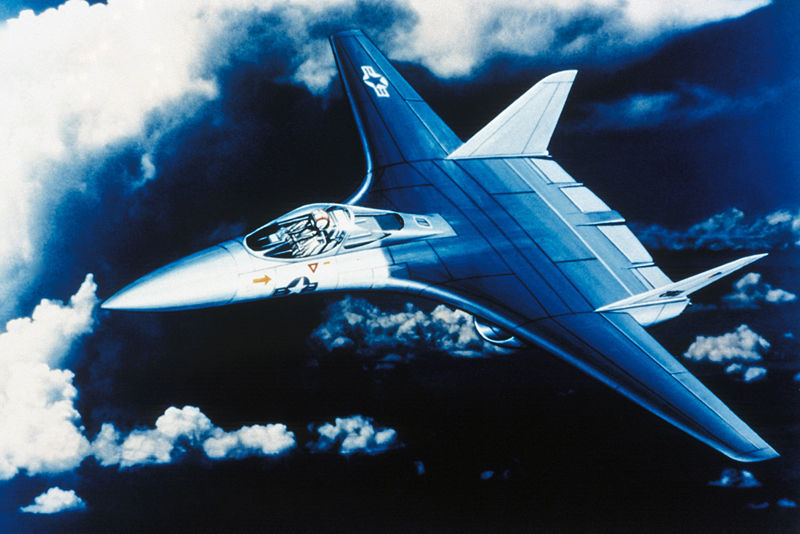
What could be safer and saner than an aircraft fitted with an atomic reactor? 

Despite worries about safety, many aircraft designers, air forces and ponderers have toyed with the idea of an atomic plane. Here’s a gallery of some of the exciting, and somewhat insane, atomic aircraft.

Image

ImageImageImageImageImage

Want to see more stories like this: Follow my vapour trail on Twitter: @Hush_kit

Thank you for reading Hush-Kit. Our site is absolutely free and we have no advertisements. If you’ve enjoyed an article you can donate here. At the moment our contributors do not receive any payment but we’re hoping to reward them for their fascinating stories in the future.

Have a look at 10 worst British military aircraft, Su-35 versus Typhoon, 10 Best fighters of World War II , top WVR and BVR fighters of today, an interview with a Super Hornet pilot and a Pacifist’s Guide to Warplanes. Was the Spitfire overrated? Want something more bizarre? The Top Ten fictional aircraft is a fascinating read, as is The Strange Story and The Planet Satellite. The Fashion Versus Aircraft Camo is also a real cracker. Those interested in the Cold Way should read A pilot’s guide to flying and fighting in the Lightning. Those feeling less belligerent may enjoy A pilot’s farewell to the Airbus A340. Looking for something more humorous? Have a look at this F-35 satire and ‘Werner Herzog’s Guide to pusher bi-planes or the Ten most boring aircraft. In the mood for something more offensive? Try the NSFW 10 best looking American airplanes, or the same but for Canadians.


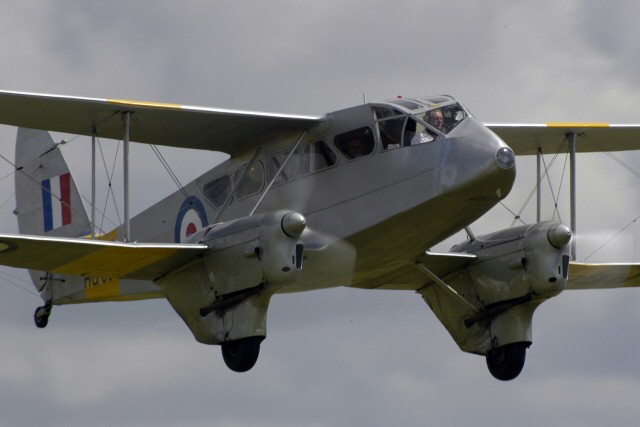
MY FAVOURITE AEROPLANE IN 200 WORDS #6 de Havilland DH.89 Dragon Rapide by David Piper

Image

Peter Pendragon and Louise Laleham, the heroes of Aleister Crowley’s searing novel Diary of a Drug Fiend, hurtle headlong into the pitchblack night and intense love, in the freezing cockpit of Peter’s plane, fantastically high on beautifully pure cocaine. They first met a few hours ago, and neither of them have ever taken drugs before.

Jack Parsons was a very handsome man; a wayward father of modern rocketry, explosives expert, explosion addict, practising sex magician, OTO lodge leader, and mentor to L. Ron Hubbard. A week after he performed the Babalon Working ritual in the Mojave desert (against Crowley’s wishes), the remarkable Marjorie Cameron, a flame-haired visionary artist exactly matching the depiction of the goddess he’d invoked, knocked on his door and became his lover.

In my head there is a brilliant Hollywood biopic of Parsons. One sequence, amidst all the flame and fire and red desert smoke, shows Jack and Marjorie becoming Peter and Louise, flying through the night, lit by pale cold terrifying brilliance, howling wind, and mad passion, from the California desert to Thelema, Crowley’s judgement, and rebirth. The only aeroplane beautiful enough to carry them is the de Havilland Dragon Rapide.
David Piper is Commander of Special Operations for Hendrick’s Gin

Image