Keep your modern fighter planes, they’re just a noisy way to burn money. All they do nowadays is bomb – where’s the romance in that?
If I loved pewter and ale (and dressing up in my grandmother’s clothes) I might love old warbirds, but I don’t and I don’t.
Big airliners? You might as well be on a ferry. If I wanted to watch Jennifer Aniston movies while developing deep-vein thrombosis, I would have stayed in Eastbourne.
The ‘whisper-jet’ slips quietly from chic-city to city. A petite, elegant jet for those who know that understated is the only cool worth having.
She first flew the day that the Convention on the Elimination of Discrimination Against Women came into effect. In the same month the sensuous TGV train service began in France. She was born of a month of intelligence and quiet speed.
She colonised the skies above Dalston long before the shouting jumble-sale of fashionistas had set (ridiculous and self-aware) foot down below. She remains the aviation world’s quietly spoken traveller, not boasting of her hour in Geneva or evening in Berlin. And I love her (even if she took her first flight on the day Fearne Cotton was born).
Caroline Kiernan is a Casting Director and stunt-kite flyer
This blog can only carry on with donations, please hit the donation button and share what you can. Every donation helps us- thank you. Donations buttons can be spotted by the eagle-eyed on this page.
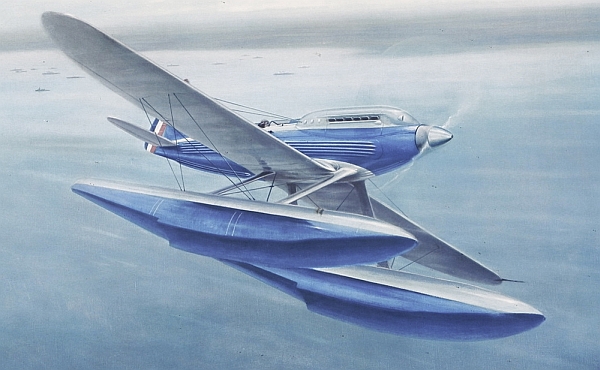
The Supermarine S6 earned itself the position of the ultimate racer built for the Schneider Trophy by securing the 2nd and 3rd consecutive wins for Great Britain. Every inch the thoroughbred, she boasted a Rolls Royce R Type engine so closely cowled that the cam covers were a part of the streamlined outer surfaces. No ounce of excess weight was allowed, nor any square inch of unnecessary cross sectional area. I used to think that, as the fastest machine of her day, she was hugely sophisticated but having seen one stripped down at Southampton I realised the opposite is true – and that she is the better expression of the ultimate for it. There is no crudity to the design but rather a simplicity that speaks of clarity of purpose. High speed aerodynamics, minimal packaging and maximum cooling are the only considerations. All this and achingly beautiful too.
Her legacy is also impeccable, though with no direct lineage lessons learned here greatly influenced the Merlin and Spitfire. Â So – successful, pivotal and displaying the pure aesthetics born from the focused pursuit of speed. By default a shining example of the Bauhaus ideals of Walter Gropius.
There can be no finer aircraft.
Stephen Mosley is an artist and aeronautical engineer
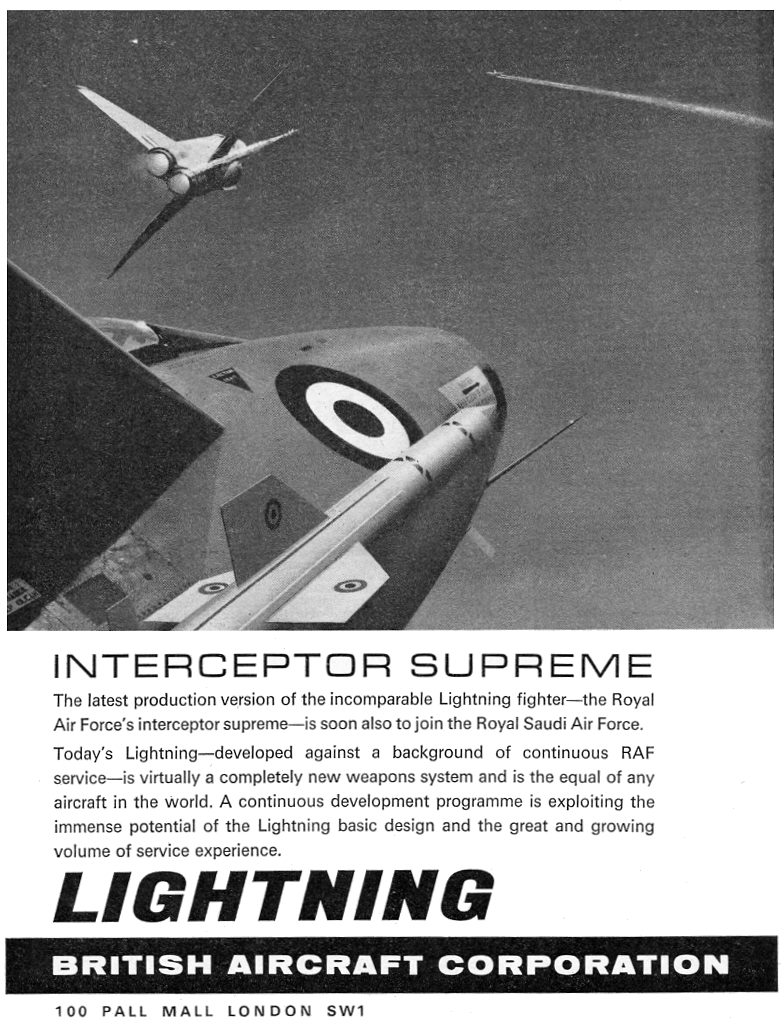
English Electric Lightning. Three words which sit so beautifully together (ignoring the tautology of ‘electric’ lightning). The charged air of English skies ripped apart by riveted lunacy.
The Lightning was quite mad- a greedy machine set on eating fuel and turning it into speed. It was so greedy its great gaping mouth was half-full, trying to eats its own nose. Its hunger saw it eating up sky to reach altitudes where few could reach it. Unlike anything else, its engines were stacked one on top of each other, making it stand monstrously tall on the ground.
The Lightning would scorn today’s tedious drones controlled by gamers in porta-cabins. The Lightning was the anti-thesis of the UAV- it was a manned missile, tricksy and twitchy – and it killed more of its own pilots than it did enemies.
It could outfly and outfight any of its peers, but like an English genius, they neglected it and tried to kill it. The English Electric P.1A flew two months after Alan Turing died, another English product killed by a nation that loves to punish its greatest children.
Blackburn Aircraft Limited produced some of the worst aeroplanes ever made. From the TB of 1915 (an engine start set the float on fire), the Sidecar of 1919 (sold at Harrods, but couldn’t fly), the Roc (a fighter of 1938, that was slower than any bomber), and the pathetic Botha (underpowered, impossible to see out of in rain), through to the shameful Firebrand (late, extremely dangerous to pilots- but scandalously pushed into service with a hush-up that resulted in many deaths)- their track record was pretty appalling, so it is all the more impressive that they went on to make the wonderful ‘Bucc’, a masterpiece from 1958.
The Buccaneer was designed to counter the threat of Sverdlov-class cruisers. It was prepared in great secrecy, as a fast, low-level maritime attack aircraft capable of using nuclear weapons. The S. Mk.1 was underpowered, as test pilot Dave Eagles quipped in his recent Hush-Kit interview it “relied on the curvature of the earth to get airborne â€. This was solved when the S.Mk 2 was introduced in 1962, powered by the Spey. The result was a superb low-level aircraft with a long-range (longer even than the Tornado), a virtually indestructible construction and a rock-steady low-level ride. The type proved its worth in Desert Storm, and remained to the end of its life a potent weapon.
This blog can only carry on with donations, please hit the donation button and share what you can. Every donation helps us- thank you. Donations buttons can be spotted by the eagle-eyed on this page.
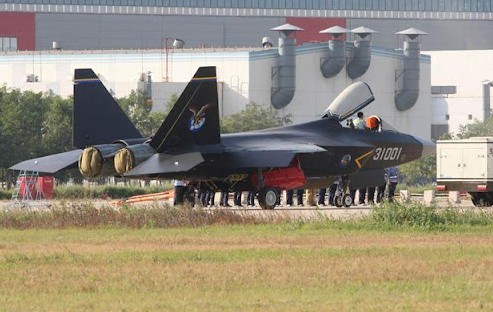
Images have emerged of a Chinese aircraft closely resembling the F-22 Raptor. Some sources have referred to it as the Shenyang J-31 as the serial number begins ’31’. The relationship between these photos and the mystery aircraft seen on a truck in June (see Hush-Kit archives, June) is unclear, though some have dismissed the link say the two shapes are too different to be related.
The aircraft appears to be smaller than the F-22, though similar in general appearance, strongly suggesting a similar role- a stealthy air dominance fighter (the designation J-21 was previously associated with an aircraft more in the F-35 class). As long time stealth-guru Bill Sweetman noted, the J-31 is appears to freed from the STOVL demands for a single engine that lead to the F-35’s configuration. This could mean a less draggy fuselage and a larger weapons bay. It is possible that whereas the F-35 is attack-optimised, the J-31 puts more emphasis on the fighter role.
A noticeable difference is that the aircraft appears to have 3D vectoring nozzles, as opposed to the Raptor’s flat 2D exhausts. The smaller size may also suggest that the J-31 is the ‘lo’ to the J-20’s ‘hi’. Today the ‘Flanker’ series represent China’s high-level fighter and the J-10, their low, F-16 equivalent, fighter.
Another notable feature is the twin nosewheels, possibly suggesting a carrier role for the fighter (though some land-based Chinese fighters have twin nosewheels). It is possible that China has followed the US in producing a ‘joint’ multi-service aircraft and this variant is equivalent to the F-35 ‘C’ variant.
The front aspect reveals several similarities with the F-35, and is it possible that the intakes feature a divertless ‘bump’, something China has experience of from both the JF-17 and J-10B. Several reports have discussed alleged Chinese hacking of the F-35 programme, whether this relates to the J-31 is unknown. It is questionable if China has the know-how to develop the avionics which are key to both the F-35’s potential capabilities, though one wry observer noted ‘..It is also questionable as to the extent that the US can produce the F-35 systems..’.
The type appears to be stealthier than J-20, and the surface finish more representative of a production stealth fighter. The type is gaudily decorated with a bird of prey design on the tail and is numbered ‘31001’. The tail design features the Chinese symbols for ‘Falcon’. A similar motif was seen on a scale model of the same basic configuration, revealed on the internet in 2011, described as the F-60 (Chinese fighters for export are prefixed with an ‘F’ designation).
Whereas both the J-20 debut pictures and ‘J-21/31 truck’ pictures were initially greeted with scepticism, analysts are generally impressed by these most recent pictures, demonstrating a shift in general mood towards Chinese internet leaks. Could this be a fake?
With the J-15, ‘J-20’ and ‘J-31’ in development, China has more nascent fighter projects than any other nation, and has eclipsed Russia as the ‘call and response’ counter to US projects. The ‘stealth club’ currently has one member,the US, but it is clear that China and Russia are likely to join at some point in the future. If the aircraft sighted is a prototype, then it would be reasonable to expect frontline aircraft by 2022. The lag between initial flying prototype and squadron aircraft in the West is generally no less than 9 years. Though we do not know if the sighted aircraft is more akin to the YF-22 or the first F-22. The first flew in YF-22 form 1990, Â followed by the first F-22 1997, and squadron service in 2005. It is even possible, but unlikely, that this is close to production standard. China tends to move faster than the West, with the J-10 taking around 7 years from likely first flight (1998) to service entry (2005).
Clearly the ‘J-31’ is far more ambitious than the J-10 (or J-10B) and the timescale is likely to be longer. The political motives for the very public transportation of a fighter shape on a truck in June and the recent images is unknown, but on the anniversary of the invasion of the disputed Diaoyu islands, Japan is on the mind of many in Chinese government, and anti-Japanese sentiments are increasingly vocal. Could this publicity be a response to Japan’s selection of the F-35? Even more likely, considering the time this project was originated, is the possibility that this is a response to Japan’s earlier intentions to acquire the F-22 Raptor, an effort quashed by US export regulations. Another factor in the timing of the unveiling must be the forthcoming visit by US  Defense Secretary Panetta, some observers noting the similar debuting of the J-20 when Robert Gates visited China in 2011.
Hush-kit is reminding the world of the beauty of flight.
Twitter: @Hush_kit
Do you have an idea for a Hush-Kit article you would like to write? Contact: hushkiteditorial@gmail.com
In the early 1980s, air forces and manufacturers in Europe wanted a new fighter. Several studies, including the Agile Combat Aircraft, envisioned the aircraft as a canard delta design, specialising in air superiority. Collaboration between all the major nations seemed possible, but France split off on its own, to work on the ACX. France was now arch-rivals with its previous partners and leapt into the lead when its Rafale-A technology demonstrator flew on 4th July 1986, Britain soon fired back with the EAP.
Now’s your chance to help this blog… donate here. You can make a big difference!Â
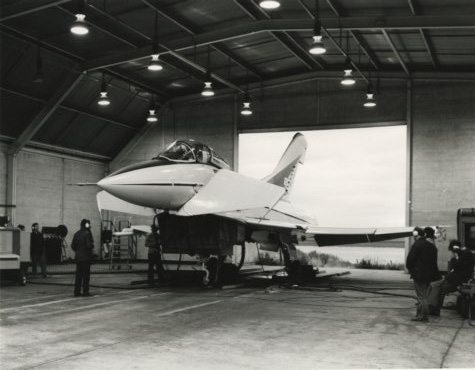
The EAP first flew on 8th August 1986. The aircraft was built as a technology demonstrator for what would become the Eurofighter Typhoon. Though there was a small element of international collaboration in the EAP, it was essentially British, and as such was the last ever supersonic British aircraft. Its performance was very impressive, as one test pilot noted, “It goes like a ferret with a firework up its bum!”.
Hush-Kit interviewed EAP test pilot Dave Eagles to get the inside story.
What were you first impressions of flying EAP?
“First, delight at finally getting the aircraft into the air. We had had 3 days or so of delay due to gloomy weather. But then happiness with the control feel, — the response and harmonisation and the marked attitude stability — and the cockpit view.”
What was the best thing about flying EAP?
“The best thing was the realisation that, in spite of all the political odds, we had succeeded in producing this state of the art aircraft, in very short time from eventual order, and that it obviously had the makings of a superb fighter. See above on response and attitude stability.”
What was the worst thing about flying EAP?
“There was nothing about the aircraft that was disappointing. There were a couple of minor gripes involving nuisance warnings. When looking at individual engine handling – to confirm that there was no interference between engines due to that initially common intake – the system produced gear box drive warnings as one or other of the engines dropped away from driving the gear box. But this was explainable. Another nuisance warning was a fuel pump warning that came on as attitude was increased during a slow down; and throttle friction was found to be too low. All of these minor points were quickly fixed.”
Typhoon has enjoyed an unprecedented safety record for a fighter, why do you think this is?
“I am not privy to current RAF ops, but I would add that reliability levels of components and systems on Typhoon was for the first time, part of the specification (this was also partly the case on Tornado ). As well, Typhoon design was subjected to much higher levels of system safety scrutiny than previous programmes.”
Do you have a favourite aircraft and if so, why?
“It would have to be Tornado, because I spent so much of my career being deeply involved with it. But for sheer joy I must say that flying the Sea Fury with the Royal Australian Navy comes close.”Do you have a least favourite aircraft and if so, why?
“No. All pilots are in love with the aircraft they are currently flying. Even the Buccaneer Mk.1, which relied on the curvature of the earth to get airborne, was, at the time I flew it, delightful.”
The most repeated quote about EAP is that ‘it went like a ferret with a firework up its bum’, which is attributed to an ‘EAP test pilot’. Do you know the origin of this quote and would you agree with it?
“I don’t know where the ferret quote came from; I hadn’t heard it before. But I certainly agree with it! The EAP of course was quite light (17,000kg), and 2 x Mk 104 RB 199s gave it an impressive push. I see that in my report of the first take-off I described the acceleration as “brisk”! The Typhoon of course has the more powerful EJ200 and basically isn’t that much heavier. So I guess that is ‘very brisk’ ”
Which modern aircraft would you most like to fly and why?
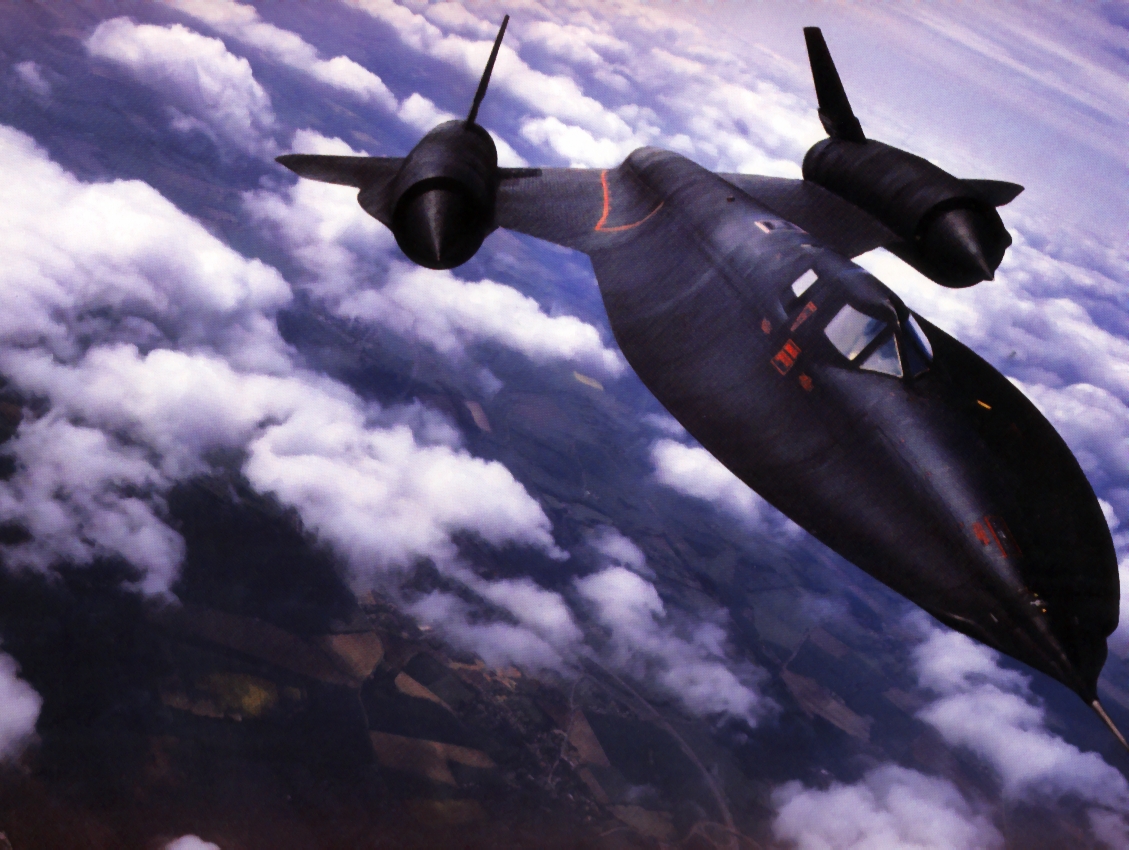
“I would very much like to fly the Typhoon, to see how it eventually turned out. I would love to fly a Tornado again, purely to feed nostalgia and one aircraft I have always longed to fly is the SR-71. An American friend of mine who flew them with NASA said, “You ain’t never been lost ’til you’ve been lost at Mach 3!”
How important was EAP for the development of EFA/Typhoon?
“The research work done on EAP was enormously important to Eurofighter in developing Typhoon, in spite of the change in wing planform, which I believe was made in the interests of productionising.”
Did the actual EAP aircraft have a nickname, what did people on the project refer to it as?
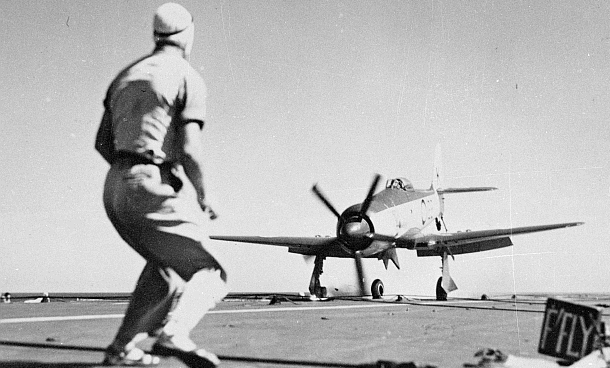
“Not that I’m aware of. But I was pleased that it’s first few flights were made with ‘FLY NAVY’ stickers just behind the cockpit!”
Typhoon’s handling characteristics and cockpit receive a lot of praise, do you feel a sense of pride knowing that you directly contributed to this?
“Yes- I feel a great sense of pride in knowing I was involved in the build up to Typhoon, but I have to say that a very great deal of the handling characteristic tuning was done by test pilots like Pete Orme and Chris Yeo after I left Warton. The cockpit, too, was of course much changed in layout as Typhoon’s complicated weapon system was added, but I will claim some involvement. I make a much stronger claim to the Tornado cockpit design “.
Hush-Kit would like to express its thanks to Dave Eagles.
EAP: A photo-journal
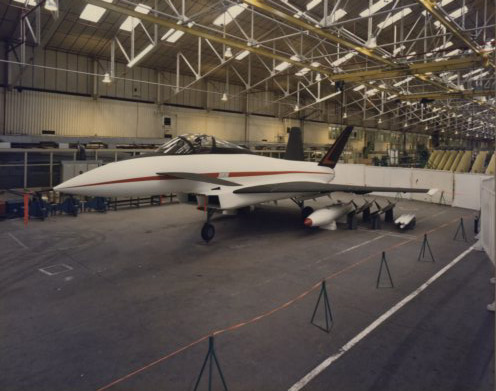
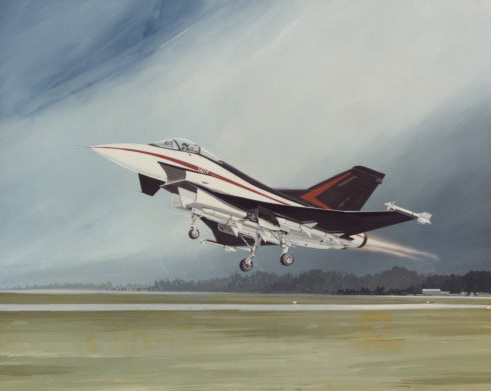
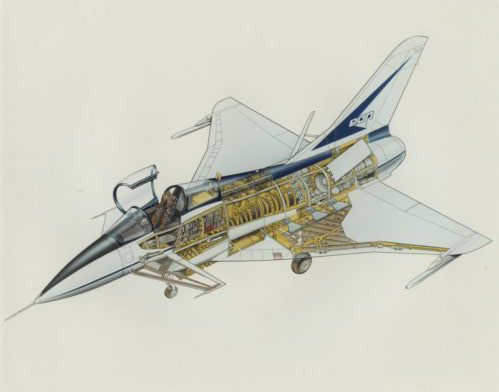
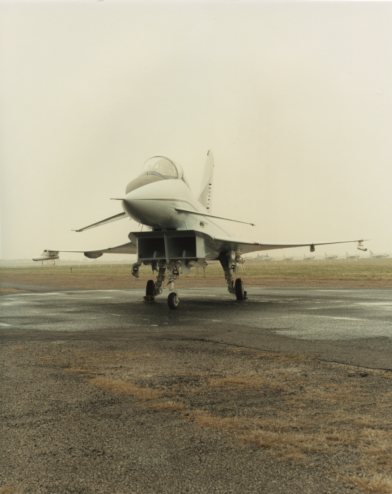
The Agile Combat Aircraft (ACA) was a fighter concept from MBB, BAe and Aeritalia, displayed as mock-up in 1982-1983. It featured canted twin-tails and cranked delta. It is likely that the tail configuration would have offered a lower frontal radar cross section than the single fin adopted by Typhoon. It would, however, have been heavier.Clear in this artist’s impression of EAP is the differences it has from today’s Typhoon. The intake, missile carriage arrangement and tail would all change. Neither EAP or Typhoon actually had tip-mounted Sidewinders.
Want to see more stories like this:Â Follow my vapour trail on Twitter:Â @Hush_kit
Thank you for reading Hush-Kit. Our site is absolutely free and we have no advertisements. If you’ve enjoyed an article you can donate here. At the moment our contributors do not receive any payment but we’re hoping to reward them for their fascinating stories in the future.
The new European aircraft would choose the best features of the US teen fighters, improve them and add the canard delta arrangement. Both the ACA and the French ACX were originally schemed with compound-sweep wings. The advantages of a compound sweep were described by Ray Whitford:
“The high degree of inboard sweep promotes strong vortex formation at high AOA, and low wave drag at supersonic speed. The lower sweep of the outboard panels maximise manoeuvrability by lowering the span loading to reduce the induced drag which has been the drawback of simple deltas. Both projects (ACA and ACX) were designed with automatic leading-edge slats, those on the outboard panels being particularly powerful as a result of the lower sweep.”
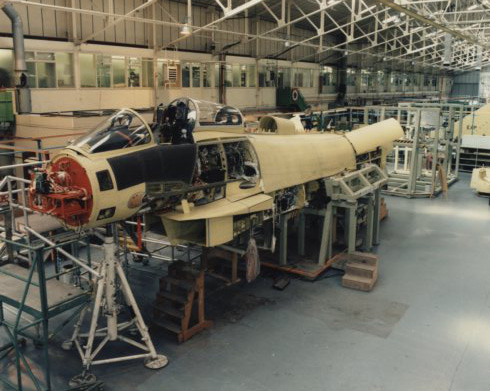
EAP was built using carbon fibre composites and aluminium lithium alloy. The advanced construction techniques and materials kept the aircraft light and strong. The canopy is noticeably heavier in its use of framing, compared to the F-16 and F/A-18.
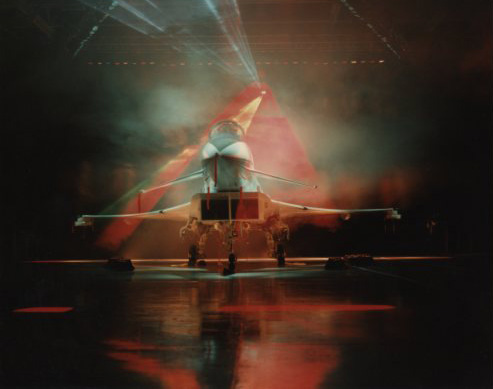
EAP enjoyed a shabazz public roll-out. BAe was keen to see show the aircraft off, partly as the rival Rafale-A was not only revealed earlier, but appeared to be closer to a production aircraft than the EAP.
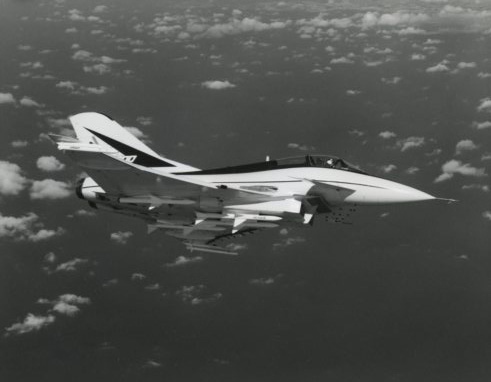
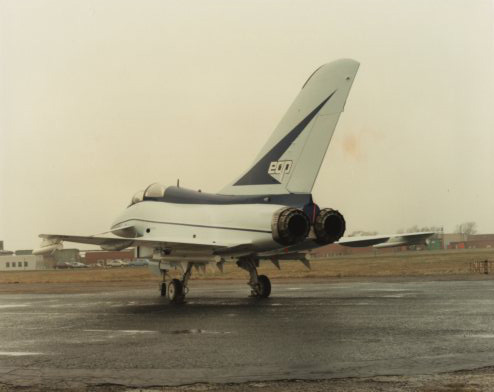
EAP blasts off under the power of two Turbo-Union RB199 Mk 104D. As anyone who has ever flown a Tornado ADV above 30,000 ft will testify, the ‘199, with its high bypass ratio, is far from being a decent fighter engine.
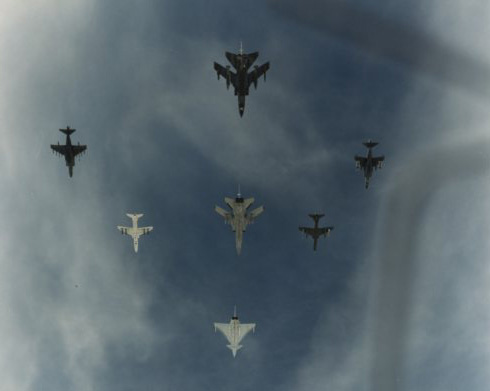
EAP leads a formation of BAe’s 1980s aircraft. Behind it can be seen a Tornado ADV, then a Tornado GR.1, flanking it are the Hawk 100 and 200, and riding outboard are the Harrier GR.5 and Sea Harrier. Today only one of these types is in RAF service (the Tornado GR), though all of the others (barring EAP and the Tornado ADV) remain in service with other air forces (albeit in modified forms).
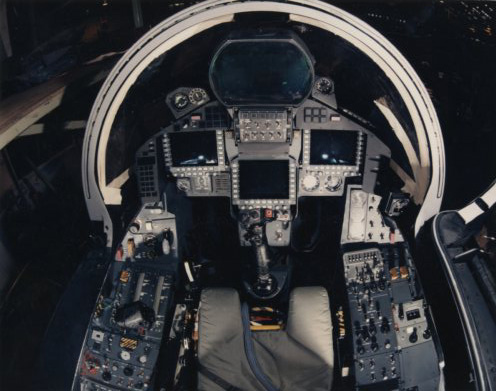
One of the technologies Europe the EAP inherited from the late teen fighters was the glass MFD (multi-functional displays) cockpit. The cockpit was clearly heavily influenced by the F/A-18 Hornet, which had entered service in 1983. Europe’s first ‘modern’ fighter cockpit came when the Rafale entered service in 2000. Prior to this both the British Sea Harrier FA.2 and French Mirage 2000-5 had received MFDs. The wide angle HUD had first been seen on the F-16, which entered service in 1978. One genuine innovation was voice control, known as DVI (Direct Voice Input) which came with the Eurofighter Typhoon, and was first used operationally in 2005. Though a similar system was tested on the US F-16AFTI, the F-35 will be the first US fighter with DVI to enter service. The Hands On Throttle-And-Stick (HOTAS) configuration was seen in proto form on the English Electric Lightning, but was first seen in its modern form on the F-16. Unlike the F-16 the stick was centre-mounted on EAP, the relative merits of side- versus central-stick remain a matter of opinion.
The EAP was fitted with a modified Tornado fin, for the sake of cost and risk reduction. The gun muzzle position is different to Typhoon’s, which is in the wing-root.
EAP was designed without considerations of RCS-reduction. In 1986, stealth was still a highly classified area. Germany had built a stealth demonstrator, the MBB Lampyridae in 1980, but this was quickly hushed up and canned, when the US, world leaders in stealth got wind of it.
Though advanced in aerodynamics and materials, EAP was clearly behind the technology curve of the Advanced Tactical Fighter concepts being explored by US fighter companies of the time. EAP emphasised agility at high speeds, good man-machine interface and high combat persistence to excel in beyond-visual range and close-in combat. It was intended to outfight the emerging threat of ‘Flanker’s and ‘Fulcrum’s. Despite Eurofighter’s claims that it was designed from the outset as a multi-role fighter, ground attack was very much a secondary consideration. Some early artworks of EFA showed it armed with BL775 cluster bombs, a weapon that was banned before Typhoon entered service. The Typhoon was first used in anger in the air-to-ground role, in Libya in 2011.
There is surprisingly little footage of EAP online, but some scouting around revealed this:
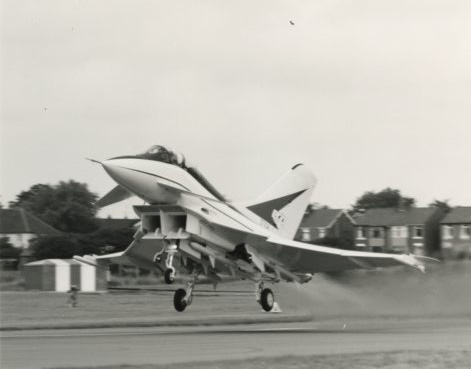
The boxy intake of EAP gave way to the ‘smiling’ curved intake of Typhoon. Dummy ASRAAMS are carried.
Thanks to Nick Stroud from The Aviation Historian.
Now’s your chance to help this blog… donate here. You can make a big difference!Â
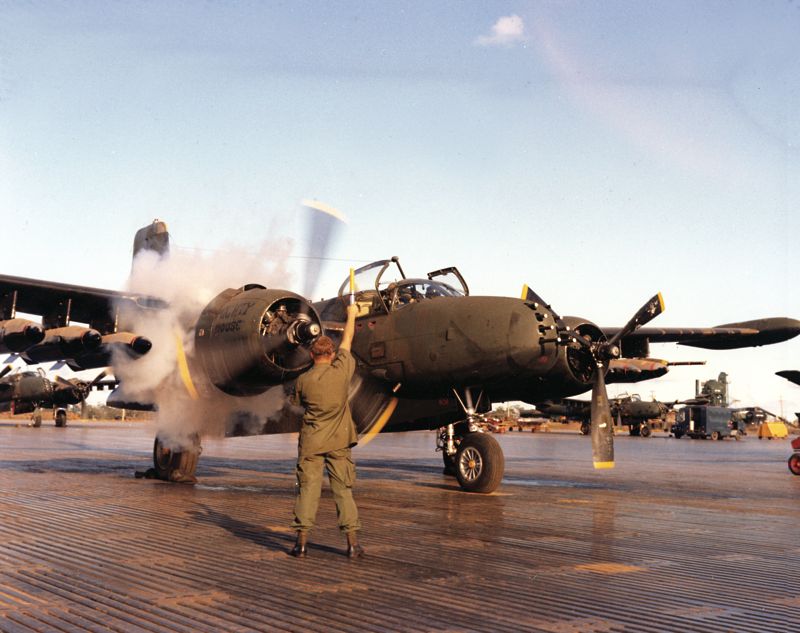
“The Vietnam War; perhaps summed up most commonly by exciting new aircraft like Phantoms, Skyhawks, Super Sabres, or the terrifying giant B-52, was also the last outing for a slew of World War II-era designs that suddenly found themselves thrown back into the rainy, humid, mud-spattered fray. Models like the A-1 Skyraider, a late war design intended to be both a dive-bomber and strike aircraft was a perfect fit for the ‘Sandy’ (SAR) missions, that became a harrowing and regular part of the Vietnam air war. But the best example of this however, was the re-duxing of the A-26 (which some call a B-26 due to utterly confusing US Military penickityness). A late World War II light-bomber, the A/B-26 was initially stripped of its gun turrets and pressed into attack roles in the murky early 60s era of ‘not quite admitting we are fighting in Vietnam’, having already flown in Korea. In time the chunky, but somehow rather graceful, machine was upgraded to specialise in attacking the Ho Chi Minh trail. Wing tip tanks upped loiter time, eight 50.cal guns clustered in the nose, and the ability to carry large amounts of external arms ranging from napalm, to rockets, to conventional and cluster bombs, made the Invader to top scoring traffic destroyer in Vietnam. Sometimes it’s good to be slow and old.”
Writing fiction about aircraft, and more specifically the experience of flying involves overcoming intrinsic challenges. A fundamental one is that the technical aspects of describing machinery and the use of technical terms risks alienating any reader who is not an aviation enthusiast. Another is the difficulty in expressing the emotional response of the aviator to the experience of flight.Â
Creative writing about flying tends to work best in the context of semi-autobiographical texts such as Antoine de St Exupery’s 1931 novel ‘Night Flight’ which reflected the author’s own experiences as a mail pilot. Long flights carried out for the company he was a director of, the ‘Aeroposta Argentine’ provided him with the inspiration to philosophise on the individual experience of the aviator, in Nightflight for example he expresses the lone pilot’s isolation:
“A single radio post still heard him. The only link between him and the world was a wave of music, a minor modulation. Not a lament, no cry, yet purest of sounds that ever spoke despair.â€
Few write as well as St Exupery and the difficulties of writing about flight arguably explain a comparative lack of great ‘flying’ novels. A good novel about flying requires enough technical detail to make it convincing but needs to be able to describe the nature of the sky and of an experience few readers will experience. This is compounded when the flight described is that of a fighter pilot and the exhilaration of flight is heightened by the adrenaline of battle.
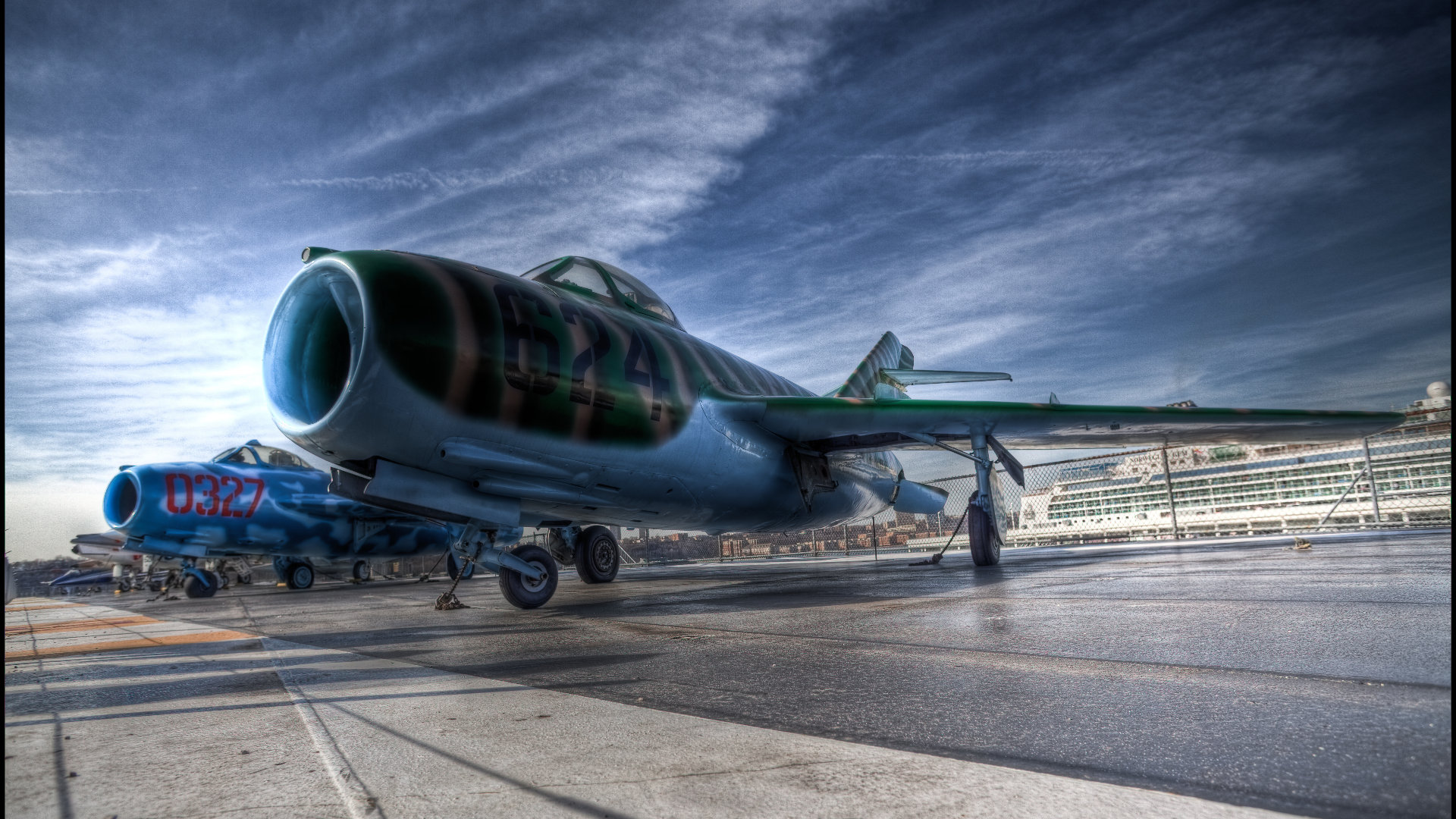
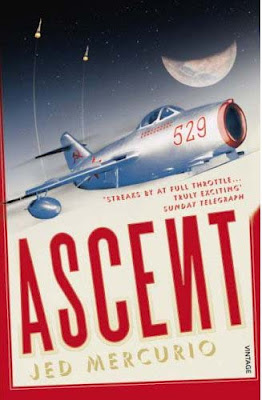
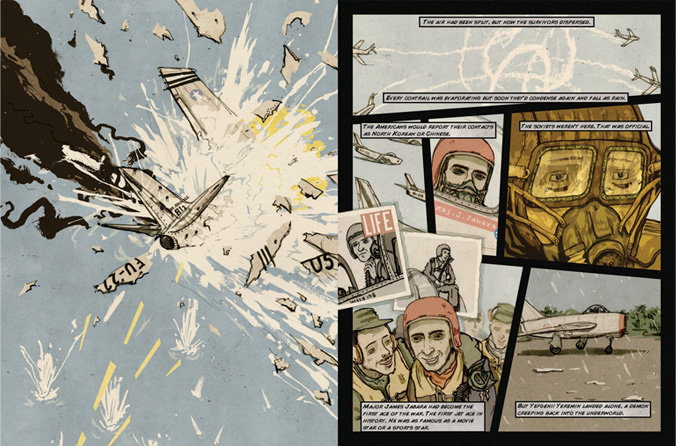
Jed Mercurio’s novel ‘Ascent’ is ostensibly the fictional tale of Russian fighter ace Yefgenii Yeremin who during the Korean war becomes the feared ‘Ivan the Terrible’. Yeremin is a fighter pilot of the Cold War. He flies MiG-15’s covertly for the VVS. The pilots are not supposed to be there, they are given Korean phrase books to memorise so that their enemies remain unaware of their nationality and they are expected to fall on their swords if they suffer damage. In effect they are phantoms. The psychological and social effect of this situation on the Russian crew and their operations is one of the interesting aspects of the novel. They cannot become heroes or die heroes in the tradition of their Second World War predecessors and this leads to questions of motivation; Glory, duty, excitement or simply a love of flying?
The depictions of engagement with the enemy are fast and thrilling but more complex than a simple fight as in-fighting between Russian pilots, questions about why they are there and of loyalty and betrayal arise. Yeremin’s ascent to superstar flying ace is accompanied by arrogance but he does not suffer an Icarus like fall from grace, but a quiet, political eradication. The differences between the cold war and that of the previous ‘heroic’ war are underlined.
When the book was published in 2007 some reviewers felt alienated by the cold distant nature of the protagonist. This misses the point, for Yeremin passion and life exist in the skies and in his jetfighter.  There he is a ruthless predator in possession of his own destiny and in the sky is able to overcome the politics, betrayal and petty jealousy that he is unable to combat on the ground. When unable to fly, grounded by rain or political exile his hours are characterised by ennui and depression.
This emotional response to the act of flying is countered by Mercurio’s emphasis on the physicality of controlling a fighter jet, the author is both a Doctor and a pilot and repeatedly describes the protagonist being thrown about in his plane and suffering:
‘His shoulders stung. The harness straps had lifted the scabs on his shoulders. He felt blood leaking from his wounds.’
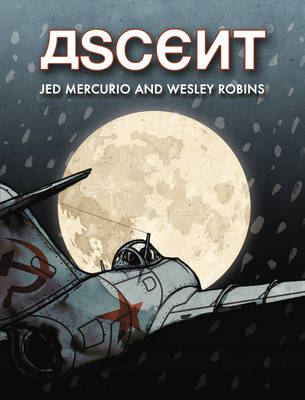
For pilots in the jet age flying is not only the act of mastering a machine and the elements but also of mastering themselves, handling g force, broken blood vessel and nausea. It was the physical mastery of suffering that took the USSR and US fighter pilots into space exploration and Mercurio’s Russian’s ability to absorb suffering is as much a factor as his good eyesight in propelling him, in the final stages of the book into the cold war space race. The book is also visually expressive, Yeremin flies through a sky of vapour streams and light and the depictions of dog fights are thrilling. The air shimmers. The pictoral element of his writing is further explored in the 2011 graphic novel version of the book illustrated by Wesley Robins.
I started this review by referring to St Exupery. ‘Ascent’ is a different kind of book but it shares, behind the descriptions of dogfights, soviet duplicity and personal ambition some of the same philosophical elements. What drives Yeremin is a hopeless kind of romanticism. His need to strive, his obsession with pushing himself higher into the canopy and beyond into space is ultimately, like most such endeavours; doomed. This is condensed in an elegiac and almost zen like ending which leaves you realising you have read something more than a thrilling adventure story.
‘Ascent’ Jed Mercurio published in paperback 2008 by Vintage.
‘Ascent’ (Graphic Novel) Jed Mercurio and Wesley Robins published in 2011 by Jonathan Cape
Review by Minerva Miller, M.A.hons (Cantab)Â Msc (City)- University Librarian at the University of London
Hush-Kit is reminding the world of the beauty of flight.


 American columnist Marilyn vos Savant has an IQ of 190. She is directly related to someone whose name has became an everyday word in aviation- who?