The top ten dog-fighters of 2015 (WVR fighter assessment) UPDATED

F-18_HUD_gun_symbology Tactics, training and luck are the determining factors in who survives within visual range aerial combat. Despite the modern emphasis on beyond-visual-range combat, the vast majority of fighter versus fighter engagements have taken place at close ranges. The following ten are the best fighters for this mission. The order is more or less arbitrary, with different aircraft having the advantage at different altitudes and air speeds. By its nature, any top ten is simplistic and should serve as the basis for discussion rather than as a conclusion.

To keep this blog going- allowing us to create new articles- we need donations. We’re trying to do something different with Hush-Kit: give aviation fans something that is both entertaining, surprising and well-informed. Please do help us and click on the donate button above – you can really make a difference (suggested donation £10). You will keep us impartial and without advertisers – and allow us to carry on being naughty. A big thank you to all of our readers. 

10. McDonnell Douglas/Boeing F-15 Eagle

Aggressor at Red Flag Alaska

Once considered top dog, the F-15 is now making room for younger aircraft. In exercises, the type still does well, but this says more about the pilot quality than any inherent advantage of this platform in the WVR arena.  Well-armed, well-equipped and powerful, it is still an aircraft to be respected. In later exercises against India, it is reported to have been able to use superior tactics to defeat Su-30s, despite the Russian aircraft enjoying greater manoeuvrability at low speeds. Powerful and reliable, and flown by some of the best fighter pilots in the world (in USAF service), it remains an adversary worthy of great respect, especially at medium altitudes.

HMD/S: Yes

Advanced SRAAMs: Yes, AIM-9X, Python 4/5

Visual stealth: Poor

Thrust-to-weight ratio: Very good

High alpha performance: Poor

Sustained turn rates: Good (16 degree/sec)

Instantaneous turn rates: Good (21 deg/sec)

9. Chengdu J-10

5075650551sep27

Rumours from China describe the J-10 performing well in DACT exercises against the far bigger Su-27/J-11. With a maximum G-rating of +9 / -3 and a maximum sustained turn load of 8.9g, the type has demonstrated impressive performance at several public airshows. It scores highly on turn radius, low visual signature, low-speed capabilities and also has excellent pilot vision.
HMD/S: Yes

Advanced SRAAMs: No, at present only PL-8

Visual stealth: Excellent

Thrust-to-weight ratio: Good

High alpha performance: Good

Sustained turn rates: Good

Instantaneous turn rates: Good

8. General Dynamics/Lockheed Martin F-16

IDF Israeli Air Force American F-16

The Viper remains potent at the mission it was designed for: the close-in dogfight. The Viper has grown fatter with age, so the early Block aircraft are the most spritely, this combined with JHMCS and modern missiles, like the AIM-9X, Python 5 and  IRIS-T keep it a foe to respect. It is small and hard for its opponents to keep visual tabs on, it has an impressive turn rate and has better retention of energy than larger-winged peers like the Mirage 2000. Below 10K feet the F-16 is similar in performance to the Typhoon. Most F-16 models have a better thrust to weight ratio than the Super Hornet (when similarly equipped). The Python 5 is regarded as one of the best air-to-air missiles, it has a very large weapon engagement zone (WEZ) and a high resistance to countermeasures. According to one defence writer close to the UK Typhoon force, RAF pilots had greater respect for the F-16s than the Gripens that they have encountered in wargames.

HMD/S: Yes, JHMCS

Advanced SRAAMs: AIM-9X, Python 4/5 and IRIS-T

Visual stealth: Excellent.

Thrust-to-weight ratio: Good

High alpha performance: Good

Sustained turn rates: Good

Instantaneous turn rates: Very good (26deg/sec)

(If all this is too modern for you, have a look at the Top Ten World II fighters)

Was the Spitfire overrated? Full story here. A Lightning pilot’s guide to flying and fighting here. Find out the most effective modern fighter aircraft in beyond-visual range combat. The greatest fictional aircraft here. An interview with stealth guru Bill Sweetman here. The fashion of aircraft camo here. Interview with a Super Hornet pilot here. Most importantly, a pacifist’s guide to warplanes here. F-35 expose here. 


7. RAC MiG MiG-29

Image

Despite its age the MiG-29 remains a fiercely capable dogfighter, sharing many of the weapon systems of the ‘Flanker’.  The Indian MiG-29K/KUB with the TopOwl helmet-mounted and R-73E is the best-equipped variant in the WVR scenario, but is normally limited to 7G, whereas land-based ’29s are 9G capable. When the MiG-35 enters service it will be the most agile fighter in the world in the low-speed regime, as anyone who has witnessed the physics defying antics of the MiG-29OVT will testify. Though thrust-vectoring, post-stall manoeuvring must be used very carefully to be effective, the MiG-35’s unsurpassed power -to-weight ratio should ensure it recovers lost energy states quickly. The tough structure offers a degree of battlefield protection according to MiG who have assessed the type’s performance in actual wars. According to at least one MiG-29 pilot, the type enjoys a small, but significant advantage over the F-16 in the merge. One USAF F-16C pilot (Mike McCoy of the 510th) who flew BFM against MiG-29s noted, “In a low-speed fight, fighting the ‘Fulcrum’ is similar to fighting an F-18 Hornet…But the ‘Fulcrum’ has a thrust advantage over the Hornet. An F-18 can really crank its nose around if you get into a slow-speed fight, but it has to lose altitude to regain the energy, which allows us to get on top of them. The MiG has about the same nose authority at slow speeds, but it can regain energy much faster. Plus the MiG pilots have that forty-five-degree cone in front of them into which they can fire an Archer and eat you up.” Luftwaffe MiG-29 Oberstleutenant Johann Koeck who flew against F-15s, F/A-18s and F-16s in extensive training exercises noted,” Inside ten nautical miles I’m hard to defeat, and with the IRST, helmet sight and ‘Archer’ I can’t be beaten. Period.”

Follow my vapour trail on Twitter: @Hush_kit

HMD/S: Yes

Advanced SRAAMs: No, but R-73 is still highly regarded. R-74 in the pipeline.

Visual stealth: Medium (poor in early versions due to smoky engines)

Thrust-to-weight ratio: Excellent

High alpha performance: Excellent

Sustained turn rates: Good

Instantaneous turn rates: Excellent (28deg/sec)

6. Saab Gripen

????????????

Lose sight, lose the fight‘ is an old dogfighting adage and it is very easy to lose sight of the tiny Gripen. Though not the most powerful fighter, it is agile, well-armed and gives its pilot good situational awareness. Some Gripen operators employ an advanced helmet-mounted sight in conjunction with IRIS-T missiles, a sobering prospect for potential adversaries. The IRIS-T is a highly regarded weapon, with excellent agility and target discrimination. The helmet-sight is an adaptation of the Typhoon helmet, the most advanced helmet in operational service. The Gripen preserves energy very well, is hard to spot and has the smallest IR signature of the fighters on this list.

Thank you for reading Hush-Kit. Our site is absolutely free and we have no advertisements. If you’ve enjoyed an article you can donate here– it doesn’t have to be a large amount, every pound is gratefully received. If you can’t afford to donate anything then don’t worry.

At the moment our contributors do not receive any payment but we’re hoping to reward them for their fascinating stories in the future.

(Top Ten Swedish aeroplanes here)

Helmet Mounted Display/Sight: Yes: Cobra

Advanced SRAAMs: IRIS-T

Visual stealth: Excellent

Thrust-to-weight ratio: Good

High Alpha performance: Good

Sustained turn rates: Excellent

Instantaneous turn rates: Very good

5. Dassault Rafale

Image

The Rafale can maintain higher Alpha manoeuvres than the Typhoon.  It is very agile, with an excellent man machine interface and the most advanced aircraft cannon. Like most carrier fighters it is docile in the low speed ranges that most within-visual-range fights take place at. Whereas The Typhoon excels at high speed high-altitude maneuverability, the Rafale excels at low speed and low altitude, though its high altitude performance has also impressed French pilots. At sea level, the Rafale is reported to have a superior instantaneous turn rate to Typhoon. One pilot who has flown Rafale, and is knowledgeable of the Typhoon’s performance, claims that below 10,000 ft it would ‘eat Typhoon’. The Rafale lacks a helmet-mounted sight and its high alpha performance is inferior to that of the Hornet family. The Rafale has reportedly done well in DACT exercises against the F-22. The Rafale is an extremely tough opponent in the WVR regime. MICA has an LOAL capability allowing targets in the ‘six o’clock’ to be engaged.

HMD/S: No

Advanced SRAAMs: Yes, MICA

Visual stealth: Medium

Thrust-to-weight ratio: Very good

High alpha performance: Very good

Sustained turn rates: Very good

Instantaneous turn rates: Excellent (especially at low level)

Help us give you more by donating to Hush-Kit here – even £1 is appreciated and it takes 10 seconds 

4. McDonnell Douglas/Boeing F/A-18 Hornet/Super Hornet

aircraft-planes_hdwallpaper_f-18-hornet_83825

The Bug family have excellent nose authority, JHMCS  and good missiles in the form of AIM-9X (or ASRAAM for RAAF legacy birds).  At low level they are the equal of any operational fighter, but at higher altitudes (and higher speeds) they are at a disadvantage against more modern aircraft like the Typhoon, Rafale and F-22. The legacy Hornet is 9G rated as opposed to the larger Super Hornet which is stressed up to 7G for normal operations (it is really the legacy F/A-18 that deserves this high ranking but the Super Hornet is also highly regarded in the ‘merge’).  It has been noted by F-16 pilots that Super Hornets lose energy quicker than Vipers at higher altitudes. In a slow fight, no Western fighters can match either the Bug or the Rhino. One pilot who has flown the Super Hornet recommended that I mention the ‘Turbo Nose down’, a manoeuvre which utilises the aircraft’s excess power to rapidly push the aircraft out of high alpha flight. Australian Hornets have demonstrated an 180° missile shot with the AIM-132, firing the missile at a target in the firing aircraft’s 6’o’ clock in the lock-on after launch mode. The so-called ‘Parthian Shot‘ is a defensive boon, but demands a wingman with nerves of steel and faith in the technology!

Read more about flying the Super Hornet here and here.

(For the sake of brevity the two F/A-18 family members share one entry.)

HMD/S: Yes

Advanced SRAAMs: ASRAAM, AIM-9X

Visual stealth: Medium

Thrust-to-weight ratio: Good

High alpha performance: Excellent

Sustained turn rates: Good

Instantaneous turn rates: Excellent

3. Eurofighter Typhoon

Eurofighter Typhoon performing during the Airpower in Zeltweg, Austria

Wild turn rates, a true 9G performance and enormous excess power make the Typhoon a hell of a dogfighter; the highly regarded G-suits worn by Typhoon pilots increase tolerance to the high forces generated by the energetic Typhoon. It also features the most advanced helmet mounted sight in service (and the newer Striker 2 is, according to one independent tester, ‘superb’), a powerful cannon and the excellent IRIS-T and ASRAAM missiles. The combination of advanced missile and helmet imbue the Typhoon with a terrifying off-boresight missile shot capability. Testing of the Aerodynamic Modification Kit, which includes modified strakes, extended flaperons and mini-leading edge root extensions may go some way to rectifying Typhoon’s main limitation – a pedestrian high alpha performance. But the Typhoon is not an ‘angles fighter’ like the F/A-18 which relies on risky (as they drain energy quickly) but startling attacks in the merge; the Typhoon is an ‘energy fighter’ using its phenomenal ability to preserve energy in a dogfight to wear its opponents out. In short, if an opponent doesn’t get a Typhoon on his first attack he is in a very dangerous position as a large amount of excess thrust makes the aircraft a very energetic adversary.

In exercises against Indian Air Force, RAF Typhoons used their superior energy and acceleration to ‘reliably’ trounce Su-30MKIs.

F-22 pilots who ‘fought’ the Typhoon in DACT were impressed by its energy levels (especially in the first turn) and several Luftwaffe aircraft proudly displayed Raptor ‘kill’ silhouettes beneath their cockpits.  Like the Raptor, the Typhoon has such a formidable reputation that any ‘victories’ against it in training exercises make excellent boasts. At medium to high altitudes, the type is generally superior to the teen fighters in the WVR regime. According to one Typhoon pilot, its dog-fighting abilities are a close match to the Raptor’s, but Typhoon benefits from being smaller and better armed.

HMD/S: Yes

Advanced SRAAMs: ASRAAM, IRIS-T

Visual stealth: Medium

Thrust-to-weight ratio: Excellent

High alpha performance: Poor

Sustained turn rates: Excellent

Instantaneous turn rates: Excellent

2. Lockheed Martin F-22A Raptor

Image

The Raptor’s excellent power-to-weight ratio, low wing-loading and 2D thrust-vectoring make it a fierce opponent in the visual range dogfight. It is let down by its lack of helmet-mounted sight and its large size. Until 2016 it was armed with the geriatric AIM-9M, but it now carries the AIM-9X. The internal carriage of its AIM-9X limits the way they can be used, and it only carries two. According to Typhoon pilots who ‘fought’ against it, the Raptor loses energy very quickly when employing thrust vectoring. The Raptor pilot likes to keep the fight high and fast. The F-22 has never been seriously challenged in wargames or DACT exercises- though the WVR regime is not its strongest card it is still extremely hard to beat, to the point that any ‘kills’ scored by pilots against the Raptor become newsworthy. Its pilots are, outside of adversary units, probably the best in the world.

HMD/S: No

Advanced SRAAMs: Yes, AIM-9X

Visual stealth: Poor

Thrust-to-weight ratio: Excellent

High Alpha performance: Excellent

Sustained turn rates: Excellent  (28 deg/sec at 20K ft)

Instantaneous turn rates: Excellent

1. Sukhoi Su-35 

13_11_08_27_sm

The Sukhoi Su-27 is no slouch in the dogfight, and this advanced derivative is even more potent; the fighter, which is now in service with the Russian air force in small numbers, benefits from an additional 7,000Ibs of thrust combined with a variety of refinements. The Su-35’s engines, at maximum reheat, generate a staggering 62,000Ibs of thrust, which when combined with the ‘Flanker’ series superb aerodynamic configuration and vectored thrust nozzles, create an aircraft unparalleled in low-speed manoeuvrability. Whereas the F-22 relies on two-dimensional thrust vectoring, the Su-35 utilises 3D nozzles and a robust flight control system that have been perfected over the last thirty years.  A Su-35 (ably demonstrated by Sergei Bogdan) held the crowds of Paris 2013 spellbound with its demonstration of dramatic post-stall manoeuvring.

The biggest question mark with the Su-35s within-range combat effectiveness is the degree to which the enormous thrust and robust engines aid energy preservation. The Su-35 unique abilities will require unique tactics – if flown by well-trained pilots, the Su-35 will prove a worthy adversary to any in-service fighter in the vicious world of the low-speed furball.

HMD/S: Yes

Advanced SRAAMs: R-73E/M

Visual stealth: Poor

Thrust-to-weight ratio: Excellent

High alpha performance: Excellent

Sustained turn rates: Excellent

Instantaneous turn rates: Excellent

 If you’ve enjoyed this article please do donate- you can help us.

So there we have it, or do we?

I asked a fighter pilot (with experience of flying most of the ‘4.5 generation’ fighter aircraft) his opinion on my top ten selection; he was keen to dismiss such a crude approach:

“It is complicated to discuss this issue in just a few words, but in order to produce a new look analysis on WVR, you should think about gyroscopic vs needle ‘driving styles’ (and the capabilities needed to play this or that, of course). So, you will pass through power-to-weight ratio, rudder surfaces, flying characteristics across different flight levels, etc. Until you get to the crucial area of energy management (that sifts the ace from the targets). It is all a question of control of the part of the egg you want to keep the fight, and well-trained pilots with good tactics will always try to keep the fight in a corner where they have some advantage. We’re not talking about an UFC card! It is team work.

The tactical egg is an imaginary bubble that represents all possible motions of an aircraft in a dogfight, showing the effects of gravity on the aircraft’s manoeuvring. Of course, new weapons (with the ability to lock-on after launch), helmet mounted sight, etc. are making the job much more complex.

Conclusion: This question requests hours of conversation and a dozen beers! ;)”

Thank you for reading Hush-Kit. Our site is absolutely free and we have no advertisements. If you’ve enjoyed an article you can donate here– it doesn’t have to be a large amount, every pound is gratefully received. If you can’t afford to donate anything then don’t worry.

At the moment our contributors do not receive any payment but we’re hoping to reward them for their fascinating stories in the future.

If this article infuriated you, try our top ten BVR fighters here

follow my vapour trail on Twitter: @Hush_kit

(I won’t bore you with the standard disclaimers regarding reading too much into leaked DACT gossip).

safe_image.jpg

“If you have any interest in aviation, you’ll be surprised, entertained and fascinated by Hush-Kit – the world’s best aviation blog”. Rowland White, author of the best-selling ‘Vulcan 607

From the cocaine, blood and flying scarves of World War One dogfighting to the dark arts of modern air combat, here is an enthralling ode to these brutally exciting killing machines.

The Hush-Kit Book of Warplanes is a beautifully designed, highly visual, collection of the best articles from the fascinating world of military aviation –hand-picked from the highly acclaimed Hush-kit online magazine (and mixed with a heavy punch of new exclusive material). It is packed with a feast of material, ranging from interviews with fighter pilots (including the English Electric Lightning, stealthy F-35B and Mach 3 MiG-25 ‘Foxbat’), to wicked satire, expert historical analysis, top 10s and all manner of things aeronautical, from the site described as:

“the thinking-man’s Top Gear… but for planes”.

The solid well-researched information about aeroplanes is brilliantly combined with an irreverent attitude and real insight into the dangerous romantic world of combat aircraft.

NOW AVAILABLE: The Hush-Kit Book of Warplanes, a gorgeous heavily illustrated – and often irreverent- coffee-table book covering the history of aviation 1914 – the present.

13_11_08_27_sm

The death of European fighters?

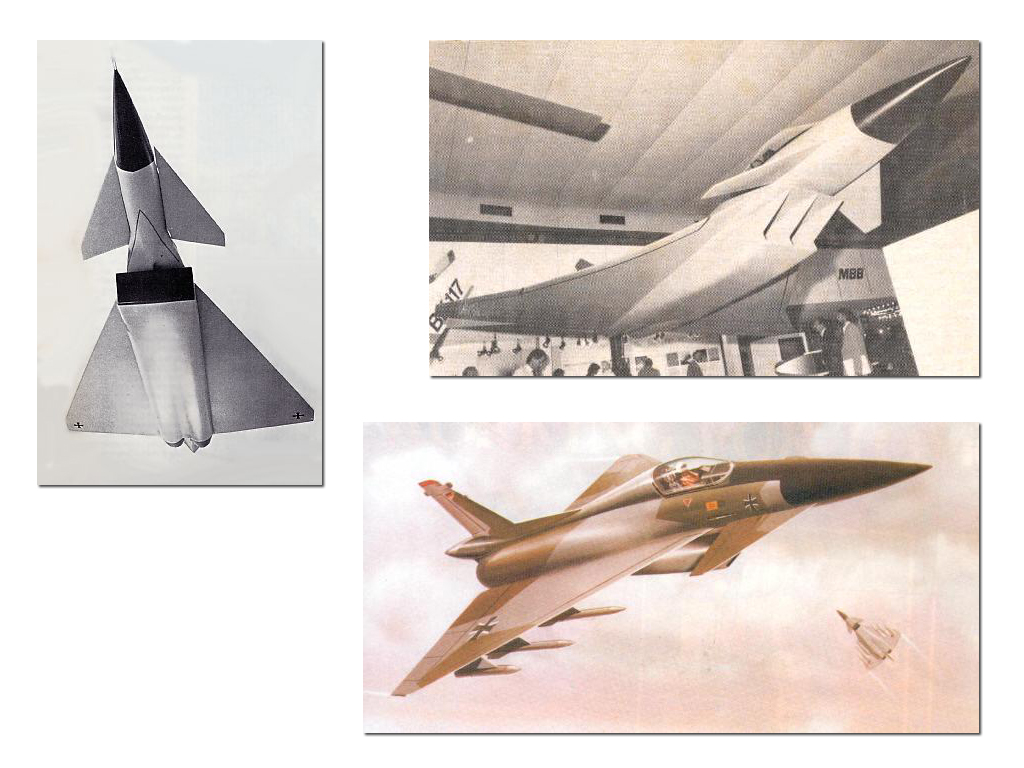
The TKF90 was a German fighter concept that fed informed the design of the Eurofighter Typhoon.
The TKF90 was a German fighter concept that informed the design of the Eurofighter Typhoon.

Following the cancellation of the BAC TSR.2 in 1965, it was suggested that the RAF purchase fifty General Dynamics F-111Ks and one hundred AFVGs. The Anglo-French Variable Geometry aircraft was a proposed multi-role fighter. The troubles this project endured illustrate the three main obstacles still facing European fighter development: aggressive US marketing backed by political might, Britain’s inability to go it alone and France’s insistence on keeping its fighters French.

The F-111 was seen as a lower cost, lower risk alternative to TSR.2, but as early as 1965 the British Government was aware that the US F-111 programme was having serious and expensive development issues. British experts visiting the General Dynamics plant at Fort Worth assessed the aircraft. They noted that the high-lift systems (especially the leading edge slats) were ill-suited to the extreme conditions of low-level flight, this was an alarming problem as this was exactly the type of flying the F-111 was conceived to do. The engine intake design was terrible and the engine was prone to surging. General Dynamics asked for assistance from the British Royal Aircraft Establishment (RAE) to solve the mess of the intake design, and one Dr. Seddon was sent to help.

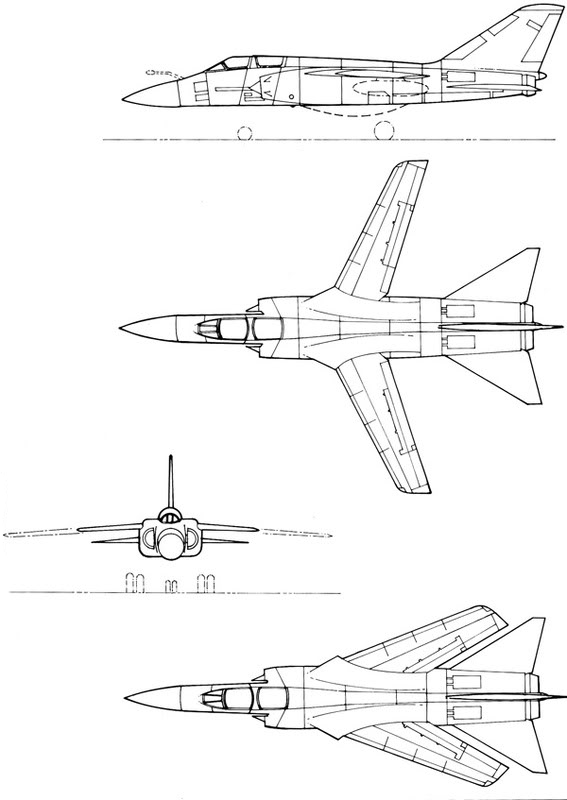
Before the TSR.2 had been scrapped, the British and French were considering collaborating on the development of a swing-wing fighter.

Image

The AFVG was a projected multi-role strike fighter with formidable capabilities. As well as land-based variants for the RAF and Armée de l’Air, it would have been available in carrier compatible variants for both British and French naval use. It was to have a radius of action of 500 nautical miles when configured for the strike or reconnaissance role, a top speed of well over Mach 2 and a ceiling of 60,000 feet. It was to be powered by two SNECMA/Bristol Siddeley M45Gs. This was a new turbofan that was used, in its M45H version, for the VFW-Fokker 614 airliner. At the early stages of the project the French wanted the strike mission to be prioritised , the British on the other hand, wanted it weighted toward the fighter mission. In 1966 this position reversed: Britain had ordered the Phantom to meet its fighter needs, and France having left NATO, felt more vulnerable from attack and wanted a new, more potent air defence fighter.

Image

The design team was composed of members from Dassault and BAC. The skilled, experienced designers were dedicated and worked in a spirit of mutual respect; the same cannot be said of the officials involved in the project.

Friction between Europe’s two biggest aviation nations was common, and the British grew distrustful of French officialdom, believing it favoured indigenous offerings over collaborative efforts. Meanwhile the costs of the AFVG were rising.

The British distrust turned out to be correct when it was found that Dassault was secretly working on its own swing-wing fighter. In fact, a technology demonstrator, the Mirage G8, was being readied to fly. The British were furious at this duplicity. British embassy staff and project officials went to confront Dassault boss Bloch and co-chairman of the Anglo-French committee, Lecamus. The French team denied knowledge of the project, but the British were insistent. Lecamus knew the game was up, and said to Bloch in French ‘It’s no good, they know’. They do not however admit to the existence of the Mirage F1, another threat to the project. Soon after, in June 1967, France pulled out of AFVG citing the rising cost as the primary reason. France pursued its own swing-wing projects for a short time, and then cancelled them. Later, the F-111K was also cancelled.

Image

Meanwhile on the other side of the channel, AFVG became the UKVG, a British project lacking carrier capability. However, the culture had moved away from indigenous aircraft and the UKVG received little funding. Britain sent a delegation to Canada to ask if it could join the huge F-104G replacement discussions featuring Belgium, Canada, the Netherlands, Germany and Italy. These nations were a little miffed by a non-F-104 operator joining these talks, but reluctantly let them in with ‘observer status’. Britain’s real motive may have been to poach supportive nations to co-develop its UKVG, which with international backing became the MRCA (multi-role combat aircraft, not to be confused with the Indian medium fighter contest or the proposed MiG-29 variant). Germany, Italy and the Netherlands joined the project (though the latter soon pulled out). Canada and Belgium were irritated that their attempts to procure a cheap fighter had been hijacked, by the British desire to develop a far more sophisticated and therefore expensive type. MRCA was eventually christened ‘Tornado’ and remains in service today, four decades later. In RAF service the type has performed frontline combat missions for a longer period than any other type, from the daring airfield raids of Desert Storm in 1990, to the controversial attacks in Syria in 2015.

Tornado Versus Typhoon

The Tornado has been so successful, that it has damaged the potential of the follow-on Typhoon project- as Tornado is still a viable ground attack platform – Britain, Germany and Italy have been slow to develop Typhoon’s ground attack potential, something which has affected its export potential. Even today, in 2015, Eurofighter is boasting that Typhoon is currently being integrated with weapons the Tornado has been carrying for a decade. Frontline Typhoons do not yet have Brimstone or Stormshadow, nor a dedicated reconnaissance pod (nor do would they be able to carry the superb RAPTOR). As well as superior equipment, the RAF Tornado force have the most experienced (at fixed-wing close air support) crews in Europe. The Typhoon will have big boots to fill, and with the inevitable wait for the F-35 it may have to do it alone for some time.

Afraid to go it alone

The AFVG story highlights the cultural differences in British and French military aircraft development: Britain industry isn’t allowed to go it alone, and France is scared of its aviation industry falling into international hands.

There are no cost advantages to the collaborative development of an aircraft, despite the many times this has been claimed. The advantage is that once they’re in motion they’re harder to cancel. Generally, they’re also harder to export.

The total cost to the UK taxpayer of the Typhoon, is around the same as the French have paid for Rafale- between 50 and 60 billion Euros.

The British government is happy to pay for two types of national military aircraft development: familiar things (Nimrod, Hawk etc) and unfamiliar things (yep, we’ll pay for UCAVs as we’re not quite sure what they are).

Despite Britain having the necessary technological base to develop its own aircraft alone, it is only allowed to work in an international team. Some might ask whether squandering this ability is a good idea (even China and India struggle to make genuinely indigenous advanced aircraft). But likewise, it could be argued that the notion of nation is at best an irrelevance. Lockheed Martin, whose mastery of technology and PR are second to none, have adopted a strange and powerful approach with the F-35: it is all things to all men- American or collaborative depending on who you ask.

Image

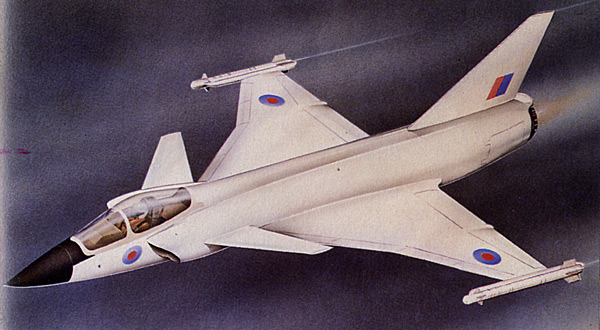
With Gripen’s success in Brazil last week, it is easy to wonder if the BAe P.106 could have been developed into an even more successful aircraft. The BAe P.106 of 1980 was a British study for a type very similar to Gripen. If this could have been developed with the single-mindedness that France demonstrated with Rafale it could have resulted in an aircraft far more exportable than the Typhoon.

Looking at Rafale and Typhoon in flight together, one is struck by the similarities. Following a recent joint exercise a RAF Typhoon pilot was asked the perennial question: which is better Typhoon or Rafale, he replied that they are very similar aircraft. The parallel development of such similar aircraft is enormously wasteful, though what you conclude from this depends on your bias. One French observer noted that if the Eurofighter nations had joined Rafale, split the costs and sent its designers/ factory workers to France, a fortune would have been saved. Though this would have been hard for the non-French nations to swallow.

One of the reasons for Gripen’s success is the modest production facilities it uses. Eurofighter and Dassault have invested in enormously expensive modern facilities to produce their fighters. This level of ambition is expensive, especially in the case of France where the amount of aircraft produced is so low.

Follow our vapour trail on Twitter: @Hush_kit

Western Europe never succeeded in developing a common fighter. This fantasy was crushed by the tension between France and Britain, and the high-pressure sales of lower-cost US types. The F-35, combined with the high cost of the Typhoon and Rafale has killed Europe as a fighter maker in the long-term. A fighter takes 20 years to develop, and with the possible exception of Turkish Aerospace Industries (TAI) TF-X (which may be developed with Swedish help), there are no future clean-sheet European fighters in development.

Was the Spitfire overrated? Full story here. A Lightning pilot’s guide to flying and fighting here. Find out the most effective modern fighter aircraft in within-visual and beyond-visual range combat. The greatest fictional aircraft here. An interview with stealth guru Bill Sweetman here. The fashion of aircraft camo here. Interview with a Super Hornet pilot here. Most importantly, a pacifist’s guide to warplanes here. F-35 expose here. 

Image

Hush-Kit Top Ten: The Ten Best Fighters of World War II

Image

What was the best fighter of World War II? The evolution of fighters in this period was a Darwinian bloodbath that would have had Richard Dawkins slavering with excitement. Whatever we put in this list some numb-nut or another will have different ideas. Here’s our selection, the order they appear is, more or less, totally arbitrary (apart from number 1 which we firmly believe WAS the best fighter of the war). Enjoy!

Keep this blog alive!

To keep this blog going- allowing us to create new articles- we need donations. We’re trying to do something different with Hush-Kit: give aviation fans something that is both entertaining, surprising and well-informed. Please do help us and click on the donate button above – you can really make a difference (suggested donation £10). You will keep us impartial and without advertisers – and allow us to carry on being naughty. Once you’ve done that we hope you enjoy 10 Incredible Soviet fighter Aircraft that never entered service. A big thank you to all of our readers.

10. Steamboat Fattie: Grumman F6F ‘Hellcat’

Image

The Hellcat was ordered as an alternative in the event of any major problems with the F4U Corsair, which was very prudent as the Corsair programme very quickly ran into very major problems indeed, and the sturdy F6F found itself the premier carrier fighter in the World’s mightiest carrier fleet. The Hellcat was big, heavy and extremely powerful, the very antithesis of its major opponent, the A6M Zero.

To fight the Zero, pilots of earlier Allied naval fighters had had to develop inventive tactics to deal with the superior Japanese aircraft. With the coming of the Hellcat, the US Navy had a fighter that was slightly faster, better armed and just manoeuvrable enough to deal with the Japanese fighter. Plus it was extremely strong and easy to fly, factors which saved many a pilot who would have been doomed in any other aircraft. The Japanese advance had been checked by the Wildcat, but it was the chunky Hellcat that allowed the US Navy to win the war in the Pacific before being replaced (in part by its old nemesis the Corsair) right at war’s end. It was exactly the right aircraft at exactly the right time.

9. ‘Dear Little Cobra’ Bell P-39 Airacobra

Image

When the P-39 first flew it had a turbo-supercharger and was a fantastic performer at all altitudes. However the US Army Air Corps decided that no fighter would ever be required to operate at high altitude so they removed the turbo-supercharger and developed the P-39 into a low altitude fighter par excellence. Then, when it was committed to combat the same US Army Air Corps were scathing in their criticism of the P-39’s altitude performance and called it ‘especially disappointing’. A bit rich you might think seeing as they were the ones who had cacked it up in the first place.

Thus the unwanted Airacobra was sent by the thousand to the Soviet Union where it found itself in a battlefield where virtually all combat was at low level and its capabilities could be properly appreciated. It was fast (a P-39 won the first post war American air-race), it handled beautifully, it was tough, its tricycle undercarriage was perfect for rough field operations, and its firepower was nothing short of spectacular. Of the six Soviet pilots to score more than 50 kills, four flew the P-39. Its performance was superior to the German aircraft it faced (and the Soviet aircraft it complemented). The Airacobra gained more air to air kills than any other US built fighter and demonstrated the remarkable strategic wisdom of the Lend-Lease programme. Given that the Eastern Front used up 80% of the German war effort, the Kobrastochka could reasonably be considered the most important American fighter of the war in Europe.

8. Cheap and Deadly: Messerschmitt Bf 109

Image

When studying military aircraft there is one aspect of design receives barely any attention, yet at the time is often the most important of all, namely: cost. The 109 was, arguably, the best fighter in the world from the time of its introduction until 1942(ish) despite being, according to an aircraft restoring engineer friend of mine ‘a pile of shit’ from a construction point of view. However, it was also very cheap and it was this aspect that led to it becoming the most produced fighter ever (or second most produced, depending on your criteria: see below). Even once its developmental zenith was past it represented a potent foe and was never outclassed by its opponents. The 109 scored more air-to-air kills than any other aircraft before or since and probably represents the best value for money of any fighter in history. Try saying that about the F-22.

7. The Triumph of Socialist Labour Yakovlev Yak-1 to 9

Image

When the great Soviet ace Alexander Pokryshkin was being pressured for political reasons to convert his unit to a Soviet built aircraft rather than the Airacobra he was then flying (to great effect), one of the proffered types was the Yak-3. Pokryshkin personally detested Alexander Yakovlev and refused the offer of his latest fighter. This is unfortunate as by doing so Pokryshkin cheated himself out of flying the finest Soviet fighter of the war. The French Normandie-Niemen unit, who fought as part of the Red Army had rather a different opinion. At the end of the war they were (allegedly) offered their choice of any Allied fighter aircraft and they selected the Yak-3. Marcel Albert, their top scorer, maintained that the Yak could outclimb a Spitfire and had a higher cruising speed. The Yak-3 was one of a family of fighters that began with the Yak-1 and diversified into different lines of concurrent development. Despite their different designations there was less difference between the types than between an early and late model Messerschmitt 109 which adds weight to the suggestion that the Yak family as a whole can be considered to be the most manufactured fighter of all time as around 38000 were built in total. The Yak-3 was the lightest and smallest fighter to be used in numbers by any combatant during the war and this led to its remarkable performance on a relatively low-powered engine. Despite its daintiness the Yak-1 was on a par with contemporary Bf 109 and Fw 190 models and by war’s end was comfortably superior to both. Unburdened with the extraneous equipment deemed necessary in the West, the Yak was a very pure sort of fighting machine and probably the most pleasing aircraft from a pilot’s perspective of the war. And what other first-line 1940s fighter has had production restart for the civilian market in the 1990s or been modified into a basic trainer?

6. I could have been a contender! Fiat G.55

Image

Just before everything went completely awry for the Italians they managed to obtain a supply of the latest DB 605 engines from Germany and built three superb fighter types. All three saw service but the best was the Fiat G.55, indeed it was so good that a team of German experts (including Adolf Galland) came to the conclusion that it was the best fighter in the Axis, possibly the world, and should be produced in vast numbers immediately for German use. Kurt Tank, designer of the Fw 190 had nothing but praise for the G.55 either and went to Turin to look at its potential for mass-production. Sadly for the Axis cold hard economic logic came into play and when it was pointed out that the, admittedly outstanding, Fiat took 15000 man hours to build against the 5000 of the still formidable Bf 109, production plans were quietly abandoned. Thus, less than 300 of the Axis’s best fighter were built and saw service only in a backwater of the conflict for a Nazi client state, whereas some 35000 109s swarmed all over Europe. However, in contrast to so many potentially terrific might-have-beens of the war, the Fiat did at least see production and served in combat, and its brilliance was demonstrated rather than merely conjectured.

5. Shatterer of Self-delusion Mitsubishi A6M Reisen ‘Zero’

Image

Quick quiz question: What links the M16 assault rifle and the Mitsubishi Zero? That’s right: 7075 aluminium alloy. It is used for the upper and lower receivers of the M16 and it was used for most of the structure of the Zero. First produced in 1936 by Sumitomo Metals of Japan and excitingly named ‘extra super duralumin’ at the time, 7075 is an alloy of aluminium and zinc and is significantly lighter and stronger than other aluminium alloys produced until this date. That Jiro Horikoshi, designer of the A6M, had to resort to new technology at the metallurgical level demonstrates not only how challenging the Navy’s specification for their new fighter was (Nakajima didn’t even enter a tender, as they deemed it impossible) but also how cutting edge the Zero was – even at the molecular level.

At its debut the A6M was the World’s best carrier fighter. That this fact was totally ignored by the Allies, despite the aircraft being, quite openly used over China in strength, suggests that the West was all to willing to believe its propaganda on Japanese military capabilities. Propaganda that today seems, at best, laughably naive, at worst founded on an illusion fostered by dogged racism. Whatever the truth, the Zero changed all that, and with such total dominance, that it gave rise to a belief in Japanese invincibility in the minds of its opponents that would remain unchecked for the first year or two of the Pacific war. By the time American fighter design had caught up a bit, grubbily specious claims were invented to ‘explain’ the Zero’s remarkable design and performance, for example Howard Hughes claimed post-war that Mitsubishi had copied his H-1 racer, and Eugene Wilson (president of Chance-Vought) claimed they had copied Vought’s own (mediocre) V-143 fighter. It is bizarre that industrialists should resort to lying about an enemy aircraft (‘we designed it really!’) in a war already won but does demonstrate the absolute superiority that the Zero demonstrated and just how infuriating that was to the grandees of the US Military-industrial complex. Praise indeed.

4. Man Machine Interface Focke Wulf Fw 190

Image

Quite apart from being an excellent aircraft with several radical features, the Fw 190 heralded a revolution in what today would be called ‘ergonomics’ but in 1941 was basically an unknown concept. Today the concept of HOTAS (hands on throttle and stick) is well-known and is generally considered to have been pioneered by the F-16. However the 190 sported a system that delivered the HOTAS concept some thirty years earlier. Known as the Kommandogerat, it was a remarkable device that automatically controlled fuel flow, fuel mixture, propellor pitch and ignition timing. It also activated the supercharger at the correct altitude – all the pilot had to do was move the throttle lever. His other hand was on the control column, where all the armament controls were situated, allowing his full awareness to be directed to combat. This situational awareness was further enhanced by the bubble hood (from which the view as described by a contemporary RAF report ‘is the best that has yet been seen’). When one considers that on its debut the Fw 190 was superior in every performance parameter except turn rate to its closest rival, the Spitfire V, yet also gave its pilots a tactical edge due to reduced workload, it is no wonder that its very existence sent British designers into a frenzy of activity to try and regain ascendancy. The Spitfire and other fighters later achieved parity but the Fw 190 remained a dangerous opponent, and like the F-16, saw its main role shift to a greater emphasis on the fighter bomber role. An aircraft that defined the state of the art, the Fw 190 could be the first truly modern fighter.

3. My Little Pony North American P-51 Mustang

Image

Because everyone’s been going on about how incredibly fantastic the Mustang for years and years it tends to distract attention from what a truly remarkable aircraft it was. It is worth remembering that it shouldn’t have existed at all and came about solely because North American didn’t particularly want to build P-40s for the British. Even then, it would have remained a competent but hardly spectacular improvement on the Curtiss fighter had not some bright spark suggested fitting a Merlin engine in it (curiously this step was taken independently and near simultaneously by North American in the US and Rolls-Royce in the UK). Even then, many pilots were initially less than impressed, citing the finer flying characteristics of the Spitfire and the better manufacturing quality of the P-47. But the Mustang was at least as good a fighter as either and could fly to Berlin and back. “When I saw those Mustangs over Berlin, I knew that the war was lost” said Herman Goering and he was right. Whether or not it was the best fighter of the war, the Mustang invariably remains the standard against which other hopefuls are judged.

2. Myth-maker Supermarine Spitfire 

Image

Today if you ask people what a ‘spitfire’ is, virtually everyone (in the UK at least) will say ‘an aeroplane’. It is extremely unlikely that anyone would say ‘a person with a fierce temper’ despite the slightly tedious accuracy they would be demonstrating if they did. This is the enduring legacy of the Spitfire, it has become the definition of the word originally used to name it: its success has changed language. There is only one other aircraft I can think of that has done this and that was Concorde (which is the French spelling of that word anyway). In a similar fashion the Spitfire also changed history, not in the conventional sense that it was important within history (though of course this is also the case), but that the legend of what happened gives it the starring role when reality saw it, (at its finest hour) performing as the supporting player. But who cares? The story is better this way, the dumpy Hurricane relegated to being championed by boring aviation geeks while the eternally handsome Spitfire swans about oozing the sex appeal that any self-respecting fighter aircraft should have. Just look at it. What were they thinking? Legend has it that RJ Mitchell said of the wings “I don’t give a bugger whether it’s elliptical or not, so long as it covers the guns”, but every other fighter covered its guns pretty effectively without cladding them in a difficult-to-manufacture but aesthetically lovely shape so I suspect he was lying. Added to this is the fact that the Spitfire is the only British fighter to be in production for the duration of the war and comfortably remained as one of the top five or so fighters worldwide throughout that time. The Spitfire may also have achieved the highest speed ever attained by a piston driven aircraft, which is pretty exciting. But the Spitfire doesn’t need facts – its claim to being a contender for the best fighter of the war has nothing to do with tawdry reality and everything to do with the myth. The Spitfire has become its own legend (If I hear the word ‘legend’ used in connection with the Spitfire again, I’m docking your pocket money, Ed.)

1. The Harbinger: Messerschmitt Me 262

Image

There was quite a lot wrong with the Me 262 when it was committed to action but most of this was due to the exigencies of the time and had nothing to do with the astounding technological advance it represented when it was unleashed on an unsuspecting world in the spring of 1944. The obvious advantage of its new powerplant was velocity. Once airborne, no other aircraft could catch the speedy Messerschmitt, not even the Allies’ jet, the Meteor, whose performance was decidedly pedestrian by comparison. But it was not solely its jet engines that made the 262 so formidable, its firepower, epitomised for bomber destruction, was particularly heavy consisting of four 30-mm cannon firing explosive rounds at an extremely high rate. The 262 was also in some senses a remarkably practical aircraft for the not-particularly-advantageous situation into which it was introduced. It could be fuelled by a much lesser quality of fuel than its piston-engined brethren so there was more chance of being able to operate it in oil-starved Germany, furthermore a surprisingly large amount of the airframe was made of wood rather than ever more scarce aluminium and steel. Scarcity of steel was the main cause of its major problem – the engines were notoriously short-lived. The Jumo 004 jet engine was not actually a bad design but steel of sufficiently high quality was no longer available for the turbines. It is also worth remembering that these engines, as well as the airframe, were built by slaves so it is hardly surprising that build quality was not that great, in fact it’s remarkable that it worked at all. But even with these niggles the 262 reigns supreme as an incredible technological last-gasp at the end of a war already lost. Its very existence heralded a new age in fighter design of which, in 1945, it was the sole example, it was as if it had popped up from the future to astound and astonish. There is evidence that it may have even broken the sound barrier. The Messerschmitt 262 was in a class of its own. Not bad for an aircraft that was supposed to be a bomber.

Thank you for reading Hush-Kit. Our site is absolutely free and we have no advertisements. If you’ve enjoyed an article you can donate here– it doesn’t have to be a large amount, every pound is gratefully received. If you can’t afford to donate anything then don’t worry.

At the moment our contributors do not receive any payment but we’re hoping to reward them for their fascinating stories in the future.

What was the most combat effective piston-engined fighter ever made? An analysis can be found here.

You may also enjoy top WVR and BVR fighters of today, an alternate history of the TSR.2, an interview with a Super Hornet pilot and a Pacifist’s Guide to Warplanes. Want something more bizarre? The Top Ten fictional aircraft is a fascinating read, as is the The Strange Story and The Planet Satellite. The Fashion Versus Aircraft Camo is also a real cracker.

Follow my vapour trail on Twitter: @Hush_kit

If you enjoyed this have a look at the Ten most formidable piston-engined fighters

safe_image.jpg

“If you have any interest in aviation, you’ll be surprised, entertained and fascinated by Hush-Kit – the world’s best aviation blog”. Rowland White, author of the best-selling ‘Vulcan 607’

I’ve selected the richest juiciest cuts of Hush-Kit, added a huge slab of new unpublished material, and with Unbound, I want to create a beautiful coffee-table book. Pre-order your copy now right here  

TO AVOID DISAPPOINTMENT PRE-ORDER YOUR COPY NOW

From the cocaine, blood and flying scarves of World War One dogfighting to the dark arts of modern air combat, here is an enthralling ode to these brutally exciting killing machines.

The Hush-Kit Book of Warplanes is a beautifully designed, highly visual, collection of the best articles from the fascinating world of military aviation –hand-picked from the highly acclaimed Hush-kit online magazine (and mixed with a heavy punch of new exclusive material). It is packed with a feast of material, ranging from interviews with fighter pilots (including the English Electric Lightning, stealthy F-35B and Mach 3 MiG-25 ‘Foxbat’), to wicked satire, expert historical analysis, top 10s and all manner of things aeronautical, from the site described as:

“the thinking-man’s Top Gear… but for planes”.

The solid well-researched information about aeroplanes is brilliantly combined with an irreverent attitude and real insight into the dangerous romantic world of combat aircraft.

FEATURING

        • Interviews with pilots of the F-14 Tomcat, Mirage, Typhoon, MiG-25, MiG-27, English Electric Lighting, Harrier, F-15, B-52 and many more.
        • Engaging Top (and bottom) 10s including: Greatest fighter aircraft of World War II, Worst British aircraft, Worst Soviet aircraft and many more insanely specific ones.
        • Expert analysis of weapons, tactics and technology.
        • A look into art and culture’s love affair with the aeroplane.
        • Bizarre moments in aviation history.
        • Fascinating insights into exceptionally obscure warplanes.

The book will be a stunning object: an essential addition to the library of anyone with even a passing interest in the high-flying world of warplanes, and featuring first-rate photography and a wealth of new world-class illustrations.

Rewards levels include these packs of specially produced trump cards.

Pre-order your copy now right here  

I can only do it with your support.

Image

Is it time for a low-cost stealth fighter? Why air arms won’t see sense


Image

Bill Sweetman, an aviation reporter renowned for his good sense recently noted that the latest, hideously over-priced generation of fighters typified by the F-35, mean that modern air forces will have to face up to the fact that they won’t be able to do all that they could twenty years ago.

As air forces prepare for the worst and order fighters for World War 3 in numbers too small to win World War I, many are beginning to question the sense of aircraft that cost more than $150 million to buy.

The marketeers of military aircraft love to re-enforce the notion of an unpredictable world that requires the purchase of super hi-tech aircraft. But maybe it’s time to look at what is sensible. The world has always been unpredictable; the post-‘Cold War’ is no more unpredictable than the 1950s, despite claims to the contrary. Considering that the most popular prediction of the Cold War was all out war between the super-powers, the post Cold War, is if anything, more predictable. The oft-cited example of the Falklands War as an example of unpredictably bolstering large military procurements is disingenuous.

These equations also imagine a passive relationship between military capability and foreign policy. They ignore how a nation’s military equipment informs its foreign policy: the US, with its fantastically capable military is more likely to invade a medium-sized nation than is the Principality of Sealand. If Sealand bought 1800 ‘Flanker’s it may be a little more feisty.

With this in mind, what can air arms actually afford?

furtmrf3One of the projects that led directly to the F-35 was the Common Affordable Lightweight Fighter. Though ‘affordable’ is a blatantly meaningless term, this is a good illustration of how the development time of modern fighters makes a mockery of the idea of a ‘low-cost’ fighter. The typical time from conception to operational service is today about 20 years. Maintaining ‘affordability’ over such a long time is probably impossible.

This gives more frugal air arms three options. The first is to upgrade existing airframes. The advantages of this are that if handled well it is relatively easy and cheap. A 1970s-designed airframe is likely to have similar performance to a modern fighter in many respects (top speed, range, low-speed agility, weapons-compatibility), where an old airframe fails is in the fields of safety, maintainability and, if you’re so inclined, stealth. Many air forces are getting excellent service out of vintage designs like the F-16 and ‘Flanker’ series.

The second option is to buy a light fighter. Saab’s Gripen is currently the world’s best light fighter. Other aircraft in its category include the endlessly postponed Tejas from India and the Chinese/Pakistani JF-17. It is easy to criticise the Tejas, an aircraft inferior to Gripen in almost every respect until its origin is looked at. India’s last indigenous fighter was designed by Kurt Tank! The Tejas is an incredible achievement, and a big stepping stone for India’s technological progress. It would be a brave observer that would guess Sweden will retain its technological lead over India in aviation in 2040.

The third option for the tighter-pursed air arms is to look for fighters with a few miles on the clock. Second-hand Typhoons are an appealing option, certainly in terms of ‘bangs for your bucks’, but many looking at this option are wondering how cheap supporting such a fleet, in terms of parts and maintenance would be. ‘Vertical’ cuts in the USAF inventory would see entire fleets of particular types retired. Hints of which types are most vulnerable to these slashing cuts have mentioned that single-purpose aircraft are in the cross-hairs. In terms of fast jets this could mean the killing of the F-15C. Considering USAF’s lack of Air Superiority fighters, thanks to the great price of the F-22, this seems unlikely. If it did happen it would push around 200 F-15C/D airframes onto the market at bargain-basement prices. They would need comprehensive refurbishment in some cases though, so the cost advantage over ‘Flanker’s would come into question.

Image

So what is the best way?

The JF-17 is hardly the most capable fighter in the world, but it may point the way forward. Compared to other fighters in production, it is cheap. Its performance is fine. A ‘silent’ JF-17 is the kind of fighter that air forces want. The first nation to produce an affordable, exportable fighter of this kind could be in a very strong position. The closest aircraft to meeting this need could be the J-10B or perhaps the J-31, if it’s price is kept in check. With rumours of a smaller aircraft based on the aerodynamic configuration of PAK FA, perhaps MiG RAC ( a weak and endangered company) could produce the aircraft air arms actually need.


In keeping a future fighter aircraft cheap and capable, there are lessons to be learned. The first is to avoid multi-national collaboration, which though it may decrease the chance of cancellation invariably increases the project costs by an enormous factor. The second is to cut development time; 20 years is too long. The third, and perhaps hardest lesson is to be realistic.

Sadly, none of these lessons will be taken onboard for the next generation of Western combat aircraft. Europe moves slowly and vaguely towards collaborative unmanned stealth aircraft and has given up on fighters and the US is fatalistically looking at the capability hole that the F-35 will bring.

Image

F-14s, Victors & Spitfires: An interview with aviation artist Ian Bott

An artwork showing an Avro Vulcan taking part in the 1977 Red Flag exercises in Nevada, representing my collaboration with writer James Kightly on the ‘Aircrew’ series for ‘Aeroplane Monthly’. James and I have produced over 70 of these features over the past six years and I’m constantly amazed at his ability to come up with fascinating facts about obscure subjects plus am constantly grateful for his patience when dealing with a prima donna artist.
“An artwork showing an Avro Vulcan taking part in the 1977 Red Flag exercises in Nevada, representing my collaboration with writer James Kightly on the ‘Aircrew’ series for ‘Aeroplane Monthly’. James and I have produced over 70 of these features over the past six years and I’m constantly amazed at his ability to come up with fascinating facts about obscure subjects plus am constantly grateful for his patience when dealing with a prima donna artist.”

Many of your artworks are of aircraft, which is your favourite aircraft?

I’m a kid of the Cold War so anything loud, overpowered and short on subtlety floats my boat. The B-58, X-15, SR-71, F-14, Lightning, mighty Vulcan or any century-series fighter or Reno Unlimited Class racer would all be good examples. However, if I had to pick one aircraft above all others it would be a humble two-seater with a 110hp engine that could manage about 100kts on a good day with a tail wind: Cessna 152 N-606GS, the aircraft that I did the bulk of my PPL training in. I spent many blissful hours getting to know her most intimate details and the subtleties of her personality. It was love at first sight and, though we occasionally had our disagreements, she never let me down and always looked after me, even when I treated her inconsiderately.

 What’s the hardest aircraft to draw?

Anything with lots of the following: struts, wires, exposed cylinder heads, antennae, multiple panes of Perspex making up a canopy reminiscent of something at Kew Gardens or, worst of all, overly-elaborate markings with lots and lots of lettering (yes US Navy of the 60s and 70s, I’m talking about you).

Materials/techniques you use?

As a professional illustrator working in 2013, software and drawing tablets have replaced much of the traditional paints, brushes and other media of earlier years but I still find that there’s no digital substitute for sitting down with a pen, pencil and paper and just drawing. My single most important piece of equipment is the set of ellipse templates that I’ve had since art college in the 80s and have used almost every day since.

 Image

What tips can you offer those trying to draw or paint a Spitfire?

If you’re going to draw a Spitfire my one piece of advice would be, without a shadow of a doubt, steer clear of clichés. I’m not saying that the aviation art world doesn’t need any more artworks of Spitfires silhouetted against pretty sunsets or shooting down Messerschmitts over the White Cliffs of Dover, all I’m suggesting is that the artist delve into the rich history of the aircraft and try and find a less well-known facet of the Spitfire story to depict.

 Image

Which aircraft is the most attractive and why?

To me the most attractive aircraft are those that combine a mixture of Swiss-watch precision, curvaceous lines and brutish power. The SR-71 probably embodies all these characteristics most strikingly but the Hawker Sea Fury, F-14, and Blackburn Buccaneer are other good examples.

 In terms of aesthetics, what is your favourite:

Wing

The U-2’s . A high-aspect ratio glider-type wing attached to the fuselage of a Starfighter but it works. Genius bordering on insanity.

Or:

Jack Northrop’s YB-35 (which is pretty much all wing). One of the most beautiful things ever to take to the air

Fuselage

The B-17. Sleek, purposeful and bristling with armament. I flew in one in 1999 and the experience of sitting in that glazed nose with four Wright Cyclones roaring away around you was breath-taking

Canopy

The B-17’s successor, the B-29. Reducing drag by making the canopy the nose of the aircraft and doing it with style to boot

Engine

Has to be the Merlin, a work of art in its own right. The positioning and cowls on the Mosquito look particularly handsome and powerful

Tail

The beautiful sweep of the Victor’s tail. Never did the threat of nuclear devastation come in such an attractive package

Jet exhaust

The jet exhaust of the F-14. So powerful yet elegant that a close-up of the working of the exhaust mechanism is one of the opening shots of ‘Top Gun’

Undercarriage

Anything built by Grumman for the Navy. If you’re going to have to design an undercarriage for carrier landings it’s going to end up looking like a brick outhouse. They know it, they don’t care and, in fact, I suspect they’re probably proud of it

If you’d like to see more of Ian’s work you can either like his Facebook page at www.facebook.com/IanBottIllustration

or check out his website at www.ianbottillustration.co.uk/

Image

All artworks copyright Ian Bott 2013