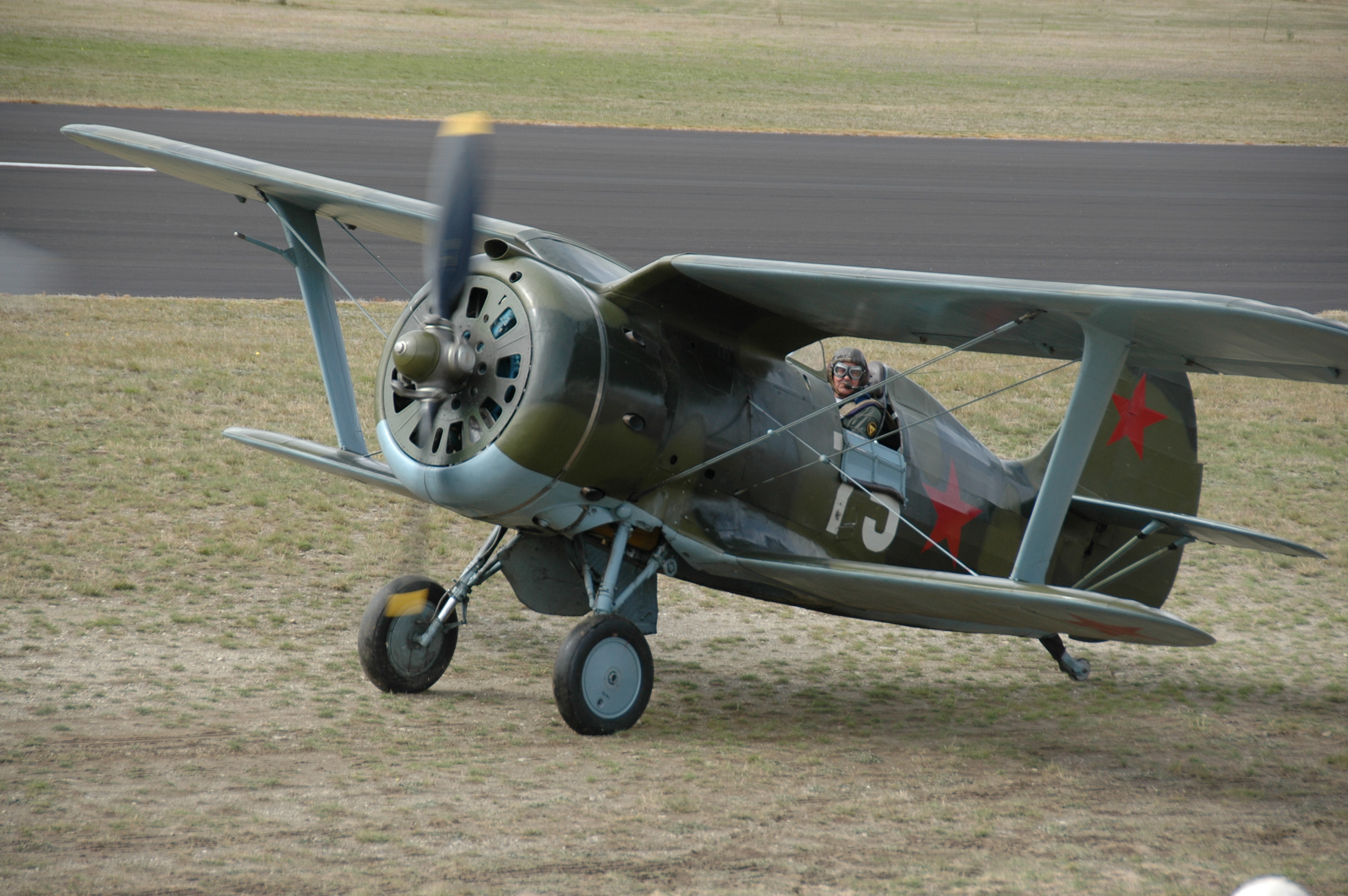
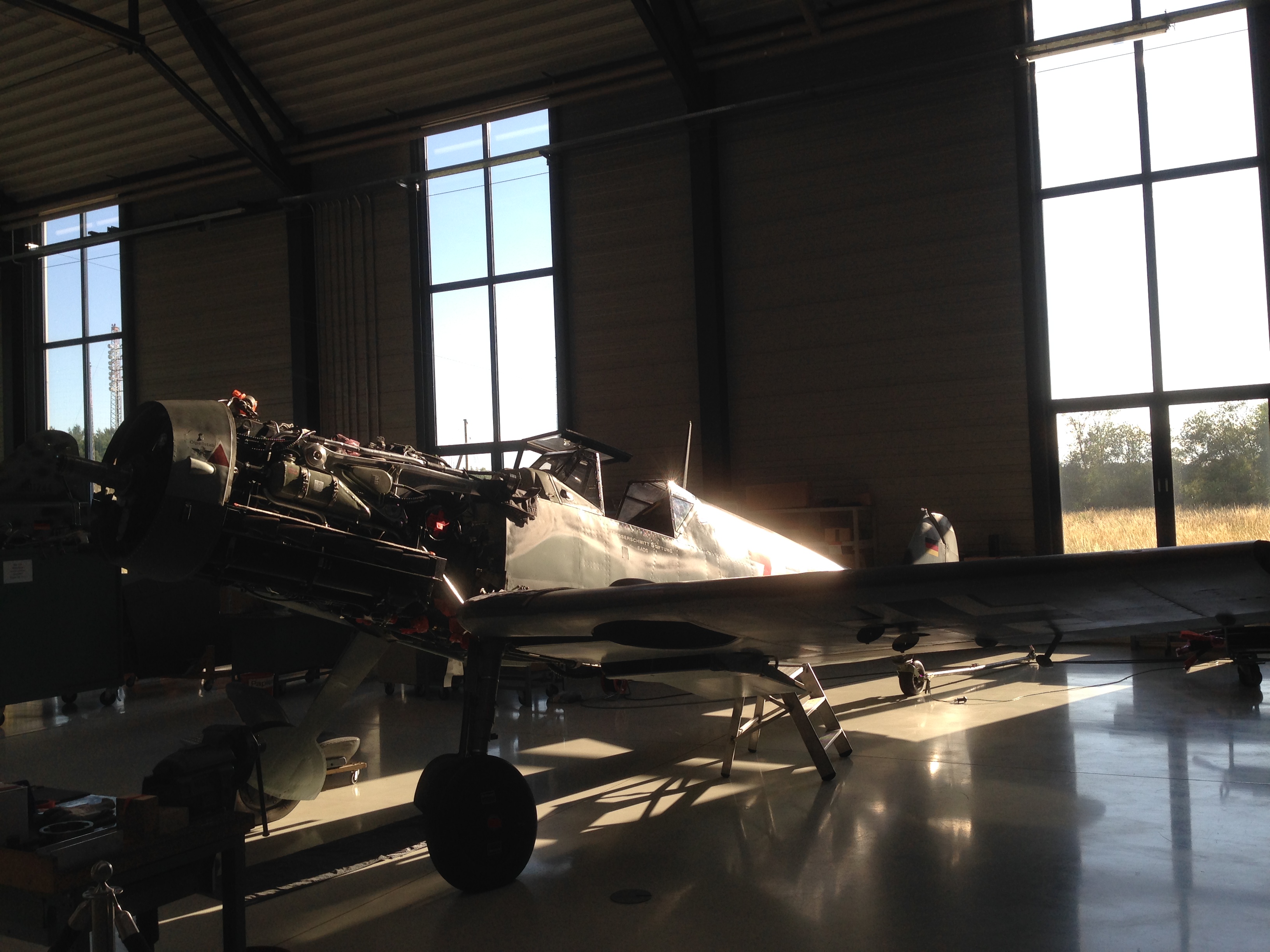
The Soviet Union lasted a mere sixty-nine years (the Spitfire has been flying longer), but in that time produced some of the largest, fastest, toughest and most agile aircraft. Even now, 25 years after its collapse, almost all Russian and Ukrainian aircraft have their roots in the communist super state. Favouring clever robust design over high technology and refinement, the Soviet approach enabled the mass production of cheap machines. Many of these were outstanding, but some – for reasons of politics, bad luck or incompetence – were diabolical. Let’s pack beer and vobla, and take a walk through the rusting graveyard of the eleven worst Soviet aircraft.
To keep this blog going- allowing us to create new articles- we need donations. We’re trying to do something different with Hush-Kit: give aviation fans something that is both entertaining, surprising and well-informed. Please do help us and click on the donate button above – you can really make a difference (suggested donation £10). You will keep us impartial and without advertisers – and allow us to carry on being naughty. Once you’ve done that we hope you enjoy 10 Incredible Soviet fighter Aircraft that never entered service. A big thank you to all of our readers.
If you enjoy this kind of thing, you may also like the 10 worst US aircraft
(If you enjoy this- there’s a donate button above and below – we can’t survive without donations. Thank you)
11. Tupolev Tu-116

With the death of Stalin, the Khrushchev Thaw left the Soviet Union in the tricky position of wanting to engage with the wider world but with no indigenous way of getting there. Fearing that mating an airliner fuselage to the wings of a Tu-95, to make the Tu-114, would take more time than was available before a 1959 state visit to the USA, a less ambitious back up plan was made. The Tu-116 replaced the Tu-95’s bomb bays with a passenger compartment for the head of state and his entourage, in a prescient nod to post-9/11 security arrangements it was impossible to access the cockpit from the passenger compartment, messages being passed by pneumatic tube. While no one appeared to think arriving on a diplomatic mission in something that looked exactly like a strategic bomber might be a bad idea, the nail in the coffin of the Tu-116 was actually the 737 style air stair that allowed the First Secretary of the Communist Party to emerge from the bowels of the aircraft, something he deemed beneath his standing. Deprived of their raison d’être the two aircraft served out their miserable lives flying technicians to the Semipalatinsk nuclear test site, presumably to ensure the Franken-liner was hidden from public view.  The Tu-116 was a poor idea and implemented badly. It was mercifully left to wallow in obscurity, somewhat like the Miss Havisham of Soviet aviation.
— Bing Chandler, former Lynx helicopter Observer (now works in flight safety)
 Save the Hush-Kit blog. If you’ve enjoyed an article you can donate here. Your donations keep this going. Thank you. Our shop is here and our Twitter account here @Hush_Kit. Sign up for our newsletter here.
NOW AVAILABLE: The Hush-Kit Book of Warplanes, a gorgeous heavily illustrated – and often irreverent- coffee-table book covering the history of aviation 1914 – the present.

Â
Â
Â
Â
Â
Â
Â
Â
Â
Â
Â
10. Tupolev Tu-22 ‘Blind John the man-eater’

The Tu-22 medium bomber, first flown in 1962, was a dangerous hotrod with a litany of design flaws. Its VD-7M engines were unreliable and caused a spate of lethal accidents. The aircraft was also very hard to handle, according to one pilot “..two flights with no autopilot drained all strength“. Tu-22 pilots had to be physically strong and keep both hands on the control yoke at all times. The landing speed was perhaps the worst of any operational aircraft: it was forbidden for pilots to go under 180 mph. The ejection seats ejected downward, a sobering prospect for low-level escapes. Pre-flight preparations took at least 3 hours, and other common procedures required 24 hours of maintenance. The high-mounted engines were exceptionally inconvenient for maintenance crew to reach. Its abysmal visibility from the cockpit resulted in one of its nicknames – Blind John (Слепой Джон). Another less than flattering nickname was ‘the man-eater’ (Людоед).
– Vasily Kuznetsov, Aviation photographer and lawyer
If you enjoy this kind of thing, you may also like the 10 worst US aircraft

Eleven wonderfully weird cancelled aeroplanes here
9. Sukhoi Su-7

For the first two decades after World War II the Soviet Union wasn’t great at building ground-attack aircraft. Ilyushin’s classic wartime Shturmovik soldiered on for a while, but in the era of atomic weapons, the use of aircraft for battlefield close support fell out of favour within the Red Army. If Soviet troops were to need firepower, they could call upon artillery. And nuclear-tipped battlefield missiles. And more artillery.
With the explosion of counter-insurgency and brushfire conflicts in the mid-1960s, it was time to reassess the ground-attack aircraft. One quick fix was to add bombs and rockets to MiG fighters. But the USSR’s first purpose-designed, jet-powered ground-attacker to reach service was the Sukhoi Su-7. Unfortunately, it wasn’t great. The Soviets never took it into battle. The Arabs did, and were not impressed.
In July 1967 Egyptian pilot Tahsin Zaki was in a formation of 12 Su-7s that was to attack Israeli forces opposite the Suez Canal. Loaded with four 500kg bombs each, the jets suffered so much drag that they couldn’t accelerate beyond 600km/h. They also proved very difficult to control. ‘The Su-7 was never a very stable aircraft at such slow speeds’, Zaki reflected in Arab MiGs Volume 4.

Provided it made it over the battlefield unscathed, the Su-7 was hampered by dismal range, meaning it was unable to loiter where it was needed. The powerful Lyulka AL-7F1 turbojet took up so much space that there was little room left for fuel tanks. It was vulnerable to foreign object damage (FOD) and, without air-to-air missile capability, was unable to protect itself other than with its two NR-30 cannon. Were it unfortunate enough to get into a dogfight with an Israeli Mirage, Arab pilots found that its fuel was quickly expended.
A final word goes to Egyptian pilot Gabr Ali Gabr: ‘The Su-7 was a totally bloody useless aircraft. It had a feeble bomb load and ineffective rockets only. The only Sukhoi that really showed an improvement over the MiG-17 was the Su-20, which we received only years later.’
— Thomas Newdick, Editor at Harpia Publishing and Assistant Editor of Combat Aircraft
8. Lavochkin LaGG-3Â

A pathetic climb rate, sluggish top speed, poor build quality, the inability to pull out of a dive or even to perform a sharp turn are among the many failings of the lamentable LaGG. The designers intended the aircraft (which started development as the LaGG-1) to use the 1,350 hp inline Klimov VK-106 engine, but when this engine failed to mature, it was replaced with the Klimov M-105 – a weedy powerplant with around 300 less horsepower. The result was an exceptionally underpowered fighter hated by its crews and mauled by its enemies. Other than an exceptional ability to withstand battle damage (something it received in abundance) -the aircraft’s only saving grace was that it sired the magnificent LaGG-5.
— Joe Coles, Hush-Kit
Something strange about Denmark’s F-35 order? Full story here
7. Silvanskii IS

Silvanskii is a name synonymous with Russian fighters..oh, wait – no it’s not. And there is a very good reason that it’s not. In the midst of Stalin’s muddled and oppressive USSR, one A.V. Silvanskii secured state funding to create a new fighter in 1937. The concept seemed sound- it was a low-winged monoplane with a 1,000 horsepower radial engine, armed with two heavy machine guns. As development began it soon became apparent that Silvanskii was a reckless bodger. By 1938 the prototype aircraft was virtually complete. Initial tests of the undercarriage revealed that the wheel wells were too small- the undercarriage did not fit into the wing in the retracted position. How this elementary mistake had been made is hard to understand, but the solution was simple- the undercarriage legs were shortened. Now the undercarriage could be retracted it was realised that the wheel bays were too shallow so the undercarriage would stick out into the airstream producing drag. Deciding not to rectify this issue, the team then fitted the propeller. Though the aircraft now had a shorter undercarriage than originally designed, no-one saw fit to think through the consequences of this modification; the propeller was now too large and would smash against the ground on take-off. Ever the master of methodical engineering, Silvanskii took a saw to the offending propeller and lopped four inches off each blade. The manager of the GAZ state aircraft factory watched this slapstick affair with dismay and growing alarm. He quite sensibly refused Silvanskii permission to fly from the factory airfield. The persistent Silvanskii looked for an alternative airfield for his fighter and charmed the State Flight Research Institute (LII) in Moscow into providing a runway and a test pilot for the maiden flight. One cold morning in early 1939, the LII test pilot strapped himself into the aircraft, known simply as the IS or ‘Istrebitel’ (fighter) and prepared to fly. The machine had other ideas, but thanks to a combination of full throttle and extremely dense cold air the machine was coaxed into taking off for one hair-raising circuit flown dangerously close to the stall. On landing the pilot damned the aircraft as unflyable. The Silvanskii bureau was bankrupted and the hapless designer was banned from working in aeronautical design.
— Joe Coles, Hush-Kit
Â
What was the ultimate piston-engined fighter? Answer here
6. Mikoyan-Gurevich MiG-23MSÂ

Arab MiG-21 pilots were excited by the prospect of a new advanced fighter, but early MiG-23s provided a huge disappointment. The Soviet Union generally offered client nations inferior versions of their fighters, but the MiG-23MS was one of the cruelest examples – and they were supplied when the air forces of Syria and Egypt were at war with a well-equipped enemy. Because of delays with the R-23 (a Sparrow equivalent), the ’23 carried only the K-13 (comparable with an early Sidewinder). The weapon system, with its very basic Sapfir-21, was completely mismatched to the aircraft’s performance – the aircraft was designed for fast long range engagements – something it couldn’t do with the K-13. The former MiG-21 pilots now had an aircraft with greatly inferior agility to the previous mounts and nastier handling characteristics. The aircraft also lacked vital equipment, including radar warning receivers. The MiG-23MS force suffered terrible losses to the Israeli Air Force, and encouraged Egypt and Libya to turn away from the use Soviet equipment, and instead favour US F-4s and French Mirages respectively. The MiG-23 was later developed into the formidable ML, but the MS was a dreadful machine hated by many of its pilots.
— Joe Coles & Thomas Newdick
Love warplanes but hate war? You may enjoy this article then.Â
 Thank you for reading Hush-Kit. Our site is absolutely free and we have no advertisements. If you’ve enjoyed an article you can donate here. At the moment our contributors do not receive any payment but we’re hoping to reward them for their fascinating stories in the future.
5. Antonov An-10 ‘Bulgakov’s magic catflap’Â

The An-10 was terrible. It’s almost as if the Ministry of Aircraft Production gave the brief to Antonov to make flying more unpleasant and dangerous. If this was the brief then Antonov succeeded with aplomb and this aircraft shouldn’t have made this list. Initial test flights revealed stability issues, leading to the ungainly ventral fins. But even these didn’t fix the problem, and further stabilizing devices (quasi winglets) were added to the horizontal tails. Which was great, apart from making the aircraft wickedly uncomfortable – it shook like a paint mixer, perhaps even worse. Then there was the insufficient amount of windows causing nausea in those prone to air sickness. There was also a lack of a real baggage hold (the low floor took up this space). An almost criminal deficiency for any aircraft, let alone one based in the USSR, was the faulty anti-icing system; two aircraft were lost in its first winter resulting in the deaths of 72 people.
A paltry 104 An-10’s were produced, but of these at least twelve were lost – most with fatalities. The straw that broke the camel’s back? After a mere 13 years in service, metal fatigue made the wings fall off. It wasn’t all bad- at least you could ride to your likely doom in a large comfortable seat.
– Bernie Leighton, helicopter pilot and Managing Correspondent at Airline Reporter
Secret British stealth aircraft project-full story here
4. Tupolev Tu-144

Its chief designer, its passengers and its launch customer were all less than enamoured with Tupolev Tu-144 – the Soviet ‘Concordski’ – and for many valid reasons.
On the last day of 1968, the Tu-144 became the first supersonic airliner to fly. It was two months ahead of Concorde’s maiden flight, but in the rush to achieve this symbolic victory, Tupolev had made a dog. The first flight was misleading – the production machine was virtually a complete redesign, most notably in the critical relationship between the wing and the engine.
If you enjoy this kind of thing, you may also like the 10 worst US aircraft
Which website am I looking at now? About Hush-Kit

Its design was aided by a huge national effort. Even its chief designer Alexei Tupolev thought it was given too great a priority. Almost all state funding for civil aviation went into the Tu-144, at the detriment of more conservative (and more useful) designs, such as the Il-86.
As well as huge centralised effort, darker methods were used to collect useful data: Sergei Pavlov, a senior Aeroflot representative in France, was banished by a personal dictate from French President de Gaulle in 1965. Pavlov had made a concerted effort to extract information from the programme, and had employed two French communists to spy at Toulouse. At the 1973 Paris Air Show, the two rival airliners were competing for foreign orders, and the second prototype was to be displayed. Its pilot, Mikhail Kozlov, had boasted that he would give a better display than Concorde: “Just wait until you see us fly. Then you’ll see something.†His words proved tragically prescient. The aircraft disintegrated in the air, killing Kozlov and his crew. Following this, the launch customer Aeroflot decided not to put the aircraft on international passenger routes. When Tu-144 entered service in December 1975, it was assigned the less-than-glamorous task of transporting cargo. In late 1977, politicians decided that the Tu-144 should begin passenger services, against the advice of Aeroflot and safety inspectors. Despite it being seven years from its first flight, the aircraft was still unreliable. It was only able to perform one of its first six scheduled passenger flights. In 180 flight hours, the first sixteen Tu-144s suffered more than 226 failures of various kinds – many of them significant. Passengers were shocked by the cabin noise, with one declassified CIA report saying “the cacophony of rushing air, engine noise and air conditioners meant conversations in the rear of the aircraft had to be shoutedâ€. The terrible Kuznetsov NK-144 turbofans were replaced by Kolesov RD-36-51s, to produce the marginally improved Tu-144D. Whereas the cabin noise was unbearable, cabin depressurisation was potentially lethal. There was also faulty de-icing equipment for the air intakes, poor fireproof paint, substandard navigation equipment and a panoply of other failings. In 1977 Tupolev took the unprecedented step of asking the West for technical assistance – hardly a propaganda coup. The British Government declined these requests. Handing technology to the designer of your enemy’s nuclear bombers was too much to ask, even for the nation that had already given the USSR a great step up by giving them the world’s best jet engines).
It can hardly inspire confidence among passengers when no aircraft is allowed to take off without an inspection by its chief designer, yet that was the extraordinary situation for this terrible machine. In May 1978 another Tu-144 crashed. This was too much for Aeroflot, and passenger flights were cancelled. In a twist that nobody would have predicted in the 1960s, the Tu-144 ended its life as ‘supersonic flying laboratory’ for NASA.
– Joe Coles & Glen Towler

3. Yakovlev Yak-38 
Were it not for two factors, the Yakovlev Yak-38 ‘Forger’ would probably be regarded as a success. Putting a vertical take-off and landing fighter into operational service was no mean feat. Of the profusion of concepts and designs that plastered drawing boards (in the US, France, West Germany and in every other aircraft producing nation) in the 1960s, the vast majority never reached even prototype stage – and only two types entered service, so on that basis, the Yak-38 did well. The first of its reputation-killing problems was the lack of any more capable follow-on. The second was the existence of the Hawker Siddeley Harrier.
Expectations of the Yak-38 should have been low. It was intended more as a concept-proving vehicle than a frontline aircraft in its own right. Unfortunately, the planned replacement – the much larger, supersonic Yak-41 ‘Freestyle’ – was cancelled, leaving the Forger to fight its own corner as an operational VTOL fighter rather than an analogue to the pre-production Hawker Siddeley Kestrel (the earlier Yak-36 could be compared to the P.1127 or Short SC.1).
The problem was the Yak-38’s lack of combat capability. Yes, it could take off and land vertically, and transition between vertical to horizontal flight, a significant achievement. Unfortunately, its payload was derisory and its range pathetic, its air-to-air capability virtually non-existent. One reason was the Forger’s VTOL concept – while the Harrier had a single engine and could use all its thrust for horizontal or vertical flight, the Yak-38 had to lug two lift engines, dead weight at all other times than in vertical flight. In hot and high conditions (such as the combat evaluation it endured in Afghanistan), the Forger could carry less than 500lb of munitions. As a proof of concept vehicle, the Yak-38 only managed to ‘prove’ that VTOL combat aircraft were impractical. If only the Harrier had not disproved the point over the Falklands, Bosnia, Kosovo, Afghanistan…
– Matthew Willis is a writer and journalist specialising in naval aviation. He is the biographer of A&AEE and Fairey test pilot Duncan Menzies. His book on the Fairey Flycatcher is due out imminently
More on the Yak-38 in The ten worst carrier aircraft
2. Sukhoi Su-2 ‘A Soviet Battle’ The rather unassuming Su-2 is historically significant in being the first creation of Pavel Sukhoi. The Su-2, both by design and unfortunate circumstances, did not anticipate any of this greatness. Designed at a time when metal was a strategically limited resource, the Su-2 was one of the last frontline aircraft that are not all metal construction (prior to today’s composite age), other examples of mixed construction being the famously excellent ‘Mossie’ and the spectacularly atrocious LaGG-3 series. Armed with a meagre four fixed 7.62 light machine guns and a notoriously unwieldy turret armed with a single Shkas. The unfortunate Su-2 was thrown into the meat grinder of Operation Barbarossa where, to the surprise of no-one, it racked up tremendous losses. While faster than its much more famous replacement, the Il-2, it had much lower survivability, armament and payload (not that the marginal difference in speed would make much difference when being chased down by the far faster Bf-109F). The toughness of the Ilyushin competitor – as well as its enormous production figures – explain why the name Il-2 still resonates to this day while the Su-2 is known nowadays mostly for being one of the least useful planes in War Thunder. The first of the Sukhoi’s was a little more than a footnote in aviation history though and, much like other designs of the era, it went from design to obsolescence in the space of 3 years.
– Matthew Wilks, Witch Doctor
- Kalinin K-7

This is what you get if you cross a Spitfire with Frank Lloyd Wright’s ‘Falling Water’ house (emphasis on the ‘falling’) then enlarge the resulting mutant to the size of Stalin’s ego. The 1930s USSR was in love with big things. Their big locomotives hauled big trains over massive distances, their enormous factories churned out terrific amounts of Fordson tractors and in the air the Kalinin K-7 was to display the triumph of the Dictatorship of the Proletariat to a disbelieving world. Their other big aeroplane, the Tupolev ANT-20, was impractically large but wasn’t a bad aircraft considering. The Kalinin K-7 on the other hand was ridiculous. Konstantin Kalinin had already produced the USSR’s most successful airliner to date and he had some interest in flying wing development. The K-7was, more or less, a seven engine flying wing with a fuselage pod and a couple of tail booms and no one seemed entirely sure whether it was an enormous bomber or a massive airliner. Nonetheless, the mighty K-7 could fly but its first brief flight revealed terrible instability and appalling vibration. Applying stereotypical Soviet engineering principles, two massive slabs of steel were welded to the tailbooms to keep them rigid. Unfortunately its structure was resonating with the engine frequency and the ‘strengthening’ had no effect: on its eighth flight the K-7 shook its right tailboom off at 350 feet, killing 14 on board and one on the ground.
-Ed Ward

You can find out more about the Kalinin K-7 here.
Thank you for reading Hush-Kit. Our site is absolutely free and we have no advertisements. If you’ve enjoyed an article you can donate here– it doesn’t have to be a large amount, every pound is gratefully received. Suggested donation £10.Â
 Thank you for reading Hush-Kit. Our site is absolutely free and we have no advertisements. If you’ve enjoyed an article you can donate here. At the moment our contributors do not receive any payment but we’re hoping to reward them for their fascinating stories in the future.
Â
Latest analysis of the F-35 here
Follow my vapour trail on Twitter:Â @Hush_kit
You may also enjoy 11 Cancelled French aircraft or the 10 worst British military aircraft, Su-35 versus Typhoon, 10 Best fighters of World War II , Su-35 versus Typhoon, top WVR and BVR fighters of today, an interview with a Super Hornet pilot and a Pacifist’s Guide to Warplanes. Flying and fighting in the Tornado. Was the Spitfire overrated? Want something more bizarre? Try Sigmund Freud’s Guide to Spyplanes. The Top Ten fictional aircraft is a fascinating read, as is The Strange Story and The Planet Satellite. The Fashion Versus Aircraft Camo is also a real cracker. Those interested in the Cold Way should read A pilot’s guide to flying and fighting in the Lightning. Those feeling less belligerent may enjoy A pilot’s farewell to the Airbus A340. Looking for something more humorous? Have a look at this F-35 satire and ‘Werner Herzog’s Guide to pusher bi-planes or the Ten most boring aircraft. In the mood for something more offensive? Try the NSFW 10 best looking American airplanes, or the same but for Canadians. 10 great aircraft stymied by the US.Â
You may also enjoy top WVR and BVR fighters of today, an interview with a Super Hornet pilot and a Pacifist’s Guide to Warplanes. Want something more bizarre? The Top Ten fictional aircraft is a fascinating read, as is The Strange Story of The Planet Satellite. Fashion Versus Aircraft Camo is also a real cracker.Â
Â
“If you have any interest in aviation, you’ll be surprised, entertained and fascinated by Hush-Kit – the world’s best aviation blogâ€. Rowland White, author of the best-selling ‘Vulcan 607’
Â
From the cocaine, blood and flying scarves of World War One dogfighting to the dark arts of modern air combat, here is an enthralling ode to these brutally exciting killing machines.
The Hush-Kit Book of Warplanes is a beautifully designed, highly visual, collection of the best articles from the fascinating world of military aviation –hand-picked from the highly acclaimed Hush-kit online magazine (and mixed with a heavy punch of new exclusive material). It is packed with a feast of material, ranging from interviews with fighter pilots (including the English Electric Lightning, stealthy F-35B and Mach 3 MiG-25 ‘Foxbat’), to wicked satire, expert historical analysis, top 10s and all manner of things aeronautical, from the site described as:
“the thinking-man’s Top Gear… but for planes”.
The solid well-researched information about aeroplanes is brilliantly combined with an irreverent attitude and real insight into the dangerous romantic world of combat aircraft.
FEATURING
- Interviews with pilots of the F-14 Tomcat, Mirage, Typhoon, MiG-25, MiG-27, English Electric Lighting, Harrier, F-15, B-52 and many more.
- Engaging Top (and bottom) 10s including: Greatest fighter aircraft of World War II, Worst British aircraft, Worst Soviet aircraft and many more insanely specific ones.
- Expert analysis of weapons, tactics and technology.
- A look into art and culture’s love affair with the aeroplane.
- Bizarre moments in aviation history.
- Fascinating insights into exceptionally obscure warplanes.NOW AVAILABLE: The Hush-Kit Book of Warplanes, a gorgeous heavily illustrated – and often irreverent- coffee-table book covering the history of aviation 1914 – the present.
NOW AVAILABLE: The Hush-Kit Book of Warplanes, a gorgeous heavily illustrated – and often irreverent- coffee-table book covering the history of aviation 1914 – the present.

I can only do it with your support.




 As can be seen in this photograph of a young Bell X-1, young aeroplanes seldom stray far from their protective mothers. Note that the mother has four visible engines, whereas the X-1 has none. Engines are developed during puberty. A young aircraft often has neither the software, weapons integration or spare parts to make it in the world by itself.


 “If it does get hit, the Osprey has multiple redundant systems. That’s true for its engines, hydraulics, and key electronics. Its fuel tanks are self-sealing and fill with inert nitrogen as they empty to prevent fires. The pilots’ control inputs are transmitted to the control surfaces by electrons, not rods and cables. The troop seats stroke to reduce the impact in the event of a crash. Those features are what truly help troops survive in combat.â€


 Â