Though earlier artists impressions show an undernose intake the aircraft or mock-up appears to have should mounted intakes somewhat reminiscent of those of the F-22 and to a lesser extent, the Berkut. I do wonder what their intake shape is… and there are rhomboid options that would make M~2.0 feasible. I think this aircraft is a candidate for MiG-29 replacement, but with emphasis shifted away from WVR combat.
TASS has announced that Russia’s latest fighter aircraft will be unveiled, and, indeed, demonstrated, at the MAKS-2021 show on July 20.
Photographs of the shrouded aircraft (or possibly mock-up) have now appeared, and the analysis below has been updated to reflect these images.
The aircraft is reported to be Russia’s first single-engine supersonic low observable tactical fighter, and has been developed by Sukhoi, and is being presented at the MAKS show by Rostec. The stated intent is to ‘rival the US fifth-generation F-35 aircraft’. The aircraft is also described as a domestic light fighter, which will compete with the F-35 in export markets. This latter comment is backed up by a video on the Rostec website which identifies a number of countries by name including India, Argentina, and Vietnam, and some imagery suggestive of Middle Eastern states.
The new photographs show an aircraft that loosely resemble the earlier ‘teaser’ imagery, but with significant differences in the intakes and fuselage.
Compared to the ‘teaser’ imagery, the ‘Checkmate’ aircraft (Hush Kit reporting name ‘Fleabag’) has twin intakes located on the sides of a rhomboidal cross-section fuselage, resembling the intake installation on the F-22, rather than a large diverterless intake under the nose. The wing appears to be similar to the teaser image, being highly-tapered, thin, and with a low-aspect-ratio, near-diamond planform.
The forward fuselage of the teaser image had a small forward canard, which appears to be absent on the shrouded ‘Fleabag’ aircraft. The shrouding of the aircraft is very effective in confusing the aircraft profile, and it is not impossible that a strake is present, in the same plane as the wing, and that the intakes are below this strake, rather like the F-18 installation. All of this must remain speculative until clearer images are available.
The rear view of the Fleabag appears to show a single afterburning nozzle, located between twin butterfly tails. Given Sukhoi experience in the application of thrust vectoring to its heavy fighter designs, it would be surprising if this were not also fitted to the new aircraft. The teaser image features an Infra-red Seeker Tracker, located ahead of the cockpit, and a radar in the aircraft nose. This would be a typical arrangement for a Russian fighter.
A once classified British study from 1993 shows a similar design solution in wing planform and tail configuration.
The wing planform and tail design are somewhat reminiscent of the McDonnell MFVT (Mixed Flow Vectored Thrust) ASTOVL concept, and as this single-engine aircraft featured twin side-intakes, there is quite a strong resemblance between it and what we can see of ‘Fleabag’. The Newark Air Museum in the UK have a model of that concept, shown below. The MFVT design was one of the propulsion alternatives examined in early UK-US joint technology studies looking at possible ASTOVL concepts in advance of the JSF program. I am not suggesting that Fleabag is a STOVL aircraft, however – the fuselage volume taken up in the MFVT for its STOVL system simply results in a fuselage shape compatible with the internal weapons bays which must surely be a feature of Fleabag.
What can we infer about the aircraft? To me, the highly-tapered, low aspect ratio wing suggests that the design is intended to be used for BVR combat, as the wing area and aspect ratio suggest sustained turn performance might not be a strong point. Checkmate is likely to have a high thrust-to-weight ratio, a vectoring nozzle and a strake ahead of the wing. This should result in the instantaneous turn rate being structurally, rather than aerodynamically, limited for substantial parts of the manoeuvring air combat envelope. The fuselage below the wing line is rhomboidal, the flat sides and fuselage width suggesting reasonable size internal weapons bays, which are necessary if the aircraft is to have a low signature.
Whether a low signature is achieved will depend on a number of aspects – not just the shape, but the materials, the manufacturing standards, and the electromagnetic properties of the surfaces and structure. Certainly, some are firmly of the view that the canard foreplane, and the large under-fuselage intake, are incompatible with a low signature aircraft. It is interesting that these features do not appear to be present in the shrouded Checkmate/Fleabag aircraft.
From the wording used in the press release – descriptors like ‘domestic light fighter’ and ‘tactical fighter’, and the reference to exporting the aircraft, it could be that the new Sukhoi is intended to be a cheap alternative to the F-35, indicating, perhaps, that some compromises in the signature area might have been made in the interests of containing acquisition, operating and maintenance costs.
Could the aircraft be a Russian equivalent to the Hush-Kit F-36 Kingsnake concept, aiming to regain the position once achieved with the widespread use of the MiG-21, by undercutting the cost of the F-35? The primary intent might be to develop a widely exportable aircraft, with, perhaps, Russian usage being limited to a ‘non-exportable’ variant used for local air defence and tactical strike. This might supplement a force mix including manned and unmanned systems, and drawing on the capabilities of future systems like the Su-57 for air superiority, and a future MiG-31 replacement. for strategic air defence.
Could the aircraft indeed be a Russian equivalent to the @Hush_Kit F-36 Kingsnake concept, aiming to regain the position once achieved with the widespread use of the MiG-21 by undercutting the cost of the F-35?
– Jim Smith
Save the Hush-Kit blog. Our site is absolutely free. If you’ve enjoyed an article you can donate here. Your donations keep this going. Thank you.
Teaser images may describe configuration of new light/medium-weight Sukhoi fighter
TASS has announced that Russia’s latest fighter aircraft will be unveiled, and, indeed, demonstrated, at the MAKS-2021 show on July 20.We consider what this might mean and what the configuration of the circulating images reveals.
The aircraft is reported to be Russia’s first single-engine low signature supersonic tactical fighter, and has been developed by Sukhoi. The stated intent is to ‘rival the US fifth-generation F-35 aircraft’. The aircraft is also described as a domestic light fighter which will compete with the F-35 in export markets.
The below image above is a ‘teaser’ for the aircraft and must be viewed with some caution until the actual hardware is revealed. The basic configuration shown in the illustration above has a near-diamond wing planform, with thin highly-tapered low-aspect-ratio wings, a forward canard, and twin butterfly tails. The aircraft has a single engine, with a large diverterless intake (UPDATE: the aircraft or mock-up photographed beneath a tarpaulin has shoulder mounted intakes similar to that of the F-22 and appears not to have a canard) under the forward fuselage. An Infra-red Seeker Tracker is located ahead of the cockpit, and a radar is mounted in the aircraft nose.
This 2017 3D model is unconnected to the model on Borisov’s desk but is interesting to compare. This model was seen on a Sukhoi executive’s desk, deliberate teaser or disinformation?
Given Sukhoi experience in the application of thrust vectoring to its heavy fighter designs, it would be surprising if this were not also fitted to the new aircraft.
The wing planform and tail design are somewhat reminiscent of the McDonnell MFVT (Mixed Flow Vectored Thrust) ASTOVL concept but the aircraft features a chin intake rather than side intakes. The Newark Air Museum in the UK have a model of that concept, shown below. The MFVT design was one of the propulsion alternatives examined in early UK-US joint technology studies looking at possible ASTOVL concepts in advance of the JSF programme.
What can we infer about the aircraft? To me, the highly-tapered, low aspect ratio wing suggests that the design is intended to be used for BVR combat, as the wing area and aspect ratio suggest sustained turn performance might not be a strong point. The fuselage below the wing line is rhomboidal, the flat sides and fuselage width suggesting reasonable size internal weapons bays, which are necessary if the aircraft is to have a low signature.
Whether a low signature is achieved will depend on a number of aspects – not just the shape, but the materials, the manufacturing standards, and the electromagnetic properties of the surfaces and structure. Certainly, some will question whether the canard foreplane and the large under-fuselage intake are compatible with this intent.
From the wording used in the press release – descriptors like ‘domestic light fighter’ and ‘tactical fighter’, and the reference to exporting the aircraft, it could be that the new Sukhoi is intended to be a cheap alternative to the F-35, suggesting, perhaps, that some compromises in the signature area might have been made in the interests of containing acquisition, operating and maintenance costs.
The Hush-Kit Book of Warplanes will feature the finest cuts from this site along with exclusive new articles, explosive photography and gorgeous bespoke illustrations. Pre-order The Hush-Kit Book of Warplanes here. Thank you. Our controversial merchandise shop is hereand our Twitter account here @Hush_Kit. Sign up for our newsletter here. The Hush-Kit Book of Warplanes will feature the finest cuts from this site along with exclusive new articles, explosive photography and gorgeous bespoke illustrations. Pre-order The Hush-Kit Book of Warplanes here.
Could the aircraft indeed be a Russian equivalent to the @Hush_Kit F-36 Kingsnake concept, aiming to regain the position once achieved with the widespread use of the MiG-21 by undercutting the cost of the F-35?
– Jim Smith
Save the Hush-Kit blog. Our site is absolutely free. If you’ve enjoyed an article you can donate here. Your donations keep this going. Thank you.
Hush-Kit thoughts
It is hard to know what to make of Russian rumours or even official statements regarding military hardware, and this is a prime example. There are more unknowns than facts around this fighter. Is it single-engined? Is it primarily for export? Could there be a STOVL variant? Manned, unmanned* or (more absurdly) optionally manned? If built, would it be built by Sukhoi or MiG (some recent releases mention Sukhoi but many older ones mention MiG)? If it is for export, and a cheap stealthish fighter could be just the ticket, then a launch or partner nation will be sought. India is said to like their Russian-sourced MiG-29UPGs very much but was far from happy with its treatment in the Sukhoi/HAL Fifth Generation Fighter Aircraft (FGFA) project. Whether they would want another partnership after the mess of FGFA is open to question, though a later off-the-shelf purchase would seem a viable idea. So who could afford to invest in such a fighter? Even domestic orders are far from assured these days with the MiG-35 floundering in obscurity, the Su-57 flailing around in single digits while even the dominating ‘Flanker’ series is not being ordered in enormous numbers. Outsiders who would love a long range stealthy fighter-bomber include Iran and Argentina but both seem highly unlikely to get involved. China has its own Shenyang FC-31 kicking around (somewhere) which appears to be in the same category so Sino-Russian collaboration seems an unlikely bet. Though it has long enjoyed a partnership with Russia, China is now far richer and ahead technologically in almost every aspect of military aerospace so what it would gain from cooperation with an increasingly unpopular Russia is hard to see.
Another issue is that no-one (at least publicly) really knows what the next generation of fighters will look like – or even if their should be one. Following or countering the American lead, as has been historically the case, is harder now as there is uncertainty on which technological direction the US will go in. The UK, with a similar defence budget to Russia is also thinking big with its Tempest research project, but this appears to have the same vagueness of direction, with placeholder shapes and every conceivable tech being mentioned without a clear idea of what is needed or why.
Despite a defence budget less than a tenth that of the US, Russia still thinks big, but with a global GDP percentage that has shrunk by almost 1% since a high of 4% in 2007/8 it is often biting off more than it can chew. As with the US experience, so-called ‘5th Generation’ heavy fighters have proved budget vampires, with many seeing an obsession with brand new airframes as an archaic idea. Mentioned as a “new light plane designed to cope with tactical assignments” in the TASS press release it is seen as ‘Lo’ to the Su-57’s ‘Hi’. This is what the US F-35 was originally intended to be (to the F-22’s ‘Hi’) but spirally demands and costs left USAF with the F-16 fulfilling this as its planned replacement grew too aristocratic for everyday tasks.
Perhaps as a provocative statement against the F-35 the teaser video features British RAF 617 Squadron badges.
Though Russia is believed to have world-class electronic warfare technology, it lags in both the sensor arena (failing to have a truly operational AESA radar 20 years after US adoption) and likely in the field of data fusion. This aircraft (if it happens) is likely to be a simpler machine than the F-35, which may not be a bad thing.
The Su-35 and F-15EX show the sense of filling an old design with new goodies, while many new ideas, such as ‘loyal wingmen’ (the implied sleight of ‘loyal’ being a required descriptor for a wingman has not gone unnoticed in the pilot community) remain unproved. In summary – the future is vague and the Russian state’s appetite for new military projects is bigger than its belly.
Photos of the forward fuselage reveal what appear to be should mounted intakes somewhat like those of the S-37 Berkut and somewhat like those of the F-22.
Most importantly, we suggest ‘Fleabag’ as the NATO reporting name.
* An unmanned variant of the KB SAT SR-10 with the superb name of ‘AR-10 Argument’ has been proposed.
TASS PRESS RELEASE
MOSCOW, July 13. /TASS/. The latest combat plane that Russia will unveil on the first day of the MAKS-2021 aerospace show will rival the US fifth-generation F-35 aircraft, Executive Director of Aviaport Aviation News Agency Oleg Panteleyev said on Tuesday.
“The teasers in English and the regions that the pilots presented in a video released by Rostec [state tech corporation] suggest that the domestic light fighter will be in competition with the US F-35 aircraft on foreign markets. I am certain that the fighter’s demonstration at the MAKS-2021 will create a wow effect. It is not accidental that [Russia’s state arms exporter] Rosoboronexport has invited over 120 delegations from 65 countries of the world to the aerospace show,” he said.
Little is known about the plane’s performance characteristics so far, the expert pointed out. According to the data available, the latest fighter features low radar signatures in various bands, a high thrust to weight ratio, a large weapon payload and advanced air-launched armaments, the expert pointed out.
“There is no doubt that in this decade Russia will be able to restore the tandem of breakthrough aircraft platforms: the heavy Su-57 [fifth-generation fighter] and a new light plane designed to cope with tactical assignments,” the expert said.
The Rostec press office announced earlier on Tuesday that Russia’s United Aircraft Corporation (UAC, part of Rostec) would feature a fundamentally new military plane on the first day of the MAKS-2021 international aerospace show in the town of Zhukovsky near Moscow. The project’s official website was also unveiled, with a midnight countdown to the plane’s July 20 premiere.
As a source in the domestic aircraft-building industry told TASS in the spring of this year, the Sukhoi Aircraft Company (part of the United Aircraft Corporation) is developing the first Russian single-engine light tactical fighter with supersonic speed capability and low radar signature.
A thousand years ago a hugely expensive Canadian aeroplane was cancelled. Today its memory is kept alive in a million Canadian moans.
Bombs
Deconstruction workers. Human unbeingers.
Crashes
When the sky rejects, the ground welcomes too quickly.
Dresden
RAF Bomber Command was overly eager to inspire Kurt Vonnegut.
Environmental damage
Maybe not as bad as cars, but still.
F-35online articles
If every online article on the F-35 was laid end-to-end and made of gold they would cost the same as the F-35 programme, or they would if its actual price was known.
Flying Cars
Are they a shit car or a shit plane? Or both?
German World War II aircraft enthusiasts
Not all, but some of these guys are a little too enthusiastic. Worth checking the name of their alsatian before meeting them one-on-one.
Grey planes
The most successful fighter pilot in history flew a bright red plane, air forces responded by painting all fighters grey. Grey is the English word for ‘gray’.
Heinkel He 177 Greif
Auto-Destructive Art (ADA) is a form of art coined by Gustav Metzger, a German artist. Taking place after World War II, Metzger wanted to showcase the destruction created from the war through his self-destructing artwork. The He 177 predated Metzger’s work.
Ilyushin Il-2 penal units
It is alleged that there were penal units in the Great Patriotic War, in which prisoners were forced to fly exceptionally dangerous combat missions.
Jokes
Jokes about airline food.
Kits
It’s often assumed people who like aeroplanes like making model kits. Extremely fiddly, fragile and frustrating and in no way sympathetic to the sausage-fingered community these little nightmares mostly remain uncompleted. Pocket money is not enough to buy them leaving many in a long suspended state of unsatisfied childhood greed for kits that may last them a lifetime.
Lisbon Portela Airport, Portugal
A site specific art installation exploring the end of hope.
Militarism
The belief that a country should maintain a military capability it can’t afford and be prepared to use it aggressively to aid US foreign policy or promote extremely vague ‘national interests’. The latter is a fine idea as long as no-one else thinks of it and ethics aren’t a thing.
Nationalism & napalm
Flag-wanking and people-melting consistently generate poor reviews on Yelp. Both have both been hung on the wings of innocent aeroplanes whose only wish is to fly.
Obsession
The reason your home isn’t nice is because you have spunked £56,000 on books on aeroplanes. Are you really actually ever going to read that book on the History of Airbus A300 Longerons?
Project Pluto
Stick a nuclear ramjet in a cruise missile. The idea was simple: With an endurance measured in weeks (or even months) this Cold War weapon could distribute nuclear warheads before leisurely cruising around pissing deadly radiation over huge areas of cursed land before crashing to earth to heap misery upon the already widespread misery as its own onboard nuclear reactor disintegrates. This was clearly the worst idea ever (only to be surpassed when Apple stopped including USB or headphone ports on their devices).
Stop arguing and feed the cat. Life is good. Take a breath.
Ryanair
Many airlines have proved it is possible to run successful budget airlines without treating passengers badly. Some have other ideas.
Soviet airliners
What was good about them was that you put your bag directly into an onboard luggage level rather than mess around waiting for carousels. But that’s all. At smaller regional airports it wasn’t unusual for passengers to physically help move aircraft stuck in snow or mud.
TSR-2 fans
A pint of bitter and a pint of bitterness. It was a nuclear bomber for godsake, not a murdered ballerina.
Underwater Aircraft Carriers
There is a reason whales don’t give birth to eaglets.
Volksjäger (He 162 Salamander)
Made by slaves to be flown by children to defend a fascist power, the He 162 was an awful thing. It escaped prosecution however by fleeing to America before having radical plastic surgery to emerge years later as the A-10.
Waiting times (airports)
Being encouraged to arrive unnecessarily early to be force-marched through a perfume shop is not cool guys.
X planes without pilots
If there’s not a little man or woman jn the front I’m not interested.
You
See also ‘me’
Zeppelin Raids & Zoom lenses
‘Strategic bombing’ (mass murder performed at over 80mph) started in World War One against Belgium. These raids paved the way for the horrors of aerial bombing in World War II. It also paved the way for the success of the lamentable cockney song ‘Roll out the barrel’ (years later, the lyrics were changed to ‘roll out the barrel bomb’ by crews of Antonovs in protracted proxy wars).
Airshows are breeding grounds for cargo shorts and zoom lenses as long as a Volvo estates, it’s a little known fact that airshow aircraft only perform dramatically fast take-offs to escape these aesthetic blunders.
History chewed out and spat out some incredible aeroplanes. We drag these rotting morsels out of the compost mulch of history and drag them to our laboratory/fight-club for autopsy. To assist us in our morbid analysis is Hush-Kit’s tamed scientist and engineer Jim ‘Sonic’ Smith(a key figure in the Typhoon and UK JSF programmes among others). To further our thrills we shall pit these dead aeroplanes against each other! Round 1 is supersonic vertical and landing aircraft: the US’ ‘Big Mouth’ Boeing X-32 (that lost out to the X-35) takes on the ‘Last Red’, the Soviet Yakovlev Yak-141. FIGHT!
“Aerospace is one of the fields where technology and innovation, particularly in times of conflict, have resulted in radical advances in development, as well as the pursuit of some spectacular evolutionary blind alleys. Hush-Kit have asked me to consider some of the aircraft that fell by the wayside in the development of warplanes from the Wright Military Flyer of 1909 to today’s emerging 6th generation fighters.
This developmental saga is often told through the path of spectacular successes, generally perceived through quite narrow National perspectives. There are also, it is true, whole books about ‘Awful Aircraft’ documenting well known failures. But there are many interesting possibilities to explore in the world of the not quite successful. The aircraft that lost out in competitive evaluation, or seemed like a good idea at the time, but never got into service.
The possibilities seem endless, and, to limit the size of this article, we are going to look at five pairs of aircraft that are broadly contemporary, that flew successfully, but that never quite made it into operational service. The plan is to look at these aircraft in pairs, explore why they were designed, how they compare, and why they missed out. All the aircraft were seriously intended to be operationally capable, and hence research aircraft are excluded. The periods chosen are broadly the 90s (one pair), the Cold War (two pairs), and the Second World War (two pairs). If these prove interesting, I am fairly confident that other pairs could be constructed, with the early years, the First World War, and an almost limitless array of VSTOL aircraft as possible examples.
In making my selection, I have decided, for artistic reasons as much as anything else, that the pairs should consist of aircraft which share the appeal of the mythical designs of Gerry Anderson, whose creations include the Angel Interceptor, which I analysed recently for Hush-Kit. Anderson’s designs manage to be both plausible and yet somehow unlikely. For real analogues, which might have been potential examples for this article, but did not quite fit the brief, consider a couple of British efforts, the Saunders-Roe SR 53, and the Armstrong-Whitworth AW 52. Both aircraft flew successfully, both were at the edge of the then-achievable technology, both had that futuristic look, and neither went on to become operational.
Hush-Kit have asked me to consider possible outcomes had the selected pairs met in air combat. This is not an easy or straightforward process, and rests to an undesirable degree on personal judgement, since adequate information is not available on most of the aircraft concerned. Hush-Kit’s specific interests for Round 1 are WVR (within Visual Range) and BVR (Beyond Visual Range) air combat, Stealth (for the X-32B and Yak-141 – it is not relevant for the other aircraft), and sortie rate.
Of course, both BVR and WVR combat outcomes are very dependent on total system capabilities – not just platform capabilities. The outcome of a BVR combat will very much depend on what off-board systems are providing situational awareness; whether or not 3rd-party targeting is available; and the size of the ‘No Escape Zone’ of the weapons carried. Additionally, it is worth noting that the result of a WVR combat with anything resembling modern weapons is likely to be a mutual kill.
Taking all this on board, I am going to loosely interpret WVR combat as manoeuvring air combat where the objective is achieving a guns kill. Any other outcome becomes too dependent on such features as whether or not helmet cueing of the missile is available; missile seeker detection and guidance range; missile fly-out range and so on. I’ve taken this approach so that the discussion can focus on platform performance and manoeuvrability, rather than system issues.
Similarly, I am going to consider BVR combat as a contest between platform sensors, and aircraft signature where appropriate. I will assume missiles to have broadly similar capability, as are available countermeasures and protection systems. The issue becomes one of numbers of missiles carried, capability of on-board sensors, and signature.” Before we compare the air combat capabilities of these two aircraft types let’s take a deep dive into their histories and designs.
Yakovlev 141 and Boeing X-32B
“Both of these aircraft were designed to have ASTOVL capabilities. ASTOVL stands for Advanced Short Take-Off and Vertical Landing, and the word Advanced is code for being supersonic. It is worth noting also that the STOVL part of the acronym reflects operational experience with aircraft like the Harrier. An aircraft which can transition from wing-borne flight to hover and land vertically, using its engine to provide lift, would, in general, be also able to take-off vertically, just as the Harrier can. However, to do so would unnecessarily reduce the available payload and range, and it is much more effective to perform a rolling take-off, especially if a ski-jump is available, as this enables operation at much higher weights than can be achieved with a vertical take-off.
ASTOVL design considerations
When considering alternative configurations for ASTOVL capability, the arrangement of the propulsion system in the vertical landing part of the flight is often the key. This is because the vertical lift available in this phase will determine the maximum landing weight, and because the engine exhaust management is likely to be critical in determining the vertical lift available.
Three aspects are critical – hot gas ingestion (re-ingestion if you are an American reader); Aerodynamic suck-down; and ground erosion. In addition, aircraft controllability, thermal heating effects, and acoustic aspects may also be important. We will have a look at what these are, and then consider how well the X-32B and Yak 141 deal with the problems that arise.
Hot-gas ingestion means the air flowing into the engine intake contains hot gases which have passed through the engine and have then been sucked into the intake. This is undesirable because the hotter air has lower density, reducing the thrust of the engine. But also, the exhaust gases will be only partially mixed with cooler, ambient temperature, air entering the intake, resulting in an unsteady and distorted intake flow, which can cause major problems with engine operation and stability. Avoiding this problem generally means keeping hot gases as far away as possible, containing forward flowing exhaust gases with under-fuselage dams or fences, or reducing exhaust gas temperature.
Aerodynamic suck-down results as the vertical jets from the propulsion system reach the ground and spread outwards at high speed under the aircraft. This high-speed outflow results in reduced pressure under the aircraft wings and fuselage, pulling the aircraft towards the ground. Measures to reduce this include reducing the exhaust jet velocity, using a high-positioned wing, and manipulating the supporting jects to produce an upward-pointing ‘fountain effect’.
Ground erosion, acoustic and temperature effects all increase dramatically with increased jet velocity and operating temperature. ‘Acoustic effects’ refers not only to the potentially damaging environment for ground crew, but also to fatigue damage caused by the very high noise levels resulting from high-speed jets in close proximity to the ground.
Unfortunately, the obvious ways to reduce these impacts – lower exhaust jet velocity, and reduced jet temperature, also reduce the thrust available, which impacts directly on the maximum achievable landing weight.
Yak-141
The Yak-141 looks every inch a supersonic fighter, with a variable-ramp intake system, small, thin, swept wings, large engine, and twin tail fins. At first glance, a single engine F-15 with half the wing area. In the vertical lift mode, the Yak 141 uses two 9,300 lb thrust turbojet lift-engines, located behind the cockpit, to balance the thrust of the Soyuz R-79 turbofan main engine, rated at 19,840 lb dry thrust or 34,170 lb in afterburning. For vertical lift, the engine exhaust is vectored via a circular nozzle, which uses rotating segments to achieve a vectored angle of up to 95 degrees, to balance the lift engines. The afterburner can be used with the engine vectored up to the full 95 deg.
Hot gas ingestion is partly managed by the separation of the lift engines from the rear nozzle, and partly by the convergence of the forward and rear jets which helps to prevent hot exhaust from the main engine migrating forward to the engine intakes. The lift engine thrust is directed 5 degrees aft of the vertical, and the main nozzle 5 deg forward, and this will result in convergence of the jets to form a fountain effect, reducing suck-down, along with the use of a high wing location.
However, little attention appears to have been paid to ground erosion and acoustic effects. The main engine uses afterburning in the vertical lift, and the lift engines are straight turbojets with a turbine entry temperature of 1480 deg C. As a result, the exhaust gases are hot and high-speed. The aircraft’s 1991 flying at Paris was curtailed due to damage caused by the aircraft exhaust to the runway, and at Farnborough in 1992, hovering flight was demonstrated, but at 500 feet rather than by a vertical landing.
Boeing X-32B
The Boeing X-32 competed with the Lockheed-Martin X-35 in the Joint-Strike Fighter Concept Demonstration Phase, losing out to that aircraft, which went on to become the F-35 Lightning II. The JSF programme was extremely challenging, calling on manufacturers to provide configurations from the same basic concept suitable for ASTOVL, conventional carrier operations, or use as a land-based fighter and strike aircraft. In addition, the aircraft was required to be stealthy, supersonic and have manoeuvrability similar to an F-16. The X-32B and X-35B were, respectively, the Boeing and Lockheed-Martin ASTOVL concept demonstrators.
The Boeing response was a remarkably chubby aircraft with a small delta wing and a chin intake. The propulsion system took air from the exhaust system of its F-119 turbofan engine, and ducted this forward to a pair of vectoring nozzles located near the centre of gravity. No afterburning or other thrust augmentation system was used to increase thrust, and the vertical lift available would thus have been limited to perhaps 28,000 lbs. In comparison, the Lockheed-Martin F-35B STOVL variant of the JSF has a maximum vertical lift of 39,700 lb.
The Boeing X-32B design was focused on simplicity and low risk, using a mixed-flow vectored thrust arrangement which relied only on changing the exhaust path from the rear nozzles to the lift nozzles for VL operation. The Lockheed-Martin X-35B design relies on the clutch-driven lift fan to greatly increase the mass flow through the propulsion system, as well as a three-bearing vectoring rear nozzle like that first flown on the Yak-141, but derived from earlier Pratt & Whitney and Convair design work.
The use of mixed fan and core air at the lift nozzles reduces the temperature of the exhaust, but the location of the vertical lift nozzles at the centre of gravity, combined with the chin intake system, increases the probability of hot gas ingestion. However, a portion of the fan air is brought forward ahead of the main lift nozzles to act as a cold-air dam, helping to prevent hot gas ingestion. The high wing, cold-air dam and convergence of the lift jets were all intended to reduce aerodynamic suck-down, and the mixed-flow exhaust system was also intended to reduce ground erosion and airframe heating issues.
Notwithstanding the risk, weight, and simplicity benefits of the propulsion concept, it required positioning the engine vertical landing nozzles at the centre of gravity, with an extended jet pipe leading to the rear propulsion nozzle. Overall size constraints and weight and balance requirements lead to the relatively short forward fuselage, and the chubby appearance noted earlier. Moreover, changes in the manoeuvre requirements for the aircraft meant that a larger wing and a tailplane would be required for the production design, which could not be demonstrated by the X-32B.
The Hush-Kit Book of Warplanes will feature the finest cuts from this site along with exclusive new articles, explosive photography and gorgeous bespoke illustrations. Pre-order The Hush-Kit Book of Warplanes here. Thank you. Our controversial merchandise shop is hereand our Twitter account here @Hush_Kit. Sign up for our newsletter here. The Hush-Kit Book of Warplanes will feature the finest cuts from this site along with exclusive new articles, explosive photography and gorgeous bespoke illustrations. Pre-order The Hush-Kit Book of Warplanes here.
Killing the Yak and the end of Bigmouth
The Yak-141 seems to have been able to deliver the performance required for an ASTOVL fleet defence fighter. It was supersonic and could carry sufficient fuel and weapons to fulfil that role. A fully mission-capable aircraft, had however, not been demonstrated at the time of its cancellation. However, it was a single-role aircraft, and would only be suitable if more capable aircraft were not available, or if the Russian Navy were only to operate small aircraft carriers. The development of maritime variants of the MiG-29 and the Su-27, coupled with the continued use of large aircraft carriers, has meant that more capable and flexible aircraft were readily available to Russian maritime forces, and hence the requirement for the Yak-141 evaporated.
Save the Hush-Kit blog. Our site is absolutely free. If you’ve enjoyed an article you can donate here. Your donations keep this going. Thank you.
The X-32 lost out to the X-35, which has gone on to be developed into the F-35 Lightning II. The X-35 was able to demonstrate suitability for the USAF land-based strike fighter requirement, US Marines ASTOVL Strike capability, and USN carrier-based strike fighter capability more convincingly, and with greater flexibility, aided by its use of a lift fan to increase VL landing weight, and hence operational flexibility.
Both aircraft feature improbably small wings and large engines, and clearly satisfy the ‘plausible but improbable’ ethos of Gerry Anderson designs. Of the two, my choice of the better loser goes to the Yak-141, which succeeded in meeting its design aims, and, indeed, has the distinction of being the first aircraft to fly with a rotating wedge vectoring rear nozzle, similar to that used by the F-35 Lightning II.
From a configuration standpoint, the layout is quite similar to the Lockheed-Martin tandem-fan design considered in the 1988 UK-NASA JART (Joint Assessment and Ranking Team) assessment, although that aircraft had a rectangular vectoring nozzle and used a clutch-driven forward fan rather than separate lift engines.
The Yak-141’s rotating wedge vectoring rear nozzle is similar to that used by the F-35 Lightning. The three-bearing swivel duct nozzle, as it is known in the US, was first built and tested back in the mid-sixties by Pratt & Whitney, and proposed for application to the Convair Model 200 Sea Control fighter design for the USN.
Sortie generation
On sortie generation, on the one hand we have the Yak-141, with a main engine and two lift engines to look after. On the other, noting the experiences in developing the F-35, avionics reliability, software and hardware integration, and looking after low signature materials in a maritime environment are all potential problem areas for a developed F-32. While at first glance, you might think the X-32B would be simpler and quicker to turn around than the Yak 141, I don’t think there would actually be much in it.
Yak 141 and Boeing X-32B – Air Combat Comparison
Analysis here is handicapped because neither aircraft flew with an integrated weapons system, and because there were clear difficulties for Boeing in fielding an aircraft able to meet the requirement to demonstrate that one configuration could satisfy the needs of the USAF, US Navy and US Marines.
Beyond-Visual-Range Combatand the merge
For BVR combat, low signature is an important enabler, as it offers the possibility of achieving a missile launch against opposition aircraft before they are aware of your presence. In a fully swept-up system, where stealthy fighters are supported by AEW&C and co-operative electronic warfare and targeting systems, this ability may be quite dominant.
However, we are looking primarily at inherent platform capability, rather than the full future air dominance system-of-systems approach. There is little doubt here that the X-32B would have a significant first shot advantage over the Yak 141, which would have pre-dated an operational F-32 by at least 10 years, and perhaps 15.
It is prudent to expect that once the first missiles have been fired, opposition launch detection systems, and the increase in signature associated with launching the weapon from an internal bay, would allow localisation by the Yak-141. If, after the initial missile firings, aircraft on both sides survive, they are likely to be manoeuvring hard to defeat opposition missiles, and to position for a follow up, or a counter, missile firing.
(not 22-mm really)
At this point, numbers of missiles available also matter. The X-32B claimed to be able to carry six AMRAAM; the Yak-141 could carry four missiles on external pylons. With the fragile weight margin evident for the X-32B, and the need to develop the aircraft as a weapons system, as well as to meet full USN and Marines requirements, I am doubtful that an operational aircraft would carry this loadout. However, there is no real doubt that the X-32B would have had a major advantage over the Yak-141 in BVR combat. Well, perhaps a small tinge of doubt, depending on the effectiveness of whatever magic is used to conceal the engine from generating a high radar signature, behind such a short intake duct.
In WVR combat, the Yak-141 has an advantage in maximum speed, and, because of its higher aspect ratio, may well have an advantage in a sustained turning engagement. The X-32B has a big wing, and a big engine, and would be likely to have an advantage in instantaneous turn rate. However, this would come at the cost of significant loss in energy. The X-32B would be advised to be cautious about committing to a WVR engagement of any prolonged duration because hard manoeuvring would be likely to leave it at a disadvantage, and possibly unable to break off combat easily.
It is worth pointing out, however, that to get to a turning WVR combat, the Yak-141 would first have to survive a BVR engagement, and then avoid a likely mutual kill in the merge.”
Save the Hush-Kit blog. Our site is absolutely free. If you’ve enjoyed an article you can donate here. Your donations keep this going. Thank you.
“Aviation, the twentieth century miracle, the giddiest of all of mankind’s gifts to itself, fixing the imagination to the possibility of the seemingly impossible, is something – unbelievably – we have come to take for granted. That the Wright Brothers (or whichever putative French rivals or steam-driven British claimants) slipped earth’s surly bonds within a mere six decades of man landing on the moon – less than an expected lifetime – should become routine business, as vast Airbuses slide through west London skies past my office window, remains objectively bonkers. But flight became commonplace in my imagination long ago, long before easyJet and Flybe offered the miracle on the cheap, back in the 1970s, the Golden Age of Airfix. Let’s be honest, if it weren’t for Airfix would we even be having this cosy chat?
For I am a child of the Airfix era – to the point where Airfix was the word for model making. And while my recently revived interest in model making has centred around the armoured fighting vehicles of the Second World War (not WW2, it isn’t a sequel) it was Airfix that started me off and that made me so darned familiar with the notion of flight that by the time I was ten I possessed opinions. Even though Airfix’s first kit was a tractor, the company’s name made it pretty clear where the action was: planes. War planes. Second World War planes: who else offered a 1:24 scale Spitfire? But the jewel in this model builder’s collection (though I have to stress pocket money restraints meant squadrons were impossible and even finger-fours of anything a stretch) was the Westland Whirlwind. Why?
Well, like the bacon double cheese-burger, the Whirlwind had two of everything yet somehow remained digestible. Compared to other twin-engine types? Well, the Me 110 by comparison looked like a stinker and the crew had to share the double helpings of engine power, and Airfix’s kit notes with the Zerstorer let you know it was a dog, at least when faced by The Few. If memory serves the box artwork for the dogfight doubles kits featured a 110 on its way down, an engine on fire, and that underlined the point you were building a doomed plane for an outclassed opponent. (This is not to say that the B-17 artwork, one of its engines burning ominously, ever put me off – the bristling armament of the Fortress seemed to promise its survival somehow). And – heresy though this may sound to some – the Whirlwind looked more nimble and high concept kit-car than the Mosquito; the Mosquito swanning into town saying I’m the Wooden Wonder don’t you know I can do anything with the joy-crushing swagger of the truly gifted all-rounder.
Furthermore, the Whirlwind seemed to offer things previous fighters couldn’t. Any Airfix fan who’d built a couple or more Spitfire Vb’s – with the Donald Duck 303 Sqn artwork – was familiar with how tricky it was to see over the nose of the plane on take off and how visibility, until the arrival of later drop canopy types, was pretty limited. And it only had a pair of cannon, too. The Whirlwind, oh my, it had four – if anything could, erm, spit fire round here it was the Whirlwind. The pilot’s view seemed far superior, the canopy afforded the pilot far more all round vision than any of the competition, and did I mention the firepower? Well, as a good friend of mine is wont to say: what’s not to like?
A fantasy hot rod fighter: the 1/72 kit would somehow seem smaller, skinnier than one might expect and the aircraft more ungainly than the artwork perhaps suggested, but the Whirlwind’s rangy lines felt right. It looked hungry, punchy. Most importantly it looked a lot like a fighter plane that a ten year old with strong opinions and a set of felt tips might design. In flight its slightly weird lines work well together, the oversize tail somehow adding to its urgent looks.
And then you’d read the notes that came with the kit. Bugger. Unreliable. Engine problems. Underpowered. Dangerous. Discontinued. To quote Anakin Skywalker: “Noooooooo!â€
The Whirlwind fits into the category of dumped types from the period of the war when there was time neither to get things wrong nor for them to eventually go right. Like the secret of so many things, it was all about timing. The Spitfire’s torturous development from conception to mass production (it’s figuring out how you churn the bloody things out and how long you can do it for that matters when you’re going to toe-to-toe in an industrial war, and the Spitfire had a two year head start on the Whirlwind). Its origins, the Air Ministry Specification F5/34, lay in the realisation that maybe equipping interceptors with .303 rifle ammunition, no matter how many converging guns you crammed into the wings of your fighter planes, might not be as optimally lethal as required; certainly this came grimly true when the Battle of Britain began – RAF fighters couldn’t as inflict a killer blow as easily as their cannon equipped adversaries. Explosive shells were far more effective, especially as aircraft had become increasingly complex. The thinking was a twin engine plane would be needed as a gun platform for the harder hitting cannon.” – AL MURRAY
The Hush-Kit Book of Warplanes will feature the finest cuts from this site along with exclusive new articles, explosive photography and gorgeous bespoke illustrations. Pre-order The Hush-Kit Book of Warplanes here. Thank you. Our controversial merchandise shop ishereand our Twitter account here @Hush_Kit. Sign up for our newsletter here. The Hush-Kit Book of Warplanes will feature the finest cuts from this site along with exclusive new articles, explosive photography and gorgeous bespoke illustrations. Pre-order The Hush-Kit Book of Warplanes here.
All the leading manufacturers pitched in – with Hawker and Supermarine offering up-gunned adaptations of their already successful types the Hurricane and Spitfire, which were knocked back for fear of interrupting production of the existing machine gun armed types. Westland got the Whirlwind airborne in late 1938. And then it stalled. Not literally. Trials showed it offered great promise: it was quicker than the competition. However, problems there simply wasn’t time for lurked.
The thing about Hush Kit of course is that is the celebration of flight, planes, their lines, quirks, foibles. And that’s why we love it. We wouldn’t love it anything like as much if it was just about the engines, because all too often it IS just about the engines, but the Whirlwind is a case in point. The Rolls Royce Peregrine was a dud. How could this be? Rolls Royce were the engine makers supreme! The mighty moan of the Merlin! The sound of freedom! Of course, the ten year old me would say well surely you stick a pair of Merlins on it then? Aside from whether that was even possible, whether they’d have been suitable, that pair of Merlins was probably about to be stuck on the AVRO Manchester. Rolls Royce had tried to drop the Peregrine and other types to concentrate on the Merlin and Griffon but the Air Ministry demurred – after all the Whirlwind needed the engines. The Peregrines arrived with Westland late, teething problems and prioritising delaying them.
But time really had run out – time that had been kind to other types. By the time Westland was able to get the Whirlwind into production, the Spitfire had been adapted to carry cannon – those blisters on the wings of that Donald Duck Vb. And for twin engine heavy punch the Bristol Beaufighter was ready, tried and tested, and had more range than the Westland plane. The Whirlwind was set to fail and fall between the cracks. Only 141 were built – with circular logic Rolls Royce dropped the Peregrine as soon as the Whirlwind was cancelled, and focused on Merlins and Griffons.
While Eric Winkle Brown didn’t rate the Whirlwind, the men that flew it on sorties did – the three squadrons that operated it did so with mixed results – doing well in the ground attack role that suited the Peregrine’s idiosyncrasies, but not so well in the Channel Dash tangling with 109s. The Peregrines didn’t do well at altitude and were pretty thirsty: so brassing up airfields in France, during the RAF’s ‘Rhubarb’ phase of operations – if rhubarbs weren’t named after theatrical background hubbub they so plainly resemble, the appearance of action but nothing actually happening, then what were they named after? – with Spitfires overhead as escort, became one of the Whirlwind’s default roles. And what kind of heavy hitting hotrod needs an escort? Unfortunately, for a plane now settled on a low-level role the cockpit would get too hot… precisely the kind of problems that a little more time finding solutions might have mitigated. Waiting eagerly in the wings was the Typhoon; Hawker had the kind of clout needed to develop a new type come-what-may that maybe Westland didn’t. As well as a properly invested aero engine manufacturer.
There’s Pathe news footage called Whirlwind Fighter Squadron, from 1943, the year the Whirlwind was shut down. As the camera pans down a long line of Whirlwinds, the crews grinning at the camera the planes look simply shit hot, their gnarly four cannon noses look completely up for it. It’s very much a film of its type, bombs chalked with cheery messages, you know the sort of thing. But the footage of the Whirlwinds tooling around the airfield at low level, and then dropping bombs in formation. At the end of the film they roar over in ‘finger four’, and they look exactly like what a ten-year-old with felt tips would have drawn to take the war to Jerry. Achtung, Whirlwind! We shall never see your like again. Apart from the helicopter that pinched your name.
Save the Hush-Kit blog. Our site is absolutely free. If you’ve enjoyed an article you can donate here.Your donations keep this going. Thank you.
Serial killer Dennis Nilsen wasn’t the only killer from Cricklewood, there was also the Handley Page Halifax. This heavy bomber is always overshadowed by the Lancasterbut matured into an excellent aircraft depsite an undeservedly poor reputation. We spoke to author Jane Gulliford Lowes to find out more.
“The early marks were all supplied with two homing pigeons who travelled on board and were kept in a basket behind the flight engineer and the wireless operator’s positions. If the aircraft was forced to ditch in the sea, the wireless operator would write out the coordinates of the aircraft’s position put the message into the little canister on the pigeon’s leg and send them on their way. There are recorded instances of crews being rescued by this very low-tech method!”
The Halifax was…
“… the unsung hero of Bomber Command. The Halifax did so much of the graft and got none of the glory… I describe it as the workhorse of the strategic bombing campaign.
There were 6, 178 Halifaxes built, and they flew 75, 532 sorties, from late 1940 right up until the end of the war. As well as taking part in strategic bombing, they were used extensively to lay sea mines, and were also utilised by Coastal Command. The Halifax was used to drop SOE agents into occupied Europe – some were even adapted with a special hatch and chute for this purpose; it flew operations to drop supplies to the Polish Home Army during the Warsaw Uprising in 1944. At every point, in just about every air battle, from the early raids on the Tirpitz through the Battle of the Ruhr, the Battle of Berlin, and the Normandy campaign, to towing gliders for Operation Market Garden, the Halifax was in the thick of it. It even took part in the Berlin airlift.
Save the Hush-Kit blog. Our site is absolutely free. If you’ve enjoyed an article you can donate here.Your donations keep this going. Thank you.
I am on a one-woman mission to rehabilitate the Halifax here in Britain – I want to educate people on the historical importance and massive contribution that the Halifax made to the war effort.
As well as being a workhorse, the later marks of the Halifax are BLOODY GORGEOUS to look at. That Perspex noses! It is exquisite! The Lancaster has looks like a bulldog chewing a wasp, whereas the Halifax looks like a Saluki that has just been to the grooming parlour….sleek, sexy, and magnificent.
However, there is no denying that the Halifax had a very chequered past ; quite frankly the earlier Marks were lethal for the crews and the aircraft only came into its own with the roll out of the Mark III in early 44. The Halifax’s subsequent record has been overshadowed by those earlier failures and high loss rates.”
How did the Halifax evolve?
The development of the Halifax really originates from 1936 and the reorganisation of RAF into 3 commands – Fighter, Coastal and Bomber. The Air Ministry wanted two new heavy bombers; it was anticipated that whoever had the better strategic or long-range bomber would win any coming war. Various plans submitted but the two designs which were accepted were what would eventually become the Short Stirling, and the Handley Page Halifax. Orders went in January 1938, and the first prototype had its maiden test flight on 25 October 1939. The second, and the first to be fully armed, flew for the first time on 17th August 1940.
35 Sqn was specially reformed to introduce the new bomber in November 1940, followed by 76 Sqn in Spring 1941. Mass production techniques were introduced and gradually both Sqns were supplied with the brand-new Halifax B Mk I Series I.
The original Mk Is had a ceiling of 18,000 ft, a range of about 1700 miles and a crew of 6 ( there was no upper gun turret). It was armed with two machine guns in the front turret, and four in the rear.
The Mk I had that ‘double fronted ’ look, rather like a Lancaster. The Series 2 had gun positions either side of the fuselage, but only 25 of those were ever built. The Series 3 had the new more powerful Merlin XX engines and an increased fuel capacity, and this eventually evolved into the B Mk II series, which became the “standard†operational Halifax.
The Mk II had four Brownings in the tail, 4four in the upper gun turret and a single gun in the nose. I have a great affection for the Mk II, as it was flown by the crew featured in Above Us the Stars for the entire duration of their operational tour.
So … it was all looking good for Bomber Command. It had its brand new four- engined heavy bomber, which was much better than anything the Germans had… except for one thing.
It was a death trap.”
Why did the earlier Halifaxes have such a bad reputation? Was this justified?
“The design was constantly being tinkered with, and as a result the aircraft got heavier and heavier as more equipment was added on. Naturally, the aircraft became increasingly difficult to fly. The newly fitted upper gun turrets caused a lot of drag, as did the flame damping exhaust system, which was also visible to enemy night-fighters. The engines just weren’t powerful enough for what it what the aircraft was expected to do. There were also problems with the tail design , which meant that the aircraft was likely to stall when trying to take evasive action (for example if the pilot had to throw the aircraft into a corkscrew manoeuvre to evade searchlights or enemy fighters).
The Halifax soon began to develop a reputation for being a dangerous aircraft to fly in, shoddily built and technically unreliable, and there were heavy losses not just in combat but also due to accidents in training.
Working closely with the Air Ministry, the aircraft was put through a stringent programme of adjustment and testing by the Handley Page team, resulting in the Halifax B Mk II Series 1. The front turret disappeared altogether and was replaced with a streamlined nose fairing. Some of the bulky mid upper gun turrets were removed, and many other adjustments made the Halifax lighter and more streamlined.
As a result of this re-design, it was half a ton lighter than its predecessors. The Halifax B MkII Series 1 was first flown on 15th August 1942 and rolled out to Squadrons in 4 Group Bomber Command that Autumn.
However, despite the considerable effort and significant expense, it was still a pile of junk and heavy losses continued.
Back to the drawing board…
The Air Ministry decide to carry out tests on aircraft that had been flying operationally to try to establish where the problems lay. Their investigations revealed a panoply of problems, including:
Poor construction in the factories, compounded by poor maintenance on Squadron.
Poor take off performance – the slightest mistake by the pilot could be fatal.
The aircraft rarely reached its ‘operational ceiling’ – it didn’t get much beyond 15,000 ft, and only 13,000 ft in hot weather. This made it a sitting duck for the Luftwaffe and German anti-aircraft defences.
Pilots couldn’t take sudden evasive action otherwise they would just lose control; this was not ideal by any stretch of the imagination.
Test flights were arranged to investigate the problems, but the test crew were all killed on their first flight. That could have marked the end of the Handley Page Halifax, but when the wreckage was examined, it was quickly established that part of the rudder had been torn off, which meant the aircraft was uncontrollable.
The designers and test engineers eventually worked out the problem was with the shape of the tail fins; the triangular shaped originals were redesigned into a square D shape, which solved the stalling problem immediately.
Now we have the B Mk II Series 1A which started to be dished out to Squadrons in June 1943. The 1As also had some other notable differences to their predecessors, not least the new sexy Perspex nose cone, and a low profile more aerodynamic upper gun turret. It’s basically a completely different aircraft.
What was it like on board for the crews?
“One of the two remaining Halifaxes on British soil, Friday 13th, lovingly restored and cared for, can be found at the Yorkshire Air Museum. One cannot fail to be impressed by the sheer size of the beast. It is enormous. The wingspan is vast, the four Bristol Hercules engines huge; thoughts automatically turn to the crews of these aircraft, many of them just boys. The inside of the aircraft seems so much smaller than one would expect, a sort of Tardis in reverse. Access is by means of a ladder and small door behind the port wing.
Behind the pilot, facing in the opposite direction, is the flight engineer, with his panels of controls, dials and fuel gauges. A drop-down seat is located on the wall of the fuselage just opposite, though in reality a flight engineer was usually kept so busy that he barely had time to sit down once the aircraft had taken off.
A drop-down seat was also available for a passenger (usually a trainee pilot learning the ropes, or a Special Operations Executive agent who was to be dropped by parachute behind enemy lines).
On the other side of the wireless operator’s position, and further towards the front of the aircraft, is the navigator’s table, his maps and charts and calculations spread out before him, his compasses and navigation equipment mounted onto panels at eye level. A double drop-down seat accommodated both the navigator and the bomb aimer, until it was time for the latter to take his position in the nose.
The bomb aimer would normally aid the navigator, as he had little to do until the aircraft began to approach its target. There is so little room that the navigator sat almost “knee to knee†with the wireless operator.
Further back, on the “backbone†of the aircraft, is the mid upper gunner’s position; he would have to lift an access hatch which doubled as his seat once he was in position, climb up into a harness and sit in his perspex bubble, ready to swivel round his four Browning machine guns in case of attack by Luftwaffe fighters. Constantly on the lookout for enemy aircraft, and with a 360-degree view, he couldn’t allow his concentration to lapse for a single moment.
It would be wrong to place more importance on any particular crew role, or indeed to downplay any other. Each crew member was essential to the functioning of the aircraft, the successful execution of its mission and the survival of his comrades.
Why is it less famous than the Lancaster and is this fair?
“We as a nation have a love affair with the Spitfire and the Lancaster. You would think they were the only two aircraft the British flew in the Second World War. I think that’s partly to do with the Battle of Britain Memorial Flight – those are the aircraft with which many people are most familiar, and which are rightly loved and venerated.
The Avro Lancaster gets all the attention, perhaps because of its almost mythological status in connection with Operation Chastise, and because it’s still flying, but also because there were more Lancasters built. The Lancaster was by far the better aircraft when compared to the Halifax Mk 1 and Mk 2, and it could take a bigger bombload; however, there was very little difference between a Halifax Mk III (and subsequent marks) and the Lancaster, in terms of performance and capability. But watch any war film about the bombing campaign and it’s very unlikely that you’ll see a Halifax – it’s just not really a part of our national consciousness or the current ‘collective memory’ of strategic bombing by the RAF.
The somewhat cramped interior is anything but luxurious – bare metal mainly, painted pale green, across which run miles of cables, pipes and wires. A single rudimentary Elsan toilet (basically a bucket with a lid) constitutes the bathroom facilities. At the nose of the aircraft, almost on the underbelly, is a large perspex bubble, where the bomb aimer would lie on his stomach, trying to visually identify the target, before pressing the button which released the payload. The pilot sits high up on the left, with the radio operator’s position tucked into a cubbyhole beneath him.
There’s just enough space for one man at a time to walk to the rear. There are several steps to negotiate, and the atmosphere on board is incredibly claustrophobic.
Then, right at the far back of the aircraft, far away from the rest of the crew, with whom he could only communicate by intercom, was the “tail-end Charlie†or rear gunner, in the most isolated, vulnerable and awkward spot from which to escape in the entire aircraft. At his disposal were four Browning machine guns, each supplied with 2500 rounds of ammunition ( that sounds a lot but in reality, it’s only around two and half minutes’ worth). The rear gunner’s position is incredibly cramped, and its occupant would sit there for hours at a time, his knees tucked up towards his chest, unable to stretch out or move around. The turret is too small to store belts of ammunition; instead, the bullets were fed into the turret along a hydraulic track positioned in the main body of the aircraft. Many gunners never fired a single bullet in anger; there was no point wasting valuable ammunition unless an enemy aircraft was spotted approaching and was within range.
As most bombers would be targeted by enemy fighters approaching from the rear, the rear gunner was incredibly vulnerable. He was also at risk from bombs falling from higher aircraft. Several aircraft arrived back at their bases with their rear turret (and their rear gunner) missing, sheared off by a falling bomb. At the height of the Bomber Command campaign ( mid 43 to mid 44), a rear gunner would be lucky to survive five missions.
I’ve interviewed veterans who flew both – several said they actually preferred the Halifax.
The Halifax did have a couple of advantages over the Lancaster; its sectional construction meant that it was likely to break into sections during a crash landing, which increased the survivability for the crews; statistically it was slightly easier to bale out of Halifax than a Lancaster. The Lancaster’s central spar made escape very difficult, and the escape hatches were smaller.
The Halifax is massively popular in Canada, because so many Canadian crews flew it, both in 6 Group Bomber Command, and in other groups. Something like 70% of all the Canadians who flew with Bomber Command flew Halifaxes, and the aircraft is still held in great affection there. There is a beautifully restored Halifax at the RCAF Museum in Trenton which was fished out of fjord in Norway; the same team, led by Karl Kjarsgaard, are currently involved in raising another.
I think the fact that the Halifax is largely ignored here is partly because Sir Arthur Harris loathed it…”
Why? What did Bomber Harris think about the Halifax?
“The Lancaster was his darling. He famously did not get on with Sir Frederick Handley Page and he called the Halifax a ‘perpetual embarrassment’. Harris blamed it for the large proportion of Bomber Command losses, even though the figures didn’t entirely stack up.
Harris hated the Halifax so much he even lobbied to get production scrapped entirely; he was only ever interested in the Lancaster. However, much to his disgust, production continued right throughout the war. The Air Ministry told him in no uncertain terms to get on with it and make use of whatever resources he had. Huge amounts of money, time, natural resources and lives had been put into the development and production of this aircraft.
However, Harris’ views certainly made Handley Page pull their socks up, and the later Marks of Halifax had a hugely improved performance.
There is absolutely no doubt though that in early 1944, the situation was dire indeed. Losses in later 1943/early 1944 ( particularly during the Battle of Berlin) were so high that Harris ordered the complete withdrawal of Halifaxes from bombing operations over Germany, unless there was a “maximum effort†raid, when it was a case of all hands (and aircraft) to the pump. In the meantime the Halifax Squadrons were focused on mine laying operations in preparation for the forthcoming invasion, or attacks on transportation targets on France. This was an incredibly valuable contribution to the war effort and one which is so often overlooked in the historiography of the strategic bombing campaign.
Losses of Halifaxes continued to mount. I’ve researched the experiences of 10 Squadron over this period . 10 Squadron was a typical Halifax bomber Squadron, and by this stage of the war was based at RAF Melbourne in Yorkshire, which was part of 4 Group Bomber Command.
10 Squadron lost 4 Halifaxes in one night in Jan 1944 (bear in mind a squadron would usually have 20-22 operational aircraft, some of which were probably in maintenance, so to lose maybe 20% of your operational force in one night is devastating). By 20th February 1944, the Squadron had lost 10 aircraft and 70 men in the space of a month, which was typical of other Squadrons in the group at that time.
After a disastrous raid on Leipzig on 19th February, in which Bomber Command lost 78 aircraft, the Halifax Mk IIs were withdrawn completely from operations over Germany. 34 of the 255 Halifaxes sent out that night were lost, an attrition rate of over 13%.
However – all was not lost for the Handley Page Halifax. By this time, the Mk III was already being introduced and delivered to Squadrons. 10 Squadron took delivery of their first Mk III on 7th March 1944.”
The Hush-Kit Book of Warplanes will feature the finest cuts from this site along with exclusive new articles, explosive photography and gorgeous bespoke illustrations. Pre-order The Hush-Kit Book of Warplanes here. Thank you. Our controversial merchandise shop is here and our Twitter account here @Hush_Kit. Sign up for our newsletter here. The Hush-Kit Book of Warplanes will feature the finest cuts from this site along with exclusive new articles, explosive photography and gorgeous bespoke illustrations. Pre-order The Hush-Kit Book of Warplanes here.
So what was different about the Halifax Mk III?
“The Mk III was an absolute game changer.
As early as late 1942, the plans for the Mk III were already well underway – a prototype flew in October 1942, and the first Mk III rolled off the production line on 29th August 1943. Throughout the War, we see this constant process of evolution and refinement as both production techniques and the onboard technology evolve.
Everybody raves about the famous Merlin engines, which powered so many other aircraft of the period, but the Halifax and the Merlin were not a match made in heaven.
For the Mk III Halifax, the Merlin inline engines were replaced by Bristol Hercules radial engines. They were also fitted slightly lower on the wing ; along with other refinements, the result is a massively improved performance.
Up weight of 65,000 lb
Bombload of 13, 000 lb
Top speed 282 mph
Ceiling of 24,000 feet
Maximum range 2350 miles.
Initial wing span same as earlier marks 98 ft 8 inches, later increased to 102ft 4 inches.
More Mk IIIs produced than any other Mk, and it was eventually used by 41 different Sqns, the majority in 4 group ( the group to which 10 Sqn belonged) and the RCAF Sqns of Group 6. In fact Group 6 were the first to take delivery of the Halifaxes in November 1943, before they were eventually rolled out across Bomber Command. This marked the beginning of a long love affair between Canada and the Halifax, which continues today, as previously mentioned.
By early 45, we’re onto the Mk VI, which was even better still than the Mk III, and which outperformed the Lancaster. It had a higher up weight, faster rate of climb, and was slightly faster. It had a new more efficient fuel system, but the Mk VI was only really rolled out to Squadrons in February/March 1945, so it’s difficult to assess its impact. However, by the end of the war the Halifax was already being phased out in favour of the Lancaster. 6 Group’s Halifaxes were being replaced with Lancasters. The vast majority were scrapped after the war, although a few did take part in the Berlin airlift, or were used as cargo/transport aircraft; some were bought by the Egyptian and Pakistan Air forces. And then the Halifax pretty much disappeared.
What should I have asked?
“About the pigeons! Yes, that’s right – pigeons. The early marks were all supplied with two homing pigeons who travelled on board and were kept in a basket behind the flight engineer and the wireless operator’s positions. If the aircraft was forced to ditch in the sea, the wireless operator would write out the coordinates of the aircraft’s position put the message into the little canister on the pigeon’s leg and send them on their way. There are recorded instances of crews being rescued by this very low-tech method!”
Prog band Big Big Train have a song called Winkie specifically about these pigeons. From the album Folklore.
Jane Gulliford Lowes is an author and historian from County Durham. Her second book, Above Us The Stars: 10 Squadron Bomber Command – The Wireless Operator’s Story was published in 2020 and tells the true story of 20-year-old Jack Clyde and his Halifax bomber crew at the height of the strategic bombing campaign.
“If one was looking for an account of how it was for RAF Bomber Crews, this is as good as it gets…a wonderful and beautifully written publication, probably the most engaging account of an ‘ordinary’ bomber crew member and his comrades that this reviewer has ever had the privilege of reading†– Andy Saunders, for History of War Magazine.
Serial killer Dennis Nilsen wasn’t the only killer from Cricklewood, there was also the Handley Page Halifax. This heavy bomber is always overshadowed by the Lancasterbut matured into an excellent aircraft depsite an undeservedly poor reputation. We spoke to the much-respected veteran aviation journalist and author Jon Lake to find out more.
“Some 29% of Halifax aircrew survived being shot down, compared to just 11% of Lancaster aircrew. Unfortunately, though, live aircrew in the Stalags and Offlags were of little interest to Bomber Harris.”
Complete this sentence:
“The Halifax was.. Very much better than many would have you believe!”
How did it compare to its peers? “Comparisons are difficult, since the pace of development was so rapid. The tendency is to compare the Halifax with the Lancaster and the two aircraft were not really contemporaries. The Halifax was designed to a specification that included peacetime limitations on wingspan, and the type made its maiden flight on 25 October 1939, and flew its first mission on 11/12 March 1941. The Lancaster made its maiden flight 15 months later than the Halifax, and entered service one year later. This meant that the Halifax was broadly contemporary with the Spitfire V, while the Lancaster’s timing made it closer to the Spitfire IX. Comparing the Halifax with the Lancaster is thus a bit like comparing the Blenheim with the Mosquito, or the Gladiator with the Hurricane. There is also the fact that the Lancaster represented Avro’s ‘second bite at the cherry’ – having failed to dramatically with the Manchester, Avro were able to address all of its problems and weaknesses with a radical redesign, where Handley Page had to pursue a more evolutionary approach. Moreover, the earliest Halifax variants were operational just when Bomber Command was suffering its heaviest losses, before tactics and techniques had been refined, and the type became associated with this failed phase of the bomber campaign. However, at the peak of its service career, the Halifax equipped 35 frontline squadrons, with about 1,500 aircraft in service and the type dropped more bombs on Germany than the Battle, Blenheim, Boston, Fortress, Hampden, Manchester, Mitchell, Mosquito, Stirling, Ventura and Wellington put together! The Halifax was certainly a vast improvement over the Stirling, and indeed the Wellington and the remainder of its contemporaries. It was only by comparison with the Lancaster that the Halifax fell short – and then it did so arguably only in its early form. But an over-concentration on the aircraft types used in the Wartime bomber campaign – the tools – may be an unhelpful distraction from the big picture. It doesn’t really make much difference if the Lancaster dropped a few more bombs on slightly more distant targets. It doesn’t even matter terribly whether losses of one type were marginally higher than for another. A more interesting question is whether using heavy bombers for area bombing attacks against enemy cities was either the best solution militarily or morally, and I remain fascinated by how the course of the war might have been altered if every Stirling had instead been two Whirlwinds, and every Lancaster and Halifax had been two Mosquitos.”
Why is it less famous than the Lanc and is this fair? “The rival Lancaster was built in larger numbers, flew more sorties, and dropped a higher tonnage of bombs, and enjoyed more high-level support and a better reputation. The Lancaster equipped more Bomber Command squadrons, and enjoyed a longer career, far more aircrew flew in the Lancaster than in the Halifax, more groundcrew serviced it, and more people saw it fly. Bomber Harris was scathing about the Halifax, famously saying: “I will state categorically that one Lancaster is to be preferred to four Halifaxes…. The Halifax suffers about four times the casualties for a given bomb tonnage when compared to the Lancaster. Low ceiling and short range make it an embarrassment when planning attacks with Lancasters.†This isn’t the whole story, and it’s far from fair. The early Halifax was a whole lot better than its Avro contemporary, the dreadful Manchester, and later radial-engined Halifaxes were probably better aircraft than the Lancaster. But reputations are sometimes hard to live down. In a pilots’ air force, the Lancaster was nicer to fly than the Halifax, and this counted for a great deal back in the 1940s. My Dad flew Lancasters at the RAE post war, and preferred the Lanc to the Liberators he flew during the war, and to the Lincolns, Halifaxes and Fortress that he flew at Farnborough. But while he liked the Lanc as a ‘flying machine’ he was always glad that he hadn’t had to go to war in one!”
What were the best and worst things about the aircraft? “One could be a smart-arse and say: “Best thing: It wasn’t a Stirling. Worst thing: It wasn’t a Mossie!†The Halifax was under-powered and draggy in its early form, and the original tailfins gave inadequate directional stability, and a tendency to irrevocable rudder ‘hard overs’ if the aircraft was mishandled during violent manoeuvres (eg during an evasive corkscrew). Early aircraft had to be stripped of armour and some defensive armament as a weight-saving measure. The Halifax had a relatively roomy interior, and it was possible to walk from one end to the other without having to scramble over or around the wing spar. This gave the aircraft a degree of multi-role versatility, and also (together with bigger, better located escape hatches) made it much easier to abandon if things went badly.”
What did crews like and not like about it? “Halifax crews had very different experiences of the war. If you were unlucky enough to be flying B.Mk Is or B.Mk IIs at the beginning of the aircraft’s career, there would not have been much to like. If you were flying B.Mk Vis in 1945, it was a very different matter!
How did its construction compare to the Lancaster, Stirling and Wellington? “Of these aircraft, only the Wellington’s construction was notably different, with its fabric-covered geodetic structure. Because the Manchester (on which the Lancaster was closely based) was designed in part as a torpedo bomber it had a much deeper bomb bay, and this was the key to the Lancaster’s success. The other bombers, by contrast, had a shallow bomb bay that proved inadequate for wartime bombloads. The Halifax, for example, could carry a 4,000-lb ‘cookie’, but only with the bomb doors partially open, with a significant drag penalty.”
The Hush-Kit Book of Warplanes will feature the finest cuts from this site along with exclusive new articles, explosive photography and gorgeous bespoke illustrations. Pre-order The Hush-Kit Book of Warplanes here. Thank you. Our merchandise shop is here and our Twitter account here @Hush_Kit. Sign up for our newsletter here. The Hush-Kit Book of Warplanes will feature the finest cuts from this site along with exclusive new articles, explosive photography and gorgeous bespoke illustrations. Pre-order The Hush-Kit Book of Warplanes here.
Was it fast enough? “Could it carry enough and go far? None of the wartime heavies were fast enough to avoid being mauled by German defences, but the Halifax was not significantly slower than any of its rivals. Early variants perhaps didn’t have a high enough ceiling. The Halifax did carry a reasonable bombload, and could reach the furthest targets. It could not carry the really over-sized weapons that the Lancaster took in its stride. The average Lancaster would deliver 154 tons of bombs in its 27.02 sortie lifetime, while the average Halifax dropped just 100 tons. And the Halifax was more expensive to build, too! But might the Halifax have got more of those 100 tons on target? We will never know!”
How many were built? Was it exported? “6,178. In addition to its wartime service with RAF, RAAF, RCAF, Free French and Polish units, the Halifax was operated post-war by the Royal Egyptian Air Force, the Pakistan Air Force and the French Air Force. The Pakistani aircraft were apparently the last in service, being retired to storage in 1954.”
How survivable was it? “What were loss rates like? A Lancaster lasted, on average, 27.2 sorties, while Halifaxes were lost after 21.05 sorties on average. This was much better than the loss rate for the Stirling which reached one per 10.7 sorties! And the Halifax loss rate was distorted by heavy losses suffered in 1941 and early 1942 – before the Lancaster was even in service. In Pathfinder service, and in the daylight missions at the end of the War, Halifaxes returned a lower loss rate than the Lancaster. In fact, it seems that the later Hercules-engined variants tended to survive longer than contemporary Lancs. Moreover, while the average early model Halifax crew may have been slightly more likely to be shot down than a Lancaster crew, they were much more likely to survive the experience. Some 29% of Halifax aircrew survived being shot down, compared to just 11% of Lancaster aircrew. Unfortunately, though, live aircrew in the Stalags and Offlags were of little interest to Bomber Harris.”
What were the engines and how well did they perform? “Early Halifaxes were powered by the Rolls Royce Merlin, but the installation in the Halifax was not as aerodynamically efficient as the ‘power egg’ installation in the Lancaster. The earlier 1130 hp Merlin X was not as reliable as the later 1280 hp Merlin XX, but the Merlin XX was ‘worked harder’ in the Halifax than in the Lanc, which needed higher boost just to cruise at a reasonable speed. The Halifax B.Mk III introduced the Bristol Hercules XVI radial engine, with an output of 1675 hp. With the Hercules engine, the Halifax could achieve a cruising speed of 225 mph at the service ceiling of 24,000 feet, bettering the Lancaster. The Halifax B.Mk VI was powered by the 1,800 hp Hercules 100 and had a maximum speed (in ‘Full Speed’ supercharger mode) of 309 mph at 19,500 ft and a cruising speed of 265 mph.
Notable raids or missions? “The bomber war was not about individual missions – which Harris regarded as unwelcome diversions from his single-minded campaign to pulverise the Reich into submission. Such high profile raids were, in any case largely given to the Lancaster (Augsburg, Op Chastise, missions against the Tirpitz) or to the Mosquito.”
What should I have asked? “You could have asked me where Hush-Kitters could read more about the Halifax – giving me a chance to plug the book I wrote for Osprey on the aircraft, or where they could put the Halifax in context alongside other RAF heavies, in which case I could have plugged the bookazine that Dave Willis and I produced for Key on just that subject!”
By Bing Chandler. Bing Chandler is a former Lynx Observer and current Wildcat Air Safety Officer. If you want a British Pacific Fleet roundel sticker he can now fix you up.
The Cold War is generally considered to have lasted from 1947 with the declaration of the Truman Doctrine, to support free peoples resisting subjugation, to 1991 and the end of the Soviet Union. Initially it didn’t appear a promising time for carrier aviation, nuclear bombs were the future of warfare and at that time the only aircraft that could carry them were strategic bombers. These would not fit on a ship, although the USN had some ‘interesting’ ideas involving P2V Neptunes and one-way missions. With the invasion of South Korea by the North in June of 1950 conventional forces experienced a sudden re-interest, Mutually Assured Destruction sort of working by preventing the two super-powers annihilating the planet. Carriers and their aircraft would go on to see action in most of the events in Billy Joel’s We Didn’t Start the Fire.
This site will pause operations if it does not hit its funding targets. If you’ve enjoyed an article you can donate here.
This Top 10 concentrates on combat aircraft in a vague attempt to keep to an actual ten for once, hence the absence of aircraft like the S-3 Viking, Gannet, and Vigilante. In an attempt to address obvious criticism just outside the 10, and in no particular order, were the Corsair II – which only stayed in production a few years longer than the A-4 which it was supposed to replace; the Super Étendard – couldn’t do anything a Sea Harrier couldn’t and needed a catapult to get airborne; Grumman Panther – did get the first carrier jet-on-jet kill, but barely had the performance of a Sea Hawk despite getting the more powerful Tay derivative of the Nene jet engine.
10. Hawker Sea Fury
Arriving just too late to see combat in WW2 the Sea Fury represents the final evolution of piston-engine fighters alongside the Bearcat and the Sea Hornet. All three of which have broadly similar performance and weaponry. Unlike the latter two however, the Sea Fury saw combat from the deck of a carrier. Taking over from the Seafire FR47s onboard Triumph (not on this list because they were so damaged by carrier landings that the squadron AEO would only allow them to fly under wartime regulations, grounding them once the ship left Korean waters) the Sea Furies of HMS Thesus were the first to conduct patrols over the Korean Peninsula in 1950. These would be maintained by aircraft from Ocean, Glory and the RAN’s Sydney for the rest of the conflict. Perhaps most famous for 802 NAS’ Sub-Lt ‘Smoo’ Ellis shooting down a MiG-15 on 9 Aug there was also at least one other probable MiG kill by Lt ‘Toby’ Davis also of 802 NAS the following day. As well as their air-to-air ability the Sea Fury could carry two 1000lb bombs or a collection of 60lb rockets. The former soon becoming the weapon of choice when it was realised the Fury’s bubble canopy gave the pilot an advantage in the dive-bombing role compared to the Firefly. These were used to great effect conducting close-air-support for Commonwealth troops and strikes on enemy and tactical positions. The pilots could also direct naval gunfire support, a task not without its problems such as asking a ship to correct its fire by nine miles, or the USS Missouri almost shooting the spotter down. [1]
After it was discovered that wing spars were being damaged catapulting them with bombs attached it was decided aircraft would be launched using RATOG. Between aircraft trickling off the front end of the ship after they failed to ignite and entering a vertical climb because the trim was set incorrectly it’s a wonder anyone ever got around to actually engaging the enemy! But they did with both Ocean and Glory achieving a record 123 sorties in a day between their Fury and Firefly squadrons, at least one Fury pilot conducting five sorties in a day.
As well as the Royal Navy the Sea Fury also operated from the carriers of the Australian, Canadian, and Dutch navies. Fast, well-armed, and with only a fair chance of flipping upside if the throttle is slammed open at low speed, the Sea Fury was the ultimate piston carrier fighter. [1] Alan Leahy. Sea Fury From the Cockpit. Ringshall: Ad Hoc Publications, 2010. 68-69
9. Douglas A-1 Skyraider
” …the greatest workhorse the Navy ever had. It was loved and trusted by those who flew it. A pilot who trusts his plane is a bold pilot. And bold pilots really do the job. “ Adm. Tom Connolly
Another design that entered service too late for the war for which it was intended the Douglas Skyraider was a single seat piston-engined aircraft that shot down MiGs. There the similarity with the Sea Fury more or less ends as the A-1 was designed as a dive/torpedo bomber rather than a fighter. Intended to replace the Avenger and the Dauntless the XBT2D-1 Destroyer II first flew in March of 1945, by April the USN had placed an order for 548 and thankfully changed the name to the AD-1 Skyraider. Part of the success was due to Ed Heinemann’s design team’s emphasis on weight reduction and simplicity inspired by an information bulletin that showed for each 100lbs of weight saved take-off would be reduced by 8’, combat radius increased 22 miles, and rate of climb increased by 18’ per minute. In total the team saved 1800lbs enabling the Skyraider to carry 8000lbs of weaponry, in something of a worrying trend for the USN this included plans for one way trips with a nuclear weapon. Thanks to its promise and relatively low-cost orders for the AD-1 were not cut back at the end of the Second World War and the first squadron was formed in December 1946. With the invasion of South Korea Skyraiders from Valley Forge were soon in action conducting ground attack and minelaying operations. The following year VA-195 and VC-35 onboard the Princeton were called upon to make an attack on the Hwacheon Dam. Despite little training in the use of torpedoes the necessary modifications were made to the aircraft to allow them to carry the weapons including disabling the airbrakes. On 1 May, in what to date was the last aerial torpedo attack on a surface target, eight Skyraiders attacked the dam successfully disabling the control gates and preventing Communist forces from controlling water levels. Remaining in service until 1968 AD-1s were also active in Vietnam, where as well as attack, close air support, and rescue missions they shot down two MiG-17s. The Skyraider’s only other naval user was the Royal Navy who operated it in the AEW role. Remarkably long lived for an aircraft that was designed at the dawn of the jet age the Skyraider is probably unique in being the only aircraft to have been developed into single, two, three, and four seat combat variants.
8. Hawker Sea Hawk
The Sea Hawk started as a private venture by Hawkers under the lead of Sydney Camm, also responsible for the Sea Fury. The initial concept being to replace the later’s Centaurus engine with a Rolls-Royce Nene turbojet. After what, it must be assumed, was a lot of development work the P.1040 emerged as a tapered wing jet with the intakes and bifurcated exhaust based in the wing roots. Despite a lack of interest (this is disputed by some) from the Admiralty and the Air Ministry Hawkers produced three prototypes, the first flying in September of 1947 (again there is some debate on the prototypes’ chronology). Following successful carrier trials, the Royal Navy ordered 151 with the first front line squadron, 806 NAS forming in 1953. Ironically after all that effort, Hawkers only built the first 35 Sea Hawk Mk1 before turning over their Kingston factory to producing its ultimate evolution the Hunter. Development and production were transferred to their subsidiary Armstrong Whitworth who went on to produce over 500 in 6 principle marks adding bombing and ground attack capabilities to the basic day fighter’s 4 x 20mm cannons.
Arguably one of the most beautiful aircraft to take to the sky the Sea Hawk served with 13 front-line RN squadrons. In 1956 seven of these took part in the Suez conflict, with little air opposition they conducted bombing, strafing, and close air support missions. During one of these their strafing was accurate enough that the paratroopers they were supporting felt confident enough to advance while it was taking place. [2] Only two Sea Hawks were lost during the action, both pilots surviving, while a number of other aircraft recovered even with severe damage.
By the end of 1960, the Sea Hawk had left front line service with the Royal Navy having also conducted operations in Aden from Bulwark in 1958. At the same time, it was entering service with what would be its final operator the Indian Navy. Operating from the Majestic class carrier INS Vikrant the Sea Hawks of 300 INAS, the White Tigers, took part in the 1971 Indo-Pakistani War which led to East Pakistan gaining its independence, becoming Bangladesh. Despite catapult problems the 18 aircraft of 300 INAS ranged across Bangladesh attacking air bases, ammunition dumps, and troop positions. Battle damage was repaired on board and all the aircraft remained serviceable during the ten days of operations.[3] Although formally leaving service in 1978 a Sea Hawk met the first three Sea Harriers for the Indian Navy over the Arabian Sea in 1983.
Also operational with the Royal Netherlands Navy until 1961 the Sea Hawk’s viceless handling, excellent visibility, and rugged construction make it one of the standout aircraft of the early cold war. [2] Brian Cull. Wings Over Suez. London: Grub Street, 1996. 302 [3] Michael Doust. Sea Hawk From the Cockpit. Ringshall: Ad Hoc Publications, 2007. 60-61
7. Grumman F-14 Tomcat
To some the F-14 is the ultimate naval fighter, and they might not be wrong. However, in terms of the Cold War it doesn’t quite make the top ranks. Entering service in 1972 with VF-124 the F-14A inherited the TF30 engines from the F-111. These were less than ideal for a fighter, rapid throttle movements, especially pulling the throttle to idle, could cause the engine to stall. Like in that film you’ll have seen, where due to the wide spacing of the engines a flat spin developed due to the asymmetric thrust. There were similar issues operating above 30,000’ which forced crews to operate lower than ideal reducing range and endurance.
All these problems were solved, the range greatly increased, and take-off performance improved by the introduction of the F110 engine in the F-14B. These only started to enter service in 1987 though, four years before the end of the Cold War. By that point at least 24 Tomcats had been lost due to engine issues, around 28% of all losses. For variety one had also managed to shoot itself down with a Sparrow missile…
Despite this the F-14A did manage to cover the withdrawal from Saigon on its maiden cruise, engaged two Libyan Su-22 in the 1981 Gulf of Sidra incident, and engaged two Libyan MiG-23s in the 1989 Gulf of Sidra incident. Which at least shows a degree of consistency on the part of the USN and the Libyan Air Force. They also covered the Invasion of Grenada and intercepted the Egypt Air 737 carrying the hijackers of the MS Achille Lauro, appearing alongside the aircraft at night while an EA-6B jammed radio communications. Oh and one shot down a USAF RF-4C during an exercise, which is taking inter-service rivalry a bit far.
The F-14A was the Cold War Tomcat, it wasn’t perfect, and the pilots flew the engines as much as they flew the aircraft, but it was still a capable fleet defender.
Following on from the success of the Skyraider Ed Heinemann and his team produced a proposal for its successor. The USN specified an aircraft of no more than 30,000lbs to meet their range criteria for carrying a 2000-lb ‘special’ (in that way that a nuclear bomb is ‘special’) weapon. Laughing in the face of such limitations the Douglas design was half the weight while still meeting the requirements. The ‘special’ weapon leading to the characteristic stalky undercarriage. One of the weight saving measures was restricting the wingspan to 27’ enabling them to fit down carrier lifts without folding, removing the need for hydraulic actuators and allowing 2000 litres of fuel to be carried in each wing.
With the first operational squadron forming in 1956 two years later the Skyhawk was in action over the Lebanon. This and subsequent action in South East Asia led to improvements to the A-4s conventional weapons capabilities which expanded to carry a wide range of unguided and guided weaponry. At the same time max payload increased from 5,500lbs in the A-4A to 9195lbs in the A-4M.
Although the USN retired the A-4 from front line service in 1976 they were still operating from US carriers until October of 1999 in the training role. The Royal Australian Navy operated them from 1967 embarking on HMAS Melbourne until it was retired in the early ‘80s, the A-4G being wired for Sidewinders to provide an air defence capability. This was something the USN had also done for operations from its smaller ASW Carriers. The Comando de la Aviación Naval Argentina received 16 A-4Cs in 1971, later replaced with A-4Qs, to operate from the ARA Veinticinco de Mayo, previously HNLMS Karel Doorman, previously HMS Venerable. However, due to issues with her catapult the majority of the Skyhawks missions were flown from shore, perhaps not surprising when using a third-hand carrier.
The Skyhawk was a classic of Cold War naval aviation, proving its capability and perhaps uniquely for this list a new operator took it to sea almost a decade after the fall of the Berlin Wall. The Brazilian Navy taking delivery of 23 ex-Kuwaiti Air Force A-4KUs in 1998 and by 2001 these were operating from the carrier Minas Gerais.
5. Grumman A-6 Intruder
Following the Buccaneer into frontline service by around 18 months the first operational Intruder squadron VA-75 formed in November of 1963. The requirements that led to the Intruder were similar if slightly less ambitious than the British bombers, a two-man crew, radius of action of 300nm for close air support and 1000nm for long range interdiction, with a speed of 500knots. [4] Unlike the Buccaneer the Intruder also had a STOL requirement for USMC use during amphibious assaults, this led to the engine exhaust being deflected by 23° although ultimately this only featured on the first seven examples. It was however used during the types first flight the exhausts remaining vectored downwards throughout. After initial trials showed that the fuselage mounted airbrakes caused excessive turbulence over the tail plane when deployed they were moved to the wingtips giving the aircraft a distinctive appearance in the approach configuration. In a novel move to increase lift almost the entire trailing edge was used as flap with roll control being achieved through use of spoilers on the upper wing surface. By 1965 VA-75 – The Sunday Punchers, were at war, using the advanced all-weather systems in the A-6 to strike targets at night, previously the North Vietnamese forces ally. Unfortunately, the systems were a bit too advanced and initially the aircraft suffered a 35% reliability rate. Improvements came with new radars and updates to the attack system known as DIANE. At the same time the USN undertook an effort to update all its mapping of North Vietnam, some of which was several miles out, to make sure the targets were where the Intruders’ systems thought they were.
The A-6 underwent a number of upgrades ultimately evolving into the A-6E with a sensor turret housing an infra-red camera and laser designator which were integrated with the avionics systems. After Vietnam, the Intruder took part in raids on Lebanon, Libya, Iranian shipping during the tanker wars, and as something of a swan song took part in the liberation of Kuwait in 1991.
After over three decades of service the A-6 was retired with no true replacement, diminishing the striking power of the USN’s carriers. [4] Robert F Dorr. Grumman A-6 Intruder. Over Wallop: Osprey, 1987. pp 9
5. Blackburn Buccaneer
Britain’s aircraft manufactures have never had much success making carrier aircraft, or land ones if you look at the Supermarine Swift and Gloster Javelin. It’s something of a surprise then that a company that had previously produced such crimes against aviation as the Blackburn Blackburn and the Firebrand somehow pulled it out of the bag with the Buccaneer.
Demonstrating that the Admiralty could do asymmetric warfare if they put their minds to it the Buccaneer specification was drawn up in response to the emergence of the Soviet Navy’s Sverdlov cruisers. This called for an aircraft able to carry a variety of stores, including a 2,500kg Red Beard tactical nuclear bomb, the abortive Green Cheese anti-ship missile [5], or 4000lbs of conventional bombs, at speeds of at least 550kts at sea level, with a minimum radius of action of 400NM at low level. [6] For 1954 these were ambitious criteria, so much so that Percival Aircraft after asking to tender read the full requirements document and changed its mind. Fitting it into the limited dimensions of a British carrier called for novel solutions. While some aircraft had used high-pressure air from the engines blown over the flaps to improve take-off and landing performance the Buccaneer took the concept to the next level. Bleed air from the engines was ducted over the wings from just aft of the leading edge, the flaps, and the tail plane. This increased the coefficient of lift and the angle of attack at the stall allowing smaller wings and tail plane. In turn this gave a smoother ride at low level where a larger tail plane would have made the aircraft overly sensitive. For comparison with a 25% bigger wing at a weight of 33,000lb the Sea Vixen had an approach speed of 125kts to the Buccaneers 124kts. [Ref] In something of a Blackburn tradition, the initial Buccaneer S1 was under-powered, on launching from a carrier the acceleration was around 1kt per second. Unusually plans to rectify this were in hand as the S1 entered service and the S2 fitted with the Spey was operational only three years later. This improved the acceleration after take-off to 7kt per second and let later Buccaneers leave the carrier with a full load of fuel rather than having to take some from a passing Scimitar.
The Buccaneer is also notable for being the first aircraft to have a head-up display, providing steering cues to the weapons release point as well as an indication of the distance to go and the air speed.
Having a relatively peaceful time in RN service its major actions were helping enforce the Beira patrol in support of sanctions against Rhodesia, bombing the stricken tanker Torrey Canyon off Lands’ End in an attempt to burn off the crude oil, and launching from Ark Royal in mid-Atlantic to conduct a show of force over Belize to deter a Guatemalan invasion. Which is the kind of thing someone should write a book about. [5] This was ultimately cancelled in favour of just lobbing tactical nuclear bombs in the general direction of enemy shipping before Martel was invented and some sanity restored. [6] Tony Butler. British Secret Projects – Jet Bombers since 1949. Hinckley: Midland Publishing. Chapter 5 [Ref] Flight International 14 Jan 1971. 55-59
3. Chance-Vought F-8 Crusader
Attempting to prove anything the British could do the Americans could do better Vought produced two terrible jet powered fighters, the F6U Pirate and the F7U Cutlass. For professionals such as Supermarine this would have been considered a good warm up before producing something truly average like the Scimitar, Vought however fumbled the ball and produced the outstanding F8U Crusader instead. Although powered by a Pratt & Whitney J57 like the F-100 Super Sabre the Crusader could fly further, faster, and higher while carrying more. To assist in getting the supersonic fighter onboard Vought used a variable incidence wing this allowed the pilot to maintain sight of the ship while flying slow enough to safely land. These were later modified to incorporate boundary layer control over the flaps, initially to allow the French Navy to land the Crusader on its smaller carriers by reducing the landing speed by 15kts.
Books could, and have, been written on the inter-service shenanigans that led to the Royal Navy acquiring the Sea Harrier. Suffice to say with the writing clearly on the wall for its conventional carriers the emergence of the Harrier in the late ‘60s offered a potential solution to the task of maintaining air cover over the fleet without relying on shore based aircraft. The FRS1 essentially added a radar and a navigation system that could be aligned at sea to the basic Harrier GR3 airframe. It also removed as much magnesium as possible from the structure due to its tendency to fizzle in the presence of water. Intended to ‘Hack the Shad’ by taking out Bear reconnaissance aircraft of Soviet Naval Aviation forces the Sea Harrier was initially armed with 30-mm cannons and 2 x Sidewinders. Alternatively, dumb bombs or rocket pods could be carried. Justifying the S in FRS1 it could also carry a WE177 nuclear bomb, while a Vinten F.95 camera took care of the R. First flight was in mid-1978 and in a move that would shock the F-35 development team one training and two operational squadrons, 899, 800, and 801 respectively, were formed at Yeovilton by February 1981.
Interview with Sea Harrier war hero Sharkey Ward here
Support Hush-Kit with our high quality aviation themed merchandise here
Â
McDonnell Douglas Phantom II
 In July 1959 the Royal Navy formed its first Sea Vixen squadron, an all-weather two-seat twin-engined carrier fighter that could just about break the sound barrier downhill. Rather un-sportingly 18 months later the USN formed its first F-4 Phantom squadron which could go twice as fast, carrying twice as many air-to-air missiles, while also hauling a selection of air-to-ground weaponry. It’s as if the Admiralty and British industry had had a total lack of imagination, although requiring the Sea Vixen to be able to conduct a free (catapult-less) take-off from the deck suggests they may have been smoking something.
 First flying in 1958, the same year as the Buccaneer, the Phantom used boundary layer control almost as much as the British aircraft*. Both aircraft also featured ailerons that drooped compensating for relatively small flaps in the take-off and landing configuration. Originally designed as an all-weather fleet defence interceptor the Phantom was seemingly capable of almost any role, being able to carry 16,000lbs of pretty much anything in the US or NATO inventory. In the case of the RF-4B it also carried out photoreconnaissance for the USMC from afloat and ashore. It was one of the first carrier aircraft to have an automatic landing capability, first trialled on 12 converted F-4Bs. They had been fitted with a system allowing them to be controlled by AWACs or surface ships to conduct interceptions, resulting in a change of designation to F-4G (a decade before the USAF F-4G). By using a retractable radar reflector in front of the nose gear the aircraft carrier could use the system to control the aircraft on approach to the deck. Although the interception capability never saw widespread use the deck landing capability was retrofitted to standard F-4Bs.  Like the Intruder the Phantom saw its combat debut in Vietnam where it operated in the fighter and bomber roles. Unlike the Intruder it would also see service with the Royal Navy in a modified form, the J79 turbojets being replaced with Spey turbofans. Famously despite increasing the available thrust this reduced the top speed by around 0.2 Mach due to the drag from the larger intakes. They did however make the UK’s Phantoms the fastest accelerating up to around 400knots. They were also briefly considered for the USN as the F-4L for operations off the smaller Essex class carriers. However, a lack of commonality with the other US models and the potential threat to the Nimitz-class programme ended the idea.  The Phantom remained in frontline service with the USN until 18 October 1986 when the type made its last carrier landing almost exactly 25 years after the first front-line squadron became carrier qualified. This period was the peak of the Cold War and throughout the F-4 proved a carrier aircraft could equal the best of any Air Force, if only because most of them ended up buying it.
If you enjoyed this the pre-order the Hush-Kit Book of Warplanes, a large beautiful coffee-table book. This book will happen when we hit our funding target, we are currently at 55%. The more you order the quicker you get your books.
*The only difference being an unblown tailplane. The resulting increased size being needed so full elevator authority would be available while operating at high Mach when the shift in centre-of-pressure increases the aircraft’s stability.  I’ve selected the richest juiciest cuts of Hush-Kit, added a huge slab of new unpublished material, and with Unbound, I want to create a beautiful coffee-table book. Here’s the book link . Â
Â
 “If you have any interest in aviation, you’ll be surprised, entertained and fascinated by Hush-Kit – the world’s best aviation blogâ€. Rowland White, author of the best-selling ‘Vulcan 607’ I’ve selected the richest juiciest cuts of Hush-Kit, added a huge slab of new unpublished material, and with Unbound, I want to create a beautiful coffee-table book. Here’s the link to pre-order your copy  From the cocaine, blood and flying scarves of World War One dogfighting to the dark arts of modern air combat, here is an enthralling ode to these brutally exciting killing machines. The Hush-Kit Book of Warplanes is a beautifully designed, highly visual, collection of the best articles from the fascinating world of military aviation –hand-picked from the highly acclaimed Hush-kit online magazine (and mixed with a heavy punch of new exclusive material). It is packed with a feast of material, ranging from interviews with fighter pilots (including the English Electric Lightning, stealthy F-35B and Mach 3 MiG-25 ‘Foxbat’), to wicked satire, expert historical analysis, top 10s and all manner of things aeronautical, from the site described as “the thinking-man’s Top Gear… but for planesâ€. The solid well-researched information about aeroplanes is brilliantly combined with an irreverent attitude and real insight into the dangerous romantic world of combat aircraft. FEATURING
Interviews with pilots of the F-14 Tomcat, Mirage, Typhoon, MiG-25, MiG-27, English Electric Lighting, Harrier, F-15, B-52 and many more.
Engaging Top (and bottom) 10s including: Greatest fighter aircraft of World War II, Worst British aircraft, Worst Soviet aircraft and many more insanely specific ones.
Expert analysis of weapons, tactics and technology.
A look into art and culture’s love affair with the aeroplane.
Bizarre moments in aviation history.
Fascinating insights into exceptionally obscure warplanes.
Support Hush-Kit with our high quality aviation themed merchandise here
Bristol’s thuggish Brigand was a tough torpedo bomber tracing its lineage back to the Blenheim.We spoke to author Alex Crawford to find out moreabout this fascinating machine.
So, what was the Brigand made to do?
“Initially the aircraft was designed as a replacement for the Beaufort torpedo bomber. By late 1941 the Beaufort was no match for the German convoy defences and the ever increasing numbers of ‘flak’ ships. Considering the time it takes to develop new aircraft the Air Ministry looked at other possibilities and in the end the Beaufighter was modified to take a torpedo. This was only to be a stop gap until the new aircraft was developed and put into production.”
Only 148 aircraft made, why so few?
“The design process started in February 1942 and by the time the first aircraft came off the production line WWII was over. The aircraft were to have replaced the Beaufighter torpedo bombers of the Coastal Command Strike Wings but these were all cut back after WWII to just two Squadrons. With the advent of missiles the idea of a Coastal Command Strike Wing was abandoned and the Squadrons were disbanded. With no need for a torpedo bomber the fate of the Brigand hung in the balance and the contract was cut back.”
Did it see combat? Was it effective?
“Yes, the Brigand B.1 saw combat operations in the Middle East and Far East. 8 Squadron carried out a few operational strikes against dissident Arabs in the Mid-East, while 45 and 84 Squadrons flew over 3,500 strike sorties during the Malayan Emergency from April 1950 until February 1953 when the aircraft were withdrawn from service.
The B.1 could carry 3,000lb of bombs and 8 rocket projectiles and had a range of 1,850 miles. This gave it the ability to cover the whole of Malaya and it could also loiter over targets if the weather was poor and wait for it to clear. As a bomber it was very effective. The aircraft would carry out pin-point dive bombing attacks and then follow this up with rocket strikes and strafing runs with its 4 x 20mm cannon.”
What was best and worst about the aircraft?
“I suppose the best feature of the Brigand was its range and payload.
The worst feature? Well there were several. Throughout its service life the Brigand was plagued with hydraulic issues. Hydraulic pump failures were a constant problem. If the pump failed then the undercarriage couldn’t be raised or lowered. There was a lever next to the pilot so he could hand pump the undercarriage up or down. There was also a back-up that would blow pressure through the system to operate the undercarriage. If all these failed then the end result was a wheels up landing. One Squadron had 18 hydraulic pump changes in one month alone.
Poor quality rubber seals were also an issue. These would degrade and break up and get into the hydraulic system causing the undercarriage jack to seize. Again this would cause undercarriage failure and the possibility of a wheels up landing.
With the cannon being mounted far back from the nose the blast tubes were longer than normal. With poor fume extraction, gases from the fired rounds would build up and on occasion these caused the High Explosive rounds to explode. With control and oil feed lines running close to the canon bay these could be damaged. In fact a few aircraft were lost to this cause. For a while the aircraft were banned from using the cannon until modifications to the blast tubes could be implemented.
Structural issues were also a problem. The Brigand was designed as a torpedo bomber. Dive bombing put a great strain on the airframe causing the skin to ripple and crack. Limits were put on the number of ‘G’ the aircraft could carry out. Propeller blades failed and broke away causing an imbalance in the engine, which would then be torn loose from its mounting. A number of aircraft were lost to this. Towards the end of 1952 cracks appeared in the spars and after two aircraft were lost after losing a wing when recovering from a dive, the B.1 fleet was grounded and withdrawn from service.”
“I haven’t read much about the pilots experience but from what I understand the aircraft was quite pleasant to fly with good handling qualities, although it had to be ‘flown’ all the time and could be very tiring, especially after a 2-3 hour sortie. 8 Squadron were quite famous for their tight four aircraft formation flying with the starboard engine feathered. From the ground it looked quite graceful but from the cockpit the navigators stated that the pilots had a trying time keeping the aircraft together and were physically exhausted after the flight. Pilots, and crew for that matter, had a great respect for the aircraft and treated every flight with some caution, as anything could and sometimes did go wrong during the flight.”
How did it compare to the Sea Hornet, are they comparable?
“You can’t really compare the two aircraft. The Sea Hornet was a naval fighter while the Brigand was initially a torpedo bomber then a dive bomber. The Sea Hornet was over 100mph faster than the Brigand and it could outmanoeuvre the bomber with ease.
The Sea Hornet could and did carry up to 2,000lb of bombs under the wings or 8 rockets. The RAF Hornet was used to good effect over Malaya and eventually replaced the Brigand with 45 Squadron.”
Was it fast for its time?
“The Brigand B.1s top speed was 358mph with a cruising speed of 292mph. Although it wasn’t as fast as the Mosquito it had roughly the same range although its bomb load was 1,000lb less. There was no aerial opposition for it to contend with during operations in the Middle East and Far East so a high speed was not a major factor. It could carry a large payload a long way and that was important.”
The Hush-Kit Book of Warplanes features the finest cuts from this site along with exclusive new articles, explosive photography and gorgeous bespoke illustrations. Order The Hush-Kit Book of Warplanes here. Thank you.Â
Our controversial merchandise shop is here and our Twitter account here @Hush_Kit. Sign up for our newsletter here.Â
Was it well-armed?
“The B.1 could carry 2 x 1,000lb bombs on centreline racks with 1 x 500lb bomb under each wing giving a maximum bomb load of 3,000lb. At the same time it could also carry 4 rocket projectiles under each wing out board of the bombs. Later, trials were conducted with double tier rocket rails and for a while it would carry 16 rockets, although at that time the bomb load had been reduced to 4 x 500lb bombs due to stress on the airframe around the centreline bomb racks.”
Was it related to the Beaufighter?
“The Brigand can trace its lineage right back to the Blenheim. The Beaufort was a variant of the Blenheim and used a large number of the same components. The Beaufighter was a fighter version of the Beaufort and likewise used a number of the same components. The initial design for a replacement Beaufort was to use the Beaufort fuselage and mate it to the Beaufighter wings, engines and tail. This was soon abandoned.
Another design used the wings and tail from the Beaufighter with a new fuselage and engines. The tail planes were mounted slightly higher up on the tail and this was initially called the Buccaneer. With insufficient power from the engines this design was also abandoned.
Eventually Bristol settled on using the wings and tail from the Buckingham with a new fuselage housing a crew of three in a single cabin. This slimline fuselage did bear some resemblance to the Beaufighter fuselage but there the similarities stopped. The new aircraft sported a twin tail larger wingspan, more powerful engines and was much larger than the Beaufighter.”
What should I have asked you?
“Why choose to write about the Brigand?”
“I was surprised that there had not been any major book written about the Brigand. There are a couple of bookazines by Warpaint and Phil Listemann plus several articles but nothing substantial. The Brigand is a fascinating aircraft. Yes it was plagued with problems from the offset but it was used when no other aircraft was available to the RAF during the Malayan Emergency. It had the range and payload capability. There had to be more to it than just being a dodgy aircraft to fly. It was actually very capably of doing the job it was not really designed to do, that of a dive bomber. Ground crews worked tremendously hard to keep them in the air. Spare parts were always an issue. There were never enough, especially hydraulic pumps and parts. They were constantly being modified to overcome the various snags that cropped up. The two Squadrons in Malaya flew over 3,500 operational sorties and lost between them 13 aircraft from all causes with 19 fatalities. Each Squadron had a total strength of eight Brigands and the average serviceability rate per Squadron was normally 4-5 aircraft per day. As well as the operational flying the Squadron had to maintain their monthly flying programme with training flights and as well as bombing practise. There is much more to the Brigand than just being a flawed aircraft. The book is being published by Mushroom Model Publications and I hope it will be out towards the 4th quarter of next year. It will deal with the design and development and operational service of the Buckingham, Brigand and Buckmaster. The Buckingham was originally planned as a bomber version of the Beaufighter and it was given the name Beaumont. Changes in design and specification resulted in a much different looking aircraft called the Buckingham. By the time it rolled off the production lines in 1944 it had already been superseded by other better aircraft such as the Mosquito and it never saw service. Most went into storage and then scrapped. The Buckmaster was a two seat trainer version of the Buckingham that was used to train Brigand pilots. It served that role admirably until the Brigands were withdrawn from service and it was no longer required. The title will be; The Bristol Buckingham, Brigand and Buckmaster.”
Describe the brigand in 3 words
“Graceful, Deadly and Dangerous.”
Hush-Kit spoke to Alex Crawford author of several books on military aircraft including a forthcoming title on the Bristol Brigand
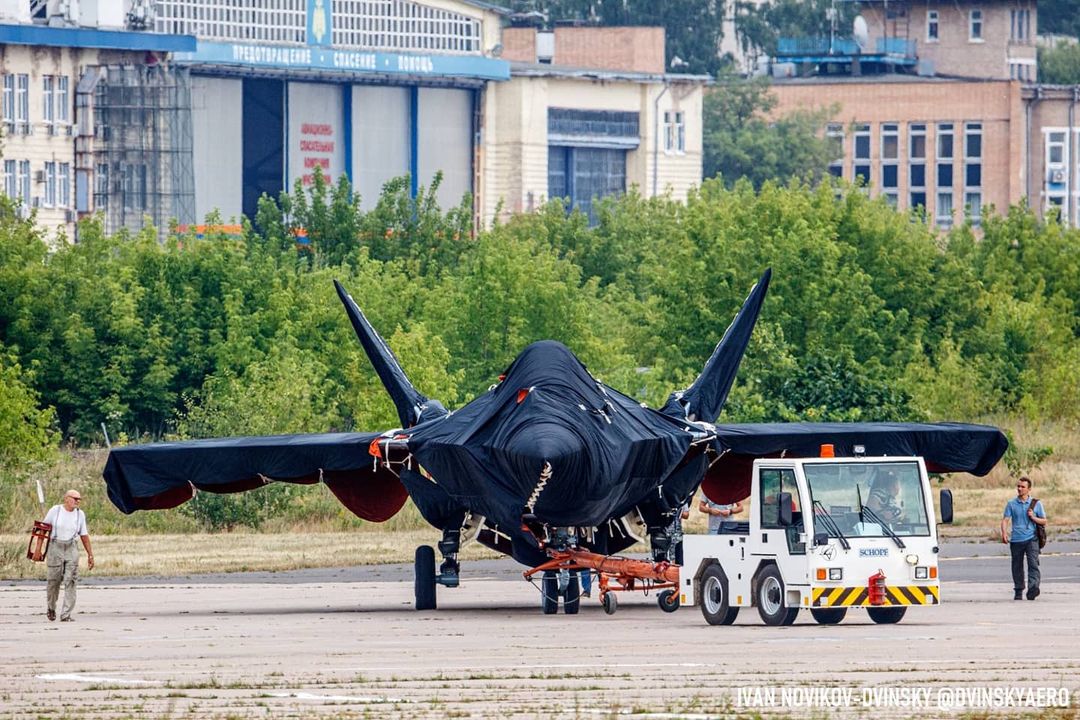


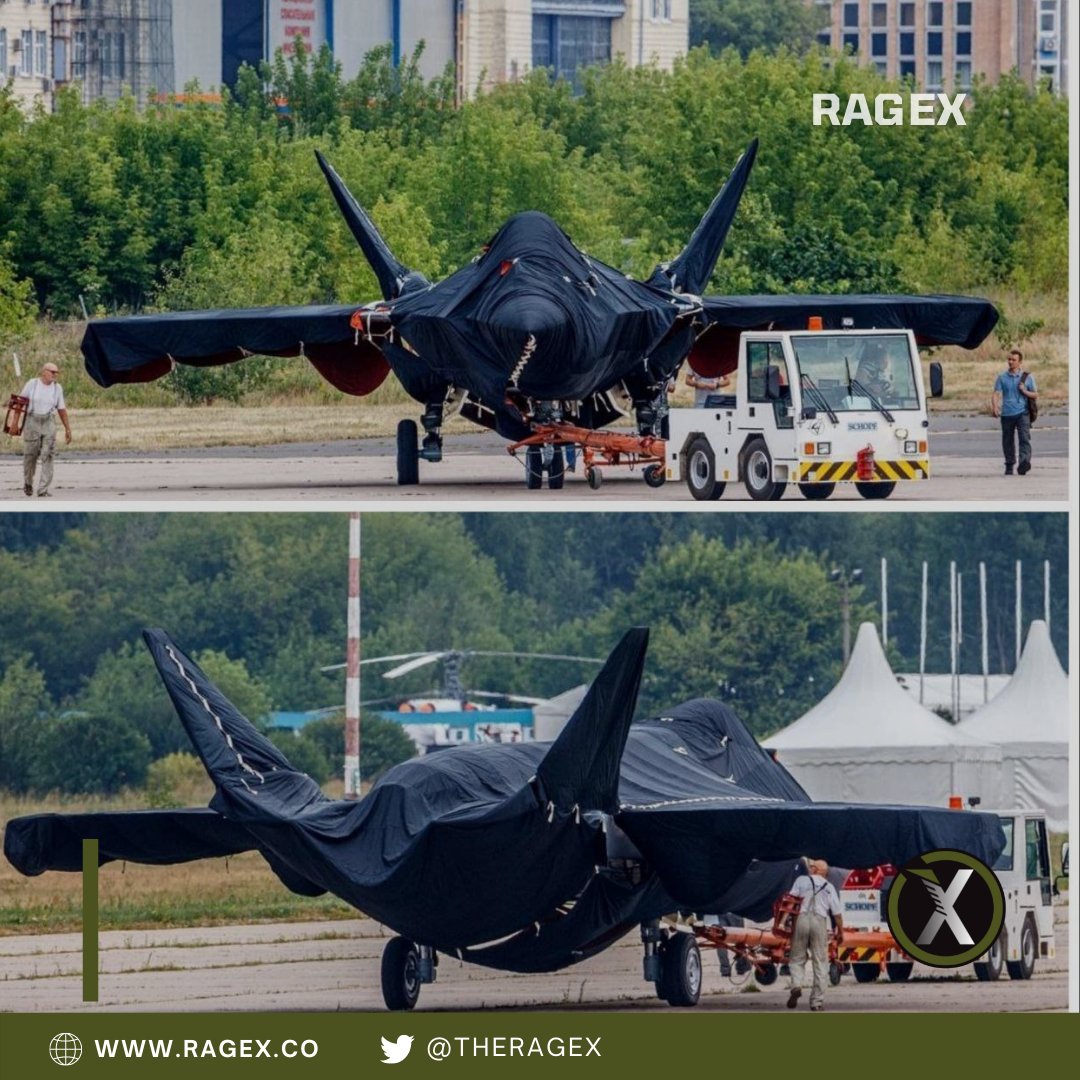



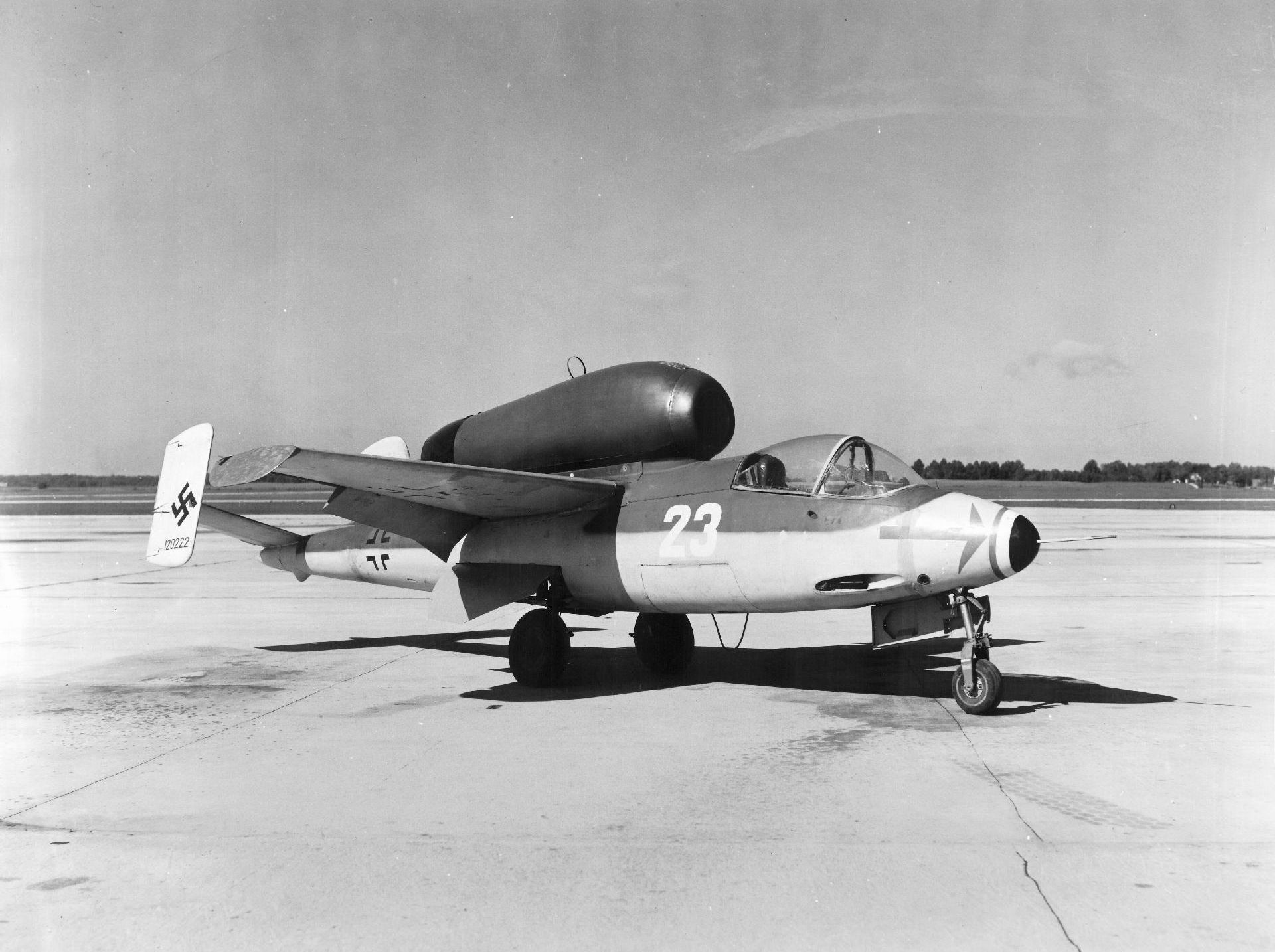

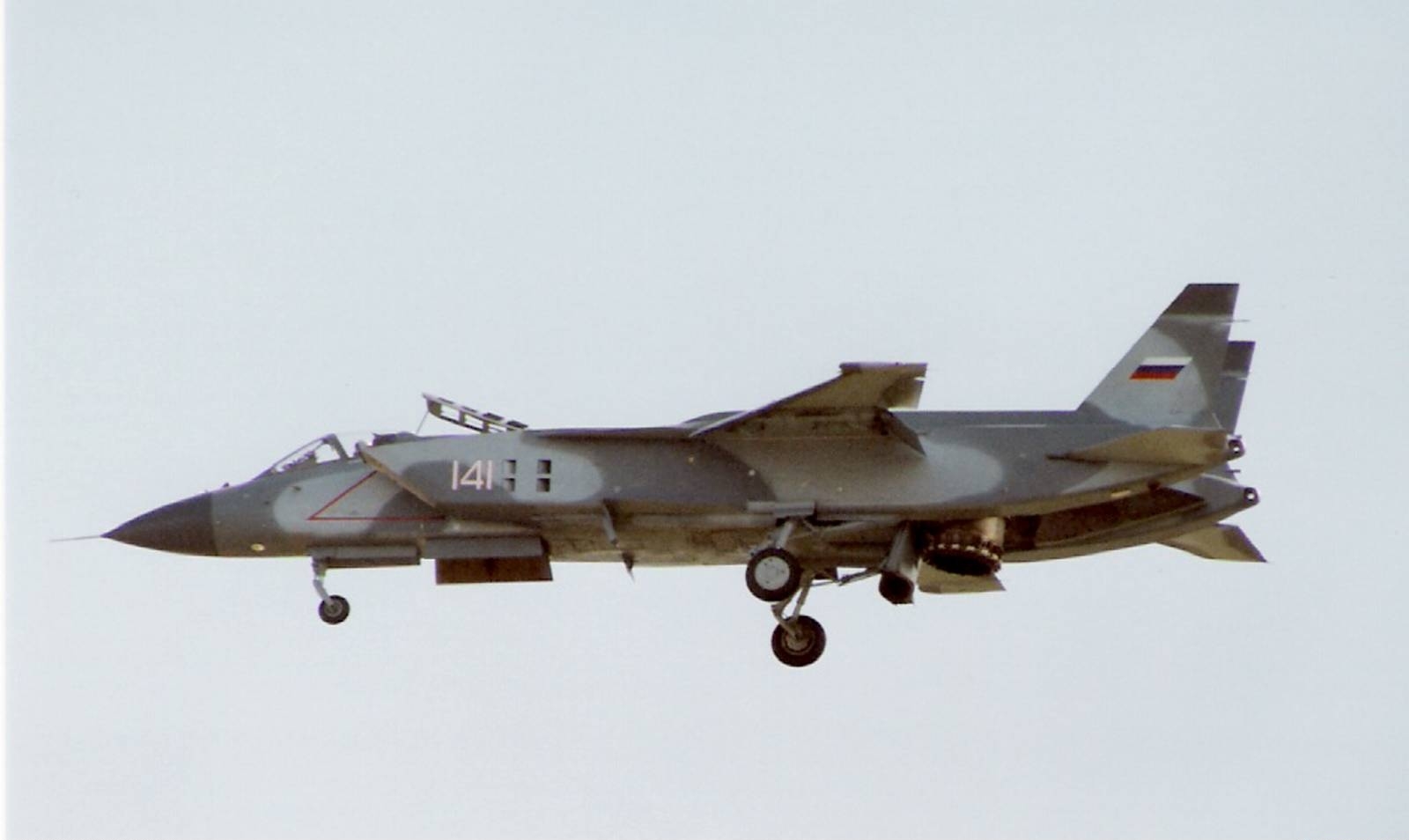


  In July 1959 the Royal Navy formed its first Sea Vixen squadron, an all-weather two-seat twin-engined carrier fighter that could just about break the sound barrier downhill. Rather un-sportingly 18 months later the USN formed its first F-4 Phantom squadron which could go twice as fast, carrying twice as many air-to-air missiles, while also hauling a selection of air-to-ground weaponry. It’s as if the Admiralty and British industry had had a total lack of imagination, although requiring the Sea Vixen to be able to conduct a free (catapult-less) take-off from the deck suggests they may have been smoking something.
  First flying in 1958, the same year as the Buccaneer, the Phantom used boundary layer control almost as much as the British aircraft*. Both aircraft also featured ailerons that drooped compensating for relatively small flaps in the take-off and landing configuration. Originally designed as an all-weather fleet defence interceptor the Phantom was seemingly capable of almost any role, being able to carry 16,000lbs of pretty much anything in the US or NATO inventory. In the case of the RF-4B it also carried out photoreconnaissance for the USMC from afloat and ashore. It was one of the first carrier aircraft to have an automatic landing capability, first trialled on 12 converted F-4Bs. They had been fitted with a system allowing them to be controlled by AWACs or surface ships to conduct interceptions, resulting in a change of designation to F-4G (a decade before the USAF F-4G). By using a retractable radar reflector in front of the nose gear the aircraft carrier could use the system to control the aircraft on approach to the deck. Although the interception capability never saw widespread use the deck landing capability was retrofitted to standard F-4Bs.Â
 First flying in 1958, the same year as the Buccaneer, the Phantom used boundary layer control almost as much as the British aircraft*. Both aircraft also featured ailerons that drooped compensating for relatively small flaps in the take-off and landing configuration. Originally designed as an all-weather fleet defence interceptor the Phantom was seemingly capable of almost any role, being able to carry 16,000lbs of pretty much anything in the US or NATO inventory. In the case of the RF-4B it also carried out photoreconnaissance for the USMC from afloat and ashore. It was one of the first carrier aircraft to have an automatic landing capability, first trialled on 12 converted F-4Bs. They had been fitted with a system allowing them to be controlled by AWACs or surface ships to conduct interceptions, resulting in a change of designation to F-4G (a decade before the USAF F-4G). By using a retractable radar reflector in front of the nose gear the aircraft carrier could use the system to control the aircraft on approach to the deck. Although the interception capability never saw widespread use the deck landing capability was retrofitted to standard F-4Bs.   Like the Intruder the Phantom saw its combat debut in Vietnam where it operated in the fighter and bomber roles. Unlike the Intruder it would also see service with the Royal Navy in a modified form, the J79 turbojets being replaced with Spey turbofans. Famously despite increasing the available thrust this reduced the top speed by around 0.2 Mach due to the drag from the larger intakes. They did however make the UK’s Phantoms the fastest accelerating up to around 400knots. They were also briefly considered for the USN as the F-4L for operations off the smaller Essex class carriers. However, a lack of commonality with the other US models and the potential threat to the Nimitz-class programme ended the idea.Â
 Like the Intruder the Phantom saw its combat debut in Vietnam where it operated in the fighter and bomber roles. Unlike the Intruder it would also see service with the Royal Navy in a modified form, the J79 turbojets being replaced with Spey turbofans. Famously despite increasing the available thrust this reduced the top speed by around 0.2 Mach due to the drag from the larger intakes. They did however make the UK’s Phantoms the fastest accelerating up to around 400knots. They were also briefly considered for the USN as the F-4L for operations off the smaller Essex class carriers. However, a lack of commonality with the other US models and the potential threat to the Nimitz-class programme ended the idea.   The Phantom remained in frontline service with the USN until 18 October 1986 when the type made its last carrier landing almost exactly 25 years after the first front-line squadron became carrier qualified. This period was the peak of the Cold War and throughout the F-4 proved a carrier aircraft could equal the best of any Air Force, if only because most of them ended up buying it.
  “If you have any interest in aviation, you’ll be surprised, entertained and fascinated by Hush-Kit – the world’s best aviation blogâ€. Rowland White, author of the best-selling ‘Vulcan 607’ I’ve selected the richest juiciest cuts of Hush-Kit, added a huge slab of new unpublished material, and with Unbound, I want to create a beautiful coffee-table book. Here’s theÂ
 “If you have any interest in aviation, you’ll be surprised, entertained and fascinated by Hush-Kit – the world’s best aviation blogâ€. Rowland White, author of the best-selling ‘Vulcan 607’ I’ve selected the richest juiciest cuts of Hush-Kit, added a huge slab of new unpublished material, and with Unbound, I want to create a beautiful coffee-table book. Here’s the   From the cocaine, blood and flying scarves of World War One dogfighting to the dark arts of modern air combat, here is an enthralling ode to these brutally exciting killing machines. The Hush-Kit Book of Warplanes is a beautifully designed, highly visual, collection of the best articles from the fascinating world of military aviation –hand-picked from the highly acclaimed Hush-kit online magazine (and mixed with a heavy punch of new exclusive material). It is packed with a feast of material, ranging from interviews with fighter pilots (including the English Electric Lightning, stealthy F-35B and Mach 3 MiG-25 ‘Foxbat’), to wicked satire, expert historical analysis, top 10s and all manner of things aeronautical, from the site described as “the thinking-man’s Top Gear… but for planesâ€. The solid well-researched information about aeroplanes is brilliantly combined with an irreverent attitude and real insight into the dangerous romantic world of combat aircraft. FEATURING


