Kick the tyres and light the fires.. pilots and their cliches

naca-test-pilot-george-cooper-stand-in-front-of-the-f-100-1954

Tired old cliches are standard issue to every pilot. Here are some of the old groaners that will have you banging your head against the table in exasperation. Remove 100 hours from your logbook for each offence you have made.

Mark-One Eyeball  refers to looking out of the window rather than relying on the instruments. Mainly used by airline pilots who wish they were flying a Piper Cub… to Australia.

Hot and High…...in reference to flying a Mooney or in more recent years a Cirrus SR22 and failing to slow it down before landing. The equivalent of walking into a nightclub with a younger girlfriend (or boyfriend) and knocking a table over.

Turning and Burning Indeed, the engines are functioning as we expected

Clockwork or Steam-powered instruments A sentimental or arrogant (depending on the orator) reference to the fact that times have changed.

Gear down and welded An unnecessary allusion to the standard downwind check that reminds the hirer that he/she is paying £160 per hour for an unsophisticated aircraft.

Kick the tyres and light the fires.. An irreverent nod to to pre-flight walkaround

Fill it with go juice...Once said by an instructor. I could never forgive her.

When it all goes quiet up front...I’m losing my patience now. An engine failure would be a relief.

Old pilots and bold pilots…. .Anyone who ever said these things has reduced their minima..that’s my contribution.

Runway behind you….blah blah blah…

Dorian Crook, proud co-owner of a Maule


Thank you for reading Hush-Kit. Our site is absolutely free and we have no advertisements. If you’ve enjoyed an article you can donate here. At the moment our contributors do not receive any payment but we’re hoping to reward them for their fascinating stories in the future.

Have a look at 10 worst British military aircraft, Su-35 versus Typhoon, 10 Best fighters of World War II , top WVR and BVR fighters of today, an interview with a Super Hornet pilot and a Pacifist’s Guide to Warplanes. Was the Spitfire overrated? Want something more bizarre? The Top Ten fictional aircraft is a fascinating read, as is The Strange Story and The Planet Satellite. The Fashion Versus Aircraft Camo is also a real cracker. Those interested in the Cold Way should read A pilot’s guide to flying and fighting in the Lightning. Those feeling less belligerent may enjoy A pilot’s farewell to the Airbus A340. Looking for something more humorous? Have a look at this F-35 satire and ‘Werner Herzog’s Guide to pusher bi-planes or the Ten most boring aircraft. In the mood for something more offensive? Try the NSFW 10 best looking American airplanes, or the same but for Canadians. 

Ten most expensive aircraft in production (2014)

rl2320.1L

The price for a modern aircraft is astonishing. Today there are at least nine types that cost more than $200 million dollars for a single aeroplane.  If the Northrop B-2  Spirit were still in production it would top this list at a horrendous $750 million per aircraft.


These are prices per single aircraft based on the best available figures, I’m happy to adjust any of these if you have better (and verifiable) data.

10. Airbus A400M Atlas

$198 million

AIR_A400M_Rollout_Seville_Top_lg

9. Lockheed Martin F-35 Lightning II

F-35B-Wasp

$200 million (average across A/B/C, 2014)

8. Boeing P-8 Poseidon

101119-N-2232G

$201.4 million

7. Boeing 787 Dreamliner

First 787 Flight Test Aerial Photos FA251253 K64839-01

$250 million

6. Airbus A350XWB

a350-msn2-003

US$260.9 million

5. Boeing C-17 Globemaster III

Jahaaaaj

$270 million

4. Boeing KC-46 Pegasus

AIR_KC-46_Refuels_B-2A_Concept_Boeing_lg

$287 million

3. Boeing 777


Boeing_777_above_clouds,_crop

US$296.0 million

2. Airbus MRTT

fsta20tornadoyzbct

$300 million

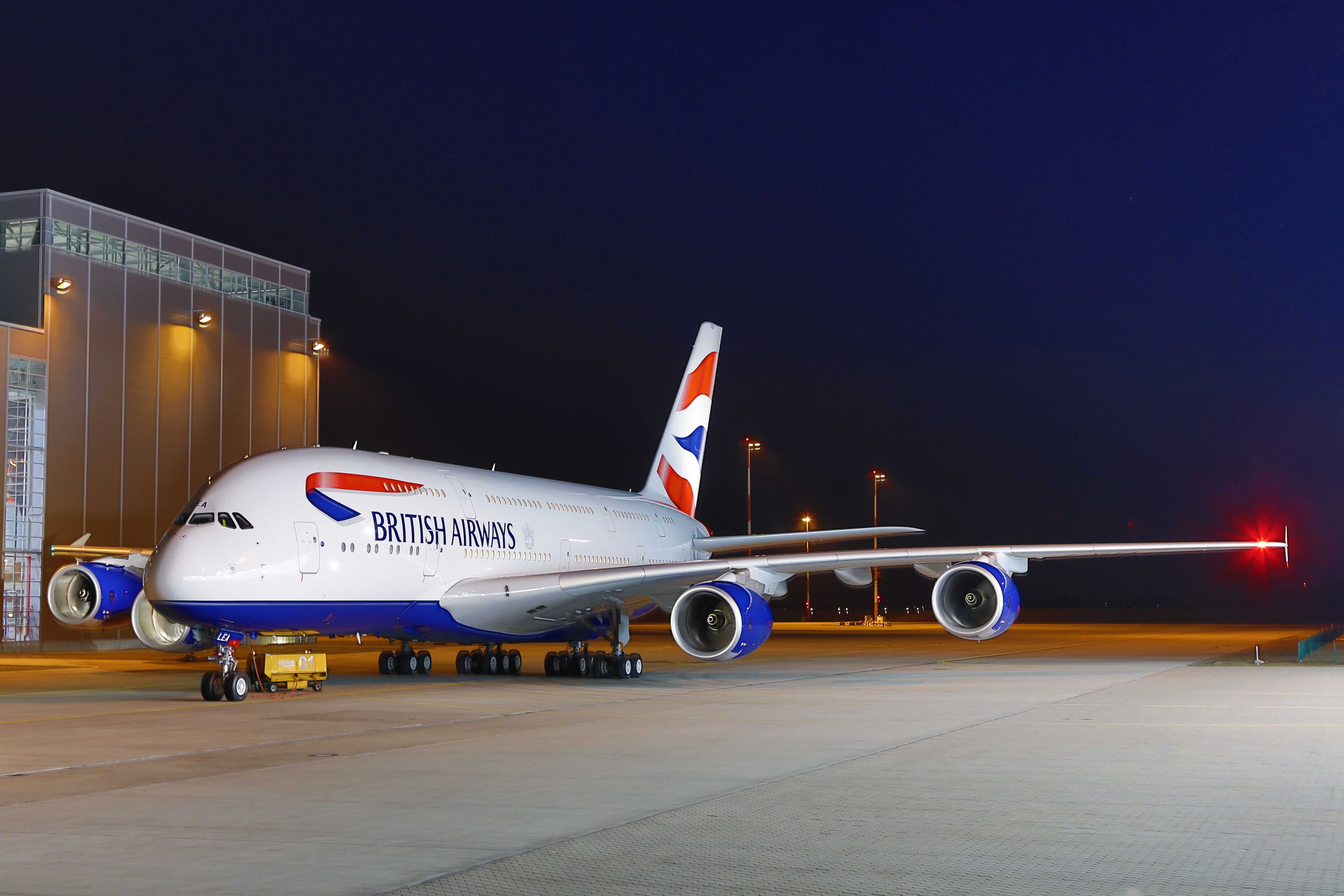
1. Airbus A380

ba3802

$397 million


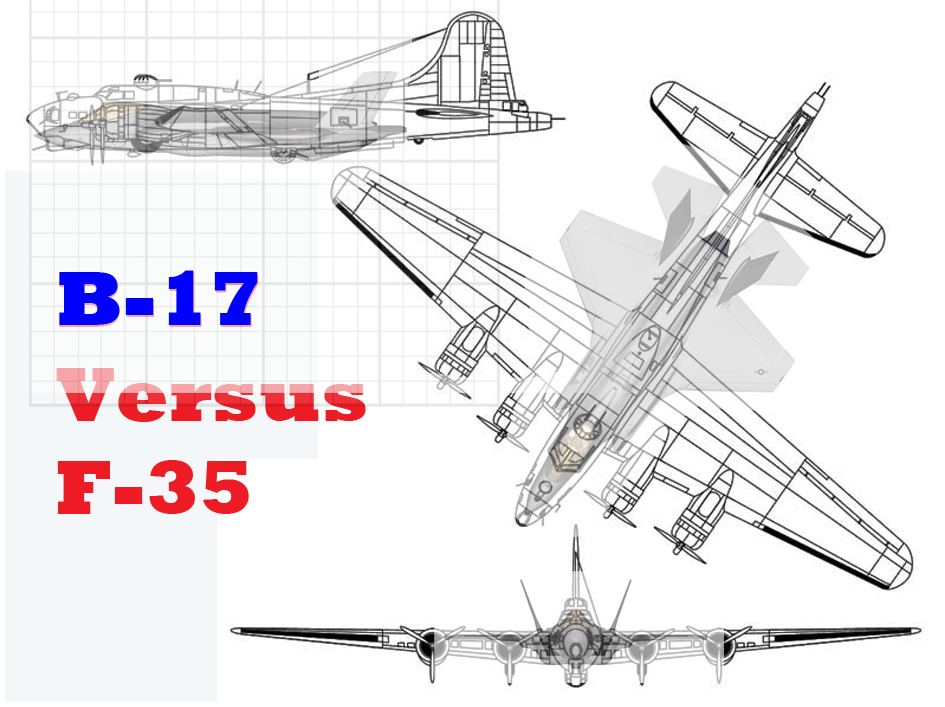
Fortress versus Lightning: B-17 and F-35 compared

Image

The Boeing B-17 and Lockheed Martin F-35 are two American bombers separated by around 70 years of history. They belong to the same weight class and bear interesting comparison.

First flight:

B-17 1935

X-35 2000 / F-35 2006

Time from requirement to service entry:

B-17 4 years (1934-1938)

F-35 23 years  (1992-2015 est. for B)

Performance

Maximum speed compared to average contemporary fighter:

B-17

287 mph/400 mph (71.75 %)

F-35

1200 mph/1450 mph (82.7 %)

Range:

B-17G:  1,738 nmi, 3219 km with 2700 kg (6,000 lb) bomb-load

F-35: 584 nm (1080 km) on internal fuel (combat radius)

Take-off speed:

B-17: 115 mph

F-35: 0 mph (B variant)

Maximum conceivable amount of enemy aircraft that can be destroyed by standard defensive weapons on one mission

F-35: 2

B-17G: 25+

Loads

Max loaded weight:

B-17G: 65K Ib

F-35: 70K Ib

Max internal bomb-load:

F-35: 4670 lbs

B-17: 8000 lbs (4500 lbs for long range missions)

Max bomb-load (including external munitions):

B-17: 17, 600 lbs

F-35: 18,000 Ibs

Max internal fuel:

F-35: 19,200 lb (C model)

B-17: 10, 200 lbs

Wing loading

F-35: 107.7 lb/ft² (526 kg/m²; 745 kg/m² max loaded)

B-17G: 38.0 lb/ft² (185.7 kg/m2)

Cost

B-17: $238,329

F-35: $170 million (flyaway average A/B/C 2013)

How many bottles of coke* could you buy with the cost of each aircraft (contemporary prices)?

F-35 is worth 113,333,333 cokes an aircraft.

B-17 was worth 4,766,580 cokes an aircraft in 1943.

The $238,329 it cost to build a B-17 would be worth $3,209,272.19 today.

*based on bottle of Coca-Cola (1943): 5 cents, (2014): $1.50

The last turbojet: the tale of the Lyulka AL-21

SU-24m-Takeoff-Desktop-HD-Widescreen-Wallpaper-1024x640

The turbojet is an endangered species–  so what aircraft are left that still use it? It is easy to think of the dwindling MiG-21 populations, and at a push the EA-6B – but you may be surprised to recall that the Su-24 and Su-25 both have turbojet engines. The ground attack mission, with its frequent long range and low-level operations, would seem to necessitate the use of turbofans. So while the West used turbofans on the A-7, Tornado, F-111, A-10 and F-15E, why on earth would the Soviet Union use fuel-thirsty turbojets on their equivalent aircraft? One reason why they employ this seemingly archaic powerplant is the turbojet’s unfussy tolerance of any kind of fuel, a blessing in the event of fuel shortages in war. The Su-25’s R-95Sh was designed to be able to run using different fuels, it can even run for four hours on ground vehicle diesel.

The turbojet aircraft that has dominated the news this year has been the Su-25, but it is the engine of the Su-24 that we are looking at today, the Lyulka AL-21. Designed by Ukrainian Arkhip M. Lyul’ka in 1959-60, the AL-21 is a turbojet with a 14-stage axial compressor with variable stator blades. This engine powered the Sukhoi Su-17, the Su-24, early MiG-23s and (as a non-reheated variant) the Yak-38. The engine also powered the Sukhoi T-10, an aircraft that became with many modifications, the famous Su-27 ‘Flanker’. By 1982 nine ‘Flanker-A’ prototypes had flown, seven with AL-21F-3A1s and only two with Al-31Fs.

The AL-31F which powered the definitive Su-27 was based on the AL-21F-3 which powered the Su-17/20 and the Su-24. It is interesting to note that Lyul’ka was aware of the turbofan concept as early as the 1950s, but politics got in the way of him being able to apply these theories in practice. Russian-born Dr. Pavel Aleksandrovich Soloviev was in a better position and it was his D-20P that became the first turbofan to enter service. The D-20P-equipped Tupolev Tu-124 entered service on 2nd October 1962 as the world’s first turbofan airliner. Today almost all jetliners are turbofans.

Another Su-25 shot down today

su25ukraine09_ukrainianairforce

Another Ukrainian Su-25 downed

In an age supposedly dominated by high technology, the warplane involved in more headlines than any other in 2014 is the simple Sukhoi Su-25. This aircraft is an armoured close air support developed by the Soviet Union and remains in widespread use around the world. 

Iraq

When the Iraqi government forces urgently required close air support they turned to the Su-25; Iran obligingly giving back the airframes they ‘confiscated’ from when they claimed asylum to operate alongside ex-Russian aircraft which were delivered with alacrity to aid the fight against ISIS (though in the event the Iraq air force didn’t have the experience to operate them). 

Russo-Ukraine War

In 26th May, Ukrainian Su-25s supported Mi-24s helicopters during a military operation to regain control over the airport in Donetsk, during which the Su-25s fired air to ground rockets. On 2nd July 2014, a Ukrainian Su-25 crashed due to a technical fault.

According to Russian new agencies and western anti-globalisation websites, the Malaysian Airlines 777MH17 was shot-down by a Ukrainian Su-25. The Western view is that it was downed mistakenly by pro-Russian forces with a Buk surface-based defence system. 

On 16th another Su-25 was shot down. Ukrainians claim it was shot down by a Russian MiG-29 fighter with a R-27T missile, allegations which the Russian government have denied. On 23rd July 2014, two Su-25s were shot down in the Donetsk region of Ukraine. A spokesperson from the National Security and Defense Council of Ukraine stated that the planes were shot down by missiles fired from Russia. Another Ukrainian Su-25 single-seat fighter was shot down today by pro-Russian forces over Luhansk Oblast in eastern Ukraine (August 20th).

The Hush-Kit aviation forum is now open!

Collection_of_military_aircraft

I wanted to set up an aviation forum freed from the tiresome ranting and gobbledegook that plagues most sites- so I did. If you’d like to get involved in well-informed polite debates on aviation subjects of any kind, then click here and get posting. I very much look forward to hearing from you.Â