In choosing the ten best-looking US airplanes, where should you begin? Some aircraft are very beautiful in the real world, but are not so photogenic. The Constellation is wonderful in reality, but looks awkwardly hump-backed in pictures. The F-15 has enormous presence and dynamic lines, but something in the way its sections fit together, give its overall shape a lack of coherency. Several of the aircraft selected have beautifully curvy lines, particularly the sensuous Panther and ‘Moonbat’. The B-1B should be viewed at dawn, when its aquatic body and intelligent face give it an exotic, almost temple-like grace. Some US aircraft are pure Roger Ramjet- these unapologetically brash, flag-waving lunatics are a world of fun, and are typified by the likes of the B-58 Hustler and XB-70 Valkyrie. The Lockheed Electra Junior, the third star of Casablanca, is perfection. I hope you enjoy my selection, I’m sure you won’t agree with all my choices, but no doubt your favourite (or favorite) would have made it in, had I space for eleven.
Once we had made our selection, we sought a second opinion. It would have been too easy to get an expert to describe the aeroplanes. So instead, we turned to a non-expert, in fact we turned to a Hip-Hop musician/croupier/sound engineer named George, to assess our top ten.
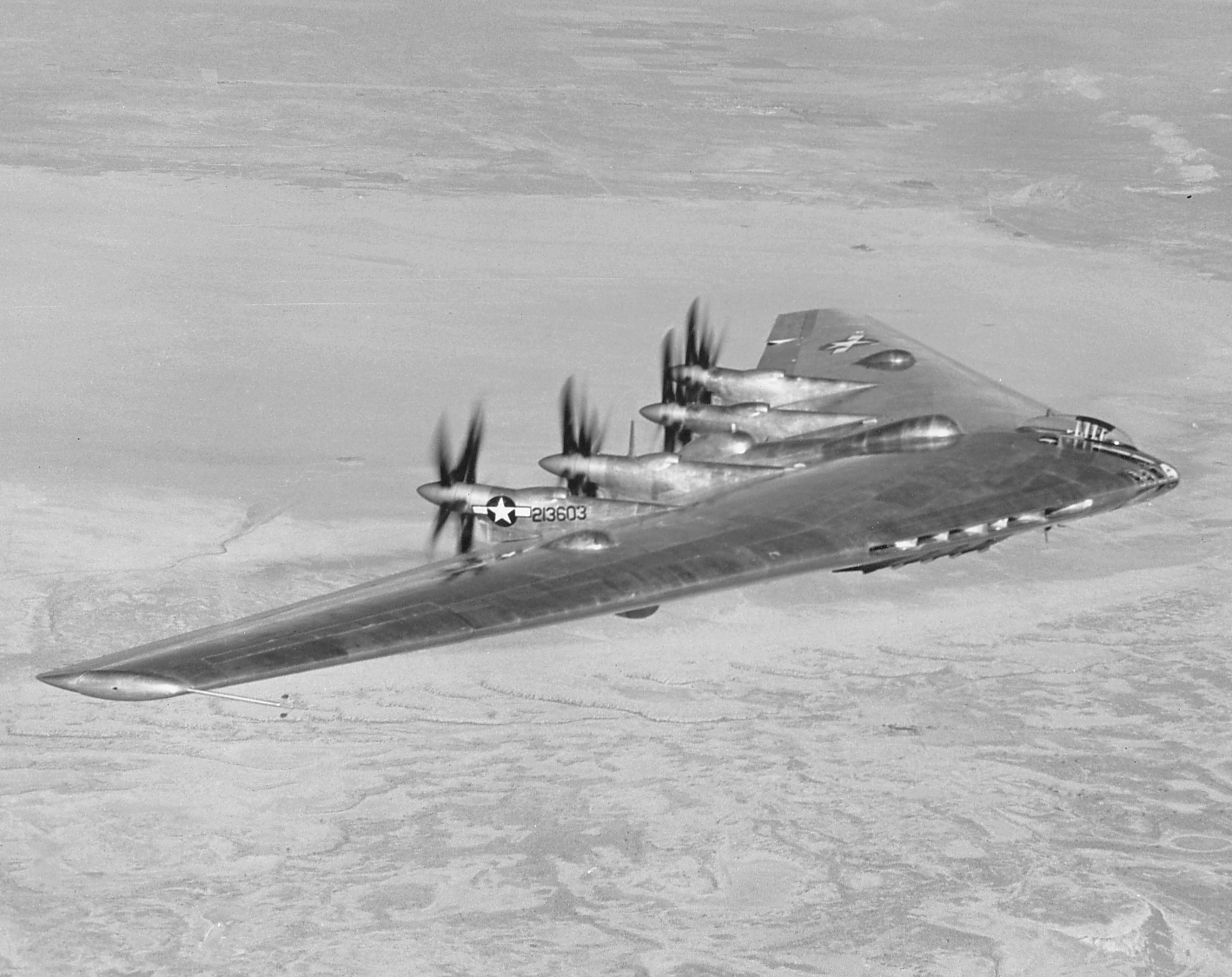
10. Northrop YB-35
 George: “This would look cool with jet engines, but those propellers make it look goofy and it has a face like a gerbil (if you put any adjective before the word gerbil it immediately becomes the voice of Jeremy Clarkson, believe me I tried). I imagine the aeroplane factory had a bunch of leftovers lying around and cobbled them into this. Wings aren’t generally the best looking bits of planes. This is the aviation equivalent of one of those internal conjoined twins that is surgically removed and is a wad of flesh, teeth and hair.”

9. North American XB-70 Valkyrie
George: “Boring. Looks like it’s from an 80s kids cartoon. where the animators wanted a plane that would be quick and easy to make Koreans draw again and again. This is probably piloted by two children and a magical comedy creature, is featured heavily in the title sequence but is hardly ever in the actual show. Reeks of disappointment and broken dreams. White should be a cool colour for an aeroplane but to me it looks like a plastic fork.“

8. McDonnell XP-67 ‘Moonbat’
George: “Seems to be very pretty but maybe because it looks like there’s Vaseline smeared on the lens, show me another angle in HD. It’s like watching that old grainy porno of Marilyn Monroe, kind of sexy but there’s always the knowledge that you’re wanking over an unhappy dead woman.”

7. Grumman F9F Panther
George: “It’s got a bum like a dolphin, nature’s smartest and most fuckable mammal. The colour scheme is like a shiny pair of Nikes and the livery is tastefully understated. It also looks surprisingly good sitting on the tarmac which usually knocks a good few points off a plane’s attractiveness. This is the warplane to pick up a date in.”

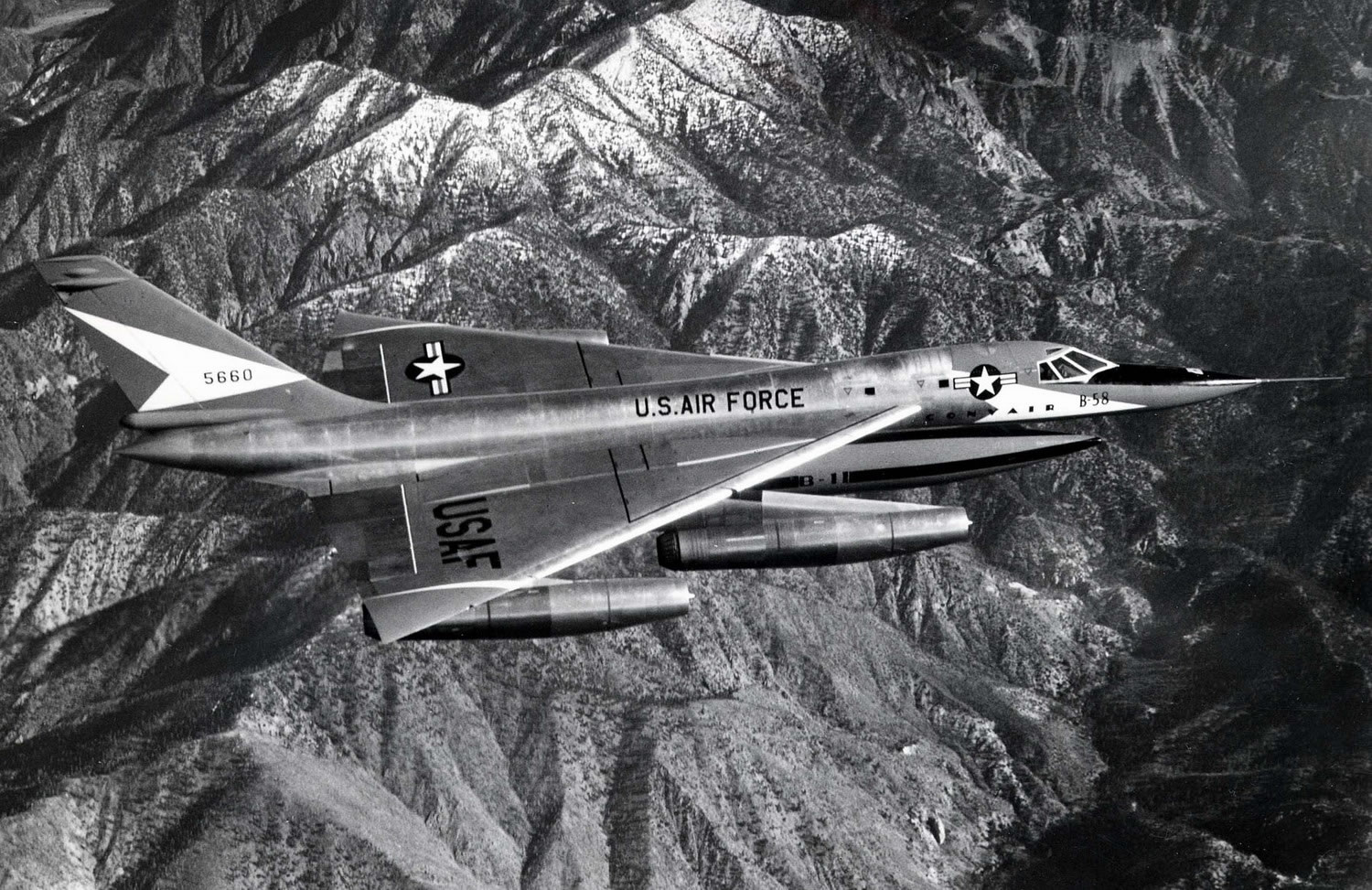
6. Convair B-58 Hustler
George: “It’s got clown make-up and it’s carrying a rolled up circus tent. Also the name Hustler. Type that into Google images while your boss or spouse is watching.“

5. Rockwell B-1B Lancer
George: “This plane looks terrifying. Which I suppose is a good thing for a warplane. Its nose has barbs on it like a flesh burrowing parasite or a cat’s penis. I would not call this plane good-looking. Unless you think cat’s penises are good looking. Which I generally don’t.“

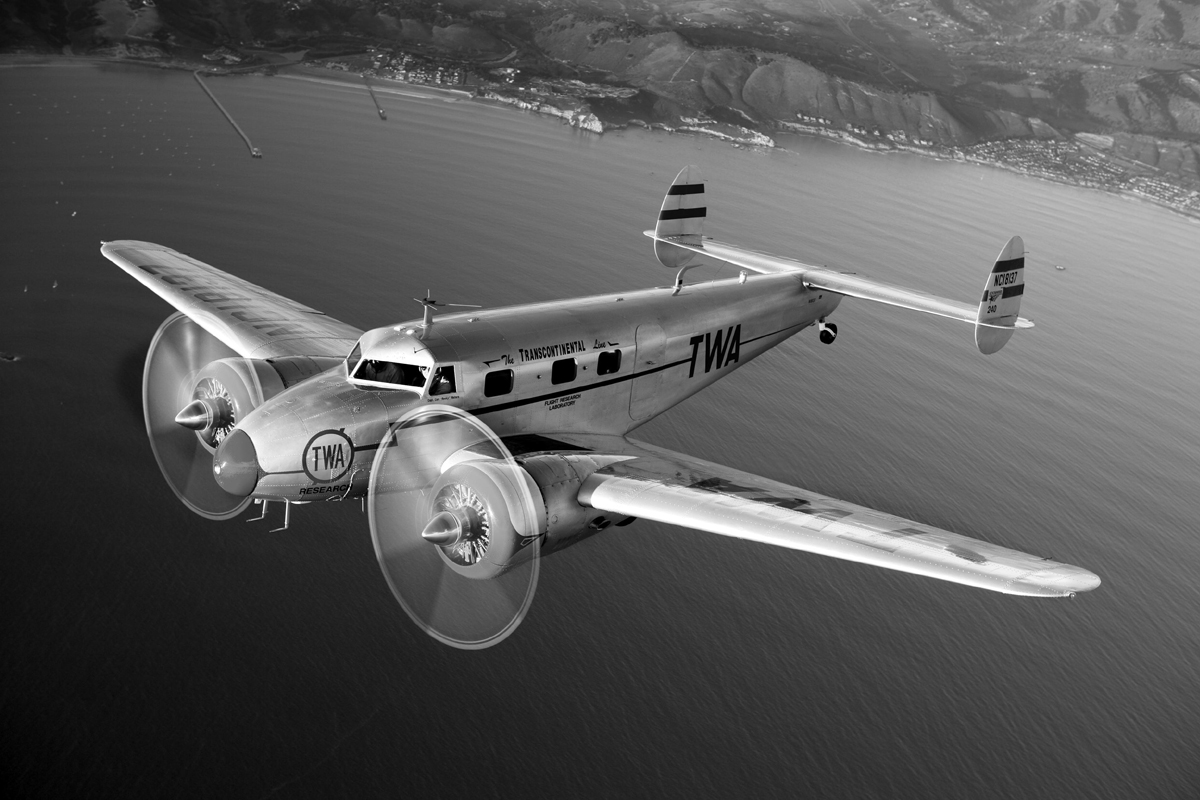
4. Lockheed 12A Electra Junior
George: “Again a bit of a squinty clown face. I think if you saw this plane on the ground it’d be nothing special but the photo make it look nice. Like the menu at a Welcome Break. I bet at least one person aboard this aircraft beats his wife. Different times, but still.”

 3. Convair F-106 Delta Dart
George: “Yes I like this. Arrowhead windshield, triangle wings and pinched waist. Looks like it was designed by a committee of 10 year old boys, but that is by no means a bad thing. Also isn’t that the exact same colour scheme as the rebel forces in ‘The Empire Strikes Back‘? “

2. North American P-51 Mustang
George: “Ugh no! These are so fugly they have to paint distracting childish nonsense on them. One of them is called Scat VI which is a decent film, but not as good as Scat I through V and definitely not good enough to name a plane after. The air intakes look like flappy doggy dicks and the whole thing is a mess of straight lines and uninspiring curves. Also, either these planes are tiny or they’re only flown by men with big fat bobble-heads. A plane designed to be flown by the young and the lithe, now exclusively flown by the old and the fat.”

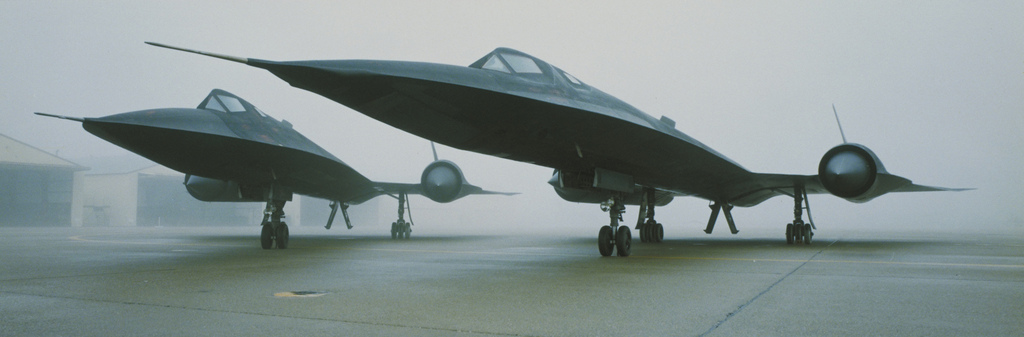
1. Lockheed SR-71 Blackbird
George: “I completely agree. Looks dangerous, without looking brutal. Nimble without looking fragile. Monstrous engines that look integral to the airframe. Long curves with that angular cockpit. I’ve never seen an unflattering angle of this thing. Plus being unencumbered with ugly weaponry helps.“

George’s score of our Top Ten:Â Â 4/10
Must try harder.
Thank you for reading Hush-Kit. Our site is absolutely free and we have no advertisements. If you’ve enjoyed an article you can donate here– it doesn’t have to be a large amount, every pound is gratefully received. If you can’t afford to donate anything then don’t worry.
At the moment our contributors do not receive any payment but we’re hoping to reward them for their fascinating stories in the future.
Follow my vapour trail on Twitter:Â @Hush_kit
Â
 If you enjoyed this, have a look at the top ten British, French, Swedish, Australian, Soviet and German aeroplanes. Wanting Something a little more exotic? Try the top ten fictional aircraft.

“If you have any interest in aviation, you’ll be surprised, entertained and fascinated by Hush-Kit – the world’s best aviation blogâ€. Rowland White, author of the best-selling ‘Vulcan 607’
I’ve selected the richest juiciest cuts of Hush-Kit, added a huge slab of new unpublished material, and with Unbound, I want to create a beautiful coffee-table book. Pre-order your copy now right here Â
TO AVOID DISAPPOINTMENT PRE-ORDER YOUR COPY NOW

From the cocaine, blood and flying scarves of World War One dogfighting to the dark arts of modern air combat, here is an enthralling ode to these brutally exciting killing machines.
The Hush-Kit Book of Warplanes is a beautifully designed, highly visual, collection of the best articles from the fascinating world of military aviation –hand-picked from the highly acclaimed Hush-kit online magazine (and mixed with a heavy punch of new exclusive material). It is packed with a feast of material, ranging from interviews with fighter pilots (including the English Electric Lightning, stealthy F-35B and Mach 3 MiG-25 ‘Foxbat’), to wicked satire, expert historical analysis, top 10s and all manner of things aeronautical, from the site described as:
“the thinking-man’s Top Gear… but for planes”.
The solid well-researched information about aeroplanes is brilliantly combined with an irreverent attitude and real insight into the dangerous romantic world of combat aircraft.
FEATURING
-
-
-
- Interviews with pilots of the F-14 Tomcat, Mirage, Typhoon, MiG-25, MiG-27, English Electric Lighting, Harrier, F-15, B-52 and many more.
- Engaging Top (and bottom) 10s including: Greatest fighter aircraft of World War II, Worst British aircraft, Worst Soviet aircraft and many more insanely specific ones.
- Expert analysis of weapons, tactics and technology.
- A look into art and culture’s love affair with the aeroplane.
- Bizarre moments in aviation history.
- Fascinating insights into exceptionally obscure warplanes.

The book will be a stunning object: an essential addition to the library of anyone with even a passing interest in the high-flying world of warplanes, and featuring first-rate photography and a wealth of new world-class illustrations.

Rewards levels include these packs of specially produced trump cards.


Pre-order your copy now right here Â
I can only do it with your support.
 The Aero 45 is as much art as it is aircraft. How can I explain this Czechoslovakian aeroplane? Here is an amorphous, yet beautiful, thing that confounds simple description. In profile the Art Deco fuselage, with its arching roof, and flat belly, appears dolphin-like. Yet from the front, the large cabin windows give it an almost arthropodic or insect-like appearance. When viewed from above or below, it takes on the form of yet another animal; the long, narrow wings give it the look of a graceful, soaring shorebird.