The RAF High Speed Flight was the original ‘Team GB’, winning the Schneider Trophy seaplane racing contest outright for Great Britain in 1931 with three successive victories – overcoming the bulbous red Macchi’s of Mussolini’s Italy twice, and finally only needing to compete against itself due to everyone else running out of money.
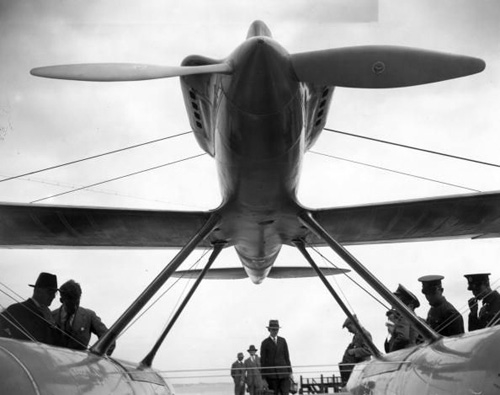
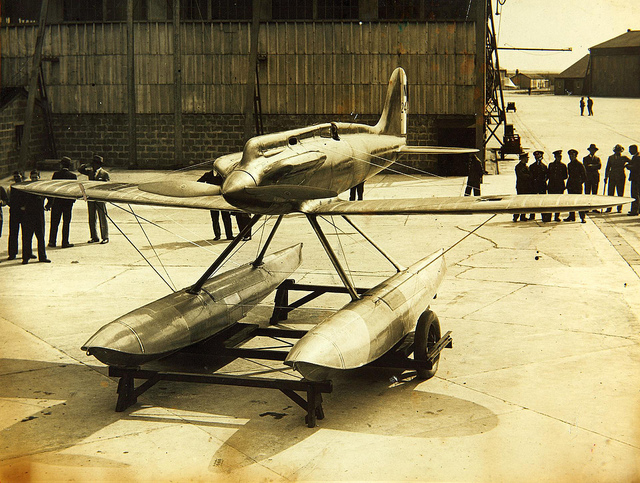
The triumphant Supermarine S6b became the iconic aircraft of the competition, the embodiment of aerodynamic and engine advances that later haunted the skies over Europe in the new form of the Spitfire and the Rolls Royce Merlin – but the international rivalry around the Trophy spawned many more remarkable planes.
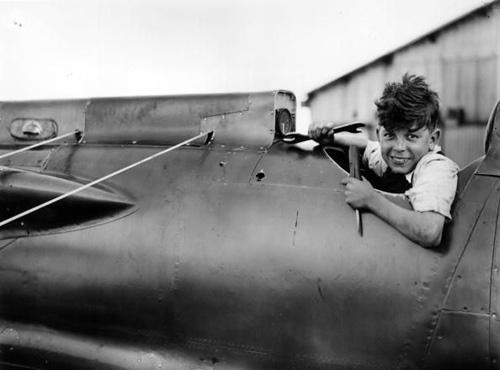
Two aircraft, designed by Henry Folland and his team at Gloster for the 1929 race, were unable to compete due to engine issues. The day after, one was flown to a world record speed – which it only held for two days. It was painted “old-goldâ€, a dark brass-like colour – and nicknamed the “Golden Arrowâ€.
There is no trace of what happened to the Gloster VI’s after 1931, and there are no colour photographs of them – but there is something about the dark, smooth shine of the Golden Arrow that gets me every time.
Alfred Cyril Lovesey was the king of British speed. He was the man that checked the Rolls-Royce R engines that won Britain the Schnieder Trophy. He was the man that doubled the power of the war-winning Merlin. Following the war he began work on Rolls-Royce’s first axial flow jetÂ
(Put very simply, in an axial turbojet the air goes straight through the engine, rather than wiggling around.)
The very first British axial-flow engine was the Metropolitan-Vickers F.2 of 1940/1, however this was considered too unreliable and Britain instead opted for the centrifugal flow jet. The centrifugal flow jet proved a technological cul-de-sac (so far, engine history moves in cycles, pun intended). The F.2 had been the right approach after all, but was used to power another technological cul-de-sac, the Saunders-Roe SR.A/1. The F.2 was refined into the Armstrong Siddeley Sapphire (which powered the early Hunters and Victors, and the piss-poor Javelin).
Rolls-Royce also wanted a piece of the axial pie, and in 1945 had put their best team on the case. Alan Arnold Griffith headed the effort, which was only fair, as he had been one of the very earliest proponents of axial flow (back in the 1920s), but had been elbowed out of the way by Whittle, who had had other ideas. By 1948 the engine (initially dubbed the AJ65, Axial Jet 6,500 lbs, but by first flight known as the Avon RA.2) was flying on a Avro Lancastrian.
The Avon entered service in 1950 on the English Electric Canberra B.2. With the great Lovesey now at the helm of the Avon programme, it was further refined into the best engine of its generation.
It would go on to power the Hunter, Comet and Lightning among many aircraft types (see gallery below). It was in production as an aero-engine from 1950-74, with over 11,000 produced. The most powerful version was the Swedish-built RM6, which developed a mighty 17,110 lbs of thrust in reheat, enabling the the SAAB Draken to reach Mach 2 on a single engine.
In a magnificent curtain call, it won Britain the land speed record in 1983, as the heart of the Thrust2 car.
Thank you for reading Hush-Kit. Our site is absolutely free and we have no advertisements. If you’ve enjoyed an article you can donate here. At the moment our contributors do not receive any payment but we’re hoping to reward them for their fascinating stories in the future.
In this subjunctive history, we look at how the Luftwaffe’s Mitsubishi A6M ‘Zero’s were a decisive weapon in the Battle of Britain.
In the Messerschmitt Bf 109 the Luftwaffe possessed possibly the World’s finest fighter aircraft at the beginning of the Second World War. It was superlative in all regards save one: range. Given the Luftwaffe’s primary role as a tactical force, operating in support of the Army in a Blitzkrieg attack, this was not seen as a major problem. Despite this, some consideration was given by the Reichsluftfahrtministerium (RLM) to the problem of bomber escort over longer ranges and the initial response to this requirement was Messerschmitt’s Bf 110 which seemed to offer a fine solution and was, in its way, a fine aircraft. It was, however, a large twin-engined machine and a small but vocal group of officers within the Luftwaffe remained unconvinced by its ability to combat the latest single-engined fighters that were being constructed in ever-greater numbers in France and the United Kingdom – aircraft that would however be hard pressed to deal with a machine in the class of the 109.
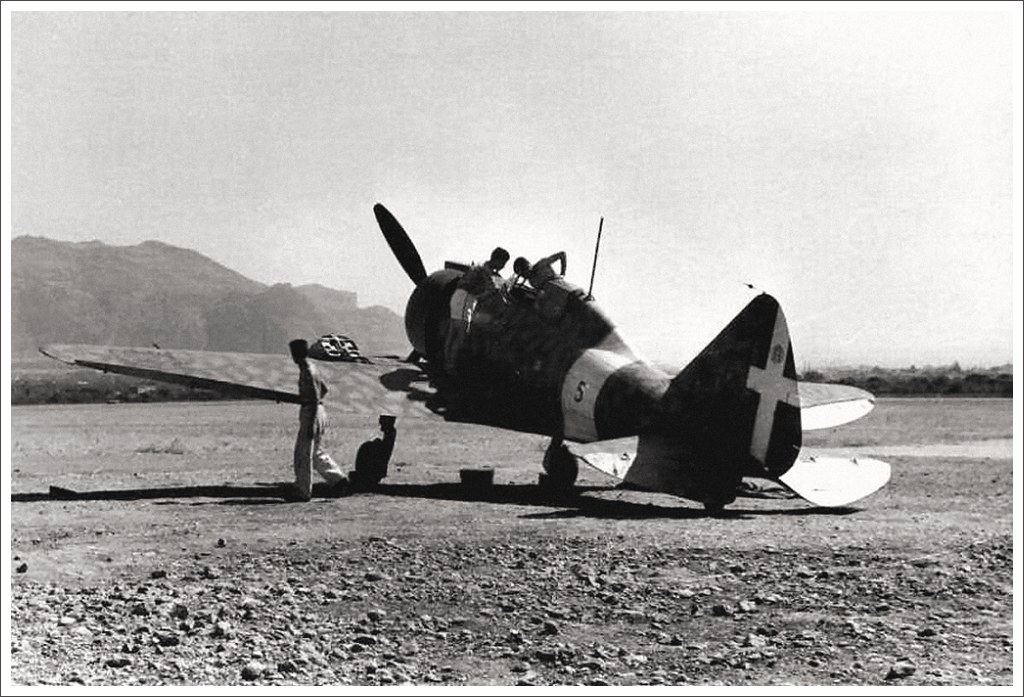
In early 1939 the RLM began to look around for a suitable single-engined fighter to operate in concert with the 109 over greater distances. One Italian aircraft appeared to fit the bill admirably, the Reggiane Re.2000. Unfortunately for the Germans the Reggiane fighter had already been ordered in quantity by the RAF and the Reggiane factory had no spare capacity nor were they particularly keen on the prospect of granting a production licence to a German manufacturer as Germany represented the likeliest opponent for any RAF fighter in the near future. Thus the Germans looked further afield and their attention became drawn to a small fighter newly produced by Japan and barely noticed by the International community, the Mitsubishi A6M, first flown in the Imperial Japanese year 2600 and thus known as Type 00 ‘Reisen’, the Zero.
After signing the 1936 Anti-Comintern pact, Japan was keen to foster good relations with Germany and following wildly enthusiastic reports from German test-pilots flying pre-series machines a production licence was sought and gained. Additionally a small number of Japanese-built aircraft were despatched to Germany. The first German-built aircraft was completed by Arado in record time and, amazingly, Zeros entered Luftwaffe service before they appeared in the ranks of the Imperial Japanese Navy. By the time the Zero was available in numbers the Polish and French campaigns were over and some began to regard the Japanese fighter as a needless extravagance in the light of the Luftwaffe’s dominance over any opposition so far encountered by it. The upcoming Battle of Britain would see that opinion reversed in the most dramatic fashion.
The initial forays by the Luftwaffe over Britain produced mixed-results. The airfields attacked in the early stages were within range of the 109s and bomber losses were not excessive. By contrast both the Stukas and the Bf 110s suffered appalling losses at the hands of Fighter Command’s Spitfires and Hurricanes and were quickly withdrawn from combat. Lacking the desire to commit a non-German aircraft to the fray, the Zeros were initially lightly used but with the shift of the attack towards London they would became the saviours of the German forces. The 109s could operate for barely ten minutes over London before their fuel level compelled them to return to base.
No such problem for the Zero, with triple the range (more with a drop tank), it could not only escort the bombers to and from France but could also protect the aircraft of Luftflotte 5 on their attacks from Norway. So outstanding was the Zero’s combat persistence that Spitfire pilots sent to intercept them found that they had to break off combat to refuel.  This endurance would have counted for naught had it been an inferior combat aircraft but the Zero was truly exceptional. The A6M2 as committed to combat over Britain was better armed than any contemporary fighter (with the exception of the flawed Messerschmitt 110) mounting two machine guns and two 20-mm cannon. Its manoeuvrability was legendary and it could easily out turn any European monoplane fighter.
It is true that both the 109 and Spitfire were faster but the Zero could sustain a much higher angle of attack forcing an attacking fighter to break off or stall. Its only real flaw was its light construction and lack of armour but with the rifle-calibre machine guns mounted by the British fighters this was not so much of a problem as it would later prove when the Zero was required to deal with a later generation of American fighters in the Pacific. Nonetheless many Zeros were lost to damage that any British (or indeed German) fighter would have survived.
It was not invincible but, out-manoeuvred and out-gunned, the RAF fighters needed a height advantage to have a reasonable chance of success. Scrambled to intercept incoming formations with limited notice, height was an advantage the British aircraft seldom possessed. The Spitfire with its superior speed could break off combat at will but the Hurricane was slower, less manoeuvrable and less well armed than the Zero. German pilots were generally veterans of Poland and France or Spain and this experience, coupled with the dominant technical superiority of their Japanese equipment resulted in the gradual erosion of Fighter Command until an effective defence could no longer be maintained and the Heinkel 111s and Junkers 88s could bomb virtually at will and the Battle of Britain was effectively won for Germany.
Desperate measures would be needed to avoid invasion and defeat.
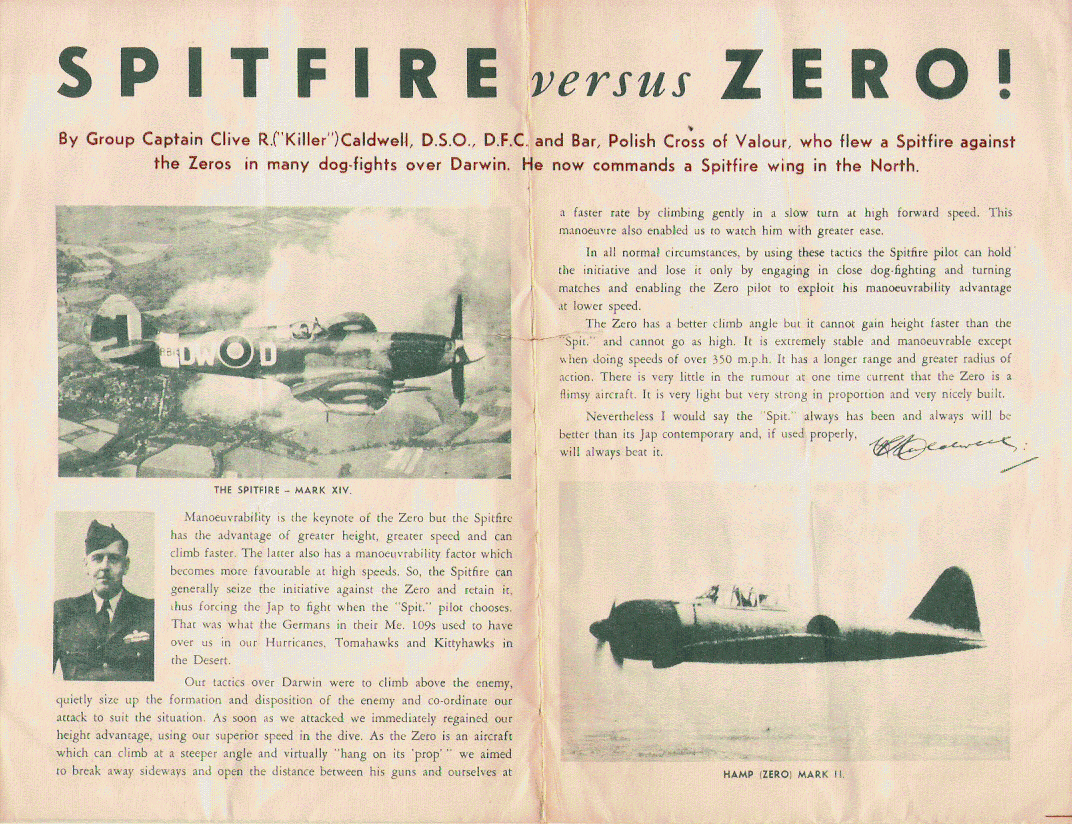
Captain Eric ‘Winkle’ Brown evaluated a Zero at the A&AEE and said later of the aircraft “the Zero had ruled the roost totally and was the finest fighter in the world until mid-1943â€. It is a compelling irony that this invader from the land of the Rising Sun led to the twilight of the British Empire.
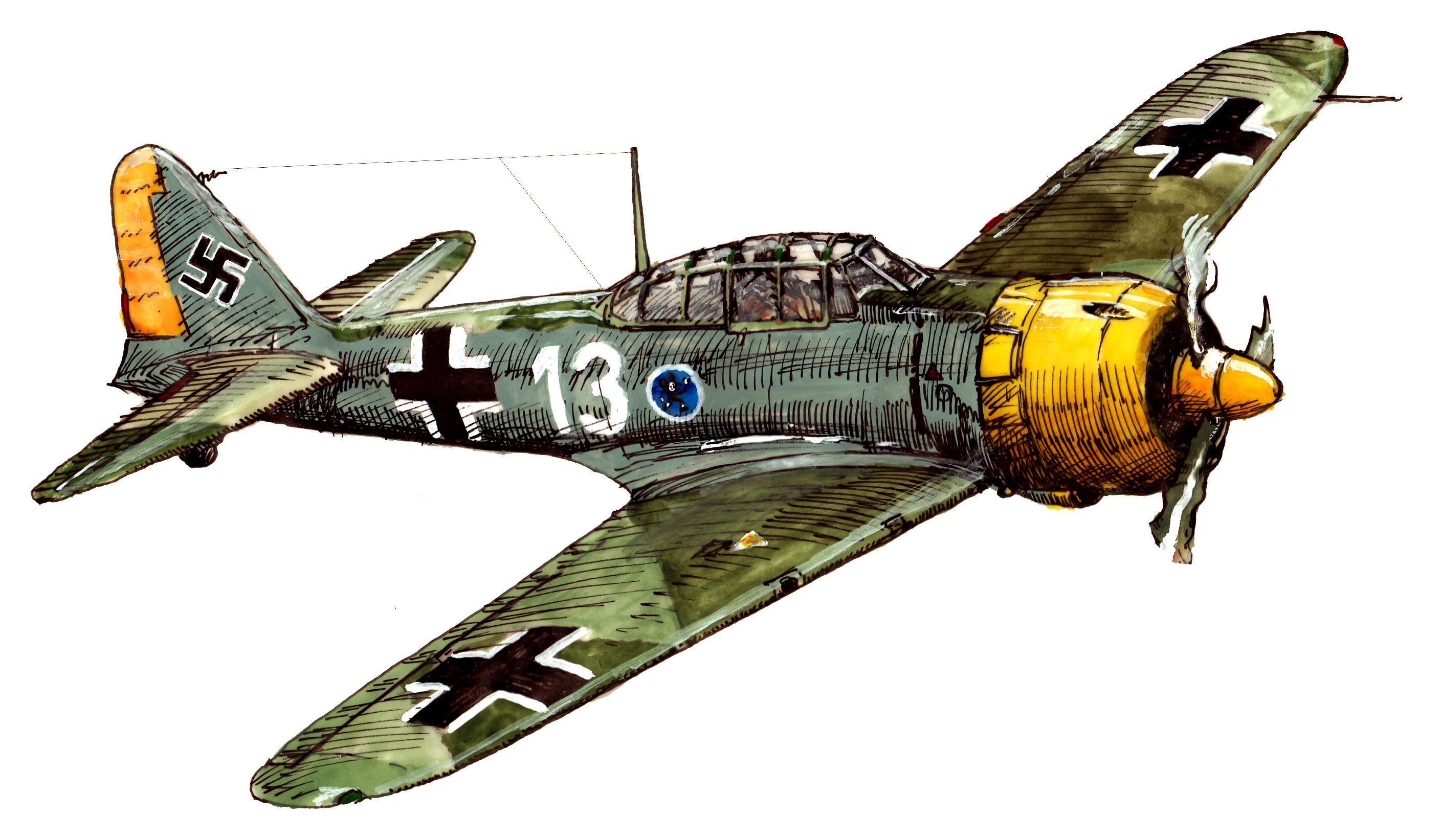
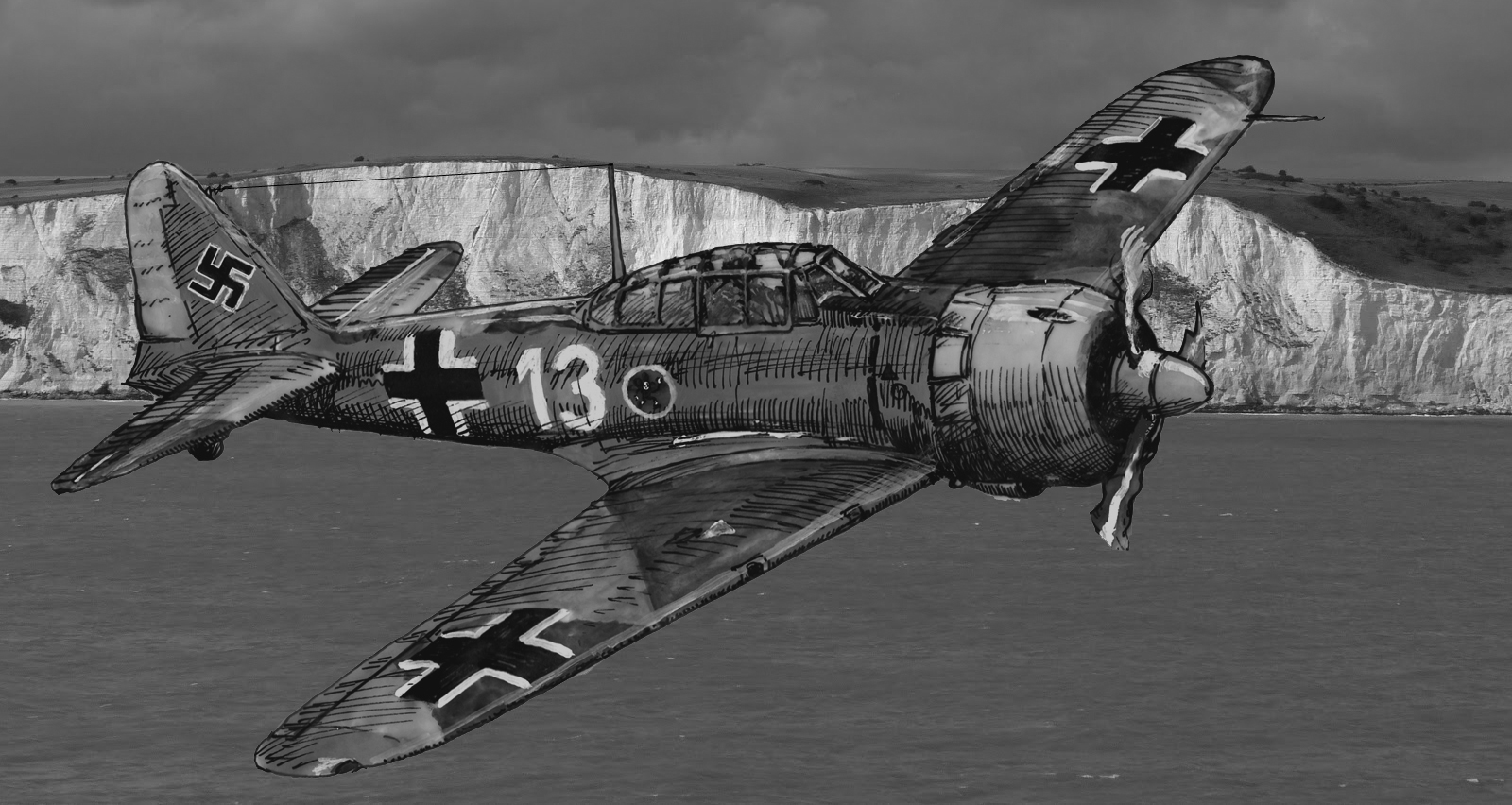
The illustration depicts the Mitsubishi A6M Model 22 ‘White 13’ of Feldwebel Heinz Bar 1./JG 51, September 1940. By this time Bar had scored 12 victories. His final total was 220 confirmed kills in over 1000 combat sorties.
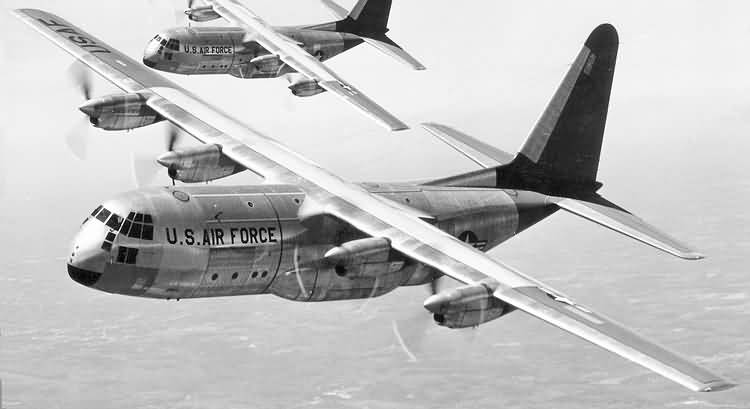
The mother of the last C-130 Hercules pilot hasn’t been born yet.
Dwell on that thought. The prototype C-130 flew in 1954, the same year that Monroe married DiMaggio, and Murrow unravelled McCarthy. Competitors have come and gone, and yet the Hercules will fly on its centenary.
More startling is how little it has changed since Lockheed’s Willis Hawkins drafted it in 1951 – and it was hardly a revolution then.
Germany coined the modern airlifter layout with the Ar-232 in 1941. America followed with the C-123 in 1949, and Britain with the Beverley in 1950.
The famous Kelly Johnson warned Lockheed that the C-130 would ruin the company. Instead, its had the longest running military aircraft production in history.
 That history is filled with stunning highs and lows.  The thrilling success of Entebbe.  The bitter disappointment of Desert One. Saving Batman in The Dark Knight.
Ignore anyone who tells you the insides are a failure of 1954 ergonomics. The thrum of turboprops has either lullabied me to sleep when I needed it, or been the soundtrack to some of the best flights of my life.
So be nice to the pregnant lady on the street. Her future grandkids might be Herky drivers.
Eamon Hamilton, Public Affairs, Royal Australian Air Force. Follow on Twitter @eamonhamilton
She accused me of being unromantic and I knew sooner or later, my boring ways would leave her cold.
Not on my watch.
After checking in depth to find the best price, I planned an irresistible display of the piratically exciting nature of my love for her. She was curating a show in New York  (I live in London) and would not be expecting a visit. I would cruise unbidden to Newark, and in the snow of Central Park present her with the ring. Engraved with our favourite line from our favourite song. We would be engaged and take the city in before we flew back together.
In theory.
Two hours after we met in New York, I was single. I sat stunned at Newark, trying to summon up the will to eat what was optimistically described as a sandwich. Flight delayed. Singled out at security. Board. Sleep. I woke up high above the Atlantic. Felt calm. Knowing no-one knew where I was, high above the Atlantic at night. Above the bottomless dark of the water. Cradled in the belly of a 777. I didn’t want to feel anything, just the perfection of the 777 carrying me away from the pain.
The recent shoot-down of a Turkish air force RF-4E Phantom II over Syria, highlights the inherent dangers of the fighter-recce mission. Reconnaissance-fighters have flown some of the most daring aerial missions, often flying alone deep in enemy airspace, relying on speed and guile for survival. A panel of experts was assembled to decide which aircraft would make the selection, in what become one of the most heated debates in Hush-Kit history.
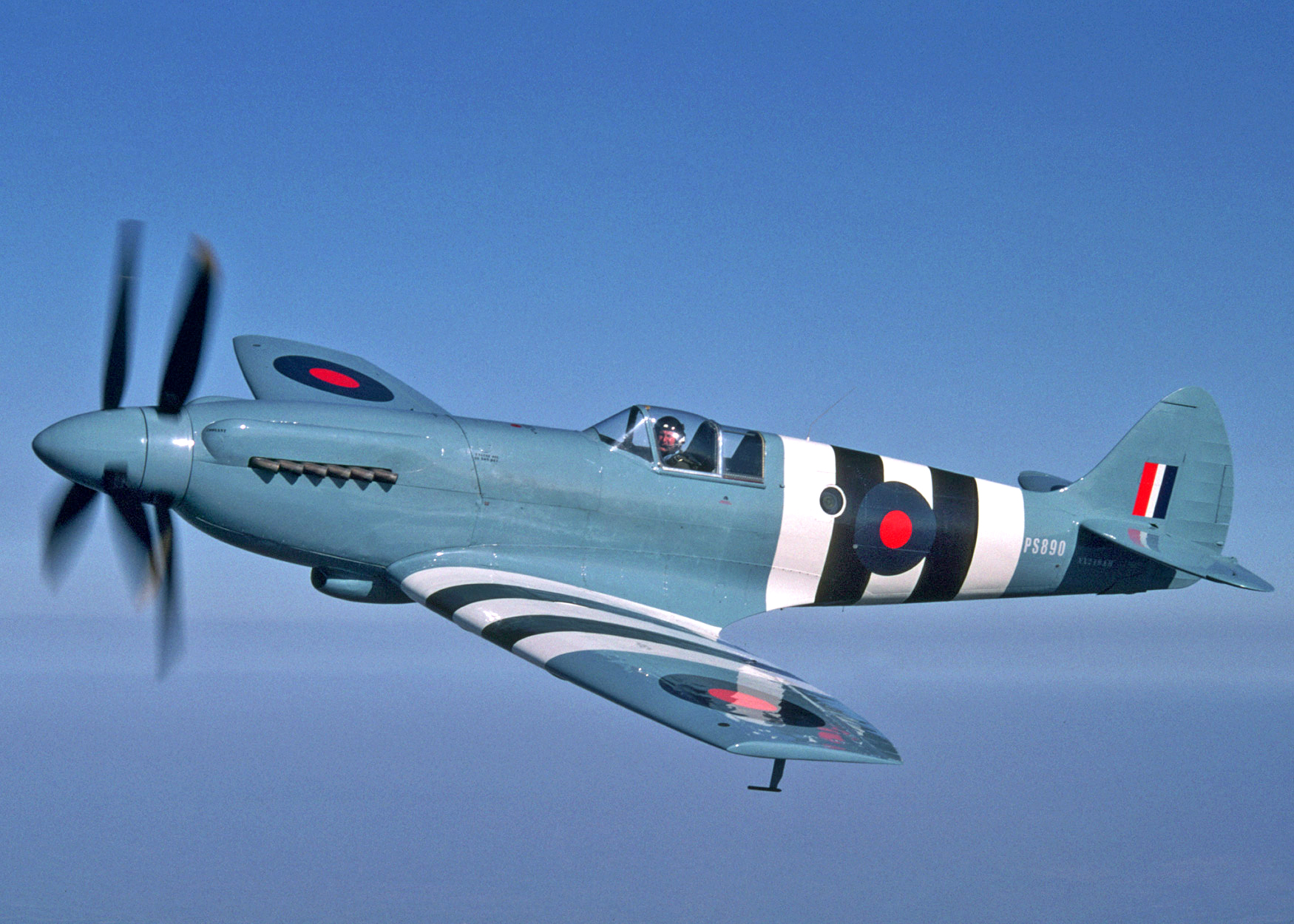
As well as being arguably the best fighter of the second world war, the Spitfire has a pretty decent claim to being its finest reconnaissance aircraft too: it pioneered a radical new conceptual approach to aerial photo reconnaissance, was fantastically successful and recorded the fastest speed ever attained by a piston-engined aircraft (over 600 mph in a dive). Not bad for an aircraft that only existed due to the eccentric persistence of one man, Sidney Cotton.
As well as spiriting Christian Dior’s managing director out of occupied France, taking clandestine photographs of Luftwaffe airfields from an aircraft piloted by Field Marshall Kesselring and inventing the Sidcot suit, Sidney Cotton was convinced that photo reconnaissance needs were best served not by converted bombers or army co-op aircraft as conventional wisdom stated but by suitably modified fighter aircraft. The PR (and later FR) Spitfires were the result. Luckily for the RAF, Cotton had pretty influential friends (ie Churchill) and managed to obtain two Spitfire Is during 1940 to be modified for the reconnaissance role. These were immediately successful and prompted more conversions and eventual factory-built reconnaissance Spitfires. With Cotton’s modifications speed was significantly increased over the fighter version but the range was colossal. Despite the fact that it was a modification of a Spitfire I (a fighter suffering from a chronically short endurance), the PR Type F was able to perform reconnaissance missions to Berlin during the summer of 1940 – try doing that in a Blenheim.
The PR Type G however ushered in a new era, although it could not range quite so far as Berlin it was the first or the PR Spitfires to retain the full armament of the standard fighter. It was a formidable aircraft – faster than the fighter, longer ranged and able to fight its way out of any trouble it might not be able to outrun, a formula that would later be repeated for the other truly great British reconnaissance aircraft, the Mosquito. Later Griffon powered versions were just as effective and would serve in the RAF until 1954.
Cotton’s Spitfires were produced in ever greater numbers and pioneered some fascinating technology. New camouflage paints were developed with a super-smooth finish to aid performance but in seemingly unlikely shades not seen on any previous military aircraft such as all-over pale blue green (called camoutint) and, famously, pink. High altitude, high speed stereoscopic photography was implemented for the first time and enabled the size of the V-1 and V-2 to be calculated. Oblique photography was also pioneered by these aircraft, and an oblique camera in a Spitfire brought back the first evidence of the Giant Wurzburg radar and inspired a Commando raid to steal one.
Ultimately the success of the reconnaissance Spitfires may be judged by the fact that from 1940 to VE day, they ranged all over Europe with relative impunity, a period during which the German’s were almost totally unable to photograph the British Isles from the air – at least until the advent of the jet…
Hush-kit is reminding the world of the beauty of flight.
The shoot-down of a Turkish air force RF-4E Phantom II over Syria, highlighted the inherent dangers of the fighter-recce mission. Reconnaissance-fighters have flown some of the most daring aerial missions, often flying alone deep in enemy airspace, relying on speed and guile for survival. A panel of experts was assembled to decide which aircraft would make the selection, in what become one of the most heated debates in Hush-Kit history.
Lockheed F-4/5 Lightning
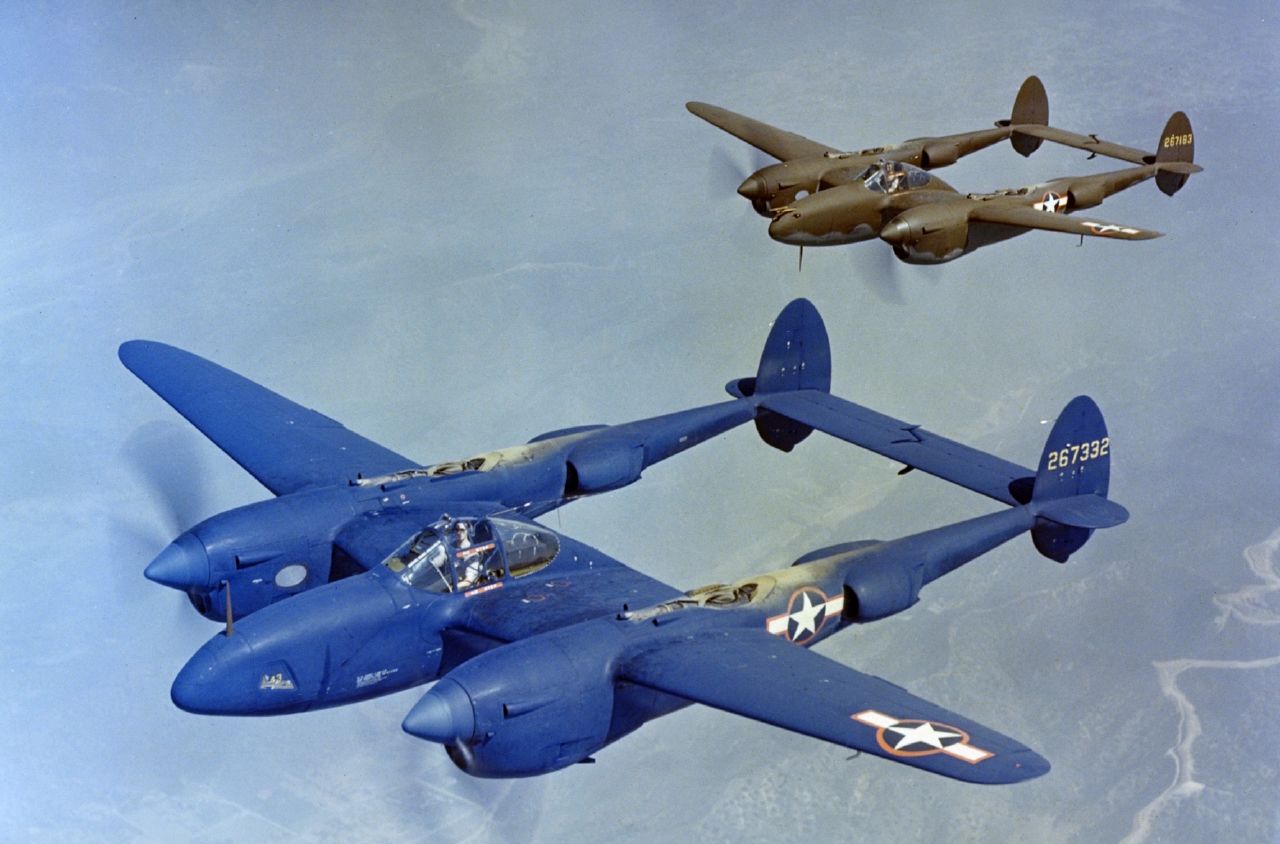
 Before the Thunderbolt and the Mustang reached service, the Lockheed P-38 Lightning was by far the US Army Air Corps most exciting fighter. It set records and it looked like it had flown straight out of the future (it would inspire the looks of a whole generation of American cars but that is another story). It was also more than usually suited to adaptation to the reconnaissance role than the average fighter aircraft of 1940 being possessed of a very good range and a decidedly large aircraft and thus well able to handle carrying the bulky camera equipment of the time over a long distance. The first ‘combat-capable’ P-38 was the E model and this was the first selected to be adapted for reconnaissance. Designated the F-4, its armament was replaced with four cameras. Some were built as such at the factory, others modified in the field but around 100 were produced. Somewhat surprisingly these were the first of the Lightning family to see operational service, the first sortie being made from Australia in April 1942. In Europe, the P-38 had a decidedly mixed career, with many teething troubles that led to its never really being entirely acceptable to its crews at the time it was most sorely needed and it faded from fighter operations as the P-47 and P-51 became available in decent numbers. By contrast, the reconnaissance versions proved invaluable from the start and would prove to be America’s most effective reconnaissance aircraft in every theatre in which they operated.
Some 1400 were built or modified from fighter airframes, early examples being designated F-4, later aircraft derived from the P-38G onwards were known as the F-5. None was armed and most were painted in various shades of blue. Initially, this consisted of a specially developed paint resulting from much research and experiment called, rather charmingly, ‘Haze’. Difficult to apply and prone to simply flaking off it was replaced by a different, bluer, paint called ‘Synthetic haze’ which did just fine until the USAAF decided that its aircraft were no longer to be painted at all. This did not go down well with the F-5 pilots who were required to fly an unarmed aircraft alone through hostile skies for many hours and might be forgiven for wishing their aircraft to blend in as much as possible with their surroundings rather than shine and shimmer in the sunlight like chromium. As a result, the last F-5Es, all of which were converted from P-38Js, were painted with British PRU blue upon their arrival in England.
I followed the competition to provide India’s air force with a new fighter aircraft like a soap opera. I loved it. Six fighters competed for a multi-billion dollar deal. The capabilities of the six entrants had been discussed for years, but the debates were little more than innuendo, sales-spin and national pride. Six of the world’s best fighters were evaluated in detail to determine which would become India’s MMRCA (Medium Multi-Role Combat Aircraft). Never before had the types been examined against each other with such scrutiny, the results would be very revealing.
The USA offered two types: the Boeing F/A-18 Super Hornet, pride of the US Navy, and the largest and heaviest of the contenders. The other type the US offered was the Lockheed Martin F-16. The F-16 had already been sold to Pakistan, the traditional enemy of India, which led many to belief it was a lame duck from the get-go.
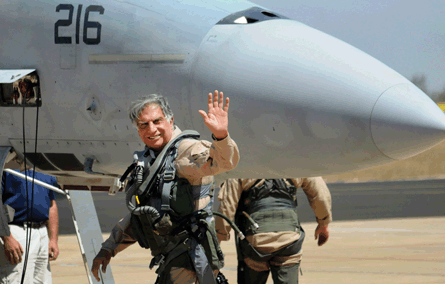
Ratan Tata takes a flight in a Super Hornet
The Russians offered the MiG-35, a souped-up variant of their MiG-29 (a type losing favour around the world). The MiG-29 was already in service with the Indian air force, a foot-in-the-door which gave the Russians hope.
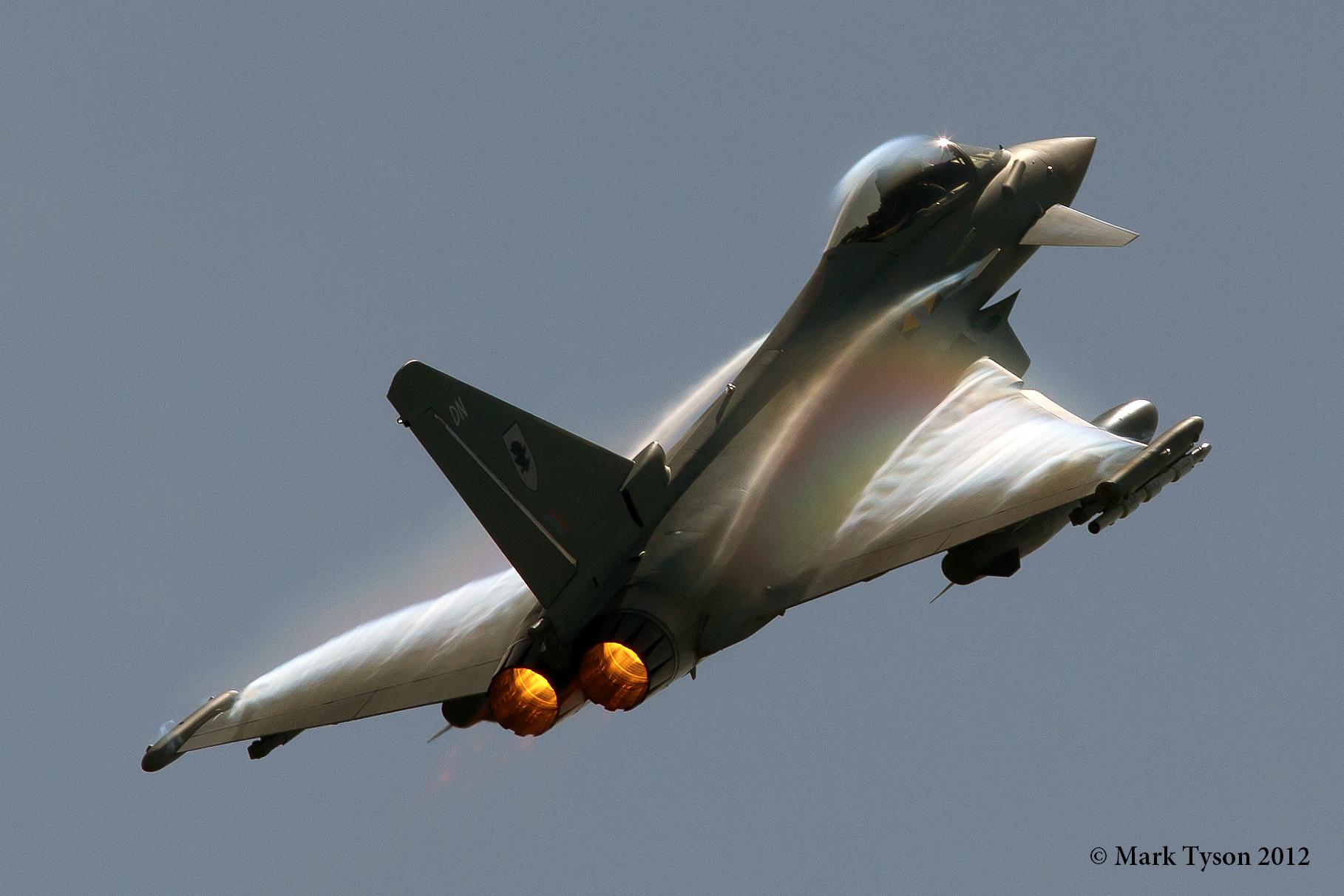
A European consortium of the UK, Germany, Italy and Spain offered the spectacularly expensive Typhoon. Their drive to sell Typhoon in India was led by Germany.
France offered the Rafale, long the fighter world’s underdog, having failed to achieve a single export sale.
Even idiosyncratic Sweden joined in, offering its petite Saab Gripen.
This contest was big. India wanted at least 126 fighters, with more orders likely. The fighters will stay in service for at least forty years, needing support and spares. Success in India was the golden ticket for the fighter ‘houses’, making other sales around the world almost inevitable.
For some companies, failure in India would mean the end of their fighter lines. The MiG series had started in 1940 in Stalin’s USSR and fought in virtually every air war up to the present day, most notably Korea and Vietnam. The other big Russian fighter house, Sukhoi, is poised to decimate RSK MiG, and has support from the highest levels. According to a startling statement from the labour union that represents MiG’s workers:
“In the past five years, six general directors have been replaced, they all come from the Sukhoi company.. they are strangling us, they want to close our companyâ€
India could mean life or death to MiG, but the Russian company was confident that over 40 years of selling aircraft to the IAF would put it in a strong position.
Another company that needed India was Dassault. The French company had it origins in a pre-war company set up my Marcel Bloch. The war brought misery to Marcel. Being of Jewish descent and refusing to collaborate with the German aviation industry, he was sent to the hell of Buchenwald. Meanwhile his brother fought in the French resistance under the nome de guerre Darius Dassault. The surname derived from char d’assaut (the French word for battle tank); d’assaut means ‘for assault’. Marcel also took the surname. Following the war, he took back control of his old aircraft company and it was renamed Dassault. The company went onto to develop the Mirage series of fighters, among the most beautiful and capable jet fighters in history. The Mirage family is inextricably linked to the story of Israel. In 1967, a French embargo on military exports to the Jewish state led to a bizarre and very exciting Mossad mission to steal the plans for the French jet (which succeeded).
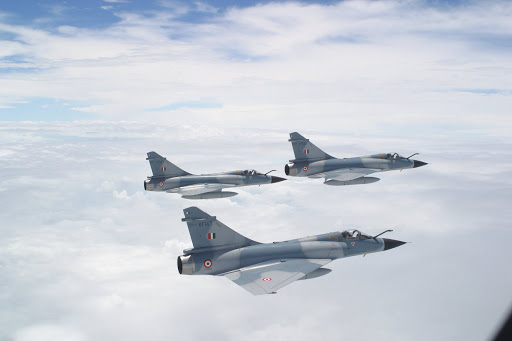
The Mirage 2000 was the final fighter to carry the famous name, and was bought by India. The type has proved popular with the IAF (what type hasn’t?) and was deemed highly effective in the 1999 Kargil War with Pakistan.
The Mirage series sold well around the world, but Dassault made two decisions that risked ending its fighter line.
Risky move number 1!
In the early 1980s it grouped together with other European nations to develop a new advanced tactical fighter. The advantages of collaboration where obvious: it would ensure a large production run, the development costs would be shared and when one government wobbled on the project, another would badger them to persist with it. However, Dassault-Breguet (as it was then known) could not resolve key differences with the other nations and went its on way in 1985. France went off to develop what was later named Rafale (‘sea squall’). The Mirage name, which had been applied to several generations of very different aircraft was dropped.
Britain, Italy and West Germany went off to develop what would become the Eurofighter Typhoon. Spain couldn’t quite make its mind up, and flirted with France, before returning to the bigger party.
France had pitted itself against its neighbours. France would have to pay for Rafale by itself, spending billions of Francs and Euros on developing a fighter which was in many, many ways similar to Typhoon.
Like all the best things, the Mirage 2000 was born in 1978. It was beautiful; a dynamic triangle that looked it had escaped from a 1950s corporate logo. It is the shape of speed and harmony. The dynamism of 50’s futurism was combined with the miracles of the electronic age. It could even fly very slow with its nose raised high, something delta (tri-angular) winged aircraft shouldn’t be able to do.
“ The Mirage 2000 is the perfect aeroplane.†was a surprising quote I got from a Rafale test pilot I spoke to in 2005. He said Rafale was great, very capable, but the older Mirage 2000 was perfect. The type is known by some in French air force as the Electric Cake Slice.
The 2000 was an export hit. India, the UAE, Peru, Greece, Taiwan, Egypt and Brazil all bought it. Pilots loved it. The Mirage 2000 could face up to the US F-16, the most popular modern fighter. The F-16 is slightly older than the 2000, but in 2012 remains in production. In 2007 Dassault ceased 2000 production to concentrate on the Rafale. This was a risky move indeed. The Mirage 2000 was still highly capable.
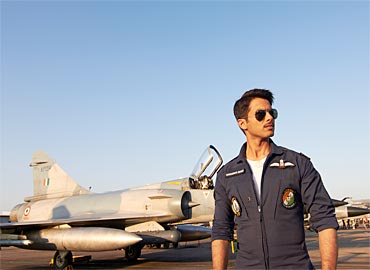
Recession scorched nations bent over backwards to chase the rupee. Indian filmstars were given fighter flights, heads of state flew out to India, Cameron from the UK, Sakozy from France, Obama from the US… promises of industrial collaborations , commercial offsets and ‘strategic partnerships’.. all heads were turned to see what India would do..
Internet forums exploded with patriotic fervour and Top Trumps speculation. Which fighter was most agile, had the greatest instantaneous turn-rate, longest radar range…would India’s traditional use of French and Russian-supplied kit continue?
Rumours and counter-rumours flowed daily, and it was a nail-biting drama, with unexpected twists and turns and press statements along the way.
Strangely all of the aircraft types (barring the MiG-35) competing for the contract took part in the 2010 air campaign against Libya. Even neutral Sweden sent Gripens to Libya. This led some cynical observers to wonder whether the ‘noble defence’ of the Libyan people may have had a commercial angle.
Hush-kit is reminding the world of the beauty of flight.
Like the X-factor it was eventually whittled down to the two finalists: The Eurofighter Typhoon and Dassault Rafale. The United States had lost, days later the US ambassador for India announced his retirement. Russia and Sweden were out too.
Typhoon versus Rafale was the most dramatic final possible. The fighter business held its breath as the painfully slow Indian procurement process weighed the arch-rivals. Both had passed the gruelling assessments, now which ever could come up with a lower bid had the deal.
On 31 January 2012 it was announced that France had won. Within minutes of the announcement the Eurofighter website, which had been plastered with adverts for Typhoon in India, switched to a bland India-less image.
The British government threw a hissy-fit and France celebrated.
The millions spent on marketing the losing aircraft were lost.
Now the reason I recount this is to go back to the idea of double-think and the enjoyment of military aircraft. I enjoyed the MMRCA contest as a fiction, as sport.
How the healthy this is, I can’t say. I was biased, I wanted Typhoon to win.
But, a couple of months ago I was reading the child mortality figures for India in The Times and did wonder how much India really needs a vast force of cutting edge fighter planes? I wondered how I could hold two Indias so separately in my mind.
Update: the MMRCA was eventually cancelled, following the failure of the Indian MoD and Dassault to agree on the terms and costs of the deal. Â Eventually 36 Rafales were ordered.
If this interests you, support Hush-Kit.net with a donation (buttons above and below). If this goes well we’ll be able to give you much more! Recommended donation £15. Many thanks for helping to keep us impartial and independent.
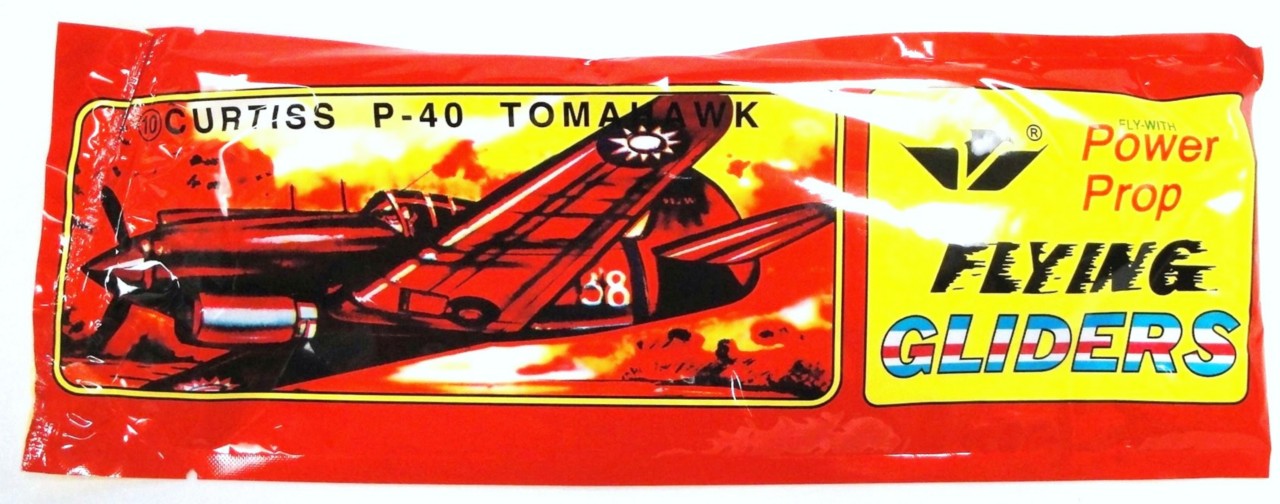
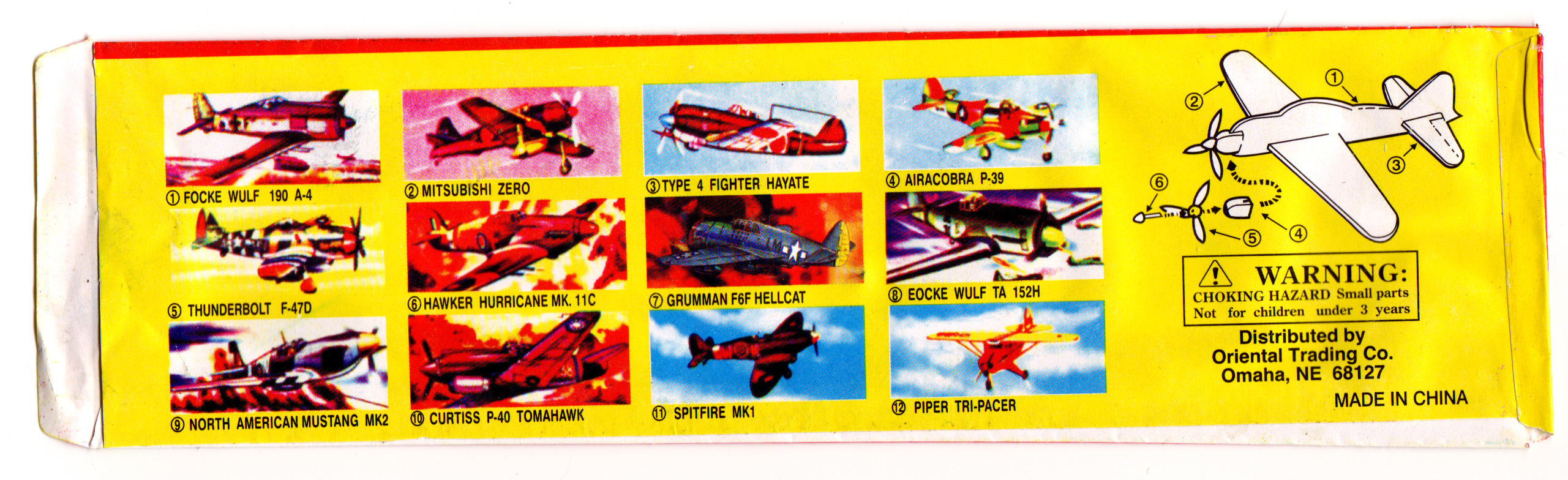
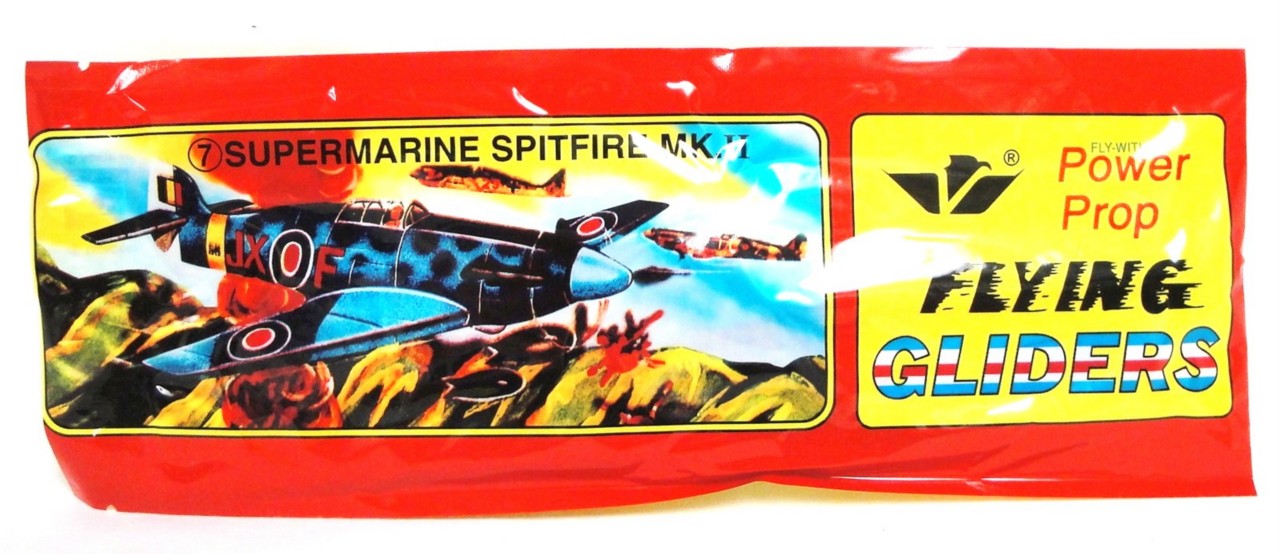
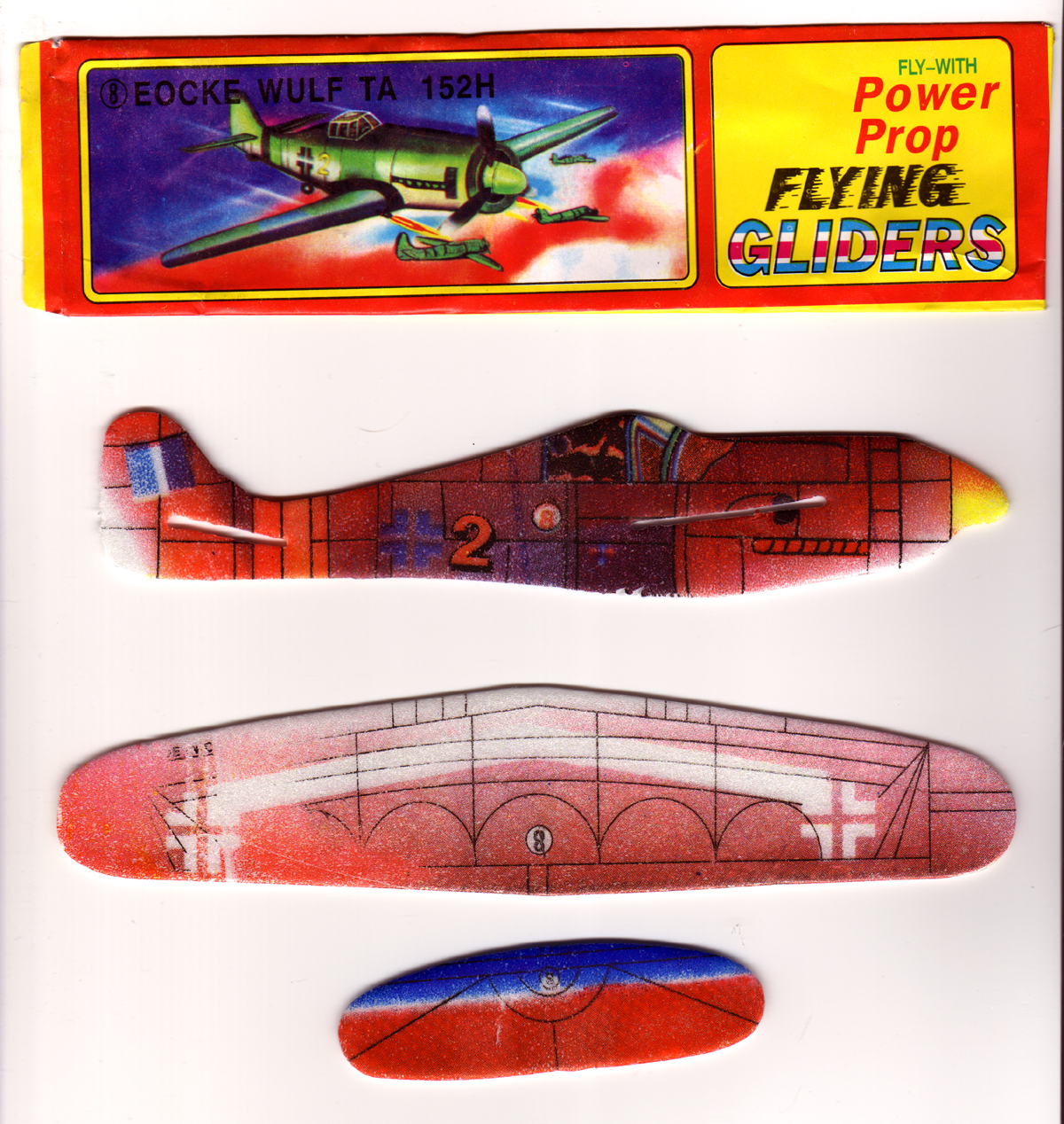
In a world where products change by the season, it’s wonderful to have eternal things. Power Prop Flying Gliders have been the same for at least thirty years, and I suspect longer than that.  You buy an envelope, decorated with a fascinatingly naïve painting of an aeroplane. Open it and within seconds you’ve assembled a natty little World War Two fighter. After a few flights you’ll loose the small blue propeller, but that’s fine as it flies better without it. The spelling mistake ‘Eocke-Wulf’ has been immortalised and remains today (if the manufacturers are reading this, please DO NOT correct this!).
(Hang on, I’ve just checked a modern packet and it appears it has been corrected…)
The artworks were clumsy and at times bordered on being ‘outsider art’.
Hey! Number 7 should be a Spitfire! This must be a US edition.
The Hawker Hurricane and Tomahawk were satanic red and appeared to be fighting in the fires of hell. The Supermarine Spitfire MK.II (sic) was the weirdest front-cover. The style is like a Vietnamese ’60s propaganda poster. Bloody splodges of explosions decorate the mountain ridge below the aircraft. The plane itself is mottled two-tone blue and is dropping two slug-like creatures (bombs?). The aircraft bears little actual resemblance to a Spitfire Mk.II and looks like an experimental Italian fighter.
Millions of these excellent toys have been produced. Gardens and pavements around the world became theatres of war, with enactments regularly foiled by cats mauling your fighter force.
Who was the artist who made these covers? Was it the work of an old man in China in the 1950s? Did he paint them in one rainy morning in a back room in Chengdu, as his wife cooked? I guess we’ll never know. Looking at them, there is enough difference to suggest there is more than one artist at work here. I want to find out the true story behind these paintings..
Hush-kit is reminding the world of the beauty of flight.
If this interests you, support Hush-Kit.net with a donation (buttons above and below). If this goes well we’ll be able to give you much more! Recommended donation £5. Many thanks for helping to keep us impartial and independent.
Marcel Bloch was imprisoned in Buchenwald concentration camp for eight months. The aircraft industrialist had refused to collaborate with the nazis, even when threatened with hanging. He survived and was reborn as Marcel Dassault, a surname derived from the French for ‘battle-tank’. Following her liberation, France would never again undervalue the fighter plane. Accordingly the air force released a fighter specification in 1953, demanding unprecedented levels of performance. Dassault responded with the futuristic Mirage I. A modestly updated ‘II’ was considered, before Dassault leapt to the bigger, faster and better-armed Mirage III.
The delta-wing is a symbol of this era of speed- an arrow pointing to the future. By 1958 the Mirage III had comfortably exceeded Mach 2, the first European aeroplane to do so.
Dassault stated that for an airplane to fly well, first it must look good. The Mirage is certainly gorgeous, but it is far more and proved itself innumerable times in combat.
Its polished aluminium body and red-painted air intakes are the epitome of an era of excess, daring technology and (popular) achievements in aerospace. Elegance is key. It is a glorious symbol of France’s renewed independence.
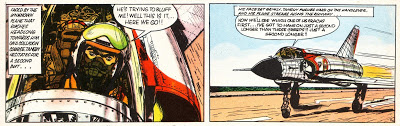
For me it conjures up memories of watching my uncle’s childhood TV series, The Aeronauts, and reading the Adventures of Tanguy & Laverdure. A la chasse…
by HP Morvan, reader in applied fluid mechanics, research engineer & aero-fan.
Hush-kit is reminding the world of the beauty of flight.