HUSHKIT EXCLUSIVE! MCLAREN F1 SUPERCAR DESIGNER TALKS PLANES

The Lockheed SR-71 Blackbird- Impossible to describe in conventional terms.

Peter Stevens designed the beautiful curves of the Mclaren F1, which has been described as the finest car in history. The F1 was the fastest production car for an incredible twelve years (1993-2005) and clocked an insane 231 mph in 1993 (seventy years earlier, the Nieuport-Delage aircraft had surpassed the 230 mph barrier in the air). As visiting professor of car design for the Royal College of Art and a lover of aviation, Hush-kit decided to grill Stevens on planes, beauty… and flying-cars!

 
From where does your love of aviation stem?

Principally from my Godfather who was a Wing Commander in a Lancaster squadron, I built him an Airfix model of one when I was about 12 years old, and as a scientist he then built a scale wind tunnel at Birkbeck College so that he could demonstrate the principals of flight to me. He lived just at the back of Duxford air field and we would often sneak in there.

What was your most notable flying experience?

When I first discovered what ‘wake turbulence’ meant! Not long after qualifying for my PPL I was taking off from Leavesden air strip near Watford and was instructed by the tower to depart right after an HS 125, at about 250 feet the little Grumman Tiger that I was flying, just about fell out of the sky. I will be forever grateful to my instructor Keith who had drilled in to me ‘lower the nose, level the wings and then regain control’, it worked, hence these replies to your questions. Or maybe the idiot who flew in on finals at Elstree beneath me and never even saw me. He was excellently roasted by the tower after I had gone round again!

What is your favourite aircraft and why?

No question, the SR-71 Blackbird! When you consider that the project was underway back in 1955 and that part of the brief was to make an aircraft that would be almost impossible to describe in conventional terms at that time, in order to protect the secret nature of the project, it put all forward thinking into perspective. For any designer this is a crucial thing, the ability to think beyond contemporary norms is very difficult but it is what you have to do if you want to make progress.

Witness the fitness! Without doubt the most beautiful aircraft ever built, the Supermarine Spitfire.

What do you consider the most beautiful aircraft (if different from above)?

It sounds so easy to say the Spitfire but for me it’s true. Most summer weekends a couple of Spitfires fly low over our house, either on their way to or from air displays. They come from a strip just a bit North of where we live in Suffolk. And the reason they still look (and sound!) so beautiful is part of a personal theory that I have. The Hurricane is a fabulous aircraft but I suspect that the draughtsmen who would have drawn the full-size lines of the ‘plane would have been local to Hatfield and would most probably have had amongst their drawing kit ‘railway curves’. These are very large radius curves used during the laying out of railway tracks. If you then connect these very big radius lines, often almost straight lines, with regular corner radii you get a Hurricane. The Spitfire, on the other hand was drawn up in Southampton where the draughtsmen would have come from the boat building industry, and they would have amongst their drawing kit ‘ships curves’, these are transitional curves that slowly tighten or flatten over their lengths. Hence the more sensuous lines of the Spitfire. Despite the arrival of CAD I still use ships curves for the most important lines on a car. These curves are sometimes call ‘French curves’ and are some of my most valued studio possessions.

The architect Norman Foster has a model of the Northrop YB-49 flying wing in his studio, do you have a model aircraft in yours? 

Two little models, a Gee Bee (such outrageous proportions), a DC-3 (first plane I flew in with my Godfather), and a BIG model of a Bleriot Monoplane (those first days of flight were just so romantic).

The bananas Gee Bee racing plane

What effect has aviation had on car design, if any? For instance has the faceted, angular stealth shape of modern aircraft influenced any designs?

In aircraft term all cars can be described as being reliant on ‘low speed aerodynamics’ but the actual shapes are often taken from very high speed aircraft. This could be considered dishonest but designers are so often looking for the ‘next new thing’. When designing a fast road-car the whole aero thing is so different from that to be considered when designing a race car. On a road car you do not want lift but you also do not want much downforce at all, otherwise the springs will need to be so stiff to avoid scraping the ground at high speeds that the thing will ride like a truck at low speeds. I do think that designers are looking at things like the F-117 stealth fighter for inspiration, the Lamborghini Aventador is a good example of this trend.

Lamborghini meets the Lockheed F-117 Nighthawk. Painting by Upshaw.

What was the most beautiful era for aircraft design?

It’s easy to get carried away with the romantic notions of early aircraft and see Golden Eras in the past, or to use the daft old adage used in race car design that ‘if it works well and wins it’s automatically beautiful’, but that is just not true. There are aircraft from all eras that are beautiful and many that are not.

Do you have any thoughts about the crossover (if any) between the purely aesthetic design fields and that of applied design (like in aviation).

I suppose that in the past designer were more inclined to be just surface decorators, this was particularly true in the Victorian age. But as popular ideas of design focused on simpler forms the designer took charge of both the form and the surface decoration. Whether this time line followed or preceded that of painters and sculptors, I am not sure (subject by a PhD I think). What I have observed is that some pure engineers have a very real sensitivity towards the difference between a ‘good line’ and a ‘poor line’, Both Patrick Head and John Barnard, ex Formula One designers, were very aware of the importance of a ‘good line’ to them. This comes back to the Spitfire and Hurricane debate.

Like the Spitfire, the Bloodhound yacht was born in 1936; Did the boatyard influence the shape of the famous British fighter?

A related point – cars and aircraft that are designed apparently for purely aerodynamic concerns are often very beautiful, indeed often the most beautiful examples of their kind. Why should this be?

I think that a sensitivity for what airflow wants to do is an unusual trait, these days CFD (Computational fluid dynamics) can produce technically correct solutions that lack any degree of harmony in the resultant forms. You can push the airflow around but you cannot force it to do what it does not want to do, I see the air as being lazy and wanting to take the least stressful path and it is the same for your hand when passing over a form. Natural transitions as seen in nature almost always have something to tell us about the best aerodynamic shapes. A good example in car design is the Jaguar XJ 13 of 1966/67; Designer Malcolm Sayer was an aerodynamicist at Jaguar but also a superb designer and the car exudes style.

What will be the next technology to move from aviation to motoring or vice versa, for example have F1 drivers used helmet mounted displays or have any advanced materials recently passed into cars from the aerospace world?

I think that more specialised carbon composites, particularly penetration resistant ones could find their way into race cars. The head-up display thing (the HUD) or the much more complex Apache helmet mounted system is now not needed in F1 cars because (unfortunately) there is an army of guys monitoring all the systems in the car and making strategy calls from the back of the pit garage, or even in some cases monitoring stuff back at the factory.

Nice chassis! Auto-genius Peter Stevens in his studio.

What will aeroplanes look like in 100 or even 1000 years time?

In 100 years I suspect that military aircraft will be pilotless but I think that private flying will remain popular but the machines will be so much more efficient and ‘drama’ proof. The huge amount of progress made in automated systems for cars, like stability control etc will find their way into aircraft in the near future. In a 1000 years we will without doubt travel virtually or maybe in person, very rarely, using our rare and expensive carbon/energy credits that we will have to earn by our ultra low energy personal lifestyles. How grim is that!

A soviet vision of the future from 1966

Will flying cars ever become popular?

As popular as amphibious cars. Who would want a crap car that is also a very poor aircraft? Just like who wants a miserable car that is also a thoroughly poor boat?

Hush-kit is reminding the world of the beauty of flight.

follow my vapour trail on Twitter: @Hush_kit

Do you have an idea for a Hush-Kit article you would like to write? Contact: hushkiteditorial@gmail.com

Crap cars that are also very poor aircraft

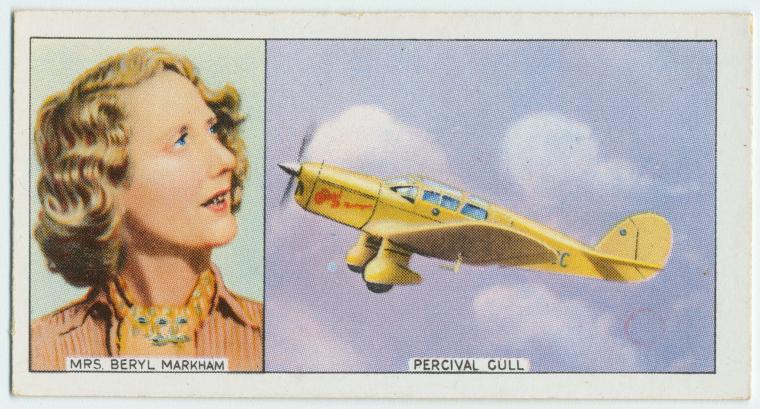
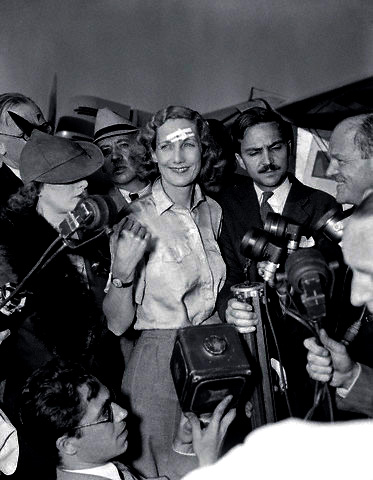
Higher than sex: The riddle of aviatrix Beryl Markham

The marvellous accomplishments of Beryl Markham’s are manifold. Ernest Hemingway’s admiration of her memoir and disdain for her character, her possession of the first commercial pilot’s licence in Kenya, her being first female licenced horse trainer in Kenya, and her triumphant, difficult, pioneering flight against the prevailing winds from England to North America are amongst the sagas that render Markham an enthralling, awe-inspiring character. 

West with the Night (1943) is Markham’s memoir, however her third husband, a Hollywood ghostwriter, claimed it as his own work after their divorce. After falling out of print, the book was rediscovered thanks to a comment by Hemingway in his published letters and subsequently republished in 1983, drawing great critical attentions and topping bestseller lists. A decade later Markham’s first biographer, Errol Trzebinski, reinforced the claim.

The full quote from Hemingway to his publisher friend reads:

“Did you read Beryl Markham’s book, West With The Night? …She has written so well, and marvellously well, that I was completely ashamed of myself as a writer. I felt that I was simply a carpenter with words, picking up whatever was furnished on the job and nailing them together and sometimes making an okay pig pen. But this girl, who is to my knowledge very unpleasant and we might even say a high-grade bitch, can write rings around all of us who consider ourselves as writers … it really is a bloody wonderful book.”

Hemingway seems astounded and almost a little gleeful that such an ‘unpleasant’ woman has turned out such a spectacular writer. The praise is gushing and the self-deprecation unusual in Hemingway’s discussion of another living writer. If Markham was not the sole mind involved in the creation of the work, then, and if she willingly deceived the press into believing the piece her work and her work only, an unfortunate rupture is created in her tale.

A restaurateur named George Gutekunst was advised by Hemingway’s son to have a look at the father’s published letters, and from the above sought a copy of the memoir, which then shot to success with the quotation (sans insults) proudly on its blurb. It seems to me highly probable that Raoul Schumacher (the husband) did indeed string together the sentences that form Markham’s book, yet it also seems to me that this creates yet another facet of fascination with the now deceased Markham, and that it is more interesting to imagine the apparently unpleasant, demanding and selfish character sitting down with her husband to compose a book.

Her story is astonishing: her childhood talents for hunting with a nearby tribe, her lifelong passion and prowess with horses and her prominence within the aviation world all demonstrate an indefatigably competitive woman. Unfortunately, the common interpretations of her character are either as a despicable woman:

“She was a positively awful wife and an almost criminally negligent mother. She never even bothered to meet her two grandchildren. “

According to a 1987 biography, Straight on Till Morning, by British writer, Mary S. Lovell, she was as ‘promiscuous as an Able Seaman on shore leave.’ ..or as a paragon of female freedom, her infidelities and solo successes celebrated as a woman against men.

Markham’s accomplishments and personality, then, are continually analysed through her femininity. It seems a shame, as almost any post that you can find about her will state, that her figure has become marginalised in aviation history and it also appears that this is through the difficulty of defining her as exemplary in either a positive or negative light. Her life was full and extreme. She had many lovers and three marriages, the first at age sixteen. Her transatlantic flight was a result of a dinner party chat whilst Markham had no plane; another guest offered her one of his, on the condition that she made this journey and she promptly obliged.

Looking at the frame and not the picture

When she emerged from the feat she was an acclaimed hero, despite landing in a bog rather than New York City, and despite being mapless and radio-less in a near-failing plane. In her jobs, both equine and aviatory, she was always a world-class, record-breaking pioneer. To me it is these parallel successes that are the most phenomenal thing about Markham, and the fact that she was a tempestuous woman, whether likeable or not, is merely a fabulous narrative framework within which to situate these achievements.

The authorship controversy, too, is fascinating yet seems to have been detrimental to Markham’s image and renown rather than a part of these. If Schumacher wrote the book the narrative perspective is nonetheless so utterly and entirely Markham’s that she desired to proclaim the text her own. Now, autobiographies can ever-increasingly be assumed to be the work of ghostwriters, and that Markham’s ghostwriter was her own husband surely situates the text more intimately with her self and makes it all the more intriguing as a historical document. In terms of content it seems that Markham made omissions in order to exaggerate her accomplishments (for example neglecting to mention the siblings that shared her wild childhood) but it has never been argued that the exploits that are detailed contain untruths.

Higher than sex

My contention is that the relatively minor place of the autobiography in literary history is a similar case to Markham’s marginalisation in aviator history. Both are slightly too vastly full of possibility and excitement, and no work has ever been done which thoroughly and fairly situates them. Nonetheless I suspect that the fact that the brilliance of both the book and the woman have been unable historically to speak for themselves remains unfortunately due largely to the gendered approach that people have taken to both.

By Emily McCarthy

Writer, tutor and research student of the Wellcome Trust’s utopias, built and unbuilt, at the London Consortium

Follow my vapour trail on Twitter: @Hush_kit


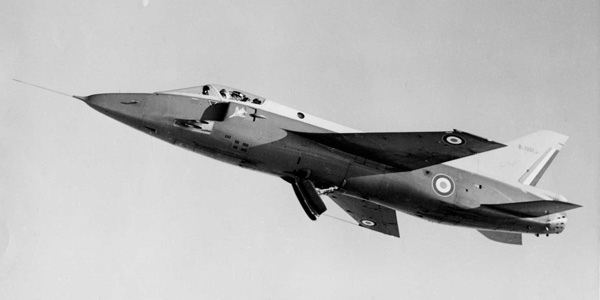
Taon

Image

Her petite frame, unusual intakes and staggered muzzles!

I love you Breguet Taon.

The aircraft, designed for a NATO competition for a light tactical fighter, even set an international speed record. For the 1,000 km (620 mi) closed circuit, it achieved a speed of 1,046.65 km/h (650.36 mph) at 7,620 m (25,000 ft) on 25 April 1958. On 23 July it broke its own record, this time achieving 1,075 km/h (667.98 mph).

Despite its speed and cute looks the type was not ordered into production.

Est-ce que ton père a été un voleur ? Parce qu’il a volé les étoiles du ciel pour les mettre dans tes yeux.

HUSH-KIT EXCLUSIVE: No.1(F) Squadron RETURNS AS TYPHOON UNIT!

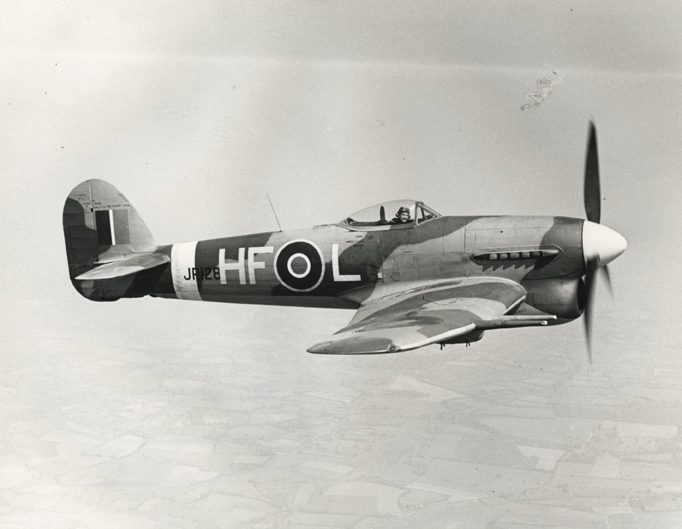
What’s in a name? The Hawker Typhoon was loud and powerful with a big gob, and so is the Eurofighter Typhoon.

Number 1 (Fighter) Squadron received its first Hawker Typhoon in 1943, in 2012 it will receive its first Eurofighter Typhoon (the multi-role FGR.4).

The Royal Air Force announced yesterday that this 100 year old unit, which has served in almost every campaign featuring British forces for a century, will become the fourth frontline Eurofighter Typhoon squadron. On September 15 at the Leuchars Jubilee Air Show, No.1 (Fighter) Squadron will officially stand up. It will be the second Typhoon Squadron based in Scotland, following the stand up of No.6 Squadron at Leuchars in 2010.

Fighter legacy

No.1 will be the second RAF Squadron to have operated both generations of Typhoon, the first being No.3(F) Squadron, which flew the mighty Hawker Typhoon from 1943-1944.  No.29, today the RAF’s Typhoon Operational Conversion Unit, was flying de Havilland Mosquitos in 1943, whereas No.6 Squadron was equipped with the tank-busting Hurricane Mk. IID (it would later get Spitfires and Tempests). No.11 Squadron was also a Hurricane unit in 1943 and was based in Burma.

No.17 Squadron, the current Typhoon Operational Evaluation Unit was under the banner of No. 691 Squadron in 1943 flying Fairey Barracudas and later Boulton Paul Defiants.

Over Libya at 30,000 ft

We saw the images on the television screens as we sat at the baklava café in Benghazi. The frenetic movements of the young men in half khaki suggested that some distant event was occurring, but we remained rooted in our casual conversations as we drank our macchiato and then the convoy departed to the airport. As the propellers beat and wheels came up, we were leaving far behind the displacement camps visited earlier that morning, where families conglomerated and sat ashen faced and introspective, having fled after the abuses perpetrated by their youth during the siege of Misrata. And soon land unfurls into the sea – the Bay of Sirte.

I sink against my seat, rest my head against the scratched window, and flick an antique, silver ashtray cover back and forth in time with my thoughts. The aeroplane is borne aloft into the cloudless blue sky, dangling from unseen strings, as the sun creeps along the length of the now gleaming wing, up and over the surf, the breakers and the rolling waves so very far below.

Time slows down, and the delegation is soon snoozing like tabby cats in the warmth from the windows and the soothing drub of the engines. I, the other hand, am impatiently awaiting for the nose to nod and signal our descent. But we do not go down when we are supposed to go down, and now our aircraft is spiralling up and round, and pointing back out to sea. One among us is wakened and called to the cockpit, returns shaking his head and with a puzzled air. “I am not sure it can be true, but they say that Gadhafi is dead. Tripoli is celebrating and shooting volleys in the sky. The brigade from Zintan is similarly marking the occasion at the airport and it is not safe to land.” Now the pilot’s voice trills in, passengers stir and whispers pass around the cabin – our diversion to a new destination is confirmed.

“If this were the way the world ended I couldn’t give a bean.”

Palpable excitement meets with frustration among our fellow travellers – they wish they could be in Libya now to revel in this moment. Others are worried; they lack the necessary papers for Europe. An unattended sense of distance overtakes me. If this were the way the world ended I couldn’t give a bean. I will go wherever this plane will take me. When the cliffs and castles of Malta loom into view against a swelling background field of blue, a feeling of happiness and sweetness washes over me. We land in Valetta in the middle of the afternoon, and all is well with the world.

Image

The history of Italian fighter planes

An incredibly handsome shit-kicking, fire-breathing killer.

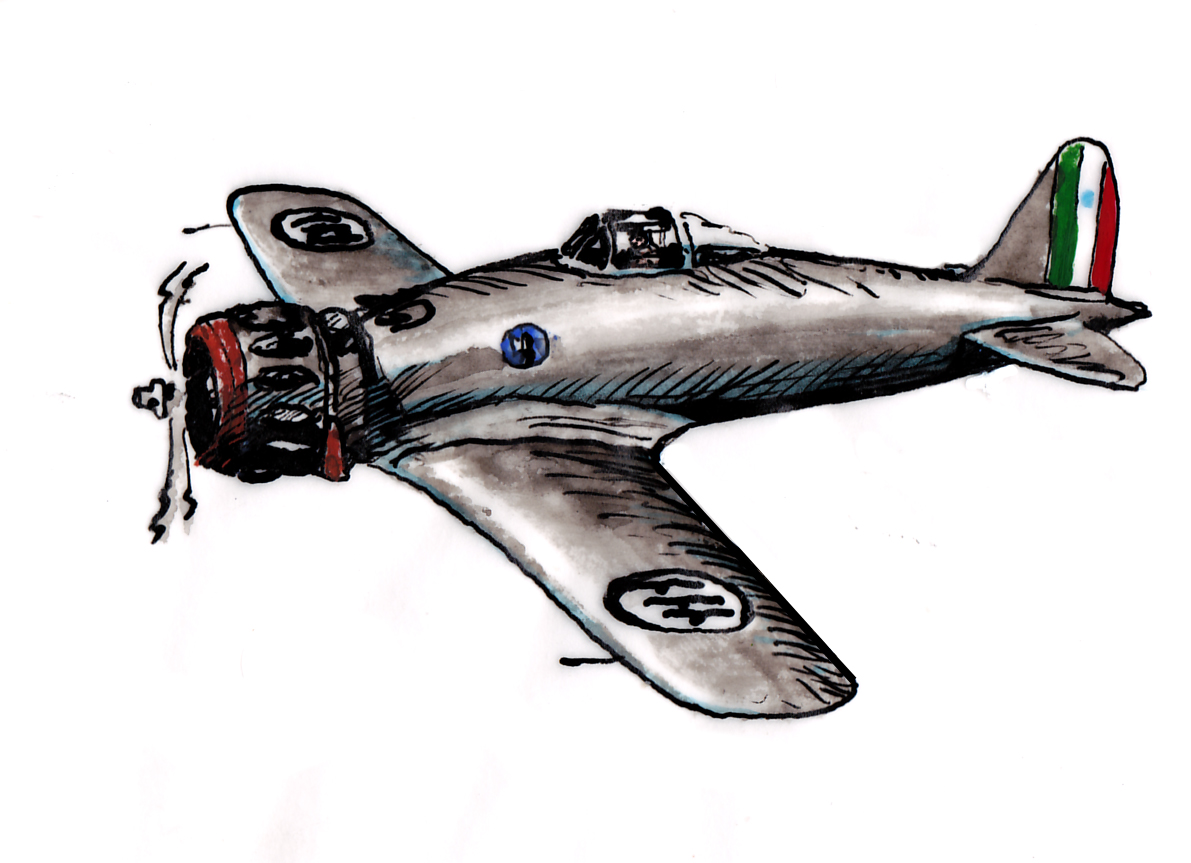
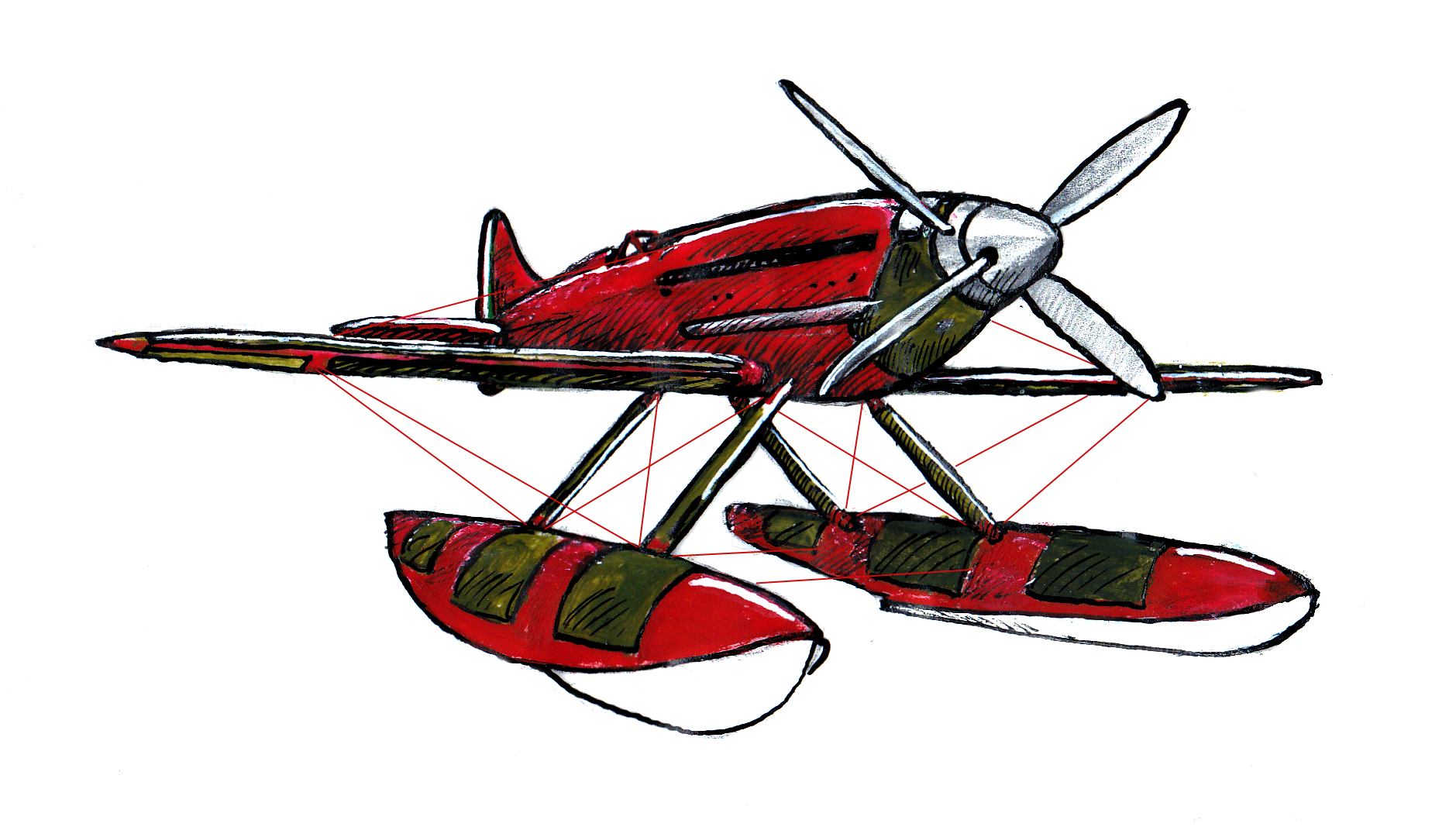
It is a truism, trundled out in countless books, websites, documentaries and a caption in the Science Museum that the design of the Spitfire was directly developed from the Supermarine S.6b. There was, however, another aircraft that boasted the same pedigree as Supermarine’s most famous product. It is not famous and it is a fine example of the artistic mediocrity that afflicted Italy’s aviation industry at the very moment that it was most sorely needed. The aircraft is the Macchi C.200 Saetta and it bears the same relation to the Macchi MC.72 as does the Spitfire to the Supermarine S.6b. The MC.72 was, to coin a phrase, an incredibly handsome shit-kicking, fire-breathing killer.

The extraordinarily beautiful Supermarine S.6A.

Its engine eventually developed over 3000 horsepower and this gargantuan 24 cylinder monster required that a vast amount of the airframe skin be employed as a cooling surface. Radiators covered the upper parts of the floats, the struts that attached them to the fuselage, nearly the whole wing, top and bottom on both sides, and (if the weather was warm) the lower rear fuselage. The entire nose was a thin- skinned tank to cool the oil. Any part of the aircraft not covered in radiator was painted Italian racing scarlet. The nose was long and dramatic to house the giant engine and the rest of the aircraft was a collection of swooping deco streamlines.

It looked fast and exciting and dangerous. And so it proved. Before it could be coaxed to the design team’s goal of 700 km/h it had claimed the lives of two test pilots. Eventually Warrant Officer Francesco Agello, chosen, like his dead colleagues, for his diminutive stature (the cockpit was tiny) took the MC.72 up to 709.2 km/h (440.6 mph) at Lake Garda in 1934; The fastest speed attained by a propeller driven seaplane to this very day. Had the MC.72 been followed up in the same manner as the Spitfire followed the S.6b then Italy would have had the fastest, finest and best looking fighter of the war.

” ..like a bumblebee or Winnie the Pooh. “

However Castoldi designed the C.200 instead. That isn’t to say that the C.200 doesn’t have a certain charm. It could almost said to be good looking in a slightly cuddly rotund kind of way, like a bumblebee or Winnie the Pooh.

From an engineering point of view it was also quite advanced. For example, to counteract the torque of the airscrew Castoldi made the left wing 21 cm longer than the right, the difference in lift between the two wings neutralising the effect of the rotating propeller.  The rear fuselage was a semi-monocoque, just like the Spitfire, and, as first designed it had a fully enclosed cockpit. The dive performance was said to be exceptionally good.

Humpty-dumpty

But who cares? It looked like humpty-dumpty. It was powered by the FIAT A.74, an unhappy Italian development of the Pratt and Whitney Twin Wasp and could barely exceed 500 km/h (312 mph). But it was pleasant to fly and although it was barely armed with two 12.7mm machine guns (which would have made it pretty competitive in World War I), the pilot had the benefit of a counter in the cockpit to tell him how much ammunition he had left to ineffectually fling at any enemy aircraft slow enough for him to catch up with. To convey the right sort of image it was dubbed the Saetta, which translates roughly as Thunderbolt and refers specifically to the lightning bolts that Jupiter clutches in his hand to scare mortals with.

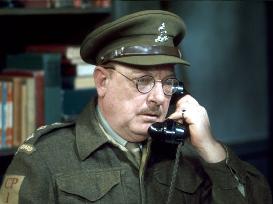
And thus Italy’s most produced monoplane fighter of World War Two joined the fray like Captain Mainwaring in a world populated by Errol Flynns.

Meanwhile the Spitfire was busy raising itself to mythic status. In addition to having a film made about it (‘First of the Few’) and having classical music composed for it (‘Spitfire Prelude and Fugue’), it actually was the best fighter aircraft in the world (more or less).

More importantly it looked like sex on legs.

And herein is the key – the Bf 109 was better than the Hurricane because it looked like it ought to be and the Spitfire was marginally better than the 109 because it was marginally better looking. The poor little Saetta could not succeed because it did not look more like a sexy killer than any other aircraft. Apart, that is, from other Italian aircraft: Over in Turin, FIAT weren’t just making engines of variable quality but busily producing aircraft too.

“..sex on legs”

Their CR.32 was an excellent attractive biplane that cut a dash over Spain and was instrumental in gaining Nationalist air supremacy. FIAT followed it up with the CR.42 (another biplane) which was chunkier, friendlier and happier looking and was so hopelessly outclassed when committed to the Battle of Britain that at least one pilot ‘mistakenly’ landed his FIAT in Suffolk rather than trust his life in the chubby machine against Fighter Command (and no one could truly blame him). To follow this FIAT gamely attempted to enter the monoplane arena; their G.50 was designed by Giuseppe Gabrielli who was also responsible for the rather elegant G.91 jet fighter of the 1960s.

A cruel joke? 

The G.50 cannot be considered his masterpiece, a slab sided, open cockpit, hump-backed aircraft, it swiftly set new standards of mediocrity. Over Greece it was outclassed by the Gloster Gladiator (a biplane) which gives a fairly accurate impression as to its capability, and it contrived to make even the Saetta look pretty slick. Its name of Freccia (Arrow) seems in retrospect to be a pointedly cruel joke and it has, quite rightly, sunk into obscurity, lacking even a modicum of aesthetic charm to commend it to anyone.

The third major Italian fighter manufacturer, Reggiane, was building an aircraft they called the Re 2000 Falco (Falcon) and it was notably better than any of the others – tellingly the RAF had ordered 600 of them before Italy entered the war but Germany embargoed the sale.

As a result the Italian air force chose inexplicably to virtually ignore the Falco (which looked like a P-47 Thunderbolt that has been squeezed lengthways – thus neither particularly threatening nor totally awful) but it was used in quantity by Hungary and Sweden with some success. But then, something weird happened. Castoldi took the C.200, bolted on a licence-built Daimler Benz V-12 DB 601 engine and created a real looker. Long slender nose, angular canopy blended with a curvaceous fairing, radiator set well back so it didn’t interfere with the svelte lines at the front.

Stylish lightning and brutish greyhounds

The porky C.200 became the stylish C.202 Folgore (Lightning) and soon made its superiority known over all Allied fighters with the exception, seemingly inevitably, of the Spitfire. A further engine change (for the DB 605) resulted in the Veltro (Greyhound), a broadly similar machine that added a certain degree of brutishness to the aesthetic mix and was a highly effective fighter. A bit like a Messerschmitt with curves. So successful was this approach that FIAT and Reggiane could not fail to notice and the German engine was married to the G.50 and the Falco.

Reggiane Re.2005 Sagittario: The most beautiful plane of the Second World War

The hopeless little G.50 was transformed into the outstanding and good-looking G.55  and ultimately the experimental G.56 which proved superior to any Axis fighter in German tests.  But the Reggiane became the Re 2005 Sagittario (Archer) an aircraft that was described as “the most beautiful plane of the Second World War” (admittedly by an Italian). Its looks did not belie its capabilities and it was lucky indeed that a mere 48 were built. It was too late anyway; the damage was done and Italy had fielded an array of the world’s least attractive or even purposeful looking fighters and had suffered the consequences.

That Italian engines lagged behind the World standard, that its industrial output was pathetic and its fighters lacked what any other nation would consider a proper armament was by the by. Italy’s fighters were aesthetically wanting in its hour of need and they suffered the consequences.

However, they got to keep the floatplane record for eighty years.

Any part of the MC.72 not covered in radiator was painted Italian racing scarlet

By Ted Ward writer and illustrator

Follow us on Twitter

Creating Hush-Kit takes time and resources, if you would like to help us continue please hit the donate button on this page (we are unfortunately well behind on our fundraising efforts). 

You may also enjoy 11 Cancelled French aircraft or the 10 worst British military aircraft, Su-35 versus Typhoon, 10 Best fighters of World War II , Su-35 versus Typhoon, top WVR and BVR fighters of today, an interview with a Super Hornet pilot and a Pacifist’s Guide to Warplanes. Flying and fighting in the Tornado. Was the Spitfire overrated? Want something more bizarre? Try Sigmund Freud’s Guide to Spyplanes. The Top Ten fictional aircraft is a fascinating read, as is The Strange Story and The Planet Satellite. The Fashion Versus Aircraft Camo is also a real cracker. Those interested in the Cold Way should read A pilot’s guide to flying and fighting in the Lightning. Those feeling less belligerent may enjoy A pilot’s farewell to the Airbus A340. Looking for something more humorous? Have a look at this F-35 satire and ‘Werner Herzog’s Guide to pusher bi-planes or the Ten most boring aircraft. In the mood for something more offensive? Try the NSFW 10 best looking American airplanes, or the same but for Canadians. 10 great aircraft stymied by the US. 

You may also enjoy top WVR and BVR fighters of today, an interview with a Super Hornet pilot and a Pacifist’s Guide to Warplanes. Want something more bizarre? The Top Ten fictional aircraft is a fascinating read, as is The Strange Story of The Planet Satellite. Fashion Versus Aircraft Camo is also a real cracker. 

Israeli Stunner: The future of US AAMs?

Image

This week (25/11/2012) Israel and the US  deployed the David’s Sling defence system. The system is intended to destroy air-threats (both aircraft and missiles) and features an IAI phased array radar. David’s Sling uses the Stunner interceptor missile, in  launchers of 16 missiles. In the test, a David’s Sling battery stationed in Southern Israel fired the two-stage interceptor missile and stopped an incoming missile. The weapon system is slated to become fully operational in 2014.

Air-to-air future?

Never mind the Meteor, the air-to-air missile (AAMs) that will shake up the future will be based on the Israeli-American Rafael/Raytheon Stunner. Presently in development as a surface-to-air missile (SAM), the Stunner (part of the Israeli Sling of David defence system) uses a dual-band optical/radar guidance system. Its dual-band guidance is unusual, as is the fact it is ‘hit-to-kill’, and that it is starting life as a SAM (normally AAMs evolve a SAM variant, not the other way around).

The Gripen Demo fitted with Meteor (dummy round) and IRIS-T missiles. Europe has never been stronger in the development and production of air-to-air missiles than it is now.

A new AIM?

The death of the AMRAAM replacement (the next generation missile or NGM) combined with the approaching arrival of Europe’s Meteor, and China’s limitless research budget all combine to threaten the US’ commercial and technological lead in the AAM field. The European IRIS-T short-range missile, superior to the US AIM-9X in some respects, has made an impressive in-road into the AAM market with ten nations using the weapon. Though both the AIM-120 AMRAAM and AIM-9X sidewinder remain the most widely exported air-to-air weapons, the development potential of both designs is limited.

A Stunner AAM produced in the US, may offer the US the best chance to dominate future AAM sales.

Image

The BAC TSR.2: Bombing the myth

ImageGive a British aviation enthusiast more than two pints and he will invariably tell you the story of TSR.2. This tale of an axed nuclear bomber will be told to you in a far more tender tone than he used to talk about his family. This bar room lecture will climax in an angry rant at the crass, penny-pinching government that killed Britain’s flying dreams. 

The story goes: Britain produces a world-beating aircraft, technologically superior to anything else- a fast, long ranged, survivable strike aircraft. A foolishly short-sighted Labour government cancel it. The British aircraft industry was already in terminal decline from Duncan Sandys’ mad announcement of the end of manned aircraft in 1957. The killing of TSR.2 was the final act of vandalism, leaving the industry that had given the world the Spitfire, the Hurricane and Hunter to wither and die.

This idea was fed to me from the rather good Take-Off magazines I read as a child. The story is a compelling one, it reaches into the recesses of the British psyche. It plays to the heart of a faded colonial superpower and affectionately pats the chip that sits on many British (particularly English) men’s shoulder.

‘You could have been the best, if only…’ is a powerful sentiment, and always reassuring, as it can’t be disproved. The only problem with the TSR.2 story is the foundations it rests upon are very shaky. Let’s imagine a world where TSR.2 was not cancelled in 1965….

 A World where TSR-2 was not cancelled

Several events conspired to save the TSR.2 from cancellation. The replacement of the MoD chief scientific advisor Solly Zuckerman (inventor of both the helmet and ‘folly’ of the same name’) certainly helped. Zuckerman, a fierce opponent of TSR.2, quit in 1964 amid allegations that his personal beliefs regarding nuclear weapons were affecting his professional decisions. With the appointment of a new, pro-TSR.2 advisor, things were looking brighter for the ‘white bomber’, which took to the air on 27 September 1964 confounding the critics with its superb performance.

Meanwhile, backroom dealings between the Royal Navy and the RAF were taking place. This unusually cordial discourse took place amid fears that inter-service squabbling could see the end of funding to both air carriers and manned land-based bombers. Though by this time RAF fears that the subsonic Buccaneer would be forced on them in place of TSR.2 were dispelled, it was clear to both services that the effectiveness of future nuclear-armed submarines threatened traditional ideas of how big air forces and navies needed to be.

Click here for the story of the Hawker P.1154, Britain’s cancelled superfighter

The Ferranti company was found to be grossly overcharging for  Bloodhound missiles (surface-to-air missiles designed to defend V-bomber and Thor missile bases) and this scandal led to big questions being asked about the survivability of V-bombers in a full-scale war and lead to further support of the TSR.2. Meanwhile Prime Minister Wilson’s commitment to ‘ the White Heat’ of technology, saw R&D investment increase (though initially only for civil aircraft projects). As money poured into Concorde, the coffers were also opened for TSR.2.

However, the development of TSR.2 was proving to be a nightmare.  The highly advanced avionics system caused huge delays and saw the price of the project sky-rocket. To survive against the world’s biggest integrated air defence network, the bomber would use a combination of speed, electronic counter-measures and flight profiles below enemy radar. To safely fly at speeds approaching Mach 1 at 200 ft,  in the murk of Northern European weather or at night would require a new technology.

UK electronics giant Ferranti was charged with developing the world’s first terrain following radar (TFR) for TSR.2, which it had been working on since 1958. It initially made excellent progress, flying successful trials in its test Dakota and Canberra (WT327). The radar was first fitted to a TSR.2 in late 1965. Initial tests concentrated on testing the radar at low level (200 ft) at speeds approaching the speed of sound, it been flown this low before, but not at these speeds.

The severe vibration proved too much for the pioneering radar and Ferranti went to back the lab to start a virtual redesign. This meant that TSR.2 entered service without its most vital sensor- the radar. After soaking up millions of pounds in, the Ferranti TFR was eventually cancelled, and the UK turned to the US company Texas Instruments to provide the TFR.

It wasn’t just the avionics that were causing problems, BAC itself had issues. The British Aircraft Corporation, formed in 1960, was a forced merger of English Electric Aviation Ltd., Vickers-Armstrongs (Aircraft), the Bristol Aeroplane Company and Hunting Aircraft. Though the company had one name, BAC was still a patchwork quilt of different, often incompatible cultures. The pressure of TSR.2 development made the already fragmented world of BAC even worse, with arguments over factory work-share and work practice leading to drawn-out industrial debates, and in early 1968, the infamous strike.

The USA strikes back

The RAF had ordered 300 TSR-2s, and the type entered service in 1969. Confident in the aircraft’s abilities, Britain was actively marketing the aircraft to several nations including Australia and Iran. This alarmed the US aerospace industry, fearful of a new contender in the fiercely competitive export market. The closest US aircraft was the F-111, which was not receiving much export interest, being seen as too expensive and complex (many air arms were also put off by its initially poor performance over Vietnam), others saw it as inflexible, as it could not perform the fighter mission. Due to its advanced nature, export limitations where also in place. McDonnell Douglas responded with a ground attack optimised F-4 Phantom II in the early 1970s. Primarily aimed at the European market, this impressive aircraft was fitted with TFR, FLIR and a laser target designator. A fuselage ‘plug’ and uprated engines gave the new Phantom impressive range/payload performance. The aircraft was dubbed ‘Strike Phantom’. The US mounted a covert anti-TSR.2 campaign, sowing doubt on the type’s maturity and highlighting the growing cost. Strike Phantom were sold to Italy, West Germany and Iran (which used them to great effect in the Iran-Iraq War). Meanwhile the TSR.2 was struggling to achieve its first export sale. Compared to the Strike Phantom, TSR.2 was big, very expensive, hard to maintain and lacking a laser-guided bombing capability.

The big tree that took all the sunlight

With TSR.2 going ahead the Anglo-French AFVG (Anglo-French Variable Geometry) aircraft, a swing-wing carrier compatible fighter (for interceptor, tactical strike and reconnaissance roles), was discontinued. In turn the UKVG was also not proposed and so did not lead to MRCA, which would have grown into Tornado. With the future of  the ground attack mission safely in TSR.2’s hands, the Anglo-French Jaguar went back towards its Taon roots, becoming a small (marginally supersonic) trainer with next to no offensive capability. The Jaguar’s success as a trainer meant the Hawk was never built. Without the collaborative base of Panavia, attempts by various European companies to start work on a new fighter in the 1980s failed to gain momentum, and the Typhoon never was.

Though in many ways a capable aircraft, TSR.2 was ultimately the aircraft that killed both Britain and Europe’s warplane industry and left it dependent on the United States.


TSR.2 Timeline

First flight 27th September 1964.

In 1968 TSR.2 was named ‘Tornado’

The TSR.2 entered service on April 1st 1969 in interim TSR.Mk 1 standard.

Upgraded to definitive Tornado TSR.Mk 2 standard with fully functioning Texas Instruments TFR in 1978.

Two TSR.2s crashed on the infamous failed ‘White Buck’ mission against Argentina in 1982.

TSR.2s were suggested for US attacks on Libya 1986, but declined for political reasons. Upgraded in 1986 to Tornado TSR.Mk.3, TSR.Mk.3A (recce) and TSR Mk.3B (anti-shipping with Sea Eagles) standard. UK buys 165 F-15F Eagle (enhanced two-seat F-15C fitted with Sky Flash and radar upgrade) in 1986 to replace Lightning and complement F-4 fleet.

During Desert Storm the large low-flying TSR.2 (with its significant IR signature) proved vulnerable to SAMs, 8 lost (of 30 sent) to enemy, 4 lost in accidents.

Fatigue problems and increased attrition rate causes a search for a replacement.The US offered F-15E and second-hand F-111s, France offered Mirage 2000D/N derivative with UK systems, Sweden offered upgraded AJ 37 Viggens. After prolonged procurement assessment the F-15G was chosen in 1994 (124 ordered). The F-15G features UK ECM equipment, weapons and Martin-Baker ejection seats.  The F-15G entered service in 1998, Tornado TSR.2 was withdrawn from attack role in 2000 (after Balkans deployment). 12 recce versions upgraded to TSR.2.Mk 4As standard and remained in service until 2004, used in Afghanistan.

2012 RAF fast jet fleet: 110 F-15Fs, 100 F-15G(UK).

If you enjoyed this, check out our exclusive article on Britain’s P.1154 STOVL fighter: http://hushkit.net/2012/07/20/the-hawker-p-1154-britains-supersonic-jumpjet/ and remember to donate if you’d like to.


safe_image.jpg

“If you have any interest in aviation, you’ll be surprised, entertained and fascinated by Hush-Kit – the world’s best aviation blog”. Rowland White, author of the best-selling ‘Vulcan 607’

I’ve selected the richest juiciest cuts of Hush-Kit, added a huge slab of new unpublished material, and with Unbound, I want to create a beautiful coffee-table book. Pre-order your copy now right here  


TO AVOID DISAPPOINTMENT PRE-ORDER YOUR COPY NOW

From the cocaine, blood and flying scarves of World War One dogfighting to the dark arts of modern air combat, here is an enthralling ode to these brutally exciting killing machines.

The Hush-Kit Book of Warplanes is a beautifully designed, highly visual, collection of the best articles from the fascinating world of military aviation –hand-picked from the highly acclaimed Hush-kit online magazine (and mixed with a heavy punch of new exclusive material). It is packed with a feast of material, ranging from interviews with fighter pilots (including the English Electric Lightning, stealthy F-35B and Mach 3 MiG-25 ‘Foxbat’), to wicked satire, expert historical analysis, top 10s and all manner of things aeronautical, from the site described as:

“the thinking-man’s Top Gear… but for planes”.

The solid well-researched information about aeroplanes is brilliantly combined with an irreverent attitude and real insight into the dangerous romantic world of combat aircraft.

FEATURING

        • Interviews with pilots of the F-14 Tomcat, Mirage, Typhoon, MiG-25, MiG-27, English Electric Lighting, Harrier, F-15, B-52 and many more.
        • Engaging Top (and bottom) 10s including: Greatest fighter aircraft of World War II, Worst British aircraft, Worst Soviet aircraft and many more insanely specific ones.
        • Expert analysis of weapons, tactics and technology.
        • A look into art and culture’s love affair with the aeroplane.
        • Bizarre moments in aviation history.
        • Fascinating insights into exceptionally obscure warplanes.

The book will be a stunning object: an essential addition to the library of anyone with even a passing interest in the high-flying world of warplanes, and featuring first-rate photography and a wealth of new world-class illustrations.

Rewards levels include these packs of specially produced trump cards.

Pre-order your copy now right here  


I can only do it with your support.

HUSHKIT EXCLUSIVE: MY FIRST-HAND EXPERIENCE OF THE AFGHAN AIR WAR

Image

Mark Townsend, war correspondent, describes the air war in Afghanistan from his first-hand experiences embedded with British forces. This is a Hush-Kit exclusive.

In a war where the most lethal threat is buried underground, Afghanistan’s airborne operations are often obscured behind the escalating roll call of IED victims.

Yet visitors to Helmand Province are quickly reminded that, like all modern campaigns, almost everything relies on what’s happening above.

To move safety across landmine sown terrain, to guarantee the outcome of skirmishes and acquire intelligence of enemy strongholds depends upon air supremacy. In fact, to get anywhere near the province you’ll need wings. The first aircraft you’re likely to experience is the C-130 Hercules, rumbling south from Kabul to the sprawling US base outside Kandahar or further on to the UK’s shrunken versions in Camp Bastionor Lashkar Gar.

Helmand is still several miles below when the flight crew gestures –despite ear plugs the engine noise is deafening – for all passengers to don flak jacket and helmet.

Now the descent. Hard and fast. Anti-missile devices on, the engine’s drone is higher now, the aircraft’s slumbering frame suddenly feels oddly nimble, its nose pointed at the ground at an angle civilian flight has never prepared you for.

Image

But then most flight time above Afghanistan is akin to a roller-coaster. Although the Chinook is regarded as the aviation workhorse of the British army, its moth-like body churning furiously through the hot Helmand sky, I only remember it as a jittery fairground ride of never-ending dips and rolls.

The exception, perhaps, being the 20-minute hop from Camp Bastion to Lashkar Gar, often a smooth affair, its load sprinkled with stern and sensible-faced reconstruction officials and diplomats. But head north from Bastion to, say, Sangin and movement by Chinook becomes a very different prospect.

You already suspect as much before you’re on board. The helicopter’s landing gear has barely touched the tarmac when the command is issued to move forward, you stumble towards its ramp, suffocated by the eyebrow-singeing heat of its two side-mounted engines. Seasoned soldiers gasp for breath, bodies bent into the draught from its spinning rotors. You’ve hardly had time to wriggle into the delicate mesh seats when the rear gunner gives the thumbs up. Then you’re up,over the perimeter fence, above the first wadi, the first cluster of Afghan compounds. Goats stare up, kids wave and you can see their smile and you guess the helicopter is no higher than 300 feet before you start lowering. The Chinook banks hard to the left, then right,you lurch forward, suspended by the flimsy safety harness as the Chinnok follows a wadi north east to Sangin. By now, you’re no more than 50 feet above the surface, its desiccated banks in line with the helicopter’s belly.

You gasp as the Chinook banks furiously again, pushing you deep into the harness. You raise an eyebrow at the young soldiers sat opposite, to say ‘this is some ride,’ but there is no acknowledgement. No one is smiling. Some swallow hard and grasp their rifles, some stare at the receding desert flats out of the open rear, others through the dust-smeared viewing port-holes. You remember they are off to war and some must surely be worried they might not travel back alive, or otherwise on their back lying on the floor of the medevac Chinook,wired up to a saline drip as medics battle to keep them from slipping under. Some probably just hate flying. Others, too, would avoid the Big Dipper given the chance. Flight time is no more than 25 minutes of lurching forward and back, occasionally the helicopter interior filling with a backdraught of dust and fume-filled air.

And then the final approach. Suddenly, we’re climbing – below, the blue strip of the Helmand River – and then as quickly we’re dropping quickly through the “fire zone”  where the enemy have recently aimed ground-to-air rockets at approaching choppers. The Hesco barrier marking the outer wall of the British army’s Sangin forward operating base, blurs past below. The soldiers opposite are all now gripping their SA80’s, eyes widened. The Chinook lands with a jolt, blades still whirling, helicopter trembling and we’re running out through the wall of heat and noise into a dust-storm. As the last boot leaps from the lamp, the Chinook is already rising, swinging around to the river.

There are other ways to ride a Chinook. Keep heading further north from Sangin to the remote base of Kajaki, submerged between jagged mountain ranges, and the journey changes. This time, the Chinook chugs slowly to 9,000 feet and for those prone to vertigo, the sight of endless peaks through the helicopter’s open rear presents a terrible urge to hurl oneself to the battlefield far below.

Again, as always, it is the descent that is most hairy. This time the helicopter weaves through a valley whose sides tower above. It is a vulnerable passage of flight. As the craft approaches the landing zone, it passes below the wreckage of another Chinook, struck weeks earlier by a Stinger missile. And again, the expressions of the soldiers opposite never change, fear is a redundant emotion for airborne ground troops.

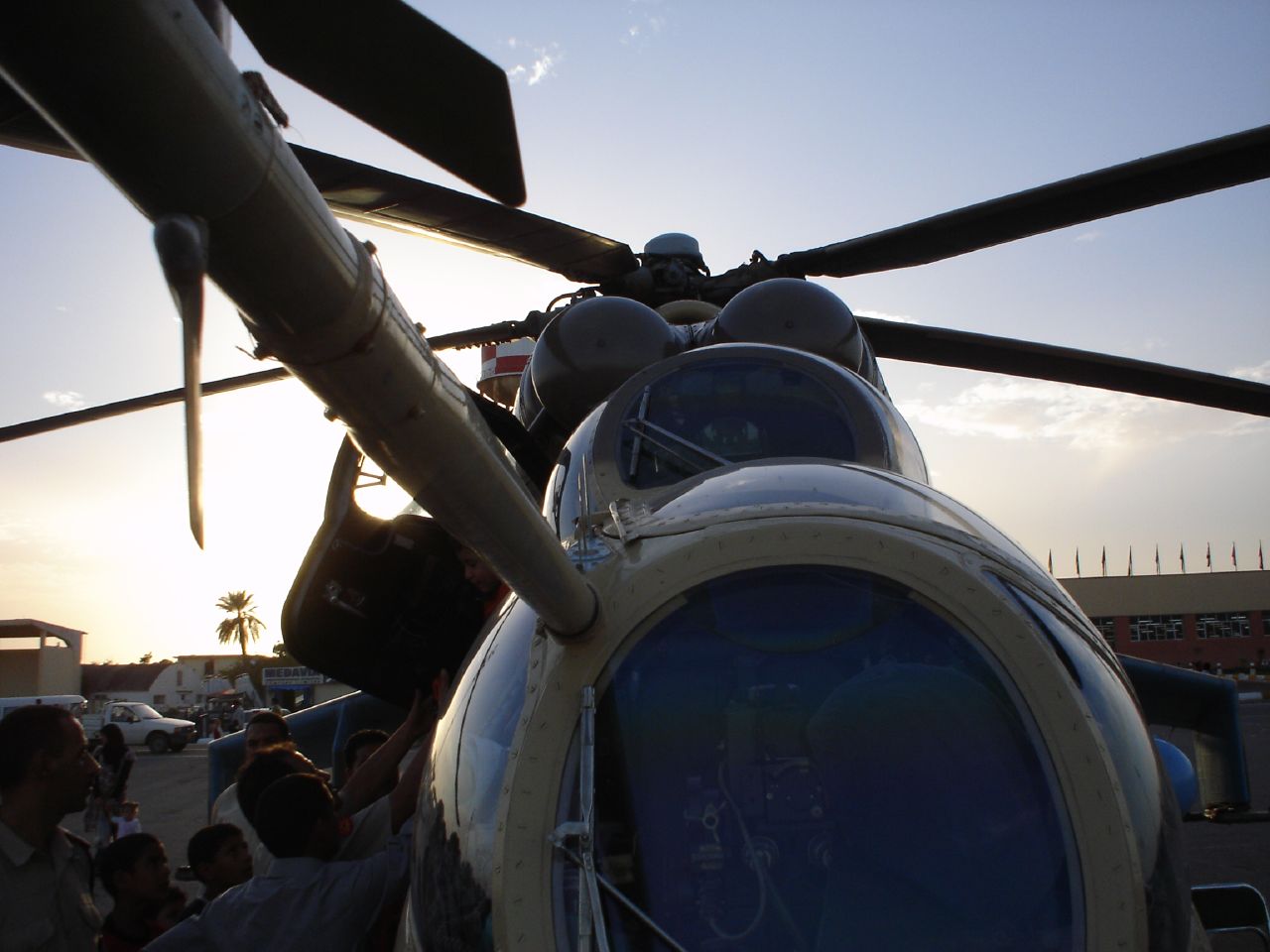
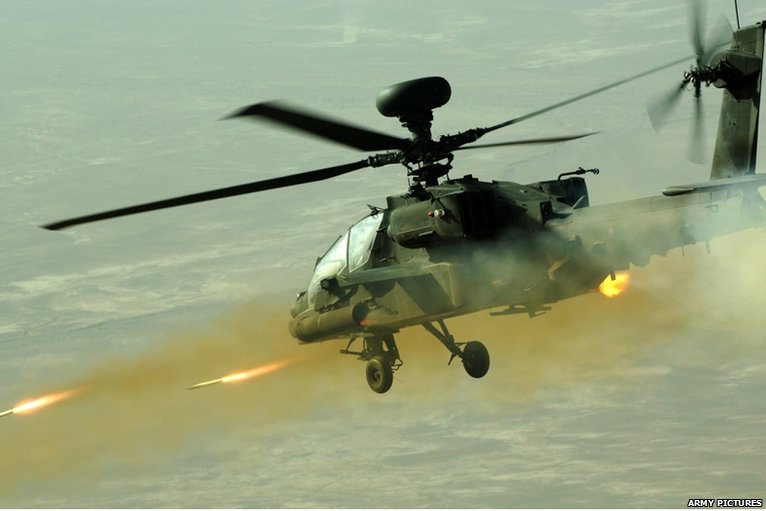
Yet while Chinooks provide their safe passage, it is the sight of another helicopter in the cloudless Helmand skies that unfailingly lifts the spirit of NATO’s infantry. The AH-64 Apache is their saviour. Its appearance, like a fuming firefly, is invariably a sign that the fighting in question will come to an end, its mere appearance usually sufficient for the Taliban to retreat.

Image

Those who have seen the Apache in action will testify its ability to hang in the air, clinically despatching laser-guided Hellfire missiles at pre-selected firing points.

It is a merciless machine. Within several days in Helmand it was evident that the Apache’s arrival always guaranteed victory or at least a successful retreat. And that’s Helmand: you spend the whole time worrying about what lies beneath while waiting for something to appear in the sky.

Image

Award-winning journalist Mark Townsend is the author of the Point Man:

http://www.guardianbookshop.co.uk/BerteShopWeb/viewProduct.do?ISBN=9780571272426