“On 9/11, I told the Chief of the Guards that if my guys were not allowed in when they came, not only would they have to answer to the President of the United States, but I will personally come over there and shit down his neck…â€
Retired SMSgt TJ NIZNIK was a U-2 Crew Chief
Everything about the U-2 is unique. The U-2 was designed for a very specific mission, and the designer of the U-2, Kelly Johnson, once said, and I paraphrase, “If you want this aircraft to go high, I cannot design it to military specification”. The U-2 is known to save weight. For instance, there are very limited access panels. The requirement of having 2-3 threads of a screw protruding past the nut plate was reduced to being flush with the nut plate. Every pound of weight saved is a foot higher in altitude, and altitude is survivability. There are no self-sealing fuel cells on this jet. The U-2 is a wet wing, meaning the entire wing, from the wing tip to the fuselage, is all fuel. No single point refueling for this jet, nope it’s all over the wing refueling. There are 6-8 Crew Chiefs assigned to the aircraft, which is very unlike the rest of the Air Force, where 2-3 are typical.
“The biggest difference between the U-2 and A-10 pilots is that one thought their shit didn’t stink, and the other group knew their shit didn’t stink.â€
The U-2 is a groundcrew nightmare. This is the only aircraft in my career where there is a file system of manufactured blueprints on hand because the tech data may only say remove and replace item X. Well, in any other military standard aircraft the tech data will be step-by-step how to remove and reinstall a part, with pictures and part numbers for consumable items. Not this jet.
The tech data will tell you what to do, but to find out the list of consumables, the ‘angle to the dangle’ of each fitting to be installed, etc, you will have to pull the blueprint and take all of the references from that. Now, I left the program in 2002, and they have been diligently working on changing the tech data to become more to standards. Another unique item is that this is the last taildragger in the inventory. With a bicycle landing gear and outboard wing pogo to prop up the wing during ground movement, this aircraft cannot turn on a dime.
TJ NIZNIK (on left)
It needs space, and some pilots misjudge their turn and get stuck on a taxiway, only to be rescued by a bunch of Crew Chiefs who will push back the jet and manually realign him. To fix a hydraulic leak in the engine bay, the jet has to be placed on a fuselage dolly, the tail section is removed, the engine is removed, and then one can tighten the fitting. Then it’s a 23-36 hour job to reinspect the entire inside and have Quality Assurance Inspections performed after you just inspected it before you can begin reinstalling everything. This is a time-consuming jet. However, every effort to eliminate this jet from the inventory has met in disaster because no other platform can do what this aircraft can.
Read the rest of this enthralling U-2 article here.
The A-10 Thunderbolt II is a giant flying rotary cannon, wrapped in armor and looking for trouble. Former USAF Staff Sergeant TJ NIZNIK cared for this ugly death machine at the height of its potency. Here, he reveals all about the A-10’s needs, the danger of ‘Hawg Bites’, and what he loved and hated about keeping the A-10 alive.
“Only a Crew Chief will know the harshness, sadness and feelings when their jet fails to return home. Even worse is when the aircrew died. Thousands of thoughts rush through our minds like, ‘did I do this or that correctly’, ‘what did I miss?’ Some may even be blamed for the mishap, and that is very hard to recover from.â€
The A-10 is famously robust. Was there anything unusual about the design or construction from a Crew Chief’s perspective?
Oh yes, the A-10 was designed with maintenance personnel in mind. Large access panels have smaller access panels. The design of separating the engines on pylons off the fuselage increased survivability, which means engines were interchangeable. Every hydraulic part has a primary and a secondary system. This is the double in triple redundancy of system power. Of course, twice the systems also mean twice the tubing, fittings, reservoirs, and accumulators. The third part of the triple redundancy is the cable and pulley system known as manual reversion. Large access panels help make maintenance easy by using high-torque Allen-head fasteners. The smaller access panels within are usually for inspection or servicing aircraft systems. The aircraft is tall, much larger than most people realize. One can walk under 70 percent of the jet without having to duck their heads. This leads to most of us have, Hawg Bites. Everyone has a scar on their head from hitting the corner of a weapons pylon or a protruding antenna. I would say that, as far as maintaining a tactical aircraft, the A-10 is the most friendly.
Did the A-10 require a lot of looking after? What were the common maintenance fixes it needed?
This is a great question. I worked on this aircraft all over from 1986 when I joined, and up to the time I retired in 2011. The hot, muggy weather of England AFB, Louisiana to the cold and damp RAF Alconbury (sorry guys but it’s true and you know it!), to the hot dry heat of Nellis AFB, Nevady to the very frozen Eielson AFB, Alaska, to my final assignment here at Moody AFB, Georgia. Each location had specific maintenance requirements that were unique to the location. For instance, at England AFB, hydroplaning was a factor, so the aircraft tires had an average 2/32 minimum depth to prevent the condition. Whereas, in Eielson AFB, we disassemble each landing gear and install new o-rings and packings each fall. This is needed because of the frozen temperatures that routine got down to -45 degree F, the older internal packings would roll and collapse the gear. Nobody likes a flat landing strut. The most common fixes were tyre changes, tightening and replacing screws, radio and comm/nav faults, and the never-ending hydraulic leak.
Most systems go until failure and consistently fail at the worst possible time. We do have time changes based upon the number of hours interval (every 100 flying hours) or a calendar interval (every 30 days). Major systems like engines, gun or actuators will have a much longer period between scheduled changes. We usually have more unscheduled failures that occur before the actual period ends, except for the gun system. That is extremely reliable.
Hush-Kit Aviation Newsletter is a reader-supported publication. To receive new posts and support my work, consider becoming a free or paid subscriber.Subscribed
How many hours of maintenance per flight hour did it need? What was most time-consuming?
Day shift usually had about 1.5 hours between flights to get it inspected, rearmed and ready for aircrew to show. Nights, however, had a much longer inspection that would take anywhere between 1-2 hours. This really depends upon whether or not the plane flew or not since the last preflight. Considering that everything went well between the mechanics, weapons and specialists and refueling, I’d say 3-4 hours per jet. If there were discrepancies, we’d work up to 12 hours and if not completed, we’d call in the day shift crew chief and specialist to complete the work to get it ready to fly for the next day. This is the best part of the swing shift. Swings were never routine and always different, especially when you have a fleet of 12-18 jets to get ready. The most time-consuming events were the operational checks. At times a 30-minute part replacement drove the aircraft to be jacked off the ground, landing gears swung up and down several times and every hydraulic system operated under power.
What do you love most about the A-10?
For the first aircraft in my career versus say an F-4, I’d say the A-10 was by far the easiest plane to work on. I spent a lot of time with my arms raised over my head, though, because it’s so big and roomy. Of course, the best thing about the A-10 is the..
You can read the rest of this thrilling A-10 article here.
Today, Boeing announced that it had won the multi-billion dollar contract (starting at around $20 billion) to develop and supply the Next Generation Air Dominance Fighter for USAF. The new aircraft will be designated F-47. Technology demonstrators for the aircraft have been flying since at least 2020. We take a look at this exciting news, the likely technologies, unusual features and possible names.
Announced at a White House press briefing, Trump noted, “An experimental version of the plane has secretly been flying for almost five years and we’re confident that it massively overpowers the capabilities of any other nation.†Within minutes of the announcement of the F-47 designation, wits online were wondering whether it was a discrete dig at the 47th President and whether it stood for ‘Fuck-47’. It is, in reality, more likely a sycophantic move. The designation F-47 had been previously used for some late and export models of the wartime P-47 Thunderbolt, though any thoughts that this could mean the aircraft could be called the Thunderbolt III are unlikely, as the Republic heritage is now within today’s Northrop Grumman. Artworks of what is suggested is the F-47 are hard to understand; they appear to show a conventional stealth fighter forward fuselage, with extended leading edge, canards or engine intake sections in the shoulder position and what looks like an odd anhedral angle on the inner wing section (more on that later).
Boeing created the Boeing Model 15 in 1923, followed by a series including the ‘Peashooter’. They specialised in bombers such as the B-17 and B-29 in the war. In the post-war years, they concentrated on airliners and bombers. The merger with McDonnell Douglas in 1997, who had a wealth of fighter experience with the F-4 and F-15, put Boeing in the fighter business again. Boeing was the company name when the Super Hornet, a radical reworking of the McDonnell Douglas F/A-18 Hornet (originally a Northrop design), first flew as a McDonnell Douglas aircraft but was carrying a Boeing badge by the time it entered service. Boeing worked on several advanced F-15s, notably the F-15EX for USAF. If the demo aircraft was the Voodoo II, as some have reported, then Voodoo is a possible name for the aircraft, Phantom III would also seem a contender. Generally, a US military aircraft is named in recent years, is a reused name of an aircraft with a good reputation that was created by the manufacturer or a company that the manufacturer has absorbed. Boeing contains McDonnell Douglas, and could fairly claim Phantom, Voodoo or Eagle III (or IV). some may fairly ask when they last ran a clean piece of paper combat aircraft design, though considering the massive development time of any combat aircraft, even Lockheed Martin contains few engineers or project managers present for the early years of the F-22 and F-35.
The teaser images obscured the wings, which may mean nothing or could point to an unorthodox wing configuration. The pronounced dihedral of the inner section is reminiscent of..
Last week, I got an email from the publisher Unbound saying they’d gone into administration and my books would be cancelled. After all the support from you, seven years of my and many others’ work on all three, and a vol 2 design that is 99% finished, I’m pretty devastated. I was told a few weeks ago that the release for volume 2 was delayed by a year, I am now told it is cancelled. I’m sad and bewildered, trying to comprehend what has happened.
Here’s the email I got:
I am in dozens of conversations (I have had little sleep this week) trying to make sense of this and ensure it resolves fairly.
I want to find a way to publish the books, and I’m talking to many people. It’s utterly frustrating to have a project that is hours away from completion (and features some mind-bending artworks of exotic amazing warplanes like cancelled Swedish warplanes) to meet cancellation. The Hush-Kit writers, photographers, artists and interview subjects are rightfully proud of this book and we want to find a way to share it. If there is anything positive in this horrible situation, it’s that I might find a way to publish Hush-Kit’s superb books in a much faster manner.
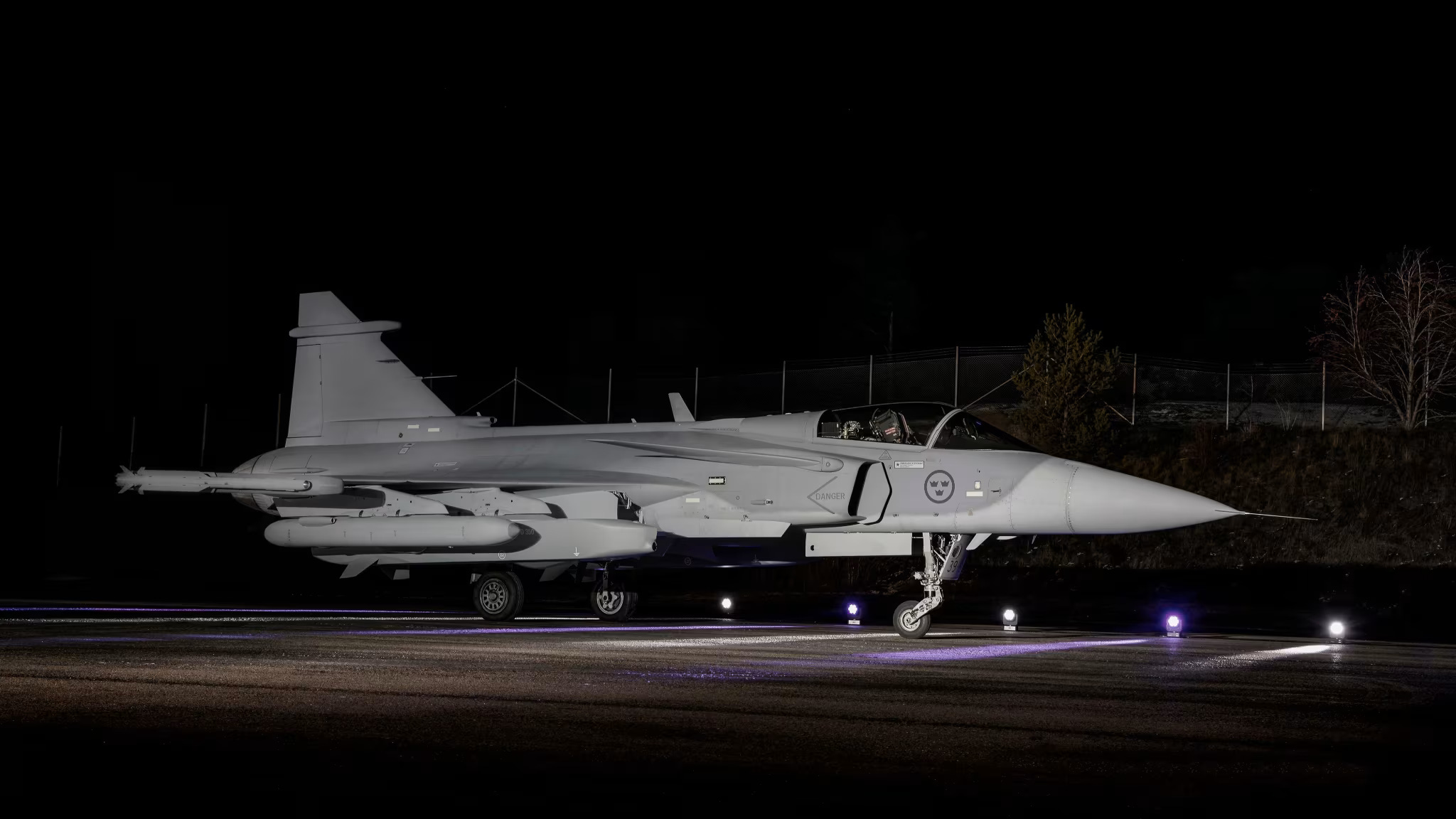
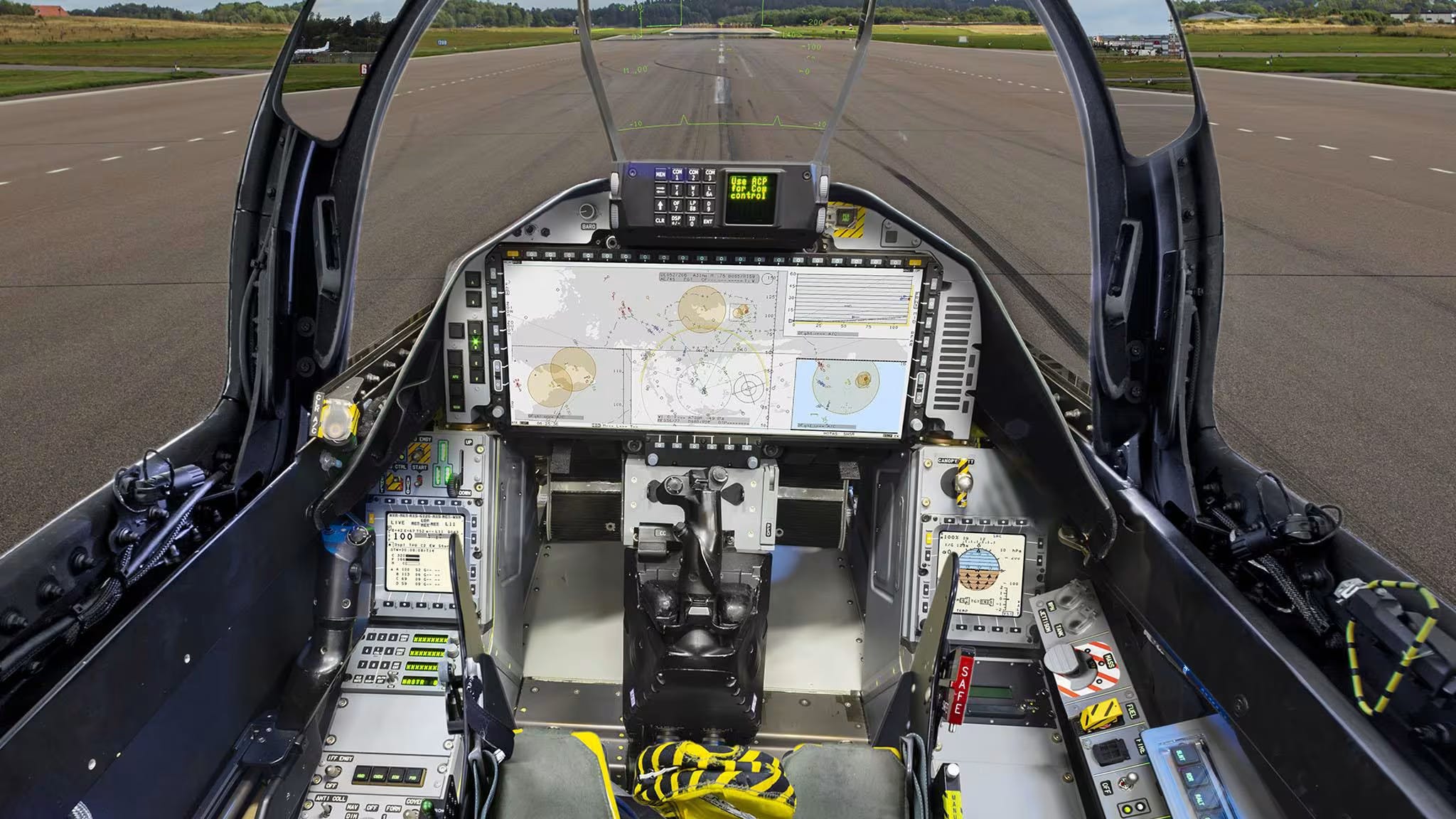
Unlikely as it is, the main competitor of the F-35 is the Saab Gripen-E. These two fighter types, are as different as they could get, one akin to a bulky people carrier, the other a stripped-down scrambler. The unlikely arch-rivals faced off in pitches for the Netherlands, Switzerland, and the Nordic countries, were proposed to Canada, and competed in the Czech Republic. We go even deeper into the unheimlich wizardry of Sweden’s new fighter with Jussi Halmetoja and find out how it compares to the F-35. This ain’t for the faint-hearted; it’s a detailed snoop into the world of the things that really count: exotic datalinks, sizzling electronic warfare and the vital need for technological sovereignty. Pour yourself a glass of wine and get comfortable; this is over 10,000 words long and reveals all you need to know about the F-35 versus the Gripen E.
“As a result, now that stealthy target is not so stealthy anymore. Now I can see you, and that means that you’re in trouble!â€
Andy Tuma met Saab’s Jussi Halmetoja for an insightful tour of the magic of the Gripen E’s engineering and tactical systems, something that can be easily overlooked, and learned of the areas in which it matches, or even exceeds, the F-35’s capabilities.
“Hello. I’m Jussi Halmetoja, and I now work for Saab as an operational advisor for the Air Domain. I’ve had over 2,300 hours in the cockpit. Before joining Saab, I was a frontline squadron pilot on both Viggen and Gripen systems and a Weapons Instructor on the squadron. I was also on the operational test job. After that, I was also involved in some developmental and experimental flight testing with the Gripen C, and also when we started working with the Czech Republic and Hungary as the first export nations.
After my flying career, I’ve had staff positions at the Meteor missile programme office in the UK MOD and then at the Swedish procurement agency FMV as the head of the air-to-air missile capabilities. I was also the requirements manager for the Gripen E.
Over the years, I’ve had the privilege to fly in and with pretty much every Western fighter that you see in service today. My role today is to bring this experience into the Saab fighter domain business, where I get involved in system requirements and programme development. But I also do a lot of marketing and sales support across the whole Gripen programme domain.â€
The F-35 pitches several key areas as gamechangers compared to the previous generation of fighter jets*. Let’s start with the advanced sensor fusion. Lockheed Martin boasts of the F-35’s autonomous fused sensors management, what they call ‘Active Sensor Management’. This refers to the way the aircraft itself manages, steers and tasks the various on-board sensors not just to correlate tracks from different sensors passively but to actively build the most accurate and reliable tactical picture by managing all sensors. Can Gripen E can do this?
“The mission to reliably detect, track and verify real objects in a complex battlespace using a lot of sensor input from multiple sources is one of the biggest challenges for fighter platforms today. To create full situational awareness, it demands fully fused data. This is a matter of life or death for any pilot.
Credit: Tibboh
At Saab, we’ve been working with this complex data fusion challenge or technology across our domains for probably at least 50 years, if not more. It is one of our core capabilities. We’ve realized long ago the necessity to implement sensor fusion throughout the entire command and control networks – not only on a singular aircraft, but also the entire networks such as aircraft, the early warning radars, other sensors. This development in the early sense of sensor fusion dates back to the Draken era in Sweden. It was, in fact, pioneered here in the 1980s, where we already deployed integrated, high-rate datalink systems on many platforms. And it’s fair to say that we’ve gathered a lot of experience over those decades, always prioritizing the mission the best way possible for the pilots.
In the Gripen E, the pilot is now assisted by a new, task-based high-level command structure. The sensors automatically steer and tune parameters to optimize their performance.
That task is done in a very similar way you mentioned that the F-35 allegedly does. No more frantic “switchology†and lists of complex routines for the pilot in the cockpit. That’s gone long ago now.
We’ve developed evolved automation – we even use aspects of things like AI and machine learning-based technology to help predict outcomes of events throughout the mission and offer the pilot advanced decision support to make the right actions at the right time in every moment. For example, how to launch a weapon and still maintain survivability against an enemy, complete situational awareness for when and how to act and when and how not to.
The ultimate point of Sensor Fusion, to sum it up, is to maintain a constant low workload for the pilots so they can entirely focus on the fight and the mission. And if you can’t do that, you’ve failed your pilots and your capability. This is a concept we call human-machine collaboration (Saab’s term).
This is what you need to fight and survive in today’s and tomorrow’s complex battle spaces against multiple threats.
You mentioned the active management or tasking of the sensors similarly to the way that the F-35 claims. So how does that work in more detail? Does it mean that, for example, on the tactical situation display, the pilot merely increases or decreases the range of the range circle, and he doesn’t have to set up the radar range or so forth manually anymore? Is it all of this done seamlessly in the background?
You can read the rest of this article here (we’re moving some of our articles to Substack to combat plagiarism issues).
“After an impressively short time, all their weapons systems lit up our warning receivers..â€
Operation Friston was the UK response when Soviet ships passed through waters near the UK. It was regularly activated as Northern Fleet Soviet warships often transited the Iceland – Faroes gap en route to the Atlantic. The Operation Order, which we were regularly required to read and sign for, laid down very strict rules about how close, how fast and how often we could approach the Soviet ships. No rules in the entire RAF were so universally disregarded as those!
Hush-Kit Aviation Newsletter is a reader-supported publication. To receive new posts and support my work, consider becoming a free or paid subscriber.
One spring day in 1985, we were tasked against the Soviet aircraft carrier Kiev and her escorts transiting the gaps North of the UK. It may have been a period of tense relations because the decision was made to make our presence well and truly felt. An experienced four-ship was put together ( I was in number 4 – so no responsibilities!), and we planned to make a radio and radar silent approach and try and take them by surprise.
So, once we ditched UK Air Traffic Control we went silent – we met a VC10 tanker and refuelled – itself an achievement radio silent- and headed North. A Nimrod was on station broadcasting the task group’s position, and well outside their radar coverage, we let down to a low level – fifty feet over the sea where the Buccaneer was happiest. We headed in towards the targets listening to the Nimrod and watching the leader for his changes of heading and speed, and once close, we accelerated to 550knots, still at 50 feet!
“Scary? Night close formation over the sea at low level was very scary. I swear we went thirty minutes without daring to blink!â€
We received no warning indications that they were aware of our approach, and sure enough, they appeared right on the nose.
As we went as low and as close as we dared past the Kiev, successive aircraft taking bow and stern below the level of their deck, we saw they were having a parade on the flight deck! It must have been quite a shock! They maintained their formation for the second pass, but they scattered during the third.
After an impressively short time all their weapons systems lit up our warning receivers, and we decided that enough fun had been had for one day, and we went home feeling very satisfied.
We did wonder whether we might have caused a diplomatic incident but no complaint came. I think the Soviet Navy saw it as “fair game”.
“The front cockpit was an absolute slum.â€
CREDIT: Mike Looseley
What was the best thing about the Buccaneer? It can fly VERY….
THE REST OF THIS LONG, EXCITING BUCCANEER ARTICLE, FULL OF SALTY REVELATIONS, CAN BE READ HERE
When this popped up on a Facebook page (I think it was The Aviation Enthusiast Book Club), the aviation writer Bill Sweetman wryly replied that 384 pages devoted to the Cutlass were rather too generous a treatment and compared it to a boxset of the music of Yoko Ono. Now, as a fan of both Yoko Ono and the Cutlass, I must disagree. This book roundly avoids a plague that has affected some recent aircraft books, and that is filler. I get it, an author commits to X number of pages on a B or C-list aircraft and runs out of material, and suddenly, you have historical context going back to the Stone Age and 80 pages of serial numbers. There is absolutely no filler in this superb book; it is a lavishly illustrated, superbly researched celebration of one of the best-looking aircraft in history. Some of the reproduced documents of the time are a real treat.
When I asked Bill if I could feature his Yoko joke above, he said on condition I acknowledge that he agrees with the book’s authors that the Cutlass is often unfairly singled out for criticism when all early carrier jet operations were very hairy (and the Scimitar and Crusader sometimes do not get the criticism they deserve). This is a fair point, and one the authors attack with brilliant data, and one particularly revealing graph. This book is a gorgeous object and is the only Cutlass reference work you need. Essential reading for Cold War aircraft enthusiasts . I strongly recommend this book
Kawanishi H6K ‘Mavis’ and H8K ‘Emily’ Units
Edward M. Young
Osprey Publishing, 2024
A fascinating insight into Japanese air power in World War II, author Edward M Young has packed a mass of information into this 96-page book. No stone is left unturned in his dogged research into these rather elegant flying boats and their (often thwarted) operations. This serious reference book is backed up with high-quality digital artworks, which bring some welcome colour. Historical details bring the horrors of warfare to life, “During the attack on Cairns, a single H8K1 dropped bombs in error on the town of Mossman, north of Cairns, wounding a small childâ€. Something about the small scale of this event stuck with me in a way that bigger, more epic events do not, and this book, with its multiple references from war diaries, is full of these human moments. This useful, well-researched book contains facts that will educate and entertain the most seasoned aviation historian.
Video of a new Chinese aircraft of novel configuration has caused a stir. We ask Jim Smith, former British aircraft technical liaison to Washington, his thoughts.
The size is consistent with a multi-role aircraft with potential for strategic air defence and strike roles. The configuration is clearly aimed at low signature, particularly the absence of a tailfin, and the use of B-2-like split ailerons for roll, yaw, and (possibly) airbrake functions. The hint of VSTOL (elsewhere) is utterly unlikely, given the absence of nozzles, the impact on internal volume, and the probability of major suckdown issues on landing. The three intake configuration is interesting and novel. There are two clear intakes below wing, with rear nozzles exhausting over the upper surface at the rear of the wing. Then there is the upper fuselage intake.
The cutaway model seen in some images appears to feature some sort of turbine engine, and the aircraft does appear to have a third central nozzle, so this does appear to be a 3rd engine of some sort. It is far from clear, however, whether the model is closely representative of the flying aircraft. The same model appears to suggest long internal weapons bays outside of the intakes. The very long-chord of the wing in this area would provide adequate volume for this, but the central and forward fuselage would appear to offer more space, perhaps for air to surface or other weapons. What could be the mission? The size suggests a design with significant fuel and payload, potential for supersonic cruise, and potentially all-aspect reduced signature.
The long weapons bays could be used for long-range (and possibly high-speed) AAMs, and there is potential for carriage of air to surface stores or stand-off weapons, if additional weapons bays are available.
There’s a lot one could do with such an aircraft, particularly in concert with the J-20 fighter. Area Denial of the South China Sea would be an obvious role, as would the strategic air defence of the Chinese mainland. It could also offer a stand-off capability against naval targets. I suggest these strategic roles for the aircraft because it looks more suited to Beyond-Visual-Range combat and strike against difficult targets, than manoeuvring air combat. There are still lots of questions to be addressed, and all of the above is guesswork based on very limited images. The upper intake location is a puzzle, as it looks challenging for use in aggressive manoeuvring flight.
I did wonder if the third engine provides an auxiliary function, such as air for a circulation control system, and perhaps for IR signature reduction. The weight and volume penalty would be significant, however, so propulsion is the most likely option, particularly since the exhaust arrangement looks similar for all three engines
“Air-to-Air? No problem. Air-to-Mud? No problem. Close Air Support? No problem. It is easy to maintain and quick-turn capable. It’s not a glamour jet; it just can do everything well.”
Former USAF Crew Chief Derek Palos explains how to keep an F-16 flying, how to avoid ‘Falcon bites’ and the story of inter-unit aircraft graffiti in South Korea.
What’s the easiest way to get injured at an airbase?
On an active flightline the easiest way to get hurt, is not to be aware of your surroundings, and respecting the sheer power of that machine, you see people get falcon bites all the time, getting hit with flight controls, running into static dischargers, I saw a guy get his arm caught in between a horizontal stabilator and the body of the plane, he was very lucky to still have his arm.
What is the most annoying bit of maintenance to do on an F-16?
I never had to personally do one but the Emergency Power Unit Removal and Replacement (EPU R&R) is said to be a legendary pain in the ass, from what I understand it is almost impossible to get in without brute force haha. The most frustrating part about maintaining the F-16 for me personally was all the fasteners on every panel, such overkill. The top and bottom leading edge flap seals had at least 400 hundred screws, with butter-soft torque tip fasteners that would round out if you breathed on them wrong. Late in my career I was the NCO in charge of the second shift phase hanger, we would do programmed maintenance on a hours flown schedule, every phase required those flap seals to be removed. They were the bane of my existence.
“We had a saying at Luke: What’s the difference between a cactus and an F-16? On a catus, the pricks are on the outside”
The tight spaces in the engine bay made it difficult to safety wire a lot of the engine mounts after R&R, but you made adjustments for that the more you did which was instrumental during one of the challenging times which I’ll tell you about later
Describe the F-16 in three words
Lawn Dart Baby! That was a common dig on the F-16, with it having one engine, if it fails, it drops like the summertime front yard game here in the states where we throw giant darts (yes Giant darts) into a circle, similiar to horseshoes.
What was your role?
I was a Crew Chief, responsible for preflight and postflight inspections, servicing the aircraft, including everyday maintenance like refuelling and tyre changing, taking oil samples post-flight for SOAP (Spectrographic Oil Analysis Program) removal and replacement of airframe components like flight controls and landing gear, minor fixes like door latches, and basically anything not related to the Avionics or Weapons system.
What was the most challenging time with the F-16 force?
I was stationed at Luke AFB in Arizona from 1993-97 in the 314th Fighter Squadron and 61st FS, (the 314th deactivated and we became the 61st ) there was a giant dust storm, what we call a haboob in Arizona (among other places). The whole base was not prepared but the 61st was positioned just right and our planes caught the brunt of the dust storm, every jet that was out on the flightline was filled with dust and small rocks in every opening. There was a freshly painted jet that we had just towed back from the paint barn that looked like half of it had been sandblasted. Every canopy was trashed, and depending which way it was facing on the ramp, decided which half of the canopy looked like it was rubbed with sandpaper. We had to take air out of the front struts to then run water through the exhaust, while an airman in raingear spun the blades from the intake. We had to resort to that because we used all the engine trailers for removed engines. The 61st worked night and day for eight days I believe, to get our 30 jets back to mission capable.
How reliable is the F-16?
I feel it was very reliable, with one engine, it had to be.
How do people feel about crawling about in the intake?
I personally didn’t mind jumping intakes; it was a badge of honour for a young airman to be able to sign off on other guy’s intakes, and it was a way to get out of a little work, too! At Luke it would get very hot on the flight line, so if you jumped in the intake while the fan was still turning (after shut down, not like that A-6 dude on the carrier lol) it would be 20 degrees cooler in there until the blades stopped, but until then it was pretty nice.
“On an active flightline the easiest way to get hurt, is not to be aware of your surroundings, and respecting the sheer power of that machine, you see people get falcon bites all the time..”
Tell me something I don’t know about F-16s?
Well, a little nugget I like to share is that something like 70% of the F-16 components are reversible, meaning landing gear and flight surfaces can work on both sides with minor changes. I think that may even include wings, but I’m not 100% sure about that one.
What were the main differences between the Block 25 and Block 40 and which did you prefer?
The Block 25 at the 61st FS was an older jet typically built in the early ’80s. The ones I worked on had Pratt & Whitney F100-220E engines, I was run-qualified on those engines. The 310th Fighter Squadron had Block 42 jets, with the same Pratt engines, and was built in the late ’80s. Luke was a training base, so we had pilots learning the F-16 after their initial flight training. The 310th was training pilots in the LANTIRN targeting and navigation pods, we would fly 2-3 sorties a day, one day mission and two night missions. At the 35th Fighter Squadron while stationed at Kunsan AB we had Block 40, those had the GE engines: a ton more thrust, but a lot more maintenance. Thinking back on it, I probably like the Block 42s at the 310th FS the most, way more maintenance-friendly, and most consistent.
What is the biggest myth about the F-16?
I’m not sure if there are any myths about the F-16, but I do feel that it is not respected as much as it should be. It is VERY versatile. Air-to-Air? No problem. Air-to-Mud? No problem. Close Air Support? No problem. It is easy to maintain and quick-turn capable. It’s not a glamour jet; it just can do everything well.
What is the most common fault on an F-16?
I can’t remember a consistent fault with the ’16. While I was with the 61st at Luke we had a problem with burn-throughs in the combustion area of the Pratt and Whitneys, we had 3 or 4 jets crash, I saw one go down myself, it was surreal. It had just taken off, there were three loud bangs, it banked hard left, punched off its wing tanks (it was a D model, 2 seater) made a u-turn and made its way to the farmland north of the base. The pilot kept the nose up the best he could; both pilots punched out, and the plane kept gliding until it eventually hit the ground, exploding. It was one of the wildest things I’ve ever seen.
A U.S. Air Force Capt. Justin Atkinson, an 18th Aggressor Squadron F-16 pilot, performs post-flight procedures on Eielson Air Force Base, Alaska, Oct. 29, 2022. This is the first time Eielson will have the wraith aggressor paint scheme in its aircraft inventory. (U.S. Air Force photo by Senior Airman Jose Miguel T. Tamondong)
What was best and worst about the F-16’s design?
I’m 6 foot 1, the F-16 is very low to the ground. if you are not paying attention you will get “Falcon Bites”, I have one on the top of my head from an actuator sight glass door, and one from the left landing gear actuator attachment bolt above my forehead. I am very biased, but I think everything is the best about F-16’s
How maintenance-friendly was it?
It was very easy to maintain. When I first joined the Air Force, all the older guys were old F-4 crew chiefs. They would constantly tell us how easy it was to have it. “Fly-by-wire? Ha! Try calibrating turnbuckles and pulleys!” The majority of the components were easily removed and replaced. It was a lot of fun to work on.
What was the relationship like between the maintainers and the aircrew?
Generally speaking, it was pretty good. At Luke, we were a training base, so we had a lot of new pilots suffering from ‘Top Gun Syndrome’, so occasionally, those guys would come around, but their instructor pilots would almost always lead by example and be really respectful and cool. We had a saying at Luke, purely in jest, ” What’s the difference between a cactus and an F-16? On a catus, the pricks are on the outside”
Going overseas, there is a completely different relationship between aircrew and maintainers. It seems to be a much closer relationship. On my third day in Korea, the pilot of my assigned jet came to my dorm room, gave me a case of beer, and said, “Take care of our jet, man!” So, in that respect, it was totally different and appreciated.
What do you think of the F-35 from a Crew Chief perspective?
I would definitely be like those old F-4 guys: “You have a laptop you plug into the jet, and it tells you what’s wrong with it? We troubleshot the old-fashioned way.” chief
What was good and bad about USAF culture?
I’m sure, like every military around the world, it’s the friends you make, the camaraderie and good times in shitty places. I got to go have temporary duty in Florida and Canada, lived in Korea for a year, learned how to run a jet, and have a ton of stories to tell. That is the Air Force culture to me. That and the food, we had the best food of all the services, hands down.
I think the bad thing about AF culture (at least when I was in) was there was sometimes a ‘fail upwards‘ climate for people who weren’t very dedicated to the job or not good at it. Don’t get me wrong, if you are not a good mechanic, and you try like hell to learn, and you are involved in everything you can be, you will not be considered a failure, you’ll be respected. But avoiding the difficult shitty work would sometimes get rewarded.
What is a Crew Chief’s role, and what makes a good one?
The Crew Chief’s role is to prepare the jet they are assigned to for the day for flight and to keep it ready until it is no longer needed for sorties. We make sure all the documentation is up to date, and all inspections are complied with prior to flight. We greet aircrew, follow them around the jet while they do their preflight inspections, answer any questions they may have and buckle them in to the seat. We then run through the engine start up, the pilot will run a pre-programmed flight control test and then we do a manual flight control check (we are on the comm the whole time this is happening), we do a dry run of the EPU (Emergency Power Unit) used only in emergencies, it is powered by Hydrazine which is a big time carcinogen. It is attached to the accessory drive gearbox, I’m pretty sure, its been a while, it can run the hydraulic pumps and other vital components for around 10 minutes. After we do that, the airman launch assisting standing by the fire bottle and the the crew chief remove the landing gear pins and send the plane on its way.
When it comes back, we do a basic post-flight inspection, which is not as thorough of an inspection, and get it ready to go again. A good crew chief has to be a good mechanic, have a ton of integrity, be a quick learner, a team player, be extremely sarcastic, self-deprecating, and have a vulgar mouth.
Which other service or unit was the butt of your jokes?
Stateside, it’s not really prevalent, except for the regular USMC jokes, calling them “Window Lickers,” and “Crayon Eaters.” Everyone makes fun of the Marines, but it’s like brothers making fun of each other. If a civilian says something like that, it’s not as accepted.
Overseas is a different story. At Kunsan AB there were two squadrons, the 35th, which is my squadron and the 80th FS The Juvats, it was just a good-natured rivalry, during the winter we would do drive by snowballing on the guys out at the “smoke pit” outside their squadron building, things like that.
Our squadron went TDY (temporary duty) to Japan and we had a guy who was obsessed with cleaning his jet, he was the crew chief on the Squadron jet, so it was expected but this dude went overboard. It was put in a hangar for it to be in a ceremony of some sort. The next morning, the host squadron had cut a giant toy wind-up key out of cardboard and made it look like a wind-up toy. The crew chief was not happy.
We had another incident when one of our jets, had diverted to Osan, the northernmost Air Force base in Korea, our tailflash designation was WP for Wolf Pack, when the jet came back someone had written in grease pencil “ere” and “ussies” on the tail so it said We’re Pussies. It was pretty funny, I wish I had a picture.
Did you call it Viper? Did anyone call it the Fighting Falcon?
  Yeah, I called it Viper, just sounds WAY cooler
What was the worst damage you ever saw on an aircraft?
I had my aircraft involved in a mid-air collision, it happened at the Gila Bend Range in Arizona. The missile rail of one F-16, same squadron, same class, hit the left flap and sheared off half of the horizontal stabilator, my jet diverted to Gila Bend reserve base and my Dedicated Crew Chief and I had to go there with a Stabilator in a van and had a flap shipped there, replaced them and the jet returned the next day.
Do you get angry if a pilot damages an aircraft?
Only if they do something avoidable, hard landings require certain inspections depending on how hard the pilots feel the landing was. I had a jet return from a night refueling training, had the refuel boom scrape down to the bare metal in a long, oblong American-football-shaped scratch all around the backbone of the plane eventually scraping it around until he made it into the air refuel receptacle.
Also had a young Lieutenant come back with his Big Mac and fries in his oxygen mask, he didn’t have one when he left, if you know what I mean. He tried to hand it to me and I recoiled and told him with all due respect I’m not taking that. The instructor pilot in the backseat told him to figure it out himself.
Do you feel possessive of the jets; do you ‘own’ them more than the pilots do?
Absolutely. They fly my jet for maybe three hours a day, I spent hours making sure everything was as close to perfect as it could be. But it really is a team effort, nothing gets off the ground without everyone doing their part.
What should I have asked you?
You asked great questions
Things are getting better, come and see why on our Substack (which will become an important base for Hush-Kit). Keep this site free by using the donation buttons on this page. For aviation news, madcap history and inappropriate jokes follow us on Twitter and Blue Sky.
We read a review we enjoyed that we’re sharing here – review by Michael Turns
“The Hush-Kit Book of Warplanes†(Published by Unbound in early 2023) by Joe Coles appears, on first glance, to be a conventional book on the subject of military aircraft. But there is far more going on here than first appears.
The book is satisfyingly hefty and handsome, and nicely printed and bound with a dramatic photograph of a Saab Draken by renowned Japanese aviation photographer Katsuhiko Tokunaga. Considered by many to be the best aviation photographer this is a promising start. The design is fresh and appealing, with extremely strong photography and artwork by talented illustrators (including the British artist Andy Godfrey). Some of the artworks are of extremely obscure cancelled projects, and the book contains multiple ‘easter eggs’ and arcane references hidden in the artworks and subheads (I found 9 but guessing there are more).
The contributors list is a veritable supergroup of aviation writers, including Bill Sweetman, Calum E. Douglas, Edward Ward, Thomas Newdick and of course, Hush-Kit creator himself Joe Coles. The book is largely made of expanded articles from the Hush-Kit site, a blog that has been going for a long time, and that is WELL WORTH a look.
The book features top 10s, an engaging and accessible format that does not detract from the seriousness of the research and the excellent knowledge of all the contributors. Likewise, the sharp – and sometimes absurd – wit brings the subject to life. The editor acerbically described the book as attempting to drag aviation writing from the 1950s to the 1970s, and in this he succeeds. Punk has arrived and it is a breath of fresh air. Those finding it too unconventional or misinterpreting the irreverence as silliness will miss out on what is the certainly the most interesting military aviation book in years.
The rapid changes in tone in the book are exhilarating, leaping from meta jokes about aircraft books to shocking true confessions of war crimes from Iranian air force pilots. The interviews feature pilots of some of the coolest aircraft types including the MiG-25, SR-71 Blackbird and Su-30 Flanker. As well offering personal insights, the insights into the machines themselves are often revelatory, such as the flaws in the F-35s much vaunted cockpit display.
“The Hush-Kit Book of Warplanes” also goes beyond the realms of technical specifications and delves into the often weird, sometimes terrifying, stories behind the aircraft. The anecdotes and historical context provide a human touch, allowing readers to connect with the incredible men and women who flew and built these machines. It serves as a reminder that warplanes are not just mechanical marvels but exist in complex world of wider context.
In conclusion, “The Hush-Kit Book of Warplanes” is a must-have addition to any aviation enthusiast’s collection. Its combination of in-depth knowledge, stunning visuals, and engaging writing make it a standout resource in the world of warplane literature. This book is a testament to the imagination and expertise of its authors, and it will undoubtedly ignite a renewed sense of wonder and admiration for these remarkable flying machines. My one worry is that it is maybe a bit ahead of the curve and some won’t get it, but for those who do – this is truly superb. Spread the word or we may not see any more books like this.