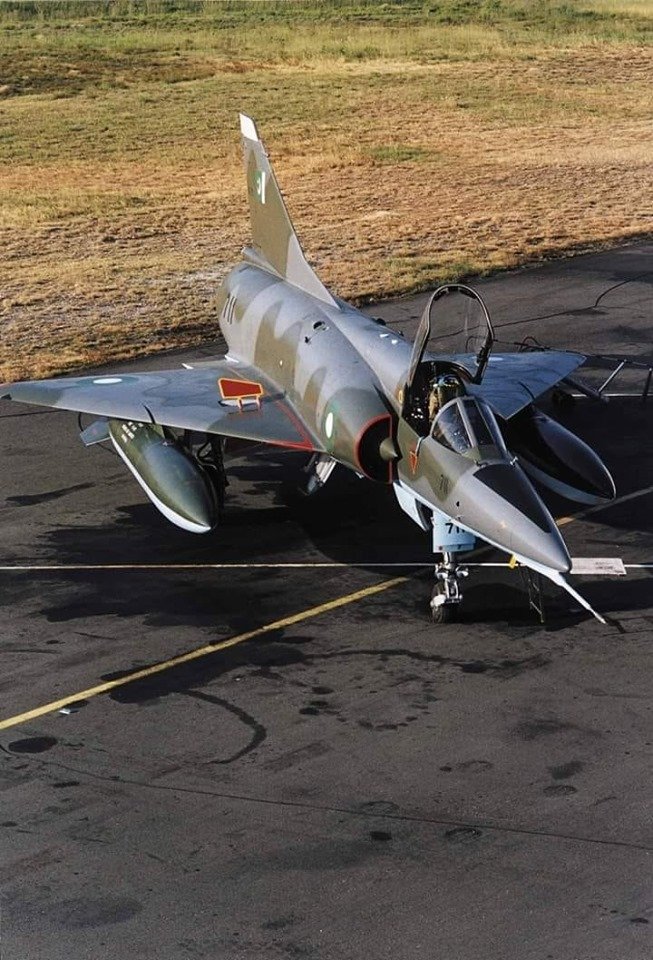
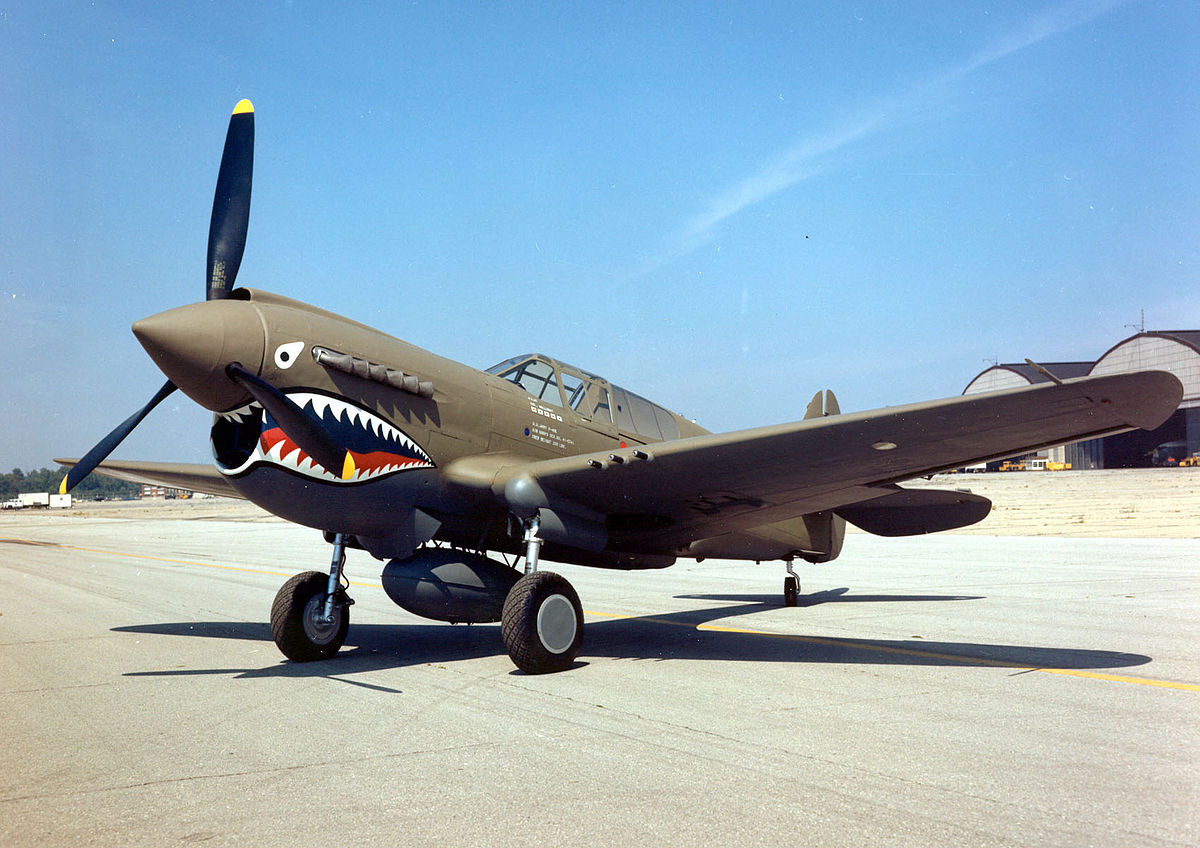
1951brought the world a horrid bestiary of diabolic aeroplanes. Across the world, aeronautical engineers sought to make the new generation of aircraft more dangerous than the last. Safety culture was for cowards, everyone was drunk and fighters looked incredible. Slick your hair with Brylcream, light up a cigarette, pop a pack of diet pills and join us on a lethal saunter along the flightline of the damned…
10. de Havilland Sea Vixen‘Booms to the tombs’
The Royal Navy’s long running fascination with sadistically punishing Navigators reached its zenith (or nadir) with the Sea Vixen. Trapped in a claustrophobic ‘coalhole’, the Navigator was mercifully blind to the fact he was flying in one of the most dangerous aircraft in the world. Around half the top speed of its American rivals, the Sea Vixen was the sickening burp that followed the fine meal that was the Mosquito.
9. Douglas F4D Skyray ‘The Flaming Ford’
The remarkable Skyray first flew in 1951 and entered service in 1956. The Skyrays had the worst accident rate of anything in the US Navy at a sobering 34.78 per 10,000 flying hours during its troublesome first operational year. This calmed down with time but is still utterly terrifying. Still, it was the most stylish aircraft ever created.
8. McDonnell F3H Demon ‘The Lead Sled’
It took a long time to tame the jet for life at sea. Added to the usual perils of carrier operations were the insufficient power, unresponsiveness and terrible reliability of early jet engines. The Demon was a carrier-based all-weather interceptor particularly cursed by the teething problems of 1950s jet engines. The Demon was plagued with engine development issues throughout its testing and short operational career. The Westinghouse J40 engine programme was a nightmare of development problems. The electronic control system didn’t work, the afterburner was dangerous. As the McDonnell F3H-1N Demon’s weight dramatically increased across its development, the original J40 couldn’t keep up with the corresponding requested thrust increases. A souped-up J40 with a 13-stage compressor and greater airflow was a flop, and Demon turned to the Allison J71. The J40 was terminated in 1955 and Westinghouse closed down in 1960.
The extraordinary beautiful Hush-Kit Book of Volume 2 will begin when funding reaches 100%. To support it simply pre-order your copy here. Save the Hush-Kit blog. Our site is absolutely free and we want to keep it that way. If you’ve enjoyed an article you can donate here. Your donations keep this going. Treat yourself to something from our shop here. Thank you.
The F3H-1N (the initial production version powered by the 7,200 lbf thrust J40-WE-22 turbojet) was particularly diabolical, in one particular week the type was involved in 11 accidents, some resulting in the death of pilots. The F3H-1N was canned after only 58 were produced.
Due to delays in afterburner development on the J71, initial production of the hugely delayed F3H-2N featured the J40 as an interim engine. This was a disaster and both engine and aircraft were grounded after a number of a series of highly publicised accidents.
7. Yakovlev Yak-1000 ‘The slack Yak’
Mach 1.7, 1,122mph at the expected operating altitude, would have been a very impressive speed for an aircraft to reach in 1951, and that was the original design target for the Yak-1000. It would have smashed the contemporary airspeed record held by the US F-86 at 670mph. The 1000 was a technology testbed intended to reach incredible speeds by combining an advanced cropped delta wing derived from German wartime research, with the terrible AL-5 turbojet. Delays in the AL-5 meant it was fitted with a far weedier engine, a pirated adaption of the Rolls-Royce Derwent V, the Klimov RD-500. The target for the new airframe-engine combination was a far less ambitious, but still world-beating, 680mph. But even this proved unattainable, as did flight.
During pre-maiden-flight taxiing trials, the aircraft proved unable to counter strong crosswinds and was blown off the runway and damaged. Yakovlev was lukewarm about the design but this time and the project was quietly dropped.
6. Lavochkin La-190 ‘Next of Kin’
The horrible Lyulka AL-5 turbojet also scuppered the potentially fantastic Lavochkin La-190. As well as good handling qualities, it was probably the fastest aircraft in the world. But not even Stalin’s USSR was willing to support an aircraft with an engine as unreliable as the AL-5.
6. Tupolev Tu-85 ‘Barge Poleaxed’
Looking for a bomber with the range to hit mainland America the Soviet Union developed the Tu-85. It was based on the Tu-80 which in turn was based on the Tu-4, a brilliantly reverse-engineered B-29. The Tu-85 was the ultimate manifestation of the Superfortress, and was more than 50% heavier than with almost double the range and a top speed of almost 400mph. Its failing was its choice of engine, it utilised the Dobrynin VD-4K, a vast complicated six-bank 24-cylinder turbo-compound inline engine. This was understandable as neither the pure jet or turboprop were fully mature, especially in the Soviet Union, and ultra powerful piston engines were complicated. However, a year later the vastly superior turboprop Tu-95 would fly, soundly demonstrating the future of Soviet bombers did not belong to piston engines.
5. Supermarine Swift
Though the similar Type 535 had already flown, the Type 541 was the true production prototype of the lamentable Swift, and that is nothing to be proud of. Britain was determined to fail at the jet age, and despite the obstacle of producing by far the best jet engines in the world, it was doing well at this task in 1951. The Swift was dangerous, with poor medium- and high-altitude performance and haunted by a host of aerodynamic issues throughout its short career. Always up for a giggle, Britain had already played around with a fighter-interceptor with poor medium-high altitude performance with the Hawker Typhoon in the 1940s and would later return to this comic conceit with the 1980s Tornado ADV.
4. Fokker S.14 Machtrainer
Not terrible as an aircraft, just unlucky in entering an oversaturated market and not being American, the Dutch S.14 Machtrainer was also rather slow. Though a useful transition to higher-performance jet aircraft, at 450mph it was a little slower than the competition, namely the cheap and plentiful T-33 and Vampire trainers.
3. Partenavia Aeroscooter ‘Pooper-scooter’
Sorry, but this is number 3 based on looks alone.
2. Gloster Javelin ‘The Tripe Triangle’
“The worst things about the Javelin? 1950s design e.g. Sapphire engine, a quaint starting system of electrically fired cartridge initiated AVPIN, Wellington ‘bomb slips’ as undercarriage uplocks, the relative inaccessibility of most aircraft components – Gloster must have had shares in the panel-screw makers. Finally there were flight envelope peculiarities due to the ‘delta’ configuration.†Peter Day, Javelin pilot, full interview here.
The Javelin got so much right and yet was so wrong. While many of the general ideas were good: a twin engines, tailed delta, a large radome containing a large radar, a crew of two, and (in later variants) missile armament and afterburners, many of the specifics were wrong. The aircraft’s biggest failing was an overly thick wing combined with a huge t-tail, which heavily penalised the Javelin’s performance and resulted in many dangerous quirks in its flight characteristics. It was also extremely difficult to maintain. The Javelin was painfully close to being brilliant and that is why it ranks so highly in this list.
1. Mikoyan-Gurevich I-350 ‘MiG’s pig’
As likely to flame out as a Christmas day gas boiler, the Lyulka AL-5 mentioned above gets yet another mention. The list of aircraft that used the cursed engine is a veritable who’s-not-who of Soviet aircraft. Not all the blame can be put on the engine, as the I-350 had rather unpleasant and extremely heavy controls. Still, it was the first Soviet aircraft to be able to sustain supersonic flight (when the engine was working).
Whether by massive brute force, beautifully sleek aerodynamic form or a combination of both, a small number of piston-engined aircraft achieved flight speeds of over 450mph. These speeding monsters were the ultimate expression of the high-performance piston aircraft.
Hughes XF-11 (1946)
Top speed: 450mph
Mikoyan-Gurevich I-225 (1944)
Top speed: 451mph
Supermarine Spitfire F Mk 24 (1946)
Top speed: 454 mph
Martin-Baker MB 5 (1944)
Top speed: 460 mph
Grumman F7F Tigercat (1943)
Normal top speed: 460 mph
Messerchmitt Me 209 (1938)
Top speed: 469mph
Focke-Wulf Ta 152H (1944)
472 mph with nitrous oxide boost
De Havilland Hornet (1944)
472 mph
Dornier Do 335 (1943)
Top speed: 474mph
Heinkel He 100 (1938)
Normal top speed: 420 mph
Maximum achieved: 466 mph
Did it enter service? No
Republic XF-12 Rainbow (1946)
Top speed: 470 mph
The extraordinary beautiful Hush-Kit Book of Volume 2 will begin when funding reaches 100%. To support it simply pre-order your copy here. Save the Hush-Kit blog. Our site is absolutely free and we want to keep it that way. If you’ve enjoyed an article you can donate here. Your donations keep this going. Treat yourself to something from our shop here. Thank you.
North American XP-82 Twin Mustang (1945)
Top speed: 482 mph
Hawker Fury/Sea Fury (1944/45)
Top speed: 483mph (Sabre Fury)
(Centaurus Sea Fury – in race mod, 510+ mph)
Supermarine Spiteful (1944)
Normal top speed: 483 mph (Seafang naval variant 475 mph)
Republic XP-72 (1944)
Normal top speed: 490 mph
Maximum achieved: 494 mph
Republic XP-47J Superbolt (1944)
Top speed: 504mph
Grumman Bearcat (1944)
Normal top speed: 455 mph
Maximum achieved: (Rare Bear racer) 528.315 mph
North American P-51 Mustang (1940)
Normal top speed: 440mph
P-51H: 487mph
Maximum achieved: average speed of 554.69 mph+ for Voodoo racer derivative
_________________________
Notes
Northrop XP-56 Black Bullet
465 mph – probably not tested to this speed
Kyushu J7W Shinden
470 mph often quoted (probably an unofficial estimate)
We spoke to former PAF Mirage pilot Fahad Mahsood about flying China’s superb K-8 advanced trainer with the Pakistan Air Force.
Describe the K-8 in three words… Energetic – Powerful – Sustained What was its role and was it successful? It is still in used in the PAF and a few countries in the world like Pakistan Air Force, PLA Air Force, Egyptian Air Force, Myanmar Air Force. Extremely successful in the role it plays in transitional training from slow-speed trainers to high-speed fighter aircraft. What’s the best thing about it? Its thrust-to-weight ratio is excellent due to its turbofan engine. Engine response is also comparatively a lot better than a lot of jets due to its axial flow compressor.
…and the worst? Its landing gear lever is too ‘light’ for military standards
What is the cockpit like? Ergonomically sound and comfortable.
How would you rate it in the following: A. Instantaneous turn 8 B. Sustained turn 10 😉 C. Climb rate 10 – Excellent! D. Ease to fly 10 E. Performance 10 – Does extremely well for the purpose of advanced jet training in both air-to-air and air-to-ground capacity
What are the biggest myths about the K-8? Relatively new aircraft, hence no myths… an open and shut case!
Tell me something I don’t know about the K-8 Its Chinese name is Hongdu JL-8 (Nanchang JL-8)
What should I have asked you? About its tailslide manuever. Used to go vertical till 0 knots and then let the jet fall on one side, build speed and recover.
How well equipped is it? What avionics does it have? For training and introductory purpose to air combat and air to ground weapon delivery, very well equipped. Two CFDs (MFDs) give a valid introduction to the student pilots as a pre-LIFT profile.
What was it like to fly the first time? Fast! Transitioning from a T-37 to this. Mark difference in engine and platform performance.
What systems did it lack? Airborne intercept radar. Can make a mark difference for getting student pilots hands on to what’s to come next.
If you were unlucky enough to still be flying a piston-engined fighter in 1949 you’d better hope your enemy didn’t have jets. The piston age was over. Though the ultimate piston-engined fighters were still serving they were now well out of their depth.The jet generation was just too fast to catch… but they were also very thirsty, short-ranged and extremely dangerous to fly.
1949 is an intriguing transitory period, many of the fighters you may have expected to be included hadn’t actually entered service yet, so no Tunnan, no F-94, no Venom, no Meteor F8, no CF-100, no Sea Hawk, no Saab 21R and, notably, nothing French. While the Arab–Israeli War (1948–1949) was little different to World War II in terms of the fighters types, with Spitfires and Bf 109 derivatives, a new age of aerial warfare was about to explode. The best of 1949 would not have to wait long for a baptism of fire in the unforgiving skies of Korea.
12. Mikoyan-Gurevich MiG-9 ‘Unwell Fargo‘
The horrible and extremely ugly MiG-9.
The I-300 had been the first Soviet pure jet to fly, a winning coin toss deciding its place in history in favour of the Yak-15 (which flew later on that same day in 1945). It was a horrible beast to fly, during a flight in 1946 it uncontrollably pitched down, crashed into the ground and killed its test pilot, A.N. Grinchik. He was replaced by the master test pilot Mark Gallai (a kind of Soviet Winkle Brown), who encountered the same pitch-down issue, which snapped one of the tailplanes off and ruptured the main fuel tank. Instead of bailing out, he made a remarkable, and successful, deadstick unpowered landing. Despite its many flaws, the I-300 was commissioned as a fighter, and assigned the designation MiG-9. The MiG-9 was predictably awful. One of its major issues was the engine flame-outs that occurred when the guns were fired at high altitudes. This was a major problem for a fighter. Its top speed of 537mph (slower than the I-300) was not great for a jet fighter, inferior to even the Me 262 clone Avia S-92. Still, it would have been fast enough able to run away from a Sea Fury. Its armament consisted of the hugely destructive Nudelman N-37 37-mm cannon and two Nudelman-Suranov NS-23 23-mm cannon. Though several advanced versions were tested, including one fitted with an afterburner capable of 600mph, they were not pursued. As soon as the superior MiG-15 was on the scene, it soaked up almost all resources available to develop fighter aircraft, starving lesser aircraft like the MiG-9.
11. Avia S-92TurbÃna ‘Czech your privilege’
On liberation, Soviet forces seized all the German tools, jigs and components for Me 262 production they found in Czechoslovakia. These extremely useful scavenged parts were gifted to the new Czechoslovakian government. Avia had enough parts to build 19 aircraft. There is some debate as to whether this small force was active in 1949 (some sources say 1950). But it is interesting to note that four years after the War, what was essentially a Me 262A was still an effective fighter. With a top speed of 560mph it could decide when to fight, even against the most potent piston-engined fighters in service such as the Sea Fury, Twin Mustang, Bearcat and Sea Hornet. The inclusion of the S-92 above the finest piston-engined is debatable, it could be said to depend on whether you want greater speed performance with shitty BMW 003s which nobody would trust to keep running for very long or better range and utterly reliable engines. In general, it is probably fair to say a pilot would have been safer in peacetime in the final piston aircraft, and safer in a dogfight in one of the early jets, with his superior speed enabling him to dictate whether to engage. It is on these grounds that the questionable S-92 and lamentable MiG-9 are chosen over the wonderful final aircraft of a dying generation.
The S-92 had the advantage of a swept wing, still a relatively novel feature for fighter aircraft of 1949. Yugoslavia expressed an interest, but with the arrival on the scene of new Soviet designs, this did not happen.
10. Lockheed F-80C Shooting Star ‘Dove from above’
While the Bell P-59 was technically the US Army Air Force’s first jet fighter, the Lockheed P-80 Shooting Star was the first to enter series production and see operational service. The prototype XP-80 first flew on 8 January 1944 and within eighteen months, the type was series production. The P-80A reached Squadron service by the end of 1945 and continued to fly alongside the newer P-80B for the next few years. The P-80As and Bs were both developed during wartime and funded through wartime contracts, but the next evolution, the P-80C (soon to be F-80C after June 1948) was the first Air Force type to reach production that was funded postwar.
By 1949, the F-80 had racked up an impressive history. With the blockade of Berlin in 1948, the 61st Fighter Squadron’s F-80Bs under 56th Fighter Group commander Col. Dave Schilling departed Selfridge Air Force Base on 12 July 1948 and headed across the Atlantic in order to protect the Allied aircraft of the Berlin Airlift. The mobilization, known as Fox Able One proved a fighter squadron could self-deploy overseas on short notice. When the squadron’s deployment ended in early summer 1949, Schilling led Fox Able Two, taking another squadron from the 56th across the Atlantic to replace them.
The 36th Fighter Group followed the 61st FS to Europe by 13 August 1948 and by the 20th were established at Furstenfeldbruck, Germany. The 36th spent the next eight months protecting Berlin Airlift aircraft from potential air threats from aggressive Russian pilots. But that was not the 36th’s only mission while at Furstenfeldbruck. During a training flight returning from Malta in 1949, members of the Group’s 22nd Fighter Squadron began practicing precision formation flying. Upon returning to Germany, those 22nd FS pilots began practicing standard formation aerobatics in the F-80B and the Skyblazers were born. The Skyblazers were actually the second USAF demonstration team, preceded by the stateside Acrojets a year prior. The Acrojets began flying F-80As but transitioned to the F-80C in 1949.
On the other side of the globe, Japan had become the Asian bulwark against Communist aggression, just as Germany had in Europe. The 8th, 49th and 51st Fighter Groups were all flying F-80B and C models from bases on Okinawa and the Japanese home islands. During the relatively calm days of 1949, the majority of Japan-based F-80s were arrayed against threats from newly Communist China, flying from Naha (51st) on Okinawa and Itazuke (8th) on the Japanese home islands. On the northern end of Honshu, the 49th flying from Misawa AB focused its attention northward, as the closest fighter unit to the Soviet Pacific Fleet homeport of Vladivostok.
The F-80 lineage diverged in 1949 with the first flight of the YF-94 Starfire on 16 April. The new all-weather interceptor was the first Air Force type fitted with an afterburner, giving the aircraft up to 6000lbs thrust. It also included a sophisticated fire control suite linked to a new air intercept radar controlled by the backseater. The weapons officer in the back seat would run the radar and direct the pilot to his target at night or in bad weather.
The F-80 of 1949 served in another distinct role as well. Fitted with a pair of K24 cameras in place of the machine gun armament, the FP-80 and after June 1948, the RF-80, provided critical tactical reconnaissance duties with the 363rd stateside and Japan with the 8th Reconnaissance Squadron. But due to peacetime budget constraints, the Air Force determined that reconnaissance squadrons were not critical infrastructure, and the 363rd Recon Group was deactivated in August 1949 after only two years of operation. One of the 363rd’s squadrons, the 161st was reassigned to the 20th Fighter Group at Shaw AFB, where it continued on as one of the only two reconnaissance squadrons in the air force.
In 1949, the Shooting Star still had somewhat of a technological edge, although that was rapidly fading as the F-84 and F-86 entered service. Improvements in the engine, weapons, and avionics allowed it to stay competitive as an air superiority fighter, despite the relative maturity of the design. The F-80 was not the fastest, nor the highest climbing, but it was good at what it did, both as an early interceptor and later as a fighter bomber. Later designs like the F-84 and F-86 built on the lessons learned by the F-80 programme even as they fought alongside the Shooting Star just a year later.
A 1948 fly-off assessment against the supposedly superior F-84C revealed that the older P-80 was more manoeuvrable, had a better low altitude climb rate and a shorter take-off run. It also was tough enough for rough field operation. The C model had greater firepower and more thrust than the B. With a top speed of 594mph, six fifty cal machine-guns and up to sixteen 127-mm unguided rockets it was not a fighter to be trifled with. But technology was moving so fast it would soon be easy meat for the MiG-15. Around half of the F-80C’s built would be lost to operational causes, 133 of the 277 lost would be destroyed by groundfire.
USAF Lt. Walter Rew waves to the crowd after winning the Allison air-race trophy 1949.
9. Yakovlev Yak-23 ‘Flora’
Highly manoeuvrable, with brisk acceleration and a good climb rate, the Yak-23 was a decent design doomed to obscurity by the appearance of far superior designs. It enjoyed a good thrust-to-weight ratio at normal operating weights of 0.46, superior even to that of the F-86 (0.42) thanks to its Soviet-built Rolls-Royce Derwent V engine. Its small size and great manoeuvrability were hallmarks of designer Alexander Sergeyevich Yakovlev. He had pushed for a lightweight and small design against official recommendations (the Yakovlev bureau’s larger Yak-25 fighter had been cancelled, proving markedly inferior to the rival La-15 and MiG-15, and dangerously prone to buffeting). The Yak-23 was fast, a top speed of 575mph at sea level was good for 1949, and the ‘Flora’ – with its twin 23-mm cannon – would have proved a handful for almost any opponent.
It would later snatch a world climb record.
8. Republic F-84D Thunderjet‘Thunderjets are gauche’
By 1949, it was clear that Republic’s F-84 Thunderjet had failed to meet initial expectations. There had been hopes that the new Thunderjet would be a worthy successor to the mighty P-47 Thunderbolt – such that a contract for 25 YP-84As for evaluation and a further 75 production P-84Bs was placed even before the first prototype made its maiden flight on February 28th, 1946. But the type’s rehabilitation as a tough, fast fighter-bomber, combat proven in Korea, lay some way in the future, and in 1949 the Thunderjet was still in the process of working through a succession of teething troubles! The F-84B became operational with 14th Fighter Group at Dow Field, Bangor, Maine in December 1947, but within weeks was subject to a range of restrictions and limitations due to control reversal, and wrinkling of the fuselage skin. The F-84B was grounded on May 24th, 1948 after further serious structural problems were uncovered. The F-84C was powered by the much improved J35-A-13 engine, and featured fuel, electrical and hydraulic systems refinements, but both of these early models were judged unsuitable for their assigned role – neither being considered operational nor capable of executing any aspect of their intended mission. The J35 engines of the F-84B and F-84C had a 40 hour time between overhauls, preventing their use in Korea. The Thunderjet’s reputation was saved from ignominy by the service entry of the structurally improved F-84D in 1949. The F-84D’s wings had thicker aluminium skin, and the wingtip fuel tanks gained small triangular fins to relieve their tendency to cause excessive wing twisting (leading to structural failure) during high g manoeuvres. The further improved F-84E also entered service in 1949, with further reinforcement of the wings, a 12 in extension to the fuselage in front of the wings and a 3 in plug aft of the wings. The new variant had a roomier cockpit and enlarged avionics bay, and could carry an additional pair of 230 gallon fuel tanks underwing, extending the combat radius from 850 to 1,000 miles. Serviceability remained obstinately poor, however, and it would be another two years before the definitive plank-winged ’84, the F-84G, entered service. The Thunderjet did form the basis of the much better swept-wing F-84F Thunderstreak and RF-84F Thunderflash, but that is another story altogether
– Jon Lake, author of dozens of books about military aircraft
The extraordinary beautiful Hush-Kit Book of Volume 2 will begin when funding reaches 100%. To support it simply pre-order your copy here. Save the Hush-Kit blog. Our site is absolutely free and we want to keep it that way. If you’ve enjoyed an article you can donate here. Your donations keep this going. Treat yourself to something from our shop here. Thank you.
The F-84B and Cs had been a huge disappointment and it was only the promised improvements of the D variant that saved the type from the axe. The D entered service in 1949 with the improved J35-A-13 engine, and with a wealth of enhancements including greatly improved fuel, hydraulic and electrical systems. The Thunderjet was now pretty hot stuff. It could carry a greater bombload than the P-80, and was faster, with better high altitude performance and a greater range. With a top speed of 587 mph at 4,000 ft it was no slouch.
7. Gloster Meteor F. Mk 4‘Mr Mature’
With the definitive F.Mk 8 yet to enter service, the F.Mk 4 was the hottest Meteor in 1949. It was massively more powerful thanks to its two Derwent V (essentially a scaled-down Nene sharing little with the Derwent IV) engines each pumping out an additional 50% greater thrust than the earlier Derwent IV nengines of the later F.Mk 3s. In fact, it was so powerful it needed its wings strengthened to keep up with the extra speed. A new stronger clipped wing was introduced, which increased possible roll rates by 80 degrees a second and made the carriage of 2,000Ib of munitions on the wings possible. The F.Mk 4 was a full 80mph faster than the 3. A slightly modified* version of the F.Mk IV** snatched the world speed record in 1945 at over 606mph, a huge jump from the previous official record of 1939 469mph figure by the Messerschmitt Me 209 V1 (though several aircraft had gone faster since notably the Me 163 and 262, none had been officially recorded). With a top speed of 590mph, four 20-mm cannon in the nose and a ceiling of over 44,000 feet the Meteor F.Mk 4 was a machine to be respected, only let down by a thick unswept wing that limited its top speed. Despite first flying in 1945, the F.Mk 4 was not rushed into service. Britain had lost her lead.
*VHF mast and armament removed, high-speed finish applied to both aircraft. Painted yellow for the benefit of speed cameras **the RAF abandoned its rather pretentious and inconvenient use of Roman numbers for aircraft marks in June 1948)
During its first test flight, the nascent Banshee famously demonstrated a climb rate twice that of the F8F Bearcat, then the US Navy’s hottest interceptor. In August 1949 it set a US Navy jet fighter altitude record of 52,000 ft (16,000 m). Carrier jets were in their infancy; the first US example FH-1 Phantom had only made its first carrier landing three years earlier. The Banshee was a vastly improved and far larger fighter based on the Phantom. The Phantom had been the first jet aircraft concieved from the outset for shipboard operation, and was a case of an over zealous embrace of an immature technology – or to be kinder, a vital stepping stone. For a minute advantage in top speed over the best piston-engined rivals (it was a piffling 4mp faster than the British Hornet) it offered far greater peril and worse handling. Though it would mature into capable machine, in 1949 the Banshee was still suffering teething problems. In Wings of the Navy, the greatest British test pilot Eric Brown rated the Banshee F2H-2 as inferior to the Meteor IV. The large Banshee rectified most of the Phantom’s shortcomings and at 580mph had decent top speed, but in 1949 it was not the capable machine it would later become.
5. de Havilland Vampire FB.5 ‘Bantamweight bloodsucker’
Image: BAE Systems. DH100 Vampire FB.5 (VV217) air-to-air on 8th March 1949
Shortly after World War 2, the RAF decided to embrace the Meteor as its standard day fighter. This left de Havilland at something of a loose end until they decided to promote the Vampire’s potential as a ground attack aircraft. Having convinced the authorities this would be a good idea a few changes had to be made to accommodate the change in operating altitude. The wings were strengthened with extra stringers and thicker skins. They also had wiring for rocket rails and bomb racks fitted to augment the four 20-mm cannon. Perhaps more drastically a foot was cut from each tip which improved low-altitude manoeuvrability and made the ride smoother. This arguably also made probably the world’s cutest jet fighter even cuter. As a nod to the ground attack role some armour was added around the engine, which was hopefully some comfort to the pilots given it was found to be impossible to fit an ejector seat in the snug cockpit. At least not if he wanted to keep his arms. In 1947 the new model was designated the Vampire FB5, which gives an average of a Mark every 9 months since the Vampire’s first flight. Which is less time than it can take to get a warning label moved these days. By December of the following year No. 16 Squadron started to receive aircraft to become the first operational squadron. The FB5 of 1949 was a punchy ground attack aircraft that was still able to take on enemy fighters after delivering its payload. That could be up to two 500lb or 1000lb bombs and eight rockets, which compares well with what the Harrier was delivering during the Falklands Conflict. Although in the latter case the rockets were probably more accurate than the WW2 era 60lb models the Vampire used which, if the pilot was lucky, went in the general direction they were pointed without damaging the aircraft. With an endurance of around two hours or 1,000 nautical miles it didn’t suffer the small bladder issue of other early jets even if the pilots might. Its relative simplicity and ruggedness also made it capable of rapidly redeploying to a new base if required. Indeed, by late ’49 No. 6 Squadron were based at Deversoir in the Canal Zone while deploying to remote airfields around the Middle East. Although not quite as fast or exciting as some of the jets in service in 1949, and still featuring a wooden fuselage, the Vampire benefited from several years of development making it a more complete aircraft than any of its competitors.
Plus, did I mention how cute they were? Though tasked as fighter-bomber, the Vampire could eat the Meteor in a dogfight. Vampire pilots enjoyed excellent visibility out from the bubble canopy (except in rain), and were enamoured of the tiny fighter’s benign handling characteristics. With lighter ailerons than the Vampire F.3, the FB.5 had a sparkling roll rate at higher altitudes, probably better than any other aircraft on this list. Its rate of turn was also superb, as was its turn radius: the FB5 could turn in three-eighths of a mile (the Meteor needed a whole mile) at 5,000 feet altitude, which increased to one mile at 35,000 feet (again smashing the Meteor, which required 1.7 miles). In 1948 a Vampire reached the astonishing altitude of 59,430 ft, setting a world record. Not bad for a fighter type first flown in 1943. The FB.5 Vampire had a top speed of 548mph, outrageous agility and powerful armament in the form of four 20-mm short barrel Hispano cannon.
– Bing Chandler/Joe Coles
4. Grumman F9F-2 Panther ‘Panther Burns’
Like the Army Air Force, the Navy’s experience with jet aircraft started during World War II. Due to Naval Aviation’s unique requirements, the Navy experimented with a few different types including composite airplanes like the Ryan FR-1 Fireball, which used both jet and piston engines. The McDonnell FH-1 Phantom became the Navy’s first pure jet powered airplane, first taking to the air in June 1945. But just two years later, it was deemed obsolete and relegated to a training role. That same year, the Grumman XF9F-1 took to the air for the first time. Grumman had provided the bulk of the Navy’s fighters during World War II and was eager to continue the tradition.
The new XF9F Panther had some initial teething problems but entered series production as the F9F-2 in 1948, with the first production models reaching the fleet in the Spring of 1949. VF-51 stood up in May and by summer the squadron was headed to the USS Boxer (CV-21) for carrier qualification. The squadron completed carrier quals by September and was declared operational.
The Panther was powered by a Pratt & Whitney J42 (manufacturer designation JT-6B), a license-built version of the British Rolls Royce Nene, that produced 5000lbs of non-afterburning thrust. The J42 gave the straight-wing Panther a top speed of 575mph, which was significantly slower than the Russian MiG-15 which was powered by roughly the same engine; a reverse engineered Nene designated the VK-1.
Unlike the Air Force’s F-80, which was originally designed as an interceptor and then evolved into an interceptor, the Panther had been built as a fighter bomber. It was armed with four AN/M3 20mm cannon with 190 rounds per gun and was capable of carrying 3,000lbs of bombs and rockets for close support and interdiction work. This capability was critical for the next squadron qualified in the type; the Marines’ VMF-115, who along with VMF-311 would take the type into combat alongside Navy squadrons the following year. F9F-2B BuNo 123526, on exhibit at the National Museum of the Marine Corps would lead the first Marine Corps jet combat mission in Korea on 10 December 1950.
While 1949 was a significant year for the Panther’s introduction to squadron service and the first mass production of a Navy jet fighter, another significant development that would improve the design also occurred that year. The F9F-5 first took to the air in December 1949 and offered significantly better low-speed handling characteristics, which greatly improved landing approaches. The newer model was lengthened by sixteen inches and housed the more powerful J48 engine, producing nearly 2000lbs more thrust than the J42. The F9F-5 would be the ultimate version of the straight-wing Panther, reaching squadron service by the end of 1950 and entering combat just over a year later. The Panther would go on to score the first jet-versus-jet kill.
– Jonathan Bernstein isan aviation author, historian, former attack helicopter pilot and Arms & Armor Curator at the National Museum of the Marine Corps. You can buy his book on P-47s here
The Panther was developed following the entirely unsatifactory study of a four-engined Grumman two-seat night fighter. The new design was small, tough and agile. Like the MiG-15 and some Vampire variants, the Panther was powered the British-designed Nene turbojet, licence produced in the US as the Pratt & Whitney J42. The F9F-4 model was delivered from late 1949 but did not enter operational service that year, it included the fuselage extension of the -5 without the powerplant upgrade. The -5 also made its first flight in ’49 but was in not service. It featured an Allison powerplant, the J33-A-16, which featured water injection to boost take-off thrust. In this time the Panther was more mature than the Banshee, and offered very similar capabilities (including the same armament) in a smaller airframe. Armed with four-cannon and ‘built like a Grumman’, it was tough sound design featuring the on-trend tip mounted fuel tanks (‘tiptanks’).
3. Mikoyan-Gurevich MiG-15
In 1949 every preening fighter pilot* in the Soviet Union wanted to fly the MiG-15. A wonder in polished aluminium with a bright red star on the tail it could achieve the almost unbelievable speed of 669 mph at Sea Level thanks to secret German research from the mid-40s that led to it having a wing swept to 35 degrees. Compared to the straight-winged MiG-9 or the piston-powered Yak-9 this was clearly the future. While the West were still getting to grips with putting the Nene engine into the comparatively conservative Sea Hawk and the positively pedestrian Attacker the Soviet Union was forging ahead by putting their ‘equivalent’ RD-45 into the MiG. It’s almost as if letting Rolls-Royce sell the Soviet Union 25 Nene for ‘civil use only’ was a mistake. In fact, the Sea Hawk was still four years from entering service while the Soviet honchos were enjoying the benefits of ejection seats, the decadence of air conditioning, and a maximum speed of Mach 0.92 to the Sea Hawk’s 0.84.
All was not totally rosy in the final year of the ‘40s however. At this stage in its career the MiG was only to be flown on fine days, while aerobatics or combat manoeuvring were out of the question. There were also a few teething problems, for instance, if you went too fast the lack of quality control on the production line would lead to uncontrollable rolling which initially had to be fixed with manual trim tabs added to the ailerons. This probably wasn’t helped by the lack of hydraulic assistance on the early MiG-15’s flying controls. Still at least the air brakes were hydraulic. Even if they caused the aircraft to pitch up when they were deployed and didn’t really slow the aircraft down enough.
Assuming the pilot managed to overcome these issues with a combination of luck and skill there were also slight issues with the armament. Although the choice of two 23-mm and one 37mm-cannon provided plenty of punch, the differing ballistics of the two rounds could make aiming tricky with one set of rounds going above the target and the other below.
The good comrades at MiG were aware of these shortcomings and even as the first aircraft were being delivered to the VVS they were preparing to produce the MiG-15bis which would feature stiffer wings, servos for the controls and effective airbrakes along with a host of other minor modifications. This however wouldn’t enter service until 1950. In 1949 the MiG-15 looked like the future while being a terrifying thrill ride that could appear barely under the pilot’s control.
The MiG-15 could out-turn, out-accelerate and out-climb the early Sabre. It was an utterly formidable machine. Early variants of the F-86 could not outturn, but they could outdive the MiG-15. The early MiG-15 was superior to the early F-86 models in ceiling, acceleration, rate of climb, and zoom. It had better high-altitude performance than the Panther or the P-80, and was faster by a hundred miles per hour.
The Lavochkin La-15 had superior manoeuvrability to the MiG-15, and with a top speed of 626 mph (some sources say 638 mph) was almost as fast. It had excellent handling chracteristics and was superbly reliable. It entered service in the VVS Autumn of 1949. It was smaller and lighter than the MiG-15 and did enjoy the stellar climb rate, though still climbed very well for the time.
It was powered by the RD-500, essentially a Soviet-built British Derwent, and armed with two 23-mm NS-23 cannon. It was rather harder to produce than the MiG-15, relying on many milled parts, and this was a major factor in the Lavochkin’s relative lack of success – only 235 aircraft were produced. It remained in service until 1954. It was the beginning of the end for the Lavochkin design bureau fighter line that had been so vital to the Soviet Union’s war effort. Lavochkin La-200 flew in 1949 but failed to secure orders, as did the later La-250. Lavochkin was reborn as a creator of surface-to-air-missiles and spacecraft. Today, the company is working on the appallingly named Mars-Grunt space robot.
North American F-86A Sabre ‘Jet spitfire’
An astonishing top speed of 679 mph at Sea Level and excellence in every category a fighter needs, North American Aviation did the almost impossible and built an aircraft even more outstanding for its generation than its P-51 Mustang, which first flew a mere seven years before the F-86.
The Sabre started life as a straight wing jet based on the even more staid FJ-1 Fury of the US Navy. By making it lighter North American Aviation managed to, just about, match the performance of the other aircraft submitted to the USAAF (which would become the USAF three weeks before the sound barrier was broken in 1947). Realising radical steps needed to be taken to come up with a winning design, they took the only logical step and like the Soviets used secret German research from the mid-40s. This led to the incorporation of a thinner wing swept to 35 degrees giving the resultant design the ability to go supersonic in a dive. So successful were these changes that if you’re the kind of person who likes winding people up and invoking the wraith of the Yeager crowd up you can argue the XP-86A and George Welch were first to break the sound barrier.
The F-86A entered frontline service in February of 1949 with the 94th Fighter Squadron who also seem to have been instrumental in giving it the name ‘Sabre’. Despite barely being out of trials the Sabre was already a delight to fly. Unlike the MiG-15 it had hydraulic boost for the flying controls, was well enough put together to remain controllable as it approached and passed the sound barrier, and air brakes that were effective. Leading-edge slats also made it much safer to fly at low speeds. Together with the all-round visibility provided by the Sabre’s bubble canopy these factors would give it the edge against the MiG in combat even allowing for the latter’s better thrust-to-weight ratio.
The F-86A wasn’t quite perfect, unlike the E model introduced in 1951 it lacked a ‘flying tail’ arrangement where the entire tail surface acts as the elevator. Instead, it had conventional elevators while the tailplane’s incidence could be adjusted via the trim system. As aircraft approach the speed of sound air over the wing surfaces accelerates to above Mach one, this causes shock waves to form at the hinge lines of control surfaces. These shock waves blank the control causing it to be less effective. In the A model Sabre above Mach 0.97 this meant pitch control was almost entirely reliant on the trim. Indeed, if the elevator alone was used to pull out of a supersonic dive there were generally less rivets in it on landing. Still, this was a minor blemish on an otherwise excellent aircraft.
If the MiG-15 was a diamond in the rough in 1949, the Sabre was the finished product noted test pilot Eric ‘Winkle’ Brown even going as far as praising the ground handling and nose wheel steering system. – Bing Chandler
There are millions of World War IIs, and some are more fun than others. The one your grand – or great grandparent –fought or endured was probably the least fun, though a period of (say) six years always holds countless contradictions. The most enjoyable ‘version’ of World War II was the retelling that was born as propaganda and became cemented to the public psyche through model kits, Commando comics, 1960s cinema and other appealingly celebratory channels. With its moral certainty, sexy machines and thrilling destruction it was utterly appealing to children, and those children became adults.
Wherever a favourite or loved aeroplane is mentioned a person’s character is being judged – and along with it what they stand for. This is a terrifying situation so let us consider the matter. Here are some considerations when one attempts to answer the hardest question of all: ‘what is your favourite aeroplane of World War II?’
The Spitfire
Loving the Spitfire is like loving The Beatles. It is like loving coffee or beer, it is ubiquitous to the point of pointlessness. It seems to say little about who you are to love the Spitfire, especially if you are British. On the other hand, the Spitfire is utterly wonderful. Despite what contrarians so tiresomely insist, the Beatles wrote great songs and the Spitfire is stunningly beautiful. And it was a miracle of engineering. And it did have a part in saving many countries in World War II. But then again…
Military history, as an account looking at ‘things’ more than ‘people’, will always have a right-wing, left-brained bent, something not to everyone’s taste. The Spitfire, as known in Britain, is warm ale, clacking cricket bats and Conservative. This is at odds with the actual Spitfire pilots who spanned the entire political spectrum.
What about the Hurricane?
You can spend about ten seconds on Twitter talking about Spitfires before someone will tell you the Hurricane was more important in the Battle of Britain. Vital yet underrated, the Hurricane is the Ringo Starr to the Spitfire’s John Lennon (to further confuse our Beatles’ analogy).
Oh wait, so which aircraft is Paul McCartney and George Harrison? Answers in the comments section, please. And do I have to stick to the Battle of Britain in this game?
What now?
Then it gets even more complicated as you wonder if celebrating the aeroplane of a particular culture means consciously or unconsciously espousing something of that culture’s beliefs. It certainly makes things a little less comfortable when you spot a load of Wunderwaffe titles on someone’s bookshelf (though these have entered the mainstream recently). But that judgement is probably silly in some ways. Which War World II is this imagined lover of German WW2 aircraft living in anyway? Perhaps they are baddies in a sixties film in this person’s head.
Bombers
The phenomenon of the ever-popular Lancaster Christmas cards shows the bizarre degree to which bombers have become cosy. As engineering, a Lancaster is amazing, a B-29 even more so. If one can look at them with a child’s eye we can enjoy the gun turrets, the quartet of roaring engines and the fraternal teamwork of the unlucky crews. Still, if fighters can be likened to flying knights, bombers seem more akin to flying human abattoirs. (note to self: may pitch flying abattoirs on Dragon’s Den).
Radial or inline?
Single-engine World War Two fighters either looked like barrels or dogs. The inline fighters had lovely noble snouts like hunting hounds, whereas the radial fighters looked like barrels. More than that the radials looked like butch brawlers. Essentially, the inlines were flamboyant cavaliers and the radials hard-drinking rough and ready roundheads. There are exceptions to this rule, the inline Hawker Typhoon, for example, was an absolute fucking bruiser. This brings us neatly to the next quandary.
Big or small?
Most of the Soviet fighters (and I make no apologies for being fighter-centric) were tiny, whereas many of the US types, especially later ones, were huge. A P-47 (see early wind tunnel model above) was more than twice the weight of a Yak-9: at around 17,000Ib all-up compared to a mere 7,500Ib for the Soviet machine. Do you support the plucky underdog or the muscleman? And what does that say about you?
Wilfully obscureÂ
Any self-respecting muso appreciates the cachet of a working knowledge of Hungarian Witch House or West African Trumpetcore – knowing stuff others don’t can be an enjoyable (if unstable) source of self-esteem. This elitism happily fits into av-geekery: ‘what do you mean you’ve never heard of the Bichel-Zagnetova BZ-104?’. The problem with choosing these rare types is often there is a reason they are rare, and you are missing out on appreciating something magnificently capable and beautiful just because it is common.
Update on the Hush-Kit Book of Warplanes
We’re now at the final design stages! I’ll share some pages with you at the first opportunity. CAN’T WAIT for the book to come out this year, all thanks to you. I want the production of the 2nd volume to be far swifter, which will be dependent on it reaching full funding in a decent timeframe (it’s currently at 31%). If you’re cautiously awaiting volume 1 before committing to the second I’d encourage you to take the plunge to ensure the fast arrival of the sequel. If you wish to support this and make it happen you can do it here.Â
Happy New Year and a huge thank you for your support Xx
The Eurofighter Typhoon FGR4 is the workhorse of the Royal Air Force’s air combat fleet, excelling in both air-to-air and air-to-ground missions. Starting life in 2003 as a dedicated interceptor, the fighter has matured into a well-equipped multi-role combat aircraft. We spoke to Wing Commander Mike Sutton about the Typhoon and his experiences of taking the aircraft to war.
What is the best and the worst thing about the Typhoon?
The Typhoon has very few vices. I was a tactics instructor on the Jaguar previously, and even though everyone loved flying it, if you weren’t careful it had a very nasty bite. Of the two hundred Jags the RAF procured, sixty-nine were lost in accidents. The Typhoon is a generational leap. The thrust alone is insane. At 500 knots at low level it will accelerate while sustaining 9g. It’s a genuine multi-role platform. I’ve done the most challenging air-to-air sorties during RED FLAG, operational close air support, live quick reaction alert scrambles and air combat against modern fighters. It excels across the board. The four-nation programme is a blessing and a curse. Perhaps the most frustrating thing about the jet is the time it takes to get agreement from all the nations for development. But when everyone is on the same page, the combined expertise, industrial resource and multi-nation investment make it a powerful combination.
What was your role in developing new tactics and operating procedures for multi-role aircraft? What have you learnt about this?
I was lucky enough to be a weapons instructor on the first multi-role Typhoon Squadron as it formed. It was a hugely exciting time. There were experienced pilots from the Tornado F3, GR4, Harrier, Jags, Mirage 2000, F-15, F-16 and F/A-18 on the brand-new Force who all had extensive tactical experience. I needed an open mind as much as diplomacy and a thick skin, as a small team of us took the best ideas from everyone around and tried to forge a new way of operating. Out with the old and in with the new. Starting afresh also enabled us to throw away outdated ways of working and attitudes that had become entrenched over the years. We looked at it holistically – from how to brief and debrief, use of the simulators, best ways to teach and record tactical lessons, as well as how to fight the aircraft. It was an evolving process and as the months and years progressed we refined the tactics. New pilots had fresh ideas. You never stand still on a fighter squadron. As soon as you stop progressing, and you get complacent, you are in for a shock.
Is Typhoon’s mechanically scanning radar an issue when compared with more modern radars?
The CAPTOR has done a decent job, but the new AESA <due in service in the mid-20s> will be far better. Taking Beyond Visual Range missile shots is about far more than being able to see targets at long range on the radar. It’s about combat identification using all of the aircraft sensors – and fusing that data – as well as electronic warfare, datalinks, integration with other fighters, jamming, secure radios and missile performance. So it’s a system where all the components need to be operating seamlessly. The AESA will also bring enhanced capabilities with electronic attack and SAR, coordinate generation and surface target combat ID.
Is the voice control still used – and if so – is it useful?
I didn’t use the pilot voice control that much. I can generally only do one thing at a time and found it easier to just use the HOTAS. But other pilots used it quite a lot for controlling the radar modes, and like everything on the Typhoon the integration improves with software upgrades. I wouldn’t be surprised if it was used extensively in the years ahead.
Is a non-stealthy aircraft still survivable in your opinion?
A country can’t just build a modern fighter and then relax for thirty years under the umbrella of its protection. It’s a constant process of threat evolution, countermeasure development, and counter-counter measure. The very idea of stealth itself is probably a misnomer too. Low observable jets are undoubtedly harder to target, but still vulnerable to passive detection, low-band radars and heat-seeking sensors. They are also much more costly to build and maintain, and often may make design compromises as they are honed for a particular role, and are limited to internal stores when exploiting their stealth. To use a car analogy, low observable is a little like a Formula One car. Very fast around a racetrack, but a rally car is better off-road.
If you look at the USAF, USN carriers, Israeli and Australian Air Forces and the RAF, they all have a blend of low-observable and conventional platforms. The USAF is about to procure the F15EX. With a mix of conventional and low-observable you can generate mass and saturation, to enhance the low-observable platforms ability to get through to their targets.
How does the Typhoon perform in BFM/DACT exercises against the F-22? Is one superior in WVR combat in your opinion – and why?
The F-22 is the best air dominance fighter in the world (but it doesn’t have much of a strike capability). At slow speed in a turning fight, its thrust vectoring provides exceptional manoeuvrability, which means it can outperform any other fighter on the planet, including the Typhoon. During the initial merge, if both aircraft were fast, then they would turn fairly equally. If the fight was fleeting, the Typhoon would benefit from the Helmet Mounted Sight, which surprisingly the F-22 does not have in its inventory. But perhaps the key point here is that the RAF will never have to fight in anger against a USAF F-22. Their time together is much better spent integrating and developing joint tactics where you learn to exploit the combined firepower of both platforms to lethal effect. We practised this routinely during exercises.
The extraordinary beautiful Hush-Kit Book of Volume 2 will begin when funding reaches 100%. To support it simply pre-order your copy here. Save the Hush-Kit blog. Our site is absolutely free and we want to keep it that way. If you’ve enjoyed an article you can donate here. Your donations keep this going. Treat yourself to something from our shop here. Thank you.
Combat pilots are far more interested in the capabilities of potential adversaries, so the real question is how does Typhoon perform against modern fighter threats? It is too early to make a judgement about the Su-57 as it is barely out of development. Regarding Flanker, that is precisely what the new AESA, the existing Defensive Aids System and PIRATE IR sensor are for. International training exercises against Indian or Malaysian Flankers were extremely useful, and fully tested the skills of the pilots using the helmet-mounted sight and ASRAAM heat-seeking missile.
Flanker versus Typhoon?
(MoD crown image)
The jets are both very capable. I would say that, flown well, the Typhoon has an edge, but when you have two fighters that are similar in capability the outcome of air combat is more nuanced.
In reality, a simple top-trumps answer doesn’t cut it. It depends on so many different factors, such as radar tenacity, performance of the jet at different speeds (E-M diagrams), sensor integration with the helmet, the sensitivity of the missile seekers, the IR background, pilot training and currency, aircraft fit, environmentals, merge altitude, radar clutter, aircraft jammers, IR countermeasures, disposition pre-merge. There are probably more! That’s why the role of the Qualified Weapons Instructors is so crucial in shaping the tactical advice to their Squadrons, and it’s so important that pilots get to practise their core skills with live flying.
A Rafale pilot I interviewed said ‘Typhoon was a joke’ – what is your response to his view?
There’s nothing like the confidence of a French fighter pilot! The Rafale and Typhoon are from a similar era, but backed by four nations and with five export customers the Typhoon has better growth potential. As the Boss of 1 Squadron we always had a French Rafale pilot on exchange, so I had a real insight into both platforms. For the air-to-air missions, an AESA equipped Typhoon with METEOR, AMRAAM-D and ASRAAM packs a powerful punch with the Helmet Mounted Sight and IRST (called PIRATE).
The Typhoon Force has also received upgraded Paveway 4 (penetrating warhead and moving target capability), which is a great weapon for Close Air Support in combination with Brimstone, which can also be used against fast inshore attack craft. For longer-range strikes, Storm Shadow and SPEAR 3 (the small, long-range, cruise missile) offer significant stand-off, precision, low collateral damage and electronic warfare capabilities. The Litening 5 targeting pods will offer high-definition imagery and a reconnaissance capability. And of course, there is the 27-mm cannon that I have fired in anger. With that weapon load-out you can take on any mission set. So my response to the French pilot, is that given the choice I would take the Typhoon every time.
SPEAR 3 is due to become operational in 2025.
Would you rather have ASRAAM, IRIS-T or AIM-9X under your wing – and why?
The ASRAAM heatseeking missile. IMAGE: MBDA
The ASRAAM is a far more capable missile. It is extremely fast off the rail and has a much longer range. It also has a huge off-boresight capability and can lock-on after launch, as well as having advanced counter-counter measures. When paired with the helmet mounted sight in a close fight it is very effective, and at longer range it offers a great crossover with AMRAAM. You can get an ASRAAM to its target before the other aircraft can even launch their IR missile back at you.
An RAF Typhoon recently had its first a2a ‘kill’ – what are your thoughts on this? (I understand RSAF Typhoons have been doing this for a while)
Finding a small drone in a fighter and shooting it down using a heat-seeking missile is pretty impressive. It shows how the jet can roll quickly from supporting the troops one minute to engaging a tricky air-to-air target moments later. More broadly, the use of explosive drones is becoming more prevalent so from a control of the air point of view, I think more thought needs to go into countering these en-masse from western air forces.
How good is Meteor, and why?
I’ve personally never flown with Meteor, but talking to colleagues on the frontline they are very impressed. The layered capability with AMRAAM-D and ASRAAM offer lots of very robust all-weather targeting options and it is a great mixed load to carry.
Tell me something I don’t know about Typhoon
When you are landing the aircraft without engineering support there are often no staging or steps available to climb out of the cockpit. There is a puny little ladder that you can deploy which pops out from under the cockpit. So you can climb down. But there is no retract function, which is a pain in the ass when you want to get back in and take off again.
Operations
What was the hardest aspect psychologically?
Keeping a clear head when dealing with constant, changing pressures. In the book I’ve placed the reader in the cockpit so they are immersed in the action and experience the adrenalin. At one point was I was locked-up by a Russian SAM. A couple of weeks later in the dead of night, I almost had a mid-air collision over a city held by enemy troops. There was also the constant threat of hand-held surface to air missiles. I felt the most pressure when friendly troops called in urgent support from fast jets because their lives were in danger. We needed to act swiftly and accurately, and avoid any risk to civilians. Sometimes we would roll from one task to the next, heading to the air-to-air refuelling tanker, and striking targets until we had dropped all eight weapons. On one occasion during a particularly vicious firefight I had to conduct a strafe attack too.
Pre-order The Hush-Kit Book of Warplanes Vol 2 here.
How well suited is Typhoon to taskings in the Middle East? What improvements would you like to see?
Within forty-eight hours of leaving our base in the UK we were conducting around-the-clock close air support missions. The jets held up superbly, and over the five months we conducted well over three hundred strikes. All were direct hits and there were no civilian casualties. I was immensely proud of the team performance. We focus a lot on the aircraft, but it is the people on the Squadron that make it happen. Everyone has a key role to play. Often the most junior, newest members of the squadron have the best ideas. Creating an environment where the engineers, pilots, intelligence, operations and support staff could all communicate effectively and work in harmony was extremely important. At the time we had the Litening 3 targeting pod, which was good, but there were other systems available that could provide clearer imagery. The Force is about to get the Litening 5 pod, which will be a fantastic upgrade and provide much better optics.
Typhoon and Litening, very very frightening.
What advice would you give to pilots coming to the Close Air Support mission?
One of the most challenging aspects was not knowing what the mission would involve until you were immersed in it. Often I would sit at the end of the runway on a moonless night, with the jet being rocked from side to side by the gusty wind from nearby thunderstorms and the red strobe light flashing against the glistening runway, pondering what the night ahead had in store. Reconnaissance in Syria? Rushing to a troops-in-contact near Mosul? Looking for snipers in Ramadi? Could I remember the Escape & Evasion plan? Would the tanker be in the right place? What if I was low on fuel and the refuelling probe failed? For all fast jet operations, much like sport, the foundations for success lay in the preparations. Striving for tactical excellence and holding yourselves to account during training. Communicating as a team and encouraging a culture of ruthless self-awareness. Always looking for the marginal gains. And creating a bond and strength as a unit so you can carry yourselves through the tough situations.
How do you feel about the current state of the nations you have been to war in?
Afghanistan is a very difficult situation, and my thoughts are with the families who have lost loved ones or seen family members suffer life-changing physical or psychological injuries. In Iraq, my thoughts are a little more positive. Towards the end of the operation, after months of fighting, I saw families return to their homes. Houses that had been abandoned breathed a new life, and this was incredibly heart-warming. It’s important to remember that we live in a liberal democracy, and it’s the politicians, not the pilots, that make the decisions about when to deploy and withdraw from conflicts. In the book I’ve explained what it is like to enact those decisions. To prepare to a level of high readiness, and then to receive the call to respond during a global crisis.
Human aspect
Something I found very interesting in your book was the reference to pilots liking certainty: care to expand on that?
Unpredictability as a pilot is not a great characteristic. A bold, flamboyant approach to flying is not encouraged as it is such a demanding and dangerous occupation. Much like brain surgery I suppose, you need dedication and discipline to learn the procedures. There is room for innovation and novelty – in fact it is essential to developing tactics – but in a controlled way. Finding the balance between the two mindsets isn’t always easy. Defining the best qualities for a fighter pilot is tricky. You need an almost obsessive drive and determination in the first place, the ability to learn fast, have good situational awareness, and to remain calm in the most dynamic situations where your life could be literally on the line. But there is an almost indefinable quality in the best pilots too. A quiet confidence, that learns from criticism and doesn’t take things personally, but strives to be the best; for yourself and your fellow pilots.
How well-supported are RAF veterans dealing with mental health issues in your opinion?
This is a question for Defence, not just the RAF. Things have improved since Afghanistan and Iraq in 2003, where the support was initially woeful. Charities like Help for Heroes and Combat Stress filled a void. Prince Harry once said leaving the military is like being on a bus with all of your mates, which pulls up at a deserted stop. You step off, the doors close and it drives away. You’re on your own. It’s a neat analogy. When you leave the military, you are thrown into the NHS system with support from your GP, who may know very little about operational stress. Particularly for veterans with limited social support and structures, I think significantly more could be done to support those suffering mental health challenges.
You had some very interesting points on the emotional impact of warfare on remote operators of unmanned aircraft, care to share your thoughts on this with our readers?
UAV pilots don’t live in conflict zones and the acute pressures of their work can therefore be overlooked. They could be conducting strikes for months or years on end, with the effect of their actions being played out on high-definition screens right before their eyes. The physical risk is much diminished, but perhaps less so the psychological impact. As the nature and methods of conducting warfare continue to evolve, we need fresh approaches to understanding where the mental pressure points may emerge.
What personality types struggle the most in war in your opinion?
I’m not a psychologist so will probably answer this imperfectly! I found that the trivia of military life was most irritating when it clashed with the pressures of high tempo operations. After landing from an eight-hour flight I often had to face what I considered to be fairly unimportant paperwork, such as overly complicated documents for squadron hire cars, or an overflowing inbox full of banal tasks that were fairly inconsequential yet demanded immediate attention. If the RAF could better prioritise the important from the irrelevant during operations that would be very welcome.
Pre-order The Hush-Kit Book of Warplanes Vol 1 here
What should I have asked you – and what do you get asked the most?
When you come back from an operation people often ask ‘what was it like?’ My book is an insight into that hidden world. Not just what happened, but what goes through your mind before a strike and just after. A pilot’s concerns, fears and priorities. The conversations that happened on the ground as we were preparing to walk to an aircraft. The complexity of developing tactics and briefing hugely demanding sorties. The struggles to relate easily to domestic life at home with families and friends. And hopefully some analysis along the way!
Swedish aircraft are a breath of fresh air. Idiosyncratic, clever and unorthodox, they have often been the result of a different way of thinking and peculiarly Swedish needs. That such a small nation makes its own combat aircraft is a quirk of history.Sweden’s non-aligned neutrality policy, which lasted until 2009, had its roots in the calamities suffered during the Napoleonic Wars of the early 19th century. The disastrous results included a loss of over a third of Sweden’s territory, most notably Finland, were not soon to be forgotten. A policy of avoiding military intervention and international allegiances wherever possible began in the early 19th century. In the 1930s, fearing a second world war, Sweden massively increased its defence spending. The War showed that neutrality was not always easy or carried out to the letter. In World War II, Sweden made itself very unpopular with the allies by supplying large amounts of vital iron ore to Nazi Germany, though Sweden was also exporting significant quantities of ball bearings to the Allies. There were trade agreements between Sweden and the Allies for these purposes, and during the latter parts of the War this included limiting Swedish exports to Germany (once Germany was too weak to pose a significant threat to Sweden anymore). Such is the delicate complicated position of non-alignment. This policy of ‘armed neutrality’ required indigenous armaments to avoid dependence or allegiance to a foreign power. From the mid-1940s Sweden’s Försvarets forskningsanstalt (FOA) intended to develop it own nuclear deterrent, an ambition it chose to give up when it joined the non-proliferation treaty in 1968.
Sweden’s nuclear deterrent would have been carried by the Saab A 36, a medium-range tactical bomber comparable with the US B-58 Hustler. Powered by two Olympus engines, this potentially extremely expensive project was cancelled in 1957.
It was the smallest nation, in terms of both population and economy, to design and build its own advanced military aircraft.But there are shades of ‘indigenous’ as no country other than the US and Russia (and lately China) has access to the full spectrum of technologies required to make a modern fighter. The Gripen, for example, uses a British ejection seat, an (essentially) American engine, pan-European air-to-air missiles and a German gun. The reliance on US tech has enabled the US to block export licences in order to scupper several potential Saab exports that threatened US sales, most notably Indian interest in the Viggen in the 1980s.
Thulin FA
Let’s head North to the icy beauty of Sweden to choose twelve incredible Swedish aeroplanes.
The master engineer Erik Brattled oversaw the creation of the Draken and Viggen and did much to define Sweden’s Cold War airpower.
12. Saab 21 (1943)
There are reasons that propellers are at the front, and most of them relate to that being the way engines are designed to turn them. The perils of the pusher are such that the US Army banned pusher designs in 1914. Shame though, as a pusher means you can have your guns very easily placed on the centreline, a shorter fuselage and a greatly improved view for the pilot.
The Saab 21 did not have a spectacular performance; 400 mph may have been insanely fast in 1940, but by 1945 when the J 21 entered service it was decidedly mediocre. To avoid a diced pilot, an ejection seat was required, the J 21 being the first non-German aircraft to carry an ejection seat as standard. The aircraft was well-armed, with one 20-mm cannon and two 13.2mm heavy machine guns in the nose and two more heavy machine-guns in the wings.
Powered by the Daimler-Benz DB 605 that had powered the cream of axis inline fighters, the J 21 was hampered by the war ending and the 605 line ending. Intriguingly, there were plans for a more advanced version with a Rolls-Royce Griffon and a Mustang-style bubble canopy, these never happened as the jet age had arrived. The J 21 become part of one of the very rarest aircraft breeds, those that went from piston to jet propulsion as the J 21R.
11. Saab B 17
No, not that one. The B 17 was Saab’s first aircraft and Sweden’s first indigenous ‘modern’ stressed-skin monoplane. Unusually conventional by Saab standards, the aircraft had already been designed by ASJA, the catchily named AB Svenska Järnvägsverkstädernas Aeroplanavdelning (Swedish Railway Workshops’ Aeroplane Department) thus joining the likes of the Henschel 129 and the English Electric Lightning in the surprisingly crowded pantheon of aircraft built by railway locomotive manufacturers. The B 17 was a workmanlike design that compared well with contemporary single-engine light bombing aircraft. And if you think it looks particularly similar to US designs of the era, the fact that between 40 and 50 American engineers were employed by ASJA on its development might not come as a total surprise. Intended for the dive-bombing role, the B 17’s wing wasn’t up to the strain of this form of attack and required strengthening. Although subsequently cleared for diving attacks, the B 17 was limited to a shallow angle of dive for the rest of its career. Speed in the dive was limited by the large undercarriage doors which functioned as dive brakes when the B 17 made its attack and on the subject of undercarriage, the wheels of the undercarriage could be switched for retractable skis for winter operation. To add even more variety 38 examples of a reconnaissance floatplane version was also built.
Entering service in 1942 over 300 were built, most of the B 17 bomber version, with just over 20 of the S 17 reconnaissance aircraft also constructed. The Saabs remained in frontline service until 1950 though continued in second line roles for a further time, latterly as a target tug into the early 1960s. A potentially exciting aside occurred during the war when 15 B 17s were loaned to exiled Danish forces in Sweden to support a Danish invasion intended to liberate that nation from German occupation, known as Danforce. Thankfully the war ended before Danforce were committed to retaking Denmark, the Danish markings on the Saabs were painted out and the aircraft returned to Swedish control. Around the time that the aircraft was being withdrawn from Swedish service, 47 were bought for use by the Imperial Ethiopian Air Force. Ethiopian Saab 17s would be the only examples to fire their guns in anger, at least once, when several were used to attack a group of Somali criminals who had derailed and robbed a train. The Saab 17 was operated by Ethiopia until 1968 and thus the last frontline examples of this Scandinavian aircraft saw out their careers under the African sky. Of five survivors, one example remains airworthy at the Swedish Air Force Museum at Linköping.
10. Saab JAS 39 Gripen (1988)
On 29 March 2011, the Swedish Air Force sent combat aircraft to war for the first time since 1963. Eight Saab Gripens supported by a Saab 340 AEW&C and a C-130 Hercules tanker were deployed in support of the No-Fly Zone over Libya. The small fighter-bomber performed well. Initially, it was tasked purely with counter-air, but NATO planners noticed the Gripen had a very capable reconnaissance pod (the SPK 39) and its responsibilities were accordingly widened.
A rather boutique operation, the Saab Gripen has seen a small factory create around 280 aircraft since the type first flew in 1988. It has served in unobtrusive numbers around the world for sensible air forces on a budget. It is considered by many to have the lowest cost per flight hour for a modern fighter, and is relatively easy to maintain. I spoke to a Gripen maintainer a few years ago and he complained of not having enough to do, he had come from a MiG background. It is comparable with a top of the range small car, coming with a wealth of high-end accessories which include one of the world’s best helmet display and cueing systems, the formidable IRIS-T infra-red missile and the well trusted ‘404 engine. Perhaps the most impressive ‘accessory’ is the long-range Meteor air-to-air missile, giving a bantamweight the reach of the heaviest heavyweight. Much of the Gripen’s magic comes from a wealth of invisible capabilities: its electronic warfare suite is extremely well-respected by pilots who have ‘fought’ against the Gripen in international exercises. The basic philosophy of the Gripen was to create the smallest possible aircraft that wouldn’t be laughed out of a war with the Soviet Union. According to Tony Inesson, “Swedish defense planning also more or less assumed a NATO intervention. The Soviets never really considered Sweden a truly neutral power, but rather as being aligned with the West.” Building an air force that could take the USSR on its own terms was impossible, but one that could slow an invasion down until NATO leapt into the fray was possible. In the 1970s when what became the Gripen was first being considered Sweden’s defence planners had a big think. The cost of new, ever more complex, combat aircraft was generally spiralling out of control, one exception to this was the US F-16 which was smaller and lighter than the aircraft it replaced. Saab studied the F-16 with interest and wondered whether something even smaller might be able to replace its Viggens. Advances in materials and electronics, as well as engine technology, aerodynamics and flight control systems, enabled the Gripen to emerge as a bantamweight fighter with a hell of a punch. The new fighter, which first flew in 1988, was 6,000-Ib lighter than the Viggen and in aerodynamic form showed the future path of European combat aircraft. It was the first of a new class of canard-deltas, and has since been joined by the European Rafale and Typhoon, and the Chinese J-10 and J-20.
The next-generation Gripen will be the E (and two-seat F.) These are larger heavier aircraft powered by the F414, they are set to enter service soon.
(Some have argued that the Gripen’s use in Libya was largely a PR exercise to promote the Gripen for export, but Fredrik Doeser has argued that this view does not hold water as it could have been deployed to Afghanistan and the aircraft was already favourably viewed, something that could have been changed by any teething issues in its first combat deployment)
9. Saab 340
Had the Habsburgs stuck around long enough to get into the aircraft-making business, their offering would’ve been something like the Saab 340. It’s reliable and innovative, sturdy, loved for its handling and cost-effectiveness, loathed for its noisiness and its less-than-luxurious accommodations, lacking space for all its baggage (in the overhead bins, anyway), pretty to look at until you start adding military bits and bobs to it, and managing to stick around long after conventional wisdom deems it out of fashion. Sometimes it hears its name mentioned in a not-so-friendly way (though not due to any fault of the aircraft itself), but, at the end of the day, as regional airliners go, you could do a hell of a lot worse. After all, you don’t enjoy a nigh four-decade lifespan, hear your number called for hauling passengers and freight on three-hour hops to remote Alaskan airstrips, and get adapted for the maritime surveillance role (Japan Coast Guard) and airborne command and control (Swedish and Royal Thai Air Forces) if you’re not doing something right. The Erieye Airborne Early Warning and Control System fitted to the 340 AEW (among other airframes) has an AESA radar as its primary sensor and is widely considered world-class.
The 340 has gotten a lot of undue flak on the Internet, mostly from travel bloggers who seem to have severe allergic reactions to anything vaguely resembling a propeller, which is unfortunate, as it’s proven to be an excellent aircraft throughout its career, replete with forward-thinking technology like diffusion welding instead of rivets and, with the Saab 340B Plus variant, a noise and vibration reduction system (which, alas, came too late to help the poor 340’s reputation for being loud). It’s carried presidents and popes, and plenty of happy passengers.
The Hush-Kit Book of Warplanes Vol II will be a fantastic sequel to The Hush-Kit Book of Warplanes Vol 1. As soon as it reaches 100% funding, work will begin and what an incredible book we have planned. Click on the image below to pre-order.
The extended version, the fifty-seat Saab 2000, had the misfortune of coming on scene just as airlines were transitioning over to regional jets, and only sixty-three were built. As for the 340, production capped at 459 airframes, and, while there’s a trend among the major air carriers moving away from aircraft in the 340’s capacity category (generally 34 to 37 seats), and the 340 is getting up there in years, the type can still be found with about forty airlines and air arms. Regional turboprops might lack the sex appeal of fast jets like Drakens or Viggens or Gripens—though I should reiterate that, military variants notwithstanding, the 340 is quite a cute little fellow—but the 340 has certainly done more than enough to earn a place on any list of Sweden’s finest flying machines.
The extraordinary beautiful Hush-Kit Book of Volume 2 will begin when funding reaches 100%. To support it simply pre-order your copy here. Save the Hush-Kit blog. Our site is absolutely free and we want to keep it that way. If you’ve enjoyed an article you can donate here. Your donations keep this going. Treat yourself to something from our shop here. Thank you.
8. Saab 37 Viggen
It is said that Sweden could either afford the Viggen or the bomb, but not both. Sweden chose the Viggen and gave up its nuclear ambitions. Clint Eastwood asked for the Viggen to star alongside himself in his wild 1982 Cold War espionage thriller Firefox. The aircraft would have played the futuristic MiG-31 ‘Firefox’. On looks alone, can you blame Eastwood? The Viggen looked like the future, and in many ways it was.
The first thing you notice is the configuration. Aside the kidney-shaped air intakes, ahead of the main wings are a small set of ‘wings’ known as canards. Canards had been fitted on the American XB-70 Valkyrie bomber, the Mikoyan-Gurevich Ye-8 and a few other experimental types, but the Viggen was the first modern canard-equipped aircraft to enter service. Unlike later canard-deltas, these were not all-moving, but they were fixed with a moving trailing edge flap. Not only do they render the Viggen, arguably, a Mach 2-capable biplane but they do other, more tangible, things. The Viggen also has an unusual wing shape. Having two angles of leading-edge sweep-back (the ‘kink’ or ‘dog leg’) allows for greater amounts of more stable lift from a wing of less relative area. This happens because the change in leading-edge angle keeps lift-generating air vortices from originating at the wing root. The earlier Draken and (later mark) Vulcan also featured rather different kinky deltas. India’s Tejas fighter has opted for a similar wing design solution to the Viggen.
Short-take off and landing was a key requirement for the type. To stop the aircraft without the fuss and hazards of a brake chute, an impressive thrust reverser mechanism – unique on a combat aircraft at the time, was added. Consisting of three triangular steel plates, it was closed up to redirect engine thrust forward through the side slit below the tail. The pilot could actually reverse his machine on the ground without the aid of a ground vehicle. Most famously, and a Swedish air show perennial, the Viggen could do a fast touch-and-go manoeuvre in which it would come in hot, arrest itself on landing with reverse thrust and then via a so-called Y-turn change the direction it was facing and rip right back into the sky on afterburner. All in a few seconds! Try that in a General Dynamics F-111. The Viggen was expected to operate from 500 to 800 metre lengths of motorway or damaged bases and be readily looked after by reservists and conscript groundcrew. It had fairly tall tandem main landing gear with anti-lock brakes. The Viggen almost seemed to handle like a sports car on the ground.
That was far from the only innovation in the Viggen: at the heart of the Viggen’s system was the CK 37 central computer (Central Kalkylator 37), the world’s first airborne computer to use integrated circuits. Many nearly boutique-level design touches were incorporated all across this aircraft’s systems. The earlier Saab 35 Draken was intended for the same ground-controlled, high altitude missile interceptions of the Convair F-102/106 or the Sukhoi Su-15; the JA 37 fighter variant of the Viggen embodied a dark recognition that future armed conflict might be a little more dirty and tactical – and require greater intelligence.
The Viggen came in five flavours: the AJ37 attack version, SK37 two-seat trainer, SH- and SF37 reconnaissance variants and the final version, the JA37 fighter-interceptor.
The Viggen had an impressive early example of a centralized computer to support the pilot by integrating and partly automating tasks such as navigation and fire control. The Central Kalkylator 37 was connected to a head-up-display and an X-band radar set. This gear meant the Viggen could meet a requirement for single-pilot operation. Performance metrics would also have been impaired thanks to the weight and space requirements of accommodating a second crew member so the dependence on technology was vital. The Viggen is most often celebrated for its out-of-the-box structural engineering but its avionics package ultimately is what made it the right investment for the Flygvapnet into the 2000s.
The Viggen was so clever in so many ways.
Its vertical fin could be folded down with dispersal to hardened bunkers or caves in mind? The outdoorsy Swedish jet made some of its Soviet and Western contemporaries look like precious hangar queens dependent on massive budgets and large, vulnerable air bases. In the Viggen, Sweden was able to extend the achievements of the Draken program and impress the world. A high-intensity R&D programme – fully funded and supported by the Swedish government – and a national flair for industrial design, combined with the employment of U.S.-licensed engine brought forth a winner.
Stephen Caulfield
7. Saab B 18
With its funky pusher propeller fighters, crazy double deltas and early adoption of the canard for jet fighters, it is difficult to accuse Saab of being a slave to convention. Thus at first glance, their only twin piston-engine bomber, the B 18, looks disappointingly ordinary, sort of halfway between a Ju 88 and a Hampden. But this elegant twin rewards a closer look as its arguably humdrum appearance was somewhat deceptive. First off, the cockpit is offset to the left, and as anyone who has ever glanced at a Sea Vixen or a Canberra PR.9 knows, offset cockpits are cool. Secondly, despite looking rather outdated considering it entered service in 1944, its performance was distinctly impressive with a top speed only 20 km/h slower than the vaunted de Havilland Mosquito FB.VI despite carrying three Swedes rather than the mere two of the Mosquito, one of whom got to wield a defensive machine gun. The Mosquito similarities didn’t end there: limited numbers of both (18 Mosquitoes and 52 Saabs) were equipped with a large calibre gun for the anti-shipping role. Weirdly both aircraft went for a 57-mm weapon.
And both aircraft were effective multi-role platforms before multi-role was really a ‘thing’ and could carry a vast array of different weaponry. The Saab however was never developed into a night fighter, for that role the Swedish used the J 30: which was their designation for the Mosquito! Most surprising of all perhaps is the fact that this fairly normal-looking WWII medium bomber was fitted with ejection seats. Sadly this was due to the Saab 18 garnering something of a reputation for crashing by the late 1940s. Ah well, the dangerous planes are always the most exciting right? For a Swedish aircraft the Saab 18 also pushed the envelope when it came to Sweden’s famed neutrality. In the reconnaissance role, B 18s were utilised during 1945 and 46 to overfly Baltic ports and photograph all Soviet shipping they found. In the course of these missions the Saabs were routinely subject to interception attempts by Soviet fighters but their speed rendered them essentially invulnerable, notably unlike other aircraft operating as spyplanes – Sweden lost an ELINT C-47 to Soviet fighters in 1952, then the search and rescue Catalina they sent out to try and find the missing aircraft was shot down too three days later sparking a major diplomatic incident. The B 18 remained in service until the late ‘fifties with the reconnaissance variants the last to be retired in 1959, replaced by another cool-looking Saab product (of course), the Lansen.
6. Saab 29 Tunnan (1948)
Aren’t Tunnans Brilliant. It’s 1948 and Europe’s aircraft manufacturers are busily reading captured German documents to learn about swept wings. But while Hawker and Supermarine are messing around with attaching them to a couple of spare airframes for research purposes, SAAB are test flying Europe’s first non-fascist swept wing production fighter. By 1951 the J29 Tunnan is in squadron service while the RAF are enduring the more pedestrian looking de Havilland Venom. To add insult to injury the shiny Swede used the same Ghost engine as the Venom to go faster, claiming two FAI speed records for the 500km and 1000km closed circuits. It could also carry 700kg more, which makes you wonder what de Havilland were doing. By 1954 the J29 had even gained an afterburner, one of the first aircraft to do so. But beating the low hanging fruit of de Havilland’s difficult second jet fighter isn’t all the Tunnan has going for it. SAAB’s most produced aircraft with 662 built, it served until 1967 as a front-line fighter and was still in use as a target tug until 1976. It was also the only SAAB to date to see combat helping with peacekeeping efforts in the Congo under the control of the United Nations. This saw 9 J29Bs and two S29C photoreconnaissance aircraft adorned with UN markings, literally just a big U and N painted on the fuselage, and operated by F22 Wing of the Swedish Air Force. Despite taking ground fire on numerous occasions while carrying out strikes on secessionists and mercenaries no Tunnans were lost in combat. Ironically after surviving the civil war all but four were then destroyed at their base in 1963 as it wasn’t considered cost-effective taking them back to Sweden. Objectively good looking and a technological trail blazer*the Tunnan is a brilliantly packaged little fighter, just look at how the landing lights drop down from the nose and the main gear tucks into the fuselage. The J29 also fitted an ejector seat before they became de rigeur.
5. FFVS J 22 (1942)
By 1940, the fighter component of the Flygvapnet consisted mostly of the Gloster Gladiator (designated J 8 in Swedish service) which were looking increasingly old hat when compared to the latest monoplane fighters busily shooting each other down all over Europe. In an attempt to maintain a credible defensive force Sweden ordered large numbers of the Seversky P-35 and Vultee P-66 Vanguard from the US only for the Americans to slap an embargo on the export of all arms to any country except the UK after only 60 P-35s had been delivered. To be fair this may have been a blessing in disguise as the P-35 (J 9 in Sweden) was a pretty woeful fighter. Sweden looked around for a replacement and intriguingly considered the Mitsubishi A6M Zero amongst others (concern about the practicality of delivery put paid to that idea). Orders were ultimately placed for the outdated Fiat CR.42 (J 11) and Reggiane Re.2000 (J 20) but neither was considered entirely satisfactory and the decision was taken to manufacture a fighter domestically instead. Sweden’s only major aircraft company, Saab, had their hands full manufacturing the B 17 (not that one) and B 18 so, impressively the Swedish government created a firm and factory from scratch specifically to design and build a new fighter: the Kungliga Flygförvaltningens Flygverkstad i Stockholm (“Royal Air Administration Aircraft Factory in Stockholm”) shortened to FFVS. From the start the aircraft was intended to be relatively light and simple and to utilise the reliable Pratt and Whitney R-1830 Twin Wasp which was also the engine of the Seversky P-35/J 9. Unfortunately Sweden had no means to procure any more R-1830 engines from the US due to the embargo and no spare engines had been delivered with the batch of Seversky fighters that had been delivered. Therefore the Swedes elected to copy the engine and start production domestically, no small undertaking in the absence of any plans or drawings. The unlicensed Twin Wasp copy, designated the STWC-3, eventually powered most of the J 22s but the engine programme ran slightly behind schedule and to make up the numbers 100 R-1830s managed to be procured from the Vichy french regime. The purposeful looking FFVS J 22 was conventional in layout, apart from the undercarriage which was unusually narrow for its height and retracted into the fuselage in a unique arrangement. The construction method used was novel with plywood sheets cladding a steel-tube frame, the plywood skin being partially load bearing. The J 22 flew for the first time in September 1942 and considering this was the first fighter aircraft designed in Sweden since the Svenska Aero Jaktfalkenof 1929 and that the engine was of significantly lower power than was considered necessary for a fighter by other nations in 1942, it turned out to be a remarkably good aircraft. Intended to roughly match the performance of contemporary Spitfire and Bf 109 models when the design was finalised, designer Bo Lundberg had admirably stretched what was possible with the limited power of the R-1830 to achieve just that. With barely more than 1000 hp available from the STWC-3, the J 22 possessed decent performance and its handling was highly praised by pilots.
Looking somewhat like an unholy union between an Fw 190 and an F8F Bearcat, the J 22 was touted as being the fastest aircraft in the world ‘relative to engine power’. Though this was not true (the Mark I Spitfire was faster still with an engine of roughly the same rated power output), the J 22 was no slouch, though it must be admitted that by the time the first of the 198 production J 22s entered service in October 1943 its performance was not quite level with the world’s best. Nonetheless, when tested in mock combat against the P-51D Mustang (J 26) after the war the J 22 could reportedly hold its own at low and medium altitude. The power of the Twin Wasp copy fell off abruptly over 15,000 feet and this was probably the type’s most serious flaw. Its armament was also underwhelming, initially two 13.2mm (0.52in) Akan M/39A and two 8mm machine guns, later aircraft had four 13.2mm guns which was better (but still somewhat lacking).
The J 22 makes for an intriguing comparison with two other aircraft produced by nations with limited fighter experience, Australia’s Commonwealth Boomerang and Finland’s VL Myrsky. All three were designed and built to make up for an uncertain supply of foreign designs, were intended to be simple to build and maintain, all used the R-1830 Twin Wasp and all three were surprisingly effective. The J 22 was the fastest of the lot and proved popular and reliable, had it been produced in a different time by a nation not categorically wedded to the idea of neutrality, it may well have proved a successful export, being quite fast, simple, and reliable. As it was the J 22s served Sweden until 1952 and arguably more importantly gave the Swedish Aircraft Industry invaluable experience that it would put to good use in the years to come. Three are known to survive, one in taxiable condition, and another is being restored to fly.
4. Saab 32 Lansen (1951)
Hermann Behrbohm was a German mathematician who had worked for the Messerschmitt aircraft company from 1937. He contributed to high-speed trials of the Bf 109 fighter, and the development of the Me 163 and Me 262. His colleagues included the great Alexander Lippisch, father of the modern delta wing. Behrbohm’s most influential work was on the P.1101 fighter series, conceived as part of the Jägernotprogramm emergency fighter programme of 1944. This unflown remarkable jet fighter design, with its nose-mounted air intake and swept wings would inform the post-war F-86, MiG-15 and the Swedish Lansen. Following the war, Behrbohm was much sought after by nations wishing to harvest his remarkable know-how. He chose to move and work in Sweden. His influence on the Saab 32 Lansen, an attack aircraft built to replace the B 18, saw the aircraft adopt an exceptionally clean aerodynamic form. It is said to be the first aircraft created with a fully detailed mathematical model of its outer-mold line. The aircraft was capable of supersonic flight in a shallow dive. Behrbohm would also work on the Draken and Viggen, notably on the latter’scanard-delta form.
3. Svenska Aero Jaktfalken (1929)
After landing the Jaktfalken, Swedish Air Force test pilot Nils Söderberg declared“this is the best aircraft that I have flown so far”. The influence of Germans in Swedish aircraft is a recurrent theme, the Jaktfalken is no exception, as it was designed by the German Carl Clemens Bücker (famous for his Jungmann and Jungmeister). It was a world-class fighter but was never ordered in numbers, it won a single export order from Norway, and by single we mean one aeroplane.
2. SAAB 90Scandia (1946)
Many nations’ aircraft industries grew fat and strong from the glut of wartime orders, and aeroplane production reached an all-time high. Sweden was no exception. In fact, being neutral and mostly spared from heavy strategic bombing (apart from that one time the Soviets had a go at Stockholm) its industry needn’t worry about such trifling matters as production lines being reduced to dust and cinder. When the war ended, SAAB’s future became uncertain. What would they do without the threat of an imminent invasion motivating combat aircraft production on a massive scale? What would they do with all their employees in the factories and design rooms? The good folks at SAAB, decided the only sensible thing to do was to branch out into the civilian sector and create the other SAAB (Svenska Automobil Aktiebolaget) as well as putting the original SAAB (Svenska Aeroplan Aktiebolaget) to work building the most modern, comfortable airliner in the world: the SAAB 90 Scandia.
Carrying thirty passengers up to 650 miles at a 211 mph cruise speed and up to 279mph in a hurry, the Scandia featured novelties such as a tricycle landing gear, and an airfoil designed using NACA profiles. Its two 1820hp Pratt & Whitney R-2180-E twin wasp radial engines provided ample power, allowing a loaded Scania to take off on just one engine. This of course drastically improved safety, especially in the take-off and landing phases, safety was further enhanced by the superior pilot view provided by the tricycle gear. The Scandia improved upon all the best qualities of the 1930s era DC-3 which was the airliner at the time. Entering production in 1946, SAAB had a real winner on its hands.
Except there was one little thing the execs at SAAB had overlooked. Or rather, there were 10,781 things that they had overlooked. That’s how many DC-3s and C-47s were built in total and now that the war was over, they were being sold for practically nothing. There was simply no way for SAAB to compete with those kinds of numbers and it looked like the future was again dark for the Swedish aeroplane manufacturer. Luckily for them, the start of the cold war meant SAAB soon received an order for 661 J-29 fighter jets. The Scandia was put aside after a meagre 18 were built and fell into obscurity.
That the Draken was a decent candidate for the best fighter in operational service in 1960 is a huge accolade for Sweden, and the result of the nation’s extremely smart defence policy of the 1950s. The Royal Swedish Air Force realised that any chance of survival against a Soviet invasion depended on departing air fields at the first whiff of war and hiding in the sticks. It was apparent that large fixed airbases were easy to locate and attack, so the Swedish Air Force went ‘off-base’. The Draken was intended to employ an indigenous jet engine design, the STAL Dovern, which was tested on a Lancaster. But the British Rolls-Royce Avon, which would also power the Lightning, was deemed a superior choice.
The policy of domestic aircraft creation has always been extremely costly and vulnerable to cancellation by politicians seeking to save money. Whereas the US could afford cost overruns, Swedish aircraft projects were under a lot more scrutiny (this continues to the present day).
Though initially excellent, the J 29s introduced in 1951 would struggle to effectively counter the fast Soviet Tu-16 bombers coming into service in 1954. With excellent foresight, work on a faster replacement for the J 29 had begun before the Tunnen had even entered service. The next fighter was to feature a radical new wing design, a world-leading datalink and would be easy to maintain and operate from reinforced sections of motorway. It would also be extremely swift, at mach 2, around twice as fast as the J 29. This remarkable project seemed to be going extremely well –– and then along came Wennerström.
Wennerström
During the 1950s, Swedish air force Colonel Stig Erik ‘The Eagle’ Constans Wennerström leaked Swedish air defence plans, including a wealth of information about Saab Draken fighter jet project, to the Soviet Union. Security forces suspected him and employed his maid as an agent who discovered rolls of films hidden in his house. Despite Wennerström’s treachery the Draken emerged as a remarkably effective machine. The wing was an absolute masterpiece of aerodynamics, an avant-courier of the LERX of the later F-16, MiG-29 and Hornet which gave the aircraft performance far exceeding the expectations of international observers. On half the installed the thrust of a Lightning, the Draken offered similar performance, three times the air-to-air missile weapon load and a far longer range. Not only that, it managed to achieve this remarkable performance with fixed air intakes, a fact that is often overlooked.
Then there’s the ability to ‘cobra’ by turning off the flight control limiters, known to the Swedish pilots who discovered this as “kort parad”, or “short parry“. And there’s the infra-red sensor – and the datalink. All of which added up to a remarkable whole. The Draken was a masterpiece of strategic thinking, aeronautical design and engineering.
The world’s first jet airliner, the Comet, was converted to fight submarines. The result was the Nimrod. We spoke to Squadron Leader Stuart ‘Roxy‘ Roxburghabout flying the famous Nimrod for the Royal Air Force.
Describe the Nimrod in three words…
The Mighty Hunter
What is the hardest thing about the Nimrod maritime role?
Lots of relative quiet, followed by frenzied activity on the detection of a submarineÂ
What were its primary duties and well suited was it for these missions?
Anti Submarine Warfare; Anti Surface Unit Warfare; Search and Rescue
The Nimrod was quite well suited for its task – particularly during its time in Service. Â Although it was the development of an airliner (the Comet) it had a good sensor suite (radar, acoustics, electronic surveillance and communications) especially at the end of its life. Â It had a massive bomb bay (9 x Stingray torpedos or 2 x Harpoon Anti Ship Missiles) or Search and Rescue equipment, reasonable speed and, particularly with air-to-air refuelling, great range. Â Finally, the crews were fantastic!
How good was the MR2 and how did it compare to rival aircraft?
Great!  I can’t really compare it to our competitors; however, we regularly held our own in routine competitions and exercises with our Allies.Â
How do you catch a submarine and is it easy?
Not particularly easy: the oceans are vast. How we look for, and hopefully find them depends on what type and task they have; however, we used a range of above the water sensors – radar and electronic surveillance measures – and below the water sensors – active and passive sonobuoys.
MRA4, what was it?
The Nimrod MRA4 was the last development of the Nimrod MPA. Â It had updated sensor suite, more modern engines and could carry more fuel and weaponry.Â
Why was it cancelled and should it have been?
The government of the day wanted to save money.  The project was late and over budget (not that unusual, to be fair) and it was cancelled. It’s probably too early to tell if that decision was correct.
What were your impressions of the MRA4?
I was only part of the programme for a short time.  It had teething trouble – what new project doesn’t? However, the sensor suite was good and I’m sure that we would have made the best of it.Â
ENJOYING THIS? THEN YOU’LL LOVE THE HUSH-KIT BOOK OF WARPLANES Vol 2! Pre-order your copy here of this beautiful coffee-table book made from the choicest cuts of Hush-Kit with a generous slab of new unpublished material, magnificent unseen illustrations and other wonders from the thrilling world of military aviation.
Tell me something I don’t know about the Nimrod?
The procedure for opening the bomb doors was based on the Second World War Sunderland long range maritime patrol aircraft.
What was your most notable mission?
I’ve had a fair few notable missions – not all I can talk about! I flew the last Nimrod MR2 sortie when XV229 left RAF Kinloss for Manston in Kent on 26 May 2010; that was quite an emotional sortie.  I flew a SAR sortie in support of the MV Christinaki which sank with all hands on 3 Feb 1994 in a Force 10 gale; we remained on task for as long as possible – dropping all our dinghies to what we thought may be survivors in the water.  We didn’t have enough fuel to get home, so we landed in Eire. They’re not used to British military personnel there and things were a little tense until they discovered our mission – we were on the BBC News. We were well looked after following that. I’ve also had some good ASW sorties: it’s good when you have tracked an adversary (or an ally) for a whole sortie and handed the contact to your relief.Â
What were the best and worst things about the Nimrod?
Best – the crews.
Worst – crewing in at 2000 on a Friday on a Bank Holiday weekend!
Do you miss flying it? How did you feel about its retirement?
A little; but I’m now flying its replacement!  It served the country well for over 40 years!
What equipment did it lack?
Not much for its time; however, the more modern MPA have access to better comms and much more computing power.Â
What should I have asked you?
Why do they call orange jam marmalade?
How does the Nimrod compare with the Poseidon?
The extraordinary beautiful Hush-Kit Book of Volume 2 will begin when funding reaches 100%. To support it simply pre-order your copy here. Save the Hush-Kit blog. Our site is absolutely free and we want to keep it that way. If you’ve enjoyed an article you can donate here. Your donations keep this going. Treat yourself to something from our shop here. Thank you.Â
Conceived as a Cold War interceptor for France, the Mirage has fought with the Pakistan Air Force for half a century. We spoke to former PAF Mirage pilot Fahad Mahsood about flying and fighting in what is now one of the oldest fighter-bombers in frontline service.
Describe the Mirage in three words...
Gorgeous, Lethal, Challenging
What was its role, and was it successful?
In the Pakistan Air Force, it has had a diversified role from Mach 2.0 air-to-air intercept fighter to air-to-ground bombing. It has shown its prowess in all roles, the event of note being its role in Operation Swift Retort of 27th February 2019 when it successfully delivered a H-4 SOW (Stand-off Weapon) against Pakistan’s eastern neighbour.
What’s the best thing about it?
Tactically, its innate ability to fly steady at extremely low altitude, at high speeds even with ground-based thermal currents in hot summers. In the long term, with correct maintenance practices, its airframe has unlimited life. So, it can fly ’till one wants it to fly. The PAF recently celebrated its fiftieth anniversary in service since 1967.
...and the worst?
Lacks slow-speed manoeuvring capability, dog-fighting, vis-à -vis contemporary fighter aircraft. Well, it was never made to be in a turning battle anyways. ‘Energy Maneuverability’ is its forte’ in air-to-air engagements and its good at what it does. Come in fast, point & shoot with high instantaneous turn rate capability, if no joy/unable, extend maintaining speed, gain separation/distance from the adversary, pitch back in oblique, re-enter the fight!
What was its biggest achievement?
The Mirage III/V, being a design of the 50s has stood the test of time. Not to mention the excellence poured in by engineers and technicians in keeping this beast alive and kicking. It has been the backbone of PAF for more than half a century. From strategic to tactical operations, you name it, it has done it for the Force… and done it well!
How would you rate it in the following
A. Instantaneous turn
Best in 30 to 40 degrees turn from linear flight path due high wing loading.
B. Sustained turn
Same reason as above, ‘high wing loading’ meaning increased induced drag generation with even small control surface deflection as well as relatively low thrust-to-weight ratio does not enable to it be a good dog-fighter in a turning battle.
C. Climb rate
Depends on the load carried. In the air-to-air configuration, it is ‘decent’ but cannot match present-day fighter jets.
D. Ride at low-level
This is where it beats everyone, IMHO!… The jet just doesn’t pay heed to any updrafts nor downdrafts… smooth as silk over land… and over water, even better! 😉
E. Crew comfort
Mirage is an ‘old-skool’ jet. Crew-comfort in dreary humid monsoon months did not mean a lot to designers in France in the 1950s. So air-conditioning is negligible on the tarmac during the summer, but in winters it is as cosy as sitting by a fire in a log cabin. I’ve performed ADA (Air Defense Alert) when the weather and the geopolitical situation were as hot it gets.
What are the biggest myths about the aircraft?Â
Until the end of the 1973 Arab-Israel War, the gleaming ‘David-Star’ Mirage-IIICJ had been considered unbeatable’ by middle-eastern Islamic countries. In came Flight Lieutenant Sattar Alvi (Retired Air Commodore) – a PAF member who flew for the Syrian Air Force with callsign Golan-8 on his MiG-21 – and shot Captain M Lutz of the Israeli Air Force out of the sky. The myth of the invincibility of Israeli Mirages was broken then and there. It only goes going to prove the old adage, ‘the gun matters, but the man behind the gun matters more!’
Tell me something I don’t know about the Mirage…
A smart, sleek and slender technician is always kept in the maintenance team by engineering officers to physically enter shock-cone laden, side-intakes of the Mirage to witness and identify the condition of the first few compressor blade stages for any cracks, bird hits or IOD (Internal Object Damage). I could not believe it till I saw it with my own eyes! 😊
What should I have asked you?Â
Until when is the PAF going to fly this ‘hunk of junk’? Honestly! I cannot say because it is playing some vital roles in the National Security matrix. That being said, the up-and-coming JF-17 Thunder is rather quickly taking over those duties with the correct amount of en vogue (and necessary) risk management. So, maybe another few decades, give or take a few! 😉
Advice to potential Mirage pilots?
Completely comprehend slow-speed handling characteristics of the weapon system.
Never-ever leave things to chance. Prepare missions well by reasoning through information on the jet ‘dog-houses’. Synthesize whole sortie into a mental model.
Never go below the ‘magic number’ of 300 knots in combat. Backside of the power curve is a no-no.
When in doubt, DECIDE and ABORT!
Which other types have you flown?
Short diversification. MFI-17 Mushak, MFI-395 Super Mushak, T-37 Tweety Bird, K-8 Karakoram-8, T-38C Talon (with USAF), Cessna 150, Cessna 172 to mention a few.
Is the Mirage still a viable warplane today?
It is very much a ‘player’ in the doctrine of the PAF as it was demonstrated on Swift Retort ops of 27th February 2019 skirmish with India. In air-to-ground role… YES! In air-to-air role… NO!
ENJOYING THIS? THEN YOU’LL LOVE THE HUSH-KIT BOOK OF WARPLANES Vol 2! Pre-order your copy here of this beautiful coffee-table book made from the choicest cuts of Hush-Kit with a generous slab of new unpublished material, magnificent unseen illustrations and other wonders from the thrilling world of military aviation.
What was your most notable mission?
That’s a very good question! Next question?!… ‘I-can-tell-you-but-then-I-would-have-to-kill-you!’ sort of a query… Let’s just say I have had my fair share of ‘exhilarations’ & ‘experiences’ that any Mirage operator can dream of doing.
What enemy aircraft types would it likely face in war and how would it fare against them?
My threat perception is based on the deep study of regional geo-politics & air power milieu. I would say stand-off weapon capability is the Mirage’s ‘go-to’ role for PAF, maybe it will be for tactical or strategic effect. Hence, the Force will not be willing to enter the hornet’s nest with this trusty ol’ steed and expose it to HIMAD (HIgh to Medium Air Defense), SHORAD (Short Range Air Defense) nor THAAD (Terminal High Altitude Area Defense).
16. What systems or weapons did it lack?
Contemporarily, ‘avionics’ is the biggest difference amongst various generations of fighter jets. Mirage is rather rudimentary a machine that does not hold too much gadgetry under its hood. This has its plus side, no EMP (Electro Magnetic Pulse) bomb nor emanator can disrupt its operations. But it does make it a more challenging fighter to fly for the pilot in the hot seat.
Arsenal-wise, the obvious choice of weapon is first-shot capability BVRAAM (Beyond Visual Range Air-to-Air Missile). With it, the ‘first-see’ competency is a pre-requisite. Hence, a pulse doppler, PESA (Passive Electronically Scanned Array) or better yet an AESA (Active Electronically Scanned Array) radar would be nice! I know it’s going a bit overboard, but for the glory of the Mirage… ANYTHING IS POSSIBLE! 😉
The extraordinary beautiful Hush-Kit Book of Volume 2 will begin when funding reaches 100%. To support it simply pre-order your copy here. Save the Hush-Kit blog. Our site is absolutely free and we want to keep it that way. If you’ve enjoyed an article you can donate here. Your donations keep this going. Treat yourself to something from our shop here. Thank you.Â
Describe life on ADA We were doing ADA (Air Defense Alert) duties from a Main Operating Base in central Pakistan in 2008 after the infamous Mumbai attacks. Some Indians had proclaimed that Pakistan was involved. It was the month of October and dense fog had settled over the whole area. There was near-zero visibility. We were always keeping an alternate base for recovery because our then base commander (now a retired three-star) had said, ‘I won’t stop you from taking-off but do not come back to land due to the bad visibility conditions. So, we were always keeping another base in the north as an alternate for recovery. The plan was simple, whoever gets to the runway first liaises with ATC, lines-up single ship and take-off. The others will follow. There were many cockpit standby’s, even start-ups but alas! No scrambles. There were eight jets doing ADA. Good Times!
How do you rate the cockpit?
For a conventional cockpit, ergonomics was never the strong point. But all ‘information’ was within reach and dials well-placed. The ‘kidney-pad’ was always a relief and needed to be settled well while strapping up especially for the ‘long’ sortie.
What were the weapons and what was it like firing each? Were they effective?
It is safe to say, they were not ‘Smart’. So, it was a lot of pilot ability at play, rather rudimentary firing cues enable a little to use gadgetry on-board to engage the bull’s-eye.
General-purpose bombs, Durandals, CBU’s etc. But the best of the lot was the H-4. It was accurate yet the man behind the gun was literally flying the stand-off weapon to the target.
Should the Mirage be retired?
With the JF-17 Thunder taking-over responsibilities and over-taking the Mirage technologically, it is inevitable but a specific timeline cannot be given. In my personal opinion, it has paid for its money’s worth.
What do the F-16 pilots think of the Mirage community?
Both have their specific roles to play in their own arena. That does not mean there is no rivalry amongst the Viper and Mirage clan. It is always a ‘healthy’ competition between the two when in Dissimilar Air Combat Training. But on the ground, we are all on the same team.
Did the aircraft have a nickname?
No… Mirage is a Mirage!… The oldest one was nicknamed ‘Baba’ (Tail Number 101)
How reliable are the aircraft?
The reliability rate varies with Mirage’s version-to-version but engineers and technicians from the maintenance team have done a bang-up job keeping these birds airworthy even in this day and age.
What should I have asked you?
What is the FCF (Functional Check Flight) profile for the Mirage?
Highest of altitudes at highest of speeds to slowest of speeds to mid-air engine switch-off and relights in the air… One of the most demanding yet enthralling missions in the long list of profiles it conducts.
One of these fighter aircraft scored more air-to-air victories than any other Allied aircraft. Photo: Ronnie MacDonald/wiki
There is a popular idea that the P-51 or Hellcat scored the most victories of all the Allied fighter aircraft. What is the truth? Edward Rippeth believes he knows the answer to what many would consider an impossible question to answer.
By Edward Rippeth
For whatever reason, there is no published Spitfire count of victories – or at least not one I could find. It is in this apparent absence of this vital information, people have laid claim that the better documented Mustang (attributed 5599 kills) and the Hellcat (a very precise 5173 kills) are the top-scoring aircraft. However, it is my view that there is enough evidence to prove that the Spitfire achieved the edge in terms of total victories in World War II. And please note, this article is based on confirmed claims, not admitted losses by the Axis. Perhaps the real figures are lower, maybe by 25- to 30%, but that applies to both US air forces as well as the RAF. But my base assumption is that neither the RAF nor US Air Forces were more or less prone to over-claiming.
So the case for the Spitfire rests on four key elements.
1. The diminution of the Battle of Britain
CREDIT IWM
Firstly, the Battle of Britain effect serves to negate the Spitfire’s overall contribution. The combination of the Spitfire’s apparently low and second-place tally (behind the Hawker Hurricane), combining with the unique importance of the Battle has overshadowed the Spitfire’s incredible overall contribution to the war. No air battle has been studied so intensely, and at no other point have victory claims been so thoroughly dissected. They were even the subject of UK Parliamentary debate in 1947, with full ‘official’ figures matched to German records published in the permanent Parliamentary record Hansard. This has inevitably brought the number down – with 2600+ claims whittled down to 1733, even though Luftwaffe records also record over 600 damaged aircraft. This means that the Battle history is based on documented Luftwaffe losses – and not confirmed pilot claims, unlike the big scores of the Mustang and the Hellcat. In addition, the more numerous Hurricane scored more kills in the Battle (with over 50% of kills to the Spitfire’s 42%), putting a question mark next to how effective the Spitfire could be. And finally, most tallies use an arbitrary cut-off at the end of the battle which reduces the number of kills significantly.
Sadly, this site will pause operations in December if it does not hit its funding targets. If you’ve enjoyed an article you can donate here.
One measure counts the battle as the intensive period between 8 August and 30 September – during which time the Spitfire scored 529 kills confirmed against Luftwaffe losses, i.e. not a huge number. In fact, for the pilots involved, German raids over Britain started over the Channel convoys immediately following the fall of France towards the end of June, and continued to the end of the year (interestingly, the 1947 Hansard record shows that in the preliminary period and after the start of October, RAF claims were significantly less than Luftwaffe losses). Therefore, in terms of confirmed pilot claims, the Spitfire in fact should be credited with about 1,400 victories for this campaign. This, though, is only the start of the Spitfire’s stellar career, and indeed the major role that RAF and Commonwealth fighters played in the war. Just 23% of RAF fighter victories occurred during the Battle of Britain.
2. The Spitfire fought the whole war
It is a rarely acknowledged fact that uniquely, the Spitfire both started and finished the war as a front-line fighter; only its great rival the Messerschmitt Bf 109 comes close. While the only aircraft the Spit shot down in the first month of the war were Hurricanes in the unfortunate Battle of Barking Creek, it was off the mark within six weeks of World War II starting, with its final kill in its naval Seafire guise out in the Pacific on VJ-Day – six years in which it was, if not always the most numerous, always the pre-eminent fighter plane of the Royal Air Force. In that time the Spitfire fought at Dunkirk, the Battle of Britain, had two years of battling over France before providing escort to the early USAAF raids; it also fought and won in North Africa, Malta, Italy, the reconquest of Burma, not to mention continuing to fight in western Europe until VE-Day. Spitfires had likely claimed over 3,000 victories before the Mustang or Hellcat even opened their accounts.
It’s probably fair to say wherever it turned up, the Spitfire won; it is perhaps no coincidence that Spitfires were not present during defeats like France, Greece, Crete, Singapore and the retreat from Burma. It couldn’t have served as the RAF’s number one fighter for so long, without knocking down lots of aircraft – and did so to decisive effect most notably in Malta and North Africa, where the course of the entire war changed dramatically. The pity is that the Spitfire hadn’t been deployed here sooner, which leads us to the one blemish on the record. The Spitfire’s bone-headed deployment in Sholto Douglas / Leigh Mallory’s Circus and Rhubarb raids of 1941 and 1942 with an unflattering loss ratio, due to using this brilliant short-range interceptor in large-formation fighter sweeps and strafing missions.
The extraordinary beautiful Hush-Kit Book of Volume 2 will begin when funding reaches 100%. To support it simply pre-order your copy here. Save the Hush-Kit blog. Our site is absolutely free and we want to keep it that way. If you’ve enjoyed an article you can donate here. Your donations keep this going. Treat yourself to something from our shop here. Thank you.
By contrast, the Hellcat and the Merlin-engined Mustang both served for less than two years and joined the war when in both Eastern and Western theatres, the early offensive onslaught of the Japanese and the Luftwaffe had been blunted, defeated and put on the defensive – thanks to aircraft such as the Spitfire, the Hurricane, the P40 and the Wildcat. In both cases, these two aircraft were not the only widespread and high-scoring US fighters – the Mustang was sharing its kills with the Thunderbolt and Lightning during the Defence of the Reich, while the Hellcat was sharing with the Wildcat, Corsair and Lightning in the Pacific. Nonetheless, it needs stating – both Hellcat and Mustang ran up massive totals very quickly and achieved a level of dominance over enemy fighters which the Spitfire seldom managed. The Spitfire of course shared its early glories with the Hawker Hurricane, but by April 1942 onwards was replacing it and for the last three years of the war, the Hurricane was very rarely used other than as a fighter-bomber. Thereafter the Spitfire was the key RAF day fighter in all theatres except the open oceans and after nightfall.
A lazy assumption I expected to see proven was that from the end of 1943, all the shooting down was being done over Germany by P51s and some by P47s, with Spitfires scarcely getting a look in. Undoubtedly the carnage inflicted by the US fighters was the major factor in the defeat of the Luftwaffe – but it doesn’t cover the whole story. It is clear from the scores of major aces (i.e. those with 12 or more kills) the Spitfire was a significant contributor, with 26% of the aerial kills in this group (the Mustang scores 39%). This was in the main due to the major role Spitfires played in clearing the skies of the Luftwaffe above the battlefields of western Europe post-D-Day. On the 29th June, 1944, the Canadian Fighter Wing led by Johnny Johnson destroyed 26 of the 34 aircraft shot down over the Normandy battle area that day. Further evidence is provided by the impressive number of Spitfire aces in the Northern European theatre between 1943 and 1945 – with Johnny Johnson himself claiming more kills than any other allied pilot (30 of his 38 total) in this campaign, with a pack of others including Canadians Don Laubman and William Kersley, Frenchman Pierre Clostermann, Englishman Stephen Daniel and Kiwi Johnny Checketts all achieving dozens of kills in Spitfires.
‘Defence of the Reich’ aces
Johnny Johnson (Eng, Spitfire) 30
Francis Gabreski (US P47) 28
Robert S.Johnson (US P47) 27
George Preddy (US P51) 26.83
John C.Meyer (US P51 / P47) 25
Pierre Clostermann (Spitfire / Tempest) 23.5
3. Statistics and more statistics – the scores of aces
While there isn’t a definitive ‘score’ for the Spitfire, the available statistical evidence points to the Spitfire shooting down more planes than its rivals. There are several ways to look at this. One available source is the scores of significant aces. While the top positions are broadly shared, significantly more RAF and Commonwealth aces than US aces have achieved more than 12 or more kills – 164 to just 125; a breakdown of totals for each of the aircraft types among these aces sees the Spitfire strikingly far ahead in terms of victories with the Hurricane in second. The Hellcat scores notably less on this measure, and is in fifth place behind the Mustang and Thunderbolt. Why the advantage to the RAF planes here? This is probably due to RAF aces being more likely to return to the fray than US aces and doing two or more tours over the course of a longer war. A lot of US pilots had only a short period of a few months to get their scoring in; this is reflected in the mission counts – for example, Robert S.Johnson flew 89 missions for his 27 kills – compared to Johnny Johnson’s 515 for 38 kills.
Total scores for 12-plus aces by aircraft type
Supermarine Spitfire
1272.7
Hawker Hurricane
919
North American P51 Mustang
651.5
Republic P47 Thunderbolt
375.2
Grumman F6F Hellcat
328
Lockheed P38 Lightning
293
Overall, the combined RAF total of aces is behind the US total (918 against 1,234). This is using the strictest criteria for RAF aces – i.e. at least five confirmed kills, with shared kills aggregated. However, the split by different aircraft types shows the Spitfire is top of the pile by number of aces, with the Hellcat ahead of the Mustang on this measure, the Hurricane and the Thunderbolt a little way behind. Another very telling split is that of the US aces, just 476 aced in the west; against 891 for the RAF. The Pacific was a much bigger theatre for US fighter aces.
Fighters listed by number of aces and their total kills
Aircraft
Aces
Ace Kills
Supermarine Spitfire
341
2967
Grumman Hellcat
305
2185
Mustang
274
2116
Hawker Hurricane
261
2230.5
If the victory totals of all aces are counted up, the Spitfire’s lead holds, but it’s closer. Thanks to the detailed breakdowns of individual ace scores in Shore / Williams Aces High, it is possible to very precise about the RAF ace scores and which aircraft the aces scored in which plane. This makes it very clear that one popular claim, that the Hurricane outscored the Spitfire, is incorrect. I’ve also added ace totals for the Mustang and the Hellcat, and this shows the Spitfire remains very clearly out in front on this measure – because more pilots became aces in the Spitfire, and of these aces, many more were high scorers. As you’d expect given the US has more aces, the combined total score of all RAF and Commonwealth aces is 7,983, significantly less than the US total – 9,341.
What the research also shows is that RAF pilots tended to switch their aircraft type more often than US pilots. A lot of Hurricane pilots from the Battle of Britain converted to Spitfires, or in the Mediterranean campaign, moved from Gladiators to Hurricanes and / or Tomahawks, and in plenty of cases moved from day fighter squadrons to night fighter squadrons where they ended up in twin-engine Beaufighters and Mosquitos. So aces in other planes may also have scored in Spitfires. The Williams and Shore record doesn’t stop with aces, they also include ‘near’ aces or pilots with some kind of claim on five aircraft, including probables and shared victories. Counting the scores of aces in other planes and ‘near’ aces, the Spitfire’s score moves up to 3,593, with the Hurricane on 2,730. And that’s the limit for logged confirmed RAF claims in the public domain for these two aircraft without having to dig through gazillions of archives.
4. The missing statistic – the non-ace scores
Hurricane pilots of the Battle of Britain
The ‘known known’ is the aces’ scores and for the Spitfire, the near aces’ scores; the unknown is a number for those under the waterline – all those hundreds, possibly thousands of pilots who shot down aircraft but not enough to achieve ace status. During the Battle of Britain, 2,937 pilots flew at least one sortie during the battle. Of these 178 were aces in the battle, and over 400 of these would become aces at some stage of World War 2, compiling over 3,500 kills. What of the other 2,500 pilots? What we do know is that 2,741 claims were registered up to October 31st, with about 400 more up to the end of the year. The Battle’s 178 aces scored 1,386 of these, and by my count, Shore and Williams logged 1,967 kills by WW2 aces and near aces. Therefore about 1,170 kills were claimed by non-WW2 aces – or 37% of the total. Is this ratio typical? Possibly not – very different circumstances may lead to a different ratio; pilots in a theatre like China-Burma-India with relatively little air combat (it saw just 20 RAF and C’wealth aces) are likely to see a proportionately much higher contribution by non-aces. But by getting to the non-ace percentage across the whole war, we can make an accurate estimate of all kills by the RAF and Commonwealth, including by plane type – and get to our Spitfire total.
ENJOYING THIS? THEN YOU’LL LOVE THE HUSH-KIT BOOK OF WARPLANES Vol 2! Pre-order your copy here of this beautiful coffee-table book made from the choicest cuts of Hush-Kit with a generous slab of new unpublished material, magnificent unseen illustrations and other wonders from the thrilling world of military aviation.
To do this, there is one further set of data. Squadron total claims, which are also available for many but not all RAF, RCAF, RAAF and SAAF squadrons. For example, the RAF’s second-highest scoring squadron, 92 Squadron, has 317.5 claimed scores, of which 204 are listed as by aces or near aces, i.e. 36% are ‘unknown’, i.e. very close to the Battle of Britain. However, some squadrons, like the South African 1 Squadron which fought primarily in North Africa, have over 50% unknown. A sample of ten squadrons shows well over 40% of kills are unlisted. Assuming this proportion is not affected by fighter type (and only two of the sampled squadrons did not use Spitfires at some time), this means that we can produce a final total for the Spitfire and Hurricane.
The victory totals of the US fighters accords with non-ace data for the USAAF Fighter groups and USN and USMC fighter squadrons. These show that non-aces for each squadron amount to about 62% of total kills – so the Mustang’s ace total of 2117 becomes 5570 – almost identical to the published number of kills for the Mustang (5599). So the squadron information effectively confirms the published numbers for US aircraft: the large gap between ace kills and total kills for the Mustang and the Hellcat has an explanation. The information on US aces doesn’t consistently include breakdown by aircraft type, and there’s no handy list of ‘near aces’, but I’ve put together a table including examples of US squadrons and fighter groups and RAF squadrons – including just the squadron ace totals, so it compares like with like. What it shows is that USAAF Fighter Groups tend to have higher non-ace scoring proportions than the RAF, which nonetheless tend to be greater than 50% of a squadron’s kills. What is also very clear is that high-scoring squadrons in all the air forces have a much lower percentage of kills by non-aces – notably David McCampbell’s high-scoring VF-15 US Navy squadron where they rack up just 31% of kills, even lower than the RAF’s 92 Squadron.
Squadron
Total
Aces total
Non-aces total
Non-aces %
Notes
1 SAAF
165.5
60.83
104
63.3%
Fought mainly North Africa, top ace Kenneth Driver
92 ‘East India’ RAF
317.5
154
163.5
51.5%
17 aces headed by Kingaby, Duke, Tuck and Bartley
112 RAF
206
88
118
57.3%
Shark’s teeth motif. 12 aces headed by Billy Drake.
264 RAF
138
75.33
62.66
45.4%
First Defiant squadron; nightfighters from 1941.10 aces headed by Thorn, Cook and Young
331 RAF (Norway)
114
65
49
42.7%
All-Norwegian; 9 aces headed by Svein Heglund
23 Fighter Group
621
220
401
64.6%
Top Asia-Pacific fighter group. Formed from Flying Tigers, China-Burma-India. 30 aces including Herbst, McComas, Older and ‘Tex’ Hill.
325 Fighter Group
520
185
335
64.4%
North African and Mediterranean fighter group, headed by Herschel ‘Herky’ Green.
354 Fighter Group
701
320
381
54.4%
Top European fighter group. 40 aces headed by Eagleston and Beerbower.
US Navy VF-14
146
51
95
65.1%
8 aces headed by William Knight (7.5k)
US Navy VF-15
310
214.5
95.5
30.8%
Top-scoring US Navy squadron, headed by McCampbell (34), Chamberlain (13.5)
US Marines VMF-121
208
114
94
45.2%
US Navy squadron, 22 aces
So how many victories did the Spitfire get? By adding the uncounted scores, the RAF and Commonwealth Spitfires scored 5,988 kills. This puts the aircraft just ahead of the Mustang on 5599.
However, there is one further set of scores that I could factor in, which is scores of the fighter types with other air forces. The Spitfire was flown by the USAAF, the Mustang by the RAF (as was the P47), and the Hellcat by the Royal Navy. Hurricanes were flown quite extensively by the Russians. Figures given for the USAAF Spitfire is 350, and the Royal Navy Hellcat 50. The Mustang has 110 kills listed for eight RAF aces and near aces (mainly Polish pilots but headed by the Greek pilot Bassilios Vassiliados with 5.83 kills), which translates into 185 kills using the 40% for unlisted kills. One last note – the Red Air Force flew Hurricanes in combat, although they weren’t popular. They had 17 aces, which suggests about 300 kills, not enough to close the gap (Red Air Force figures are very sketchy indeed, hence I’ve not included in this analysis). So the final listing is as follows – the Spitfire heading the Mustang and Hellcat. Hence my declaration that the Supermarine Spitfire is the highest-scoring Allied fighter type of World War II.
Aircraft type
Kills
Supermarine Spitfire
6,338
North American P51 Mustang
5,784
Grumman F6F Hellcat
5,223
Hawker Hurricane
4,850
Republic P47 Thunderbolt
3,786
Sources: Aces High Christopher Shore / Clive Williams (Grub Street); American Fighter Aces Association website; Stephen Sherman’s Acepilots.com; Aces of WW2.com; Wikipedia; Most Dangerous Enemy Stephen Bungay.
Edward Rippeth
Head of Primary Publishing, International schools Cambridge University Press
The extraordinary beautiful Hush-Kit Book of Volume 2 will begin when funding reaches 100%. To support it simply pre-order your copy here. Save the Hush-Kit blog. Our site is absolutely free and we want to keep it that way. If you’ve enjoyed an article you can donate here. Your donations keep this going. Treat yourself to something from our shop here. Thank you.
One of these fighter aircraft scored more air-to-air victories than any other Allied aircraft. Photo: Ronnie MacDonald/wiki
Hush-Kit gives its readers a lot, if you feel this massive effort deserves support then head over to Patreon and subscribe.
The Hush-Kit Book of Warplanes Vol 1 here and Vol 2here

![McDonnell F3H “Demon†aircraft are catapulted from the aircraft deck of USS Forrestal (CVA 59) for night interception training mission in the Eastern Mediterranean. July 1957. [3001x2284] : r/Warthunder](https://i0.wp.com/i.redd.it/3evfyf6aijp71.jpg?w=780&ssl=1)


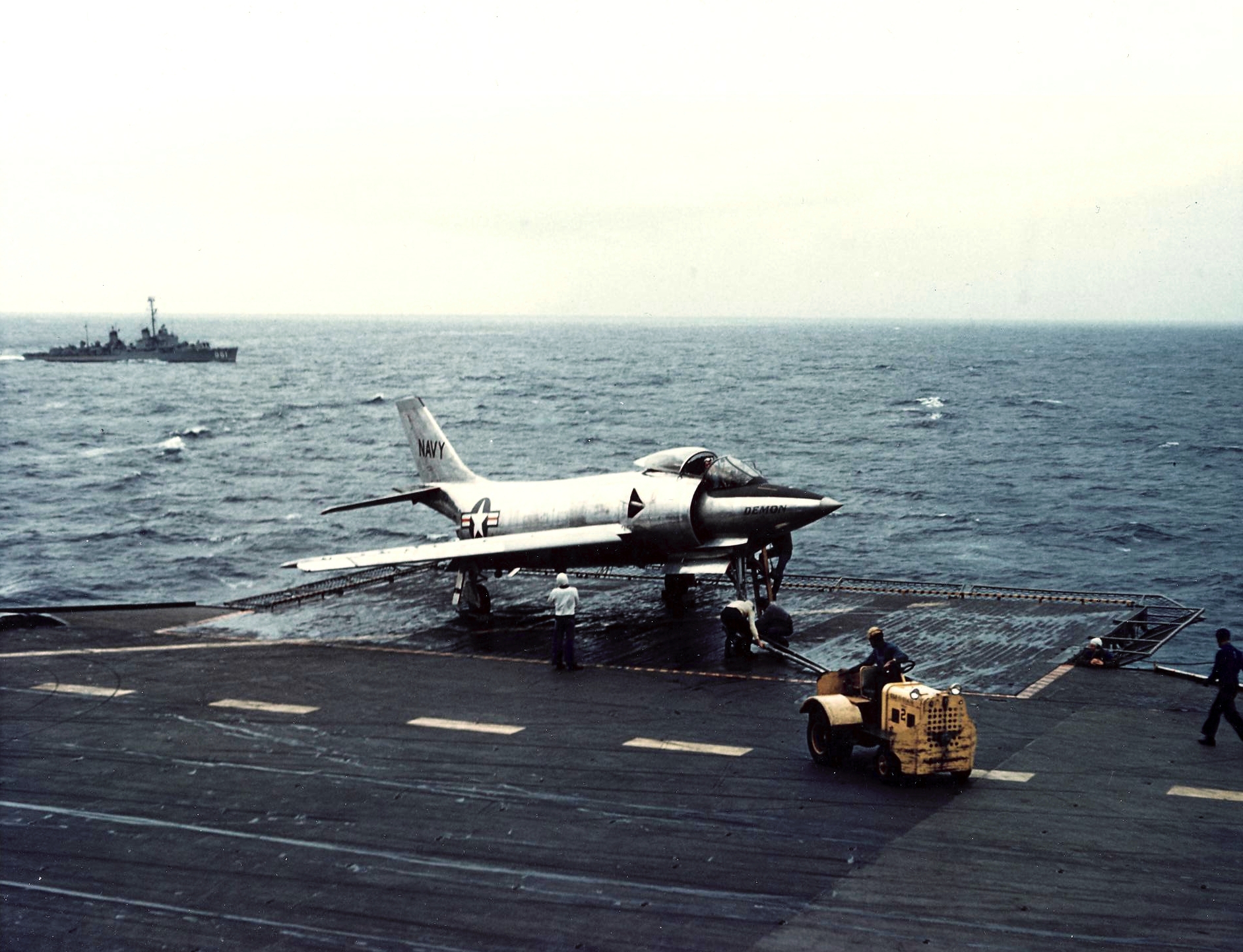


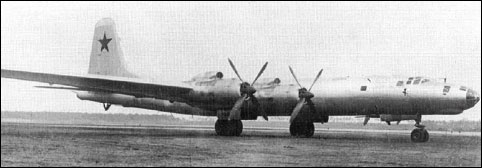


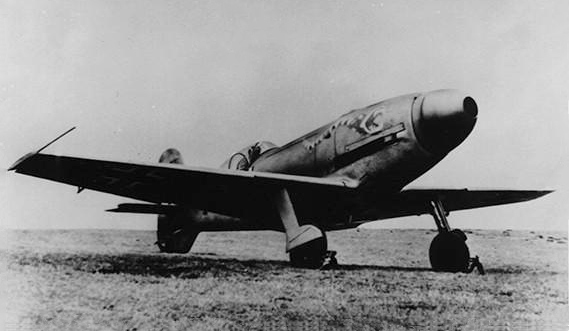
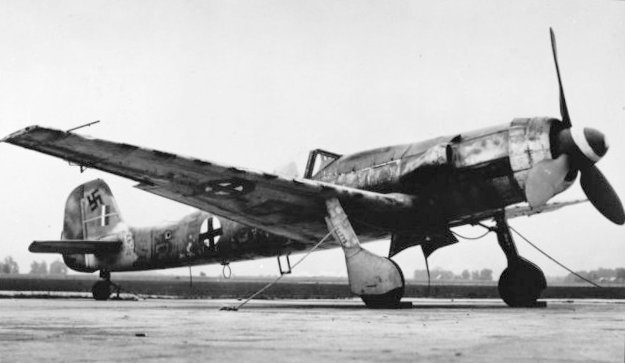
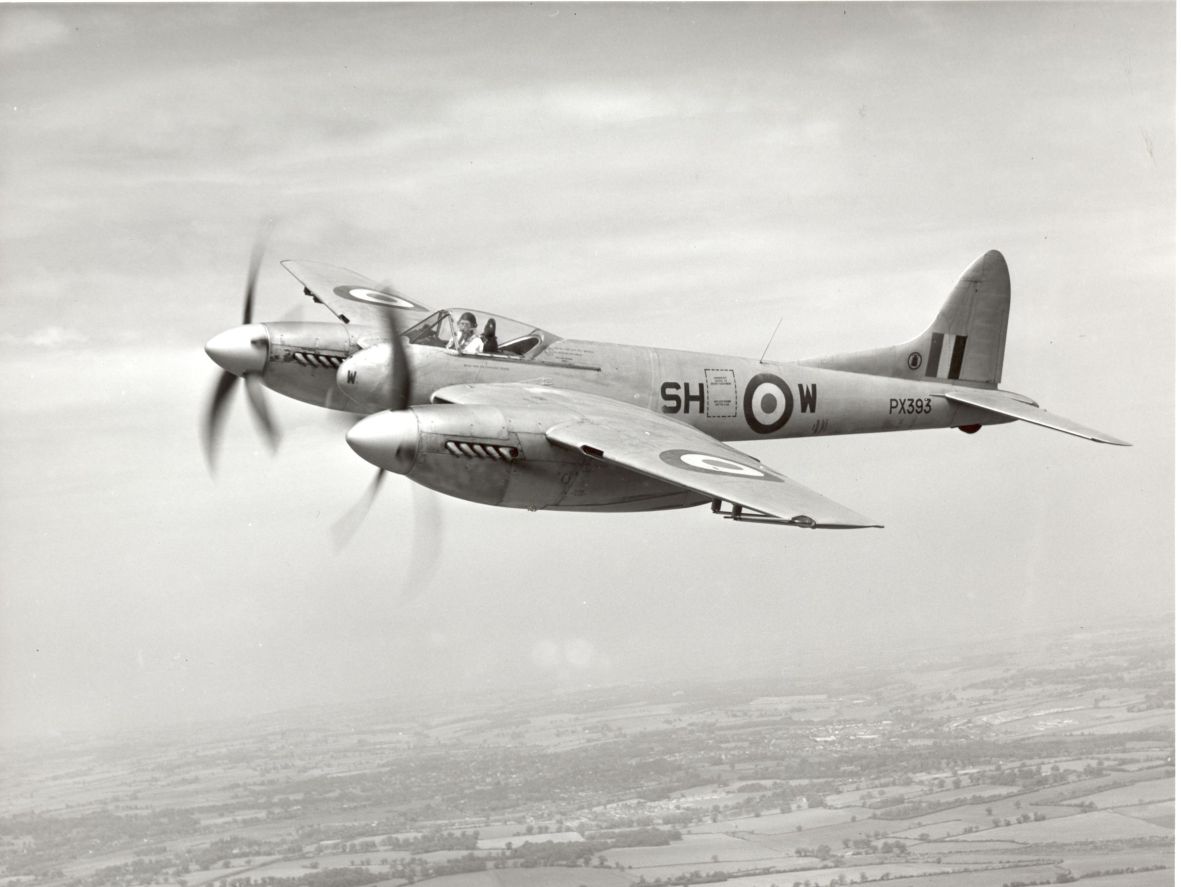

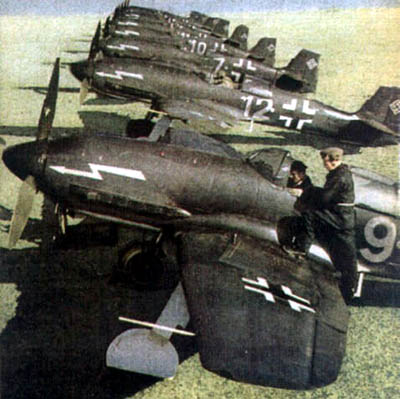

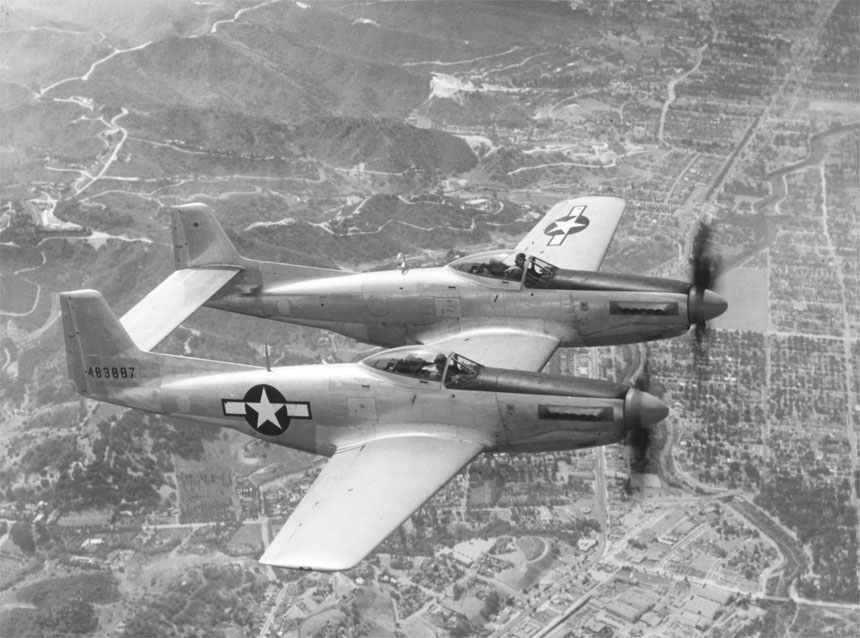


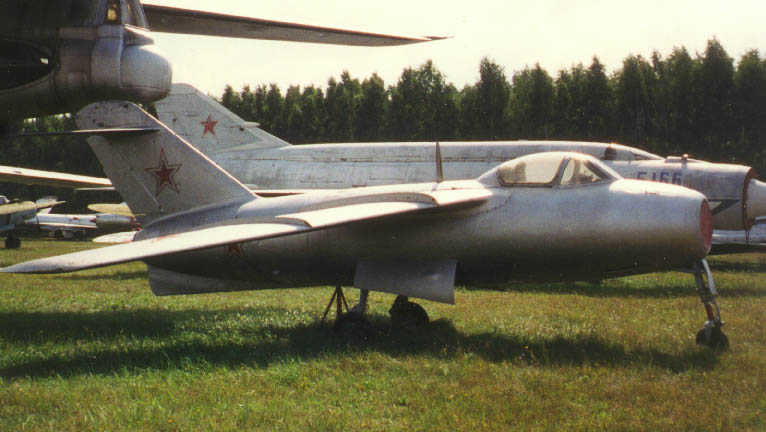


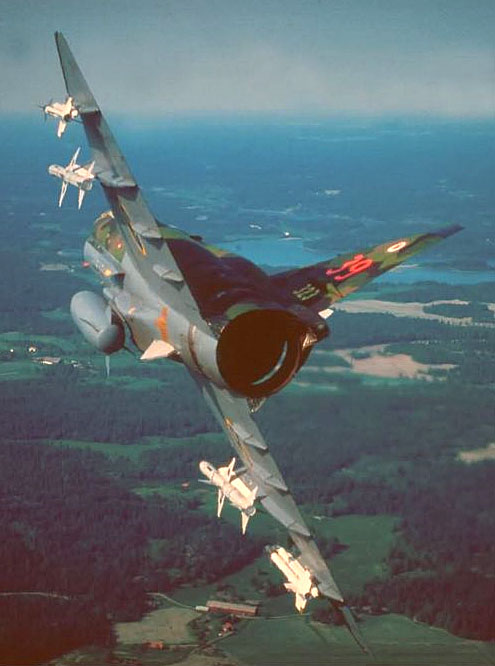
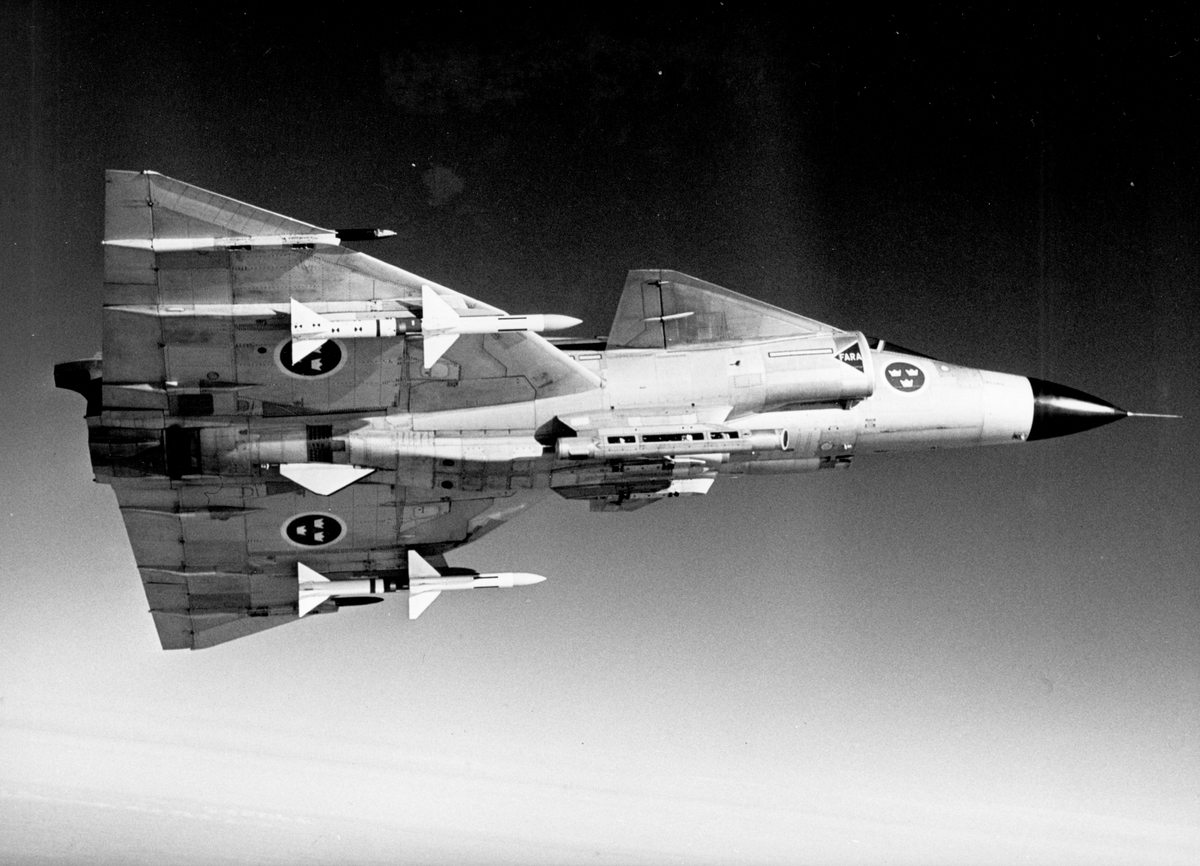


![Data Sheet] FFVS J-22 - Fighters - War Thunder - Official Forum](https://i0.wp.com/cdn-live.warthunder.com/uploads/1b/a24dd2c6c6d940efffb0d267c4a163450c1751_mq/ffvs%2Bj%2B22%2Bjaeger-schweden%2B%289%29.jpg.5161142.jpg?w=780)