Ask the insider: Eurofighter Typhoon

Lee:Plane Focus .png
Copyright: Geoffrey Lee, Planefocus Ltd

Jim Smith had significant technical roles in the development of the UK’s leading military aviation programmes. From ASRAAM and Nimrod, to the JSF and Eurofighter Typhoon. We asked him about the concept behind the Eurofighter Typhoon. 

What was your role on this project? 

“I worked on Typhoon advising the Project Office on Mass and Performance. This involved understanding and validating data from the project, and advising both the UK and NETMA (NATO Eurofighter/Tornado Management Agency) on compliance with requirements for mass and point and mission performance. As part of this role, I was delegated UK airworthiness sign off for the Performance System for first flight of the aircraft. This was not as grand as it sounds, as for first flight the concerns are take off and lading distances, brakes and brake parachute. Moving into the Chief Scientists area, I also wrote the Mass and Performance chapters of the Chief Scientist’s review of the programme”

Was Typhoon the right concept, what is the airframe optimised for?

“The aircraft, or more properly, the system, was designed to meet a variety of requirements from the partner nations. These are classified and I will not detail them. The mission performance requirements from most partners emphasised air superiority, but there were also some air to surface missions. Point performance requirements were owned by specific Nations and included requirements on climb performance, acceleration, instantaneous and sustained turn rates and specific points required by the Nations. 

I would summarise the intent as providing the best possible air superiority aircraft within weight and affordability constraints, and against the need to replace then in-service systems like Tornado F3. Acceleration in the transonic and supersonic regime was a high point, as was supersonic manoeuvrability. The aircraft is required to be able to pull significant g at a Mach number a clean F-35 cannot achieve in level flight. 

From a UK perspective the aircraft was seen as primarily an air defence and air superiority fighter, but with a strong capability to transition to swing roles, where both air-to-air and air-to-surface capability can be delivered if required. The UK considered the Typhoon and F-35 to be complementary, with F-35 delivering primarily a strike role.

I think Typhoon has proven itself to be an excellent choice for the RAF, given that it is in service with proven capability, has replaced the Tornado F3, and has increasing capability in all roles as radar and weapons development and integration continue.”

 What was most interesting about this project? 

“The complexity of working in a 4-nation collaboration, with 4 National Industries, 4 National Governments, and Industry Joint Venture, and a NATO Management agency. Any significant review meeting would have many participants, and a focussed approach was required.

The interaction of the flight control system, the load management system and the aircraft aerodynamics, coupled with the highly unstable configuration resulted in a flight-test program which focussed on identifying any difference between predicted and observed flight behaviour. The emphasis was on validating the Aerodynamic, FCS and Loads models to ensure safety while expanding the flight envelope.

Also, as with all modern weapons systems, development takes time; this should not be a surprise.”

Is it an issue that Typhoon has inferior High Alpha performance compared to twin-tailed rivals/potential threats?

“I don’t regard this as significant. The most likely result of close-in combat these days is a mutual kill, and it does not make sense to compromise the system to favour high alpha performance. If you are in that type of combat, you have effectively lost both the BVR combat and the merge. Integration of Meteor on Eurofighter, coupled with the capabilities of ASRAAM should make this type of engagement unnecessary.”

Why did the cranked delta wing of early concepts change to the conventional delta?

678aaa.jpg

“I was not involved in EF configuration design decisions. Because I was not involved, I can speculate a bit. 

The essentials for EF were keeping the weight low (maximising thrust to weight) and minimising transonic and supersonic drag to achieve outstanding energy manoeuvrability. This is the ability to engage, manoeuvre, shoot, disengage, accelerate and re-engage at high energy, and the aircraft is quite exceptional in this regard. Other key factors are high instantaneous turn rate delivered through a highly unstable configuration and a smart fcs which delivers pilot intent while managing airframe loads; and good sustained turn rate, delivered through low weight and wing loading, and an aerodynamically optimised close coupled canard configuration.

moniteur33_p35.jpg

Why might the cranked delta of EAP not have been used? Some possibilities are:

– A straight leading edge should lead to a simpler and lighter wing structure (Weight, Cost/Complexity);

– Maintaining a higher sweep on the outboard leading edge rather than having a reduced-sweep cranked planform should reduce wave drag, improving both acceleration and supersonic performance (Drag);

– Aerodynamic interaction with the canard may have been more favourable, either through having more linear characteristics at incidence, and/or allowing the fcs to manage a greater degree of instability (Drag, fcs design);

It is possible either more favourable or more linear aerodynamic cross coupling characteristics are obtained. For highly manoeuvrable unstable designs the cross terms such as rolling moment and yawing moment due to sideslip can have a big impact on handling qualities (fcs design).

What might have been traded away? 

Perhaps an impact on low-speed, high alpha qualities. The value of extreme high alpha flight to a modern fighter is questionable, and EF performance already benefits from low wing loading, loads management from the FCS, and high thrust to weight.”

With an unlimited budget, how would you upgrade Typhoon? 

1-F-35-EFA-KC-767-Aeronautica-Militare-Trasvolata.jpg

For the Air Defence role, integrate the active e-scan radar, Meteor and conformal fuel tanks. All planned, but sooner rather than later would be good.

For the swing role/strike role, continue integrating stand-off weapons. Conformal tanks as above. Look hard at maximising interoperability with JSF.”


Two Up

hh.png

“Two Up is a collection of anecdotes and stories drawn from our more than 50-year experience of photographing, flying, analysing, designing and generally working with aircraft. The 26 episodes in the book cover everything from schoolboy expeditions to photograph aircraft in England; to Ron’s visit as Westland’s Chief Future Project Engineer to Russia and Poland to examine their helicopter industry; my learning to fly aerobatics in the Chipmunk; Ron’s flight to Oshkosh on Concorde; and many more.

Two Up Down Under focuses on a visit Ron made to Australia to enjoy an aviation and photographic road trip around the Riverina, leading to our visit to the Australian Antique Aeroplane Association’s fly-in at Echuca, Victoria. There is something for everyone in here, whether you are interested in Volkswagen kombis, recreational and antique aircraft in Australia, flying, photography or classic cars. In his later career, he was a well-regarded analyst working primarily on Land Systems for BAe Systems. Both Ron and I have been private pilots. He has owned a number of interesting aircraft, including a 1938 Tipsy B, and is also a winner of the Dawn to Dusk Trophy. My flying experience highlights include Chipmunk aerobatics and flying recreational aircraft in Australia.”

Save the Hush-Kit blog. Our site is absolutely free and we have no advertisements. If you’ve enjoyed an article you can donate here. At the moment our contributors do not receive any payment but we’re hoping to reward them for their fascinating stories in the future.

Want to see more stories like this: Follow my vapour trail on Twitter: @Hush_kit

Have a look at How to kill a Raptor, An Idiot’s Guide to Chinese Flankers, the 10 worst British military aircraft, The 10 worst French aircraft,  Su-35 versus Typhoon, 10 Best fighters of World War II , top WVR and BVR fighters of today, an interview with a Super Hornet pilot and a Pacifist’s Guide to Warplanes. Was the Spitfire overrated? Want something more bizarre? The Top Ten fictional aircraft is a fascinating read, as is The Strange Story and The Planet Satellite. The Fashion Versus Aircraft Camo is also a real cracker. Those interested in the Cold Way should read A pilot’s guide to flying and fighting in the Lightning. Those feeling less belligerent may enjoy A pilot’s farewell to the Airbus A340. Looking for something more humorous? Have a look at this F-35 satire and ‘Werner Herzog’s Guide to pusher bi-planes or the Ten most boring aircraft. In the mood for something more offensive? Try the NSFW 10 best looking American airplanes, or the same but for Canadians. 

Lee:Plane Focus

Copyright: Geoffrey Lee, Planefocus Ltd

US Navy releases UFO footage: we ask former UK Ministry of Defence expert what this means

Recently released footage from a US Navy Super Hornet’s sensor pod (above) shows a currently unexplained aerial phenomenon or aircraft. Hush-Kit spoke to former UK Government and Ministry of Defence UFO expert Nick Pope for his opinion. 
What happened, and what does the footage tell us?

Save the Hush-Kit blog. Our site is absolutely free and we have no advertisements. If you’ve enjoyed an article you can donate here. At the moment our contributors do not receive any payment but we’re hoping to reward them for their fascinating stories in the future.

There’s still a lot about this footage that we don’t know. The film does appear to be genuine (which isn’t always the case with UFO footage), but while some media reporting makes it sound as if this was an official release by the Pentagon, it was actually released by former Blink-182 rocker Tom DeLonge’s To The Stars Academy, which is essentially a commercial venture. The fact that footage like this exists formed part of a story in the New York Times on December 16, revealing that the Pentagon had a UFO investigation program, and that it focused on sightings from the military. This is a big deal, not just because of the footage, but because for many years the US government has consistently and very specifically denied that there was any official interest or involvement in the subject. It turns out that there was.

 What was the 2004 case and is this similar?

We probably know more about the 2004 case than the other footage, mainly because it caught the attention of the New York Times, who ran a second story focusing specifically on this incident, naming Cmdr. David Fravor and Lt. Cmdr. Jim Slaight as the two Navy airmen involved. Once this information was in the public domain the airmen themselves spoke out and this filled in a lot of the blanks. Both these cases tell the media and the public what government UFO investigators have known for many years: pilots sometimes encounter things that they can’t identify, and these things are sometimes tracked on military radar. Pilots have chased them, footage of these chases exists, and on occasion these objects seem to be capable of extraordinary speeds and maneuvers. Unfortunately, none of this footage tells us what these things actually are. Conspiracy theorists believe the government knows all about UFOs and is covering up the truth. The reality – as we see in these videos – is that the government doesn’t know either. There’s something going on, but we don’t know what it is.

Some have said that the gimbal footage case is a result of a misreading of the IR sensor imagery, does this make sense to you?

When I worked at the UK Ministry of Defence on their UFO project (1991 to 1994) I had access to various imagery analysis resources and capabilities. Specifically, I was able to task DIS (Defence Intelligence Staff) and JARIC (Joint Air Reconnaissance Intelligence Centre) experts with analyzing any photos and videos of UFOs that we acquired. However, I wasn’t an imagery analyst myself, and had to rely on the advice of the deep specialists who I consulted. Accordingly, I know what I don’t know. It may be that there’s a misreading of the imagery here, but I don’t have the specialist knowledge to call this either way. I’m wary when non-specialists – whether they’re true believers or die-hard debunkers – get their hands on this sort of evidence and undertake what I call a ‘conclusion-led analysis’, trying either to validate it or debunk it, depending on their existing belief system. I genuinely don’t know what to make of this footage, but I’m happy to adopt a wait-and-see approach, listen to genuine experts, and see where the data take us.

What do you think the US Navy ‘gimbal footage’ was? Or wasn’t?

The basic instinct of pilots and air force intelligence officers will be to assume that these sorts of sightings are attributable to drones, missiles, or some sort of atmospheric plasma phenomenon that science doesn’t yet fully understand. This is why those of us who have investigated UFOs from within government tend to use soundbites like ‘more likely Russian than Martian’ when we look at such things. That said, few people who’ve looked at this issue officially are prepared to entirely rule out other more exotic options. ‘Never say never’, in other words. There are some intriguing clues here. We should bear in mind that these aren’t leaked videos. The footage has been reviewed, declassified and released by the Pentagon, albeit by or at the request of Luis Elizondo himself, in one of his last acts before leaving government service. This latter point may open him to investigation, given that these videos are seemingly a key part of Tom DeLonge’s commercial venture, in which Elizondo is involved, presumably as a paid consultant and/or shareholder. However, the key point to me is that given that the Pentagon declassified the footage, it’s unlikely they think it shows a new drone or missile, irrespective of whether it’s American, Russian or Chinese. Similarly, if the Pentagon genuinely thought this was the smoking gun that proves UFOs are extraterrestrial, it’s unlikely they’d authorize public release of the footage. The public release implies the authorities regard this material as unclassified. Sadly, this suggests a prosaic explanation.

What do you make of the recent Iranian claims? 

My gut feeling is that any unexplained aerial activity in the vicinity of Iranian military facilities is likely to be connected to US or Israeli reconnaissance flights, involving spy planes or drones. That said, I think we’d have to look at just how this story got out in the first place: was it leaked, was it the result of investigative journalism, or did the Iranian authorities themselves have a hand in things? If the latter, we need to consider the possibility of some sort of Iranian deception/disinformation operation – though I confess the strategic aim of such an operation escapes me.

Want something more bizarre? The Top Ten fictional aircraft is a fascinating read

You should also enjoy our Top Tens! There’s a whole feast of fantastic British, French, Swedish, Australian, Japanese , Belgian,  German and Latin American aeroplanes. Want something more bizarre? The Top Ten fictional aircraft is a fascinating read as is the Top Ten cancelled fighters.

Read an interview with a Super Hornet pilot here.

 Want something more bizarre? The Top Ten fictional aircraft is a fascinating read, as is The Strange Story and The Planet Satellite. The Fashion Versus Aircraft Camo is also a real cracker. Those interested in the Cold Way should read A pilot’s guide to flying and fighting in the Lightning. Those feeling less belligerent may enjoy A pilot’s farewell to the Airbus A340. Looking for something more humorous? Have a look at this F-35 satire and ‘Werner Herzog’s Guide to pusher bi-planes or the Ten most boring aircraft. In the mood for something more offensive? Try the NSFW 10 best looking American airplanes, or the same but for Canadians. 

Save the Hush-Kit blog. This site is in peril, we are far behind our funding targets. Our site is absolutely free and we have no advertisements. If you’ve enjoyed an article you can donate here. 

What the public say about the big aviation issue

Calendar

We gave the people what what they wanted. What did they want? A calendar with pictures of aeroplanes with gently sexualised images of the aircraft’s designers. But what did the public think of our calendars? We asked our beloved readers to find out…  

“I missed out on the 2017 calendar and I had an awful year. I will not make the same mistake again.”

— Chris Disraeli, Berlin

“What the hell is this? Oh, it’s got planes on it – the pictures are great, but why the old men in underwear?”

— Harold Herman, Uxbridge

“The puns are terrible and confusing, but I want this calendar”

— Gemma Winkler, Catolonia

“How do I get it? By emailing hushkiteditorial@gmail.com? Why isn’t there an online shop? I haven’t time to copy and paste an email address. Alright then, I’ve changed my mind. When will you get a proper online shop?”

— Dr Thomas Mann, Cockermouth

“Is there a Lightning on this? The English Electric one. There is? I’m in.”

— Dawn Fecundity, Egremont

“Oh! A really good Blackburn Skua cutaway…amazing!”

— Bertha Cowling, Madrid

Order your calendar while stocks last, yes it’s real. Email hushkiteditorial@gmail.com and support your second favourite aviation site.

Go on!

Go on!

Seriously, go on!


Hush23432247_10156844500343642_938685336_o.png

Cancelled! Ten great fighter aircraft that never entered service

SuperTiger
The Grumman F11F-1F Super Tiger out performed the Saab Draken, Lockheed F-104 Starfighter, Dassault Mirage III and Fiat G.91 in a tender to equip the Swiss Air Force. The Mirage III was finally chosen as a safer alternative. As Dassault can testify from more recent experiences, winning a Swiss fighter evaluation is no guarantee of anything. The Super Tiger never entered production.

Many of the finest fighter aircraft ever made were consigned to the scrapheap of history. Sometimes they were defeated in evaluations by superior opponents.  Sometimes bribery, intrigue or plain bad luck killed these unlucky warriors. Here is a mouth-watering selection of ten fighters which didn’t make it to squadron service.

Dear aviation lunatic, save the Hush-Kit blog. Our site is absolutely free and we want to stay free, without adverts or restrictions- this is where you come in: send a donation here. The more we get, the more we can give you. Thanks for your time. 

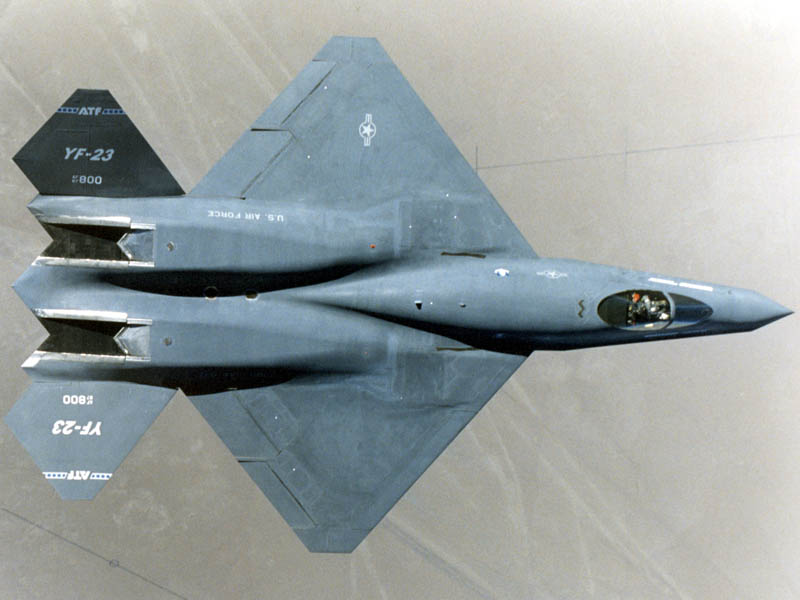
10.  McDonnell Douglas/Northrop YF-23 Black Widow II (1990) 

Northrop-McDonnell Douglas YF-23

The 1980s Advanced Tactical Fighter programme sought to replace the F-15 with a fighter that combined the new technology of radar stealth with advanced avionics and engine technology. The fighter was needed to counter a generation of Russian fighters that threatened the US’ traditional technical superiority. The stakes to win this contest were extremely high, with the winner expecting a $65 billion contract. No expense was to be spared in producing a stealthy fighter to dominate the skies. All the major US aerospace companies submitted designs, but only two teams were downselected to produce prototype designs for a competitive fly-off. One was a Lockheed/Boeing/General Dynamic team and the other was Northrop/McDonnell Douglas. The YF-23’s pedigree was impeccable, Northrop had built the most advanced stealth aircraft in the world, the B-2, and McDonnell Douglas was the most experienced fighter house in the world having developed the supremely capable F-15 and the cutting-edge F/A-18. The YF-23 was a sleek masterpiece, quite unlike anything else flying before or since. It was probably both stealthier and faster than the F-22, which is astonishing considering that the F-22 can maintain a speed of Mach 1.82 without resorting to reheat (afterburners). Lacking the large conventional tail surfaces and thrust-vectoring (a risky technology) of the F-22 it was likely that the YF-23 was less agile, and it may also have been harder to maintain. The Black Widow was also larger than the F-22 which was likely to have translated into it being more costly to procure and operate. The YF-23 lost the evaluation, and today the F-22 Raptor is in service with USAF. What is certain is the YF-23 was the most formidable fighter never to have entered service. YF-23_top_view.jpg

9. Avro Canada CF-105 Arrow (1958)

arrow

The phrase ‘Canadian superfighter’ sounds odd, but that’s what the CF-105 was. Fast, long-ranged and fitted with advanced avionics, it would have proved devastatingly proficient at destroying incoming Soviet bombers. It was extremely innovative, and was the first ‘fly-by-wire’ fighter, flying with electric signal control as far back as 1958! The world would not catch up with this technology until the teen fighters of the mid 1970s. The initial aircraft was Mach 2 capable but plans were afoot for a Mach 3 variant. The Arrow was to be fitted with weapon systems that exceeded the contemporary state of the art: it was intended to be armed with internally carried Sparrow II missiles, an ‘active’ beyond visual range weapon (essentially they wanted an AMRAAM thirty years early). The Arrow was to operate as part of a vast fully automated, integrated air defence system intended to protect Canada from its communist neighbour.

super_arrow.jpg
The ‘Super Arrow’ was proposed by Bourdeau Industries in 2012.  The extremely optimistic projected $11.73 billion cost to develop and produce a new heavy stealth fighter raised more than a few eyebrows. In light of recent US-Canada relations perhaps it would have had some merit!

The whole project was axed in 1959. It is still mourned by Canadians today, and it is probably this proud nostalgia that led to the bizarre recent proposal for a production line to be opened in the near future to create modern stealthy CF-105s. Though conspiracy theories abound of US interference leading to its cancellation, it’s likely that it was actually the budget book that killed a hugely ambitious, and wildly expensive project.

CF-105_Arrow-04.jpg

8. Martin-Baker MB5 (1944)

Image
The MB5 The full potential of the Griffon 83 engine was harnessed by a six bladed contra-rotated propeller.

The best British piston-engined fighter ever flown. Well armed, very fast and easy to maintain. Flight trials proved it be truly exceptional, with a top speed of 460mph, brisk acceleration and docile handling. Its cockpit layout set a gold standard that Boscombe Down experts recommended should be followed by all piston-engined fighters. A multitude of access panels made it far easier to maintain than its contemporaries, and its tough structure (a more advanced version of the load-bearing tubular box type favoured by Hawker) would have given it greater survivability. The only thing the MB5 lacked was good timing, it first flew two weeks before the Allied Invasion of Normandy. Born at the birth of the jet age, with readily available Spitfires and Tempests this masterpiece of British engineering didn’t stand a chance.

Save the Hush-Kit blog. This site is in peril, we are far behind our funding targets. Our site is absolutely free and we have no advertisements. If you’ve enjoyed an article you can donate here. 

7. Commonwealth CA-15 ‘Kangaroo’ (1946)

cac-ca-15.jpg

A strong contender for the title of the ultimate piston-engined fighter is the Australian Commonwealth CA-15 ‘Kangaroo’. The RAAF wanted a fighter superior to the highly respected P-51 Mustang, so accordingly issued an exceptionally demanding requirement. The specification called for a machine with a high rate of climb, excellent manoeuvrability including a high roll rate, and a generous range. The resultant Kangaroo delivered on all promises, and boasted a top speed of 458mph, and a range on internal fuel of 1,150 miles! The addition of drop tanks allowed for 2,540 mile flights. These remarkable figures were attained with the Griffon 61, even more impressive figures would have been achieved if the desired Double Wasp or three-speed Griffon had been fitted. Like the MB5 it was just too late to the party.

6. Dassault Mirage 4000 (1979)

Image

France’s Mirage 2000 has been described by many fighter pilots as the perfect flying machine. Its ferociously high performance and almost telekinetic responsiveness have left pilots of many nationalities giddy with love and respect for the ‘Electric Cake Slice’. So imagine a ‘2000 with twice the power and you have a pretty spectacular aeroplane; the 4000, which first flew in 1979 was a just such an aircraft, in the same heavyweight class as the F-15 and Su-27. The Mirage 4000 was one of the first aircraft to incorporate carbon fibre composites (to keep weight down)- and was probably the very first to feature a fin made of this advanced material. Thanks to its light structure and powerful engines it had a thrust-to-weight ratio that exceeded 1: 1 in an air-to-air load-out. On its sixth test flight it reached 50,000 feet at Mach 2 in 3 minutes 50 seconds. The 4000 would have been agile, long-ranged and able to haul an impressive arsenal. Its capacious nose could have held an advanced long-range radar. The French air force didn’t want it, Iran — another potential customer- had a revolution, and Saudi Arabia, also on the look-out for a heavy fighter, opted instead for the F-15. Despite its obvious potential, the Mirage 4000 failed to find a customer, which was an enormous kick in the nuts for Dassault, as the company had privately funded the type’s development.

5. IAI Lavi (1986)

Image

In the mid-1970s Israel began work on an indigenous fighter-bomber to replace its A-4s and Mirage derivatives. Development of the very advanced design was aided by US technological assistance. The highly agile canard delta first flew in 1986 and showed great potential. Similar to the F-16 but with greater manoeuvrability at higher speed (though it had a lower maximum speed of Mach 1.6) and altitudes it was also to be fitted with Israel’s widely respected guided munitions and electronic warfare equipment. But the Lavi project was too expensive for such a small country and it was cancelled in favour of a F-16C order. The degree to which the design influenced China’s J-10 is much disputed but it is generally agreed that Chengdu learned much from Israeli industrial visits. Had the Lavi gone into production it would likely have been a potent multirole aircraft, somewhat like a larger Gripen.

aaa.png

4. Northrop F-20 Tigershark

The F-20 was the ultimate US F-5 derivative. However unlike the twin-engined Tiger II and Freedom Fighter, the F-20 was powered by a single engine. It was intended to serve the needs of US client nations not cleared for fighters as advanced as the F-16. The F-20 had similar performance to the F-16 but would have been easier to maintain and cheaper to operate. Flight trials went extremely well and Chuck Yeager became an enthusiastic advocate of the type. When restrictions on F-16 exports relaxed, the F-20 lost its raison d’etre. An attempt to provide F-20s for the US aggressor fleet proved unsuccessful perhaps as General Dynamics and some in the F-16 community feared the F-20 reaching production status. In the end this privately funded fighter fell by the wayside, but did serve to distract attention away from Northrop’s secretive work on the nascent B-2 stealth bomber.

The F404 engine that had powered the F-20 did find gainful employment in the light fighter world, going on to power the Saab Gripen, KAI FA-50 and Tejas Mk 1.

F-20-Tigersharks.jpg

3. Lockheed YF-12 (1963)

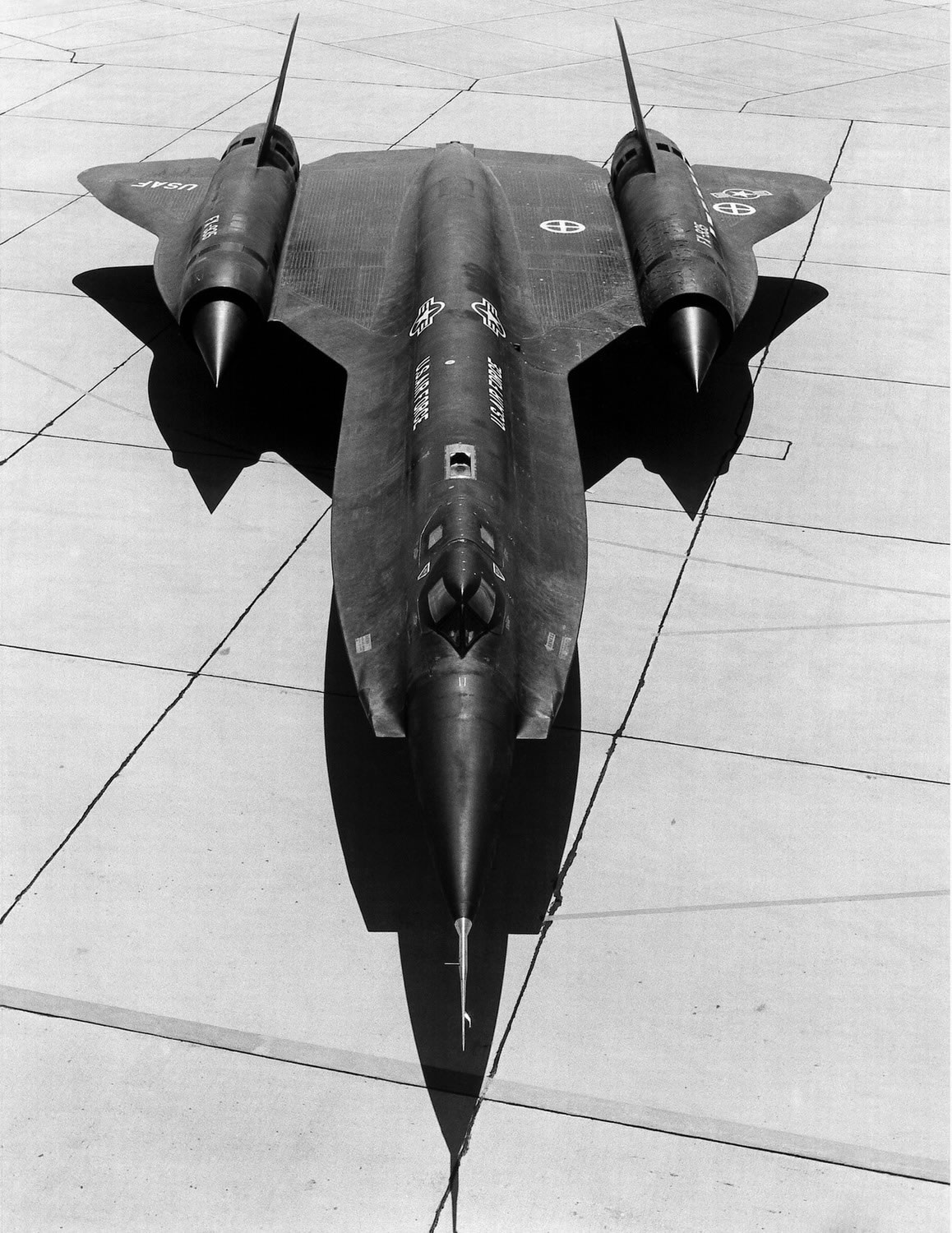
Until the late 1950s each generation of fighter interceptors was faster than the last. It stood to reason that the Mach 2.3 capable F-106 would be replaced by something even faster, and work on the the F-108 Rapier began accordingly. Somewhat unsurprisingly, a fleet of Mach 3 fighters that each weighed twice the weight of a loaded Lancaster bomber proved too expensive to develop. It seemed a shame to waste the expensive radar, missiles and fire control system developed for the F-108 so they were fitted to the only available airframe of comparable performance, the extremely secret Lockheed A-12 reconnaissance aircraft. The cost of the war in Vietnam and a less defensive military posture saw the funding for the 93 aircraft USAF wanted scrapped. Elements of this weapon system eventually found their way onto the F-14 Tomcat.

Lockheed_YF-12.jpg

2. Focke-Wulf Fw 187 (1937)

1439324059_focke-wulf-fw-187-falke-02.png

The American P-38 Lightning was a single-seat twin-engined fighter and it proved a great success, but the idea was novel for its time. By keeping the frontal cross section to the absolute minimum, this class of aircraft could be as fast as a single-engined fighter but with far greater range, and if required, firepower. The Germany company Focke-Wulf  also tried this idea, and the result was the superb Fw 187. The Fw 187 was an extremely clean design aerodynamically, everything being done to keep the frontal cross section to the absolute minimum; the cockpit was tiny (even by German standards), the dashboard of which was so small that some of the instruments had to be mounted externally on the engine nacelles. The result of this strict adherence to aerodynamic slickness was an extremely fast manoeuvrable fighter with an impressive range. With the original Jumo  210Da engines, a compromise unwanted by the designer, the prototype clocked 326 mph, which was 50mph faster than the much hyped Messerschmitt 210. When the desired DB 600As were added in 1939, the Fw 187 hit a level flight speed of 394mph, an astonishing figure for the time. Armed with two cannon and four machine-guns, the type would have proved a huge thorn in the side for the RAF’s Fighter Command if employed as an escort fighter in the Battle of Britain. Despite a small operational evaluation, the type never entered series production. The Me 210 lobby had greater political clout than the exponents of the Fw 187, and Focke-Wulf was devoting its resources to the development of the Fw 190.

5936924491_5f7a26d009_z

1. Vought XF8U-3 Crusader III (Reader’s choice, suggested by Rowland White)

tmp396641358082736129.jpg

As ‘phabulous’ as the Phantom was, in the F-4, the US Navy may have picked the wrong aircraft. Had they gone for the Crusader III instead, the Vought machine would have made mincemeat of the MiGs over Vietnam.

YOU NEED THE HUSH-KIT BOOK OF WARPLANES ON YOUR SHELF! Read the reviews to find out why

The XF8U-3 first flew on 2 June 1958. The prototype reached Mach 2.39, and demonstrated a zoom ceiling well over 76,000 ft (23,170 m). Fly-offs against the F4H (the early Phantom), demonstrated that the Crusader III had vastly superior manoeuvrability. John Konrad, Vought’s chief test pilot, noted that it “fly circles around the Phantom II”. Its combat thrust-to-weight ratio (T/W ratio) was approached unity (0.97), an almost unprecedented figure for the 1950s (the F4H reached around 0.86). The F8U-3 program was cancelled after five aircraft built, but not all was wasted: NASA appreciated the type’s remarkable high altitude performance and took three of the test aircraft for research purposes. These NASA Crusaders routinely intercepted and defeated U.S. Navy Phantom IIs in unrequested mock ‘bounce’ dogfights. The Navy did not enjoy this bullying and ordered NASA to stop it.

Though the XF8U-3 was a better dogfighter, the Phantom had a crew of two, which was a huge advantage considering how hard it was to operate contemporary radars and missiles, and could carry a weapon-load twice as big. The F-4 also had the advantage of two engines, a prime consideration for an operator at sea. Still, there is little doubt that the Crusader III would have been a formidable air superiority fighter or interceptor. With the advent of 1970s technology, allowing effective single crew operations, it could have matured into an exceptionally potent fighter. 

Have a look at How to kill a Raptor, An Idiot’s Guide to Chinese Flankers, the 10 worst British military aircraft, The 10 worst French aircraft,  Su-35 versus Typhoon, 10 Best fighters of World War II , top WVR and BVR fighters of today, an interview with a Super Hornet pilot and a Pacifist’s Guide to Warplanes. Was the Spitfire overrated? Want something more bizarre? The Top Ten fictional aircraft is a fascinating read, as is The Strange Story and The Planet Satellite. The Fashion Versus Aircraft Camo is also a real cracker. Those interested in the Cold Way should read A pilot’s guide to flying and fighting in the Lightning. Those feeling less belligerent may enjoy A pilot’s farewell to the Airbus A340. Looking for something more humorous? Have a look at this F-35 satire and ‘Werner Herzog’s Guide to pusher bi-planes or the Ten most boring aircraft. In the mood for something more offensive? Try the NSFW 10 best looking American airplanes, or the same but for Canadians. 

Save the Hush-Kit blog. This site is in peril, we are far behind our funding targets. Our site is absolutely free and we have no advertisements. If you’ve enjoyed an article you can donate here.

YOU NEED THE HUSH-KIT BOOK OF WARPLANES ON YOUR SHELF! Read the reviews to find out why

A fighter pilot’s account of the F-86 Sabre – Part 1: Learning to dogfight


12308414_1634203716843766_5567660712110820107_n

The Sabre was the best fighter of its generation. Potently armed, agile and a delight to fly, it proved formidable in the Indo-Pakistan War of 1965. It was with the Pakistan Air force that Wg. Cdr. Irfan Masum (Rtd) flew the ‘Jet Spitfire’. Here he shares his dramatic experiences of flying the F-86F Sabre.

We can only bring your articles like this with your support. Our site is absolutely free and we have no advertisements (any you do see, are from WordPress). If you’ve enjoyed an article you can donate here. 

“My first impression of the aircraft was that it was sleek to the extent of being sexy. It had already built its reputation in combat in the 1965 Indo-Pak war where it fared extremely well against the adversary. So I was thrilled that I was going to fly it. The pilot who forged this reputation was its wartime reputation was Flt Lt M. M. Alam who shot down five Indian Air Force Hawker Hunters in one sortie… in under two minutes of combat. It is fair to say that Alam, the pilot, and Sabre, the fighter – put the Pakistan Air Force on the map as one of the leading Air Forces of the world. The Sabre’s reputation filled me with awe and made me eager to get into its cockpit and feel the thrill of it personally.” (read about Irfan’s MiG-19 adventures here).

paki4

How did it differ from the other aircraft you flew?

The F-86F was different to other fighters I flew in many ways. Firstly, it manoeuvred beautifully and was aerodynamically very friendly, making it an ideal aircraft to learn the facets of fighter flying. Secondly, it was a forgiving aircraft to the extent that it would say ‘sorry’ to the pilot for mishandling it…. or almost. Meaning that the trainee pilot could mishandle it and get away with it. The Sabre, almost always, refused to enter a spin. And if you forced it into one and then left the controls, it would recover itself. Thirdly, it was the only aircraft I’d flown that had automatic ‘speed controlled’ slats. 

Its computing gunsight made it lethally accurate in air battles. It was ideal in close combat, and six guns blazing at a very good rate of fire gave it an edge on all contemporary fighters of the era.

‘Dissimilar’ air combat training was a norm and the F-86 was often pitted against the MiG-19 and Mirage. Sabre tactics against the MiG were simple: strictly confine itself to a turning battle. Stay long enough in combat – without ceding advantage- for the MiG to run scarce on fuel and then make it difficult for him to disengage. Take a gun shot on a disengaging MiG, and a missile shot before the MiG accelerated out of reach.

My instructor was Flt Lt Farooq Zaman. He was as fearless an instructor as he was a fighter pilot, never missing the opportunity to take me to my limits often forcing me to fly at the very edges of the flight envelope.

His compared  ‘air combat’ to a literal ‘dogfight’: according to him, the aim of dogs fighting each other is to turn around faster and bite the other dog first. He demanded that I manipulate the flight controls (ailerons, rudders and elevators – in conjunction with the throttles) however necessary, to turn around and bite him. The essence of his theory stayed with me all my flying years.

Another tip that he gave me – demonstrated practically in the air many a times – would also form the backbone of my combat tactics. His mantra was ‘achieve height advantage on the adversary’ right in the beginning of the combat. How? He would explain – after the initial merge (which is usually head-on) show that you are getting into a tight climbing turn towards the foe, forcing him to also get into a tight climbing turn towards you. Then roll wings level and pull up for a loop with no bank on. Once inverted on top of the loop, execute a roll of the top and stay up there looking for the adversary – who will be sighted below the horizon considerably lower than you. The aerodynamics of this manoeuvre were simple – pulling up with wings level allows one to gain more height than the one who is pulling up towards you with a 60-70 degree bank on. Once you achieve the initial height advantage, make it work for you. Exchange height advantage for speed, when needed, but convert the extra speed back to height advantage so as to maintain an upper hand. Never lose the height advantage throughout the 1V1 combat.”

Part two coming soon

paki.jpgHave a look at How to kill a Raptor, An Idiot’s Guide to Chinese Flankers, the 10 worst British military aircraft, The 10 worst French aircraft,  Su-35 versus Typhoon, 10 Best fighters of World War II , top WVR and BVR fighters of today, an interview with a Super Hornet pilot and a Pacifist’s Guide to Warplanes. Want something more bizarre? The Top Ten fictional aircraft is a fascinating read, as is The Strange Story and The Planet Satellite. The Fashion Versus Aircraft Camo is also a real cracker. Those interested in the Cold Way should read A pilot’s guide to flying and fighting in the Lightning. Those feeling less belligerent may enjoy A pilot’s farewell to the Airbus A340. Looking for something more humorous? Have a look at this F-35 satire and ‘Werner Herzog’s Guide to pusher bi-planes or the Ten most boring aircraft. In the mood for something more offensive? Try the NSFW 10 best looking American airplanes, or the same but for Canadians. 

Su-35 versus F-22 Raptor: Analysis from RUSI’s Justin Bronk

MAKS_Airshow_2015_(20615630784).jpg

The most potent operational fighter aircraft in Russian service is the Sukhoi Su-35. We asked Justin Bronk, Research Fellow from the Royal United Services Institute (RUSI), how it would fare in combat against the formidable F-22 Raptor operated by the United States Air force. 

Are there tactics which would enable a Su-35 force to take on a F-22 formation?

Simply put – no. Whilst the Su-35 does have the hypothetical capability to detect the F-22 at close ranges using its IRST and potentially the Irbis-E radar, both sensors would have to be cued to focus on exactly the right part of sky to have a chance of generating a target track. By contrast, the F-22 will know exactly where the Su-35 is at extremely long range and can position for complete control of the engagement from the outset with superior kinematics. The Su-35’s only chance would be to absorb the AMRAAM and AIM-9 shots from the F-22’s and hope that they had sufficient numbers left to attack the tankers and airbases which the F-22’s rely on post-engagement.

150731-F-BM568-906.JPG

How do the F-22 and Su-35 compare in terms of close-in agility/energy preservation/types of fighters (angles V energy)

The Su-35 can probably out-turn an F-22 in a horizontal fight at medium and low altitudes, but the need to carry missiles and tanks externally to be effective, as well as the brute size of the Sukhoi will ensure it remains at a distinct energy disadvantage to the Raptor in terms of energy retention and acceleration at all speeds. The F-22 also will not get into an angles fight with an Sukhoi – there is simply no need for it to do so.

How do they compare in terms of BVR engagements?

BVR engagements are all about situational awareness, positioning/energy advantage, and persistence in terms of fuel and missiles. In all but the latter category the Su-35 is hopelessly outclassed by the F-22 (as are all other operational fighter aircraft). Even in terms of missiles, the Su-35 can carry up to twelve to the F-22’s eight but combat practice, especially against stealthy targets, involves firing salvos of six missiles with mixed seekers so the Su-35 only really has two credible shots. By contrast the F-22 can get much closer without being threatened so even against the Su-35S DRFM jammers, it can fire smaller salvos with much better Pk.

(taken from full article here)

Follow him on Twitter: @Justin_Br0nk

Follow my vapour trail on Twitter: @Hush_kit

You may also enjoy top WVR and BVR fighters of today, an interview with a Super Hornet pilot and a Pacifist’s Guide to Warplanes. Want something more bizarre? The Top Ten fictional aircraft is a fascinating read, as is The Strange Story of The Planet Satellite. Fashion Versus Aircraft Camo is also a real cracker. 

SAVE HUSH-KIT. Hush-Kit needs donations to continue, sadly we’re well behind our targets, please donate using the buttons above or below. Many thanks. I really hope Hush-Kit can continue as it’s been a fascinating experience to research and write this ridiculously labour-intensive blog.

MAKS_Airshow_2015_(20615630784).jpg

My favourite aeroplane in 200 words #43: Mikoyan-Gurevich MiG-105

2d75tw8.jpg
Sofia Kovalenok from the Monino AF Museum volunteer restoration team, and her responsibility the 105.11. She has sourced and restored missing cockpit equipment and applied the original markings to the spaceplane scheme with all the stencils (105.11 was repainted in silver, though originally it was white and black).

In 1965 the Soviet Union started a top secret project lead by the engineer Gleb Lozino-Lozinskiy. Known as ‘Spiral’, its aim was to build a spaceplane that could have been used for a variety of purposes including aerial reconnaissance, space rescue, satellite maintenance, and as a space interceptor to sabotage enemy satellites. Yes, I did say ‘space interceptor’, but let’s add another element of excitement: it was to be launched from the back of a Mach 6 mothership (to be built by Tupolev). Once thrown into the air by the mothership, its own detachable rocket would boost it into space. The  MiG-105 was built as a research aircraft in support of the Spiral, to demonstrate landings (made on skids) and low speed handling. It made its first subsonic free-flight in 1976, taking off under its own power from an old airstrip near Moscow. It made only eight flights before the project was cancelled in favour of the Buran, a knock-off of the US Shuttle. Though the MiG-105 never made it into space, its sister, the unmanned БОР (‘BOR’) did. Now exhibited at the Monino museum, The MiG-105 is (like me) a Muscovite — which is clearly another reason to love this little flying shoe.

— Ria Timkin, Musician (you can support her music here. She currently has no songs about spaceplanes)

2vm6cya.jpg

My favourite aeroplane in 200 words #42: Martin-Baker MB3

martin-baker-mb3-runup.jpg

Despite never entering service, the MB3 has been indirectly responsible for saving 7553 lives (and counting). Friends and partners, James Martin and Valentine Baker had been designing unconventional monoplanes since the early 1930s. From the start they believed that aircraft should be as simple as possible. The MB3 was their response to a wartime RAF requirement for a fast, heavily armed, fighter. Formidably furnished with six 20-mm cannon, it was also designed for ease of maintenance and manufacture (unlike the Spitfire). Tests flights, which started on 31st August 1942, proved it was both highly manoeuvrable and easy to fly. Its top speed of 415 mph was a touch faster than the contemporary Spitfire Mk VIII. The main load-bearing structures were constructed of heavy tubing (or built-up spars) so it would have been able to survive greater battle damage than an equivalent stressed skin aircraft. It was not to be however: on a test flight on 12th September 1942, the engine failed soon after take-off, and the MB3 crashed in a field and killed its pilot, Capt. V Baker. Though the team had been investigating the idea of escape seats since 1934, it was Baker’s death that motivated Martin to focus exclusively on ejection seats.

–– Lucy Bentham 

0188d912ff3fd2cc47bc82e5995af6a2