Two weeks ago the Danish government selected the F-35A Lightning II as its future fighter aircraft. The somewhat odd details of the evaluation raised many questions about its validity causing contract loser Boeing (who had offered the Super Hornet) to raise a formal complaint. We spoke to veteran military aviation expert Jon Lake to find out more.Â
______
So – who was in the Danish fighter evaluation – and why no Rafale or Gripen?
Lockheed Martin, offering the F-35, Eurofighter offering the Typhoon and Boeing offering the Super Hornet. In essence Dassault and Saab were not included because they did not think it worth their while to spend money going through the process – which might suggest that they thought that their aircraft would not meet the requirement, or that the result was a foregone conclusion, and that the competitive process was a sham. Saab withdrew before the Request for Binding Information, Dassault did not respond to the initial RFI.
Who won?
Lockheed, with the F-35A Joint Strike Fighter.
A different fleet size was assumed for each type- what was that about?
This was largely based on airframe life and perceptions about availability. An airframe with a longer airframe life and better availability could obviously provide more sorties, and thus a smaller fleet would be required.
Do you agree with the criteria and judgement?
I think that Denmark probably selected the best aircraft to meet its strategic and geopolitical needs, and possibly also the best aircraft to meet its military requirement, though there are elements within the official summary that severely dent the credibility of the entire evaluation process. Ranking the mature, proven Super Hornet as being riskier than the Typhoon, and especially as being higher risk than the immature, troubled F-35, would seem to be perverse and illogical, while rating the Typhoon below Super Hornet for mission effectiveness (and rating both types equally for survivability) also flies in the face of the facts.
We know that “the New Fighter Program has made use of various expert panels, which have ultimately evaluated and ranked the candidates.”
Denmark says that “the participating experts have represented a broad range of competencies and experience related to the specific evaluation areas,” but the evaluation results cast some doubt on such a claim, in my view.
The summary tells us that “Quality assurance has been carried out by Danish experts from Deloitte in cooperation with international experts from RAND Europe assisted by QinetiQ and Vorderman Consulting.”
I note with interest that Vorderman Consultancy seems to be Major General Peter Vorderman Royal Netherlands Air Force retd., who seems to have been a helicopter pilot. On the basis of the summary, I’d suggest that a lack of fighter experience, and a lack of understanding of the fighter/attack roles is evident. The expert panels do not seem to have had the effect that you’d expect real subject matter experts to have on this process and its bizarre conclusions.
Did F-35 have to win this? Was there really a chance someone else could win?
At one time, it seemed as though the Danes were conducting a proper evaluation – going to Germany to fly a compelx Typhoon four-ship mission in the Luftwaffe’s synthetic devices, for example.
Source: Defencetalk/Eurofighter
Why is Typhoon always deemed expensive to maintain?
In short because people go to NAO reports and uncritically accept the numbers within those reports, failing to understand how those numbers are arrived at.
The Danish seemed worried by the Typhoon spares support – is this still an issue?
Different operators have had quite different experiences when it comes to Typhoon availability and support. If, like the RAF, you fail to order the right spares, in the right quantities, then it will bite you in the arse.
Boeing has raised a complaint about the assessment- what is this about and does it stand a chance?
Boeing is claiming that the Danes have used flawed data to determine costs. No shit, Sherlock! I would say that there is no chance whatever of a change of heart based on this objection.
Has Denmark made the right decision?
Probably, yes. It may not have selected the best aircraft to meet its military requirement, but for many small air forces, the single most important factor in selecting equipment will be to strengthen important alliances.
Also ranking higher than actual capabilities will be the need to ensure interoperability with neighbours and allies, and especially with the US. It is, after all, almost unthinkable that Denmark would ever go to war except as part of a US led coalition, and in such a coalition, Denmark’s participation (in presenting a united front and in burden-sharing) is likely to be more significant than the actual military capabilities that it can bring to the table. While the Gripen would represent a cost-effective, flexible and versatile solution to Denmark’s needs, and while Typhoon would provide unequalled air defence capability and formidable air-to-ground capabilities, neither aircraft would ‘buy’ Denmark the political advantages that F-35 will, and neither will be quite as seamlessly interoperable with USAF assets.
Moreover, though it is likely to be expensive to buy, expensive to operate, and lacking in particular capabilities, the F-35A pilot will enjoy unequalled survivability (thanks to the aircraft’s low observable characteristics) and unmatched situational awareness and net-enabled capabilities. In many circumstances, one can imagine that this will make the F-35A a better air-to-air aircraft than ‘type X’ which might have superior kinematics, a longer range AESA radar, a superior defensive aids sub systems and longer-range air-to-air missiles – all of which ought to make ‘brand x’ a superior air-defence aeroplane.
Why has Super Hornet done so badly in the export market?
That’s a massive question, which calls for an in-depth article to properly answer, which isn’t appropriate here. I am a big fan of both the original, ‘Heritage Hornet‘ and, to a lesser extent, of the Super Bug. Great multi-role and swing-role capabilities, a good cockpit and man-machine interface, relatively low operating costs, a decent, well-integrated AESA radar, formidable high Alpha handling and low speed agility…. what’s not to like? But at the same time you need to ask yourself some questions. What can a Super Hornet do that cheaper, single-engined fourth gen’ fighters can’t do better, or more cost-effectively? What can a Super Hornet do that a Rafale or Typhoon, or even a modernised ‘Advanced F-15’ can’t do better? What compromises have been made in order to provide the Super Hornet’s carrier capabilities? If you were a logistician would you rather operate a single-engined aircraft operated globally by the USAF and by countless allies, or a twin-engined aircraft operated by the US Navy and Australia? How many potential Super Hornet customers would actually have been allowed to buy the aircraft?
 What should I have asked you about the evaluation results?
“Why on earth did either Eurofighter or Boeing ever think that this was a genuinely open contest?”
The Soviet Union lasted a mere sixty-nine years (the Spitfire has been flying longer), but in that time produced some of the largest, fastest, toughest and most agile aircraft. Even now, 25 years after its collapse, almost all Russian and Ukrainian aircraft have their roots in the communist super state. Favouring clever robust design over high technology and refinement, the Soviet approach enabled the mass production of cheap machines. Many of these were outstanding, but some – for reasons of politics, bad luck or incompetence – were diabolical. Let’s pack beer and vobla, and take a walk through the rusting graveyard of the eleven worst Soviet aircraft.
To keep this blog going- allowing us to create new articles- we need donations. We’re trying to do something different with Hush-Kit: give aviation fans something that is both entertaining, surprising and well-informed. Please do help us and click on the donate button above – you can really make a difference (suggested donation £10). You will keep us impartial and without advertisers – and allow us to carry on being naughty. Once you’ve done that we hope you enjoy 10 Incredible Soviet fighter Aircraft that never entered service. A big thank you to all of our readers.
If you enjoy this kind of thing, you may also like the 10 worst US aircraft
(If you enjoy this- there’s a donate button above and below – we can’t survive without donations. Thank you)
11. Tupolev Tu-116
With the death of Stalin, the Khrushchev Thaw left the Soviet Union in the tricky position of wanting to engage with the wider world but with no indigenous way of getting there. Fearing that mating an airliner fuselage to the wings of a Tu-95, to make the Tu-114, would take more time than was available before a 1959 state visit to the USA, a less ambitious back up plan was made. The Tu-116 replaced the Tu-95’s bomb bays with a passenger compartment for the head of state and his entourage, in a prescient nod to post-9/11 security arrangements it was impossible to access the cockpit from the passenger compartment, messages being passed by pneumatic tube. While no one appeared to think arriving on a diplomatic mission in something that looked exactly like a strategic bomber might be a bad idea, the nail in the coffin of the Tu-116 was actually the 737 style air stair that allowed the First Secretary of the Communist Party to emerge from the bowels of the aircraft, something he deemed beneath his standing. Deprived of their raison d’être the two aircraft served out their miserable lives flying technicians to the Semipalatinsk nuclear test site, presumably to ensure the Franken-liner was hidden from public view.  The Tu-116 was a poor idea and implemented badly. It was mercifully left to wallow in obscurity, somewhat like the Miss Havisham of Soviet aviation.
— Bing Chandler, former Lynx helicopter Observer (now works in flight safety)
 Save the Hush-Kit blog. If you’ve enjoyed an article you can donate here. Your donations keep this going. Thank you. Our shop is here and our Twitter account here @Hush_Kit. Sign up for our newsletter here.
NOW AVAILABLE: The Hush-Kit Book of Warplanes, a gorgeous heavily illustrated – and often irreverent- coffee-table book covering the history of aviation 1914 – the present.
Â
Â
Â
Â
Â
Â
Â
Â
Â
Â
Â
10. Tupolev Tu-22 ‘Blind John the man-eater’
The Tu-22 medium bomber, first flown in 1962, was a dangerous hotrod with a litany of design flaws. Its VD-7M engines were unreliable and caused a spate of lethal accidents. The aircraft was also very hard to handle, according to one pilot “..two flights with no autopilot drained all strength“. Tu-22 pilots had to be physically strong and keep both hands on the control yoke at all times. The landing speed was perhaps the worst of any operational aircraft: it was forbidden for pilots to go under 180 mph. The ejection seats ejected downward, a sobering prospect for low-level escapes. Pre-flight preparations took at least 3 hours, and other common procedures required 24 hours of maintenance. The high-mounted engines were exceptionally inconvenient for maintenance crew to reach. Its abysmal visibility from the cockpit resulted in one of its nicknames – Blind John (Слепой Джон). Another less than flattering nickname was ‘the man-eater’ (Людоед).
– Vasily Kuznetsov, Aviation photographer and lawyer
If you enjoy this kind of thing, you may also like the 10 worst US aircraft
Eleven wonderfully weird cancelled aeroplanes here
9. Sukhoi Su-7
For the first two decades after World War II the Soviet Union wasn’t great at building ground-attack aircraft. Ilyushin’s classic wartime Shturmovik soldiered on for a while, but in the era of atomic weapons, the use of aircraft for battlefield close support fell out of favour within the Red Army. If Soviet troops were to need firepower, they could call upon artillery. And nuclear-tipped battlefield missiles. And more artillery.
With the explosion of counter-insurgency and brushfire conflicts in the mid-1960s, it was time to reassess the ground-attack aircraft. One quick fix was to add bombs and rockets to MiG fighters. But the USSR’s first purpose-designed, jet-powered ground-attacker to reach service was the Sukhoi Su-7. Unfortunately, it wasn’t great. The Soviets never took it into battle. The Arabs did, and were not impressed.
In July 1967 Egyptian pilot Tahsin Zaki was in a formation of 12 Su-7s that was to attack Israeli forces opposite the Suez Canal. Loaded with four 500kg bombs each, the jets suffered so much drag that they couldn’t accelerate beyond 600km/h. They also proved very difficult to control. ‘The Su-7 was never a very stable aircraft at such slow speeds’, Zaki reflected in Arab MiGs Volume 4.
Provided it made it over the battlefield unscathed, the Su-7 was hampered by dismal range, meaning it was unable to loiter where it was needed. The powerful Lyulka AL-7F1 turbojet took up so much space that there was little room left for fuel tanks. It was vulnerable to foreign object damage (FOD) and, without air-to-air missile capability, was unable to protect itself other than with its two NR-30 cannon. Were it unfortunate enough to get into a dogfight with an Israeli Mirage, Arab pilots found that its fuel was quickly expended.
A final word goes to Egyptian pilot Gabr Ali Gabr: ‘The Su-7 was a totally bloody useless aircraft. It had a feeble bomb load and ineffective rockets only. The only Sukhoi that really showed an improvement over the MiG-17 was the Su-20, which we received only years later.’
— Thomas Newdick, Editor at Harpia Publishing and Assistant Editor of Combat Aircraft
8. Lavochkin LaGG-3Â
A pathetic climb rate, sluggish top speed, poor build quality, the inability to pull out of a dive or even to perform a sharp turn are among the many failings of the lamentable LaGG. The designers intended the aircraft (which started development as the LaGG-1) to use the 1,350 hp inline Klimov VK-106 engine, but when this engine failed to mature, it was replaced with the Klimov M-105 – a weedy powerplant with around 300 less horsepower. The result was an exceptionally underpowered fighter hated by its crews and mauled by its enemies. Other than an exceptional ability to withstand battle damage (something it received in abundance) -the aircraft’s only saving grace was that it sired the magnificent LaGG-5.
— Joe Coles, Hush-Kit
Something strange about Denmark’s F-35 order? Full story here
7. Silvanskii IS
Silvanskii is a name synonymous with Russian fighters..oh, wait – no it’s not. And there is a very good reason that it’s not. In the midst of Stalin’s muddled and oppressive USSR, one A.V. Silvanskii secured state funding to create a new fighter in 1937. The concept seemed sound- it was a low-winged monoplane with a 1,000 horsepower radial engine, armed with two heavy machine guns. As development began it soon became apparent that Silvanskii was a reckless bodger. By 1938 the prototype aircraft was virtually complete. Initial tests of the undercarriage revealed that the wheel wells were too small- the undercarriage did not fit into the wing in the retracted position. How this elementary mistake had been made is hard to understand, but the solution was simple- the undercarriage legs were shortened. Now the undercarriage could be retracted it was realised that the wheel bays were too shallow so the undercarriage would stick out into the airstream producing drag. Deciding not to rectify this issue, the team then fitted the propeller. Though the aircraft now had a shorter undercarriage than originally designed, no-one saw fit to think through the consequences of this modification; the propeller was now too large and would smash against the ground on take-off. Ever the master of methodical engineering, Silvanskii took a saw to the offending propeller and lopped four inches off each blade. The manager of the GAZ state aircraft factory watched this slapstick affair with dismay and growing alarm. He quite sensibly refused Silvanskii permission to fly from the factory airfield. The persistent Silvanskii looked for an alternative airfield for his fighter and charmed the State Flight Research Institute (LII) in Moscow into providing a runway and a test pilot for the maiden flight. One cold morning in early 1939, the LII test pilot strapped himself into the aircraft, known simply as the IS or ‘Istrebitel’ (fighter) and prepared to fly. The machine had other ideas, but thanks to a combination of full throttle and extremely dense cold air the machine was coaxed into taking off for one hair-raising circuit flown dangerously close to the stall. On landing the pilot damned the aircraft as unflyable. The Silvanskii bureau was bankrupted and the hapless designer was banned from working in aeronautical design.
Arab MiG-21 pilots were excited by the prospect of a new advanced fighter, but early MiG-23s provided a huge disappointment. The Soviet Union generally offered client nations inferior versions of their fighters, but the MiG-23MS was one of the cruelest examples – and they were supplied when the air forces of Syria and Egypt were at war with a well-equipped enemy. Because of delays with the R-23 (a Sparrow equivalent), the ’23 carried only the K-13 (comparable with an early Sidewinder). The weapon system, with its very basic Sapfir-21, was completely mismatched to the aircraft’s performance – the aircraft was designed for fast long range engagements – something it couldn’t do with the K-13. The former MiG-21 pilots now had an aircraft with greatly inferior agility to the previous mounts and nastier handling characteristics. The aircraft also lacked vital equipment, including radar warning receivers. The MiG-23MS force suffered terrible losses to the Israeli Air Force, and encouraged Egypt and Libya to turn away from the use Soviet equipment, and instead favour US F-4s and French Mirages respectively. The MiG-23 was later developed into the formidable ML, but the MS was a dreadful machine hated by many of its pilots.
— Joe Coles & Thomas Newdick
Love warplanes but hate war? You may enjoy this article then.Â
 Thank you for reading Hush-Kit. Our site is absolutely free and we have no advertisements. If you’ve enjoyed an article you can donate here. At the moment our contributors do not receive any payment but we’re hoping to reward them for their fascinating stories in the future.
5. Antonov An-10 ‘Bulgakov’s magic catflap’Â
The An-10 was terrible. It’s almost as if the Ministry of Aircraft Production gave the brief to Antonov to make flying more unpleasant and dangerous. If this was the brief then Antonov succeeded with aplomb and this aircraft shouldn’t have made this list. Initial test flights revealed stability issues, leading to the ungainly ventral fins. But even these didn’t fix the problem, and further stabilizing devices (quasi winglets) were added to the horizontal tails. Which was great, apart from making the aircraft wickedly uncomfortable – it shook like a paint mixer, perhaps even worse. Then there was the insufficient amount of windows causing nausea in those prone to air sickness. There was also a lack of a real baggage hold (the low floor took up this space). An almost criminal deficiency for any aircraft, let alone one based in the USSR, was the faulty anti-icing system; two aircraft were lost in its first winter resulting in the deaths of 72 people. A paltry 104 An-10’s were produced, but of these at least twelve were lost – most with fatalities. The straw that broke the camel’s back? After a mere 13 years in service, metal fatigue made the wings fall off. It wasn’t all bad- at least you could ride to your likely doom in a large comfortable seat.
– Bernie Leighton, helicopter pilot and Managing Correspondent at Airline Reporter
Secret British stealth aircraft project-full story here
4. Tupolev Tu-144
Its chief designer, its passengers and its launch customer were all less than enamoured with Tupolev Tu-144 – the Soviet ‘Concordski’ – and for many valid reasons.
On the last day of 1968, the Tu-144 became the first supersonic airliner to fly. It was two months ahead of Concorde’s maiden flight, but in the rush to achieve this symbolic victory, Tupolev had made a dog. The first flight was misleading – the production machine was virtually a complete redesign, most notably in the critical relationship between the wing and the engine.
If you enjoy this kind of thing, you may also like the 10 worst US aircraft
Its design was aided by a huge national effort. Even its chief designer Alexei Tupolev thought it was given too great a priority. Almost all state funding for civil aviation went into the Tu-144, at the detriment of more conservative (and more useful) designs, such as the Il-86.
As well as huge centralised effort, darker methods were used to collect useful data: Sergei Pavlov, a senior Aeroflot representative in France, was banished by a personal dictate from French President de Gaulle in 1965. Pavlov had made a concerted effort to extract information from the programme, and had employed two French communists to spy at Toulouse. At the 1973 Paris Air Show, the two rival airliners were competing for foreign orders, and the second prototype was to be displayed. Its pilot, Mikhail Kozlov, had boasted that he would give a better display than Concorde: “Just wait until you see us fly. Then you’ll see something.†His words proved tragically prescient. The aircraft disintegrated in the air, killing Kozlov and his crew. Following this, the launch customer Aeroflot decided not to put the aircraft on international passenger routes. When Tu-144 entered service in December 1975, it was assigned the less-than-glamorous task of transporting cargo. In late 1977, politicians decided that the Tu-144 should begin passenger services, against the advice of Aeroflot and safety inspectors. Despite it being seven years from its first flight, the aircraft was still unreliable. It was only able to perform one of its first six scheduled passenger flights. In 180 flight hours, the first sixteen Tu-144s suffered more than 226 failures of various kinds – many of them significant. Passengers were shocked by the cabin noise, with one declassified CIA report saying “the cacophony of rushing air, engine noise and air conditioners meant conversations in the rear of the aircraft had to be shoutedâ€. The terrible Kuznetsov NK-144 turbofans were replaced by Kolesov RD-36-51s, to produce the marginally improved Tu-144D. Whereas the cabin noise was unbearable, cabin depressurisation was potentially lethal. There was also faulty de-icing equipment for the air intakes, poor fireproof paint, substandard navigation equipment and a panoply of other failings. In 1977 Tupolev took the unprecedented step of asking the West for technical assistance – hardly a propaganda coup. The British Government declined these requests. Handing technology to the designer of your enemy’s nuclear bombers was too much to ask, even for the nation that had already given the USSR a great step up by giving them the world’s best jet engines). It can hardly inspire confidence among passengers when no aircraft is allowed to take off without an inspection by its chief designer, yet that was the extraordinary situation for this terrible machine. In May 1978 another Tu-144 crashed. This was too much for Aeroflot, and passenger flights were cancelled. In a twist that nobody would have predicted in the 1960s, the Tu-144 ended its life as ‘supersonic flying laboratory’ for NASA.
– Joe Coles & Glen Towler
3. Yakovlev Yak-38
Were it not for two factors, the Yakovlev Yak-38 ‘Forger’ would probably be regarded as a success. Putting a vertical take-off and landing fighter into operational service was no mean feat. Of the profusion of concepts and designs that plastered drawing boards (in the US, France, West Germany and in every other aircraft producing nation) in the 1960s, the vast majority never reached even prototype stage – and only two types entered service, so on that basis, the Yak-38 did well. The first of its reputation-killing problems was the lack of any more capable follow-on. The second was the existence of the Hawker Siddeley Harrier. Expectations of the Yak-38 should have been low. It was intended more as a concept-proving vehicle than a frontline aircraft in its own right. Unfortunately, the planned replacement – the much larger, supersonic Yak-41 ‘Freestyle’ – was cancelled, leaving the Forger to fight its own corner as an operational VTOL fighter rather than an analogue to the pre-production Hawker Siddeley Kestrel (the earlier Yak-36 could be compared to the P.1127 or Short SC.1). The problem was the Yak-38’s lack of combat capability. Yes, it could take off and land vertically, and transition between vertical to horizontal flight, a significant achievement. Unfortunately, its payload was derisory and its range pathetic, its air-to-air capability virtually non-existent. One reason was the Forger’s VTOL concept – while the Harrier had a single engine and could use all its thrust for horizontal or vertical flight, the Yak-38 had to lug two lift engines, dead weight at all other times than in vertical flight. In hot and high conditions (such as the combat evaluation it endured in Afghanistan), the Forger could carry less than 500lb of munitions. As a proof of concept vehicle, the Yak-38 only managed to ‘prove’ that VTOL combat aircraft were impractical. If only the Harrier had not disproved the point over the Falklands, Bosnia, Kosovo, Afghanistan…
– Matthew Willis is a writer and journalist specialising in naval aviation. He is the biographer of A&AEE and Fairey test pilot Duncan Menzies. His book on the Fairey Flycatcher is due out imminently
2. Sukhoi Su-2 ‘A Soviet Battle’The rather unassuming Su-2 is historically significant in being the first creation of Pavel Sukhoi. The Su-2, both by design and unfortunate circumstances, did not anticipate any of this greatness. Designed at a time when metal was a strategically limited resource, the Su-2 was one of the last frontline aircraft that are not all metal construction (prior to today’s composite age), other examples of mixed construction being the famously excellent ‘Mossie’ and the spectacularly atrocious LaGG-3 series. Armed with a meagre four fixed 7.62 light machine guns and a notoriously unwieldy turret armed with a single Shkas. The unfortunate Su-2 was thrown into the meat grinder of Operation Barbarossa where, to the surprise of no-one, it racked up tremendous losses. While faster than its much more famous replacement, the Il-2, it had much lower survivability, armament and payload (not that the marginal difference in speed would make much difference when being chased down by the far faster Bf-109F). The toughness of the Ilyushin competitor – as well as its enormous production figures – explain why the name Il-2 still resonates to this day while the Su-2 is known nowadays mostly for being one of the least useful planes in War Thunder. The first of the Sukhoi’s was a little more than a footnote in aviation history though and, much like other designs of the era, it went from design to obsolescence in the space of 3 years.
– Matthew Wilks, Witch Doctor
Kalinin K-7
This is what you get if you cross a Spitfire with Frank Lloyd Wright’s ‘Falling Water’ house (emphasis on the ‘falling’) then enlarge the resulting mutant to the size of Stalin’s ego. The 1930s USSR was in love with big things. Their big locomotives hauled big trains over massive distances, their enormous factories churned out terrific amounts of Fordson tractors and in the air the Kalinin K-7 was to display the triumph of the Dictatorship of the Proletariat to a disbelieving world. Their other big aeroplane, the Tupolev ANT-20, was impractically large but wasn’t a bad aircraft considering. The Kalinin K-7 on the other hand was ridiculous. Konstantin Kalinin had already produced the USSR’s most successful airliner to date and he had some interest in flying wing development. The K-7was, more or less, a seven engine flying wing with a fuselage pod and a couple of tail booms and no one seemed entirely sure whether it was an enormous bomber or a massive airliner. Nonetheless, the mighty K-7 could fly but its first brief flight revealed terrible instability and appalling vibration. Applying stereotypical Soviet engineering principles, two massive slabs of steel were welded to the tailbooms to keep them rigid. Unfortunately its structure was resonating with the engine frequency and the ‘strengthening’ had no effect: on its eighth flight the K-7 shook its right tailboom off at 350 feet, killing 14 on board and one on the ground. -Ed Ward
Thank you for reading Hush-Kit. Our site is absolutely free and we have no advertisements. If you’ve enjoyed an article you can donate here– it doesn’t have to be a large amount, every pound is gratefully received. Suggested donation £10.Â
 Thank you for reading Hush-Kit. Our site is absolutely free and we have no advertisements. If you’ve enjoyed an article you can donate here. At the moment our contributors do not receive any payment but we’re hoping to reward them for their fascinating stories in the future.
“If you have any interest in aviation, you’ll be surprised, entertained and fascinated by Hush-Kit – the world’s best aviation blogâ€. Rowland White, author of the best-selling ‘Vulcan 607’
Â
From the cocaine, blood and flying scarves of World War One dogfighting to the dark arts of modern air combat, here is an enthralling ode to these brutally exciting killing machines.
The Hush-Kit Book of Warplanes is a beautifully designed, highly visual, collection of the best articles from the fascinating world of military aviation –hand-picked from the highly acclaimed Hush-kit online magazine (and mixed with a heavy punch of new exclusive material). It is packed with a feast of material, ranging from interviews with fighter pilots (including the English Electric Lightning, stealthy F-35B and Mach 3 MiG-25 ‘Foxbat’), to wicked satire, expert historical analysis, top 10s and all manner of things aeronautical, from the site described as:
“the thinking-man’s Top Gear… but for planes”.
The solid well-researched information about aeroplanes is brilliantly combined with an irreverent attitude and real insight into the dangerous romantic world of combat aircraft.
FEATURING
Interviews with pilots of the F-14 Tomcat, Mirage, Typhoon, MiG-25, MiG-27, English Electric Lighting, Harrier, F-15, B-52 and many more.
Engaging Top (and bottom) 10s including: Greatest fighter aircraft of World War II, Worst British aircraft, Worst Soviet aircraft and many more insanely specific ones.
Expert analysis of weapons, tactics and technology.
A look into art and culture’s love affair with the aeroplane.
Bizarre moments in aviation history.
Fascinating insights into exceptionally obscure warplanes.NOW AVAILABLE: The Hush-Kit Book of Warplanes, a gorgeous heavily illustrated – and often irreverent- coffee-table book covering the history of aviation 1914 – the present.
NOW AVAILABLE: The Hush-Kit Book of Warplanes, a gorgeous heavily illustrated – and often irreverent- coffee-table book covering the history of aviation 1914 – the present.
Thanks to Bill Sweetman for introducing me to this remarkable song:
NO
don’t give me a P-38
the props, they counter-rotate
they’re scattered & sittin’
from Burma to Britain
don’t give me a P-38
NO
give me operations
way out on some lonely atoll
for I am too young to die
I just wanna grow old
& don’t give me a P-39
the engine is mounted behind
she’ll tumble & spin
& she’ll auger you in
don’t give me a P-39
NO
don’t give me a Peter 4-0
it’s a hell of an airplane, I know
she’s a ground looping bastard
& you’re sure to get plastered
don’t give me a Peter 4-0
NO
don’t give me an ’86-D
with rockets, radar & AB
she’s fast, I don’t care
she blows up in mid-air!
don’t give me an 86-D
NO
& don’t give me an F-84
she’s just a ground loving whore
she’ll whine & she’ll wheeze
& make straight for the trees
don’t give me an F-84
NO
The F-35 is many things: a totem of all that’s wrong with the military industrial congressional complex, a technological marvel, a black hole that sucks in cash, and a weapon system that is now in service. But can it do the job? Hush-Kit spoke to the Royal United Services Institute’s Justin Bronk to find out more.Â
Help Hush-Kit to remain independent by donating here. Donations enable us to carry on creating unusual and engaging articles. Thank you.Â
We have all heard repeated stories about poor fleet availability rates – how reliable are the different F-35 models?
Justin Bronk:Â “That very much depends which source one asks, which squadron and which software standard aircraft are operating with. In many cases, particularly with the A model at Elgin AFB, the serviceability is much better than the various dire reports in the mainstream media and POGO reports would suggest. However, the C model is still at a much less advanced stage and the B model is reportedly only attaining the required serviceability rates with the USMC via manual ALIS workarounds and by accepting many combat-suitability limitations which continue to limit Block 2B software.”
We have seen photos of the sweeping of landing sites (by many groundcrew with brooms) for the F-35B – what’s the story?
 “Like the Harrier, the F-35B is particularly at risk during the critical hover stages of a vertical landing where there is no ‘glide approach’ possible in the event of engine failure. Therefore, every precaution is taken to keep foreign object damage (FOD) risks to an absolute minimum at landing sites. Because of the concentrated vertical jet blast which the F-35B generates during vertical landings, it tends to create worse ‘brownout’ conditions and more serious FOD danger if landing zones are not meticulously cleared than other types. The V-22 Osprey is another example of how a combination of powerful hot downward jet wash and turbine engines can create brownout and FOD issues.”
 Which of the F-35 capabilities are unusually good, and do they currently function?
“The situational awareness which the F-35 generates for pilots is second to none. Even in the limited Block 2B software version of the B model being used by the USMC, the picture generated automatically by all the aircraft’s various sensors and presented in a clear, unified picture which can be interrogated in depth without sensor management gives pilots a huge advantage over their colleagues and opponents flying any previous tactical fighters. The limitations at present are in sharing that information with other platforms and linking more than two F-35s via the stealthy MADL datalink simultaneously.
The carefree VSTOL characteristics of the F-35B make the notoriously difficult and dangerous vertical phases of flight in a Harrier simple and safe. This has huge implications for deck qualification requirements and work up schedules, as well as promising greatly reduced fleet attrition rates over the Harrier and even the F-18 series. ”
Which of the F-35s avionics or sensors are second-rate?
“In many respects, the F-35 incorporates technologies which have been overtaken by specialised podded alternatives due to the jet’s long development cycle. However, it is worth remembering that the F-22 Raptor still flies on computer technologies from the early 1990s so even the most capable fighter in existence is dependent on technologies which could be considered second rate. The EOTS system is probably the most obvious example of where specialised technology has overtaken the F-35 programme since the latest Litening III and Sniper pods incorporate better resolution, cooling efficiency and full motion video capabilities than EOTS. However, this is offset in squadron service to a significant extent by the fact that EOTS is ‘baked in’ to every airframe so unlike targeting and reconnaissance pods which are often in short supply for operations, let alone training sorties, EOTS (along with all the other F-35 core capabilities) will be available on every jet so pilots can truly train as they will fight.”
Do modern air arms need the F-35, and if so- why?Â
“Modern air arms need to solve two key challenges going forwards – combat mass and the proliferation of extremely capable surface to air missile system technologies globally. The F-35 will certainly be available in smaller numbers than the generation of fighters it is replacing – however, if the full potential capabilities of the aircraft can be unlocked then this may be partly offset by being able to accomplish the same tasks in high threat environments with far fewer airframes than previously possible. In terms of the threat from modern SAM systems such as the S-300V4 and S-400 the answer is simple – modern air arms with the exception of the USAF are not equipped to operate in hostile airspace guarded by these systems. Therefore, if the current fighter types are inadequate then a new approach is needed and whilst F-35 may not be the whole or even the most efficient answer to the problem; at the moment it seems to be the best available.”
What is the best estimate for how much a customer would pay for a A/B and C?
“The billion dollar question! Essentially the most accurate answer is ‘it depends’ since production lot costs vary significantly, as do exchange rates and operating costs are determined by fleet size and flying hours as much as anything intrinsic to the aircraft.
However, in very broad brush terms for an air force looking for aircraft to be delivered in the 2020-2025 timeframe then around $100M for the A, $125M for the B and $140M for the C would be my best estimate on flyaway cost including initial spares and weapons.”
How well can F-35s currently communicate with platforms like the F-16 or Typhoon?Â
“That depends on what the threat environment is. If F-35 can broadcast on Link 16 without unacceptably degrading its survivability then links with F-16 or Typhoon are as good as any other fighter on the network. However, low-probability of intercept (stealthy) waveforms such as the multifunction advanced datalink (MADL) currently require a translation node such as Northrop Grumman’s Battlefield Airborne Communication Node (BACN), mounted on another platform like a Global Hawk in order to pass tactical information to Link 16 assets.”
What tactics will emerge when conventional aircraft fight alongside lower RCS (radar cross section) aircraft?
“This already occurs regularly on Red Flag exercises where Typhoons and F-15s (amongst others) are teamed up in strike packages with the F-22 Raptor. In this case the F-22s use their superior situational awareness and survivability to direct the other fighters against enemy air threats for a as long as possible to preserve their own missiles and fuel for the final stages of any encounter, or to take out any particularly high threat targets which the fourth generation aircraft are having difficulties with. The F-35 will not be able to fly as high, fast and far as the F-22 so tactics will have to change vis-à -vis integration with more traditional designs. However, the principles of using the fifth generation assets’ superior situational awareness and survivability to get the most out of the brute power of the Typhoons and ‘teen series’ fighters, whilst helping the latter to avoid or defend against the most dangerous threats as the engagement develops, will still apply.”
What problems do you predict for the F-35?Â
“Many issues remain in terms of software, flight control system parameters, buffeting and weapons integration are running behind schedule in Block 2 and 3 software – so Block 3 and 4 are increasingly taken up with fixes for problems rather than adding promised capabilities. Autonomic Logistics Information System (ALIS) also remains a source of bugs and deployability issues and will do for some time. I therefore predict that whilst most of the aircraft’s current problems will be ironed out over time, the time required to do so will lead to a situation not unlike Typhoon where advanced weapons integration and promised software-based capability upgrades are delivered years behind schedule in the first decade or so of the F-35’s frontline career.”
What is the greatest myth about the F-35?
“The greatest myth about the F-35 is that it is a bad aircraft because it cannot outmanoeuvre an F-16. The F-16 is a phenomenal example of single mission-set aircraft design that has proven to be flexible and cost effective in multiple conflicts. However, the F-16 is simply not going to be relevant in a high-threat environment going forwards. The F-35 should never have to out-manoeuvre an F-16 within visual range because its situational awareness and low-observability allows an F-35 pilot to know exactly where the F-16 is from a great distance whilst remaining undetected itself. He/she can, therefore, position themselves to completely control any engagement or avoid a direct confrontation as required. If in a really tight spot, the advanced helmet with 360-degree targeting capabilities and AIM-9X with its extreme off-boresight engagement parameters should ensure that a turning dogfight is an irrelevance.”
Is the F-35 cost effective?
“That remains to be seen when the type has several years of frontline operational service under its belt. It also fundamentally depends on what a nation wants its air force to do. Switzerland, for example, which only uses its air force for QRA duties against airliners during weekdays and is not planning to participate in power projection activities overseas, would be mad to purchase F-35. However, for the UK which has Typhoon as a superb (albeit expensive) QRA, air superiority and soon to be multirole asset, but lacks the capacity to operate against modern integrated air defence systems (IADS); F-35 is not only cost effective but also the only option – assuming the UK wants to be able to project power abroad in this way in future. The F-35 is fundamentally about allowing air forces to operate in areas covered by modern SAM systems and for that task it can be considered cost effective as there are precious few alternatives to compare it to apart from the B-2 Spirit which remains the most expensive airframe in history.”
 What will be different about F-35I Adirs? Will any other operators use unique kit?
“The Israelis are basically demanding the right to be able to ‘open up’ the F-35 to look under the hood and tinker with things as they have been accustomed to doing with previous foreign types such as the F-4, Mirage III and F-15. What they end up doing with it will most likely revolve around integrating unique Israeli munitions and developing their own cyber-warfare and EW capabilities using the aircraft’s impressive potential in that area.”
Do the air arms believe the claims of its air-to-air effectiveness? If so, why is the US looking into F/A-XX?
“Air arms believe the claims of F-35’s air to air effectiveness compared to legacy types. Air combat in the modern age is first and foremost about situational awareness – who sees who first, positions for advantage and kills with the first shot. F-35 will be extremely capable in this area and if used in close conjunction with fast, heavily armed and high-flying legacy fleets such as the F-15C and Typhoon, it will be utterly lethal. However, the fact remains that F-22 would most likely eat the F-35 for breakfast and foreign competitors such as the Chinese and Russians are developing aircraft aimed at closing the gap with the F-22. The F-22/F-35 duo should be enough to ensure US air dominance through the 2020s if used wisely, but beyond that, the game will continue to change and few believe that the F-35 can be developed on its own to maintain air dominance once the F-22 has itself been outclassed. Therefore, the F/A-XX and F-XX programmes are (quite rightly) looking into what comes next.”
 What should I have asked you about the F-35?
“Am I excited to see it come to the UK at RIAT in a few months’ time? Answer: Yes, but quite frankly I’m much more excited to see the F-22!”
Justin Bronk is Editor of RUSI Defence Systems, and Research Fellow at the Military Sciences at Royal United Services Institute. He has written articles on the RAF’s role in Syria, Rafale versus Typhoon and the Su-35.
Justin Bronk has previously worked on a Lockheed Martin sponsored research project on the F-35 – this article was not sponsored by Lockheed Martin.Â
Thank you for reading Hush-Kit. Our site is absolutely free and we have no advertisements. If you’ve enjoyed an article you can donate here– without donations we can’t carry on.
At the moment our contributors do not receive any payment but we’re hoping to reward them for their fascinating stories in the future.
“Schaulust is a German word which describes the pleasure we feel in looking. This curiosity or scopophilia is a powerful pleasure and one that if not indulged in directly will leading to sublimation in another activity, often one remarkably similar to erotic voyeurism. The love of a military aircraft find its roots in the Purified Pleasure Ego, that facet of the ego that projects its own badness onto external objects. The spyplane, exemplified by the erotically supercharged SR-71 is an example of the hyper-sexualisation of the object (often bolstered by patriotism, itself a product of the Uber-Ich). Sitting at such a giddy vertex of powerful impulses makes the spyplane a powerful symbol. It is because of this that the spyplane occupies such a particularly potent appeal to the unconscious.”
“Let us start with the E-6, it is surely significant that this aircraft was originally known as the Hermes. Hermes, the god of ‘boundaries’ is a phallic deity. He was portrayed on pillars with an engorged phallus – his son Pan has a larger and fully erect penis. The E-6 is codenamed Looking Glass – as this is not a spyplane – but a mirror to the US Navy’s ability to control forces when an nuclear attack destroys Global Operations Center (GOC), located at Offutt Air Force Base. The mirror also reveals a nation in the grip of the most dangerous of Anti-Cathexis, the belief in nuclear deterrent- the unconscious desire for a universal orgasm that will consume and destroy all of us.
Â
MiG-25R ‘Fehlleistung’
The enemy’s aircraft has the same symbolic value- but it is inverted. That the Mikoyan-Gurevich MiG-25R was made so dangerous to fly was a nod to the Death Drive, the fundamental tendency for life to seek the calm of entropic non-activity. A Fehlleistung is a faulty achievement- when we intend to do one thing but do another, and is really the code word that should have been assigned to describe this extremely fast aeroplane by the Air and Space Interoperability Council. The MiG-25R was virtually invulnerable to interception (at least physically, though not emotionally), relying on high speed and altitude to evade its persecutors.
It suffered a Repetition Compulsion throughout the 1970s to fly over troubled Middle Eastern nations without offering help. Its attraction to potential conflict continued through its later life- in 1997 a MiG-25R of the Indian Air Force caused a diplomatic stir by snooping on Pakistan at bisonic speeds. If the ‘Foxbat’ embraced Thanatos, then the Blackbird represents the opposite – it is the voice of the libido and of the Trieb - and the invincible sexual self.
But what of the female? The Lockheed Electra Complex is the desire of the female child to have children with her father in a four-engined turboprop. So taboo was such a notion that the Apollonian US Navy disguised the Electra, renaming it Orion (a name with with all together different associations) when it pressed it into service, notably as the EP-3, which -revealingly- was a reconnaissance aircraft.
Â
The unmanned aircraft- its title alone expressing the agonising castration fear of pilots- is a nightmare weaved or indeed woven from carbon fibre. Who controls what it sees? The Latent Control parallels are as dangerous as you would imagine. With its famed ‘drinking straw vision’ does it demonstrate a wilful aversion to distinguishing between the inner and outer life? Can it separate fantasy and externality for its Portacabin dreamers? The unmanned aircraft is voyeurism heaped upon voyeurism- a remove from a titillating remove, and as such threatens all involved.”
Sigmund Freud’s new book Harrier GR.Mk 3 ‘The Thimble-Nosed Mother of all of Us’ is now available.Â
Want to see more stories like this:Â Follow my vapour trail on Twitter:Â @Hush_kit
Thank you for reading Hush-Kit. Our site is absolutely free and we have no advertisements. If you’ve enjoyed an article you can donate here. At the moment our contributors do not receive any payment but we’re hoping to reward them for their fascinating stories in the future.
Do you waste a great deal of time reading about flying machines? Do you find the way aeroplanes are written about boring? Do you find repeated questions irritating?
We’re looking for some new contributors to write about aviation in a refreshing and humorous style. There is no payment, but it will add meaning to your life and distract you from the grave and your many personal failings (there’s also a large readership and you’ll be allowed plugs).
If you’re interested, then please contact me via @Hush_kit on Twitter or our Facebook page. If you’ve successfully avoided the menace of social media then let me know in the comments section below and I can arrange another form of contact.
Few nations have killed as many beautiful aircraft projects as France. Several on this list were felled by the German occupation- some by France’s traditional dislike of heavy fighters- and some were just unlucky. Though he does not make it onto the list itself- innovative designer Michel Wibault deserves a special mention- not only did he come up with the concept that the British Harrier was based on, he also worked on the exquisite Republic Rainbow. Here are eleven of the most fascinating aircraft, designed in France, that were never to enter service.
To keep this blog going- allowing us to create new articles- we need donations. We’re trying to do something different with Hush-Kit: give aviation fans something that is both entertaining, surprising and well-informed. Please do help us and click on the donate button above – you can really make a difference (suggested donation £10). You will keep us impartial and without advertisers – and allow us to carry on being naughty. Once you’ve done that we hope you enjoy 10 Incredible Soviet fighter Aircraft that never entered service. A big thank you to all of our readers.
(Cancelled aircraft from all around the world can be found here)
11. SNCASO SO8000 Narval
In a parallel universe, fighters look like the Narval, or I at least hope they do. The Narval offered a fascinating insight into how piston-engine fighters may have evolved if they had not  been so rudely pushed out of the way by the coming of the jet engine. Two prototypes were produced for the proposed SNCASO SO.8000 Narval (Narwhal) naval fighter. The engine was the Arsenal 12H (essentially a Jumo 213, which also powered the incredible Nord Noroit). Two prototypes were constructed, the first being flown for the first time on 1 April 1949 – the type was clearly obsolete as it offered a piffling top speed of 454 mph (in the same year the 600mph+ Sabre had entered service in the United States). SNCASO gave up this beautiful turkey in the early ’50s. Only two prototypes were constructed, and the type did not enter production
10. SNCASO SE.100
The SNCASO SE.100 was an outstanding aircraft blessed with a sensational 360 mph top speed and exceptionally powerful armament. It apparently handled well, which is surprising given its truncated fuselage and some decidedly odd features, not least the ‘Mercier’ ailerons, wherein the entire wingtip swivelled to give lateral control, and a tricycle undercarriage featuring rear wheels that retracted into the tail fins. Incredibly the production version was to be armed with ten 20-mm cannon, eight firing forward and two in a turret for rear defence, an armament unmatched by any fighter of the war. By the time France fell the prototype had been tested (and admittedly crashed) and the Citroën car factory was tooling up for mass production but not a single production aircraft was destined to be built and operational service of the ‘French Beaufighter’ was sadly never to occur.
9. C.A.P.R.AÂ R40
Little is known about the proposed C.A.P.R.A R40 twin-engined fighter. From what information is available, it seems that it would have been an extremely effective machine. A top speed of 398 mph would have been combined with the awe-inspiring armament of six forward-firing MAC rifle-calibre machine-guns and two 20-mm cannon and five rearward firing 7.5-mm machine-guns. The even more capable R41 would have had a top speed of 413 mph. The aircraft would have been powered by two Hispano-Suiza 12Ys.
8. Dassault Mirage 4000
France’s Mirage 2000 has been described by many fighter pilots as the perfect flying machine. Its ferociously high performance and almost telekinetic responsiveness have left pilots of all nationalities giddy with love and respect for the ‘Electric Cake Slice’. So imagine a ‘2000 with twice the power and you have a pretty spectacular aeroplane; the 4000, which first flew in 1979 was a just such an aircraft, in the same heavyweight class as the F-15 and Su-27. The Mirage 4000 was one of the first aircraft to incorporate carbon fibre composites (to keep weight down)- and was probably the first to feature a fin made of this advanced material. Thanks to its light structure and powerful engines it had a thrust-to-weight ratio that exceeded 1: 1 in an air-to-air load out. On its sixth test flight it reached 50,000 feet at Mach 2 in 3 minutes 50 seconds. The 4000 would have been agile, long-ranged and able to haul an impressive arsenal. Its capacious nose could have held an advanced long-range radar. The French air force didn’t want it, Iran — another potential customer- had a revolution, and Saudi Arabia, also on the look-out for a heavy fighter, opted instead for the F-15. Despite its obvious potential, the Mirage 4000 failed to find a customer, which was an enormous kick in the nuts for Dassault, as the company had privately funded the type’s development.
The global depression of the 1930s put car giant Ettore Bugatti’s industrial empire into a state of decline. In an attempt to expand, Ettore moved into the world of aero-engine production. To publicise this move in the most dramatic fashion, he decided to create an incredibly fast racing aircraft, the 100P. It was planned that the Bugatti Model 100 would win the 1939 Deutsch de la Meurthe Cup Race. As one might expect from Bugatti, the design was exceptionally beautiful. The most unusual feature of the aircraft was its engine configuration. The drive train of the two rear mounted engines ran to the front of the aeroplane where there was a gearbox. One engine would drives a driveshaft on the left side, and the other one on the right side of the aeroplane. The gearbox took power from those two engines and delivered it to two contra-rotating propellers. This hugely innovative design was expected to reach a speed above 460 mph. The aircraft was not completed by the September 1939 deadline and was hidden to avoid the advanced technology falling into German hands.Â
It has long been rumoured that a fighter variant of the type was to follow on from the basic racer. Scotty Wilson, the creator of a flying replica of the 100P, was keen to nip this rumour in the bud, noting that he has seen no concrete evidence of this. “That is a persistent myth that we have seen no evidence for. The fact is: the aircraft is very small and there really is no room for armament.†though he continued “Let me speculate on something, we know the French government was interested in a small lightweight fighter.In fact Caudron built such a type, which saw some service with the Finnish air force (The Cauldron-Renault C.710 series). The Bugatti aircraft was really not suited to this” however Wilson concedes that it could have been used in the unarmed reconnaissance role. It does however seem likely that a larger version of the aircraft of this aircraft could have been adapted to the fighter role. The other fact that Wilson was keen to clarify was the nature of the 110P, which was simply the 100P, with a slightly smaller wing to allow a higher top speed of 475 mph.
Sadly, Wilson was killed in 2016 flying the 100P replica.Â
6. SNCAC NC.1071
One way to soup up your twin radial-engined torpedo bomber is to replace the powerplants with Nene jet engines. This is what happened to the rather pedestrian NC.1070, and the improvement in performance of the resultant NC.1071 was startling: the top speed went from a snore-inducing 359mph to a tooth-loosening 500mph (an increase of 40%) and its service ceiling jumped from 32,644 ft to 43,000 ft. Unfortunately the aforementioned tooth-loosening was rather too real- the type suffered from severe structure distortion in flight. After consideration of a fighter (NC.1072) and fighter version (NC.1073), the project was binned.
5. SNCASE S.E.5000 Baroudeur
Aeroplane designers hate wheels. Wheels are for cars. The weight and complexity of a retractable undercarriage is a huge nuisance. Why not do away with them altogether? The wartime Germans were very keen on this idea and built a series of aeroplanes that took off from trolleys. The aircraft would simply uncouple itself from the trolley as it took-off, the trolley remaining behind on the runway. The aeroplane would land on simple skids. A trolley take-off frees an aeroplane from the need for vast, vulnerable runways. In a war, airbases would be priority targets and how ever good a fighter was, it be would utterly impotent if it had no runway to take off from. Mindful of this problem, and fearing the technological hurdles of vertical take-off and landing, Sud-Est, turned back to the ‘trolley dolly’ concept to create the Sud-Est SE.5000 Baroudeur (‘adventurer’). The aircraft took its first flight on 1 August 1953. It was superb: trolley take-offs proved effortless, skid landings a delight (even in crosswinds). It could be rapidly rearmed and refuelled, and would have made a superb tactical fighter. If required, the trolley could even have be rocket-assisted! The ‘jet dirtbike’ never made it into service, usurped by a generation of concrete-loving fast-jets.
4. Potez 75
Intended as a battlefield support and counter-insurgency aircraft armed with guided anti-tank missiles (the SS-10), the wonderfully anarchistic Potez 75 shared much with modern helicopter gunships, including its top speed of 171 mph. The type didn’t prove successful as a missile platform and was subsequently modified to perform the light attack role with guns, rockets and light bombs. It proved its worth in this role in a combat evaluation in the dirty Algerian War of the mid-1950s. Potez received orders for 100 from the French military. Light COIN aircraft are seldom popular with air forces, as it is feared they lead to subservience to land forces and threaten the beloved high-tech fast jets. Accordingly, the Potez 75 failed to survive budget cuts.
3. Arsenal VB 10
Like the Bugatti 100P, the VB 10 used a system of two engines (in this case 1150HP Hispano-Suiza 12Zs) each driving one propeller in a set of two contra-rotating propellers. This monstrous heavy interceptor was designed and ordered into production in 1940, but an inconvenient invasion and occupation effectively put the project on pause. Â If the type had entered service anytime before 1943- it would have been word-class: its 435 mph top speed and four 20-mm cannon would have been a formidable challenge to any opponent. As it was, the type did not fly until 1947- by which time it was a dinosaur.
2. SNCASO SO.9000 Trident
In 1948 the French Air Staff gave SNCASO the task of designing a point defence intercepter capable of climb rates, altitudes and a top speed far in excess of existing designs. The simplest way to achieve the desired performance was by combining a rocket engine with two turbojets. The rocket engine was mounted in the aft section of the fuselage, the turbojets in pods on the tips of the wings. The aircraft first first flew on 2 March 1953 – though the rocket was not added until September 1954. During the 18-month test programme the aircraft completed over 100 flights,  reached Mach 1.8 and an altitude of 20,000 metres (65,000 ft). A Trident II was lost due to an accident on 21 May 1957. This promising interceptor was cancelled in 1957, partly due to the then fashionable belief that manned aircraft had no future- and also due to advances in jet technology. In 1958, the Trident II set a spate of time-to-height and altitude records. An absolute record altitude of 24,217 m (79,452 ft) in May 2 was made by Roger Carpentier, which has never been bettered by another self-launched rocket aeroplane (one not sent aloft by mothership). This altitude record was smashed a mere five days later by the jet-propelled F-104 Starfighter.Â
1. Breguet Taon
The achingly beautiful Taon was submitted for the NATO Light Weight Strike Fighter competition in 1953. The Taon (among other entrants) was defeated by the Fiat G91, but France rarely took the results of NATO procurement contests seriously if it didn’t win them. In the end it didn’t order the G91- but neither did it opt for the Taon, and this promising type was cancelled. Before its demise the aircraft set an international speed record for a 1,000 km closed circuit with a speed of 1,046.65 km/h (650.36 mph) on 25 April 1958. Four months later it bettered this by 38mph. The Taon was far from a wasted effort as it led to the larger twin-engined Breguet Br.121 concept, the basis of the SEPECAT Jaguar. The Jaguar was produced from 1972 to 2008, and remains in service with the Indian Air Force.
Thank you for reading Hush-Kit. Our site is absolutely free and we have no advertisements (any adverts you see are from WordPress and not Hush-Kit). If you’ve enjoyed an article you can donate here. At the moment our contributors do not receive any payment but we’re hoping to reward them for their fascinating stories in the future.
Want to see more stories like this:Â Follow my vapour trail on Twitter:Â @Hush_kit
Thank you for reading Hush-Kit. Our site is absolutely free and we have no advertisements. If you’ve enjoyed an article you can donate here. At the moment our contributors do not receive any payment but we’re hoping to reward them for their fascinating stories in the future.
I was delighted to hear that this article inspired Sam Combs to create the following illustrations:
“If you have any interest in aviation, you’ll be surprised, entertained and fascinated by Hush-Kit – the world’s best aviation blogâ€. Rowland White, author of the best-selling ‘Vulcan 607’
I’ve selected the richest juiciest cuts of Hush-Kit, added a huge slab of new unpublished material, and with Unbound, I want to create a beautiful coffee-table book. Pre-order your copy now righthere Â
TO AVOID DISAPPOINTMENT PRE-ORDER YOUR COPY NOW
From the cocaine, blood and flying scarves of World War One dogfighting to the dark arts of modern air combat, here is an enthralling ode to these brutally exciting killing machines.
The Hush-Kit Book of Warplanes is a beautifully designed, highly visual, collection of the best articles from the fascinating world of military aviation –hand-picked from the highly acclaimed Hush-kit online magazine (and mixed with a heavy punch of new exclusive material). It is packed with a feast of material, ranging from interviews with fighter pilots (including the English Electric Lightning, stealthy F-35B and Mach 3 MiG-25 ‘Foxbat’), to wicked satire, expert historical analysis, top 10s and all manner of things aeronautical, from the site described as:
“the thinking-man’s Top Gear… but for planes”.
The solid well-researched information about aeroplanes is brilliantly combined with an irreverent attitude and real insight into the dangerous romantic world of combat aircraft.
FEATURING
Interviews with pilots of the F-14 Tomcat, Mirage, Typhoon, MiG-25, MiG-27, English Electric Lighting, Harrier, F-15, B-52 and many more.
Engaging Top (and bottom) 10s including: Greatest fighter aircraft of World War II, Worst British aircraft, Worst Soviet aircraft and many more insanely specific ones.
Expert analysis of weapons, tactics and technology.
A look into art and culture’s love affair with the aeroplane.
Bizarre moments in aviation history.
Fascinating insights into exceptionally obscure warplanes.
The book will be a stunning object: an essential addition to the library of anyone with even a passing interest in the high-flying world of warplanes, and featuring first-rate photography and a wealth of new world-class illustrations.
Rewards levels include these packs of specially produced trump cards.
The 747 Shuttle Carrier Aircraft was pretty impressive, but was chosen at the expense of a far more adventurous plan. The losing contender was the Twin Fuselage C-5, which would have been a spectacular monster. This design would have been a far riskier proposition than the relatively unmodified 747- though it would have been a truly incredible sight.
Thank you for reading Hush-Kit. Our site is absolutely free and we have no advertisements. If you’ve enjoyed an article you can donate here. At the moment our contributors do not receive any payment but we’re hoping to reward them for their fascinating stories in the future.
The RAF’s most advanced interceptor in the 1980s and ’90s was the Tornado Air Defence Variant. In creating a ‘fighter’ based on a bomber, the programme went against received wisdom. The result was a deeply controversial interceptor. The initial model was the F2 which entered service in 1985, this was followed by the F3 (all images in this article: Copyright David Gledhill)
During the Cold War, Britain’s greatest fear was an attack from the Soviet Union. The communist superpower was equipped with a vast armada of heavy bombers capable of delivering nuclear armageddon to the United Kingdom hundreds of times over. Against this potential annihilation stood a force of RAF interceptors. In charge of the weapon systems of these supersonic guardians was a team of highly-trained Navigators. Hush-Kit spoke to former RAF Navigator David Gledhill to find out more.
Save the Hush-Kit blog. This site is in peril, we are far behind our funding targets. Our site is absolutely free and we have no advertisements. If you’ve enjoyed an article you can donatehere.
The Tornado F2 has a very bad reputation – would you have been confident to take it to war?
David Gledhill: “The initial operational standard of F2 delivered into service deserved its poor reputation, was under-developed and inadequately tested. There were many issues shortly after delivery including operational clearances. The F2 was not declared to NATO until 31 December 1986 and at that time its capability was marginal. It was, however, a very effective weapons platform from the outset and the missiles and gun performed well.
The Foxhunter radar was delivered late and for some months F2s operated carrying a ballast in the nose in lieu of the radar. It simply did not work effectively. There were problems with poor target tracking in track-while-scan mode and the software design and interface with the navigator who controlled the radar was poor adding significantly to the workload. For many years the navigator had to make up for equipment and software deficiencies using work around procedures. The fact it only carried two Sidewinders was quickly rectified with delivery of the F3.”
Was the Tornado inferior to the F-4 Phantom* in any respects?
“The F2 and, subsequently, the F3 was generally better that the Phantom in most areas, (including performance, avionics and weapons) apart from the the high level subsonic performance, particularly when heavily loaded with weapons and fuel tanks. The big issue was that most of the improvements in the early years were not a quantum improvement and it lagged its peers. It took about 10 years to field a weapon system standard which met the original specification but by then the F3 had earned a poor reputation. Its reputation was, undoubtedly, worse than its capability for most of its service life.”
*HK:The F-4 was an older American design that entered RAF service in 1969
How did the Phantom compare to the Tornado in terms of:
A. Acceleration
B. Sustained turns
C. Instantaneous turns
D. High altitude performance
“The Tornado was perhaps a little slower to accelerate initially but rapidly overtook the Phantom and had a much higher top speed at all levels. This was an area in which the F3 excelled. It was cleared by the manufacturer to 850 knots/Mach 1.2 at low level and once there could hold supersonic in cold power. Sadly this was limited to 750 knots in service. At height with the wings fully swept it was very slippery and Mach 2 was easily achievable in a clean aircraft. To achieve a good sustained turn rate the wings had to be fully forward in the 25 degree sweep position. Turn rate was helped by the use of slats and flaps. It also benefitted from the spin prevention system and carefree throttle handling which prevented the pilot from exceeding the design limits and made it almost impossible to lose control. With the wings swept the aircraft needed a good deal of G to give a good, sustained turn which had a negative effect of the fatigue life of the airframe. Anyone who watched a Tornado F3 aerobatic sequence would have seen the instantaneous turn performance. During my brief “aeros†career I flew with Paul Brown who demonstrated the minimum radius turn immediately after takeoff. Flown at 250 knots, the jet easily stayed inside the airfield boundary hanging on the power. Sadly such a manoeuvre was not very useful tactically as, flying at 250 knots in a threat environment was ill advised. It was the Tornado’s performance at height which let it down. Above 25,000 feet carrying tanks and electronic warfare equipment it struggled and reheat was needed for most manoeuvres. Replacement EJ200 engines were considered to solve the issues but never installed due to funding constraints.”
Which aircraft have you ‘fought’ in training exercises, and of these which were the most formidable fighters?
“I came across most of the latest generation fighters over the years with the exception of the F-14 and the Soviet fighters. I flew in an F-16A of the Royal Netherlands Air Force which was a remarkable aircraft, albeit at that time only armed with stern hemisphere Sidewinders. The F-15C would have to be top of my list but I know that the Su-27 Flanker would have been a formidable opponent and is extremely capable in all corners of the envelope. That said, western avionics, particularly in the data link era would, hopefully, have redressed that balance. Nowadays, the F-22 is in a league of its own but with emerging fighters such as PAK FA in Russia and the Chengdu J-20 in China, that dominance may be challenged.”
Do you believe the ADV the right choice for the UK? what would have been better?
“I think it fair to say that most aircrew in the early ’80s would have preferred other fighter types to F3 but the mantra was that the weapon system would make up for airframe deficiencies. That clearly did not happen, at least not at first. The logical choice for the UK scenario would have been an F-14D as it was designed for exactly the same mission, namely to defend an aircraft carrier (which is how the UK was often jokingly referred to). A two seat F-15 would also have been eminently suitable. The logic of the early 80s was that two seat operations were still the optimum solution as avionics systems were diverse and integration was immature. The current standard seen in the F-15C simply did not exist in those days. The F-16 and F-18 were evaluated and rejected.”
How capable was the F3 at the end of its career, how did it compare with its peers?
“The Stage 3 standard which retired from service in 2011 was light years ahead of that of the F2. At its demise, the F3 was armed with the C-5 standard AMRAAM and ASRAAM missiles, a capable Foxhunter which had automatic track-while-scan, JTIDS data link, secure radios, better identification systems and capable electronic warfare equipment including a radar homing and warning receiver, towed radar decoy, chaff and flares and a Phimat chaff pod. The situation awareness enjoyed by the crews was, arguably, better than even the latest generation American platforms. Regrettably, it still lacked the performance when carrying its role equipment particularly carrying 2250 litre tanks in the upper air but with improved situation awareness and long range weapons, the crew should not have been drawn into the visual arena.”
Do you believe that two seats are better than one for a modern fighter?
“Having flown a Typhoon before I retired I am confident that modern design, integration and technology can be handled by one person. Current systems are a generation or more ahead of that in the F3. It is always preferable to have two sets of eyes in a close combat environment but today that should be a last ditch emergency. The battle should be fought beyond visual range. A single pilot can now cope with air defence operations in all but the highest workload environments in my opinion.”
What is the greatest myth or misunderstanding of the F3?
“Undoubtedly, that the aircraft which emerged in the mid 90s had not improved over the early variants. By 1994 when “Stage 2†radar was introduced it came of age. It continued to improve and could have been even better with more investment. If it had been employed against an aggressive opponent, the results would undoubtedly have been surprising as it is unwise to under estimate an opponent. The standard which retired was one of the most capable fighters in the world and, with further enhancements would have been extremelyeffective.”
Which variant of the Phantom did you fly? What were the various merits of the different British Phantom variants?
“I flew the FGR2 almost exclusively during my four tours. With its pulse-Dopplerradar and Sparrow/Skyflash missiles it had a look-down, shoot-down capability against targets at extremely low level and could engage targets up to 70,000 feet. Although unreliable at first, it was a hugely capable radar for its generation. Having never served at Leuchars, I only ever flew the FG1 on one occasion and was unimpressed. Although the radar was similar, it lacked the inertial navigation system, the high frequency radio and the battery for internal starting. I felt sorry for Leuchars based crews operating many miles from the UK shores without adequate navigation kit. Although I never flew the F-4J, I flew about 10 sorties in the Luftwaffe’s F-4F as a NATO evaluator. At that time it was equipped with a pulse radar which was much less capable than the British Phantom and useless at low level. It also had only stern hemisphere Sidewinders so had limited capability. It was eventually upgraded with the AN/APG65 radar from the F-18, AMRAAM, AIM-9L and digital avionics and became one of the most effective Phantoms ever fielded. To its final days it always smoked like a chimney and that was never a good thing entering a visual fight as it advertised your position to an enemy.”
What is your lasting memory of the Phantom?
“The Phantom had charisma. Even now, most crews who flew the aircraft have a lasting affection which will never fade. It was rugged, capable and dependable and what more could anyone ask. As I always say you could love the Phantom, hate the Phantom but you could never ignore the Phantom.”
How many missiles do you think it would have taken to down a Tu-95?
That is hard to say. The Sparrow or Skyflash with its larger warhead would have been preferable to the Sidewinder. A kill always depended on striking a vulnerable area such as engines or control surfaces or causing damage to flight control systems. It would be possible to cause lethal damage with one shot but might have needed more. The ‘Bear’ was a large rugged aircraft and would probably have survived minor damage, but the Phantom had eight missiles and a gun. Happily the Cold War never turned hot.
Would a F3 have had the speed to catch a Tu-160?
Without a doubt. The F3 could travel extremely quickly in a straight line. With an excellent “snap-up†capability the Skyflash would have been able to engage a Blackjack at any of its operational heights. A supersonic target was not much more demanding than a subsonic target other than the fact that things happened rather quickly. With a Mach 2 dash capability it might even have been possible to run one down even if the head-on engagement failed.
Would this have been the hardest aircraft to intercept?
“The hardest engagements were high speed, low level targets employing jamming, tactics and terrain to avoid detection and engagement.”
This 56 Sqn Phantom is at RAF Akrotiri. It is fitted with an external gun pod.
How easy was it to get lost over the North Sea?
“Almost impossible. Precise navigation, other than maintaining the combat air patrol position, was rarely needed and area navigation was often good enough. It only became important when recovering to base, hopefully, with sufficient fuel. That said, quick reaction alert crews operating well north of Scotland with marginal weather at base or at the diversions were keenly interested in an accurate position. Overland was an entirely different proposition.”
What equipment would you have like to have seen integrated onto the F3?
“The air combat performance in the visual arena would have been transformed by fitting a helmet mounted sight allowing the crew to target weapons quicker and more effectively. The impressive off-boresight capability of ASRAAM could not be fully exploited by the weapon system. Internal electronic warfare equipment such as that developed for Typhoon would have mitigated some of the performance penalties of carrying external stores. The F3 would also have benefitted from a missile warning system. All this technology was available but was not affordable within a cash-strapped MOD budget.”
Thank you for reading Hush-Kit. Our site is absolutely free and we have no advertisements. If you’ve enjoyed an article you can donate here. At the moment our contributors do not receive any payment but we’re hoping to reward them for their fascinating stories in the future.
How do interceptor crews feel about the prospect of shooting down a hijacked airliner? Was this eventuality trained for in the 1980s?
“I can safely say it was every crew’s worst nightmare. There were clear procedures to follow and, given the correct authentication, it would have been the crew’s duty to carry them out. That would not have made it any easier. We trained regularly when holding Quick Reaction Alert and Battle Flight and one of the drills was “intervention†when we would pull alongside, try to establish contact, give visual interception signals and shepherd a rogue aircraft to a diversion airfield. One of the main tasks in Germany was to investigate any incursions into the Air Defence Interception Zone or ADIZ. Often light aircraft would stray too close to the Inner German Border and our role was to lead them away to safety.”
What were favourite and least favourite missions/flights?
“My least favourite flight was a Basic Radar Sortie Number One as an instructor on the Operational Conversion Unit when it was cold and wet and you were soaking before the canopy was even closed. Invariably, that would be followed by an instrument departure through thousands of feet of thick cloud following the leader on radar. The best sorties were undoubtedly a four- ship tactical mission over land in Germany against Jaguars or Harriers or other Phantoms and it sometimes seemed that World War 3 had, indeed, broken out.”
How much variation was there in the F3 fleet – were certain airframes better than others?
“The F3 was much better than the Phantom in this aspect. The Phantoms were built in 1968 at the height of the Vietnam War. They seemed to be almost hand-built and engineering tolerances were ‘relaxed‘. Some airframes didn’t fly straight and, certainly, leaked. There was, undoubtedly, a difference in the performance of the radars, particularly in Germany. One airframe on 92 Squadron did not have a fully serviceable radar for its entire time on the Squadron. It was so marked that it was chosen as the test bed for the radar reliability trial. The F3 was vastly improved and I was never really conscious of any differences between airframes. The obvious difference was that in both aircraft, the rear cockpit in a ‘twin sticker’ had a different layout so demanded different routines when operating the kit.”
What advice would you give to today’s fighter crews?
“Times change and I would never presume to set my own experiences against modern challenges. There are a few old truisms that are still valid, however. -It’s the one you don’t see that gets you- and -You fight like you train-.”
Although a within visual range fight is best avoided, how would you have fought the following…
A. A Su-27 in an F3 (and how confident would you feel of surviving)?
“The ‘Flanker’ was a very capable airframe with a good radar, an integrated infra-red search and track system, helmet mounted sight and capable weapons. Its turning performance was as good as the F-15 if not slightly better, although the avionics and combat modes were more traditional. The F3 was out-ranged by the longer range AA-10C Alamo missile when carrying Skyflash and that balance was only redressed by the fielding of AMRAAM. Without a helmet mounted sight, the F3 would have been killed inside a single turn by a well flown Flanker as, aerodynamically, it was out-performed at all levels.”
B. MiG-23 in an F-4 or F3 ?
“We gave the MiG-23 more credit than, perhaps, it deserved during the Cold War. Although it was a swing wing design, its turning performance was the same as the Phantom and inferior to the F3. The wings could not be moved under G so tactically it was limited. The weapon system and early generation weapons such as the AA-7 Apex and AA-8 Aphid were also less capable and the radar did not have true look-down, shoot-down capability. Furthermore, Soviet pilots were not well trained in air combat skills. All in, I would have been confident that a British crew with a serviceable weapons system in either a Phantom or an F3 would beat the average Flogger if employing normal tactics.”
“The Lightning was an agile performer at all heights but suffered from an obsolete radar, limited capability missiles and a lack of fuel. The key would be to make best use of beyond visual range weapons, ideally, to achieve a kill before the merge. The Lightning emitted less smoke which meant a Phantom would often be seen before seeing the Lightning. Once visual a Lightning had the edge over a Phantom but was probably on equal footing with an F3 except at high level where the Lightning was superior. Pilots would use the vertical to keep a Lightning at bay until the opportunity for a forward hemisphere shot, either Skyflash or AIM-9L presented itself. In the days before those missiles were fielded, a stalemate was more likely. If the fight was prolonged, the Lightning would rapidly run out of fuel and be looking for a disengagement, at which time it would be vulnerable. Because of the limitations of both Firestreak and Red Top, a Lightning pilot would have to position close to the “6 o’clock†in order to take a shot. Tactically aware crews should have been able to fend off an attack long enough to run the Lightning short of fuel.”
D. How would an F-4 ‘fight’ a Harrier?
“The Harrier only ever carried the AIM-9G/L missile. Without beyond visual range weapons the Harrier pilot would be forced to adopt defensive tactics prior to the merge. Once visual a Harrier was extremely agile with good visibility from the cockpit. With an AIM-9L it had a slight advantage over the Phantom post merge. The Phantom crew would seek to generate a minimum separation pass and disengage allowing them to re-enter the fight, ideally having locked up and fired a Skyflash on re-entry. The legendary ‘viffing’ (vectoring in forward flight, or using the jet nozzle as ‘brakes’) was a useful technique to force a Phantom pilot to fly through leaving him vulnerable in the resulting ‘scissors’. It was ill advised in a multi aircraft engagement, however, as it left the Harrier pilot vulnerable to other fighters as it lost all the speed which was hard to recover.”
The Mighty Stage 3 ‘Pomcat’
What was your involvement with the F3 upgrade- and why are RAF upgrades generally so slow?
“I was the MOD desk officer responsible for fast-jet electronic warfare programmes in Operational Requirements in MOD. I proposed the original plan for the Gulf War modifications to the Tornado F3 and worked closely during the early months with the F3 Operational Evaluation Unit to modify the prototype aircraft. On a subsequent tour I was the sponsor in MOD for all airworthiness aspects of the Tornado F3 weapon system and avionics and saw many key modifications into service in concert with the operational requirements staff. Modification programmes are slow because each change has to be designed and integrated into the overall aircraft system by the manufacturer before entering an extensive testing cycle. These aspects are discussed extensively in Tornado F3 In Focus and my new book Operational Testing – Honing the Edge.”
David Gledhill joined the Royal Air Force as a Navigator in 1973. After training, he flew the F-4 Phantom on squadrons in the UK, the Falklands and West Germany. He was one of the first aircrew to fly the F2 and F3 Air Defence Variant of the Tornado on its acceptance into service and served for many years as an instructor on the Operational Conversion Units of both the Phantom and the Tornado. He commanded the Tornado Fighter unit in the Falkland Islands and has worked extensively with the Armed Forces of most NATO nations including two tours of duty in the USA. He has published a number of factual titles through Fonthill Media including “The Phantom In Focusâ€, “Fighters Over The Falklands†and “Tornado F3 In Focusâ€. He has also published a series of novels in the Phantom Air Combat series; “Defectorâ€, “Provocationâ€, “Deception†and “Maverick†which follow the exploits of a fictional Phantom fighter crew. He is about to publish a new book called “Operational Test -Honing the Edge†and has a sequel to his Phantom book called “Snapshot – The Wildenrath Phantom Years†in draft. His next novel “Infiltration†will pit his fighter crew against a Soviet naval task force operating off Scotland. You can find the full details of his books on his website or him on Twitter @davegledhill1.
Thank you for reading Hush-Kit. This site cannot carry on without your generosity. If you’ve enjoyed an article you can donate here. At the moment our contributors do not receive any payment but we’re hoping to reward them for their fascinating stories in the future.
Since we assembled our assessment of the top ten fighters in the beyond-visual range regime in 2013, a great deal has changed. Most significantly, the Su-35 has entered frontline service with the Russian air force- Â and the MBDA Meteor missile is now fitted to operational Saab Gripens. With this news in mind, and access to more information we have adjusted our top ten- there’s at least big surprise in the re-ordering. I hope you enjoy this article.
HK
To excel in Beyond Visual Range air combat a fighter must be well-armed and equipped with capable avionics. It must be able to fly high and fast to impart the maximum range to its missiles, allowing them to hit the enemy before he is even aware of their presence. The aircraft must give its crews good enough situational awareness not to shoot their friends down, and be easy to operate so it can deploy its weapons quickly and accurately. The black magic of the aircraft’s electronic warfare suite can also come in to its own, reducing the opponent’s situation awareness.
Hardware is generally less important than training and tactics, but removing these human factors from the mix allows us to judge the most deadly long-range fighting machines currently in service. The exact ordering of this list is open to question, but all the types mentioned are extraordinarily potent killers. This list only includes currently active fighters (so no PAK FAs etc) and only includes weapons and sensors that are actually in service today (so no Meteor missiles etc).
To keep this blog going- allowing us to create new articles- we need donations. We’re trying to do something different with Hush-Kit: give aviation fans something that is both entertaining, surprising and well-informed. Please do help us and click on the donate button above – you can really make a difference (suggested donation £10). You will keep us impartial and without advertisers – and allow us to carry on being naughty.  A big thank you to all of our readers.
10. Lockheed Martin F-16E/F
A great sensor suite, including a modern AESA and comprehensive defensive aids systems is combined with advanced weapons and a proven platform; a small radar cross section also helps. However, the type is let down by mediocre ‘high and fast’ performance, fewer missiles than its rivals and a smaller detection range than some of its larger rivals. With Conformal Fuel Tanks its agility is severely limited.
Armament for A2A mission:Â 4 x AIM-120C-7, 2 x AIM-9X (1 x 20-mm cannon.).
9. Boeing F/A-18E/F Super Hornet
Well equipped with a great defensive system and excellent weapons the Super Hornet  has much to offer. It is happiest at lower speeds and altitudes  making it a fearsome dogfighter, but is less capable at the BVR mission; a mediocre high-speed high-altitude performance let it down, as does a pedestrian climb rate and acceleration at higher speeds. The touch screen cockpit has disadvantages, as switches and buttons  can be felt ‘blind’ and do not require ‘heads-down’ use. The much-touted AN/APG-79 AESA radars introduced on Block II aircraft has proved unreliable and has enormous development problems. One scathing report said ‘ …operational testing does not demonstrate a statistically significant difference in mission accomplishment between F/A-18E/F aircraft equipped with AESA and those equipped with the legacy radar.’ Read an exclusive interview with a Super Hornet pilot here.
Armament for A2A mission:Â Super Hornet (high drag ‘Christmas tree’) 12 x AIM-120, realistic = 6 x AIM-120C-7 Â + 2/4 AIM-9X ) (1 x 20-mm cannon)
8. Sukhoi Su-30MK and Shenyang J-11B
Until the arrival of the Su-35, the most capable official members of Sukhoi’s ‘Flanker’ family were the export Su-30MKs. Agile and well-armed they are formidable opponents. Armed with ten missiles the Su-30 has an impressive combat persistence and is able to fly impressively long distance missions. The radar is a large, long-ranged PESA (featuring some elements of an AESA) and Indian aircraft carry particularly good Israeli jamming pods. The type has proved itself superior to both the RAF’s Tornado F.Mk 3 and USAF’s F-15C in exercises, though the degree of dominance over the F-15C is marginal to the point that superior training, tactics and C3 saw the US lord over the type in later exercises. The pilot workload is higher than in later Western designs, the engines demanding  to maintain and the vast airframe has a large radar cross section.
A2A armament: 6 x R-77, 4 x R-73 (1 x 30-mm cannon)
Shenyang J-11B
The Chinese pirate version of the ‘Flanker’ features a reduced radar cross section and improved weapons and avionics. With the latest Type 1474 radar (with a 100 miles + range) and the highly-regarded PL-12 active radar AAM, it is an impressive fighter.
The Russian air force is currently updating its MiG-31 fleet to BM standard. The new model features an updated avionics suite further sharpening the teeth of this unique machine. The fastest modern fighter in the world, with a top speed of Mach 2.83, the MiG-31 offers some unique capabilities. Until the arrival of the Meteor missile in April 2016, no fighter had a longer air-to-air weapon than the type’s huge R-33S, which can engage targets well over 100 miles away. Designed to hunt in packs of four or more aircraft the type can sweep vast swathes of airspace, sharing vital targeting information by data-link with other aircraft. The enormous PESA radar was the first ever fitted to a fighter. The type is marred by a mountainous radar cross section and poor agility at lower speeds. More on the MiG-31 here and here.
That the Eagle has jumped two places in our rating is not due to any improvements in the design since 2013, but the fact that we have greater knowledge of how well it has been performing in international exercises. Though the famously one-sided score sheet of the F-15 should be taken with a pinch of salt (Israeli air-to-air claims are often questionable to say the least), the F-15 has proved itself a tough, kickass fighter that can be depended on. It lacks the agility (certainly at lower speeds) of its Russian counterparts, but in its most advanced variants has an enormously capable radar in the APG-63(V)3. The F-15 remains the fastest Western fighter to have ever entered service (the often quoted M2.54 speed is exaggerated, but it will get up to M2.3), and is currently the fastest non-Russian frontline aircraft of any kind in the world. The type is let down by a giant radar cross section, a massive infra-red signature and an inferior high altitude performance to a newer generation of fighters. Typhoon pilots who have fought it describe it as a challenging threat, Hornet pilots have noted that it is almost impossible to defeat at long ranges.
A2A armament:Â 6 x AIM-120C-7, 2 x AIM-9X (1 x 20-mm cannon)
5. Sukhoi Su-35SÂ
Russia’s latest operational fighter was not in service at the time of our last list – today it very much is and is an impressive machine. The Su-35S were deployed in Syria in 2016 to provide air cover for Russian forces engaged in anti-rebel/ISIL attacks. The Su-35 is even more powerful than the Su-30M series and boasts improved avionics and man-machine interface. More on the Su-35 can be found here.
A2A armament: 6 x R-77, 4 x R-73 (1 x 30-mm cannon)
4. Dassault Rafale
The Rafale has leapt from position 7 to position 3 thanks to the new RBE2 AESA radar. The Rafale has great agility, one of the lowest radar cross sections of a ‘conventional’ aircraft and its defensive systems are generally considered superior to those of its arch-rival, the Typhoon. It falls down in its main armament, the MICA, which is generally considered to have a lower maximum range than later model AMRAAMs. It has a little less poke than the Typhoon in terms of  thrust-to-weight ratio leading some potential customers in hot countries to demand an engine upgrade. It has yet to be integrated with a helmet cueing system in operational service.
A2A armament: 6 x MICA (possibly 8 if required, though this has not been seen operationally) Â (one 30-mm cannon)
3. Eurofighter Typhoon
A high power-to-weight ratio, a large wing and a well designed cockpit put the Typhoon pilot in an advantageous position in a BVR engagement. Acceleration rates, climb rates (according to a German squadron leader it can out-climb a F-22) and agility at high speeds are exceptionally good. Pilot workload is very low compared to most rivals and the aircraft has proved reliable. The type will be the ‘last swinging disc in town’, as it will be among the last modern fighters to feature a mechanically scanned radar; the Captor radar may use an old fashioned technology but it still a highly-rated piece of kit with extremely impressive detection ranges. It has a smaller radar cross section than both the F-15 and Su-30 and superior high altitude performance to Rafale. Combat persistence is good and the AIM-132 ASRAAM of RAF aircraft are reported to have a considerable BVR capability.
A2A armament (RAF):Â 6 x AIM-120C-5, 2 x AIM-132 (1 x 27-mm cannon)
2. Saab Gripen C/D
In our original list from three years ago, the Gripen did not even make the top ten. Its dramatic jump to the number two position is due to one reason: the entry into operational service (in April 2016) of the MBDA Meteor missile. The Gripen is the first fighter in the world to carry the long-delayed Meteor. The Meteor outranges every Western weapon, and thanks to its ramjet propulsion (an innovation for air-to-air missiles) it has a great deal of energy, even at the outer extremes of its flight profile, allowing it to chase maneuvering targets at extreme ranges. Many air forces have trained for years in tactics to counter AMRAAM, but few know much about how to respond to the vast No Escape Zone of Meteor. This combined with a two-way datalink (allowing assets other than the firer to communicate with the missile), the aircraft’s low radar signature, and the Gripen’s pilot’s superb situational awareness makes the small Swedish fighter a particularly nasty threat to potential enemies.
4 x MBDA Meteor + 2 x IRIS-T (1 x 27-mm cannon)
The ten best-looking Swedish aeroplanes here
1. Lockheed Martin F-22 Raptor
Undisputed king of beyond-visual range air combat is the F-22 Raptor. Its superbly stealthy design means it is likely to remain undetected to enemy fighters, calmly despatching its hapless opponents. The type’s excellent AESA radar is world class, and its ‘low-probability of interception’ operation enables to see without being seen. When high-altitude limitations are not in place (due to safety concerns) the type fights from a higher perch than F-15s and F-16s, and is more frequently supersonic. High and fast missile shots give its AMRAAMs far greater reach and allow the type to stay out harm’s way. The F-22 is expensive, suffers from a poor radius of action for its size and has suffered a high attrition rate for a modern fighter.
6 x AIM-120C-5Â + 2 x AIM-9M (1 x 20-mm cannon)
Thank you for reading Hush-Kit. Our site is absolutely free and we have no advertisements. If you’ve enjoyed an article you can donate here. When we hit out funding target we will be able to give you even better and more frequent reading matter.
Let’s get in to the merge, Top Ten Dogfighters here
By Joe Coles &Â Thomas Newdick
Thank you for reading Hush-Kit. Our site is absolutely free and we have no advertisements. If you’ve enjoyed an article you can donate here– it doesn’t have to be a large amount, every pound is gratefully received. If you can’t afford to donate anything then don’t worry.
At the moment our contributors do not receive any payment but we’re hoping to reward them for their fascinating stories in the future.
As a thank you….
Those who donate more than £50 may ask for a short article on a particular subject.
Those who donate more than £100 may ask for a long article on a particular subject.
Find out about the latest Hush-Kit articles on Twitter:Â @Hush_kit
“If you have any interest in aviation, you’ll be surprised, entertained and fascinated by Hush-Kit – the world’s best aviation blogâ€. Rowland White, author of the best-selling ‘Vulcan 607’
I’ve selected the richest juiciest cuts of Hush-Kit, added a huge slab of new unpublished material, and with Unbound, I want to create a beautiful coffee-table book. Pre-order your copy now righthere Â
TO AVOID DISAPPOINTMENT PRE-ORDER YOUR COPY NOW
From the cocaine, blood and flying scarves of World War One dogfighting to the dark arts of modern air combat, here is an enthralling ode to these brutally exciting killing machines.
The Hush-Kit Book of Warplanes is a beautifully designed, highly visual, collection of the best articles from the fascinating world of military aviation –hand-picked from the highly acclaimed Hush-kit online magazine (and mixed with a heavy punch of new exclusive material). It is packed with a feast of material, ranging from interviews with fighter pilots (including the English Electric Lightning, stealthy F-35B and Mach 3 MiG-25 ‘Foxbat’), to wicked satire, expert historical analysis, top 10s and all manner of things aeronautical, from the site described as:
“the thinking-man’s Top Gear… but for planes”.
The solid well-researched information about aeroplanes is brilliantly combined with an irreverent attitude and real insight into the dangerous romantic world of combat aircraft.
FEATURING
Interviews with pilots of the F-14 Tomcat, Mirage, Typhoon, MiG-25, MiG-27, English Electric Lighting, Harrier, F-15, B-52 and many more.
Engaging Top (and bottom) 10s including: Greatest fighter aircraft of World War II, Worst British aircraft, Worst Soviet aircraft and many more insanely specific ones.
Expert analysis of weapons, tactics and technology.
A look into art and culture’s love affair with the aeroplane.
Bizarre moments in aviation history.
Fascinating insights into exceptionally obscure warplanes.
The book will be a stunning object: an essential addition to the library of anyone with even a passing interest in the high-flying world of warplanes, and featuring first-rate photography and a wealth of new world-class illustrations.
Rewards levels include these packs of specially produced trump cards.


 The rather unassuming Su-2 is historically significant in being the first creation of Pavel Sukhoi. The Su-2, both by design and unfortunate circumstances, did not anticipate any of this greatness. Designed at a time when metal was a strategically limited resource, the Su-2 was one of the last frontline aircraft that are not all metal construction (prior to today’s composite age), other examples of mixed construction being the famously excellent ‘Mossie’ and the spectacularly atrocious LaGG-3 series. Armed with a meagre four fixed 7.62 light machine guns and a notoriously unwieldy turret armed with a single Shkas. The unfortunate Su-2 was thrown into the meat grinder of Operation Barbarossa where, to the surprise of no-one, it racked up tremendous losses. While faster than its much more famous replacement, the Il-2, it had much lower survivability, armament and payload (not that the marginal difference in speed would make much difference when being chased down by the far faster Bf-109F). The toughness of the Ilyushin competitor – as well as its enormous production figures – explain why the name Il-2 still resonates to this day while the Su-2 is known nowadays mostly for being one of the least useful planes in War Thunder. The first of the Sukhoi’s was a little more than a footnote in aviation history though and, much like other designs of the era, it went from design to obsolescence in the space of 3 years.


  “Like the Harrier, the F-35B is particularly at risk during the critical hover stages of a vertical landing where there is no ‘glide approach’ possible in the event of engine failure. Therefore, every precaution is taken to keep foreign object damage (FOD) risks to an absolute minimum at landing sites. Because of the concentrated vertical jet blast which the F-35B generates during vertical landings, it tends to create worse ‘brownout’ conditions and more serious FOD danger if landing zones are not meticulously cleared than other types. The V-22 Osprey is another example of how a combination of powerful hot downward jet wash and turbine engines can create brownout and FOD issues.”


 However, in very broad brush terms for an air force looking for aircraft to be delivered in the 2020-2025 timeframe then around $100M for the A, $125M for the B and $140M for the C would be my best estimate on flyaway cost including initial spares and weapons.”


 “Schaulust is a German word which describes the pleasure we feel in looking. This curiosity or scopophilia is a powerful pleasure and one that if not indulged in directly will leading to sublimation in another activity, often one remarkably similar to erotic voyeurism. The love of a military aircraft find its roots in the Purified Pleasure Ego, that facet of the ego that projects its own badness onto external objects. The spyplane, exemplified by the erotically supercharged SR-71 is an example of the hyper-sexualisation of the object (often bolstered by patriotism, itself a product of the Uber-Ich). Sitting at such a giddy vertex of powerful impulses makes the spyplane a powerful symbol. It is because of this that the spyplane occupies such a particularly potent appeal to the unconscious.”


 Few nations have killed as many beautiful aircraft projects as France. Several on this list were felled by the German occupation- some by France’s traditional dislike of heavy fighters- and some were just unlucky. Though he does not make it onto the list itself- innovative designer Michel Wibault deserves a special mention- not only did he come up with the concept that the British Harrier was based on, he also worked on the exquisite Republic Rainbow. Here are eleven of the most fascinating aircraft, designed in France, that were never to enter service.


 I was delighted to hear that this article inspired Sam Combs to create the following illustrations:


 Thank you for reading Hush-Kit. This site cannot carry on without your generosity. If you’ve enjoyed an article you can donate

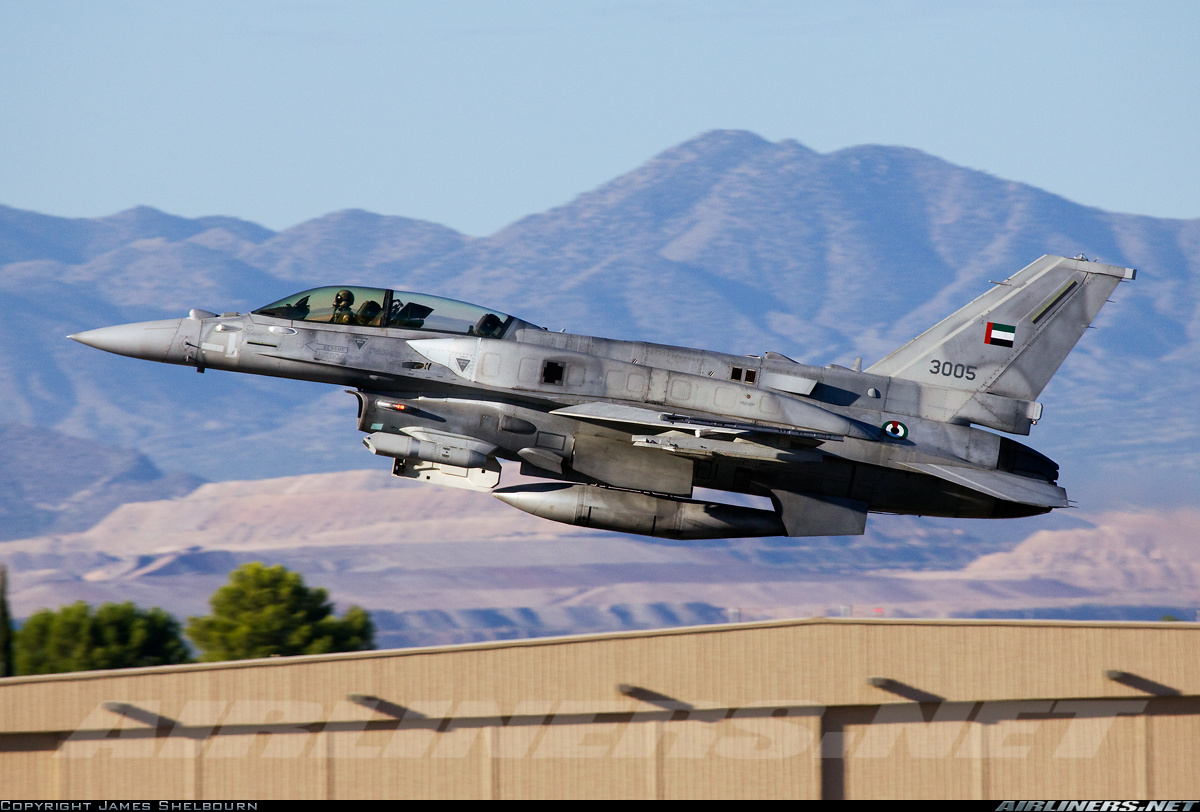
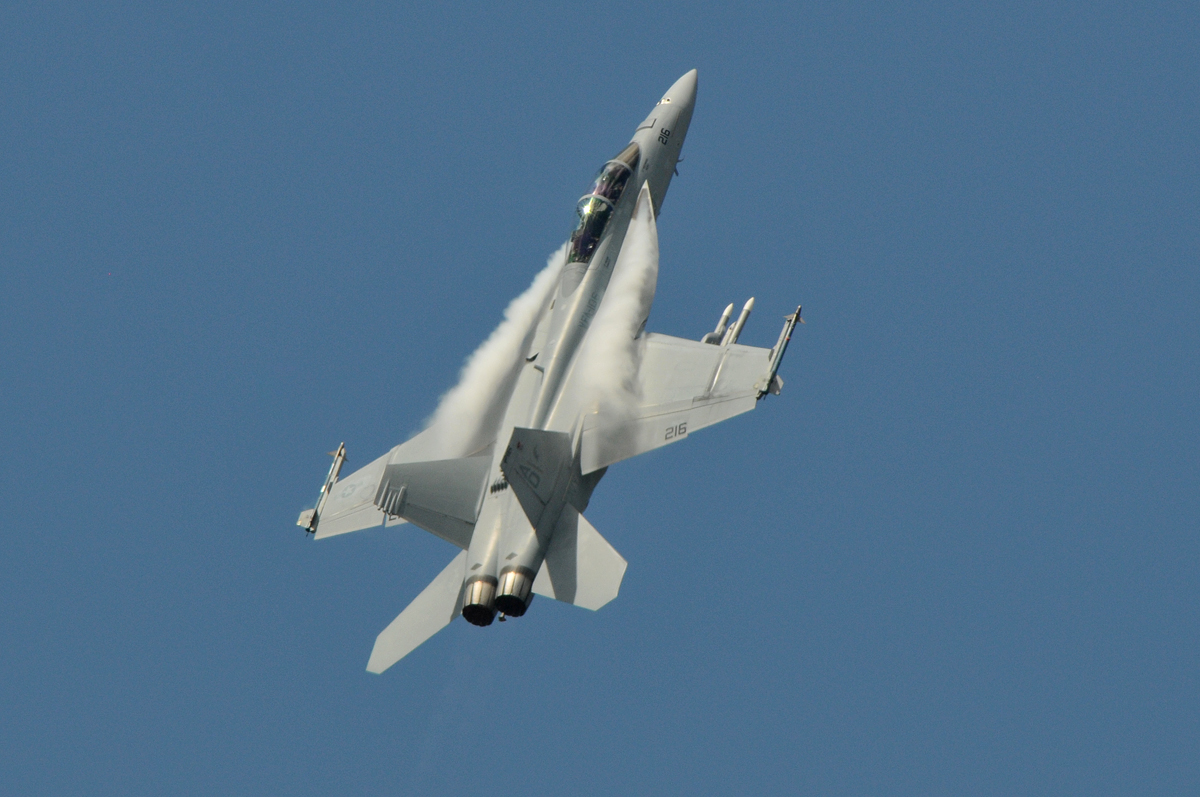

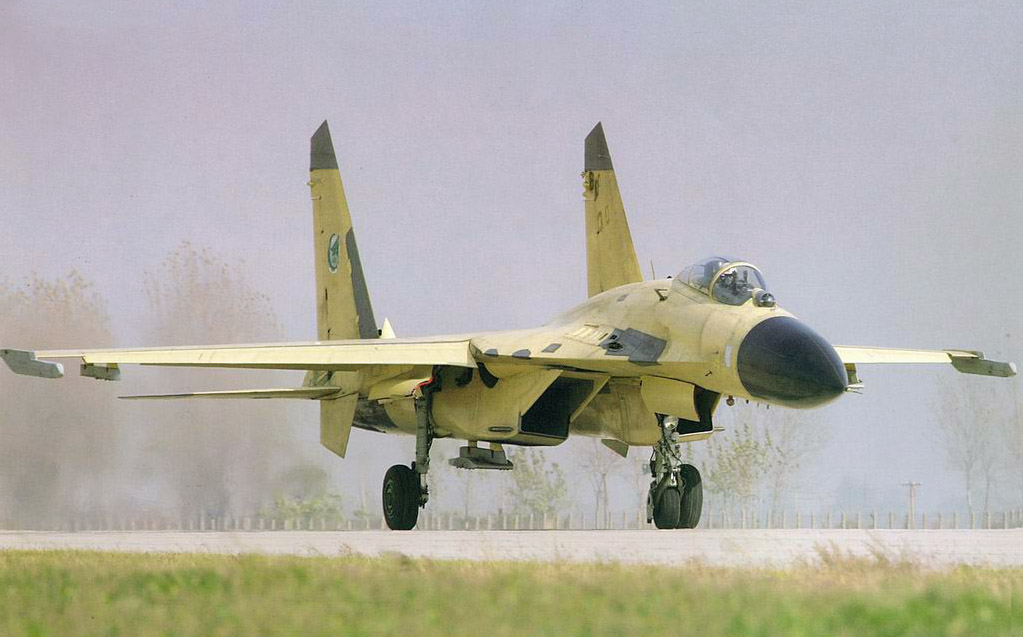


 Russia’s latest operational fighter was not in service at the time of our last list – today it very much is and is an impressive machine. The Su-35S were deployed in Syria in 2016 to provide air cover for Russian forces engaged in anti-rebel/ISIL attacks. The Su-35 is even more powerful than the Su-30M series and boasts improved avionics and man-machine interface. More on the Su-35 can be found


