
Created by Lindsay Rumbold.
Many strange and wonderful aviation stories here.


The alternative aviation magazine

As our creaking librarian navigates the dust we take you to the darkest recesses of our archives. Abandon hope (of not getting distracted for an hour).
DANGER: the following article contains links to distracting aviation articles that may seriously affect today’s productivity.

A is for Arsenal VB 10 and Aurora (spyplane) , Antonov An-225 (most powerful planes), An-2 and Airshow review. And AESA (RBE2)

B is for Beyond- visual range combat (top ten fighters) , Worst British Military Aircraft and most Boring planes and (myth of) Bermuda Triangle
C is for Convair Model 49, Cars (relationship with aircraft design)Â Â and conspiracy theoriesÂ

D is for Douglas A2D Skyshark

E is for expensive (ten most expensive aircraft in production) and English Electric Lightning (flying and fighting in)Â

F is for French (10 worst French aircraft), Fashion (versus aircraft camouflage) , Fictional (top ten fictional aircraft) and Fiat G.95 supersonic VSTOL fighter
Thank you for reading Hush-Kit. Our site is absolutely free and we have no advertisements. If you’ve enjoyed an article you can donate here– it doesn’t have to be a large amount, every pound is gratefully received. If you can’t afford to donate anything then don’t worry.
At the moment our contributors do not receive any payment but we’re hoping to reward them for their fascinating stories in the future.


G is for German (best-looking German aircraft)

H is for helicopter (ten coolest cancelled helicopters) and Hawker P.1154

I is for interview, (stealth-guru Bill Sweetman, supercar design genius Peter Stevens and British fighter test pilot Dave Eagles) and Italian Fighters (A history of). And Indian air power.Â

J is for Japanese (best-looking Japanese aircraft) and Jump Jets (the top ten)

K is for Kafka (read his airshow review here)

L is for Lockheed Martin F-35Â and Latin-American aeroplanes (the most attractive ten)Â . oh, and Lyulka AL-21. It’s also for lies (10 lies about aircraft)


M is for Mixmaster (Douglas XB-42) and Mirage (Dassault)

N is for Northrop Grumman LRSB analysis and North American Na-335 ‘F-15’
O is for Outbreak of World War II (Best fighters in service)
P is for Phantom (interview with Royal Navy pilot), Pacifist (guide to warplanes) and Piston-Engined Fighters and the word Plane (is right to use it?)

Q is for QF target drones and QuizÂ
R is for Rafale (versus Typhoon) 
and Recce Fighters
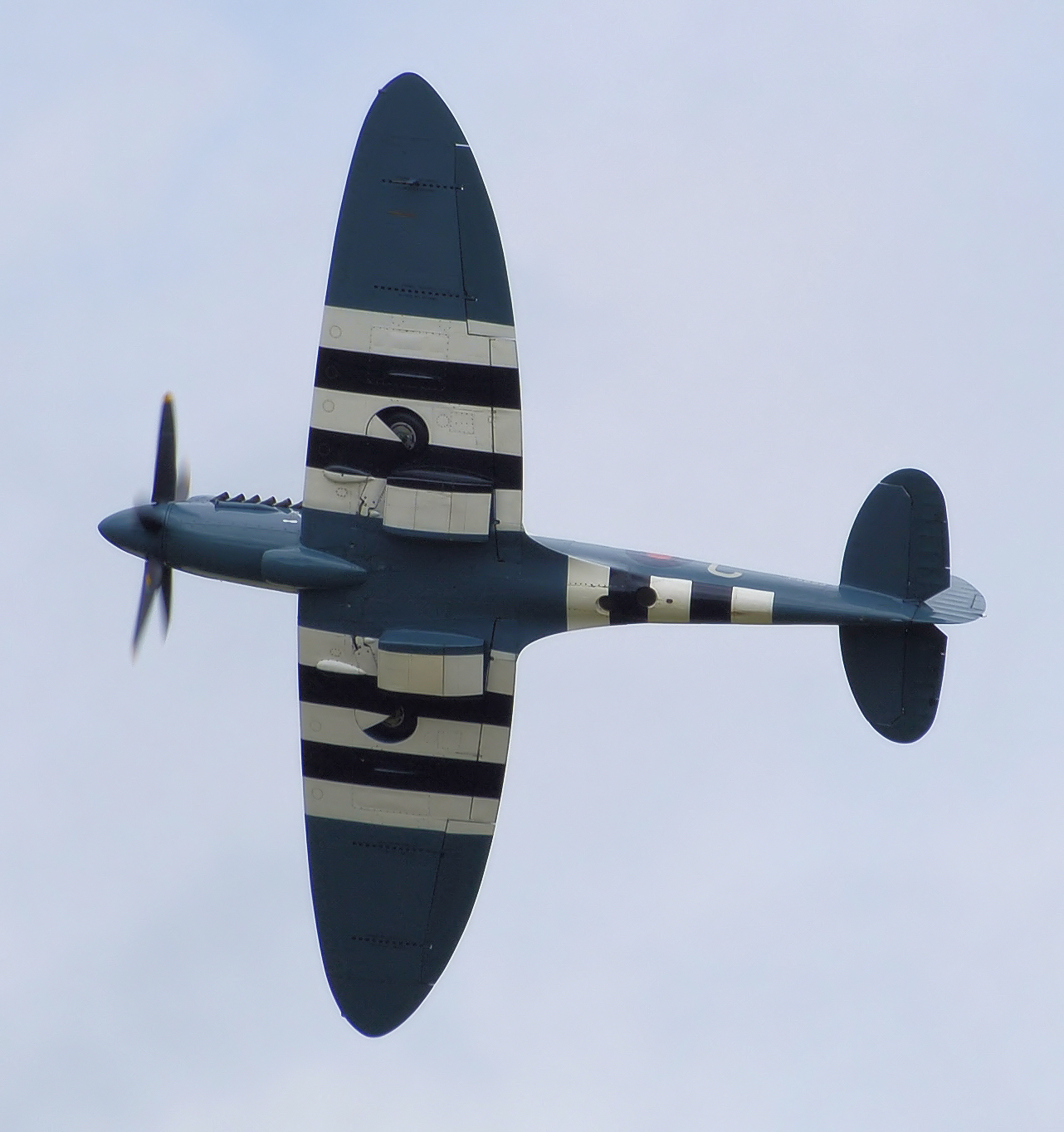
S is for Spitfire, Dismantling the myth 
 ,  Swedish aeroplanes (top ten) and an interview with a Super Sabre pilot and Syria (RAF in). Also for swept forward wings.
T is for Typhoon and Typhoon versus Su-35
U is Undercarriages (ten most whacked-out examples)

V is for Vampire (de Havilland), Valiant B2  and Viggen
W is for Westland Wyvern and worst carrier aircraft
X is for XC-12
 and X-planes (worst)
Y is for Y-shaped tail (The strange story of the Planet Satellite)
Z is for Zero How the A6M won the Battle of Britain

Thank you for reading Hush-Kit. Our site is absolutely free and we have no advertisements. If you’ve enjoyed an article you can donate here. At the moment our contributors do not receive any payment but we’re hoping to reward them for their fascinating stories in the future.

The shoot-down of a Turkish air force RF-4E Phantom II in 2012 highlighted the inherent dangers of the fighter-recce mission. Reconnaissance-fighters have flown some of the most daring aerial missions, often flying alone deep in enemy airspace, relying on speed and guile for survival. A panel of experts was assembled to decide which aircraft would make the selection, in what become one of the most heated debates in this site’s history.
10. Supermarine Swift
Though the Swift lived in the shadow of the more successful Hunter, it was a capable low-level recce fighter. The type lived up to its name and in 1953 earned the world air speed record (it reached 737.7 mph over Libya) , though this was stolen away by the Douglas Skyray a mere eight days later. RAF Swifts were based in West Germany, where in the event of war it would have been expected to run the gamut of the Warsaw Pact’s defences, then the most formidable anywhere. It was one of the first service aircraft fitted with an afterburner, following the F-94 Starfire and F6U-1 Pirate. The afterburner was unreliable at high altitude, but this did affect the Swift in the low-level tactical reconnaissance role.

9. Lockheed F-4/5 Lightning
Despite all their success the reconnaissance Lightning will probably best be remembered as the aircraft in which the renowned French author and pilot Antoine de Saint-Exupéry disappeared. His F-5B was missing until 2000 when a diver discovered the wreckage spread over a large area of the Mediterranean. It will probably never be known what caused the aircraft to crash and is a most unfair association for the finest US reconnaissance aircraft of the war.

8. Hawker Hunter FR.10
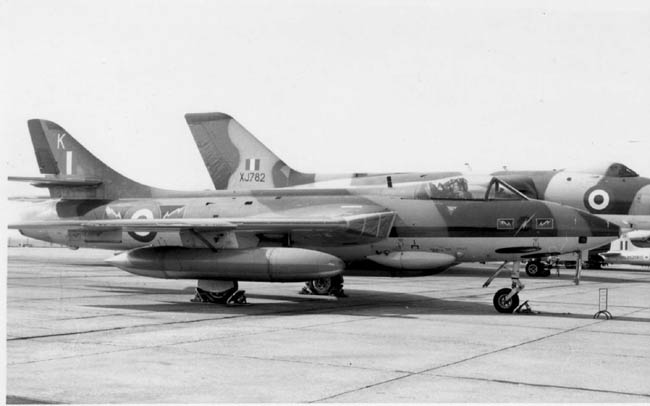
The Hunter FR.10 was an extremely good fighter-reconnaissance aircraft. Its near ‘idiot-proof’ handling characteristics, low-level speed and range made it well-suited to the mission. Apart from the camera fit, the FR.10 differed from fighter Hunters in having additional armour-plating and a voice recorder.
7. Dassault Mirage IIIR
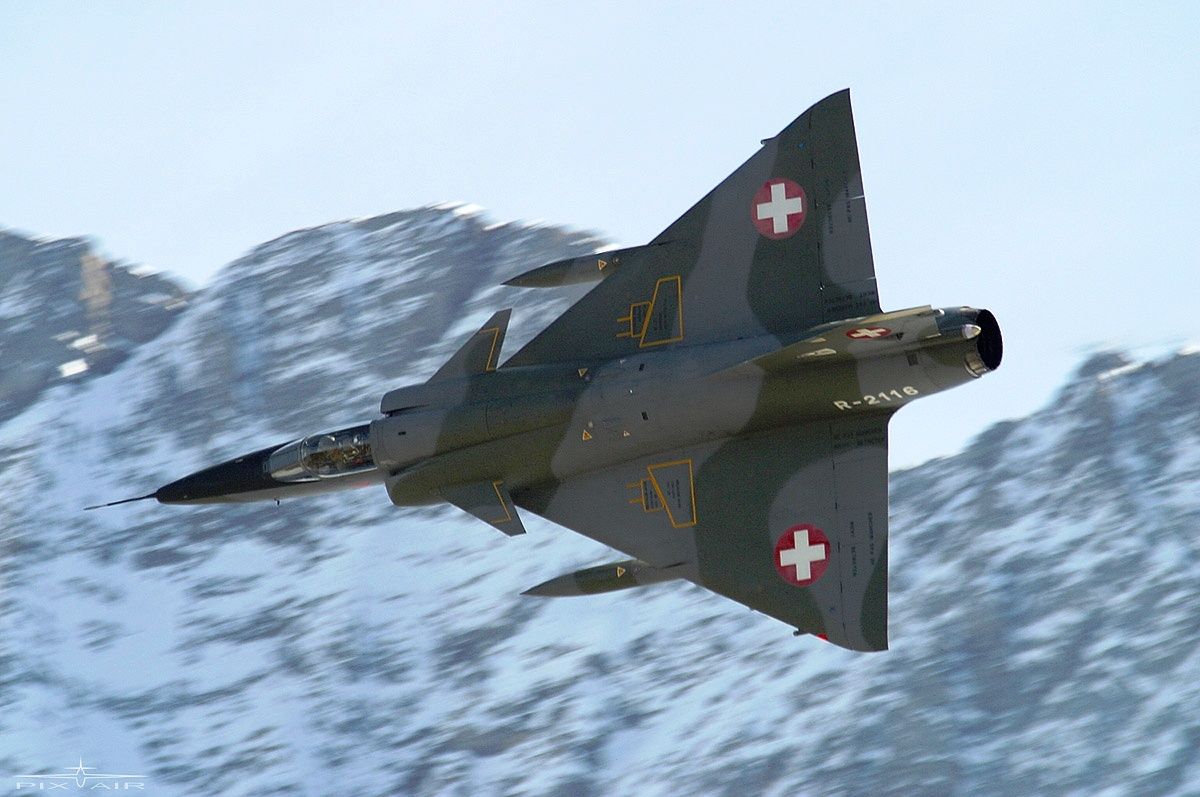
The French Mirage IIIR saw war in the air forces of Pakistan and Israel. The type saw less controversial service with Switzerland, which with 18 aircraft bought, was the largest export customer.
5. Saab AJSH 37 Viggen

The story of the Viggen’s development is similar to that of the Tornado; it started life as a bomber, and was then developed into a fighter and reconnaissance aircraft. The Viggen was extremely well equipped, For the photographic SF version, the radar in the nose was taken out to make room for one SKa 24 57 mm, three SKa 24C 120 mm and two SKa 31 600 mm photographic cameras. IVKa 702 t also carried one Infrared linescan camera. Additional sensor pods could be carried on the fuselage stations.
4. Mikoyan-Gurevich MiG-25R ‘Foxbat-B’
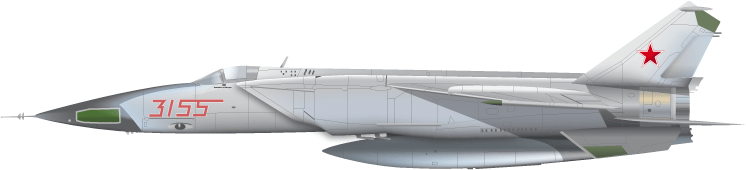
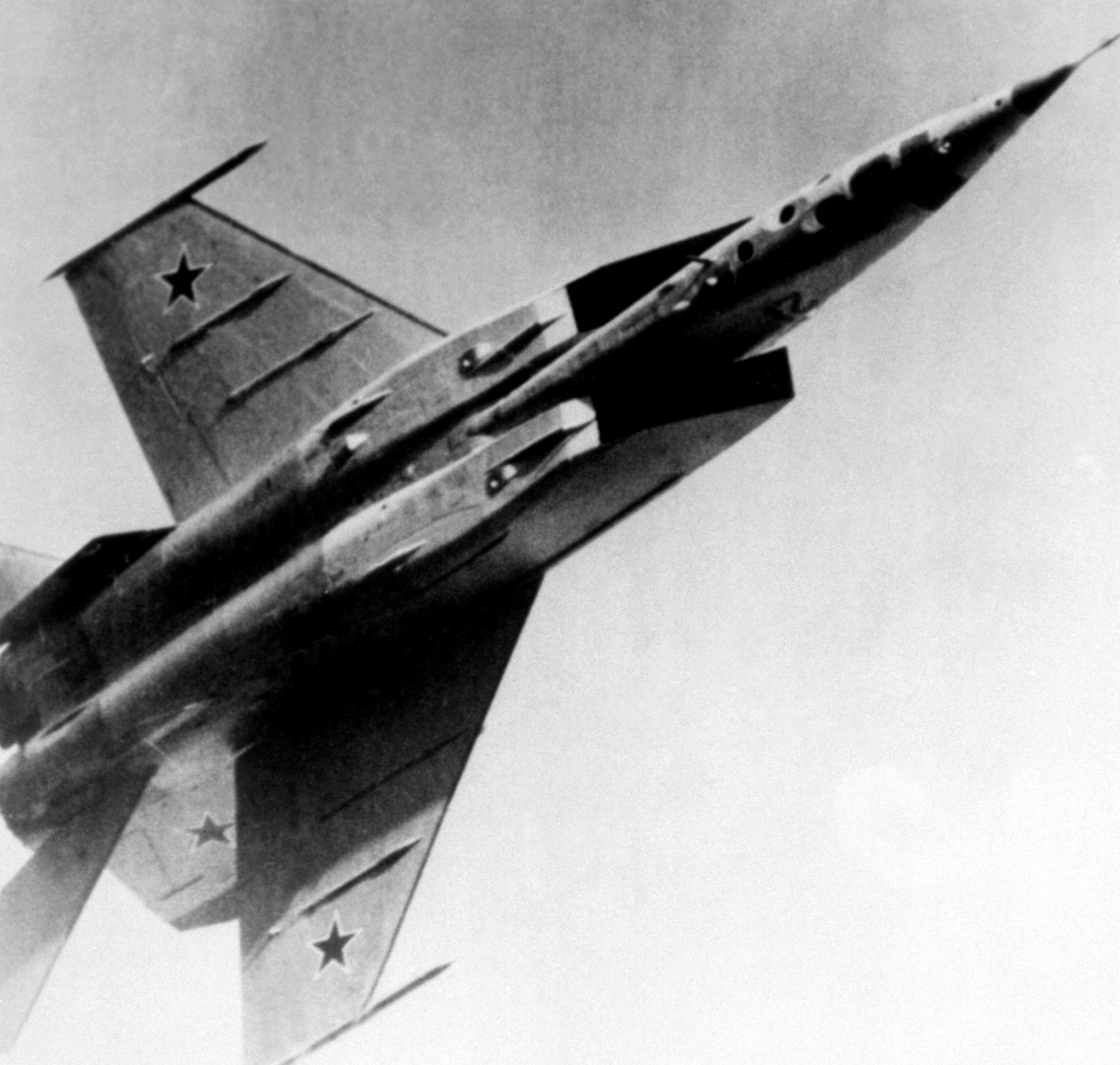
One of the judging panel thought the MiG-25R should not be included as a recce-fighter, because while most of the recce-fighters on this list are modifications of fighters, in the case of the ‘Foxbat’- the recce version was planned from the outset. Strictly speaking, the armed reconnaissance versions of the MiG were recce-bombers, high-speed strike aircraft able to haul an impressive load of eight 500kg bombs — treated with special coatings to resist overheating at Mach 2.8+.
Anyway, we felt that the MiG-25 should be included, as it was also an operational fighter. And in terms of recce-fighters, it is certainly the fastest. What’s more, this Cold War classic remains in front-line service with the Russian Air Force, with the latest upgrade set to keep it at the front line for some years to come.
The USSR sent two MiG-25Rs, and two MiG-25RBs to Egypt in March 1971. They were operated by the Soviet 63rd Independent Air Detachment set up especially for this mission. Det 63 flew over Israeli-held territory in Sinai on reconnaissance missions roughly 20 times.  A MiG-25 was tracked flying over Sinai at Mach 3.2, leading the West to believe that the ‘Foxbat’ had a true tri-sonic capability; it later transpired that this speed was only achievable at the expense of the engines. The normal limiting speed was Mach 2.8, which is still far faster than any other recce-fighter.
The Soviet Union also flew MiG-25RBs over Iran in the 1970s though this was halted when the introduction of the F-14 Tomcat into the IIAF made the mission too risky.
3. Vought RF-8 Crusader
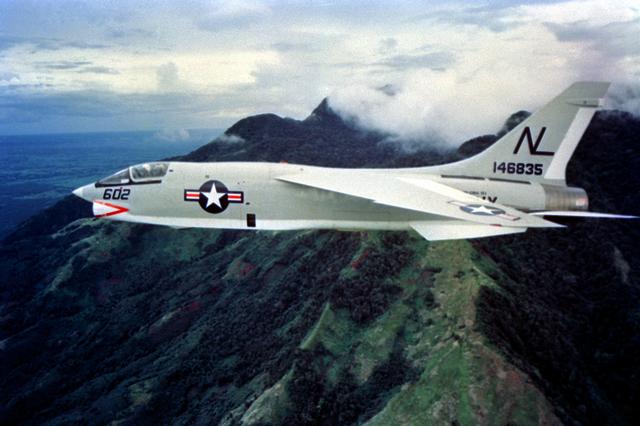
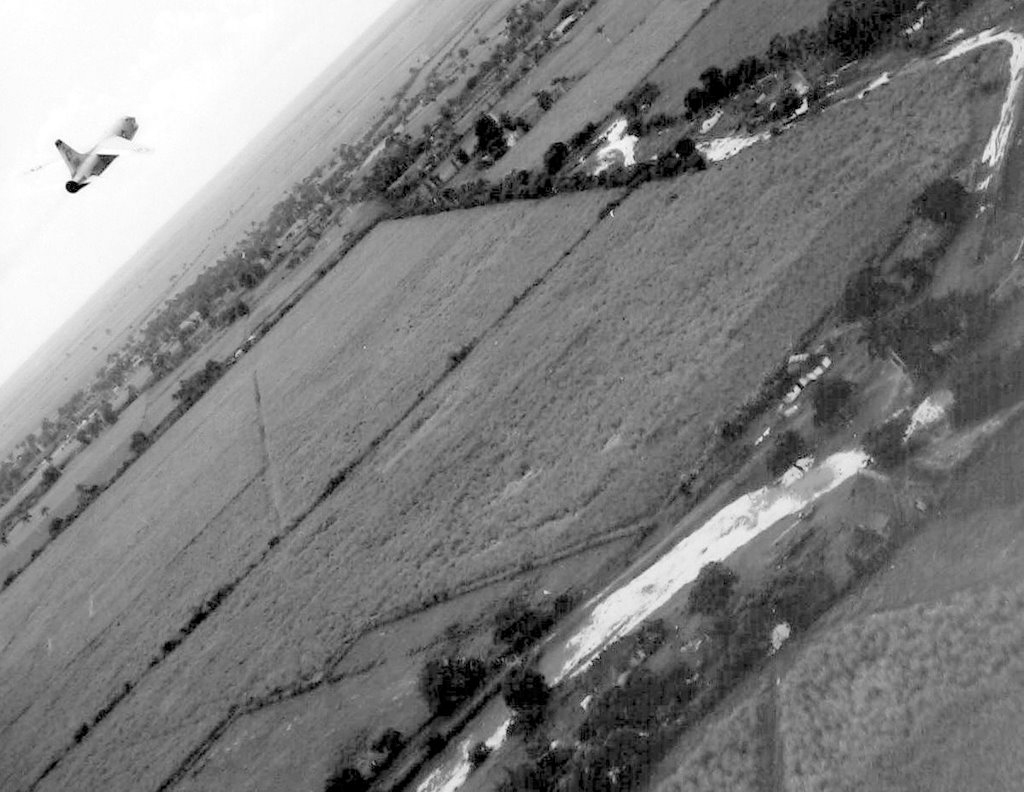
The RF-8 almost started World War 3, or possibly helped avert it. U-2 flights over Cuba in 1962 showed possible signs that the Soviet Union was creating a nuclear missile base. However, the high altitude U-2 photos were not good enough to say this for sure, what was needed was close, low-level photography. To do this over Cuba was dangerous to say the least. The US Navy sent in RF-8 Crusaders in October 1962, flying at extremely low-level at supersonic speeds. The images they brought back proved conclusively what the US feared. No RF-8s were shot down on these daredevil missions.
3. Supermarine Spitfire (recce-fighter variants)
2. McDonnell Douglas RF-4 Phantom II
The fast, tough Phantom is ancient. You wouldn’t think an enormous, smoky fighter with a radar signature the size of a bus would make an ideal recce platform, and to be honest it is reaching the end of it useful life. However, it has performed admirably in this role for several decades. The Phantom is a strong aircraft, with some built-in, battle resistance. This, combined with a high top speed (Mach 2.2) and a two-man crew made the aircraft an effective reconnaissance platform.
The type flew missions in Vietnam and the Arab-Israeli War. Though there only four squadrons of RF-4Cs deployed they lost 72 aircraft in combat, demonstrating the very dangerous nature of the post-strike recce mission that RF-4s performed.
During the late 60s the top secret Project Dark Gene began. CIA and Imperial Iranian Air Force (IIAF), aircraft were sent to probe the Soviet Union’s air defence system and assess its capabilities. In 1973, an IIAF RF-4C manned by an Iranian pilot and US back-seater was intercepted by a Soviet MiG-21, when the Russian fighter failed to destroy its opponent with missiles and guns, it resorted to ramming it. The ramming attack destroyed both aircraft and killed the MiG-21 pilot (posthumously awarded as a Hero of the Soviet Union). The version of the Phantom used in these operations was rumoured to be a nuclear-capable RF-4C with enhanced ELINT systems.

Was the Spitfire over-rated? Find out here. You may also enjoy top WVR and BVR fighters of today, an interview with a Super Hornet pilot and a Pacifist’s Guide to Warplanes. Want something more bizarre? The Top Ten fictional aircraft is a fascinating read, as is The Strange Story of The Planet Satellite. Fashion Versus Aircraft Camo is also a real cracker.Â
Follow my vapour trail on Twitter:Â @Hush_kit
1 .McDonnell RF-101 Voodoo
From Cuba to the Taiwanese straits the RF-101 surveyed the world’s political faultlines with virtual impunity. Fast, long-ranged, but most importantly in the right place (or rather wrong place) at the right time, the Voodoo ensured its place in history.


In his controversial article ‘Dismantling the Spitfire myth’ Matthew Willis asserted that the Spitfire’s role in British history is hugely over-stated. Jon Lake countered by defending its reputation in ‘Spitfire’s Revenge’. Willis clipped his wings, strapped on some cannon and fired back with this. Here is Lake’s response, the fourth part of a fascinating debate.Â
“Since writing my response to Matthew’s attempted demolition of the Spitfire I have been lucky enough to have spent a day with a former Spitfire pilot who flew most marks of that aircraft, and who was part of a Mustang wing being formed for Tiger Force at the end of the War.
He was in no doubt whatsoever as to the relative merits of Spit, Hurricane and Mustang. Over the course of my 31 years working full time in aviation, I’ve met and talked in depth to many wartime pilots – British, American, and German, including aces like ‘Grumpy’ Unwin, Bobby Oxspring, Pete Brothers, Johnny Kent, Johnny Johnson, and even (biggest namedrop so far) a German bloke called Galland. Most of the Spitfire, Hurricane, and Bf 109 pilots I’ve spoken to, wartime and current, acknowledge the Spitfire I and II’s superiority over the Hurricane, and the Bf 109E’s absolute superiority over the Hurricane. The margin between Spitfire and ‘109 is more open to argument.
Rafale versus Typhoon here
I’m also lucky enough to have a history degree, from a good University, with some knowledge of historiography, so I’m unapologetic about dismissing Matthew’s original piece as being revisionist. I would define revisionism as being a departure from the authoritative and generally accepted doctrine, in a way that is partial, and biased, and which attempts to distort history to fit a preconceived notion and to support a particular interest group.
Britain was slow in harnessing its industrial might for aircraft production, but there is no real reason why Fighter Command could not have been ‘Spitfire heavy’ in 1940, and had it been, it would have performed better. In any case, when we’re engaged in ‘what ifs’ then we’ve already started to engage in a degree of stretching historical fact. But without the Spitfire, the RAF would have been buggered, frankly, both during 1940, and more importantly afterwards, when the Hurricane’s lack of development potential and inferiority would have made the war in the air very much more one-sided – especially once the Bf 109F and Fw 190 entered the fray. The Spitfire V was able to hold its own, while the IX dominated. The Hurricane would have been downed in droves. Matthew continues to insist that “the fighter position was marginal in 1940†and that this is “undeniableâ€, and that this “was largely as a result of the Spitfire.†This is simply not true. We never looked likely to run out of aircraft in 1940, but the losses of experienced aircrew was a real problem, and to say that we could have generated more from the FTSs or from ground tours ignores the crucial difference between an experienced expert and a rookie. Matthew whines that: “The Fleet Air Arm, meanwhile, was fighting to keep supply lines in the Mediterranean open with scant resources, while priority was still being given to RAF types.†That’s because the RAF was responsible for the air defence of the UK – a critical role against an existential threat, and the Spitfire was the only available aircraft that was capable of guaranteeing any degree of air advantage over the UK. With so many aircraft necessarily tied down to defend the homeland, the offensive sweeps can be seen as a useful adjunct, rather than some kind of pointless and wasteful self-indulgent project by the Air Marshals. And the day and night operations over occupied Europe complicated the Germans task, and made life difficult for their fighter and bomber crews alike.

Meanwhile, in the Med, I’d venture to suggest that the most vital role was played by the RAF fighters operating from Malta, rather than the FAA. Finally the Mustang: a poor gunnery platform, in which target tracking proved difficult, and an aircraft which had vicious departure characteristics if mishandled when manoeuvring. As a result, the Mustang struggled against a well-flown Fw 190, where a Spitfire IX could cope easily. The post-war SETP evaluation of US fighters placed the Mustang behind the P-47, F6F and F4U. The Mustang came last in rate of climb, stall warning, height loss in the stall, turn performance, stick force per g (manoeuvring stability), agility, heading change time, and air-to-air tracking, and was second last in acceleration, roll performance, and air-to-ground tracking. Just one extract from the report gives a flavour of the Mustang: “The P-51 gave no warning whatsoever of an accelerated stall. At the stall, the aircraft departed with complete loss of control, achieving 270-degree of roll before recovery. Departure was accompanied by violent aileron snatch strong enough to rip the control stick from the hand. In short, the P-51 suffered from a Part I deficiency.â€

Meanwhile the Griffon engined XIV and XVIII were even better, enjoying a better all round capability than the Mustang, Typhoon or Tempest, apart from on take off, where the colossal torque showed only too clearly that the tail surfaces should have been increased just a little more than they were, and that an earlier adoption of contra props would have been transformational. But Matthew’s central point is that the Spitfire’s advantages were not ‘worth’ the extra production man hours that it supposedly tied up. Two points. The first is that I distrust his figures on production times, and wonder whether he is actually comparing like with like (he certainly isn’t when he compares British and US types, since US industrial production was superior in all sorts of way, and there’s little doubt that (say) North American could not have produced Spitfires more quickly than Supermarine or Castle Bromwich). The second is more important, and that is that no alternative aircraft promised to give the degree of superiority required to defend the UK – properly and necessarily the primary role of air power until June 1944.”
You may also enjoy top WVR and BVR fighters of today, an interview with a Super Hornet pilot and a Pacifist’s Guide to Warplanes. Want something more bizarre? The Top Ten fictional aircraft is a fascinating read, as is The Strange Story of The Planet Satellite. Fashion Versus Aircraft Camo is also a real cracker.Â
Follow my vapour trail on Twitter:Â @Hush_kit
Jon Lake

Following the many complaint emails the last time we asked George (a grumpy, and famously incompetent, soundman) to review a top ten, we decided never to ask him again. But then we changed our mind. We left George with a bag of homegrown and some photos of Canadian aircraft. We have told the British embassy in Ottawa to remain on a high-security alert. Over to George..
“Once again Hush-Kit publishes an article so tedious that it is immeasurably improved by my comparing the aircraft in it to animal genitalia.
Oh Canada, a country famed for not having fourteen attractive anythings. Unless you find moderate political beliefs and moose dicks attractive, which I feel I’ve made fairly clear I don’t.
So put down your poutine pots and syrup bottles, and enjoy the fourteen least appalling looking Canadian planes to take to the cold drab skies, eh?“
14. Avro Canada CF-105 Arrow ‘The Doomed Delta’

“The famous white-suited Canuck ‘asphalt whisperers’ who are employed to apologise to any square foot of tarmac that has to bear the weight of a taxiing plane.”
13. Avro Canada VZ-9 Avrocar ‘Unidentified Canadian Object’

“What’s the female equivalent of a phallic symbol?* A gynic symbol? Vulvic?
Whatever it is, this is that and I’m DTF.“
*Note from editor: the word you’re looking for is ‘yonic’.
12. de Havilland Canada DHC-1 Chipmunk

“I think this plane made it into the top 14 just because it’s yellow.”
11. Bombardier Challenger 350 ‘The Cocaine Train’

“If I’m spending my hard earned coke money on a plane from a company called Bombardier, I’d better be able to rain fiery death on my enemies…Â I can’t? Do you know how many Siberian tigers and pearl handled Lugers I could have bought with this money? “
10. Canadian Vickers VedetteÂ

“This looks like the trainers your mother buys you because ‘they’re just as good as Nikes’. No mum, as the other kids made painfully clear, they’re not.”
9. Canadian Vickers Vancouver

“We really scraped the bottom of the barrel looking for attractive Canadian planes, so we stuck some wings on the barrel and voila.”
8. Canadian Vickers Vista

“Endgame in the canoe arms race.”
Was the Spitfire overrated? Full story here. A Lightning pilot’s guide to flying and fighting here. Find out the most effective modern fighter aircraft in within-visual and beyond-visual range combat. The greatest fictional aircraft here. An interview with stealth guru Bill Sweetman here. The fashion of aircraft camo here. Interview with a Super Hornet pilot here. Most importantly, a pacifist’s guide to warplanes here. F-35 expose here.Â
7. Vickers Velos ‘Flight of the Phoenix Cinema’Â
Â

“Isn’t this from that film where a ragtag bunch crash their plane in North London and Jimmy Stewart has to rebuild it out of bay windows and bike sheds?”
6. Vickers Vanessa

“Ah Vanessa. If she just took off her big spectacles she’d be beautiful. Something, something, handling characteristics.”
5. de Havilland Canada DHC-6 Twin Otter ‘Twotter’

“Hey ding dong, just painting the word ‘Viking’ on the side of your business casual aircraft doesn’t make it cool. If you type ‘viking’ into Google the top result is an office supplies company. This is the aeronautical equivalent of a bunch of pens.”
4. Fleet 50 Freighter ‘Catfish‘
“This is the plane version of the ‘Facebook angle’. If my experiences are anything to go by it has racist tattoos on its fuselage.”
3. Canadair CC-106 Yukon

“Oh hello, this is the Canadian Airforce. We’d like a plane please.”
“What kind of plane?”
“A fucking boring one.”
 2. Canadian Car and Foundry FDB 3

“Famed chubby chaser and aircraft designer Arnie Hemplocke (far left) and his two fat muses, Sydney and Paul Fuccbois.”

“I commissioned this artist to do a dick pic for me, but even he couldn’t capture its graceful might and sleek power, so I donated it to the Louvre. It’s the big triptych in the ‘Viande Et Des Legumes a Deux’ wing.“
You may also enjoy top WVR and BVR fighters of today, an interview with a Super Hornet pilot and a Pacifist’s Guide to Warplanes. Want something more bizarre? The Top Ten fictional aircraft is a fascinating read, as is The Strange Story of The Planet Satellite. Fashion Versus Aircraft Camo is also a real cracker.Â
Follow my vapour trail on Twitter:Â @Hush_kit
Dear reader,Â
Sorry, but we have removed this article at the author’s behest. You may however enjoy one of the following articles:
Four military aircraft myths you shouldn’t believe here.
The most potent fighters of World War Two here
The ten most fighters at the outbreak of War here.
Thanks,
Hush-Kit

Europe’s two middle-weight fighter aircraft, the Typhoon and Rafale, have fought tooth and nail for multi-billion Euro sales across the world. Geographically surrounded on four sides by the Eurofighter nations, the frivolous observer may liken the French Rafale to Asterix and his indomitable friends. The reality is that France’s withdrawal from the Future European Fighter Aircraft in the early 1980s resulted in a vast and unnecessary duplication of time, money and effort to produce two very similar aeroplanes. The relatively subtle differences between these two superbly capable aircraft have inspired a great deal of heated debate, often poisoned by pride and nationalism.
 Justin Bronk is a Research Analyst of Military Sciences at the Royal United Services Institute. He recently released a report (which can be read here) on the Typhoon fighter sponsored by Eurofighter (I am keen to mention this to provide a context to any accusations of bias). Despite this, I generally found him an impartial -and particularly well-informed-  judge to evaluate the two types, though this is open to debate. The ‘final word’ in the title is journalese on my part, and I appreciate that this discussion will go on for a long time, probably long after both types have been retired.Â
Design philosophyÂ
The Rafale and Typhoon share common programme roots and as such are fairly similar in design and aerodynamic philosophy. The biggest difference is in the optimisation of the wing aerofoil and camber shapes, as well as the aerodynamically coupled vs uncoupled canards. Aerodynamically coupled/uncoupled canards refer to the interaction between the lift created by the canards and the lift created by the leading edges of the wings. Uncoupled canards -i.e further from the wing- allow greater control authority due to a greater moment from the centre of lift, but cannot be used to improve the high-alpha performance of the wing.
We spoke to a Rafale pilot here.
Essentially Typhoon is aerodynamically designed to maximise manoeuvrability at supersonic speeds and relatively light (i.e. air superiority) load-outs. By contrast, Rafale’s coupled canards and wing shape is optimised for maximum lift generation and ordinance carrying capacity over a wide speed and angle of attack envelope.
Radar
 Radar is a sensitive and highly restricted topic for open source discussion… however, in very broad terms CAPTOR-M which is the current radar on Typhoon is the most advanced and capable mechanically scanned fighter radar in service around the world. It loses out to the new RBE2 AESA radar which has entered service with Armee de l’Air Rafales in terms of low-probability of intercept (stealthy emissions) and multiple simultaneous tracking and search capabilities. In the air to air domain, at longer ranges against a small number of conventional threat aircraft, Typhoon might well have the advantage over even the RBE2 due to its impressive range and resolution. However, against large numbers of targets at different ranges/altitudes and certainly in a ground-scanning role, the Rafale is currently ahead on radar capabilities. Once the long-delayed CAPTOR-E AESA radar is integrated onto Typhoon in the early 2020s, however, Typhoon should have the advantage in radar and greater development potential since its radar aperture is much larger, can fit a greater number of T/R modules for its AESA than Rafale and will have a much wider field of regard. The latter capability will allow Typhoon to take particular advantage of the long-range capabilities of the Meteor missile by continuing to provide guidance to the missile whilst maintaining maximum range from an incoming target.
Read more about Captor-E and RBE2 AESA.

Infra-red search and track sensors
The Typhoon’s PIRATE IRST is far and away the most capable fighter-mounted system in operation anywhere in the world. Its phenomenal sensitivity caused problems during the first decade of service due to the sheer number of false positive returns but now that processing power has caught up enough to allow the sensitivity to be properly exploited for extremely long range detection of fighter sized targets, including stealth targets, it is becoming one of Typhoon’s strongest advantages in the air superiority arena. However, at present, the systems integration allowing the radar and IRST to be tasked together in an optimal fashion is still superior on Rafale. This is a core focus of capability upgrades in the P3E software package for Typhoon.
The Death of European fighters, full story here.
Cockpit functionality: Man-machine interface


 Both aircraft are fairly close in this regard and both are continually being upgraded with new cockpit functionality streamlining to reduce pilot workload. Both present few problems for a pilot transitioning from any ‘teen’ series fighter as their carefree handling mean that they are actually very easy to physically fly, freeing up mental energy for the formidable task of making the most out of the fighting potential of both aircraft. An RAF Typhoon instructor told me last year that ‘one of the biggest difficulties for pilots from a [Tornado] GR.4 or F.3 background in adjusting to Typhoon is how to best manage the awesomeness’.
A Lightning pilot’s guide to flying and fighting here. Find out the most effective modern fighter aircraft in within-visual and beyond-visual range combat. The greatest fictional aircraft here. An interview with stealth guru Bill Sweetman here. The fashion of aircraft camo here. Interview with a Super Hornet pilot here. Most importantly, a pacifist’s guide to warplanes here. F-35 expose here.Â
Costs and reliabilityÂ

Both are twin engine air superiority fighters with extensive multirole capabilities. As such both are fairly expensive to maintain and fly. Operating costs are notoriously difficult to accurately compare given the all sorts of infrastructure, measurement metrics, operating environment and other factors influence even the most objective attempt. Suffice to say that the aircraft are comparable. The Rafale M, as a carrier fighter requiring more maintenance, suffering greater fatigue and saltwater corrosion can safely be assumed to be more expensive than other Rafale or Typhoon variants. Also, the Typhoon’s EJ200 engines are the most reliable military jet engines ever fielded by any air force and their uniquely low maintenance, replacement and bug-fixing requirements help to lower Typhoon’s maintenance costs significantly.
Very amusing review of Eurofighter short film here
ObservabilityÂ

 Low observability is hotly debated and impossible to prove in open source. Both aircraft have some RCS reduction features but both are inherently un-stealthy designs. Of the two, Typhoon makes slightly greater use of RAM and active canard signature management for frontal RCS reduction but this is probably offset in the high-end survivability department by Rafale’s superior SPECTRA electronic warfare system.Â

Performance
 Typhoon is the faster aircraft and has a significantly superior thrust-to-weight ratio which gives it better acceleration at all altitudes. This also allows Typhoon to retain and regain energy faster than Rafale in a horizontal dogfight situation. It also has a significantly higher service ceiling of over 60,000ft which allows it to operate uniquely well alongside the US F-22 Raptors ‘high and fast’ in the air superiority role which is exactly where it was designed to excel. Rafale has a significantly superior load-carrying capability and its manoeuvrability at low speeds and altitudes is also better than Typhoon’s although the margin is slim except where both aircraft are very heavily loaded. In terms of horizontal manoeuvrability, Rafale has the better instantaneous turn rate allowing it to reverse its turns more quickly but Typhoon can sustain higher g’s for longer without bleeding speed. High alpha performance is similar, with both aircraft limited by their air intake placement and lack of thrust vectoring although Typhoon’s intakes can at least ‘gape’ slightly to increase airflow at high Alpha and low speeds. Range is almost identical at around 2000nmi with three drop-tanks in ‘ferry’ configuration but in terms of strike missions, Rafale’s greater payload capacity allows it to carry greater under-wing fuel loads for a given strike payload. The high availability of aerial refuelling in both air force’s standard operating scenarios means the small differences are almost unimportant for overall combat effectiveness.
Thank you for reading Hush-Kit. Our site is absolutely free and we have no advertisements. If you’ve enjoyed an article you can donate here. At the moment our contributors do not receive any payment but we’re hoping to reward them for their fascinating stories in the future.
The Snecma M88 is probably the most significant weakness of the basic Rafale design – the engine is underpowered for the aircraft and the development potential in terms of extra thrust is low. This was one of the primary reasons the French left the Eurofighter consortium since the M88 would never have been able to develop enough power for what would become the Typhoon, but the French insisted that it be used. The EJ200 is not only phenomenally reliable but it also has very significant thrust growth potential (easily 20-30%) according to Eurojet. The problem for Eurojet who make the engine is that it works so well that there is very little business for them in terms of upgrades or replacement engines. Existing customers are perfectly happy with the EJ200 as it is.
Test pilot reveals Typhoon’s top supercruise speed here
Weaponry

In terms of weaponry, the Rafale is severely limited at long ranges in the air-to-air arena by having to rely entirely on the MICA which is not credible beyond 20km due to being essentially a short range missile adapted for short-mid range work. Until the Meteor enters frontline service with Rafale operators, the aircraft lacks long range air-to-air punch, certainly compared to the proven and effective AIM-120C AMRAAM load out on Typhoon. Even the ASRAAM used as the short range IR missile by the RAF has greater kinetic energy and manoeuvrability performance at ranges beyond 20km than the MICA. The MICA is a fast and manoeuvrable missile at short ranges with lock-on after launch capabilities. However, it is neither as manoeuvrable as the IRIS-T used by German, Italian and Spanish Typhoon operators, nor as fast and lethal at medium ranges as the ASRAAM. Finally on missiles, whilst the Meteor will give the Rafale much needed long range firepower, the Rafale will only be able to utilise a one-way datalink with the missile when it has been fired, not the two way datalink which Typhoon and Gripen are equipped with – which allows for much more accurate and reliable guidance during very long range engagements whilst the missile is in semi-active mode. In terms of the gun, both aircraft have highly effective aerial guns with heavy explosive shells and good instant firing rates. Rafale has the edge of fire-weight per second but slightly shorter effective range than the BK27 on Typhoon. In terms of air-to-ground munitions, Rafale is currently the clear winner with the full French air-to-ground arsenal integrated including the nuclear strike role. The Hammer AASM has proven highly effective and accurate, with good range for a bomb adaptor kit although it is expensive compared to alternatives. Typhoon in its current tranche 2 and 3 P1Eb configuration as deployed in Cyprus for operations against ISIL can only deliver the excellent Paveway IV laser and gps-guided bomb, guided by a Litening III targeting pod. However, once the Brimstone anti-armour missile and Storm Shadow cruise missiles are added in 2018 and 2016 respectively, Typhoon will be comparable to Rafale in terms of its conventional strike suite. In recce terms, Rafale currently has the edge as the world-beating DB110 RAPTOR pod is only integrated on Tornado and although there are plans to fit it to Typhoon which would close the gap, these are not concrete as yet.
Sensor fusion
 Rafale’s sensor fusion in terms of a common picture presented to the pilot is currently slightly ahead of Typhoon although the P3E upgrade being trialled at BAE Warton will close this gap to a significant extent. It is important to remember, however, that both fighters use a post-sensor picture fusing approach to streamline information for the pilot, rather than the much more complex approach being pursued by the F-35 development programme where all sensors feed into a single process which analyses, contrasts and compares them before presenting a single, processed picture to the pilot. Post sensor fusion is where the different sensors are not linked per se but their outputs are combined by an information management system to streamline the displayed data for the pilot.
Defensive systemsÂ

 The defensive aids suites on both jets comprise of passive (tracking and intelligence gathering) capabilities and active (jamming and other EW) capabilities. In passive terms, Typhoon actually has the edge following the UK-led DASS upgrade programme. However, in terms of active jamming and EW capabilities, the SPECTRA system proved itself in Libya and in multiple NATO exercises and being capable of protecting the Rafale from fairly high-end threats which normally would require complex suppression packages or stealth aircraft to bypass. The French (and Swedes) have long excelled in electronic warfare and jamming and the Typhoon has a way to go yet if it is to catch up with the other two Eurocanards in this area. It is also worth remembering, however, that part of the Rafale’s appearance of being able to go places Typhoon cannot due to SPECTRA is explained by the higher (and admirable) tolerance for risk in the Armee de l’Air compared to the RAF or any other European air forces. Even if Typhoon had SPECTRA, the RAF would not have sent it into Libya before the US air defence suppression had been carried out.
Leaked Swiss evaluation report
The leaked evaluation report from the Swiss fighter contest of 2008/09 put the Rafale ahead of Typhoon in almost every category tested, what do you make of this?Â
 Any fighter evaluation depends on the details of the assessment criteria for each exercise and without seeing those, I cannot possibly speculate. However, one thing which is worth noting is that the Typhoon sent to Switzerland was apparently a tranche 1 and one with problems. Someone involved in the competition told me in person that ‘the Swiss told us [Typhoon] that technically speaking we had brought the finest jet of the bunch, but it was as if we had brought a Mercedes sports car where the door wouldn’t shut properly and the air conditioning was broken’.
Conclusion
In conclusions: both are fantastic fighter aircraft of which European defence communities should be proud. Rafale currently has the edge over Typhoon in terms of ground-attack versatility, radar modernisation and manoeuvrability at high-loads. Equally, Typhoon has the edge in the air-superiority role due to its superior high altitude performance and thrust to weight ratio, as well as long-range armament. The advantages in maturity for Rafale are more to do with failures in the Eurofighter consortium to invest and coordinate upgrades in the way that Dassault and the French government have managed, than any inherent limitation in the Typhoon itself. Indeed, with its larger radar aperture, power generation capabilities, engine power and growth potential Typhoon has more development potential than Rafale – if it can survive in production long enough. A hypothetical air force which operated both types, whilst that would be expensive, would enjoy phenomenal complementary capabilities and would arguably be stronger than a similarly sized force comprised only of one type.
Justin Bronk is a Research Analyst at the Military Sciences at Royal United Services Institute.
Follow him on Twitter: @Justin_Br0nk
Follow my vapour trail on Twitter:Â @Hush_kit
Thank you for reading Hush-Kit. Our site is absolutely free and we have no advertisements. If you’ve enjoyed an article you can donate here. At the moment our contributors do not receive any payment but we’re hoping to reward them for their fascinating stories in the future.
You may also enjoy top WVR and BVR fighters of today, an interview with a Super Hornet pilot and a Pacifist’s Guide to Warplanes. Want something more bizarre? The Top Ten fictional aircraft is a fascinating read, as is The Strange Story of The Planet Satellite. Fashion Versus Aircraft Camo is also a real cracker.Â
Follow my vapour trail on Twitter:Â @Hush_kit
“If you have any interest in aviation, you’ll be surprised, entertained and fascinated by Hush-Kit – the world’s best aviation blogâ€. Rowland White, author of the best-selling ‘Vulcan 607’
From the cocaine, blood and flying scarves of World War One dogfighting to the dark arts of modern air combat, here is an enthralling ode to these brutally exciting killing machines.
The Hush-Kit Book of Warplanes is a beautifully designed, highly visual, collection of the best articles from the fascinating world of military aviation –hand-picked from the highly acclaimed Hush-kit online magazine (and mixed with a heavy punch of new exclusive material). It is packed with a feast of material, ranging from interviews with fighter pilots (including the English Electric Lightning, stealthy F-35B and Mach 3 MiG-25 ‘Foxbat’), to wicked satire, expert historical analysis, top 10s and all manner of things aeronautical, from the site described as:
“the thinking-man’s Top Gear… but for planes”.
The solid well-researched information about aeroplanes is brilliantly combined with an irreverent attitude and real insight into the dangerous romantic world of combat aircraft.
FEATURING


Former Republican presidential nominee John McCain said that British military bombing into Syria would amount to “some token aircraft” that would not make “a significant differenceâ€. Justin Bronk from the Royal United Services Institute considers the point and asks whether the RAF’s cited ‘unique capabilities’ should have contributed to the decision to extend the war.Â
The necessity or otherwise of RAF strikes in Syria needs to be judged on the political arguments, not operational ones. Whilst the RAF has extremely experienced aircrew and Tornado GR.4 and Reaper in particular are also well suited for the mission, there are simply too few to make a military difference to the realities on the ground. Increasing the RAF striking power from 8 Tornados and 10 Reapers to 10 Tornados, 6 Typhoons and the 10 Reapers represents a significantly greater burden on the RAF without making much of an impact on the total coalition firepower available to hit ISIL. Brimstone is a uniquely accurate and low-collateral missile for destroying vehicles but its tactical utility will not change the strategic calculus in Syria. The same is true for Paveway IV in its class as a PGM. The most useful contribution that the RAF makes to the coalition efforts over Syria is in ISR – with E-3D, Sentinel R.1, Reaper and Airseeker (UK Rivet Joint) all having been providing ISR over Syria long before the vote to authorise strikes. The vote, therefore, only made a small difference to the RAF’s critical contribution of ISR to ops over Syria by allowing Tornado to operate over Syria with the wide area surveillance DB110 RAPTOR pod which remains the finest tactical reconnaissance fast jet capability in the world. In summary – RAF strikes in Syria are welcome but are only politically, not operationally, game-changing.

In terms of the claim of zero civilian casualties from RAF strikes against ISIL so far – it is impossible to verify for certain but the claim does stand up to fairly detailed scrutiny. This has a great deal to do with RAF target selection since the vast majority of RAF strikes against ISIL have been against armed vehicles, heavy weapons positions and snipers engaged in firefights with friendly forces. These typically have a much lower collateral damage risk factor than strikes against targets such as training camps, IED factories and command centres which the US has been hitting in large numbers and which by nature tend to look like any other buildings from the air, and are also much more often in the middle of densely populated civil areas.
Justin Bronk is a Research Analyst of Military Sciences at Royal United Services Institute.
Follow him on Twitter: @Justin_Br0nk
Follow my vapour trail on Twitter:Â @Hush_kit
You may also enjoy top WVR and BVR fighters of today, an alternate history of the TSR.2, an interview with a Super Hornet pilot and a Pacifist’s Guide to Warplanes. Want something more bizarre? The Top Ten fictional aircraft is a fascinating read, as is The Strange Story and The Planet Satellite. The Fashion Versus Aircraft Camo is also a real cracker.
Â

The Hush-Kit article charged that the Spitfire was a “war-losing weaponâ€, and that it was “the wrong aircraft at the wrong time.†I would counter that this is largely revisionist nonsense – and although he makes a handful of good points these are things that are discernible only with the benefit of 20:20 hindsight, and there are an awful lot of charges which do not, in my view, hold water.
It said that: “It’s pretty well accepted these days that the Battle of Britain was won by the Hurricane, and there’s no reason to suspect that more Hurricanes wouldn’t have defeated Goering’s armada just as soundly, if not more so.â€
I think he’s wrong on both counts. The Hurricane was undeniably important, and shot down more enemy aircraft than the Spitfire, but that was inevitable, given that there were more of them, often flown by more experienced pilots and squadrons, and that they were often sent against the easier targets – bombers, dive bombers and Bf 110s. And there is little doubt that a Fighter Command exclusively equipped with Spitfires would have done even better.
Mr Willis says that the Spitfire’s narrow-track undercarriage invited accidents. Technically, it did, though in practice, the natural fear of ground looping accidents failed to materialise – perhaps because we were using grass airfields with unlimited runway directions.
Mr Willis says that the Spitfire’s roll rate wasn’t competitive. That’s exaggerated, and fails to account for the fact that its turn rate, turn radius, and rate of onset were class leading, while the Spitfire pilot enjoyed an unrivalled all round view. The Spitfire’s only serious drawbacks were not mentioned by this article– one being the engine’s tendency to cut out under negative g. This is a problem that was easily solved, and which is over-stated by non-pilots. Even if you have fuel injection it’s almost always better to roll inverted and pull hard than to try and push into a steep dive, since you can always sustain more positive g than negative…..

The other Spitfire weakness was its rifle-calibre machine gun armament – but this again was easily solved.
More contentious is the claim that you could have built “two-and-a-half Hurricanes†or “three-and-a-bit Messerschmitt Bf 109sâ€* for one Spitfire. This seems to based on Correlli Barnett, who also managed to claim that there was no heavy electrical engineering industry in the UK despite the fact that we developed the world’s first synchronous national grid in the 1920s and electrified the Southern Railway in the 1930s. The Spitfire airframe undeniably took more production man hours than the fabric, wood and tubular metal Hurricane – and was less simple to repair as a consequence (though factory repairs to the Spitfire were cheaper). In any case, both types were limited by the production time of their engines, armament, etc.
A Lightning pilot’s guide to flying and fighting here. Find out the most effective modern fighter aircraft in within-visual and beyond-visual range combat. The greatest fictional aircraft here. An interview with stealth guru Bill Sweetman here. The fashion of aircraft camo here. Interview with a Super Hornet pilot here. Most importantly, a pacifist’s guide to warplanes here. F-35 expose here.Â
Hurricane of fire
Moreover, Mr Willis avoids the fact that while the Hurricane was more damage tolerant to light damage from machine gun ammunition, it also caught fire much more easily (thanks to all the wood, fabric and dope on the rear half of the aircraft, plus two fuel tanks in the wings), and what would often be minor damage to some parts of a Spitfire would be fatal to the same areas on a Hurricane. One of the top plastic surgeons said that he could tell a Hurricane pilot by the severity and type of burns he suffered. The cockpit area on a Hurricane was not well sealed and the airflow would often ‘torch’ burning fuel at the unfortunate pilot.
What were the best fighters at the outbreak of the war? The surprising answer is here.
It is true that Spitfire production lagged behind Hurricane production for the whole of the Battle of Britain period, but we never ran short of aircraft during the Battle – availability of pilots was the critical shortage in 1940!
The article charges that by the end of the Battle Spitfires were being shot down at a faster rate than Hurricanes. This was perhaps inevitable, given that the Spitfire’s job was to tackle the Bf109s, and it’s certainly true that every Luftwaffe victory was claimed to be a Spitfire – since such a claim had more prestige than shooting down a lowly Hurricane or Defiant. The Messerschmitts were there to defend the bombers, i.e. to shoot down the Hurricanes, and it was the Spitfire’s job to stop them doing that. The Spitfires performance in combat was better than that of the Hurricane, and the Spitfire was at least equal (if not better) than the Bf 109E. The Hurricane was not. Replacing Spitfires with more Hurricanes (as the article would have preferred) would not have succeeded in achieving that.
One distinguished former Battle of Britain pilot has said that by the time the Battle began, the Hurricane was already obsolescent, and others have said that sending young pilots out in Hurricanes was tantamount to murder! That may be a bit much, but there is no doubt that the Hurricane was soon pretty much outclassed in the air-to-air role and had no remaining development potential, whereas the Spitfire V and Spitfire IX were decisive developments that proved capable of dealing with the Bf109G and Fw190. The Hurricane could never have been developed to achieve the same performance. Hardly surprising, since it was, in many respects, little more than a monoplane Hawker Fury.
The Spitfire was much better suited to improvement and development, resulting in the succession of Spitfire variants, which allowed the type to be continuously improved, rapidly incorporating lessons from production and combat experience.
This is why they built more than 23,000 Spitfires, which remained viable throughout the war, and afterwards, while the Hurricane effectively left active service as a fighter in 1943, remaining in service only in the ground attack role – in which it was outshone by other types. They built about 14,000 Hurricanes as a consequence.
We come to the crux of Willis’ argument with his statement that: “the priority that was placed on Spitfire production in 1940 (as well as Hurricanes, to be fair) pulled effort from other services, effectively hamstringing the Fleet Air Arm for years and preventing the development of newer designs.â€
This sort of stuff always seems to come from someone with a Navy connection. The Fleet Air Arm suffered because it was viewed as being a sideshow – a diversion from the main effort of defending the UK and later of carrying the war to the German homeland. In retrospect, this was probably an entirely sensible prioritisation. But the poor state of the FAA had little to do with the Spitfire.
The over-rated Mustang
Finally, Willis claims that it would have made more sense to switch British production to the Mustang, which he seems to have unqualified regard for.
While it’s true that (once given the Merlin engine) the Mustang did have the legs to take it to Berlin it was actually a remarkably poor air-to-air fighter, ill-suited to fighter-versus-fighter combat. I would draw attention to the excellent work done by the Society of Experimental Test Pilots in their evaluation of the major wartime US fighter types by modern test pilots. The Mustang proved to be a poor gunnery platform, and an aircraft prone to departure when manoeuvred hard. It was rated behind the F6F, P-47 and F4U.
Jon Lake has written many books including, Tornado: the Multi-Role Combat Aircraft and The Battle of Britain.Â
“In the second paragraph: change ‘for that amount of effort you could have two-and-a-half Hurricanes or three-and-a-bit Messerschmitt Bf 109s’ to ‘for that amount of effort you could have one-and-a-half Hurricanes or three-and-a-bit Messerschmitt Bf 109s’ (bold just to emphasise the change, shouldn’t be bold in the published version)
In the fifth paragraph: change ‘Who knows what might have been achieved with three aircraft produced for every Spitfire?’ to ‘Who knows what might have been achieved with two or three aircraft produced for every Spitfire?’ (as above re bold).
I’ve developed the arguments a fair bit since the original piece was posted, but it wouldn’t be fair to go chopping and changing it now. I stand by everything I wrote apart from the bits above that need correcting.”
You may also enjoy top WVR and BVR fighters of today, an alternate history of the TSR.2, an interview with a Super Hornet pilot and a Pacifist’s Guide to Warplanes. Want something more bizarre? The Top Ten fictional aircraft is a fascinating read, as is the The Strange Story and The Planet Satellite. The Fashion Versus Aircraft Camo is also a real cracker.


