10 warplanes that definitely shouldn’t have carried nuclear weapons, but did

BOOM BOOM BOOM

In researching this article, I spoke to crews of B-52s, B-47s and Vulcans and even chatted on a train with a nuclear scientist. The scientist was more alarmed by the risks of an accidentally dropped nuke than were the Air Force people, so make of that what you will.

WARNING: Do not read this article if you are alarmed by accounts of nuclear accidents

“Broken Arrow is a code phrase that refers to an accidental event that involves nuclear weapons, warheads or components”

Vietnam War Patch USAF Motto TO ERR IS HUMAN TO FORGIVE IS ...

A honeybee typically dies after stinging because its barbed stinger gets lodged in the skin of its opponent. When the honeybee tries to fly away, it ruptures its abdomen and internal organs, killing it. Not to be outdone, humans developed a form of self-defence that could potentially kill all humans and make entire regions or even the whole planet uninhabitable. So far, so spicy, but not spicy enough.

Newly Declassified Film Dramatized 'Nightmare Situation' of Nuclear Bombing  Run in 1960 to Train U.S. Pilots — Paleofuture
Threads: Film's traffic warden found after plea by documentary makers - BBC  News

To make this enterprise even more exciting, nukes were carried by utterly inappropriate aircraft with deeply concerning crash rates. With 32known Broken Arrow incidents, each with the risk of accidental detonation (see below), contamination or theft of nuclear devices, the apocalypse almost came to town riding a flaming clown car. Here are 10 of those clown cars.

10. Boeing B-47 Stratojet

I asked former B-47 pilot Colonel G. Alan Dugard (Retired) what B-47 pilots were most afraid of
“
Loss of an outboard engine on take off. This caused a number of take-off accidents. Two at my home base in New Hampshire and others at other locations. It was discovered that the pilots’ reaction to this was to use aileron movement to correct the loss of direction control. Photos later discovered the problem was exacerbated by the use of aileron and resulted in a situation called “Roll due to Yaw”. Correction of only rudder would correct the roll.”

Then, there were the cataclysmic structural problems. 58 B-47s were lost in only two years, 27 in 1958 alone. Over its lifetime, 203 B-47s were lost in crashes, resulting in 464 deaths. Across 3,725,585 flying hours, 288 aircraft were involved in Class A mishaps. Which, as abysmal as it sounds, is pretty much the gold standard for safety for a first-generation jet aircraft. Unfortunately, a big chunk of the ten per cent of the fleet that did meet fiery ends carried nukes. On 10 March 1956, one just disappeared in the Med. It wasn’t carrying a bomb, but was carrying ‘nuclear capsules’. A nuclear capsule is a small, sealed container holding a radioactive material, which can be dangerous if handled improperly (like being dropped into the sea in a bomber, for example).

Around five months later, on 27 July 1956, a B-47 slid off the runway during a touch-and-go landing and smashed into an igloo full of nuclear weapons.

Losing a nuke in the sea is one thing, but in 1958, a USAF B-47 dropped a nuclear weapon on South Carolina. It started 25 minutes after takeoff. Captain Bruce Kulka, was ordered to the bomb bay area after the captain of the aircraft, Captain Earl Koehler, noticed a fault light indicating that the bomb harness locking pin had not engaged. As Navigator and Bombrdier, Kulka was sent into the bomb bay to insert a locking pin into the bomb shackle to prevent accidental release. The bomb bay and its access were so confined that the Navigator had to take off his parachute. After climbing onto the bomb while trying to locate the right place to put the pin, he accidentally released it. This left him and the bomb on the sheet metal bomb bay doors, which opened almost immediately after. Although the bomb dropped, the Navigator somehow found his way back into the cockpit. The bomb hit the ground, and its conventional high explosives detonated, damaging buildings and killing six people. The Air Force was sued by the victims, who received US$54,000 (600,000 in 2025 dollars). The lead-up to what became known as the 1958 Mars Bluff tragedy inspired the penultimate scene in Dr Stranglove.

Hush-Kit Aviation Newsletter is a reader-supported publication. To receive new posts and support my work, consider becoming a free or paid subscriber.

During a night practice exercise in 1958, an F-86 fighter collided with a B-47 carrying a 7,600-pound (3,400 kg) Mark 15 nuclear bomb. Fearing a crash, the B-47 crew jettisoned the bomb off the coast of Tybee Island, Georgia. The B-47 recovered back to base. After unsuccessful searches, the weapon was declared lost. Later investigations found freakishly high radiation levels in the Wassaw Sound bay area.

https://substack-post-media.s3.amazonaws.com/public/images/3d18fe17-1d12-471b-92d6-e4270672e622_480x339.jpeg (480×339)

9: Boeing B-52 Stratofortress

Operation Chrome Dome (1961 to 1968) was akin to a man protecting his garden from his neighbour by walking around with a rucksack full of TNT, smoking a cigar, 24 hours a day, drunk, and hoping nothing went wrong. Except instead of a man with a sack of TNT, it involved actual B-52s loaded with thermonuclear bombs on continuous airborne alert. The United States Air Force maintained up to 12 nuclear-armed bombers airborne 24 hours a day. In a move that almost anyone could have predicted, it went horribly. It took a mere five Broken Arrow events to kill the operation.

Budgie: The Little Helicopter

On October 15, 1959 Sarah Ferguson, former wife of disgraced British Prince Andrew and author of Budgy the Helicopter, was born. Ukrainian nationalist Stepan Bandera was murdered in Munich by Soviet KGB agent Bogdan Stashinsky with a hydrogen cyanide gas gun shot into Bandera’s face. Meanwhile..

This article continues here

A Crew Chief’s guide to looking after the U-2 spyplane

Pampering the ‘Dragon Lady’

U-2 & pilot-suit.

“On 9/11, I told the Chief of the Guards that if my guys were not allowed in when they came, not only would they have to answer to the President of the United States, but I will personally come over there and shit down his neck…”

Retired SMSgt TJ NIZNIK was a U-2 Crew Chief

Everything about the U-2 is unique. The U-2 was designed for a very specific mission, and the designer of the U-2, Kelly Johnson, once said, and I paraphrase, “If you want this aircraft to go high, I cannot design it to military specification”. The U-2 is known to save weight. For instance, there are very limited access panels. The requirement of having 2-3 threads of a screw protruding past the nut plate was reduced to being flush with the nut plate. Every pound of weight saved is a foot higher in altitude, and altitude is survivability. There are no self-sealing fuel cells on this jet. The U-2 is a wet wing, meaning the entire wing, from the wing tip to the fuselage, is all fuel. No single point refueling for this jet, nope it’s all over the wing refueling. There are 6-8 Crew Chiefs assigned to the aircraft, which is very unlike the rest of the Air Force, where 2-3 are typical.

“The biggest difference between the U-2 and A-10 pilots is that one thought their shit didn’t stink, and the other group knew their shit didn’t stink.”

The U-2 is a groundcrew nightmare. This is the only aircraft in my career where there is a file system of manufactured blueprints on hand because the tech data may only say remove and replace item X. Well, in any other military standard aircraft the tech data will be step-by-step how to remove and reinstall a part, with pictures and part numbers for consumable items. Not this jet.

The tech data will tell you what to do, but to find out the list of consumables, the ‘angle to the dangle’ of each fitting to be installed, etc, you will have to pull the blueprint and take all of the references from that. Now, I left the program in 2002, and they have been diligently working on changing the tech data to become more to standards. Another unique item is that this is the last taildragger in the inventory. With a bicycle landing gear and outboard wing pogo to prop up the wing during ground movement, this aircraft cannot turn on a dime.

TJ NIZNIK (on left)

It needs space, and some pilots misjudge their turn and get stuck on a taxiway, only to be rescued by a bunch of Crew Chiefs who will push back the jet and manually realign him. To fix a hydraulic leak in the engine bay, the jet has to be placed on a fuselage dolly, the tail section is removed, the engine is removed, and then one can tighten the fitting. Then it’s a 23-36 hour job to reinspect the entire inside and have Quality Assurance Inspections performed after you just inspected it before you can begin reinstalling everything. This is a time-consuming jet. However, every effort to eliminate this jet from the inventory has met in disaster because no other platform can do what this aircraft can.

undefined

Read the rest of this enthralling U-2 article here.

Hawg Tamer: I kept the A-10 in fighting order

Hanging with the BRRTTTT Pack

The A-10 Thunderbolt II is a giant flying rotary cannon, wrapped in armor and looking for trouble. Former USAF Staff Sergeant TJ NIZNIK cared for this ugly death machine at the height of its potency. Here, he reveals all about the A-10’s needs, the danger of ‘Hawg Bites’, and what he loved and hated about keeping the A-10 alive.

“Only a Crew Chief will know the harshness, sadness and feelings when their jet fails to return home. Even worse is when the aircrew died. Thousands of thoughts rush through our minds like, ‘did I do this or that correctly’, ‘what did I miss?’ Some may even be blamed for the mishap, and that is very hard to recover from.”

The A-10 is famously robust. Was there anything unusual about the design or construction from a Crew Chief’s perspective?

Oh yes, the A-10 was designed with maintenance personnel in mind. Large access panels have smaller access panels. The design of separating the engines on pylons off the fuselage increased survivability, which means engines were interchangeable. Every hydraulic part has a primary and a secondary system. This is the double in triple redundancy of system power. Of course, twice the systems also mean twice the tubing, fittings, reservoirs, and accumulators. The third part of the triple redundancy is the cable and pulley system known as manual reversion. Large access panels help make maintenance easy by using high-torque Allen-head fasteners. The smaller access panels within are usually for inspection or servicing aircraft systems. The aircraft is tall, much larger than most people realize. One can walk under 70 percent of the jet without having to duck their heads. This leads to most of us have, Hawg Bites. Everyone has a scar on their head from hitting the corner of a weapons pylon or a protruding antenna. I would say that, as far as maintaining a tactical aircraft, the A-10 is the most friendly.

A-10 crew chief apprentice course

Did the A-10 require a lot of looking after? What were the common maintenance fixes it needed?

This is a great question. I worked on this aircraft all over from 1986 when I joined, and up to the time I retired in 2011. The hot, muggy weather of England AFB, Louisiana to the cold and damp RAF Alconbury (sorry guys but it’s true and you know it!), to the hot dry heat of Nellis AFB, Nevady to the very frozen Eielson AFB, Alaska, to my final assignment here at Moody AFB, Georgia. Each location had specific maintenance requirements that were unique to the location. For instance, at England AFB, hydroplaning was a factor, so the aircraft tires had an average 2/32 minimum depth to prevent the condition. Whereas, in Eielson AFB, we disassemble each landing gear and install new o-rings and packings each fall. This is needed because of the frozen temperatures that routine got down to -45 degree F, the older internal packings would roll and collapse the gear. Nobody likes a flat landing strut. The most common fixes were tyre changes, tightening and replacing screws, radio and comm/nav faults, and the never-ending hydraulic leak.

A-10 crew chief apprentice course

Most systems go until failure and consistently fail at the worst possible time. We do have time changes based upon the number of hours interval (every 100 flying hours) or a calendar interval (every 30 days). Major systems like engines, gun or actuators will have a much longer period between scheduled changes. We usually have more unscheduled failures that occur before the actual period ends, except for the gun system. That is extremely reliable.

Hush-Kit Aviation Newsletter is a reader-supported publication. To receive new posts and support my work, consider becoming a free or paid subscriber.Subscribed

How many hours of maintenance per flight hour did it need? What was most time-consuming?

Day shift usually had about 1.5 hours between flights to get it inspected, rearmed and ready for aircrew to show. Nights, however, had a much longer inspection that would take anywhere between 1-2 hours. This really depends upon whether or not the plane flew or not since the last preflight. Considering that everything went well between the mechanics, weapons and specialists and refueling, I’d say 3-4 hours per jet. If there were discrepancies, we’d work up to 12 hours and if not completed, we’d call in the day shift crew chief and specialist to complete the work to get it ready to fly for the next day. This is the best part of the swing shift. Swings were never routine and always different, especially when you have a fleet of 12-18 jets to get ready. The most time-consuming events were the operational checks. At times a 30-minute part replacement drove the aircraft to be jacked off the ground, landing gears swung up and down several times and every hydraulic system operated under power.

What do you love most about the A-10?

For the first aircraft in my career versus say an F-4, I’d say the A-10 was by far the easiest plane to work on. I spent a lot of time with my arms raised over my head, though, because it’s so big and roomy. Of course, the best thing about the A-10 is the..

You can read the rest of this thrilling A-10 article here.

F-35 versus Gripen E: A deep deep dive

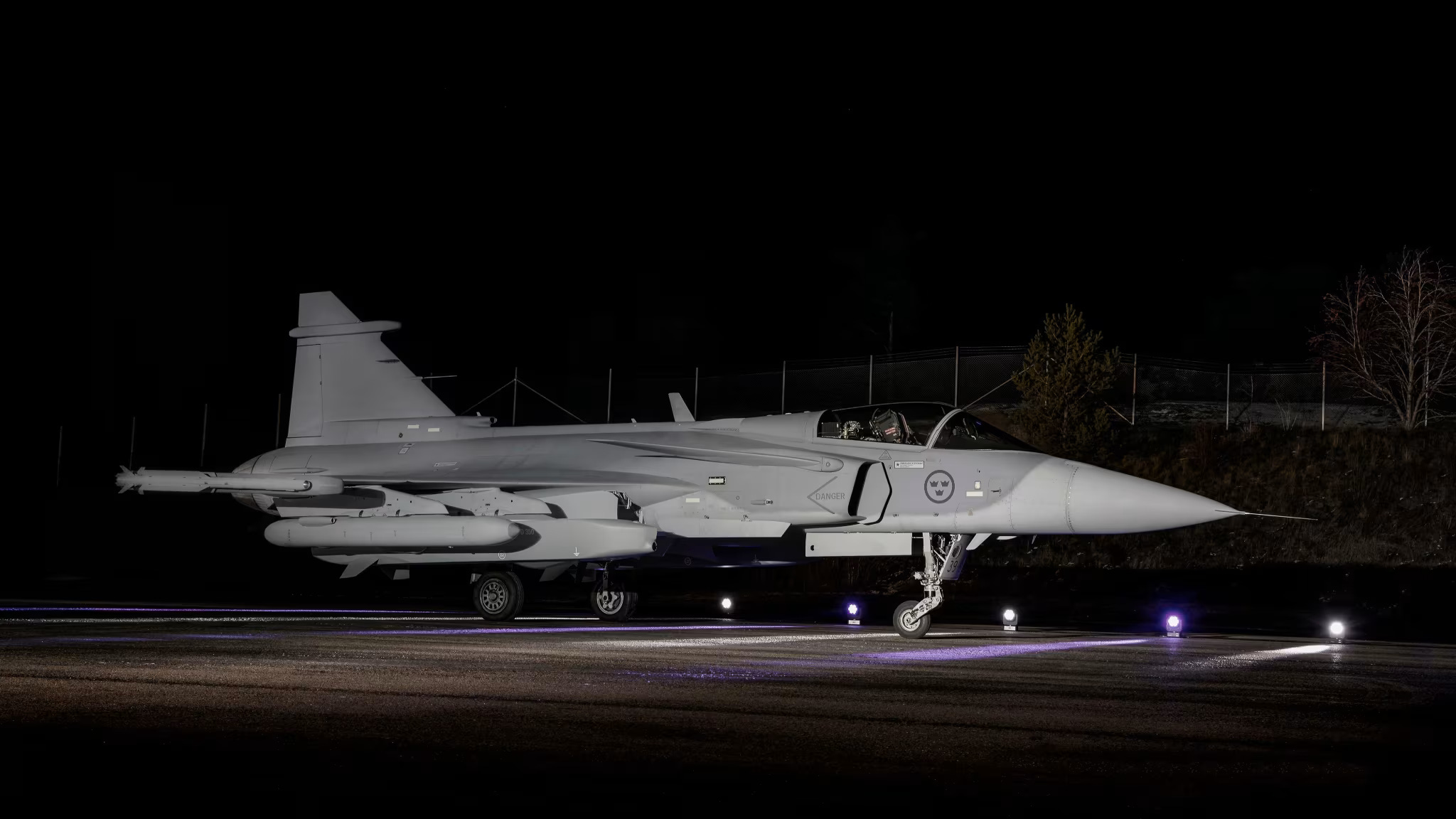
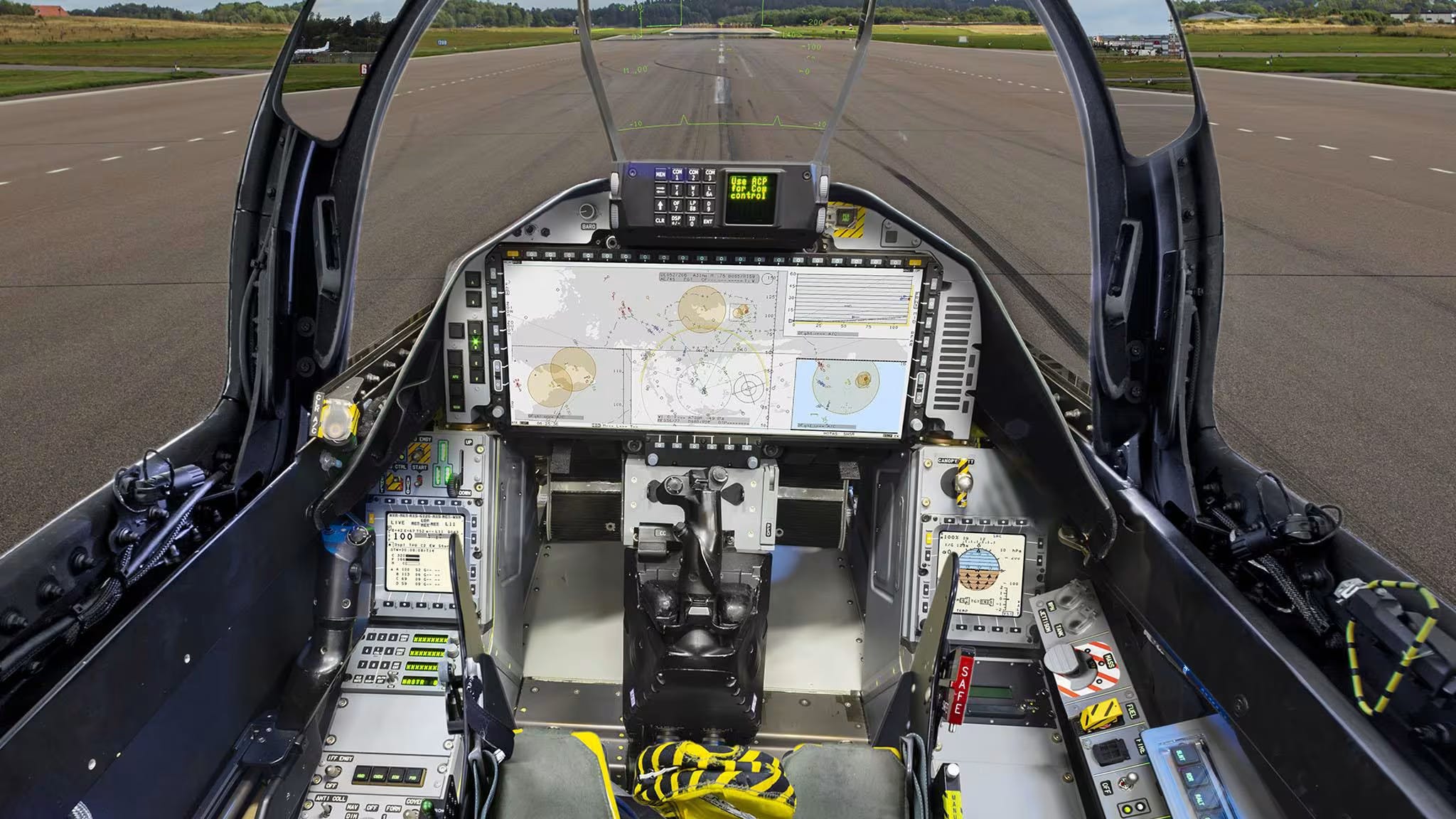
Unlikely as it is, the main competitor of the F-35 is the Saab Gripen-E. These two fighter types, are as different as they could get, one akin to a bulky people carrier, the other a stripped-down scrambler. The unlikely arch-rivals faced off in pitches for the Netherlands, Switzerland, and the Nordic countries, were proposed to Canada, and competed in the Czech Republic. We go even deeper into the unheimlich wizardry of Sweden’s new fighter with Jussi Halmetoja and find out how it compares to the F-35. This ain’t for the faint-hearted; it’s a detailed snoop into the world of the things that really count: exotic datalinks, sizzling electronic warfare and the vital need for technological sovereignty. Pour yourself a glass of wine and get comfortable; this is over 10,000 words long and reveals all you need to know about the F-35 versus the Gripen E.

“As a result, now that stealthy target is not so stealthy anymore. Now I can see you, and that means that you’re in trouble!”

Andy Tuma met Saab’s Jussi Halmetoja for an insightful tour of the magic of the Gripen E’s engineering and tactical systems, something that can be easily overlooked, and learned of the areas in which it matches, or even exceeds, the F-35’s capabilities.

“Hello. I’m Jussi Halmetoja, and I now work for Saab as an operational advisor for the Air Domain. I’ve had over 2,300 hours in the cockpit. Before joining Saab, I was a frontline squadron pilot on both Viggen and Gripen systems and a Weapons Instructor on the squadron. I was also on the operational test job. After that, I was also involved in some developmental and experimental flight testing with the Gripen C, and also when we started working with the Czech Republic and Hungary as the first export nations.

After my flying career, I’ve had staff positions at the Meteor missile programme office in the UK MOD and then at the Swedish procurement agency FMV as the head of the air-to-air missile capabilities. I was also the requirements manager for the Gripen E.

Over the years, I’ve had the privilege to fly in and with pretty much every Western fighter that you see in service today. My role today is to bring this experience into the Saab fighter domain business, where I get involved in system requirements and programme development. But I also do a lot of marketing and sales support across the whole Gripen programme domain.”

The F-35 pitches several key areas as gamechangers compared to the previous generation of fighter jets*. Let’s start with the advanced sensor fusion. Lockheed Martin boasts of the F-35’s autonomous fused sensors management, what they call ‘Active Sensor Management’. This refers to the way the aircraft itself manages, steers and tasks the various on-board sensors not just to correlate tracks from different sensors passively but to actively build the most accurate and reliable tactical picture by managing all sensors. Can Gripen E can do this?

“The mission to reliably detect, track and verify real objects in a complex battlespace using a lot of sensor input from multiple sources is one of the biggest challenges for fighter platforms today. To create full situational awareness, it demands fully fused data. This is a matter of life or death for any pilot.

Credit: Tibboh

At Saab, we’ve been working with this complex data fusion challenge or technology across our domains for probably at least 50 years, if not more. It is one of our core capabilities. We’ve realized long ago the necessity to implement sensor fusion throughout the entire command and control networks – not only on a singular aircraft, but also the entire networks such as aircraft, the early warning radars, other sensors. This development in the early sense of sensor fusion dates back to the Draken era in Sweden. It was, in fact, pioneered here in the 1980s, where we already deployed integrated, high-rate datalink systems on many platforms. And it’s fair to say that we’ve gathered a lot of experience over those decades, always prioritizing the mission the best way possible for the pilots.

In the Gripen E, the pilot is now assisted by a new, task-based high-level command structure. The sensors automatically steer and tune parameters to optimize their performance.

That task is done in a very similar way you mentioned that the F-35 allegedly does. No more frantic “switchology” and lists of complex routines for the pilot in the cockpit. That’s gone long ago now.

We’ve developed evolved automation – we even use aspects of things like AI and machine learning-based technology to help predict outcomes of events throughout the mission and offer the pilot advanced decision support to make the right actions at the right time in every moment. For example, how to launch a weapon and still maintain survivability against an enemy, complete situational awareness for when and how to act and when and how not to.

The ultimate point of Sensor Fusion, to sum it up, is to maintain a constant low workload for the pilots so they can entirely focus on the fight and the mission. And if you can’t do that, you’ve failed your pilots and your capability. This is a concept we call human-machine collaboration (Saab’s term).

Kraftwerk | LA Phil

This is what you need to fight and survive in today’s and tomorrow’s complex battle spaces against multiple threats.

You mentioned the active management or tasking of the sensors similarly to the way that the F-35 claims. So how does that work in more detail? Does it mean that, for example, on the tactical situation display, the pilot merely increases or decreases the range of the range circle, and he doesn’t have to set up the radar range or so forth manually anymore? Is it all of this done seamlessly in the background?

You can read the rest of this article here (we’re moving some of our articles to Substack to combat plagiarism issues).

Analysis of China’s new double-delta stealth warplane

Video of a new Chinese aircraft of novel configuration has caused a stir. We ask Jim Smith, former British aircraft technical liaison to Washington, his thoughts.

The size is consistent with a multi-role aircraft with potential for strategic air defence and strike roles. The configuration is clearly aimed at low signature, particularly the absence of a tailfin, and the use of B-2-like split ailerons for roll, yaw, and (possibly) airbrake functions. The hint of VSTOL (elsewhere) is utterly unlikely, given the absence of nozzles, the impact on internal volume, and the probability of major suckdown issues on landing. The three intake configuration is interesting and novel. There are two clear intakes below wing, with rear nozzles exhausting over the upper surface at the rear of the wing. Then there is the upper fuselage intake.

The cutaway model seen in some images appears to feature some sort of turbine engine, and the aircraft does appear to have a third central nozzle, so this does appear to be a 3rd engine of some sort. It is far from clear, however, whether the model is closely representative of the flying aircraft. The same model appears to suggest long internal weapons bays outside of the intakes. The very long-chord of the wing in this area would provide adequate volume for this, but the central and forward fuselage would appear to offer more space, perhaps for air to surface or other weapons. What could be the mission? The size suggests a design with significant fuel and payload, potential for supersonic cruise, and potentially all-aspect reduced signature.

The long weapons bays could be used for long-range (and possibly high-speed) AAMs, and there is potential for carriage of air to surface stores or stand-off weapons, if additional weapons bays are available.

There’s a lot one could do with such an aircraft, particularly in concert with the J-20 fighter. Area Denial of the South China Sea would be an obvious role, as would the strategic air defence of the Chinese mainland. It could also offer a stand-off capability against naval targets. I suggest these strategic roles for the aircraft because it looks more suited to Beyond-Visual-Range combat and strike against difficult targets, than manoeuvring air combat. There are still lots of questions to be addressed, and all of the above is guesswork based on very limited images. The upper intake location is a puzzle, as it looks challenging for use in aggressive manoeuvring flight.

I did wonder if the third engine provides an auxiliary function, such as air for a circulation control system, and perhaps for IR signature reduction. The weight and volume penalty would be significant, however, so propulsion is the most likely option, particularly since the exhaust arrangement looks similar for all three engines

MY FAVOURITE AEROPLANE IN 200 WORDS #31 Saab JAS 39 Gripen by Joanna Sjölander

"My flying experience in Gripen pushed me over the edge forever" Joanna Sjölander
“My flying experience in Gripen pushed me over the edge forever” Joanna Sjölander

I’ve always appreciated machines with plentiful horsepower.

I’ve sighed longingly upon seeing power measured in numbers. Power displayed in courageous designs. I have dreamt about Lamborghinis and Koenigseggs…

…though I usually get more excited about things I can actually get my hands on. So a whole new playground of the mind opened up, when I realised that these objects of desire did not have to be on four wheels: nothing embodied all of these traits better than Gripen.

Image

The more I learned about how it, the more I fell in love. And the more I got involved in its story and shaping its future, the more devoted I was.

My flying experience in Gripen pushed me over the edge forever.

You have no idea how smart and how efficient the design teams at Saab are in their very creative work. As a part of an engineering body, they are constantly calculating and testing the boundaries. In a humble workshop, they sweat away, because they have to. Because there is always limited time, limited resources and limited leverage. But working with limitations is something the Swedes excel at. The result is a handsome beast, with an efficiency that is envied by all. But only a lucky few get to truly enjoy it.

Joanna Sjölander, a dedicated Gripen fan and once in a lifetime Gripen pilot

Coming soon to Hush-Kit, Joanna describes her fantastic Gripen flight in detail.

If you enjoyed this, you may get a thrill from this love letter to Swedish aeroplanes or this Viggen tribute.

joanna2

Find out about the latest Hush-Kit articles on Twitter: : @Hush_kit


EUROFIGHTER TYPHOON BOON! THE LUFTWAFFE TAKE ON THE F-22 RAPTOR AT RED FLAG

Eurofighter GmbH, producer of the Typhoon fighter, is beginning to emerge from a period of serious self-reflection. Recent sales campaigns have ended in bitter defeat. Eurofighter has watched big prized contracts being dished out to all of it rivals. It lost in Switzerland to the Swedes, in Japan to the United States and in India to the French. Rafale, Typhoon’s closest rival, had emerged victorious in India, the biggest fighter contest in the world. Future enhancements to Rafale are almost certain to be bank-rolled by India, as well as making sales to additional customer more likely for the French fighter. This was disastrous news as the Rafale is very similar in capability to the Typhoon. Could the shrinking fighter market support two such near rivals?

Added to this gloom was the F-35’s seeming invincibility to cancellation. The F-35 is set to become the first massed-produced stealth fighter, available to all (well, almost all). Many air forces have been envious of the US’ stealth technology since the F-117’s star-turn in the 1991 war with Iraq. As well as the promise of stealth, the F-35 has enormous political backing and Lockheed Martin’s incredible mastery of the black arts of military hardware promotion. Despite the F-35’s dire development problems, customers are still clinging to the notion that the F-35 will be the Model-T of stealth and will make ‘aluminum’ aeroplanes obsolete overnight. However, the F-35’s problems have given Eurofighter an extended time window in which large sales have been possible, but these opportunities have been repeatedly squandered. To many observers it was looking like Typhoon was a dead duck, that would fail to achieve any more significant export sales.

 Typhoon boon?

After several years of misery for Eurofighter, the last week has brought a little bit of sunshine. The most conspicuous piece of good news was from the Luftwaffe regarding Typhoon’s performance over in Alaska. A detachment of 8 German Typhoons from JG74 were deployed to Red Flag 2012 in Eielson AFB in June. During the exercise they took part in basic fighter manoeuvres (BFM) against the F-22. Now before I go any further, we all know the usual disclaimer: without details, and in particular without rules of engagement specifics, not much can be inferred from BFM anecdotes. But…the following exciting titbits did emerge-

  • According to the Col. Andreas Pfeiffer, commander of JG74 “Typhoon is a superior dogfighter” to the F-22 in within visual range combat.
  • Typhoon can out-climb the F-22
  • Typhoon can out-accelerate the F-22

These are all very interesting claims. The latter point reminds me of a conversation I had with a Eurofighter representative a few years ago. I asked him if Typhoon could out-climb the F-22. He replied it could. Two days later he withdrew this comment.

The confident statements by Pfieffer are significant for two reasons:

  1. The F-22 is the aircraft to beat

Of course the Raptor decimated the Typhoons at Beyond Visual Range, a domain where the F-22 is still peerless. But, the Raptor is also one of the very best close-in dogfighters, thanks partly to thrust vector control (TVC). Performing well against the F-22, even if just in the Within Visual Range domain is still a notable achievement. On the subject of TVC, Luftwaffe pilots noted the F-22’s tendency to sink when employing thrust-vectoring. This echoes the experience of the F-15C pilots who flew against India Su-30s in training exercises. The USAF Eagle pilots were quick to identify counter-tactics to the energy depleting TVC moves employed by IAF ‘Flanker’s, though admittedly the F-22 is probably far better at recovering energy than the Su-30.

2.  These were German Typhoons

Luftwaffe Typhoons (for the sake of clarity I will not refer to them as ‘Eurofighters’ as the Luftwaffe generally does) are the worst equipped of the partner nations (the RAF aircraft are the best). To put it simply, if the worst Typhoons can put up a decent fight against the F-22, what could the best Typhoons do?

The defensive systems are not to the same spec as the RAF, lacking several components and featuring a smaller amount of data about potential threats. They do not have an infra-red search and track device, possibly the best way to track a low Radar Cross Section (RCS) target like the F-22.

Importantly they didn’t have the Typhoon’s advanced helmet system. The helmet displays vital information to the pilot and allows weapons to be slewed onto targets very quickly indeed and at extreme angles.

RAF Typhoons took the helmet system to a multi-national exercise in Malaysia last year. The system was deemed to be a strong contributor to the Typhoon’s domination of air combat exercises against F/A-18s, F-16s, MiG-29s and advanced F-15 variants during this training event.

The JG74 aircraft sent to the US were upgraded examples. Changes included an upgrade to the aircraft’s radar software and new radio, mission data and countermeasures software system. Other modifications were classified.

Luftwaffe Typhoons are considered behind the curve in terms of tactics and equipment, especially when compared with RAF aircraft. This success in Red Flag is thus particularly good news. Especially as Germany is keen to offload as many of its older Typhoons to export nations as possible, offering these low-mileage, early Tranche aircraft at competitive rates.

The next piece of good news, is that Eurofighter is waking up to the basics of sales. Shockingly, it emerged that the company put little or no effort into reducing unit costs to potential buyers, instead relying on the weight of high-level governmental support. The obvious example must be India, where the Typhoon bid was supported by extravagant promises and visible efforts by heads of state, but ultimately lost on cost grounds.

Guiseppe Orsi, chairman and chief executive of Finmeccanica (one of Eurofighter’s main partners), acknowledged the lessons learnt in an interview with the Financial Times. He stated:

“We will all be around the table and start from what is the competitive price to win a competition, as we do in the commercial field, then we go back and see what each company has to do in order to get that competitive price.”

The partner companies must work together to achieve this for the greater good of Typhoon sales. Clearly the united ‘front’ of Eurofighter is a smokescreen for large defence contractors viewing their partners as rivals and being unwilling to share sensitive information on costs and margins. Sadly it seems Eurofighter represents a microcosm of the EU itself, its problems analogous to a failing Europe.

However, awareness and public admission of this is a sign that this culture may change.

The aircraft itself is by all accounts excellent, the missing piece to the puzzle of its failure to achieve greater export success may have been found.

If this interests you, support Hush-Kit.net with a donation (buttons above and below). If this goes well we’ll be able to give you much more! Recommended donation £10. Many thanks for helping to keep us impartial and independent.

You may also enjoy A B-52 pilot’s guide to modern fighters, Flying and fighting in the Lightning: a pilot’s guide, Interview with a Super Hornet pilot, Trump’s Air Force Plan, 11 Worst Soviet Aircraft, 10 worst US aircraft, and 10 worst British aircraft. MiG-21s, MC-21s and the overrated Typhoon: In conversation with FlightGlobal’s Stephen Trimble, The F-35 will fail, until the US learns to share, An air force of my own #1, Top 8 Mach 3 fighters