Playing with Fire: Jet-Age Brinkmanship in the 20th Century
The dangerous skies of the Cold War were even more perilous than is often understood, and there were several times Soviet air defences obliterated U.S. warplanes. Now largely forgotten, they reveal the startlingly dangerous nature of Cold War flying. Here are ten, often shocking, times the Soviets Shot Down US warplanes in the Cold War.
The dangerous skies of the Cold War were even more perilous than is often understood, and there were several times Soviet air defences obliterated U.S. warplanes. Now largely forgotten, they reveal the startlingly dangerous nature of Cold War flying. Here are ten, often shocking, times the Soviets Shot Down US warplanes in the Cold War.
10: ‘Turbulent Turtle’
The PB4Y-2 Privateer was a well-trusted U.S. Navy patrol bomber adapted from the B-24 bomber. Used in the Second World War, it later served as a reconnaissance aircraft. Its long range and large airframe made it suitable for surveillance, including maritime patrol and electronic intelligence collection missions.
During the Cold War, Privateers conducted “Ferret†missions to intercept and study enemy radar and communications. Some were modified for nuclear delivery, but most aimed to provoke enemy intercepts and record air defence chatter. These high-risk flights pushed into contested airspace, gathering critical electronic intelligence for U.S. military analysts.
On April 8, 1950, a VP-26 PB4Y-2 Privateer (BuNo 59645, nicknamed “Turbulent Turtle”) was intercepted by Soviet La-11 (though some reports say ‘MiG’) fighters over the Baltic Sea. It was shot down, killing all ten crew (though there were rumours that eight of them were captured and sent to a gulag).
Hush-Kit Aviation Newsletter is a reader-supported publication. To receive new posts and support my work, consider becoming a free or paid subscriber.
The aircraft was reportedly attacked even after crashing. This marked one of the earliest deadly Cold War confrontations between U.S. and Soviet forces. As you would expect with such secretive missions, many of the photos in this article show the aircraft type rather than the specific airframe that was shot down. The crew of “Turbulent Turtle” were probably the U.S. Navy’s first casualties in the secret war with the U.S.S.R.
9: January 28, 1964, Erfurt Sabreliner
On January 28, 1964, a U.S. Air Force T-39 Sabreliner on a routine training flight was shot down by a Soviet MiG-19 near Erfurt, East Germany. The unarmed jet had taken off on this cloudy winter afternoon from Wiesbaden Air Base but reportedly strayed into East German airspace due to navigational error or weather conditions.
Forty-seven minutes after take off, two U.S. air defence radars spotted the T-39 heading toward East Germany at 500 mph (800 km/h). Both stations tried to contact the plane on USAF and international distress frequencies, but got no response—likely due to radio failure. Two MiG-19s were scrambled to intercept. The Soviets engaged, firing and destroying the jet midair.
All three crew members were killed instantly. The incident provoked outrage in the West, with U.S. officials calling it an unjustified attack on an unarmed training flight. The Soviets insisted the plane had violated their airspace and ignored orders to land. Diplomatic protests followed, but tensions remained high throughout the Cold War.
The shootdown exemplified the razor-thin margins of error during Cold War reconnaissance and training missions. Even peacetime flights could trigger deadly encounters in divided skies. The 1964 T-39 incident served as a grim reminder that Cold War boundaries were not just political—they were lethal, and often unforgiving.
8: Barents Sea Shootdown
IMAGE USAF/Public Domain
On July 1, 1960, a U.S. Air Force RB-47H reconnaissance aircraft was shot down by a Soviet MiG-19 over the Barents Sea. Flying in international airspace, the RB-47H was on an electronic intelligence mission when it was attacked, leading to the deaths of four crew members and the capture of two.
The Soviet pilot reportedly jammed the RB-47’s MD-4 fire control system, disabling its tail guns and leaving it defenceless. The two surviving crew members were held in Soviet captivity for over a year before being released in 1961, amid Cold War tension and diplomatic pressure from the United States.
Credit: USAF/Public Domain
The RB-47H, part of America’s strategic reconnaissance fleet, had a long history of high-risk missions along Soviet borders. On April 28, 1965, another RB-47 was attacked by North Korean MiG-17s over the Sea of Japan. Despite sustaining heavy damage and losing three of its six engines, it managed to return to base.
The RB-47 remained in limited use into the Vietnam War, conducting ELINT (electronic intelligence) relay missions. However, the ageing platform was soon replaced by the more advanced RC-135. The last RB-47H was officially retired on December 29, 1967, marking the end of a perilous yet crucial chapter in Cold War aerial espionage.
7: Seminole survival
On October 21, 1970, a U.S. Army RU-8 Seminole reconnaissance aircraft strayed into Soviet airspace over the Armenian SSR. The RU-8, a modified Beechcraft used for electronic surveillance, was conducting an intelligence mission when it reportedly suffered navigational issues, inadvertently crossing the sensitive border during heightened Cold War tensions.
Flying near the Turkish-Soviet frontier, the aircraft entered Soviet territory under unclear circumstances. The incident triggered a rapid Soviet military response. Though intercepted, the RU-8 managed a forced landing without fatalities. Remarkably, all four crew members survived the ordeal and were later rescued and returned safely, avoiding a major international crisis.
Seminole surviva
The loss of the RU-8 highlighted the risks associated with Cold War intelligence-gathering missions along volatile borders. Reconnaissance aircraft, such as the Seminole, were often deployed in ambiguous airspace, relying on outdated navigation systems and flying perilously close to hostile zones to intercept enemy communications and radar signals.
Despite the successful rescue, the incident served as a stark reminder of how easily intelligence missions could escalate into international incidents. Fortunately, in this case, diplomacy prevailed over escalation. The RU-8 crew’s survival and recovery offered a rare, positive ending in the often dangerous world of Cold War aerial espionage operations.
6: Destroyer down!
READ THE REST OF THIS EXCITING ARTICLE ON OUR NEW SITE HERE.
The weight of a Dakota, the rampant good looks (and handling) of a rhino on heat, with more horsepower than Genghis Khan, the Westland Wyvern was a thug. This Fleet Air Arm monster was a strike aircraft for a dying empire wishing to administer a little more pain before it bowed out.
Teddy Petter was a complicated man. He gave the world the Whirlwind fighter, the Canberra, and the Gnat* In January 1960, Petter left the aircraft industry forever to become a holy man. He joined the religious commune of ‘Father Forget’ in Switzerland. Years before this, he had started work on one of the most unholy machines in history, the truly wild Westland Wyvern.
*The intakes were designed by Michal Giedroyc, father of British TV presenter Mel Giedroyc from Mel & Sue fame
8. Where should the engines go?
Though the Wyvern looked sensational, it was obsolescent when it finally entered service in 1953. It had first flown in 1946. Its decade-long development essentially condemned it to relative obscurity. This was not the fault of the intrinsic design, which was basically sound, but because the aircraft had to be redesigned not once, but twice, to accept a different engine when the preferred choice became unavailable. Frankly, it’s remarkable that the Wyvern made it into service at all.
When Teddy Petter designed the aircraft in the mid-forties, the intention was to fit a turboprop engine when one became available. The fact that a turboprop engine had not even been flown at this stage shows just how forward-thinking this was. In the meantime, the Air Ministry suggested using the new Rolls-Royce Eagle piston engine, which would be run for the first time in March 1944. However, before this occurred, the Wyvern, as it existed on paper, was a very different creature. Part of the naval requirement was that the new aircraft should boast an excellent view for landing on a carrier deck. However, with conventional single-engined aircraft at the time, this view was impaired by an enormous aero engine placed directly in front of the pilot. Petter initially decided the best way around this was to remove the view-obscuring engine and put it elsewhere.
His first proposal, influenced by discussions with Commodore (later Rear Admiral and chairman of BOAC) Matthew Slattery, Head of the Naval Aircraft and Production Department, featured two Merlin engines mounted in tandem with a drive shaft to rear-mounted contra-rotating propellers. This configuration was (unsurprisingly perhaps) deemed too complex and too much of a risk in the event of a ‘waved-off’ carrier landing, quite apart from risking a diced pilot in the event of bailing out.
Undeterred, Petter decided the Wyvern should instead place a single Eagle (engine, not bird) behind the pilot and drive the propeller by a shaft a la Bell P-39 Airacobra, allowing a good view over the nose for carrier operations and a configuration Westland already had experience with after building the experimental F.7/30 fighter of 1934, designed by Arthur Davenport, then chief designer at Westland. However, others felt that this configuration was too complex and took matters into their own hands. While Petter was away in London, Harald Penrose, Westland’s chief test pilot (who, as well as being an amateur aircraft and yacht designer, would survive four forced landings whilst flight testing the Wyvern), set about modifying the Wyvern mock-up: he cut a cockpit hole in the fuselage above the wing and raised the top line of the fuselage with curved battens until the same view over the nose could be obtained with the engine in the nose as with the rear-mounted engine. Arthur Davenport, still at Westland but now Petter’s deputy, liked the simplicity of this solution. The design was subsequently approved at a mock-up conference with officials, and the rear-mounted engine was discarded.
Now located in the nose, the engine was a complete departure from previous Rolls-Royce products. The sleeve valve Eagle featured a 24-cylinder H-form layout with two horizontally opposed flat 12-cylinder engines driving two crankshafts geared together to power the airscrew. This was precisely the same layout as the wartime Napier Sabre, but imitation is the sincerest form of flattery, and it seems that Rolls-Royce had realised that Napier were building a better-designed engine than their own Merlin and Griffon. The Eagle delivered a whopping 3500 hp and bid fair to endow the Wyvern with a decent enough performance (notwithstanding the Wyvern’s incredible heft), but sadly for Westland, Rolls-Royce decided the future lay with jets (correctly as it turned out) and the Eagle was abandoned.
“I thought the Wyvern was a beautifully built aircraft, but engine and airframe were both new and this is usually a drawback. Taking over 813 Squadron in December 1954, and wishing to arrive in style, I got a Wyvern from Lee-on-Solent to fly out to Malta to join the ship. This particular one had the very latest cartridge starter, two immense cartridges inserted just behind the main air intake. By the time I was ready to start I was expecting something really exciting. It was a few days before November 5.
When I pressed the starter button, the cartridge gases ignited in the engine compressor and blew the spinner backplate into the front propeller, the whole thing flew to pieces and the odds and sods went into the engine and wrecked it. I got to Malta a week later, by Dakota.†– Commander Mike Crosley DSC,
Fly Navy (Pen & Sword Books)
Hush-Kit Aviation Newsletter is a reader-supported publication. To receive new posts and support my work, consider becoming a free or paid subscriber.
The Wyvern was duly reworked to accept a very promising turboprop engine, the Rolls-Royce Clyde. This engine was lighter than the Eagle but was rated at an impressive 4030 hp, exactly the sort of power the Wyvern needed. Sadly for Westland (again), Rolls-Royce felt the future lay with pure turbojets, not turboprops (incorrectly this time). Hedging their bets somewhat, development of the (ultimately very successful) Dart continued, but the Clyde was abandoned. This left very few options for the Wyvern and Westland alighted on the best of what was left, the Armstrong Siddeley Python. This was not an ideal engine for a carrier fighter and was more challenging to integrate with the airframe. Subsequent testing revealed that the Python did not like the sudden acceleration of a catapult-assisted takeoff and had a tendency to flame out immediately after launch. This very problem led to the most famous Wyvern escape, described further down. It also suffered from a prolonged spool-up time, meaning that speed changes, such as might be needed in a go-around, were far less rapid than desired. These issues were improved over time, but never entirely eradicated and most of the operational accidents of the Wyvern could be ascribed to the unfortunate Python.
As for visibility, Georges Barras of 813 Squadron noted, “..the long nose totally obscured the landing area of the deck, leaving the pilot to find the centre line by keeping in the middle between the mirror landing sight on the left and the island and the island superstructure on the right. It was a bit hit and miss as to which wire, if any, were caught, and there was a high proportion of ‘bolters’ (missed all the wires, go round again.â€
7. Wyvern Tail
The Wyvern is named for a type of dragon with two legs, two wings, which often has a pointed tail. Presumably as a nod to this mythical beast, Petter gave the aircraft a massive….read the rest of the exciting Wyvern story on our Substack here.
Read the rest of the exciting Wyvern story on our Substack here.
“On 9/11, I told the Chief of the Guards that if my guys were not allowed in when they came, not only would they have to answer to the President of the United States, but I will personally come over there and shit down his neck…â€
Retired SMSgt TJ NIZNIK was a U-2 Crew Chief
Everything about the U-2 is unique. The U-2 was designed for a very specific mission, and the designer of the U-2, Kelly Johnson, once said, and I paraphrase, “If you want this aircraft to go high, I cannot design it to military specification”. The U-2 is known to save weight. For instance, there are very limited access panels. The requirement of having 2-3 threads of a screw protruding past the nut plate was reduced to being flush with the nut plate. Every pound of weight saved is a foot higher in altitude, and altitude is survivability. There are no self-sealing fuel cells on this jet. The U-2 is a wet wing, meaning the entire wing, from the wing tip to the fuselage, is all fuel. No single point refueling for this jet, nope it’s all over the wing refueling. There are 6-8 Crew Chiefs assigned to the aircraft, which is very unlike the rest of the Air Force, where 2-3 are typical.
“The biggest difference between the U-2 and A-10 pilots is that one thought their shit didn’t stink, and the other group knew their shit didn’t stink.â€
The U-2 is a groundcrew nightmare. This is the only aircraft in my career where there is a file system of manufactured blueprints on hand because the tech data may only say remove and replace item X. Well, in any other military standard aircraft the tech data will be step-by-step how to remove and reinstall a part, with pictures and part numbers for consumable items. Not this jet.
The tech data will tell you what to do, but to find out the list of consumables, the ‘angle to the dangle’ of each fitting to be installed, etc, you will have to pull the blueprint and take all of the references from that. Now, I left the program in 2002, and they have been diligently working on changing the tech data to become more to standards. Another unique item is that this is the last taildragger in the inventory. With a bicycle landing gear and outboard wing pogo to prop up the wing during ground movement, this aircraft cannot turn on a dime.
TJ NIZNIK (on left)
It needs space, and some pilots misjudge their turn and get stuck on a taxiway, only to be rescued by a bunch of Crew Chiefs who will push back the jet and manually realign him. To fix a hydraulic leak in the engine bay, the jet has to be placed on a fuselage dolly, the tail section is removed, the engine is removed, and then one can tighten the fitting. Then it’s a 23-36 hour job to reinspect the entire inside and have Quality Assurance Inspections performed after you just inspected it before you can begin reinstalling everything. This is a time-consuming jet. However, every effort to eliminate this jet from the inventory has met in disaster because no other platform can do what this aircraft can.
Read the rest of this enthralling U-2 article here.
The A-10 Thunderbolt II is a giant flying rotary cannon, wrapped in armor and looking for trouble. Former USAF Staff Sergeant TJ NIZNIK cared for this ugly death machine at the height of its potency. Here, he reveals all about the A-10’s needs, the danger of ‘Hawg Bites’, and what he loved and hated about keeping the A-10 alive.
“Only a Crew Chief will know the harshness, sadness and feelings when their jet fails to return home. Even worse is when the aircrew died. Thousands of thoughts rush through our minds like, ‘did I do this or that correctly’, ‘what did I miss?’ Some may even be blamed for the mishap, and that is very hard to recover from.â€
The A-10 is famously robust. Was there anything unusual about the design or construction from a Crew Chief’s perspective?
Oh yes, the A-10 was designed with maintenance personnel in mind. Large access panels have smaller access panels. The design of separating the engines on pylons off the fuselage increased survivability, which means engines were interchangeable. Every hydraulic part has a primary and a secondary system. This is the double in triple redundancy of system power. Of course, twice the systems also mean twice the tubing, fittings, reservoirs, and accumulators. The third part of the triple redundancy is the cable and pulley system known as manual reversion. Large access panels help make maintenance easy by using high-torque Allen-head fasteners. The smaller access panels within are usually for inspection or servicing aircraft systems. The aircraft is tall, much larger than most people realize. One can walk under 70 percent of the jet without having to duck their heads. This leads to most of us have, Hawg Bites. Everyone has a scar on their head from hitting the corner of a weapons pylon or a protruding antenna. I would say that, as far as maintaining a tactical aircraft, the A-10 is the most friendly.
Did the A-10 require a lot of looking after? What were the common maintenance fixes it needed?
This is a great question. I worked on this aircraft all over from 1986 when I joined, and up to the time I retired in 2011. The hot, muggy weather of England AFB, Louisiana to the cold and damp RAF Alconbury (sorry guys but it’s true and you know it!), to the hot dry heat of Nellis AFB, Nevady to the very frozen Eielson AFB, Alaska, to my final assignment here at Moody AFB, Georgia. Each location had specific maintenance requirements that were unique to the location. For instance, at England AFB, hydroplaning was a factor, so the aircraft tires had an average 2/32 minimum depth to prevent the condition. Whereas, in Eielson AFB, we disassemble each landing gear and install new o-rings and packings each fall. This is needed because of the frozen temperatures that routine got down to -45 degree F, the older internal packings would roll and collapse the gear. Nobody likes a flat landing strut. The most common fixes were tyre changes, tightening and replacing screws, radio and comm/nav faults, and the never-ending hydraulic leak.
Most systems go until failure and consistently fail at the worst possible time. We do have time changes based upon the number of hours interval (every 100 flying hours) or a calendar interval (every 30 days). Major systems like engines, gun or actuators will have a much longer period between scheduled changes. We usually have more unscheduled failures that occur before the actual period ends, except for the gun system. That is extremely reliable.
Hush-Kit Aviation Newsletter is a reader-supported publication. To receive new posts and support my work, consider becoming a free or paid subscriber.Subscribed
How many hours of maintenance per flight hour did it need? What was most time-consuming?
Day shift usually had about 1.5 hours between flights to get it inspected, rearmed and ready for aircrew to show. Nights, however, had a much longer inspection that would take anywhere between 1-2 hours. This really depends upon whether or not the plane flew or not since the last preflight. Considering that everything went well between the mechanics, weapons and specialists and refueling, I’d say 3-4 hours per jet. If there were discrepancies, we’d work up to 12 hours and if not completed, we’d call in the day shift crew chief and specialist to complete the work to get it ready to fly for the next day. This is the best part of the swing shift. Swings were never routine and always different, especially when you have a fleet of 12-18 jets to get ready. The most time-consuming events were the operational checks. At times a 30-minute part replacement drove the aircraft to be jacked off the ground, landing gears swung up and down several times and every hydraulic system operated under power.
What do you love most about the A-10?
For the first aircraft in my career versus say an F-4, I’d say the A-10 was by far the easiest plane to work on. I spent a lot of time with my arms raised over my head, though, because it’s so big and roomy. Of course, the best thing about the A-10 is the..
You can read the rest of this thrilling A-10 article here.
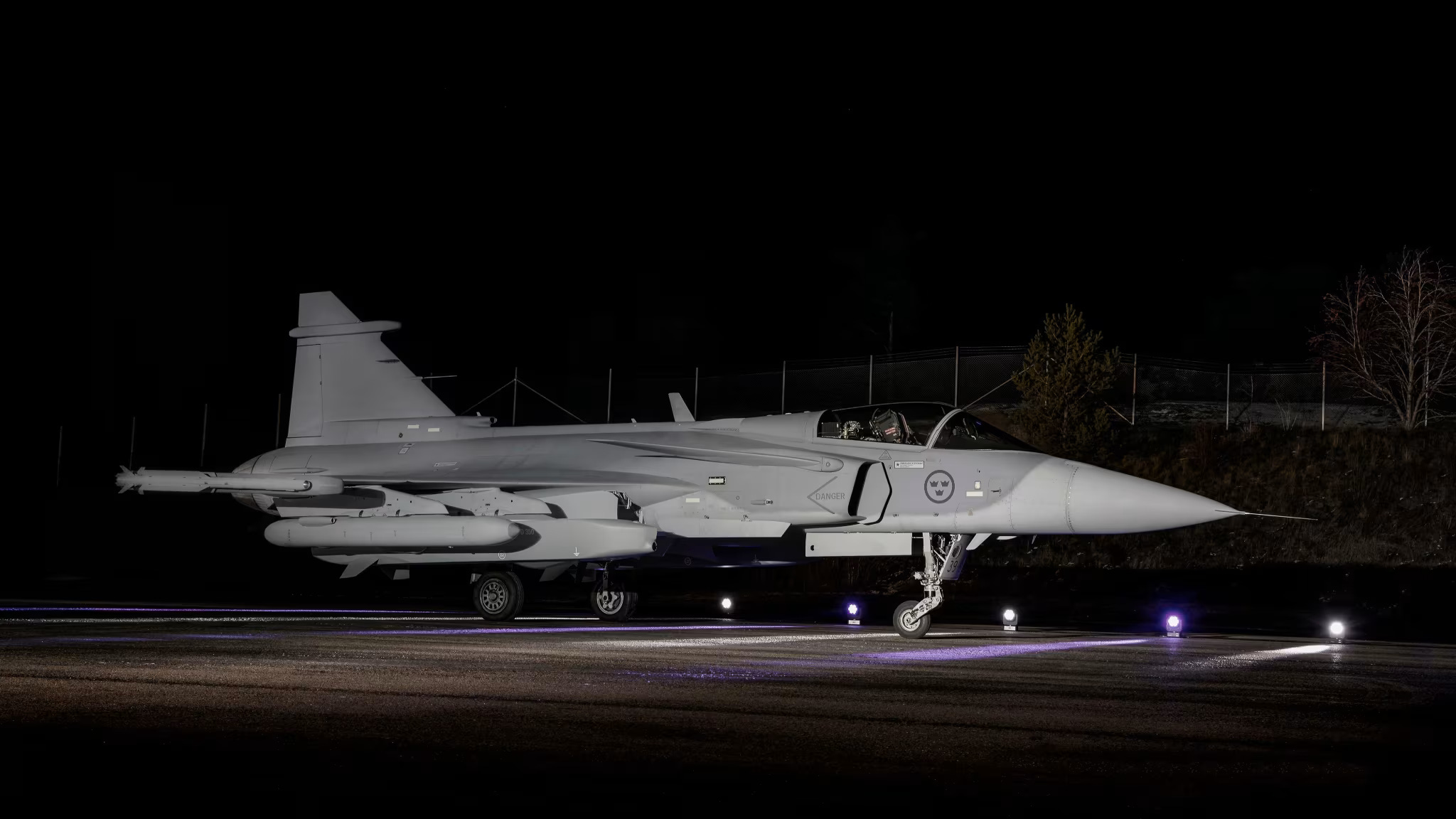
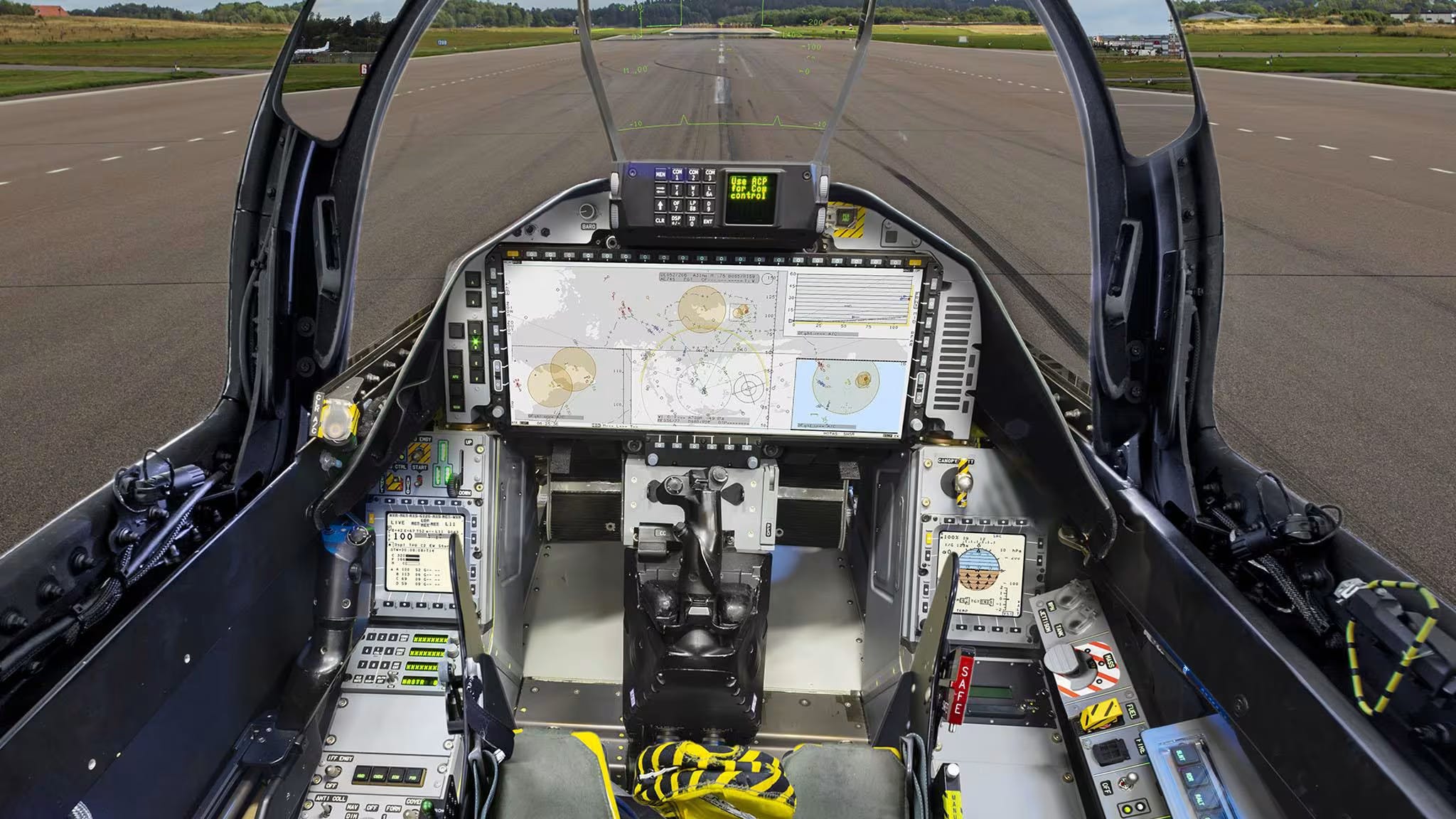
Unlikely as it is, the main competitor of the F-35 is the Saab Gripen-E. These two fighter types, are as different as they could get, one akin to a bulky people carrier, the other a stripped-down scrambler. The unlikely arch-rivals faced off in pitches for the Netherlands, Switzerland, and the Nordic countries, were proposed to Canada, and competed in the Czech Republic. We go even deeper into the unheimlich wizardry of Sweden’s new fighter with Jussi Halmetoja and find out how it compares to the F-35. This ain’t for the faint-hearted; it’s a detailed snoop into the world of the things that really count: exotic datalinks, sizzling electronic warfare and the vital need for technological sovereignty. Pour yourself a glass of wine and get comfortable; this is over 10,000 words long and reveals all you need to know about the F-35 versus the Gripen E.
“As a result, now that stealthy target is not so stealthy anymore. Now I can see you, and that means that you’re in trouble!â€
Andy Tuma met Saab’s Jussi Halmetoja for an insightful tour of the magic of the Gripen E’s engineering and tactical systems, something that can be easily overlooked, and learned of the areas in which it matches, or even exceeds, the F-35’s capabilities.
“Hello. I’m Jussi Halmetoja, and I now work for Saab as an operational advisor for the Air Domain. I’ve had over 2,300 hours in the cockpit. Before joining Saab, I was a frontline squadron pilot on both Viggen and Gripen systems and a Weapons Instructor on the squadron. I was also on the operational test job. After that, I was also involved in some developmental and experimental flight testing with the Gripen C, and also when we started working with the Czech Republic and Hungary as the first export nations.
After my flying career, I’ve had staff positions at the Meteor missile programme office in the UK MOD and then at the Swedish procurement agency FMV as the head of the air-to-air missile capabilities. I was also the requirements manager for the Gripen E.
Over the years, I’ve had the privilege to fly in and with pretty much every Western fighter that you see in service today. My role today is to bring this experience into the Saab fighter domain business, where I get involved in system requirements and programme development. But I also do a lot of marketing and sales support across the whole Gripen programme domain.â€
The F-35 pitches several key areas as gamechangers compared to the previous generation of fighter jets*. Let’s start with the advanced sensor fusion. Lockheed Martin boasts of the F-35’s autonomous fused sensors management, what they call ‘Active Sensor Management’. This refers to the way the aircraft itself manages, steers and tasks the various on-board sensors not just to correlate tracks from different sensors passively but to actively build the most accurate and reliable tactical picture by managing all sensors. Can Gripen E can do this?
“The mission to reliably detect, track and verify real objects in a complex battlespace using a lot of sensor input from multiple sources is one of the biggest challenges for fighter platforms today. To create full situational awareness, it demands fully fused data. This is a matter of life or death for any pilot.
Credit: Tibboh
At Saab, we’ve been working with this complex data fusion challenge or technology across our domains for probably at least 50 years, if not more. It is one of our core capabilities. We’ve realized long ago the necessity to implement sensor fusion throughout the entire command and control networks – not only on a singular aircraft, but also the entire networks such as aircraft, the early warning radars, other sensors. This development in the early sense of sensor fusion dates back to the Draken era in Sweden. It was, in fact, pioneered here in the 1980s, where we already deployed integrated, high-rate datalink systems on many platforms. And it’s fair to say that we’ve gathered a lot of experience over those decades, always prioritizing the mission the best way possible for the pilots.
In the Gripen E, the pilot is now assisted by a new, task-based high-level command structure. The sensors automatically steer and tune parameters to optimize their performance.
That task is done in a very similar way you mentioned that the F-35 allegedly does. No more frantic “switchology†and lists of complex routines for the pilot in the cockpit. That’s gone long ago now.
We’ve developed evolved automation – we even use aspects of things like AI and machine learning-based technology to help predict outcomes of events throughout the mission and offer the pilot advanced decision support to make the right actions at the right time in every moment. For example, how to launch a weapon and still maintain survivability against an enemy, complete situational awareness for when and how to act and when and how not to.
The ultimate point of Sensor Fusion, to sum it up, is to maintain a constant low workload for the pilots so they can entirely focus on the fight and the mission. And if you can’t do that, you’ve failed your pilots and your capability. This is a concept we call human-machine collaboration (Saab’s term).
This is what you need to fight and survive in today’s and tomorrow’s complex battle spaces against multiple threats.
You mentioned the active management or tasking of the sensors similarly to the way that the F-35 claims. So how does that work in more detail? Does it mean that, for example, on the tactical situation display, the pilot merely increases or decreases the range of the range circle, and he doesn’t have to set up the radar range or so forth manually anymore? Is it all of this done seamlessly in the background?
You can read the rest of this article here (we’re moving some of our articles to Substack to combat plagiarism issues).
When this popped up on a Facebook page (I think it was The Aviation Enthusiast Book Club), the aviation writer Bill Sweetman wryly replied that 384 pages devoted to the Cutlass were rather too generous a treatment and compared it to a boxset of the music of Yoko Ono. Now, as a fan of both Yoko Ono and the Cutlass, I must disagree. This book roundly avoids a plague that has affected some recent aircraft books, and that is filler. I get it, an author commits to X number of pages on a B or C-list aircraft and runs out of material, and suddenly, you have historical context going back to the Stone Age and 80 pages of serial numbers. There is absolutely no filler in this superb book; it is a lavishly illustrated, superbly researched celebration of one of the best-looking aircraft in history. Some of the reproduced documents of the time are a real treat.
When I asked Bill if I could feature his Yoko joke above, he said on condition I acknowledge that he agrees with the book’s authors that the Cutlass is often unfairly singled out for criticism when all early carrier jet operations were very hairy (and the Scimitar and Crusader sometimes do not get the criticism they deserve). This is a fair point, and one the authors attack with brilliant data, and one particularly revealing graph. This book is a gorgeous object and is the only Cutlass reference work you need. Essential reading for Cold War aircraft enthusiasts . I strongly recommend this book
Kawanishi H6K ‘Mavis’ and H8K ‘Emily’ Units
Edward M. Young
Osprey Publishing, 2024
A fascinating insight into Japanese air power in World War II, author Edward M Young has packed a mass of information into this 96-page book. No stone is left unturned in his dogged research into these rather elegant flying boats and their (often thwarted) operations. This serious reference book is backed up with high-quality digital artworks, which bring some welcome colour. Historical details bring the horrors of warfare to life, “During the attack on Cairns, a single H8K1 dropped bombs in error on the town of Mossman, north of Cairns, wounding a small childâ€. Something about the small scale of this event stuck with me in a way that bigger, more epic events do not, and this book, with its multiple references from war diaries, is full of these human moments. This useful, well-researched book contains facts that will educate and entertain the most seasoned aviation historian.
Video of a new Chinese aircraft of novel configuration has caused a stir. We ask Jim Smith, former British aircraft technical liaison to Washington, his thoughts.
The size is consistent with a multi-role aircraft with potential for strategic air defence and strike roles. The configuration is clearly aimed at low signature, particularly the absence of a tailfin, and the use of B-2-like split ailerons for roll, yaw, and (possibly) airbrake functions. The hint of VSTOL (elsewhere) is utterly unlikely, given the absence of nozzles, the impact on internal volume, and the probability of major suckdown issues on landing. The three intake configuration is interesting and novel. There are two clear intakes below wing, with rear nozzles exhausting over the upper surface at the rear of the wing. Then there is the upper fuselage intake.
The cutaway model seen in some images appears to feature some sort of turbine engine, and the aircraft does appear to have a third central nozzle, so this does appear to be a 3rd engine of some sort. It is far from clear, however, whether the model is closely representative of the flying aircraft. The same model appears to suggest long internal weapons bays outside of the intakes. The very long-chord of the wing in this area would provide adequate volume for this, but the central and forward fuselage would appear to offer more space, perhaps for air to surface or other weapons. What could be the mission? The size suggests a design with significant fuel and payload, potential for supersonic cruise, and potentially all-aspect reduced signature.
The long weapons bays could be used for long-range (and possibly high-speed) AAMs, and there is potential for carriage of air to surface stores or stand-off weapons, if additional weapons bays are available.
There’s a lot one could do with such an aircraft, particularly in concert with the J-20 fighter. Area Denial of the South China Sea would be an obvious role, as would the strategic air defence of the Chinese mainland. It could also offer a stand-off capability against naval targets. I suggest these strategic roles for the aircraft because it looks more suited to Beyond-Visual-Range combat and strike against difficult targets, than manoeuvring air combat. There are still lots of questions to be addressed, and all of the above is guesswork based on very limited images. The upper intake location is a puzzle, as it looks challenging for use in aggressive manoeuvring flight.
I did wonder if the third engine provides an auxiliary function, such as air for a circulation control system, and perhaps for IR signature reduction. The weight and volume penalty would be significant, however, so propulsion is the most likely option, particularly since the exhaust arrangement looks similar for all three engines
“Air-to-Air? No problem. Air-to-Mud? No problem. Close Air Support? No problem. It is easy to maintain and quick-turn capable. It’s not a glamour jet; it just can do everything well.”
Former USAF Crew Chief Derek Palos explains how to keep an F-16 flying, how to avoid ‘Falcon bites’ and the story of inter-unit aircraft graffiti in South Korea.
What’s the easiest way to get injured at an airbase?
On an active flightline the easiest way to get hurt, is not to be aware of your surroundings, and respecting the sheer power of that machine, you see people get falcon bites all the time, getting hit with flight controls, running into static dischargers, I saw a guy get his arm caught in between a horizontal stabilator and the body of the plane, he was very lucky to still have his arm.
What is the most annoying bit of maintenance to do on an F-16?
I never had to personally do one but the Emergency Power Unit Removal and Replacement (EPU R&R) is said to be a legendary pain in the ass, from what I understand it is almost impossible to get in without brute force haha. The most frustrating part about maintaining the F-16 for me personally was all the fasteners on every panel, such overkill. The top and bottom leading edge flap seals had at least 400 hundred screws, with butter-soft torque tip fasteners that would round out if you breathed on them wrong. Late in my career I was the NCO in charge of the second shift phase hanger, we would do programmed maintenance on a hours flown schedule, every phase required those flap seals to be removed. They were the bane of my existence.
“We had a saying at Luke: What’s the difference between a cactus and an F-16? On a catus, the pricks are on the outside”
The tight spaces in the engine bay made it difficult to safety wire a lot of the engine mounts after R&R, but you made adjustments for that the more you did which was instrumental during one of the challenging times which I’ll tell you about later
Describe the F-16 in three words
Lawn Dart Baby! That was a common dig on the F-16, with it having one engine, if it fails, it drops like the summertime front yard game here in the states where we throw giant darts (yes Giant darts) into a circle, similiar to horseshoes.
What was your role?
I was a Crew Chief, responsible for preflight and postflight inspections, servicing the aircraft, including everyday maintenance like refuelling and tyre changing, taking oil samples post-flight for SOAP (Spectrographic Oil Analysis Program) removal and replacement of airframe components like flight controls and landing gear, minor fixes like door latches, and basically anything not related to the Avionics or Weapons system.
What was the most challenging time with the F-16 force?
I was stationed at Luke AFB in Arizona from 1993-97 in the 314th Fighter Squadron and 61st FS, (the 314th deactivated and we became the 61st ) there was a giant dust storm, what we call a haboob in Arizona (among other places). The whole base was not prepared but the 61st was positioned just right and our planes caught the brunt of the dust storm, every jet that was out on the flightline was filled with dust and small rocks in every opening. There was a freshly painted jet that we had just towed back from the paint barn that looked like half of it had been sandblasted. Every canopy was trashed, and depending which way it was facing on the ramp, decided which half of the canopy looked like it was rubbed with sandpaper. We had to take air out of the front struts to then run water through the exhaust, while an airman in raingear spun the blades from the intake. We had to resort to that because we used all the engine trailers for removed engines. The 61st worked night and day for eight days I believe, to get our 30 jets back to mission capable.
How reliable is the F-16?
I feel it was very reliable, with one engine, it had to be.
How do people feel about crawling about in the intake?
I personally didn’t mind jumping intakes; it was a badge of honour for a young airman to be able to sign off on other guy’s intakes, and it was a way to get out of a little work, too! At Luke it would get very hot on the flight line, so if you jumped in the intake while the fan was still turning (after shut down, not like that A-6 dude on the carrier lol) it would be 20 degrees cooler in there until the blades stopped, but until then it was pretty nice.
“On an active flightline the easiest way to get hurt, is not to be aware of your surroundings, and respecting the sheer power of that machine, you see people get falcon bites all the time..”
Tell me something I don’t know about F-16s?
Well, a little nugget I like to share is that something like 70% of the F-16 components are reversible, meaning landing gear and flight surfaces can work on both sides with minor changes. I think that may even include wings, but I’m not 100% sure about that one.
What were the main differences between the Block 25 and Block 40 and which did you prefer?
The Block 25 at the 61st FS was an older jet typically built in the early ’80s. The ones I worked on had Pratt & Whitney F100-220E engines, I was run-qualified on those engines. The 310th Fighter Squadron had Block 42 jets, with the same Pratt engines, and was built in the late ’80s. Luke was a training base, so we had pilots learning the F-16 after their initial flight training. The 310th was training pilots in the LANTIRN targeting and navigation pods, we would fly 2-3 sorties a day, one day mission and two night missions. At the 35th Fighter Squadron while stationed at Kunsan AB we had Block 40, those had the GE engines: a ton more thrust, but a lot more maintenance. Thinking back on it, I probably like the Block 42s at the 310th FS the most, way more maintenance-friendly, and most consistent.
What is the biggest myth about the F-16?
I’m not sure if there are any myths about the F-16, but I do feel that it is not respected as much as it should be. It is VERY versatile. Air-to-Air? No problem. Air-to-Mud? No problem. Close Air Support? No problem. It is easy to maintain and quick-turn capable. It’s not a glamour jet; it just can do everything well.
What is the most common fault on an F-16?
I can’t remember a consistent fault with the ’16. While I was with the 61st at Luke we had a problem with burn-throughs in the combustion area of the Pratt and Whitneys, we had 3 or 4 jets crash, I saw one go down myself, it was surreal. It had just taken off, there were three loud bangs, it banked hard left, punched off its wing tanks (it was a D model, 2 seater) made a u-turn and made its way to the farmland north of the base. The pilot kept the nose up the best he could; both pilots punched out, and the plane kept gliding until it eventually hit the ground, exploding. It was one of the wildest things I’ve ever seen.
A U.S. Air Force Capt. Justin Atkinson, an 18th Aggressor Squadron F-16 pilot, performs post-flight procedures on Eielson Air Force Base, Alaska, Oct. 29, 2022. This is the first time Eielson will have the wraith aggressor paint scheme in its aircraft inventory. (U.S. Air Force photo by Senior Airman Jose Miguel T. Tamondong)
What was best and worst about the F-16’s design?
I’m 6 foot 1, the F-16 is very low to the ground. if you are not paying attention you will get “Falcon Bites”, I have one on the top of my head from an actuator sight glass door, and one from the left landing gear actuator attachment bolt above my forehead. I am very biased, but I think everything is the best about F-16’s
How maintenance-friendly was it?
It was very easy to maintain. When I first joined the Air Force, all the older guys were old F-4 crew chiefs. They would constantly tell us how easy it was to have it. “Fly-by-wire? Ha! Try calibrating turnbuckles and pulleys!” The majority of the components were easily removed and replaced. It was a lot of fun to work on.
What was the relationship like between the maintainers and the aircrew?
Generally speaking, it was pretty good. At Luke, we were a training base, so we had a lot of new pilots suffering from ‘Top Gun Syndrome’, so occasionally, those guys would come around, but their instructor pilots would almost always lead by example and be really respectful and cool. We had a saying at Luke, purely in jest, ” What’s the difference between a cactus and an F-16? On a catus, the pricks are on the outside”
Going overseas, there is a completely different relationship between aircrew and maintainers. It seems to be a much closer relationship. On my third day in Korea, the pilot of my assigned jet came to my dorm room, gave me a case of beer, and said, “Take care of our jet, man!” So, in that respect, it was totally different and appreciated.
What do you think of the F-35 from a Crew Chief perspective?
I would definitely be like those old F-4 guys: “You have a laptop you plug into the jet, and it tells you what’s wrong with it? We troubleshot the old-fashioned way.” chief
What was good and bad about USAF culture?
I’m sure, like every military around the world, it’s the friends you make, the camaraderie and good times in shitty places. I got to go have temporary duty in Florida and Canada, lived in Korea for a year, learned how to run a jet, and have a ton of stories to tell. That is the Air Force culture to me. That and the food, we had the best food of all the services, hands down.
I think the bad thing about AF culture (at least when I was in) was there was sometimes a ‘fail upwards‘ climate for people who weren’t very dedicated to the job or not good at it. Don’t get me wrong, if you are not a good mechanic, and you try like hell to learn, and you are involved in everything you can be, you will not be considered a failure, you’ll be respected. But avoiding the difficult shitty work would sometimes get rewarded.
What is a Crew Chief’s role, and what makes a good one?
The Crew Chief’s role is to prepare the jet they are assigned to for the day for flight and to keep it ready until it is no longer needed for sorties. We make sure all the documentation is up to date, and all inspections are complied with prior to flight. We greet aircrew, follow them around the jet while they do their preflight inspections, answer any questions they may have and buckle them in to the seat. We then run through the engine start up, the pilot will run a pre-programmed flight control test and then we do a manual flight control check (we are on the comm the whole time this is happening), we do a dry run of the EPU (Emergency Power Unit) used only in emergencies, it is powered by Hydrazine which is a big time carcinogen. It is attached to the accessory drive gearbox, I’m pretty sure, its been a while, it can run the hydraulic pumps and other vital components for around 10 minutes. After we do that, the airman launch assisting standing by the fire bottle and the the crew chief remove the landing gear pins and send the plane on its way.
When it comes back, we do a basic post-flight inspection, which is not as thorough of an inspection, and get it ready to go again. A good crew chief has to be a good mechanic, have a ton of integrity, be a quick learner, a team player, be extremely sarcastic, self-deprecating, and have a vulgar mouth.
Which other service or unit was the butt of your jokes?
Stateside, it’s not really prevalent, except for the regular USMC jokes, calling them “Window Lickers,” and “Crayon Eaters.” Everyone makes fun of the Marines, but it’s like brothers making fun of each other. If a civilian says something like that, it’s not as accepted.
Overseas is a different story. At Kunsan AB there were two squadrons, the 35th, which is my squadron and the 80th FS The Juvats, it was just a good-natured rivalry, during the winter we would do drive by snowballing on the guys out at the “smoke pit” outside their squadron building, things like that.
Our squadron went TDY (temporary duty) to Japan and we had a guy who was obsessed with cleaning his jet, he was the crew chief on the Squadron jet, so it was expected but this dude went overboard. It was put in a hangar for it to be in a ceremony of some sort. The next morning, the host squadron had cut a giant toy wind-up key out of cardboard and made it look like a wind-up toy. The crew chief was not happy.
We had another incident when one of our jets, had diverted to Osan, the northernmost Air Force base in Korea, our tailflash designation was WP for Wolf Pack, when the jet came back someone had written in grease pencil “ere” and “ussies” on the tail so it said We’re Pussies. It was pretty funny, I wish I had a picture.
Did you call it Viper? Did anyone call it the Fighting Falcon?
  Yeah, I called it Viper, just sounds WAY cooler
What was the worst damage you ever saw on an aircraft?
I had my aircraft involved in a mid-air collision, it happened at the Gila Bend Range in Arizona. The missile rail of one F-16, same squadron, same class, hit the left flap and sheared off half of the horizontal stabilator, my jet diverted to Gila Bend reserve base and my Dedicated Crew Chief and I had to go there with a Stabilator in a van and had a flap shipped there, replaced them and the jet returned the next day.
Do you get angry if a pilot damages an aircraft?
Only if they do something avoidable, hard landings require certain inspections depending on how hard the pilots feel the landing was. I had a jet return from a night refueling training, had the refuel boom scrape down to the bare metal in a long, oblong American-football-shaped scratch all around the backbone of the plane eventually scraping it around until he made it into the air refuel receptacle.
Also had a young Lieutenant come back with his Big Mac and fries in his oxygen mask, he didn’t have one when he left, if you know what I mean. He tried to hand it to me and I recoiled and told him with all due respect I’m not taking that. The instructor pilot in the backseat told him to figure it out himself.
Do you feel possessive of the jets; do you ‘own’ them more than the pilots do?
Absolutely. They fly my jet for maybe three hours a day, I spent hours making sure everything was as close to perfect as it could be. But it really is a team effort, nothing gets off the ground without everyone doing their part.
What should I have asked you?
You asked great questions
Things are getting better, come and see why on our Substack (which will become an important base for Hush-Kit). Keep this site free by using the donation buttons on this page. For aviation news, madcap history and inappropriate jokes follow us on Twitter and Blue Sky.
We read a review we enjoyed that we’re sharing here – review by Michael Turns
“The Hush-Kit Book of Warplanes†(Published by Unbound in early 2023) by Joe Coles appears, on first glance, to be a conventional book on the subject of military aircraft. But there is far more going on here than first appears.
The book is satisfyingly hefty and handsome, and nicely printed and bound with a dramatic photograph of a Saab Draken by renowned Japanese aviation photographer Katsuhiko Tokunaga. Considered by many to be the best aviation photographer this is a promising start. The design is fresh and appealing, with extremely strong photography and artwork by talented illustrators (including the British artist Andy Godfrey). Some of the artworks are of extremely obscure cancelled projects, and the book contains multiple ‘easter eggs’ and arcane references hidden in the artworks and subheads (I found 9 but guessing there are more).
The contributors list is a veritable supergroup of aviation writers, including Bill Sweetman, Calum E. Douglas, Edward Ward, Thomas Newdick and of course, Hush-Kit creator himself Joe Coles. The book is largely made of expanded articles from the Hush-Kit site, a blog that has been going for a long time, and that is WELL WORTH a look.
The book features top 10s, an engaging and accessible format that does not detract from the seriousness of the research and the excellent knowledge of all the contributors. Likewise, the sharp – and sometimes absurd – wit brings the subject to life. The editor acerbically described the book as attempting to drag aviation writing from the 1950s to the 1970s, and in this he succeeds. Punk has arrived and it is a breath of fresh air. Those finding it too unconventional or misinterpreting the irreverence as silliness will miss out on what is the certainly the most interesting military aviation book in years.
The rapid changes in tone in the book are exhilarating, leaping from meta jokes about aircraft books to shocking true confessions of war crimes from Iranian air force pilots. The interviews feature pilots of some of the coolest aircraft types including the MiG-25, SR-71 Blackbird and Su-30 Flanker. As well offering personal insights, the insights into the machines themselves are often revelatory, such as the flaws in the F-35s much vaunted cockpit display.
“The Hush-Kit Book of Warplanes” also goes beyond the realms of technical specifications and delves into the often weird, sometimes terrifying, stories behind the aircraft. The anecdotes and historical context provide a human touch, allowing readers to connect with the incredible men and women who flew and built these machines. It serves as a reminder that warplanes are not just mechanical marvels but exist in complex world of wider context.
In conclusion, “The Hush-Kit Book of Warplanes” is a must-have addition to any aviation enthusiast’s collection. Its combination of in-depth knowledge, stunning visuals, and engaging writing make it a standout resource in the world of warplane literature. This book is a testament to the imagination and expertise of its authors, and it will undoubtedly ignite a renewed sense of wonder and admiration for these remarkable flying machines. My one worry is that it is maybe a bit ahead of the curve and some won’t get it, but for those who do – this is truly superb. Spread the word or we may not see any more books like this.
When you’ve flown 52 different aircraft types (and counting), you often get asked what your favourite is. So, it was a welcome change when I was asked to choose the ten worst aircraft. No holds barred, the more brutal, the better, was the brief; but, despite my best efforts, I can only think of seven that truly deserve my savaging.
Sure, I’ve flown aircraft with ‘interesting’ handling characteristics that, if ignored, can cause massive embarrassment massive embarrassment and in some cases a not insignificant amount of paperwork (such as being aggressively flicked out of a turn whilst pushing that little too much and thinking “I’ll just sweeten this shot with a touch of VIFFâ€, or encountering yaw divergence for the first time after rapid rolling for more than the 360 degree limit you’d read somewhere in the Aircrew Manual but completely forgotten about, that sort of thing), and sat in cockpits that defy all logical design criteria and hide essential switches in the most bizarre of places, or place things like ‘weapon jettison’ buttons adjacent to gear buttons and flap levers (thereby increasing the risk of inadvertent jettison when putting the gear down in the dark and leaving a fuel tank or two in someone’s back garden).
“Hovering a Wessex was like trying to hover a semi-detached house from the upstairs bedroom window.”
But does that make them bad aircraft and, hence, the worst to fly? No, that’s just aviation, and having experienced enough variety so far I can compare and contrast and see that repetitive design faults are not deliberate, they just happen. And aerodynamicists don’t purposely make their aircraft dangerous to fly, it’s more that foibles in aircraft handling come about because design compromises have to be made to satisfy an overall design specification. Also, there’s no such thing as a perfect aircraft. It’s a bit like cars – they’ll all get you from A to B in their own unique way, some faster than others, some with higher levels of comfort, some with no comfort at all, and some will inherently pull to one side when you brake, and there’s no international standard when it comes to which side of the steering wheel the indicator stalk lives on. But you get used to all of that and drive accordingly. And so it is with aircraft, but, like cars, some really do stand out from the crowd as unlovable stinkers. So here goes, in no particular order………
Grob Tutor
As a budding RAF pilot, I cut my teeth on the Scottish Aviation Bulldog back in 1988. I didn’t know much as a pilot back then, having only flown the venerable de Havilland Chipmunk and the Cessna 150. But what I did know was that the Bulldog was a joy to fly – with a compact and easy to manage cockpit, agile handling and enough power to fly aerobatics without having to trade height for speed, what more could I want?
Alas, all good things, like civilisation and a bottle of good whisky, come to an end. When the Bulldog went out of service, in stepped the drearily sluggish Grob Tutor. What a contrast – heavy in roll, festooned with checks despite not having much more in the systems department than a Bulldog except for a GPS navigation control unit that alone took hours to get to grips with (the Harrier was easier to flash up and get going), and it always finished aerobatics lower than where it started.
The first time I flew one was 15 years after the Bulldog, 13 years after I joined the RAF, and I’m glad it didn’t figure in any of my flying training. I’ve said it before – would I buy one even if it was the last aircraft on Earth? No, I’d craft an aircraft from coconuts and old bin bags scratch instead.
However, if, and only if, there is a plus side, I suppose it’s passable as a clipped-wing motor glider.
Harrier T.Mk.10‘The Hump-Jet’
“What?!†I hear you scream, as you throw your martini at your butler, and spit your tiramisu out in rage,
“Has he gone mad?â€
Well, not exactly. The T10 was a two-seat training variant of the excellent Harrier GR7, and there are two reasons why the T10 is on my list – its general inability to hover because of its extra airframe weight and the use of a Pegasus 105 engine that was the same as the lighter GR7’s, so unless stripped of weight (wing stores) and flying on cold, high atmospheric pressure days, forget about attempting all that fun VSTOL stuff. Oh, and one too many seats. Enough said.
Beagle Bassett‘Shirty Bertie’
This aircraft goes down as the worst aircraft I never flew. Eh? How can that be? Well, ‘Bertie,’ as the Empire Test Pilots’ School Bassett was affectionately known, was a highly modified, variable stability test bed aircraft that until recently was a stalwart of the ETPS fleet.
Capable of simulating the flying characteristics of any other aircraft through the intervention into the right-hand seat flying controls of a very complicated box of tricks on the cabin floor that could be fiddled with and adjusted to change performance through control responses, it really was quite a machine. However, due to the limitation of not allowing the box of tricks to have its say below a minimum height in case it ‘threw a wobbly,’ the person in the right hand seat wasn’t allowed to physically fly Bertie anywhere near the ground. In my capacity as the ETPS Multi-engine Instrument Rating Examiner at the time, it was my job to test the person in the left-hand seat (who had an independent, original, non-modified set of flying controls) and make sure he could fly solely on instruments, predominantly in order to return to an airfield and land in inclement weather.
As a result, the test profile was conducted no higher than about 3000 feet above the ground. And well below the box of tricks minimum height. So despite conducting this annual test around four times at ETPS, I never actually flew Bertie, only in Bertie. And that, as a pilot, is frustrating. Top tip – never fly when you’re angry or frustrated, as it’ll probably mean you rate the experience poorly and end up slagging the aircraft off in an article about the worst ones you’ve flown. (Of course this was not actually Bertie’s fault, bless him, and he’s now enjoying his retirement at the Boscombe Down Aviation Collection).
Westland Wasp‘Balancing a pyramid on a castor’
As a fixed wing pilot, I’ve been lucky enough to have flown eight helicopters over the years. My first experience was the pre-Harrier hover course, a weeklong stint at RAF Shawbury flying the Squirrel helicopter where my brain was taught how to stop then land, as back then it only knew how to land then stop. And I would suggest that’s quite important ahead of being let loose with a Harrier. Since then, I’ve flown the Agusta Westland 109, Lynx, Gazelle, Jet Ranger III, Schweitzer 300 and the US Navy UH-72, all with helicopter instructors and hence all my hands-on from lifting to landing. As I said, I’ve been very lucky. I like helicopters.
And as luck would have it, one day when I was about to take a Piper Warrior for a flight out of Thruxton airfield near Salisbury, I was offered the opportunity, completely out of the blue, to fly in a Wasp that had just had some maintenance performed on it and needed a check flight after something called ‘blade tracking’. I said I like helicopters, but I don’t profess to understand how they work, but I do appreciate that any angry palm tree/large collection of rotating parts flying in very close formation requires a lot of very special and considered care and attention. So, I wasn’t worried when told that we were going to see how much vibration there might be, and hopefully at acceptable levels. After all, helicopters vibrate even when they stand still, so this was just a matter of keeping it all in check. Anyhow, after a successful take off and flight to assess said vibration, during which I have to say I was quite enamoured by the vintage and overall quirkiness of this little helicopter, I was allowed to fly it back to Thruxton to land. It was during the last four feet of the flight that I began to think, ‘I’m not enjoying this’.
I knew how to hover, how to pick a ground reference just forward of the nose on which to ‘formate’ and stay steady against, and yet I had to choose one dandelion after another as I proceeded to move randomly across the airfield in a desperate attempt to stay put and land. This was quite frustrating (see advice above about flying frustrated), and it dampened my initial attraction to the Wasp, but after some time seemingly having to totally relearn how to fly a helicopter (it’s not really that easy in the first place when you’re a novice, made even harder when your steed seems to have a mind of its own), I landed. Subsequently I asked some former Wasp pilot mates of mine whether I was alone in my inability to hover the damn thing, and they said “No, to begin with its a bit like trying to balance a pyramid upside down on a single castor, but you get used to it!†Ah well, maybe I’ll be lucky again in the future and have a second chance to get used to it, but until then, it’s definitely on the list.
(Another favourite helicopter analogy of mine was hearing how hovering a Wessex was like “trying to hover a semi-detached house from the upstairs bedroom window.†Somehow helicopter mates tend to come out with the best analogies, and I add it here for your delectation).
Boeing 767‘The Power Couple’
I’ve only flown the 767 simulator, but due to the fidelity of modern-day simulation, I can only assume the real thing is just as crap. I currently fly the 787-9 as my day job – which, through its fly-by-wire flight control system allows me to hand fly what feels like a big Cessna – and yet I still have to trim the aircraft when changing speeds or changing flap settings, and there’s plenty of feedback, which for any pilot is vitally important. But at least when I put on loads of power to speed up, or conversely take power off to slow down, the aircraft doesn’t try to reach heaven or bury us all in the nearest part of Mother Earth.
Because that’s what a 767 tries to do.
The ‘pitch/power couple’ as it’s called (an aircraft’s want to pitch up with power, or nose down on power reduction) is alarmingly strong on a 767. I’d been warned about it in the briefing before the simulator session (and that alone speaks volumes about this Boeing design), and sure enough, what a handful. There’s something quite alarming about having to dial nose down trim in as you accelerate such that you’re still having to push hard whilst doing so. Let alone pull like a dingbat whilst decelerating as the trim can’t operate fast enough. Overall, sub-optimal, and I’ll stick with my 787, thank you very much.
(Incidentally, my venerable old 747-400 didn’t behave anywhere near as badly either, so what was going on in the 767 planning meetings is anyone’s guess, and my ex-737 colleagues speak of similar things there).
ShortTucano TMk 1
Before I start pulling the Tucano to pieces, I just want to say that I loved flying it. I flew it as a student, so I have some lovely memories of flying solo as high as 25,000ft, strapped to an ejection seat, pulling up to 6g without a g-suit. And I was an instructor on it for my first tour in the RAF, as well as at Empire Test Pilots’ School as their Standards pilot. I flew it to Sweden, Denmark, the Czech Republic, Germany, Belgium, Portugal, France and all over the UK. I thoroughly enjoyed flying aerobatics in it, and never had a major emergency in it.
So, how come it’s on this list? When I talk to friends and colleagues about their memories of the Tucano, it’s the worst aircraft they’ve ever flown, so by democractic principles, it’s also one of mine. It has to be, right? It wasn’t a jet, so totally inferior to the Jet Provost it replaced, and the secondary effects of being propellor driven meant it never had ‘jet-like handling’ despite what it said in the Embraer sales catalogue. Its build quality was a little suspect, for sure, but it wasn’t my airbrake that fell off. Apparently, it could have done with automatic rudder trim to compensate for the torque effect of 1100 shaft horsepower, but to be fair using the electric rudder trim on the throttle wasn’t exactly arduous. So according to everyone else, the Tucano was one of the worst aircraft I’ve flown. But actually, according to me, she was one of the nicest and I miss her.
Klemm Kl.25
In another case of being in the right place at the right time, a very good friend of mine was given the responsibility, and it was a huge one, of periodically airing a Klemm 25 down in Wiltshire. Built in Germany between the wars, the Klemm 25 was officially branded as a ‘light leisure, sports and training aircraft’ and no doubt was used to train quite a few ‘civilian’ pilots to get around those pesky Treaty of Versailles rules that prevented Germany from training pilots for a Luftwaffe it wasn’t supposed to have.
Removable wings are quite handy if you don’t own an airfield, or if your hangar is a bit on the small side, and especially useful in the ‘30s when you could tow your aircraft home and park it on the drive. I’m pretty sure if you did that today, well, you can probably imagine what would happen, you’d get Arts Council funding granted and be bothered by culture-vultures treading on your flowerbeds, but I digress.
I found myself standing in a field watching the wings being attached and on closer inspection I began to realise that ‘basic’ is an understatement when it comes to describing the work of Herr Hanns Klemm back in 1928.
Accustomed as I am to all the mod cons and electronic wizardry of 21st century aviation, the Klemm is akin to comparing a 1969 Hillman Imp to a Bentley Continental GT – in an Imp you’re not sure when you insert the key whether it’ll start or not, electronics hadn’t even been invented for the motor car when it was made, you better have a mechanically sympathetic driving style as well as an ear for impending mechanical doom, and best wear a coat as it’ll be cold (no such worries with a Bentley).
And so, it was with the Klemm. Noisy, windy, I couldn’t hear a word Charlie was saying in the front seat as there was no intercom, and no instruments to speak of – there was an airspeed indicator, a clock, an engine rpm gauge, a compass, and a rate of climb and descent indicator. That was it. The Klemm is a true seat—of-the-pants aircraft (as well as just being a pants aircraft) and you have to rely on senses you have but rarely call upon in order to fly it, and I freely admit that I was out of my comfort zone. But am I complaining unduly? Probably, as it is of its time and some 600-odd were built, which even by today’s standards of small aircraft production is really quite an achievement. So, is it truly one of the worst aircraft I’ve flown? I suppose only when compared to aircraft that came after it, and that’s like using hindsight when analysing a historical event and suggesting it would have happened differently had one been involved.
I was very lucky to fly the Klemm, it gave me my one and only insight to date into the very early days of aviation and just how actually cutting edge it would have been almost 100 years ago. And yes, I own a 1969 Hillman Imp that I wouldn’t trade for a Bentley Continental GT even if you paid me because it’s good, clean, honest fun to drive and reminds me of the basics.
So there you have it, my take on what I think are the worst (and indeed not actually worst at all) aircraft I’ve flown to date. My opinion, my list, and I’m sure I’ll get an email or three from some real Tucano haters, and that’s fine.
But as Air Marshall of Necromancy in the Hushkonian Air Force, watch out…….
Matt Doncaster, 787 pilot, former Harrier pilot and Air Marshall of Necromancy in the Hushkonian Air Force
Keep this site free by using the donation buttons on this page
Pre-order The Hush-Kit Book of Warplanes Vol 3 here.
The KC-10 did not require modification to carry the SR-71’s special JP-7 fuel, as it had fuel tanks that could be isolated (if desired) and only delivered to the boom. Those tanks could also hold regular JP-8 and feed it to the engines if needed.
Last week, the KC-10 Extender, a superb aerial refuelling aircraft, retired. We spoke to a KC-10 pilot to learn about ‘Big Sexy’.
The best KC-10 was its versatility and the flexibility of its crews. Unlike the KC-135, the KC-10 was ready to refuel probe or drogue receivers without any extra work or attachments needed before launch. With the ability to be refuelled itself, the KC-10 could be launched and flexed to almost any refuelling mission quickly.
The worst thing about the KC-10 was taxiing it around on smaller airfields. The nosewheel sits 20+ feet behind the pilots, so you must be very careful about turning sharp corners or trying 180° turns. In these cases, we’d often have a boom operator open the forward doors, lay on their stomach & hang out of the aircraft; they were on the intercom, relaying the position of the main and nose wheels to the pilots, keeping us from crunching taxi lights or ending up in the grass (which we sometimes did anyway).
Based on overall capacity, the KC-10 was better than the KC-135; it could take off with a much higher fuel load. While it burned more per hour, there was still significantly more fuel available for receivers. The ‘135 also couldn’t do Drogue receivers unless the boom was modified ahead of time (which meant it couldn’t do probe receivers) or if you attached pods to the wings. The KC-10 was ready for either at any time (and we could put our own pods on the wings, if needed).
The empty weight of the KC-10 was about 250,000 lbs. Maximum takeoff weight was 590,000 lbs…so about 340,000 lbs of fuel, if you weren’t carrying cargo. All of it could be offloaded, other than what we needed to save to get ourselves home…and sometimes we pushed that limit! In one case, I pushed a little too far – we got back to our deployed base, and it was fogged in. We couldn’t even attempt an approach.
We were getting close to diverting, which would have been painful, but another KC-10 arrived. They took up a holding pattern over the base, a couple thousand feet above us. We started coordinating between ourselves to balance fuel out so nobody had to divert, then just did it. At one point, there were four of us in the pattern, talking to each other, and passing fuel so that everyone got to sleep in their own bunks. The fog eventually lifted, and we all made it in.
The KC-10 was actually pretty easy to take off and land. It was very stable and large, and bumps that would affect smaller jets didn’t have much impact on us. The controls were pretty straightforward. On landing, you’d start the process of “flaring†just after the 50’ radar altimeter callout.
You rarely landed smoothly, though, as the centre gear touched down first on crowned runways. It shook & rattled, so there was always some of that, except in the rare instance you’d land with the centre gear retracted.
There weren’t many foibles to the jet; it handled well. It was just very large. When refuelling with KC-135s years ago, the bow wave of a heavy KC-10 could hit a sensor in the 135’s tail, disconnecting their autopilot. If they weren’t watching it, you’d suddenly end up with a face-full of KC-135 as their autopilot kicked off and the nose dropped. They eventually fixed that problem, if I recall.
One peculiar aspect was that the number 2 engine in the tail was angled down at about 2.5°. We tried not to use it for taxiing, as we were already worried about blowing things over…some would limit how much they used it when air refuelling, too, as a big input could push the nose down.
Something you may not know about the KC-10: well, it had a large space under the cargo floor that was just empty. I think it was the galley on the DC-10, but the Air Force had no need. We called it “The Pool Roomâ€; I was told it was because you could put a pool table in there, and have room to play. Getting into it was a hassle.
You could access the KC-10 through the nose gear. We occasionally had to do that; you’d climb up & shimmy through the avionics compartment, eventually ending up in the cockpit. It was a tight fit!
The newer KC-46 is a decent aircraft. It’s had teething issues, but they will eventually sort it out. The problem is that losing the KC-10 still represents a major loss of overall capacity, as there will be less fuel in the air at any given time. The Air Force already can’t meet all its demand for Air Refueling, and I’m afraid that is much worse today.
My favourite aircraft to refuel was the B-1; it wasn’t particularly cool or anything, but when it showed up on your schedule in Afghanistan, they were going to take about 100k lbs of fuel…and your day just got a lot shorter!
My least favourite aircraft to refuel was the A-10. It doesn’t have the power of other jets and flies pretty slowly; we had to use slats and sometimes flaps to get slow enough. Above certain weights, it was just not possible.
The deck angle when refuelling A-10s could be in excess of 5° nose up…almost feels like you are setting up for a power-on stall. We had a procedure to help called a “Tobogganâ€â€¦we’d enter a slight descent at around 300 feet per minute. That gave the A-10 the help it needed to get on the boom, but you only had 1,000’ below you before you’d be outside of your protected airspace, so you’d only get 3 minutes or so. Then you’d have to climb up & do it again.
Nobody was necessarily bad at meeting the tanker, and we went out of our way to come to them. It didn’t always work, but we usually managed to end up 1-3 miles in front of them. Many fighter types referred to the KC-10 as the “mothership†because it was so large and was just there, in front of you.
Occasionally, the AWACs would control our rejoins. They didn’t seem to have much practice doing so; I can recall them vectoring us to our bomber, and vectoring the bomber to us…AWACs handed us off nose to nose at around 3 miles, closing at probably 600-700 knots. We were separated by 1,000’, so it wasn’t unsafe, but AWACs kind of said, “There you go,†and we immediately shot past each other in opposite directions. It was funny…we took over & directed a mutual turn on the same magnetic heading, which at least put us abeam each other & fixed it from there.
The KC-10 set the bar for tanker ops, hands down. As we discussed, the flexibility to do any Air Refueling mission at any time was key, and our ability to be refuelled meant we could be doing it for long hours.
We also had a significant cargo capacity. You could load up support troops and their equipment, then drag multiple fighters across an ocean. When you landed, you were almost your own little Air Force and could start operations quickly.
1A good tanker crew got to be a mini family. We didn’t use ranks in the KC-10 while flying, but rather, first names. We wanted every member of the crew to feel like they could speak up if they saw something wrong; everyone knew who the Aircraft Commander was, but that wasn’t something you wanted to flex on your crew – doing so may mean you win the battle, but you’re losing the war.
A good crew got to the point where they knew what everyone else needed, and they were ready before anyone asked. They understood the bigger picture, and took care of each other; you could complain, but my only rule was that the complaints better be funny because there wasn’t a lot we could do about most of it…it was better to laugh about it than to make each other miserable.
Big Sexy was the most common name, yes. Sometimes referred to as Gucci, but the official name was the Extender.
Three engines weren’t particularly unusual, no. The tail engine was exactly like the other two, but with a longer cowling. It was angled down slightly, though, as I mentioned.
If you had an engine failure (like we did in the simulator every quarter), you hoped it would be the tail engine. There was no asymmetrical thrust; the loss of one of the wing engines caused a lot of asymmetrical thrust, which required a lot of rudder to counteract.
There’s a Hush-Kit Book of Warplanes Vol 1, and there will soon be a Vol 2 and then a Vol 3!
Thank you for reading the Hush-Kit site. It’s all been a massive labour of love to which I have devoted much time over the last 12 years. There are over 1100 free articles on Hush-Kit; think of the work that’s gone into that! To keep this going, consider donating (see button on top of page) or supporting on Patreon. Not having a sponsor or paid content keeps this free, unbiased (other than to the Whirlwind) and a lot naughtier. We can only do this with your support. I love this site and want it to keep going; this is where you come in.
To those who already support us I’d like to say a big thank you.