
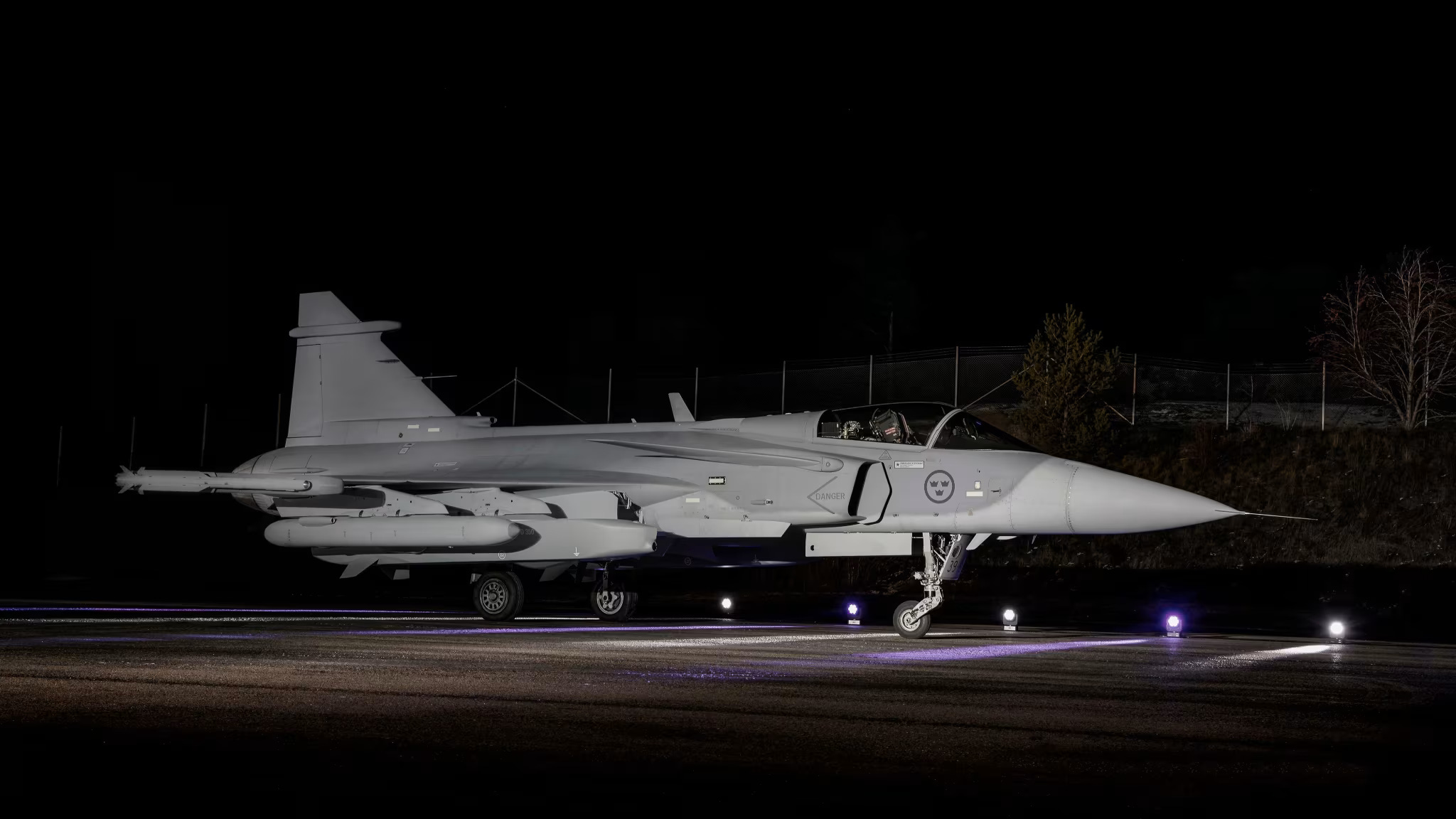
Unlikely as it is, the main competitor of the F-35 is the Saab Gripen-E. These two fighter types, are as different as they could get, one akin to a bulky people carrier, the other a stripped-down scrambler. The unlikely arch-rivals faced off in pitches for the Netherlands, Switzerland, and the Nordic countries, were proposed to Canada, and competed in the Czech Republic. We go even deeper into the unheimlich wizardry of Sweden’s new fighter with Jussi Halmetoja and find out how it compares to the F-35. This ain’t for the faint-hearted; it’s a detailed snoop into the world of the things that really count: exotic datalinks, sizzling electronic warfare and the vital need for technological sovereignty. Pour yourself a glass of wine and get comfortable; this is over 10,000 words long and reveals all you need to know about the F-35 versus the Gripen E.
“As a result, now that stealthy target is not so stealthy anymore. Now I can see you, and that means that you’re in trouble!â€
Andy Tuma met Saab’s Jussi Halmetoja for an insightful tour of the magic of the Gripen E’s engineering and tactical systems, something that can be easily overlooked, and learned of the areas in which it matches, or even exceeds, the F-35’s capabilities.
“Hello. I’m Jussi Halmetoja, and I now work for Saab as an operational advisor for the Air Domain. I’ve had over 2,300 hours in the cockpit. Before joining Saab, I was a frontline squadron pilot on both Viggen and Gripen systems and a Weapons Instructor on the squadron. I was also on the operational test job. After that, I was also involved in some developmental and experimental flight testing with the Gripen C, and also when we started working with the Czech Republic and Hungary as the first export nations.

After my flying career, I’ve had staff positions at the Meteor missile programme office in the UK MOD and then at the Swedish procurement agency FMV as the head of the air-to-air missile capabilities. I was also the requirements manager for the Gripen E.
Over the years, I’ve had the privilege to fly in and with pretty much every Western fighter that you see in service today. My role today is to bring this experience into the Saab fighter domain business, where I get involved in system requirements and programme development. But I also do a lot of marketing and sales support across the whole Gripen programme domain.â€
The F-35 pitches several key areas as gamechangers compared to the previous generation of fighter jets*. Let’s start with the advanced sensor fusion. Lockheed Martin boasts of the F-35’s autonomous fused sensors management, what they call ‘Active Sensor Management’. This refers to the way the aircraft itself manages, steers and tasks the various on-board sensors not just to correlate tracks from different sensors passively but to actively build the most accurate and reliable tactical picture by managing all sensors. Can Gripen E can do this?
“The mission to reliably detect, track and verify real objects in a complex battlespace using a lot of sensor input from multiple sources is one of the biggest challenges for fighter platforms today. To create full situational awareness, it demands fully fused data. This is a matter of life or death for any pilot.

Credit: Tibboh
At Saab, we’ve been working with this complex data fusion challenge or technology across our domains for probably at least 50 years, if not more. It is one of our core capabilities. We’ve realized long ago the necessity to implement sensor fusion throughout the entire command and control networks – not only on a singular aircraft, but also the entire networks such as aircraft, the early warning radars, other sensors. This development in the early sense of sensor fusion dates back to the Draken era in Sweden. It was, in fact, pioneered here in the 1980s, where we already deployed integrated, high-rate datalink systems on many platforms. And it’s fair to say that we’ve gathered a lot of experience over those decades, always prioritizing the mission the best way possible for the pilots.

In the Gripen E, the pilot is now assisted by a new, task-based high-level command structure. The sensors automatically steer and tune parameters to optimize their performance.
That task is done in a very similar way you mentioned that the F-35 allegedly does. No more frantic “switchology†and lists of complex routines for the pilot in the cockpit. That’s gone long ago now.
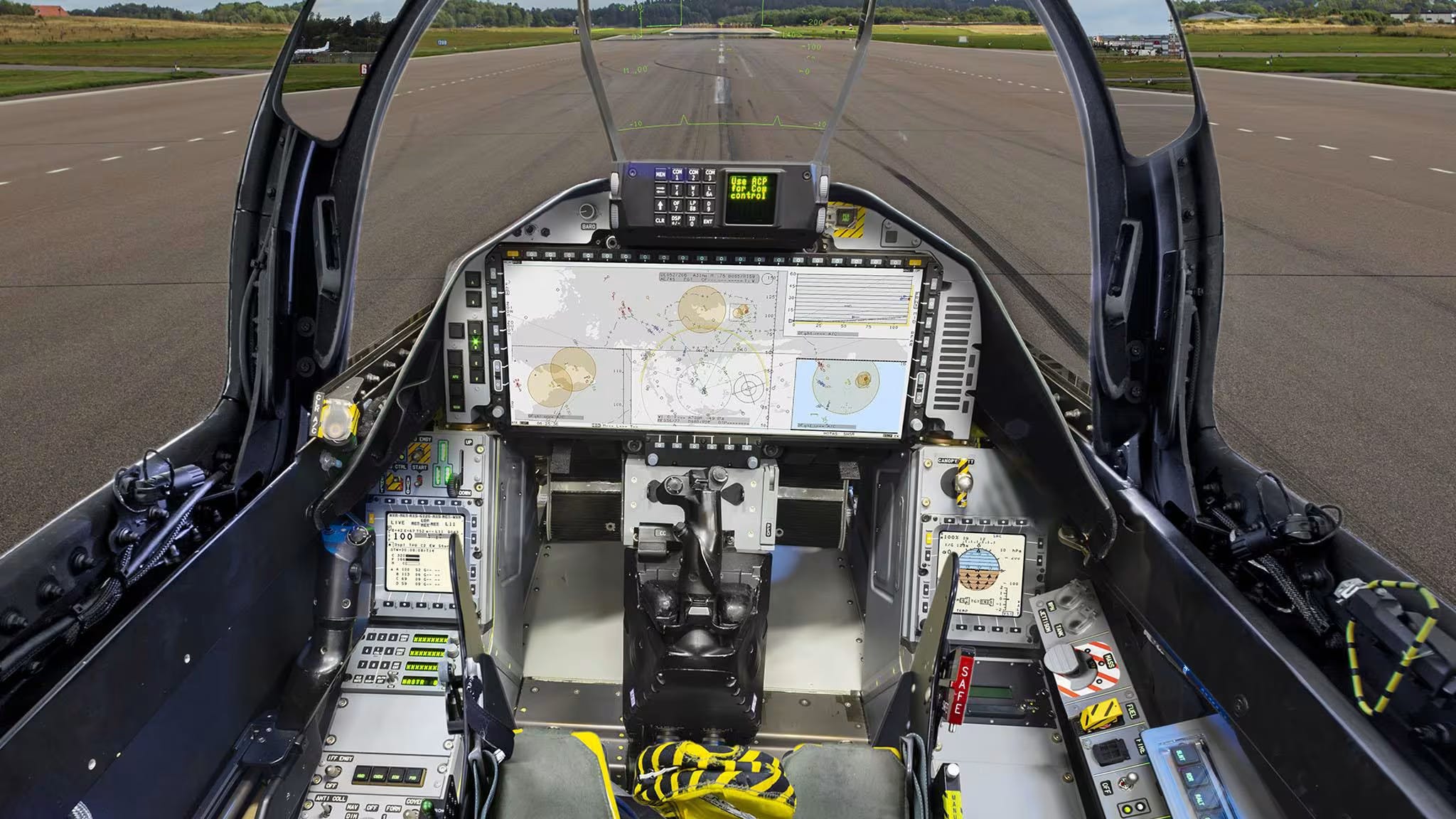
We’ve developed evolved automation – we even use aspects of things like AI and machine learning-based technology to help predict outcomes of events throughout the mission and offer the pilot advanced decision support to make the right actions at the right time in every moment. For example, how to launch a weapon and still maintain survivability against an enemy, complete situational awareness for when and how to act and when and how not to.

The ultimate point of Sensor Fusion, to sum it up, is to maintain a constant low workload for the pilots so they can entirely focus on the fight and the mission. And if you can’t do that, you’ve failed your pilots and your capability. This is a concept we call human-machine collaboration (Saab’s term).

This is what you need to fight and survive in today’s and tomorrow’s complex battle spaces against multiple threats.
You mentioned the active management or tasking of the sensors similarly to the way that the F-35 claims. So how does that work in more detail? Does it mean that, for example, on the tactical situation display, the pilot merely increases or decreases the range of the range circle, and he doesn’t have to set up the radar range or so forth manually anymore? Is it all of this done seamlessly in the background?


