You VOTED on the 10 best-looking British aircraft….and here are the results

STAY CALM!

“All beauty is founded on the laws of natural forms.”

– John Ruskin, The Lamp of Beauty

“The U.K.’s perception of beauty is totally out of whack.”

– Gok Wan

You were asked to vote for the best-looking British aircraft. With such a mouthwatering bevvy of sublime flying machines, selection was a tough task for the many people who took part. Such is democracy that, sadly, your favourite aircraft may not have made the list, so apologies in advance (international designs like Concorde and the Eurofighter Typhoon are not included). The good news is that the following ten are all absolute stunners.

Before we look at the winners, let’s look at some stunning machines that failed to make the top 10: Percival Mew Gull, Gloster VI, BAC 221, Miles Hawk Speed Six

undefined
MY FAVOURITE AEROPLANE IN 200 WORDS #12 Gloster VI by Andrew Brady |  Hush-Kit
Britain's Missed Mirage? - The Fairey Delta 2 - Forgotten Aircraft -  Military Matters
File:Miles Hawk Speed Six 'G-ADGP 8' (51549640547).jpg - Wikimedia Commons

NOW TO THE TOP 10

10: de Havilland DH.106 Comet â€˜Elizabethan Wet Dream’

undefined

The de Havilland company had produced a slew of beautiful aeroplanes throughout the 1920s and 1930s, among them a series of elegant biplanes and the streamlined four-engined DH.91 Albatross airliner (incidentally, voted joint number 11 with the Hawker Typhoon/Tempest). Drawing on their interwar know-how of the highly advanced DH. 88 Comet and Albatross, de Havilland created the phenomenal Mosquito combat aircraft.

undefined

Also, de Havilland flew the Vampire jet-powered fighter in the Second World War. When the war ended, with the experience gained from high-speed aircraft, airliners, and jet propulsion, de Havilland was well-positioned to build the world’s first jet airliner. This they did, and the resultant machine, with its sleekly buried engines, streamlined form and bare aluminium, was a revelation when it entered the world.

de Havilland DH.106 Comet

The Comet, the 707, and the disaster that shaped the Jet Age

The de Havilland DH.106 Comet was a silver dream of the future when it was unveiled in 1949. In a world of spluttering piston-engined DC-3 airliners, the Comet looked like it had arrived from another planet. It was the world’s first jet airliner, promising unprecedented travel speeds and altitudes. Sadly, the beautiful Comet would have a tragic early life with several crashes.

Later, podded engines would totally dominate airline design, but the Comet’s four jet engines neatly contained in the inner section of the wing was the far more aesthetic solution. The Comet lived on as the military Nimrod maritime patrol aircraft, but it as an airliner that it was purest in form.

9: Blackburn Buccaneer â€˜The Lancashire Hotpot Pirate’

FAAM Aircraft – Blackburn Buccaneer | SoFFAAM

A pleasingly left-field choice, the Blackburn Buccaneer was a naval attack aircraft that first flew in 1958. It is not beautiful but imposing, rugged, and rather eccentric in appearance. The Buccaneer was built to operate from Royal Navy aircraft carrier and perform low-level anti-shipping missions. To see a Buccaneer, the observer is impressed by its heavy industrial look, which reeks of physical strength

To create space on the crowded carrier deck, the â€˜Bucc’ has folding wings; the ‘Bucc’ is a particularly imposing sight when its wings are folded up. Scale, as with the English Electric Lightning, is where some of the Buccaneer’s visual impact comes from; the massive Buccaneer certainly knows how to dominate a hangar.

Blackburn Buccaneer

The tail section is particularly wonderful; many British jets have a seductively curved leading-edge to their tailfin, but the Buccaneer takes this to extremes, with a long curve that starts halfway down its back. Then we have a T-tail (a design feature that we’ll meet a few more times).

To this already characterful tail, add a banana-shaped (perhaps yam is more appropriate) airbrake protruding from the back, and we have one of the coolest rear-ends in aviation. Incidentally, the Buccaneer’s nickname is not from the airbrake design but because the aircraft was initially known as the BNA (Blackburn Naval Aircraft) or BANA (Blackburn Advanced Naval Aircraft).

As a flying ‘fuck you’ to a world that never truly appreciated it, Blackburn Aircraft Limited, after decades of debacle, went out on a high with this absolute unit.

8: English Electric Lightning â€˜Holy fuck!’

The Lightning, with an aggressive spiked cone protruding from its gaping ‘mouth’ is not pretty. It is also probably not conventionally beautiful (though some may disagree): but it is impressive and terrifying in appearance. It looks fast with its unusual wing swept back at an alarming sixty degrees.

The novel feature of overwing stores (ferry fuel tanks and even weapons on export aircraft) also won the Lightning many votes. This unusual feature results from the undercarriage occupying a significant portion of the underwing area that is normally reserved for stores carriage. The position of standard two air-to-air missiles (Red Top and Firestreak) is also rather unusual, being carried beneath the forward fuselage.

 Images of the English Electric Lightning, supplied by BAE Systems Military Air and Information (MAI).
CREDIT: Ian Black

The Lightning looked aggressively futuristic, especially in the shiny bare aluminium skin it wore for much of its life. The tail was somewhat brutal, and the aircraft’s proportions imposing. The height of the Lightning is quite remarkable; almost unbelievably, the fighter stands higher than an adult male giraffe.

 Images of the English Electric Lightning, supplied by BAE Systems Military Air and Information (MAI).

The most idiosyncratic feature, other than the wing shape, was the double-stacked engines, the twin vertically stacked nozzles at the rear are quite unlike any operational aircraft (though there were a few cancelled aircraft, notably the French SNCASE Grognard which adopted this approach). The Lightning invented heavy metal and tore the sky to pieces, with all the mad performance (and endurance) of an ADHD greyhound.

8: Avro Vulcan â€˜The Sound of 1,000 orgasming Brian Blesseds’

undefined

Few lucky enough to have seen an Avro Vulcan take off will forget it. The combination of ear-splitting noise and the vast shadowy mass of the delta wing is as dramatic as any opera, and far louder! The Avro Vulcan was a bomber used by the Royal Air Force, first flown in 1952.

Initial Vulcans had a straight leading edge, giving the aircraft a sleek, futuristic look; the later models had a kinked leading edge, which gave a more sinister, perhaps even Gothic appearance. The very thick wing gave the Vulcan a satisfying look of solidity. The Vulcan was unusual in being a subsonic delta.

Avro Vulcan

undefined

The Vulcan’s beauty was despite its grim intended role, as a nuclear bomber. The Vulcan enjoyed some wonderful paint schemes, notably the white ‘anti-flash’ for the nuclear role. The 1960s scheme for low-level bombing combined dark green and dark sea grey on top surfaces with Light Aircraft Grey on the underside.

No other aircraft looked like the Vulcan, which oozed charisma and even today, enjoys a larger ‘fan’ following than the other V-bombers, the rather conventional Vickers Valiant and radical Handley Page Victor. Fortunately, the Vulcan never carried out its nuclear attack role but did carry out conventional attacks in the Falklands War of 1982.

7: Vickers VC10 â€˜The Flying Jaguar E-Type’

The VC10 was born close to Weybridge in Surrey, England at Brooklands. This was the centre of British speed, both motor racing and aircraft production. Brooklands was where the Hurricane took its first flight, and was instrumental in creating the declinist poster-boy, the cancelled TSR.2 bomber (number 15 in terms of votes).

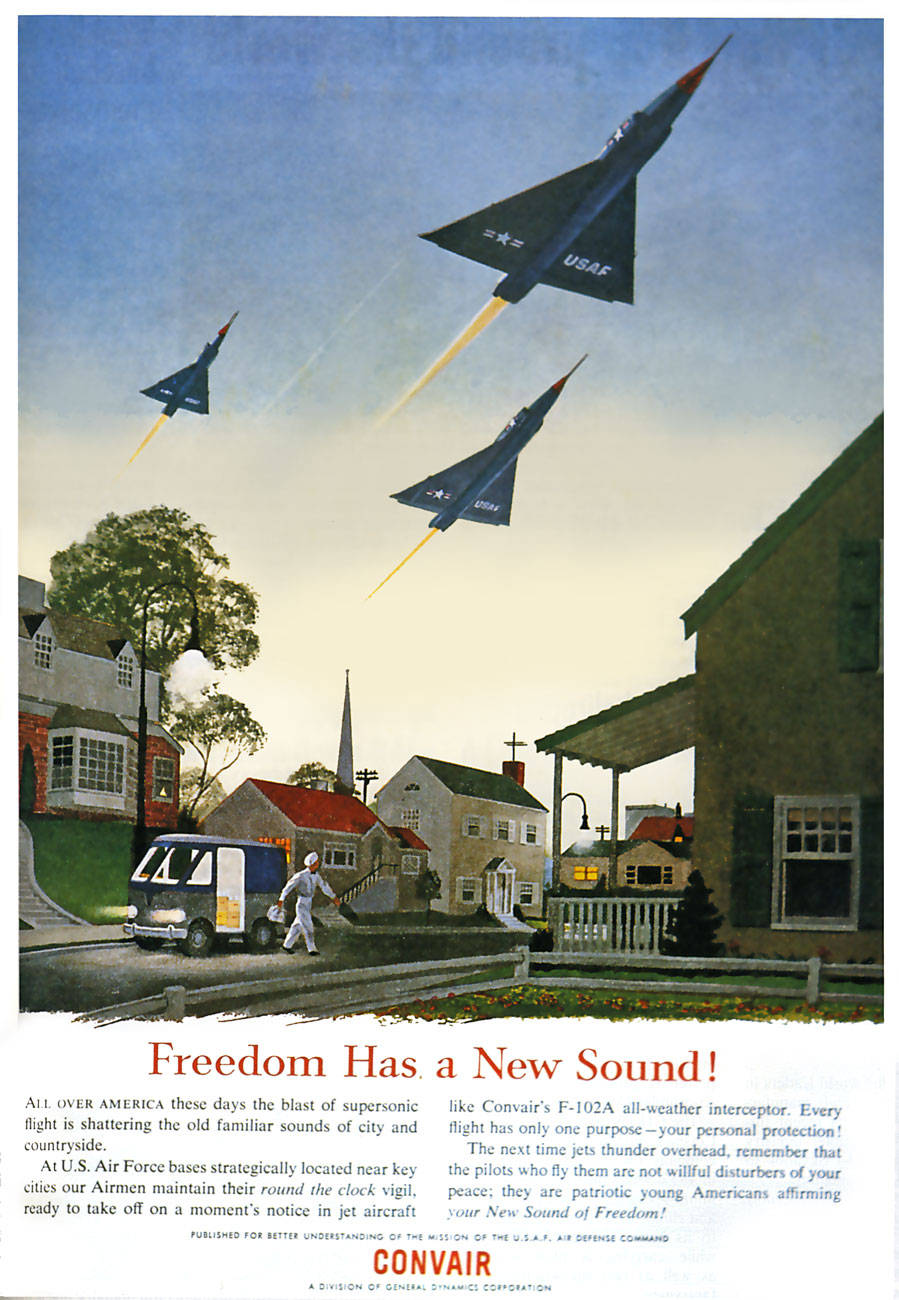
The VC10 was one of the fastest airliner this side of Concorde and the Tu-144. Its ‘never exceed speed’ was a spritely Mach 0.94. There is a story of a medical emergency onboard a VC10 en route from South Africa being addressed with a FL430 flight at a hair-singeing Mach 0.95. This would have even given Elvis’ speedy Convair a run for its money.

Vickers VC10

Sublimely uncluttered aerodynamic cleanliness defines the appearance of the spectacular Vickers VC10 airliner. Modern airline engines are too big to be put at the back, but this wasn’t the case in the VC10’s time (to be fair, there are other issues with having the engines on the back) and the VC10 had a neat quartet of jets tucked beneath the tail.

G-ASGR

The T-tail was a popular feature in British jet aircraft designs of the 1950s, and the VC10 featured one of the most impressive examples. The brilliantly engineered VC10, with its sharply swept wings and T-tail, had a probing dynamic shape, screaming speed and optimism.

6: de Havilland DH.103 Hornet â€˜Give me the horn!’

undefined

The most qualified pilot to judge a piston-engined fighter was the test pilot Eric ‘Winkle’ Brown, who deemed the single-seat Sea Hornet to be the finest aircraft he ever flew. Thanks to structural techniques developed from the Mosquito, a tiny frontal cross-section and fuselage, and buckets of power, it was joyfully overpowered.

Combat experience was limited to Malaya, where it replaced the Spitfire and the Beaufighter in the ground-attack role, flying over 4,500 reconnaissance and close-support sorties. Hornets also played a part in the dramatic rescue of survivors, including a six-year-old girl, of the shot-down Cathay Pacific DC-4 near Hainan Island in November 1954.

de Havilland DH.103 Hornet

undefined

The Hornets were the first to arrive on the scene to search for survivors, followed by a Valetta, Sunderland, York and Privateer. The DC-4 was shot down by PLAAF La-11s for

reasons unclear, either mistakenly for a Taiwanese military aircraft, to kill a Chinese Nationalist ambassador onboard or in a failed attempt to kill former OSS Head ‘Wild Bill’ Donovan.

The Hornet was the zenith of the minimalist school of piston-engined fighter design, which like the earlier Westland Whirlwind (number 17 in terms of votes) mated the minimum possible ‘wetted area’ with the maximum power. The Hornet was an astonishing warplane.

5: Handley Page Victor â€˜J.G. Ballard’s Hotrod’

undefined

Imagine a Bell X-1 that has been bodybuilding in the year 5000 and returned, obscenely muscular and futuristic, to terrify the 1950s: meet the Handley Page Victor bomber. Fast as a fighter, the Victor brought style to the insane poker game of nuclear brinksmanship. The pinnacle of British aero-engineering, the Victor was a madly impressive machine.

Of the V-bombers, it could be said that the Valiant was lukewarm in performance; the Vulcan a suboptimal approach (something the engineers of Handley Page strongly believed), but the Victor was a horrifically capable courier of the apocalypse, harnessing the white heat of technology to deliver the white heat of atomic holocaust.

undefined

Mike Freer – Touchdown-aviation – Gallery page http://www.airliners.net/photo/Handley-Page-HP-

The Victor viewed from the front is an astonishing sight, a Dan Dare or Thunderbird’s-esque vision of a very British kind of futurism. Its faceted cockpit section, aggressive intake and towering T-tail combine to form an utterly unique ‘cathedral of speed’.

Although one of its most defining characteristics is the huge, dihedral tailplane, the Victor was the only production aircraft to emerge from HP’s extensive studies of tailless aircraft, beginning in the 1930s. It directly descends from the studies of Lachmann’s advanced project department and the HP.75 Manx.

4: de Havilland DH.88 Comet ‘The

Credit: Airwolfhound

Just look at the thing. Absolute fucking perfection.

The de Havilland Comet Racer of 1934 is a ravishingly beautiful machine with an incredible, perhaps miraculous, backstory. Sir MacPherson Robertson put up a £10,000 prize (equivalent to £607,000 in 2025) for the winner of an air race from England to Australia, to celebrate the centenary of the Australian state of Victoria.

Whereas most entrants (rather reasonably) chose an existing aircraft, the de Havilland aircraft company proposed a brand-new aeroplane. The new machine, an utterly modern machine embracing all the latest ideas in aeronautical design, went from conception to winning the contest in only nine months!

de Havilland DH.88 Comet

Credit: Alan Wilson

Innovations included a retractable undercarriage (rare in 1934), a new kind of wooden stressed skin, and two-pitch propellers. Despite its slender fuselage, it contained enough fuel to travel 2900 miles (4667 kilometres) on internal fuel! The DH.88 would lead to the Mosquito, one of the best aircraft of the Second World War.

Today, Comet G-ACSS is part of the Shuttleworth Collection at Old Warden in England. Undoubtedly, this collection contains some of the most gorgeous aircraft in history, most of which sadly failed to make the cut in our poll (due to a paucity of votes), among them the gorgeous Mew Gull and Miles Hawk Speed Six.

3: de Havilland DH.98 Mosquito

undefined

The de Havilland company did well on this vote, and unsurprisingly, the ‘Wooden Wonder’ Mosquito was a popular choice. Some note that the Mosquito’s beauty, unlike that of the DH.88, cannot be adequately captured in a photo and that you need to see and hear one in flight to fully appreciate it.

The Mosquito was one of the most versatile, effective and survivable warplanes of the Second World War. Key to its excellence was its impressive turn of speed, the result of a clean light airframe of wooden sandwich construction, and two of the excellent Rolls-Royce Merlin inline engines.

de Havilland DH.98 Mosquito

undefined

Although some Mosquito variants could be accused of having a stubby nose, which sits somewhat obscured by the engines in profile, and not the most attractive canopy, it does boast a beautiful wing, engine nacelles and a rather cheeky tail fin with the tailplane protruding further aft in a somewhat eccentric, and quite appealing way.

The inner section of the wing has a far broader chord than the outer, giving the aircraft a look of structural strength. The ratio of propeller disc to overall size accurately gives the impression that is a very powerful machine capable of great speeds. The Mosquito ‘hangs’ together perfectly, as beautiful as it was brilliant.

Don’t get me wrong, I love a Mosquito, but come on, not more beautiful than a Comet surely? But you voted that it was. I’m not saying you’re confusing brilliance with beauty, but…

2: Hawker Hunter â€˜The Kingston Gangsta’

Privately-owned Hunter G-PSST

The Hawker Hunter was a very popular choice with Hush-Kit readers, and indeed, it is with most aviation enthusiasts. The Hunter is characterised by exquisite curves, without overly aggressive protruding shapes, and appears as if you could run your hand across the entire aircraft without hurting your hand— a key determinant of vehicle beauty, according to car designer Peter Stevens.

Sea Hawk FGA.6 - Navy Wings - Naval Aviation Charity

Designed by the brilliant Sydney Camm, creator of the Hawker Hurricane, the Hunter inherited another of his designs, the straight-winged (and very pretty) Sea Hawk (above). The neat wing root jet inlets are absolutely elegant, arguably the most fuckable in Cold War aviation, and both have a nose of handsome curve, and the cockpit canopy of a friendly yet formidable shape.

Hawker Hunter

Swiss Hunter with a special painting

The distinctive curved tail is characteristic of many British designs including the later Hawk T1. This offer aerodynamic advantages but is harder to manufacture, indeed a historical trend in many British aircraft has been aerodynamics over ease of manufacture. This prioritising of aerodynamics often has the happy byproduct of leading to good-looking aeroplanes.

It perhaps should be noted that some do not consider the Hunter to have an ‘all-aspect’ beauty, i.e, it doesn’t look perfect from every viewing angle: the wing chord is a little too deep, and the rear fuselage, a tad too elongated. But these are rather churlish criticisms of what is undoubtedly a very attractive machine. I still can’t believe you heartless bastards didn’t get the de Havilland Albatross or Supermarine S6 into the top 10.

undefined

1: Supermarine Spitfire ‘The Nazi-defeating Goddess of Beauty’

The Spitfire, with its mass of complex curves, was a manufacturer’s nightmare but an aesthete’s dream. Its deadly rival, the German Messerschmitt Bf 109, was the opposite, a nasty waspish block of unyielding angularity; the Spitfire, on the other hand, looked alive, a thoroughbred racer of uncluttered smoothness.

An elliptical wing is a wing shape that tapers from the root to the tip in an ellipse. The elliptical wing of many Spitfire marks is considered by many to be very beautiful (as well as being an excellent aerodynamic solution). Some Spitfires had the wingtips cropped for improved low-altitude performance, giving them a more thuggish appearance.

Supermarine Spitfire

The Spitfire inherited much of its good looks from its race plane heritage, and freed from floatplanes was even ‘faster’ in appearance. Intriguingly, floatplane Spitfires were tested in World War II, with one Spitfire Mk IX becoming the fastest floatplane of the war, with an impressive top speed of 377mph.

Those who prefer a spritely, almost canine, nobility of form prefer the early Merlin examples, whereas those who favour a more aggressive, muscular appearance flock to the late Griffon examples. The Spitfire’s beauty is not just based on its shape; one must savour or consider its historical significance, balletic agility and melodious engine sound to appreciate it fully.

Follow the Hush-Kit aviation world on Twitter X or Blue Sky. Sign up for our free newsletter here

Escalation in the Skies: India-Pakistan Aerial Confrontation Deepens Amid Missile Claims and Possible Downed Rafale Jet

Chinese J-10 fighter of the Pakistan Air Force

Indian Air Force air strikes have been followed by claims of a downed IAF Rafale and evidence of the combat debut of the Chinese PL-15 long-range air-to-air missile.

In a dramatic escalation of cross-border tensions, the Indian Air Force (IAF) has carried out a wave of airstrikes targeting multiple locations within Pakistan and Pakistan-administered Kashmir. The offensive comes just two weeks after a deadly terrorist attack in Pahalgam, located in Indian-administered Kashmir, which left 25 Indian nationals and one Nepali tourist dead. The Indian government has attributed the attack to militants operating from across the border and has vowed a firm military response.

The Indian Defence Ministry officially confirmed the operation, codenamed Operation Sindoor, emphasising that the strikes are part of a broader strategy to dismantle terrorist infrastructure and hold perpetrators accountable. Indian officials described the campaign as a calibrated yet resolute message to those enabling cross-border terrorism.

Hush-Kit Aviation Newsletter is a reader-supported publication. To receive new posts and support my work, consider becoming a free or paid subscriber.

Meanwhile, Pakistani authorities have claimed that in the course of retaliatory actions, multiple Indian aircraft were shot down. According to Pakistan’s military spokesperson, at least five IAF jets were downed during the engagement. However, independent verification of this claim remains elusive, and Indian officials have neither confirmed nor denied the losses, maintaining a deliberate silence.

In the contested airspace high above the India-Pakistan border, what was once a standoff has erupted into the most intense aerial conflict between the two countries in decades. Reports suggest that Pakistan may have deployed its most advanced air-to-air missile, the PL-15, a Chinese-designed system known for its long range. Analysts believe this marks one of the first combat uses of the PL-15. The PL-15 missile is equipped with active radar guidance, and is comparable to Western systems such as the AIM-120D AMRAAM and the MBDA Meteor.

Image

The missile’s seeker head (possibly photographed on the ground) is believed to utilise Active Electronically Scanned Array (AESA) radar technology, giving it superior resistance to electronic warfare and enhanced target acquisition range. Some sources also suggest it can engage targets at over 200 kilometres under ideal conditions, giving it a formidable edge in beyond-visual-range combat. India also has long-range air-to-air missiles, in the form of Meteors, on its Rafale (though delivered it is not known whether the Meteor are operational). Whether long-range engagements will be seen remains unknown. Such long-range shots require strong situational awareness to avoid the risk of friendly fire, and so far there have been no known examples in air warfare, though last year a Ukrainian surface-to-air missile used shoot-and-scoot tactics to down a Russian Air Force aircraft at an extreme range.


The age of ultra-long-range missiles started with the US Grumman F-14 Tomcat, which entered service in 1974, and the Soviet MiG-31 of 1981. But these heavyweight specialists interceptors were unusual. It was not until the 2010s that longer-range missiles, like the AIM-120D, MBDA Meteor, R-37, and PL-15, began being carried by smaller aircraft.


On-the-ground images and unverified footage have emerged showing wreckage consistent with PL-15 missile components. Debris reportedly discovered in Punjab’s..

READ THE REST OF THIS STORY HERE


https://hushkit.substack.com/p/escalation-in-the-skies-india-pakistan

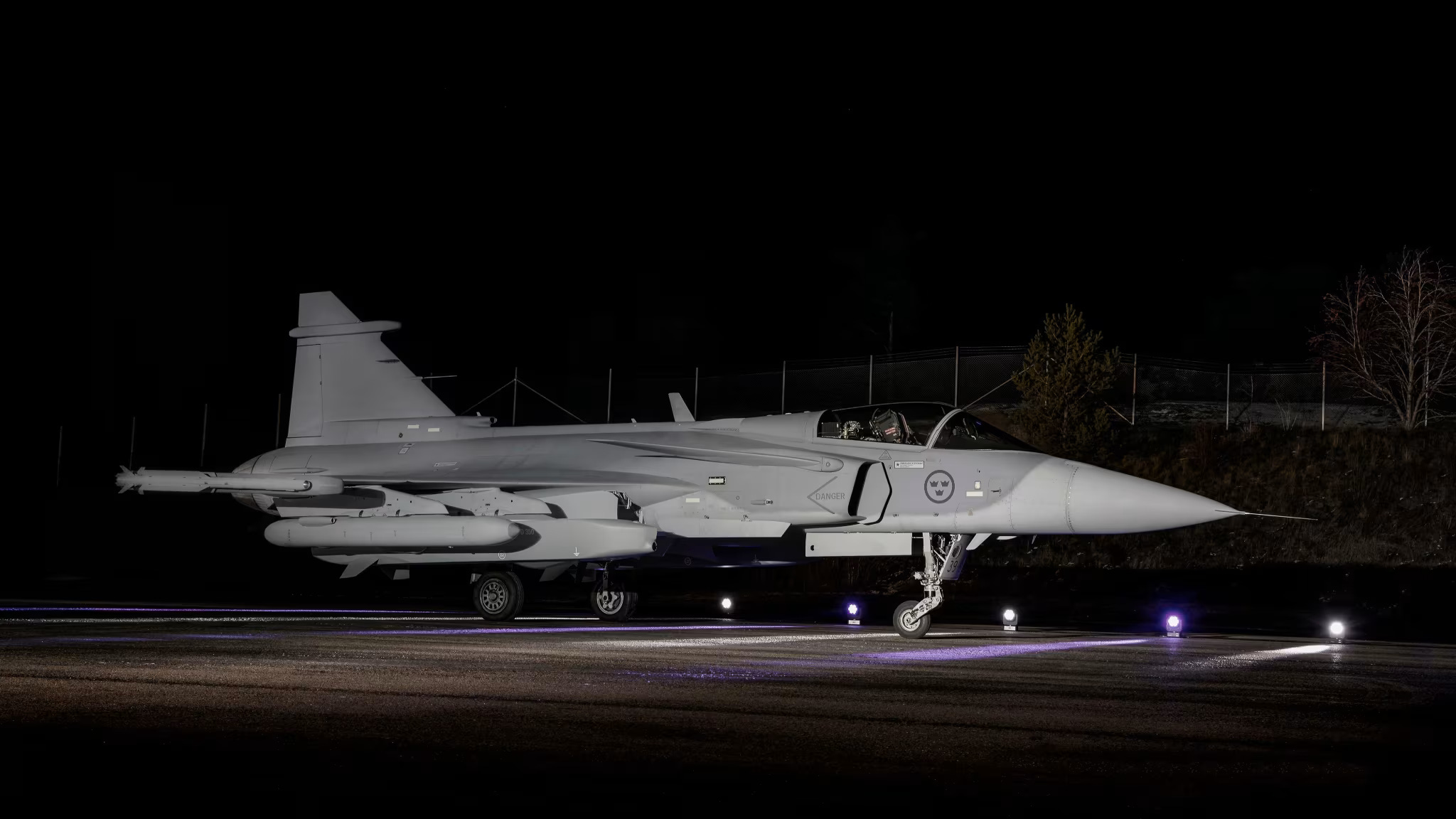
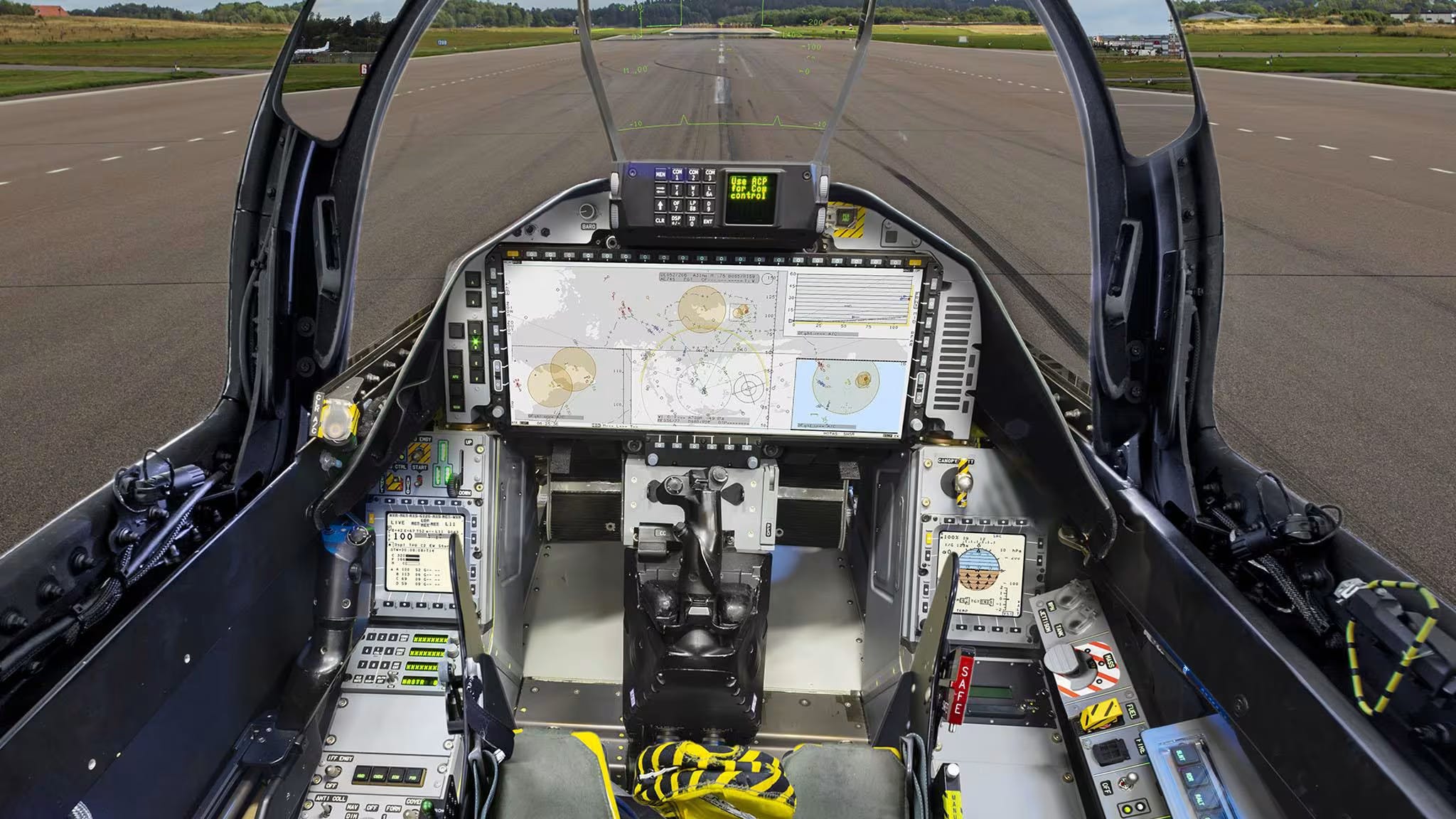
F-35 versus Gripen E: A deep deep dive

Unlikely as it is, the main competitor of the F-35 is the Saab Gripen-E. These two fighter types, are as different as they could get, one akin to a bulky people carrier, the other a stripped-down scrambler. The unlikely arch-rivals faced off in pitches for the Netherlands, Switzerland, and the Nordic countries, were proposed to Canada, and competed in the Czech Republic. We go even deeper into the unheimlich wizardry of Sweden’s new fighter with Jussi Halmetoja and find out how it compares to the F-35. This ain’t for the faint-hearted; it’s a detailed snoop into the world of the things that really count: exotic datalinks, sizzling electronic warfare and the vital need for technological sovereignty. Pour yourself a glass of wine and get comfortable; this is over 10,000 words long and reveals all you need to know about the F-35 versus the Gripen E.

“As a result, now that stealthy target is not so stealthy anymore. Now I can see you, and that means that you’re in trouble!”

Andy Tuma met Saab’s Jussi Halmetoja for an insightful tour of the magic of the Gripen E’s engineering and tactical systems, something that can be easily overlooked, and learned of the areas in which it matches, or even exceeds, the F-35’s capabilities.

“Hello. I’m Jussi Halmetoja, and I now work for Saab as an operational advisor for the Air Domain. I’ve had over 2,300 hours in the cockpit. Before joining Saab, I was a frontline squadron pilot on both Viggen and Gripen systems and a Weapons Instructor on the squadron. I was also on the operational test job. After that, I was also involved in some developmental and experimental flight testing with the Gripen C, and also when we started working with the Czech Republic and Hungary as the first export nations.

After my flying career, I’ve had staff positions at the Meteor missile programme office in the UK MOD and then at the Swedish procurement agency FMV as the head of the air-to-air missile capabilities. I was also the requirements manager for the Gripen E.

Over the years, I’ve had the privilege to fly in and with pretty much every Western fighter that you see in service today. My role today is to bring this experience into the Saab fighter domain business, where I get involved in system requirements and programme development. But I also do a lot of marketing and sales support across the whole Gripen programme domain.”

The F-35 pitches several key areas as gamechangers compared to the previous generation of fighter jets*. Let’s start with the advanced sensor fusion. Lockheed Martin boasts of the F-35’s autonomous fused sensors management, what they call ‘Active Sensor Management’. This refers to the way the aircraft itself manages, steers and tasks the various on-board sensors not just to correlate tracks from different sensors passively but to actively build the most accurate and reliable tactical picture by managing all sensors. Can Gripen E can do this?

“The mission to reliably detect, track and verify real objects in a complex battlespace using a lot of sensor input from multiple sources is one of the biggest challenges for fighter platforms today. To create full situational awareness, it demands fully fused data. This is a matter of life or death for any pilot.

Credit: Tibboh

At Saab, we’ve been working with this complex data fusion challenge or technology across our domains for probably at least 50 years, if not more. It is one of our core capabilities. We’ve realized long ago the necessity to implement sensor fusion throughout the entire command and control networks – not only on a singular aircraft, but also the entire networks such as aircraft, the early warning radars, other sensors. This development in the early sense of sensor fusion dates back to the Draken era in Sweden. It was, in fact, pioneered here in the 1980s, where we already deployed integrated, high-rate datalink systems on many platforms. And it’s fair to say that we’ve gathered a lot of experience over those decades, always prioritizing the mission the best way possible for the pilots.

In the Gripen E, the pilot is now assisted by a new, task-based high-level command structure. The sensors automatically steer and tune parameters to optimize their performance.

That task is done in a very similar way you mentioned that the F-35 allegedly does. No more frantic “switchology” and lists of complex routines for the pilot in the cockpit. That’s gone long ago now.

We’ve developed evolved automation – we even use aspects of things like AI and machine learning-based technology to help predict outcomes of events throughout the mission and offer the pilot advanced decision support to make the right actions at the right time in every moment. For example, how to launch a weapon and still maintain survivability against an enemy, complete situational awareness for when and how to act and when and how not to.

The ultimate point of Sensor Fusion, to sum it up, is to maintain a constant low workload for the pilots so they can entirely focus on the fight and the mission. And if you can’t do that, you’ve failed your pilots and your capability. This is a concept we call human-machine collaboration (Saab’s term).

Kraftwerk | LA Phil

This is what you need to fight and survive in today’s and tomorrow’s complex battle spaces against multiple threats.

You mentioned the active management or tasking of the sensors similarly to the way that the F-35 claims. So how does that work in more detail? Does it mean that, for example, on the tactical situation display, the pilot merely increases or decreases the range of the range circle, and he doesn’t have to set up the radar range or so forth manually anymore? Is it all of this done seamlessly in the background?

You can read the rest of this article here (we’re moving some of our articles to Substack to combat plagiarism issues).

How to treat an F-16 fighter plane

“Air-to-Air? No problem. Air-to-Mud? No problem. Close Air Support? No problem. It is easy to maintain and quick-turn capable. It’s not a glamour jet; it just can do everything well.”

Former USAF Crew Chief Derek Palos explains how to keep an F-16 flying, how to avoid ‘Falcon bites’ and the story of inter-unit aircraft graffiti in South Korea.

What’s the easiest way to get injured at an airbase? 

    On an active flightline the easiest way to get hurt, is not to be aware of your surroundings, and respecting the sheer power of that machine, you see people get falcon bites all the time, getting hit with flight controls, running into static dischargers, I saw a guy get his arm caught in between a horizontal stabilator and the body of the plane, he was very lucky to still have his arm. 

What is the most annoying bit of maintenance to do on an F-16?

        I never had to personally do one but the Emergency Power Unit Removal and Replacement (EPU R&R) is said to be a legendary pain in the ass, from what I understand it is almost impossible to get in without brute force haha. The most frustrating part about maintaining the F-16 for me personally was all the fasteners on every panel, such overkill. The top and bottom leading edge flap seals had at least 400 hundred screws, with butter-soft torque tip fasteners that would round out if you breathed on them wrong. Late in my career I was the NCO in charge of the second shift phase hanger, we would do programmed maintenance on a hours flown schedule, every phase required those flap seals to be removed. They were the bane of my existence.

“We had a saying at Luke: What’s the difference between a cactus and an F-16? On a catus, the pricks are on the outside”

The tight spaces in the engine bay made it difficult to safety wire a lot of the engine mounts after R&R, but you made adjustments for that the more you did which was instrumental during one of the challenging times which I’ll tell you about later  

Describe the F-16 in three words


   Lawn Dart Baby! That was a common dig on the F-16, with it having one engine, if it fails, it drops like the summertime front yard game here in the states where we throw giant darts (yes Giant darts) into a circle, similiar to horseshoes.   

What was your role?

  I was a Crew Chief, responsible for preflight and postflight inspections, servicing the aircraft, including everyday maintenance like refuelling and tyre changing, taking oil samples post-flight for SOAP (Spectrographic Oil Analysis Program) removal and replacement of airframe components like flight controls and landing gear, minor fixes like door latches, and basically anything not related to the Avionics or Weapons system.  

What was the most challenging time with the F-16 force?


I was stationed at Luke AFB in Arizona from 1993-97 in the 314th Fighter Squadron and 61st FS, (the 314th deactivated and we became the 61st ) there was a giant dust storm, what we call a haboob in Arizona (among other places). The whole base was not prepared but the 61st was positioned just right and our planes caught the brunt of the dust storm, every jet that was out on the flightline was filled with dust and small rocks in every opening. There was a freshly painted jet that we had just towed back from the paint barn that looked like half of it had been sandblasted. Every canopy was trashed, and depending which way it was facing on the ramp, decided which half of the canopy looked like it was rubbed with sandpaper. We had to take air out of the front struts to then run water through the exhaust, while an airman in raingear spun the blades from the intake. We had to resort to that because we used all the engine trailers for removed engines. The 61st worked night and day for eight days I believe, to get our 30 jets back to mission capable.  

How reliable is the F-16? 

        I feel it was very reliable, with one engine, it had to be. 

How do people feel about crawling about in the intake? 

         I personally didn’t mind jumping intakes; it was a badge of honour for a young airman to be able to sign off on other guy’s intakes, and it was a way to get out of a little work, too! At Luke it would get very hot on the flight line, so if you jumped in the intake while the fan was still turning (after shut down, not like that A-6 dude on the carrier lol) it would be 20 degrees cooler in there until the blades stopped, but until then it was pretty nice.

“On an active flightline the easiest way to get hurt, is not to be aware of your surroundings, and respecting the sheer power of that machine, you see people get falcon bites all the time..”

Tell me something I don’t know about F-16s? 

        Well, a little nugget I like to share is that something like 70% of the F-16 components are reversible, meaning landing gear and flight surfaces can work on both sides with minor changes. I think that may even include wings, but I’m not 100% sure about that one.

What were the main differences between the Block 25 and Block 40 and which did you prefer? 

        The Block 25 at the 61st FS was an older jet typically built in the early ’80s. The ones I worked on had Pratt & Whitney F100-220E engines, I was run-qualified on those engines. The 310th Fighter Squadron had Block 42 jets, with the same Pratt engines, and was built in the late ’80s. Luke was a training base, so we had pilots learning the F-16 after their initial flight training.  The 310th was training pilots in the LANTIRN targeting and navigation pods, we would fly 2-3 sorties a day, one day mission and two night missions. At the 35th Fighter Squadron while stationed at Kunsan AB we had Block 40, those had the GE engines: a ton more thrust, but a lot more maintenance. Thinking back on it, I probably like the Block 42s at the 310th FS the most, way more maintenance-friendly, and most consistent.

What is the biggest myth about the F-16? 

        I’m not sure if there are any myths about the F-16, but I do feel that it is not respected as much as it should be. It is VERY versatile. Air-to-Air? No problem. Air-to-Mud? No problem. Close Air Support? No problem. It is easy to maintain and quick-turn capable. It’s not a glamour jet; it just can do everything well. 

What is the most common fault on an F-16? 

          I can’t remember a consistent fault with the ’16. While I was with the 61st at Luke we had a problem with burn-throughs in the combustion area of the Pratt and Whitneys, we had 3 or 4 jets crash, I saw one go down myself, it was surreal. It had just taken off, there were three loud bangs, it banked hard left, punched off its wing tanks (it was a D model, 2 seater) made a u-turn and made its way to the farmland north of the base. The pilot kept the nose up the best he could; both pilots punched out, and the plane kept gliding until it eventually hit the ground, exploding. It was one of the wildest things I’ve ever seen.

A U.S. Air Force Capt. Justin Atkinson, an 18th Aggressor Squadron F-16 pilot, performs post-flight procedures on Eielson Air Force Base, Alaska, Oct. 29, 2022. This is the first time Eielson will have the wraith aggressor paint scheme in its aircraft inventory. (U.S. Air Force photo by Senior Airman Jose Miguel T. Tamondong)

What was best and worst about the F-16’s design?

         I’m 6 foot 1, the F-16 is very low to the ground. if you are not paying attention you will get “Falcon Bites”, I have one on the top of my head from an actuator sight glass door, and one from the left landing gear actuator attachment bolt above my forehead. I am very biased, but I think everything is the best about F-16’s

How maintenance-friendly was it? 

        It was very easy to maintain. When I first joined the Air Force, all the older guys were old F-4 crew chiefs. They would constantly tell us how easy it was to have it. “Fly-by-wire? Ha! Try calibrating turnbuckles and pulleys!”  The majority of the components were easily removed and replaced. It was a lot of fun to work on.

What was the relationship like between the maintainers and the aircrew? 

         Generally speaking, it was pretty good. At Luke, we were a training base, so we had a lot of new pilots suffering from ‘Top Gun Syndrome’, so occasionally, those guys would come around, but their instructor pilots would almost always lead by example and be really respectful and cool. We had a saying at Luke, purely in jest, ” What’s the difference between a cactus and an F-16?  On a catus, the pricks are on the outside”

Going overseas, there is a completely different relationship between aircrew and maintainers. It seems to be a much closer relationship. On my third day in Korea, the pilot of my assigned jet came to my dorm room, gave me a case of beer, and said, “Take care of our jet, man!” So, in that respect, it was totally different and appreciated.

What do you think of the F-35 from a Crew Chief perspective? 

 I would definitely be like those old F-4 guys: “You have a laptop you plug into the jet, and it tells you what’s wrong with it? We troubleshot the old-fashioned way.” chief

What was good and bad about USAF culture? 

          I’m sure, like every military around the world, it’s the friends you make, the camaraderie and good times in shitty places. I got to go have temporary duty in Florida and Canada, lived in Korea for a year, learned how to run a jet, and have a ton of stories to tell. That is the Air Force culture to me. That and the food, we had the best food of all the services, hands down.

I think the bad thing about AF culture (at least when I was in) was there was sometimes a ‘fail upwards‘ climate for people who weren’t very dedicated to the job or not good at it. Don’t get me wrong, if you are not a good mechanic, and you try like hell to learn, and you are involved in everything you can be, you will not be considered a failure, you’ll be respected. But avoiding the difficult shitty work would sometimes get rewarded. 

What is a Crew Chief’s role, and what makes a good one?

   The Crew Chief’s role is to prepare the jet they are assigned to for the day for flight and to keep it ready until it is no longer needed for sorties. We make sure all the documentation is up to date, and all inspections are complied with prior to flight. We greet aircrew, follow them around the jet while they do their preflight inspections, answer any questions they may have and buckle them in to the seat. We then run through the engine start up, the pilot will run a pre-programmed  flight control test and then we do a manual flight control check (we are on the comm the whole time this is happening), we do a dry run of the EPU (Emergency Power Unit) used only in emergencies, it is powered by Hydrazine which is a big time carcinogen. It is attached to the accessory drive gearbox, I’m pretty sure, its been a while, it can run the hydraulic pumps and other vital components for around 10 minutes. After we do that, the airman launch assisting standing by the fire bottle and the the crew chief remove the landing gear pins and send the plane on its way.

When it comes back, we do a basic post-flight inspection, which is not as thorough of an inspection, and get it ready to go again. A good crew chief has to be a good mechanic, have a ton of integrity, be a quick learner, a team player, be extremely sarcastic, self-deprecating, and have a vulgar mouth.  

Which other service or unit was the butt of your jokes? 

Stateside, it’s not really prevalent, except for the regular USMC jokes, calling them “Window Lickers,” and “Crayon Eaters.” Everyone makes fun of the Marines, but it’s like brothers making fun of each other. If a civilian says something like that, it’s not as accepted.

Overseas is a different story. At Kunsan AB there were two squadrons, the 35th, which is my squadron and the 80th FS The Juvats, it was just a good-natured rivalry, during the winter we would do drive by snowballing on the guys out at the “smoke pit” outside their squadron building, things like that. 

Our squadron went TDY (temporary duty) to Japan and we had a guy who was obsessed with cleaning his jet, he was the crew chief on the Squadron jet, so it was expected but this dude went overboard. It was put in a hangar for it to be in a ceremony of some sort. The next morning, the host squadron had cut a giant toy wind-up key out of cardboard and made it look like a wind-up toy. The crew chief was not happy.

We had another incident when one of our jets, had diverted to Osan, the northernmost Air Force base in Korea, our tailflash designation was WP for Wolf Pack, when the jet came back someone had written in grease pencil  “ere” and “ussies” on the tail so it said We’re Pussies. It was pretty funny, I wish I had a picture.

Did you call it Viper? Did anyone call it the Fighting Falcon?

    Yeah, I called it Viper, just sounds WAY cooler

What was the worst damage you ever saw on an aircraft?

     I had my aircraft involved in a mid-air collision, it happened at the Gila Bend Range in Arizona. The missile rail of one F-16, same squadron, same class, hit the left flap and sheared off half of the horizontal stabilator, my jet diverted to Gila Bend reserve base and my Dedicated Crew Chief and I had to go there with a Stabilator in a van and had a flap shipped there, replaced them and the jet returned the next day.

Do you get angry if a pilot damages an aircraft? 

   Only if they do something avoidable, hard landings require certain inspections depending on how hard the pilots feel the landing was. I had a jet return from a night refueling training, had the refuel boom scrape down to the bare metal in a long, oblong American-football-shaped scratch all around the backbone of the plane eventually scraping it around until he made it into the air refuel receptacle.

Also had a young Lieutenant come back with his Big Mac and fries in his oxygen mask, he didn’t have one when he left, if you know what I mean. He tried to hand it to me and I recoiled and told him with all due respect I’m not taking that. The instructor pilot in the backseat told him to figure it out himself. 

Do you feel possessive of the jets; do you ‘own’ them more than the pilots do? 

    Absolutely. They fly my jet for maybe three hours a day, I spent hours making sure everything was as close to perfect as it could be. But it really is a team effort, nothing gets off the ground without everyone doing their part.

What should I have asked you? 

         You asked great questions 

Things are getting better, come and see why on our Substack (which will become an important base for Hush-Kit). Keep this site free by using the donation buttons on this page. For aviation news, madcap history and inappropriate jokes follow us on Twitter and Blue Sky.

We read a review we enjoyed that we’re sharing here – review by Michael Turns

Unbound (@Unbound@mas.to) - mas.to

“The Hush-Kit Book of Warplanes” (Published by Unbound in early 2023) by Joe Coles appears, on first glance, to be a conventional book on the subject of military aircraft. But there is far more going on here than first appears.

The book is satisfyingly hefty and handsome, and nicely printed and bound with a dramatic photograph of a Saab Draken by renowned Japanese aviation photographer Katsuhiko Tokunaga. Considered by many to be the best aviation photographer this is a promising start. The design is fresh and appealing, with extremely strong photography and artwork by talented illustrators (including the British artist Andy Godfrey). Some of the artworks are of extremely obscure cancelled projects, and the book contains multiple ‘easter eggs’ and arcane references hidden in the artworks and subheads (I found 9 but guessing there are more).

The contributors list is a veritable supergroup of aviation writers, including Bill SweetmanCalum E. DouglasEdward WardThomas Newdick and of course, Hush-Kit creator himself Joe Coles. The book is largely made of expanded articles from the Hush-Kit site, a blog that has been going for a long time, and that is WELL WORTH a look.

The book features top 10s, an engaging and accessible format that does not detract from the seriousness of the research and the excellent knowledge of all the contributors. Likewise, the sharp – and sometimes absurd – wit brings the subject to life. The editor acerbically described the book as attempting to drag aviation writing from the 1950s to the 1970s, and in this he succeeds. Punk has arrived and it is a breath of fresh air. Those finding it too unconventional or misinterpreting the irreverence as silliness will miss out on what is the certainly the most interesting military aviation book in years.

The rapid changes in tone in the book are exhilarating, leaping from meta jokes about aircraft books to shocking true confessions of war crimes from Iranian air force pilots. The interviews feature pilots of some of the coolest aircraft types including the MiG-25, SR-71 Blackbird and Su-30 Flanker. As well offering personal insights, the insights into the machines themselves are often revelatory, such as the flaws in the F-35s much vaunted cockpit display.

“The Hush-Kit Book of Warplanes” also goes beyond the realms of technical specifications and delves into the often weird, sometimes terrifying, stories behind the aircraft. The anecdotes and historical context provide a human touch, allowing readers to connect with the incredible men and women who flew and built these machines. It serves as a reminder that warplanes are not just mechanical marvels but exist in complex world of wider context.

In conclusion, “The Hush-Kit Book of Warplanes” is a must-have addition to any aviation enthusiast’s collection. Its combination of in-depth knowledge, stunning visuals, and engaging writing make it a standout resource in the world of warplane literature. This book is a testament to the imagination and expertise of its authors, and it will undoubtedly ignite a renewed sense of wonder and admiration for these remarkable flying machines. My one worry is that it is maybe a bit ahead of the curve and some won’t get it, but for those who do – this is truly superb. Spread the word or we may not see any more books like this.

Buy your copy here.

Pre-order The Hush-Kit Book of Warplanes Vol 3 here.

Is the attack helicopter dead?

The attack helicopter is costly and complex to operate, yet it is taking a mauling in the Russian invasion of Ukraine. Russia’s full-scale invasion attempt of Ukraine starting in 2022 has shown both the vulnerability of helicopters and the effectiveness of small, uncrewed aircraft against armour. With this in mind, we ask: Is the attack helicopter dead?

  • Ron Smith

Few observers thought Ukraine could withstand the Russian onslaught of 2022. Footage released in April footage of the destruction of a Russian Kamov attack helicopter was a huge morale boost. And more followed. The war in Ukraine has been marked by staggering losses of both anti-armour helicopters and armour.

Armour operations

Typical Western doctrine (offensive or defensive) uses manned armoured reconnaissance ahead of the Forward Line of Own Troops (FLOT) to locate enemy forces and determine their intentions. Increasingly, manned operations will be supported by other ISR (intelligence, surveillance, and reconnaissance) platforms, such as Uncrewed Air Vehicles (UAV) and later Uncrewed Ground Vehicles (UGVs), to augment the manned platforms.

Recce: This is driven by a recce Plan determined by the Commander’s Critical Information Requirements (CCIRs), designed to fill in gaps in intelligence and distinguish enemy feints and deception tactics from their main force’s true intentions and timing. Other objectives would typically be to locate enemy command and control, logistics, air defence units, long-range artillery, and other high-value/high-threat components.

The recce info will then shape the deployment of main armour and infantry (again offensive or defensive), supporting anti-armour helicopter and precision long-range artillery operations.

Manned armoured reconnaissance beyond the FLOT (i.e., in enemy territory) is likely hazardous, particularly if the enemy has effective electronic surveillance capabilities. Traffic analysis can be used to locate signal traffic from unknown forces and, even if encrypted, is likely to result in unwelcome attention. The US tends to assume its comms cannot be read, so it reports every enemy observation. The UK is more concerned about detected transmissions (even if not read) and operates largely under radio silence.

Terrain masking to avoid detection may make Very High Frequency traffic difficult, so HF or datalink to SATCOMs may have to be used.

Armour and Mechanised Infantry: In addition, armour, on both sides, is having a hard time. In the Ukraine case, the threat has proven to be a combination of precision artillery and long-range missile attack, combined with top attack by armed drones. 

The author identified this latter threat as a concern more than a dozen years ago – having noted that Hezbollah, in the first Lebanon conflict, had deployed armed drones against Israeli armour.

Because the high mass of protective armour leads to weight and mobility issues, MBT protection is concentrated against direct fire attacks from other MBTs. Top protection is typically reduced, primarily against artillery near misses rather than direct hits, which are now the norm. Even with these measures, deployed MBT mass is typically around 62 tonnes, and top protection is one area that is typically traded off to achieve acceptable mobility.

Active protection systems are not yet regarded as mature and may introduce hazards to nearby personnel (if operating with infantry, for example). I am unsure how successful these are in Israeli use, or whether they have been used successfully in Ukraine.

Furthermore, Western armour generally has no organic means of detecting or countering the drone threat, although directed energy weapons or RF countermeasures may offer some capability in the future and are undoubtedly being actively researched and trialled.

So heavy armour is looking increasingly vulnerable, as, in the Ukrainian conflict at least, attack helicopters. However, heavy armour is clearly still important for taking and holding ground, so it will most likely continue to be central in many operations. 

Attack Helicopter operations

When the UK was developing its thinking for GST3971 to acquire a dedicated attack helicopter in the mid-1980s, the vision was of a helicopter that could engage in autonomous direct-fire attack of heavy armour. The threat was essentially Cold War, with massed Soviet armour operating across the North German Plain. Organic air defence (then primarily radar-directed ZSU-23-4) was a significant threat, leading to a desire to stand-off outside its lethal range. Priority targets were enemy air defence, command and control centres and heavy armour.

The solution was deemed to be a low-signature helicopter (radar and IR signatures, particularly) fitted with a mast-mounted sight and using terrain screening. A long-range fire-and-forget weapon was required so that the helicopter would not be exposed throughout the weapon’s flight time.

Initially, Apache was not favoured because the AH-64A was regarded as having large visual and radar signatures and an inadequate sighting system. Without a mast-mounted sight, Scout helicopter support would also be required for target acquisition and designation.

The AH-64D with Longbow and RF Hellfire largely solved these problems by acquiring targets at long range and engaging in indirect fire. However, the missile and target detection range exceeded the recognition and identification range of the TADS sight (which also required the helicopter to be exposed to gain a line of sight to the target). This introduced some concern about the ability to achieve positive target identification when operating under restrictive rules of engagement.

The Situation in Ukraine

Russian operations over Ukrainian-held territory

Today, taking the Ukraine experience as representative, Russian attack helicopters are operating over large regions of Ukrainian-held territory without air superiority and with a dispersed infantry threat armed with capable MANPADS systems. The defending forces can adopt positions that are well hidden, but which offer good fields of fire. 

The difficulty of detecting and countering this threat, combined with extensive areas lacking terrain cover, significantly increases the risk to attack helicopters in transit to and from their targets. This is compounded by the apparent ineffectiveness of the helicopter protection and countermeasures equipment.

There are reports of both sides in Ukraine using armed drones for anti-personnel operations against individual soldiers, so operation under cover, if not actually below ground is becoming necessary, if there are enemy drones in the area. This undoubtedly reduces the opportunities for, or increases the risk of, MANPADS operation.

Ukraine perspective – early phase

In the early phase of the invasion there was an armoured attack along the borders, but particularly moving south towards Kyiv from Belarus. This was largely canalised along main routes, as were its supporting logistic columns. This resulted in heavy losses. These were inflicted mainly by mines and artillery. Flooding of off-road terrain reduced the transit route options for the invading force.

Later Developments

After being pushed back from Kyiv in the initial armour thrust, Russian armour and mechanised infantry have been grinding out attacks from Ukraine’s borders, particularly from the south and east. This relatively static land battle is accompanied by long-range missile attacks on critical infrastructure and population centres.

Both sides have effective anti-aircraft missile systems, and neither side has achieved full air superiority over the battlefield. The later Russian attack has featured the use of medium- to long-range stand-off weapons (cruise or ballistic missiles and glide bombs), air-or ground-launched, often from within Russian territory. There seems little scope to counter this, while the political does not exist to mount attacks on launch locations well into Russian territory. The best possible missile defence system may ameliorate damage but will not hasten the end of the conflict, which has become strategic rather than tactical.

Significant numbers of western ground-to-air missile systems are also being supplied. Ukrainian anti-armour operations have increasingly been able to use precision artillery such as HIMARS and ATACMS. The availability of such systems and their munitions is likely to be in short supply and is dependent on enduring political support from EU and NATO countries. It is, therefore, vulnerable, for example, should Donald Trump be returned as US President following the November election.

It seems likely that NATO surveillance assets (E-3, RC-135W, U-2S and satellite cover) are gathering real time intelligence over the battlefield – whether such information is being passed to inform Ukraine deployments and targeting decisions has not been revealed. In any future conflict, using such overhead assets and effective datalinks to transmit near real-time intelligence is likely to be key to effective offensive or defensive operations.

Both Russia and the Ukraine have adopted the use of armed drones for the top attack of armour and these appear to have been very successful. (Relatively little imagery has been released showing Ukraine anti-armour helicopter attacks on Russian armour, or indeed Russian helicopter attacks on Ukrainian armour – Western or otherwise).

NATO nations are beginning to supply air-to-ground weapons such as Brimstone and Storm Shadow, and F-16 aircraft have entered Ukrainian service. It is not known whether Western air-to-ground missiles have been integrated for release from existing Russian-built equipment operating with the Ukrainian Air Force.

Suggested Success Factors for Helicopter anti-armour operations

What do you need for successful helicopter anti-armour missions? Ideally, you want air superiority and not to operate over large swathes of enemy-held territory occupied by determined resistance, equipped with capable MANPADS and other air defence systems such as S-200 and S-300. 

Here is a list of possible success factors for postulated helicopter anti-armour operations.

  • Accurate intelligence as to disposition and movement of enemy armour: satellite, aerial recce, stand-off radar, comms / SIGINT, manned armoured reconnaissance, SF, etc.
  • A command and control infrastructure capable of providing updated target information in near real-time
  • Ability to comply with restrictive rules of engagement when necessary
  • Preferably having air superiority over the area of operations
  • Ability to reach an engagement position with minimal exposure to threat systems
  • Ability to engage at long-range
  • The necessity of avoiding enemy drone threats to AH is likely to favour mobile rather than static operation.
  • Carriage of sufficient weapons to inflict significant attrition on the enemy force (likely to determine the number of helicopters in the attack)
  • Use of longer-range missiles (Rafael Spike NLOS quotes 27 km range, helicopter-launched Brimstone is said to have similar range capability).
  • Proven and effective countermeasures against unexpected missile attack – missile launch detection and tracking, plus sophisticated countermeasures and effective signature reduction. Today, there must be some query as to the availability and effectiveness of such systems.
  • Ballistic tolerance at least against small arms and medium machine gun threats
  • Reliable, low-maintenance platform, capable of operation in all weather and climatic conditions.
  • Crashworthy fuel systems
  • Run-dry transmission systems

Defensive Operations

The above factors suggest that deploying attack helicopters operating defensively (over one’s territory) could still be effective.

If the enemy uses the same or similar equipment, there would still be problems to solve regarding positive target ID. Also, effective command and control to deal with a fluid ground situation could be problematic, as could maintaining a supply of munitions to the AH force. Missile countermeasures remain an uncertain problem.

Offensive Operations

Long-range indirect fire engagements would be preferred for both offensive and defensive operations, and they would probably be essential in the offensive case. 

The high helicopter losses sustained by Russia in current offensive operations probably reflect high risk operations, in the face of determined opposition with capable weapons and not much terrain cover for the helicopters. Also, no air superiority to provide top cover and hinder ground air defence, together with apparently ineffective measures to hinder missile lock-on and to break lock, once engaged.

Moreover, the threat is not the organic air defences of battlegroups or a Soviet Motor-Rifle Regiment or Brigade but dispersed and well-hidden infantry and special forces units equipped with modern MANPADS missile systems. Furthermore, because the enemy forces are operating over the defenders’ own ground, the defence can be cued and alerted to approaching helicopters, given good data connectivity.

In the case of offensive operations, it would appear that stand-off operations from the ground already held by one’s own forces might be the order of the day. In this case, the helicopters might operate similarly to a highly mobile precision artillery unit, able to redeploy kilometres across the field of operations in minutes. With a lack of local air superiority, the Russian use of stand-off weapons launched from within their territory supports this proposition.

A further consideration is that maintaining the mobility of the helicopter force is likely to benefit it by hampering any drone threat targeted at it.

The focus of attack might shift towards enemy logistics – MBTs without fuel or ammunition cannot conduct manoeuvre warfare. 

Increasing the range at which the attack is conducted could suggest the use of larger helicopters to carry the heavier weapons likely to be required – feasible if operating over safe ground. The carriage of Exocet on certain export Sea King aircraft is an example of such a usage. Rafael Spike and Brimstone are also attracting interest because of their long-range capability. Clearly, target selection would be entirely dependent on the higher-level ISTAR infrastructure, although salvo-fired Brimstone has already shown some autonomous target discrimination capability.

An alternative to using one heavy long-range missile per tank destroyed might be to use a larger helicopter to launch long-range drone-carrying systems. This could allow several medium helicopters to launch attack and surveillance drones into a given operational area, possibly in the enemy’s rear. Command and control, logistics, comms, armour, barracks, and hardened targets could all be engaged in this way. 

Forward-launched recce drones could provide target designation and satisfy positive ID requirements when operating under tight rules of engagement.

Such an approach could also overload the enemy air defence command and control and be usefully deployed in conjunction with simultaneous missile and/or manned aircraft operations.

This capability is alluded to in several planned US programmes, including the abandoned FARA and FLRAA. We are talking about air-launched effects (LE) for reconnaissance or attack and Future Tactical Unmanned Aircraft Systems. The air-launched effects were described (Vertiflite March / April 2024) as being deployed from FARA, FLRAA and Black Hawk “to decoy, disrupt or destroy enemy air defences and to spot targets for joint forces”. The same article indicates that ”the Army plans first flight of a fully-integrated ALTIUS – Air-Launched, Tube Integrated Unmanned System from a Black Hawk this year” potentially for a rapid fielding decision in 2025.

The US’s ”long-standing interest in technologies that enable a single operator to control multiple UAS is associated with this.”

Perhaps network-enabled command and control, ISTAR, and other means of target verification can integrate existing AH capability in defensive operations. Medium helicopters operating further back could launch a mix of longer-range weapons and ‘Launched effect UAS’ in both offensive and defensive scenarios.

Further to the suggestion of stand-off medium helicopters for anti-armour ops over enemy territory (and the US reference to Air Launched Effects), see here.

It is also worth noting that Sea King was cleared for export customers to launch Sea Eagle (India) and Exocet (Qatar, Pakistan), suggesting plenty of payload for air-launched systems controlled by medium support helicopters. [A good role for the FAA Merlin Mk.4 force?]

The Drone Threat to Helicopters

In a traditional mechanised offensive, armour and infantry fighting vehicles (IFVs) operate collectively to gain and hold ground. Helicopters are used forward to take out enemy armour and attack command posts while scouting and designating targets for precision artillery strikes.

Infantry also relies on helicopter support for air cover and casevac. Recently, drones have been used in kamikaze attacks on helicopters. Used in this way, drones could significantly hamper helicopter operations and severely affect infantry morale.

Both helicopters and ground vehicles now need to adopt design and protection / defensive measures cognisant of the drone threat. In this scenario, the twin tail rotors suggested on some Westland designs (admittedly for other purposes) could provide a degree of redundancy.

General Observations

As the earlier discussion shows, the systems are more important than the platform. Ideally, you want to be network-enabled (so that someone else sorts out the targets and satisfies the rules of engagement). Then you want a long-range fire-and-forget weapon system capable of defeating enemy countermeasures and with a tandem charge, warhead to deal with ERA. If the missile sensor can discriminate between target types, so much the better. If I were in a tank, I’d still be worried about drones – as I said in a briefing a dozen years ago. 

Given the right network integration and the right weapons, you could inflict a deal of pain in a fairly basic helicopter while staying well out of the way of any air defence. You still have to protect yourself against chance encounters – partisans or special forces with shoulder-launched weapons, for example. This appears easier said than done.

Assuming conditions allow offensive aircraft operations, integrating western weapon systems such as Brimstone on suitable platforms, such as Frogfoot, could provide the ability to salvo fire against multiple targets. Its MMW radar seeker is supposed to support this capability, with the weapons themselves avoiding duplication of effort and allocating targets across the salvo (fire-and-forget en masse).

The capacity offered by a medium helicopter in this role could extend to area denial or countermobility operations. This type of platform might be used to deliver area denial or scatterable countermeasures (even mines, perhaps) to rapidly counter enemy armour. Missiles such as Brimstone might be more effectively employed in this scenario.

Whether in a defensive or offensive posture, an agile and responsive command and control system will be required to maintain a responsive decision-making process. This is known as the OODA-loop (OODA stands for observe, orient, decide, act). There is some question as to whether current NATO surveillance assets are providing near-real-time intelligence to Ukraine. It is clear, however, that long-range stand-off anti-armour operations will require a persistent (probably stealthy) high-flying or stand-off system to provide situation awareness, detect armour targets across the battlefield and enable the use of precision indirect fires (whether by artillery or helicopter, operations).

Use Code DISCOUNT15 for a healthy 15% discount on your pre-order of The Hush-Kit Book of Warplanes Vol 3 here.

One very good use case for low or zero sensors but good comms is to have airborne nodes in a ‘scrum half’ position behind the tactical edge. Anything up threat (exquisite and LO) can use directional comms to get data back / receive C2 and Intel from the nodes; the nodes then use any route to get to the optimal place – including space and terrestrial – from a position that cannot be easily targeted by OPFOR.

Urgent Operational Requirements manage rapid change during conflict, usually in response to painful lessons learned. This is generally at the subsystem/protection level rather than the system and platform level. Examples could be the rapid introduction of electronic countermeasures, protective screens, and responses to enemy countermeasures. The targeting infrastructure required to support helicopter indirect fire long-range attacks appears a little different from that required to support MLRS / HIMARS / ATACMS operations and should, therefore, be available, provided suitable tasking orders can be accommodated.

Interestingly, the available description of the Leonardo AW249 mentions the ability to operate air-launched RPVs. The latest Aerospace magazine indicates more on its network capability: “acts as a sensor ISR node on a C4 network, and (can) control and manage UAVs – with a Wide Band LOS Datalink … LTE Gateway and Link 16.” The articles do not address the routine concept of operations, but the connectivity and network capabilities could allow a range of collaborating systems to provide targeting data. Now they just need to adapt AW149 and/or NH90 TTH to the stand-off anti-armour role …”

Tentative Conclusions

There are many problems facing armoured units in modern land warfare. Broadly, these fall into

(1) threats: enemy armour, helicopters, armed drones, precision artillery and missiles, minefields and obstacles;

and (2) the difficulty of sustaining operations over time at long range: logistics – fuel, ammunition, repair, crew sustainment, rules of engagement.

Similarly, one can discuss the problems facing the counter-armour forces – again dependent on terrain/area of operations, posture, equipment and C4ISTAR systems and their connectivity. 

Operational changes may arise under TTPs (Tactics, Techniques, and Procedures) rather than wholesale doctrinal revisions. The challenge is to inflict heavy casualties on enemy forces while increasing one’s own chances of survival.

Used carefully, existing attack helicopters operating over ‘friendly’ terrain can still be effective. Increased use of ‘network-enabled warfare’ seems essential, combined with the ability to engage targets primarily at range and preferably non-line-of-sight.

You might end up with some new operational concepts and the reprioritisation of target lists.  Flooding of land to ‘canalise’ (literally and metaphorically) the routes available to armour (and logistics); out-of-contact launching and controlling of recce/designator / armed drones – and longer-range missiles from medium helicopters looks like a decent tactic for anti-armour operations and may have a place in both defensive and offensive postures.

Brimstone 2 (helicopter launched) has a stated range of 40 km+. As an operational concept, half a dozen AW149s (or NH90s, or Merlins, or Sea Kings), each with eight Brimstone 2, could do a lot of damage providing indirect fire—provided near real-time networked stand-off target information was available. In this role, the helicopter fleet operates as a highly mobile precision artillery force.

Exploitation of night capability and simultaneous attacks along a front might come into play. Deep strikes into enemy training and rear areas (and recruitment centres) might also be targeted to affect public opinion and morale.

Other options could include using dummy armour supported by signals deception activity to draw in enemy forces or distract from more covert operations.

Finally, it would appear that heavy armour forces do need organic close-in air defence. Perhaps the naval approach (e.g., Phalanx)—whether by high rate-of-fire radar-directed gun systems, electronic countermeasures (potentially including EMP to disrupt connectivity of control systems), or directed energy means—might go a good way to countering the ‘kamikaze drone’ threat. Target detection and tracking systems would have to be modified to suit the targets to be engaged. 

The low cost and simplicity of the drones mean that they have a significant number of advantages, and identifying and then defeating drones once in the air is hard; their low profile and low signature are a challenge, and their agility makes physical defeat hard. This strongly favours electronic countermeasures might be the preferred approach.

There’s a Hush-Kit Book of Warplanes Vol 1, and there will soon be a Vol 2 and then a Vol 3!

Thank you for reading the Hush-Kit site. It’s all been a massive labour of love to which I have devoted much time over the last 12 years. There are over 1100 free articles on Hush-Kit; think of the work that’s gone into that! To keep this going, consider donating (see button on top of page) or supporting on Patreon. Not having a sponsor or paid content keeps this free, unbiased (other than to the Whirlwind) and a lot naughtier. We can only do this with your support. I love this site and want it to continue; this is where you come in.

To those who already support us, I’d like to thank you.

The discussion suggests that intelligence, communications, and the ability to counter enemy operations are becoming dominant factors in future land warfare. Land platforms and helicopters should now be designed, considering enemy drone operations as a key threat.

Equally, friendly drone operations – offensive, defensive, intelligence gathering, defence suppression, etc. —should be integrated into and with operational planning and land and air platform capabilities.

RV Smith

Dr Ron Smith joined the British helicopter company Westland in 1975, working in Research Aerodynamics, and remotely piloted helicopters (before they were cool), and later became Head of Future Projects. He had a strong influence on the design of the NH90 helicopter, and was involved in the assessment of the Apache for Britain. He also explored a variety of exotic future technologies for Westland. One such exotic machine was a secret stealth attack helicopter.

Credit is also due to John Puddy, Robert Hopkins, Jeremy Smith, and Jim Smith for the valuable insights they provided.

Use Code DISCOUNT15 for a healthy 15% discount on your pre-order of The Hush-Kit Book of Warplanes Vol 3 here.

I flew the Big Sexy KC-10 super-tanker and I will miss it


The KC-10 did not require modification to carry the SR-71’s special JP-7 fuel, as it had fuel tanks that could be isolated (if desired) and only delivered to the boom. Those tanks could also hold regular JP-8 and feed it to the engines if needed.

Last week, the KC-10 Extender, a superb aerial refuelling aircraft, retired. We spoke to a KC-10 pilot to learn about ‘Big Sexy’.

The best KC-10 was its versatility and the flexibility of its crews. Unlike the KC-135, the KC-10 was ready to refuel probe or drogue receivers without any extra work or attachments needed before launch. With the ability to be refuelled itself, the KC-10 could be launched and flexed to almost any refuelling mission quickly.

The worst thing about the KC-10 was taxiing it around on smaller airfields. The nosewheel sits 20+ feet behind the pilots, so you must be very careful about turning sharp corners or trying 180° turns. In these cases, we’d often have a boom operator open the forward doors, lay on their stomach & hang out of the aircraft; they were on the intercom, relaying the position of the main and nose wheels to the pilots, keeping us from crunching taxi lights or ending up in the grass (which we sometimes did anyway).

Based on overall capacity, the KC-10 was better than the KC-135; it could take off with a much higher fuel load. While it burned more per hour, there was still significantly more fuel available for receivers. The ‘135 also couldn’t do Drogue receivers unless the boom was modified ahead of time (which meant it couldn’t do probe receivers) or if you attached pods to the wings. The KC-10 was ready for either at any time (and we could put our own pods on the wings, if needed).

The empty weight of the KC-10 was about 250,000 lbs. Maximum takeoff weight was 590,000 lbs…so about 340,000 lbs of fuel, if you weren’t carrying cargo. All of it could be offloaded, other than what we needed to save to get ourselves home…and sometimes we pushed that limit! In one case, I pushed a little too far – we got back to our deployed base, and it was fogged in. We couldn’t even attempt an approach.

We were getting close to diverting, which would have been painful, but another KC-10 arrived. They took up a holding pattern over the base, a couple thousand feet above us. We started coordinating between ourselves to balance fuel out so nobody had to divert, then just did it. At one point, there were four of us in the pattern, talking to each other, and passing fuel so that everyone got to sleep in their own bunks. The fog eventually lifted, and we all made it in.

The KC-10 was actually pretty easy to take off and land. It was very stable and large, and bumps that would affect smaller jets didn’t have much impact on us. The controls were pretty straightforward. On landing, you’d start the process of “flaring” just after the 50’ radar altimeter callout.

You rarely landed smoothly, though, as the centre gear touched down first on crowned runways. It shook & rattled, so there was always some of that, except in the rare instance you’d land with the centre gear retracted.

There weren’t many foibles to the jet; it handled well. It was just very large. When refuelling with KC-135s years ago, the bow wave of a heavy KC-10 could hit a sensor in the 135’s tail, disconnecting their autopilot. If they weren’t watching it, you’d suddenly end up with a face-full of KC-135 as their autopilot kicked off and the nose dropped. They eventually fixed that problem, if I recall.

One peculiar aspect was that the number 2 engine in the tail was angled down at about 2.5°. We tried not to use it for taxiing, as we were already worried about blowing things over…some would limit how much they used it when air refuelling, too, as a big input could push the nose down.

Something you may not know about the KC-10: well, it had a large space under the cargo floor that was just empty. I think it was the galley on the DC-10, but the Air Force had no need. We called it “The Pool Room”; I was told it was because you could put a pool table in there, and have room to play. Getting into it was a hassle.

You could access the KC-10 through the nose gear. We occasionally had to do that; you’d climb up & shimmy through the avionics compartment, eventually ending up in the cockpit. It was a tight fit!

The newer KC-46 is a decent aircraft. It’s had teething issues, but they will eventually sort it out. The problem is that losing the KC-10 still represents a major loss of overall capacity, as there will be less fuel in the air at any given time. The Air Force already can’t meet all its demand for Air Refueling, and I’m afraid that is much worse today.

My favourite aircraft to refuel was the B-1; it wasn’t particularly cool or anything, but when it showed up on your schedule in Afghanistan, they were going to take about 100k lbs of fuel…and your day just got a lot shorter!

My least favourite aircraft to refuel was the A-10. It doesn’t have the power of other jets and flies pretty slowly; we had to use slats and sometimes flaps to get slow enough. Above certain weights, it was just not possible.

The deck angle when refuelling A-10s could be in excess of 5° nose up…almost feels like you are setting up for a power-on stall. We had a procedure to help called a “Toboggan”…we’d enter a slight descent at around 300 feet per minute. That gave the A-10 the help it needed to get on the boom, but you only had 1,000’ below you before you’d be outside of your protected airspace, so you’d only get 3 minutes or so. Then you’d have to climb up & do it again.

Nobody was necessarily bad at meeting the tanker, and we went out of our way to come to them. It didn’t always work, but we usually managed to end up 1-3 miles in front of them. Many fighter types referred to the KC-10 as the “mothership” because it was so large and was just there, in front of you.

Occasionally, the AWACs would control our rejoins. They didn’t seem to have much practice doing so; I can recall them vectoring us to our bomber, and vectoring the bomber to us…AWACs handed us off nose to nose at around 3 miles, closing at probably 600-700 knots. We were separated by 1,000’, so it wasn’t unsafe, but AWACs kind of said, “There you go,” and we immediately shot past each other in opposite directions. It was funny…we took over & directed a mutual turn on the same magnetic heading, which at least put us abeam each other & fixed it from there.

The KC-10 set the bar for tanker ops, hands down. As we discussed, the flexibility to do any Air Refueling mission at any time was key, and our ability to be refuelled meant we could be doing it for long hours.

We also had a significant cargo capacity. You could load up support troops and their equipment, then drag multiple fighters across an ocean. When you landed, you were almost your own little Air Force and could start operations quickly.

1A good tanker crew got to be a mini family. We didn’t use ranks in the KC-10 while flying, but rather, first names. We wanted every member of the crew to feel like they could speak up if they saw something wrong; everyone knew who the Aircraft Commander was, but that wasn’t something you wanted to flex on your crew – doing so may mean you win the battle, but you’re losing the war.

A good crew got to the point where they knew what everyone else needed, and they were ready before anyone asked. They understood the bigger picture, and took care of each other; you could complain, but my only rule was that the complaints better be funny because there wasn’t a lot we could do about most of it…it was better to laugh about it than to make each other miserable.

Big Sexy was the most common name, yes. Sometimes referred to as Gucci, but the official name was the Extender.

Three engines weren’t particularly unusual, no. The tail engine was exactly like the other two, but with a longer cowling. It was angled down slightly, though, as I mentioned.

If you had an engine failure (like we did in the simulator every quarter), you hoped it would be the tail engine. There was no asymmetrical thrust; the loss of one of the wing engines caused a lot of asymmetrical thrust, which required a lot of rudder to counteract.

Follow KC-10 driver here and follow me here

There’s a Hush-Kit Book of Warplanes Vol 1, and there will soon be a Vol 2 and then a Vol 3!

Thank you for reading the Hush-Kit site. It’s all been a massive labour of love to which I have devoted much time over the last 12 years. There are over 1100 free articles on Hush-Kit; think of the work that’s gone into that! To keep this going, consider donating (see button on top of page) or supporting on Patreon. Not having a sponsor or paid content keeps this free, unbiased (other than to the Whirlwind) and a lot naughtier. We can only do this with your support. I love this site and want it to keep going; this is where you come in.

To those who already support us I’d like to say a big thank you.

All the best, Hush-Kit

EUROFIGHTER TYPHOON BOON! THE LUFTWAFFE TAKE ON THE F-22 RAPTOR AT RED FLAG

Eurofighter GmbH, producer of the Typhoon fighter, is beginning to emerge from a period of serious self-reflection. Recent sales campaigns have ended in bitter defeat. Eurofighter has watched big prized contracts being dished out to all of it rivals. It lost in Switzerland to the Swedes, in Japan to the United States and in India to the French. Rafale, Typhoon’s closest rival, had emerged victorious in India, the biggest fighter contest in the world. Future enhancements to Rafale are almost certain to be bank-rolled by India, as well as making sales to additional customer more likely for the French fighter. This was disastrous news as the Rafale is very similar in capability to the Typhoon. Could the shrinking fighter market support two such near rivals?

Added to this gloom was the F-35’s seeming invincibility to cancellation. The F-35 is set to become the first massed-produced stealth fighter, available to all (well, almost all). Many air forces have been envious of the US’ stealth technology since the F-117’s star-turn in the 1991 war with Iraq. As well as the promise of stealth, the F-35 has enormous political backing and Lockheed Martin’s incredible mastery of the black arts of military hardware promotion. Despite the F-35’s dire development problems, customers are still clinging to the notion that the F-35 will be the Model-T of stealth and will make ‘aluminum’ aeroplanes obsolete overnight. However, the F-35’s problems have given Eurofighter an extended time window in which large sales have been possible, but these opportunities have been repeatedly squandered. To many observers it was looking like Typhoon was a dead duck, that would fail to achieve any more significant export sales.

 Typhoon boon?

After several years of misery for Eurofighter, the last week has brought a little bit of sunshine. The most conspicuous piece of good news was from the Luftwaffe regarding Typhoon’s performance over in Alaska. A detachment of 8 German Typhoons from JG74 were deployed to Red Flag 2012 in Eielson AFB in June. During the exercise they took part in basic fighter manoeuvres (BFM) against the F-22. Now before I go any further, we all know the usual disclaimer: without details, and in particular without rules of engagement specifics, not much can be inferred from BFM anecdotes. But…the following exciting titbits did emerge-

  • According to the Col. Andreas Pfeiffer, commander of JG74 “Typhoon is a superior dogfighter” to the F-22 in within visual range combat.
  • Typhoon can out-climb the F-22
  • Typhoon can out-accelerate the F-22

These are all very interesting claims. The latter point reminds me of a conversation I had with a Eurofighter representative a few years ago. I asked him if Typhoon could out-climb the F-22. He replied it could. Two days later he withdrew this comment.

The confident statements by Pfieffer are significant for two reasons:

  1. The F-22 is the aircraft to beat

Of course the Raptor decimated the Typhoons at Beyond Visual Range, a domain where the F-22 is still peerless. But, the Raptor is also one of the very best close-in dogfighters, thanks partly to thrust vector control (TVC). Performing well against the F-22, even if just in the Within Visual Range domain is still a notable achievement. On the subject of TVC, Luftwaffe pilots noted the F-22’s tendency to sink when employing thrust-vectoring. This echoes the experience of the F-15C pilots who flew against India Su-30s in training exercises. The USAF Eagle pilots were quick to identify counter-tactics to the energy depleting TVC moves employed by IAF ‘Flanker’s, though admittedly the F-22 is probably far better at recovering energy than the Su-30.

2.  These were German Typhoons

Luftwaffe Typhoons (for the sake of clarity I will not refer to them as ‘Eurofighters’ as the Luftwaffe generally does) are the worst equipped of the partner nations (the RAF aircraft are the best). To put it simply, if the worst Typhoons can put up a decent fight against the F-22, what could the best Typhoons do?

The defensive systems are not to the same spec as the RAF, lacking several components and featuring a smaller amount of data about potential threats. They do not have an infra-red search and track device, possibly the best way to track a low Radar Cross Section (RCS) target like the F-22.

Importantly they didn’t have the Typhoon’s advanced helmet system. The helmet displays vital information to the pilot and allows weapons to be slewed onto targets very quickly indeed and at extreme angles.

RAF Typhoons took the helmet system to a multi-national exercise in Malaysia last year. The system was deemed to be a strong contributor to the Typhoon’s domination of air combat exercises against F/A-18s, F-16s, MiG-29s and advanced F-15 variants during this training event.

The JG74 aircraft sent to the US were upgraded examples. Changes included an upgrade to the aircraft’s radar software and new radio, mission data and countermeasures software system. Other modifications were classified.

Luftwaffe Typhoons are considered behind the curve in terms of tactics and equipment, especially when compared with RAF aircraft. This success in Red Flag is thus particularly good news. Especially as Germany is keen to offload as many of its older Typhoons to export nations as possible, offering these low-mileage, early Tranche aircraft at competitive rates.

The next piece of good news, is that Eurofighter is waking up to the basics of sales. Shockingly, it emerged that the company put little or no effort into reducing unit costs to potential buyers, instead relying on the weight of high-level governmental support. The obvious example must be India, where the Typhoon bid was supported by extravagant promises and visible efforts by heads of state, but ultimately lost on cost grounds.

Guiseppe Orsi, chairman and chief executive of Finmeccanica (one of Eurofighter’s main partners), acknowledged the lessons learnt in an interview with the Financial Times. He stated:

“We will all be around the table and start from what is the competitive price to win a competition, as we do in the commercial field, then we go back and see what each company has to do in order to get that competitive price.”

The partner companies must work together to achieve this for the greater good of Typhoon sales. Clearly the united ‘front’ of Eurofighter is a smokescreen for large defence contractors viewing their partners as rivals and being unwilling to share sensitive information on costs and margins. Sadly it seems Eurofighter represents a microcosm of the EU itself, its problems analogous to a failing Europe.

However, awareness and public admission of this is a sign that this culture may change.

The aircraft itself is by all accounts excellent, the missing piece to the puzzle of its failure to achieve greater export success may have been found.

If this interests you, support Hush-Kit.net with a donation (buttons above and below). If this goes well we’ll be able to give you much more! Recommended donation £10. Many thanks for helping to keep us impartial and independent.

You may also enjoy A B-52 pilot’s guide to modern fighters, Flying and fighting in the Lightning: a pilot’s guide, Interview with a Super Hornet pilot, Trump’s Air Force Plan, 11 Worst Soviet Aircraft, 10 worst US aircraft, and 10 worst British aircraft. MiG-21s, MC-21s and the overrated Typhoon: In conversation with FlightGlobal’s Stephen Trimble, The F-35 will fail, until the US learns to share, An air force of my own #1, Top 8 Mach 3 fighters

Once upon a time, a story in no way about the F-35…


Once upon a time a new fighter was planned. It would be a great fighter. It would push the boundaries of technology and it would be all things to all air forces – and navies.

The military knew that it had to ask for every piece of technology and every capability it could think of. It knew this because a responsible government keeps a check on defence procurement, making sure that the military doesn’t spend all the treasure. So the military asked for all the toys it could ever want, expecting that it’d actually get only the toys it needed. That was usually the way of things. It also decided that it’d be really smart to ask for just one type of fighter, but have it built in really different versions.

So the military sat down and made a list of all the magic it wanted in its new fighter. The list said: stealth; a new radar and sensor suite; a helmet-mounted sight that did away with the traditional HUD; a single, widescreen cockpit display; advanced sensor and data fusion; a new propulsion system; the ability to operate from land bases without compromise; the ability to operate from aircraft carriers without compromise; the ability to operate from smaller ships without compromise; weapon bays; supersonic performance; a brand new logistics and maintenance system; world-beating air-to-ground capability; and world-beating air-to-air capability.

It also made a list of all the aeroplanes it wanted to replace. On the list it wrote F-16, F/A-18, A-10, Harrier, Tornado, F-4 and EA-6B, a long list of very different aeroplanes with diverse capabilities. Could the new fighter really take-off like a Harrier, kill tanks like an A-10 and jam mobile phone signals before they could trigger an IED?

Airframe Wizards

Now the aircraft and engine manufacturers, high-tech wizards with great magic in their wands, looked at what the military was asking for and saw treasure. They saw the chance to develop technology beyond their wildest dreams and, if everything went well, to make billions of money from all the fighter jets they would sell to air forces and navies of the world.

It all seemed so possible and soon they were busily at work, crafting and concocting. Each piece of technology was possible, given enough time and resource, but no one stopped to ask if all the technology was possible at the same time and for the same machine. No one stopped to ask if so much technology could be adapted to fit the requirements of the very different versions of that machine. And no one stopped and said to the government, or the military, ‘Yes, we can do all these things, but probably, if we’re entirely honest, not in a useful timescale, certainly not on budget, and maybe not all for just one airframe design.’ Worse still, everybody became so engrossed in trying to make it all work, that nobody thought to ask if they really should be trying to make it all work.

Problems, problems

Many years passed. A great deal of treasure was made and a huge amount lost. Wizards came and went. Dates and deadlines came and went. Some aeroplanes were built while the wizards were still working their magic and although these aeroplanes were upgraded, they were never as good as the aeroplanes that were made years later, when all the magic was finally working.

The problem was that none of the wizards ever lay down his wand and said: ‘What are we doing? This is all going horribly wrong and we should admit that we’re all wrong and fix it.’

The problem was also that the military saw all its wildest dreams coming true and didn’t want to admit that it had set off the wizards on a quest that would stretch their magic so far that it’d keep breaking. It had been allowed almost all of the toys that it had wished for, even though, in the real world, most of those toys were pure luxury most of the time.

The government simply didn’t understand and it didn’t think to ask anybody who did. It started out with a big chest of treasure and although it added a little bit of extra gold, it still wasn’t enough to pay for the fighter programme as it struggled along. So it decided to buy fewer aeroplanes, but it was the development costs using all the treasure up, not the production, so the government actually paid for fewer, much, much, much, much more expensive aeroplanes.

Happily Ever Afters

There were several possible endings to the Fighter Fairy Tail. In one, the whole programme was stopped and the wizards put all their magic and their clever spells into the aeroplanes that the new fighter was supposed to replace, and into much more modern aeroplanes that were already in production, but still evolving. Legend has it that this had been done once before, long, long ago, when a very clever helicopter gave away all its magic. It worked out quite well.

In another ending, the programme was cancelled and the military made do with the fighters it already had in production. This seemed like a very silly ending, because it wasted so much magic and most of the very, very clever wizards disappeared.

Ending number three saw some of the magic requirements relaxed. This meant that the remaining magic could be made to work much better, much more quickly. One of the fighter variants was abandoned, which allowed the others to be much less compromised. The wizards managed to get really, really good aeroplanes to the military without too much more delay. By the time the military got its hands on the jets it had forgotten about all the problems and the aeroplanes worked so well that everyone, even the government, was delighted.

In the final ending, the wizards carried on as they were. The military wriggled and jiggled and although some changes were made, it pretty much got what it wanted. At first the government made the military order far fewer jets, but the aeroplane remained in production for 30 years and because orders kept being added, in the end the military got all its aeroplanes and the wizards made lots and lots of treasure.

The problem was that the first aeroplanes were delivered when their magic was immature. They all needed new spells and some of them had lots of their magic missing for many years. By the time it was ready, they were worn out.

But finally, the military got all the variants of the new fighter into service. Eventually they all worked. All the magic did what it was supposed to do and because the magic was clever, the wizards could keep writing new spells that kept the aeroplanes on top of the world.

But there was a snag. The ending was not entirely happy, although it did take forever after. Almost two decades passed from the time when the wizards delivered the first aeroplanes until all the variants were in service and doing all the things that the wizards had promised and that the military wanted. This was always going to be the ending. The aeroplane was superb. Its technology was superb. Its powerplant was superb. But in combination, they were just too much for the wizards to make quickly and at the same time. For a truly happy ending, somebody should have realised that.

This is a work of fiction. Any similarity to militaries, governments, wizards or fighters, living or dead, is purely coincidental.

Follow the author on @twodrones