You VOTED on the 10 best-looking British aircraft….and here are the results

STAY CALM!

“All beauty is founded on the laws of natural forms.”

– John Ruskin, The Lamp of Beauty

“The U.K.’s perception of beauty is totally out of whack.”

– Gok Wan

You were asked to vote for the best-looking British aircraft. With such a mouthwatering bevvy of sublime flying machines, selection was a tough task for the many people who took part. Such is democracy that, sadly, your favourite aircraft may not have made the list, so apologies in advance (international designs like Concorde and the Eurofighter Typhoon are not included). The good news is that the following ten are all absolute stunners.

Before we look at the winners, let’s look at some stunning machines that failed to make the top 10: Percival Mew Gull, Gloster VI, BAC 221, Miles Hawk Speed Six

undefined
MY FAVOURITE AEROPLANE IN 200 WORDS #12 Gloster VI by Andrew Brady |  Hush-Kit
Britain's Missed Mirage? - The Fairey Delta 2 - Forgotten Aircraft -  Military Matters
File:Miles Hawk Speed Six 'G-ADGP 8' (51549640547).jpg - Wikimedia Commons

NOW TO THE TOP 10

10: de Havilland DH.106 Comet â€˜Elizabethan Wet Dream’

undefined

The de Havilland company had produced a slew of beautiful aeroplanes throughout the 1920s and 1930s, among them a series of elegant biplanes and the streamlined four-engined DH.91 Albatross airliner (incidentally, voted joint number 11 with the Hawker Typhoon/Tempest). Drawing on their interwar know-how of the highly advanced DH. 88 Comet and Albatross, de Havilland created the phenomenal Mosquito combat aircraft.

undefined

Also, de Havilland flew the Vampire jet-powered fighter in the Second World War. When the war ended, with the experience gained from high-speed aircraft, airliners, and jet propulsion, de Havilland was well-positioned to build the world’s first jet airliner. This they did, and the resultant machine, with its sleekly buried engines, streamlined form and bare aluminium, was a revelation when it entered the world.

de Havilland DH.106 Comet

The Comet, the 707, and the disaster that shaped the Jet Age

The de Havilland DH.106 Comet was a silver dream of the future when it was unveiled in 1949. In a world of spluttering piston-engined DC-3 airliners, the Comet looked like it had arrived from another planet. It was the world’s first jet airliner, promising unprecedented travel speeds and altitudes. Sadly, the beautiful Comet would have a tragic early life with several crashes.

Later, podded engines would totally dominate airline design, but the Comet’s four jet engines neatly contained in the inner section of the wing was the far more aesthetic solution. The Comet lived on as the military Nimrod maritime patrol aircraft, but it as an airliner that it was purest in form.

9: Blackburn Buccaneer â€˜The Lancashire Hotpot Pirate’

FAAM Aircraft – Blackburn Buccaneer | SoFFAAM

A pleasingly left-field choice, the Blackburn Buccaneer was a naval attack aircraft that first flew in 1958. It is not beautiful but imposing, rugged, and rather eccentric in appearance. The Buccaneer was built to operate from Royal Navy aircraft carrier and perform low-level anti-shipping missions. To see a Buccaneer, the observer is impressed by its heavy industrial look, which reeks of physical strength

To create space on the crowded carrier deck, the â€˜Bucc’ has folding wings; the ‘Bucc’ is a particularly imposing sight when its wings are folded up. Scale, as with the English Electric Lightning, is where some of the Buccaneer’s visual impact comes from; the massive Buccaneer certainly knows how to dominate a hangar.

Blackburn Buccaneer

The tail section is particularly wonderful; many British jets have a seductively curved leading-edge to their tailfin, but the Buccaneer takes this to extremes, with a long curve that starts halfway down its back. Then we have a T-tail (a design feature that we’ll meet a few more times).

To this already characterful tail, add a banana-shaped (perhaps yam is more appropriate) airbrake protruding from the back, and we have one of the coolest rear-ends in aviation. Incidentally, the Buccaneer’s nickname is not from the airbrake design but because the aircraft was initially known as the BNA (Blackburn Naval Aircraft) or BANA (Blackburn Advanced Naval Aircraft).

As a flying ‘fuck you’ to a world that never truly appreciated it, Blackburn Aircraft Limited, after decades of debacle, went out on a high with this absolute unit.

8: English Electric Lightning â€˜Holy fuck!’

The Lightning, with an aggressive spiked cone protruding from its gaping ‘mouth’ is not pretty. It is also probably not conventionally beautiful (though some may disagree): but it is impressive and terrifying in appearance. It looks fast with its unusual wing swept back at an alarming sixty degrees.

The novel feature of overwing stores (ferry fuel tanks and even weapons on export aircraft) also won the Lightning many votes. This unusual feature results from the undercarriage occupying a significant portion of the underwing area that is normally reserved for stores carriage. The position of standard two air-to-air missiles (Red Top and Firestreak) is also rather unusual, being carried beneath the forward fuselage.

 Images of the English Electric Lightning, supplied by BAE Systems Military Air and Information (MAI).
CREDIT: Ian Black

The Lightning looked aggressively futuristic, especially in the shiny bare aluminium skin it wore for much of its life. The tail was somewhat brutal, and the aircraft’s proportions imposing. The height of the Lightning is quite remarkable; almost unbelievably, the fighter stands higher than an adult male giraffe.

 Images of the English Electric Lightning, supplied by BAE Systems Military Air and Information (MAI).

The most idiosyncratic feature, other than the wing shape, was the double-stacked engines, the twin vertically stacked nozzles at the rear are quite unlike any operational aircraft (though there were a few cancelled aircraft, notably the French SNCASE Grognard which adopted this approach). The Lightning invented heavy metal and tore the sky to pieces, with all the mad performance (and endurance) of an ADHD greyhound.

8: Avro Vulcan â€˜The Sound of 1,000 orgasming Brian Blesseds’

undefined

Few lucky enough to have seen an Avro Vulcan take off will forget it. The combination of ear-splitting noise and the vast shadowy mass of the delta wing is as dramatic as any opera, and far louder! The Avro Vulcan was a bomber used by the Royal Air Force, first flown in 1952.

Initial Vulcans had a straight leading edge, giving the aircraft a sleek, futuristic look; the later models had a kinked leading edge, which gave a more sinister, perhaps even Gothic appearance. The very thick wing gave the Vulcan a satisfying look of solidity. The Vulcan was unusual in being a subsonic delta.

Avro Vulcan

undefined

The Vulcan’s beauty was despite its grim intended role, as a nuclear bomber. The Vulcan enjoyed some wonderful paint schemes, notably the white ‘anti-flash’ for the nuclear role. The 1960s scheme for low-level bombing combined dark green and dark sea grey on top surfaces with Light Aircraft Grey on the underside.

No other aircraft looked like the Vulcan, which oozed charisma and even today, enjoys a larger ‘fan’ following than the other V-bombers, the rather conventional Vickers Valiant and radical Handley Page Victor. Fortunately, the Vulcan never carried out its nuclear attack role but did carry out conventional attacks in the Falklands War of 1982.

7: Vickers VC10 â€˜The Flying Jaguar E-Type’

The VC10 was born close to Weybridge in Surrey, England at Brooklands. This was the centre of British speed, both motor racing and aircraft production. Brooklands was where the Hurricane took its first flight, and was instrumental in creating the declinist poster-boy, the cancelled TSR.2 bomber (number 15 in terms of votes).

The VC10 was one of the fastest airliner this side of Concorde and the Tu-144. Its ‘never exceed speed’ was a spritely Mach 0.94. There is a story of a medical emergency onboard a VC10 en route from South Africa being addressed with a FL430 flight at a hair-singeing Mach 0.95. This would have even given Elvis’ speedy Convair a run for its money.

Vickers VC10

Sublimely uncluttered aerodynamic cleanliness defines the appearance of the spectacular Vickers VC10 airliner. Modern airline engines are too big to be put at the back, but this wasn’t the case in the VC10’s time (to be fair, there are other issues with having the engines on the back) and the VC10 had a neat quartet of jets tucked beneath the tail.

G-ASGR

The T-tail was a popular feature in British jet aircraft designs of the 1950s, and the VC10 featured one of the most impressive examples. The brilliantly engineered VC10, with its sharply swept wings and T-tail, had a probing dynamic shape, screaming speed and optimism.

6: de Havilland DH.103 Hornet â€˜Give me the horn!’

undefined

The most qualified pilot to judge a piston-engined fighter was the test pilot Eric ‘Winkle’ Brown, who deemed the single-seat Sea Hornet to be the finest aircraft he ever flew. Thanks to structural techniques developed from the Mosquito, a tiny frontal cross-section and fuselage, and buckets of power, it was joyfully overpowered.

Combat experience was limited to Malaya, where it replaced the Spitfire and the Beaufighter in the ground-attack role, flying over 4,500 reconnaissance and close-support sorties. Hornets also played a part in the dramatic rescue of survivors, including a six-year-old girl, of the shot-down Cathay Pacific DC-4 near Hainan Island in November 1954.

de Havilland DH.103 Hornet

undefined

The Hornets were the first to arrive on the scene to search for survivors, followed by a Valetta, Sunderland, York and Privateer. The DC-4 was shot down by PLAAF La-11s for

reasons unclear, either mistakenly for a Taiwanese military aircraft, to kill a Chinese Nationalist ambassador onboard or in a failed attempt to kill former OSS Head ‘Wild Bill’ Donovan.

The Hornet was the zenith of the minimalist school of piston-engined fighter design, which like the earlier Westland Whirlwind (number 17 in terms of votes) mated the minimum possible ‘wetted area’ with the maximum power. The Hornet was an astonishing warplane.

5: Handley Page Victor â€˜J.G. Ballard’s Hotrod’

undefined

Imagine a Bell X-1 that has been bodybuilding in the year 5000 and returned, obscenely muscular and futuristic, to terrify the 1950s: meet the Handley Page Victor bomber. Fast as a fighter, the Victor brought style to the insane poker game of nuclear brinksmanship. The pinnacle of British aero-engineering, the Victor was a madly impressive machine.

Of the V-bombers, it could be said that the Valiant was lukewarm in performance; the Vulcan a suboptimal approach (something the engineers of Handley Page strongly believed), but the Victor was a horrifically capable courier of the apocalypse, harnessing the white heat of technology to deliver the white heat of atomic holocaust.

undefined

Mike Freer – Touchdown-aviation – Gallery page http://www.airliners.net/photo/Handley-Page-HP-

The Victor viewed from the front is an astonishing sight, a Dan Dare or Thunderbird’s-esque vision of a very British kind of futurism. Its faceted cockpit section, aggressive intake and towering T-tail combine to form an utterly unique ‘cathedral of speed’.

Although one of its most defining characteristics is the huge, dihedral tailplane, the Victor was the only production aircraft to emerge from HP’s extensive studies of tailless aircraft, beginning in the 1930s. It directly descends from the studies of Lachmann’s advanced project department and the HP.75 Manx.

4: de Havilland DH.88 Comet ‘The

Credit: Airwolfhound

Just look at the thing. Absolute fucking perfection.

The de Havilland Comet Racer of 1934 is a ravishingly beautiful machine with an incredible, perhaps miraculous, backstory. Sir MacPherson Robertson put up a £10,000 prize (equivalent to £607,000 in 2025) for the winner of an air race from England to Australia, to celebrate the centenary of the Australian state of Victoria.

Whereas most entrants (rather reasonably) chose an existing aircraft, the de Havilland aircraft company proposed a brand-new aeroplane. The new machine, an utterly modern machine embracing all the latest ideas in aeronautical design, went from conception to winning the contest in only nine months!

de Havilland DH.88 Comet

Credit: Alan Wilson

Innovations included a retractable undercarriage (rare in 1934), a new kind of wooden stressed skin, and two-pitch propellers. Despite its slender fuselage, it contained enough fuel to travel 2900 miles (4667 kilometres) on internal fuel! The DH.88 would lead to the Mosquito, one of the best aircraft of the Second World War.

Today, Comet G-ACSS is part of the Shuttleworth Collection at Old Warden in England. Undoubtedly, this collection contains some of the most gorgeous aircraft in history, most of which sadly failed to make the cut in our poll (due to a paucity of votes), among them the gorgeous Mew Gull and Miles Hawk Speed Six.

3: de Havilland DH.98 Mosquito

undefined

The de Havilland company did well on this vote, and unsurprisingly, the ‘Wooden Wonder’ Mosquito was a popular choice. Some note that the Mosquito’s beauty, unlike that of the DH.88, cannot be adequately captured in a photo and that you need to see and hear one in flight to fully appreciate it.

The Mosquito was one of the most versatile, effective and survivable warplanes of the Second World War. Key to its excellence was its impressive turn of speed, the result of a clean light airframe of wooden sandwich construction, and two of the excellent Rolls-Royce Merlin inline engines.

de Havilland DH.98 Mosquito

undefined

Although some Mosquito variants could be accused of having a stubby nose, which sits somewhat obscured by the engines in profile, and not the most attractive canopy, it does boast a beautiful wing, engine nacelles and a rather cheeky tail fin with the tailplane protruding further aft in a somewhat eccentric, and quite appealing way.

The inner section of the wing has a far broader chord than the outer, giving the aircraft a look of structural strength. The ratio of propeller disc to overall size accurately gives the impression that is a very powerful machine capable of great speeds. The Mosquito ‘hangs’ together perfectly, as beautiful as it was brilliant.

Don’t get me wrong, I love a Mosquito, but come on, not more beautiful than a Comet surely? But you voted that it was. I’m not saying you’re confusing brilliance with beauty, but…

2: Hawker Hunter â€˜The Kingston Gangsta’

Privately-owned Hunter G-PSST

The Hawker Hunter was a very popular choice with Hush-Kit readers, and indeed, it is with most aviation enthusiasts. The Hunter is characterised by exquisite curves, without overly aggressive protruding shapes, and appears as if you could run your hand across the entire aircraft without hurting your hand— a key determinant of vehicle beauty, according to car designer Peter Stevens.

Sea Hawk FGA.6 - Navy Wings - Naval Aviation Charity

Designed by the brilliant Sydney Camm, creator of the Hawker Hurricane, the Hunter inherited another of his designs, the straight-winged (and very pretty) Sea Hawk (above). The neat wing root jet inlets are absolutely elegant, arguably the most fuckable in Cold War aviation, and both have a nose of handsome curve, and the cockpit canopy of a friendly yet formidable shape.

Hawker Hunter

Swiss Hunter with a special painting

The distinctive curved tail is characteristic of many British designs including the later Hawk T1. This offer aerodynamic advantages but is harder to manufacture, indeed a historical trend in many British aircraft has been aerodynamics over ease of manufacture. This prioritising of aerodynamics often has the happy byproduct of leading to good-looking aeroplanes.

It perhaps should be noted that some do not consider the Hunter to have an ‘all-aspect’ beauty, i.e, it doesn’t look perfect from every viewing angle: the wing chord is a little too deep, and the rear fuselage, a tad too elongated. But these are rather churlish criticisms of what is undoubtedly a very attractive machine. I still can’t believe you heartless bastards didn’t get the de Havilland Albatross or Supermarine S6 into the top 10.

undefined

1: Supermarine Spitfire ‘The Nazi-defeating Goddess of Beauty’

The Spitfire, with its mass of complex curves, was a manufacturer’s nightmare but an aesthete’s dream. Its deadly rival, the German Messerschmitt Bf 109, was the opposite, a nasty waspish block of unyielding angularity; the Spitfire, on the other hand, looked alive, a thoroughbred racer of uncluttered smoothness.

An elliptical wing is a wing shape that tapers from the root to the tip in an ellipse. The elliptical wing of many Spitfire marks is considered by many to be very beautiful (as well as being an excellent aerodynamic solution). Some Spitfires had the wingtips cropped for improved low-altitude performance, giving them a more thuggish appearance.

Supermarine Spitfire

The Spitfire inherited much of its good looks from its race plane heritage, and freed from floatplanes was even ‘faster’ in appearance. Intriguingly, floatplane Spitfires were tested in World War II, with one Spitfire Mk IX becoming the fastest floatplane of the war, with an impressive top speed of 377mph.

Those who prefer a spritely, almost canine, nobility of form prefer the early Merlin examples, whereas those who favour a more aggressive, muscular appearance flock to the late Griffon examples. The Spitfire’s beauty is not just based on its shape; one must savour or consider its historical significance, balletic agility and melodious engine sound to appreciate it fully.

Follow the Hush-Kit aviation world on Twitter X or Blue Sky. Sign up for our free newsletter here

MY FAVOURITE AEROPLANE IN 200 WORDS #31 Saab JAS 39 Gripen by Joanna Sjölander

"My flying experience in Gripen pushed me over the edge forever" Joanna Sjölander
“My flying experience in Gripen pushed me over the edge forever” Joanna Sjölander

I’ve always appreciated machines with plentiful horsepower.

I’ve sighed longingly upon seeing power measured in numbers. Power displayed in courageous designs. I have dreamt about Lamborghinis and Koenigseggs…

…though I usually get more excited about things I can actually get my hands on. So a whole new playground of the mind opened up, when I realised that these objects of desire did not have to be on four wheels: nothing embodied all of these traits better than Gripen.

Image

The more I learned about how it, the more I fell in love. And the more I got involved in its story and shaping its future, the more devoted I was.

My flying experience in Gripen pushed me over the edge forever.

You have no idea how smart and how efficient the design teams at Saab are in their very creative work. As a part of an engineering body, they are constantly calculating and testing the boundaries. In a humble workshop, they sweat away, because they have to. Because there is always limited time, limited resources and limited leverage. But working with limitations is something the Swedes excel at. The result is a handsome beast, with an efficiency that is envied by all. But only a lucky few get to truly enjoy it.

Joanna Sjölander, a dedicated Gripen fan and once in a lifetime Gripen pilot

Coming soon to Hush-Kit, Joanna describes her fantastic Gripen flight in detail.

If you enjoyed this, you may get a thrill from this love letter to Swedish aeroplanes or this Viggen tribute.

joanna2

Find out about the latest Hush-Kit articles on Twitter: : @Hush_kit


Hush-Kit Top Ten: The ten best-looking Swedish aeroplanes

Hur mÃ¥r du? Outside of France and the superpowers, Sweden is the only nation that still produces her own fighter aircraft. From Gunnar ‘The Ghost’ to Elsa Andersson, Sweden’s aviators and aircraft have long been made of a special kind of magic. Their aeroplanes have often been technologically advanced, rivalling the best in the world, and it is only  politics (and large price tags) which have stopped them being more widely exported (Allestädes framme fÃ¥r ofta näsbränna!).


If you haven’t donated already, please do and keep this blog going: buttons above and below. If you have donated, manny, many thanks 🙂

Here is an excuse to ogle at ten wonderful Swedish aeroplanes. If you enjoy this, have  a look at the top ten British, French, Australian,  Soviet and German aeroplanes. Wanting Something a little more exotic? Try the top ten fictional aircraft.

10. Saab 91 Safir

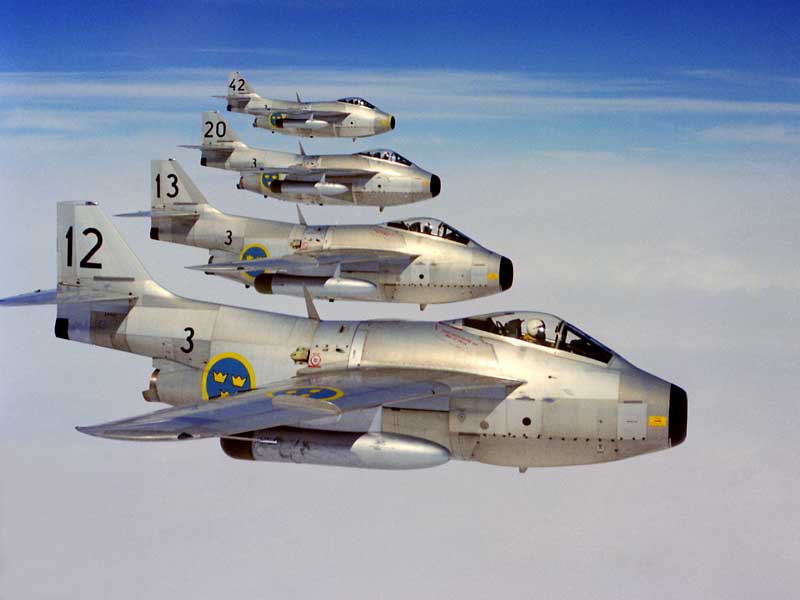
9. Saab 29 Tunnan

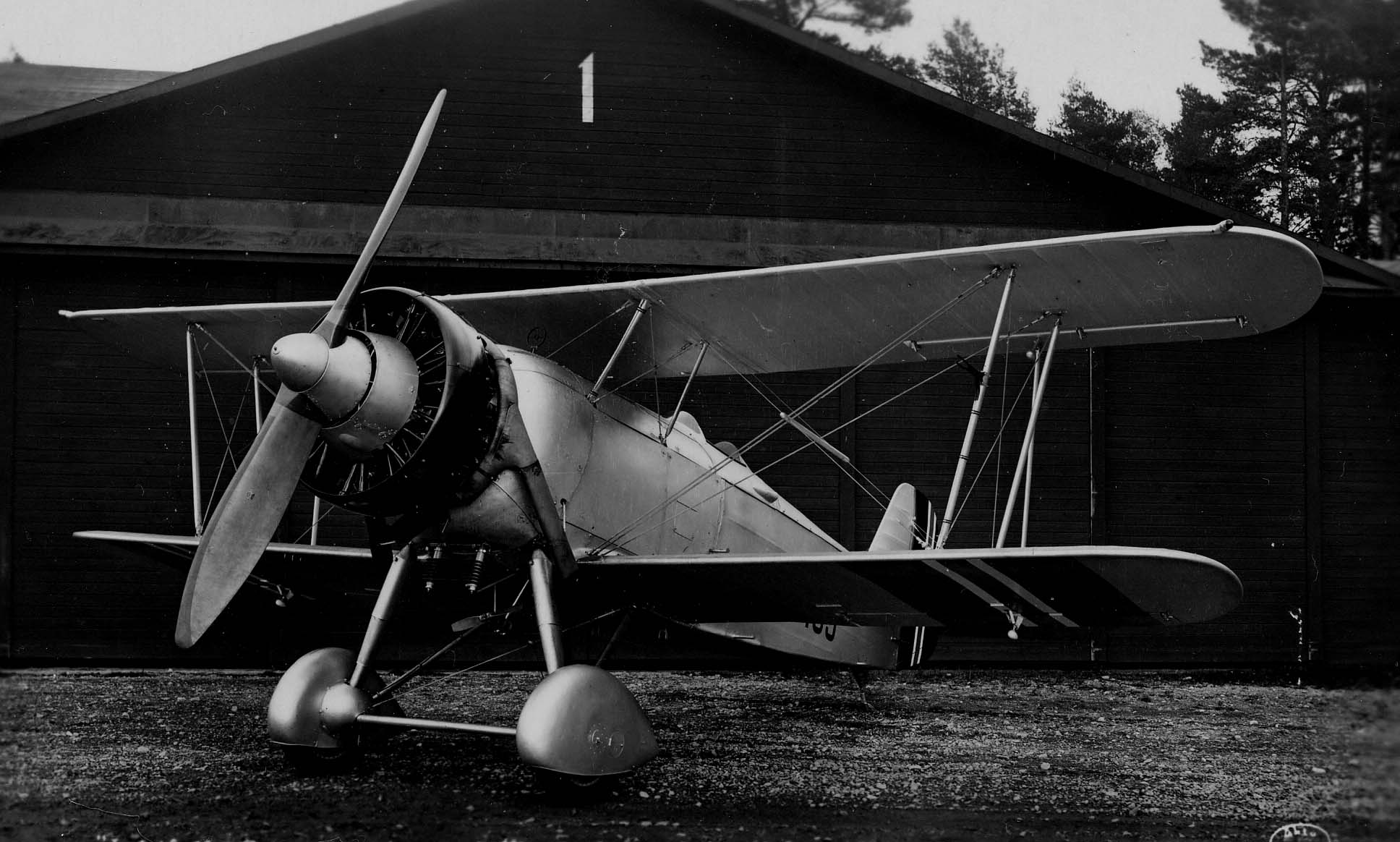
8. Svenska Aero Jaktfalken

7. FFVS 22

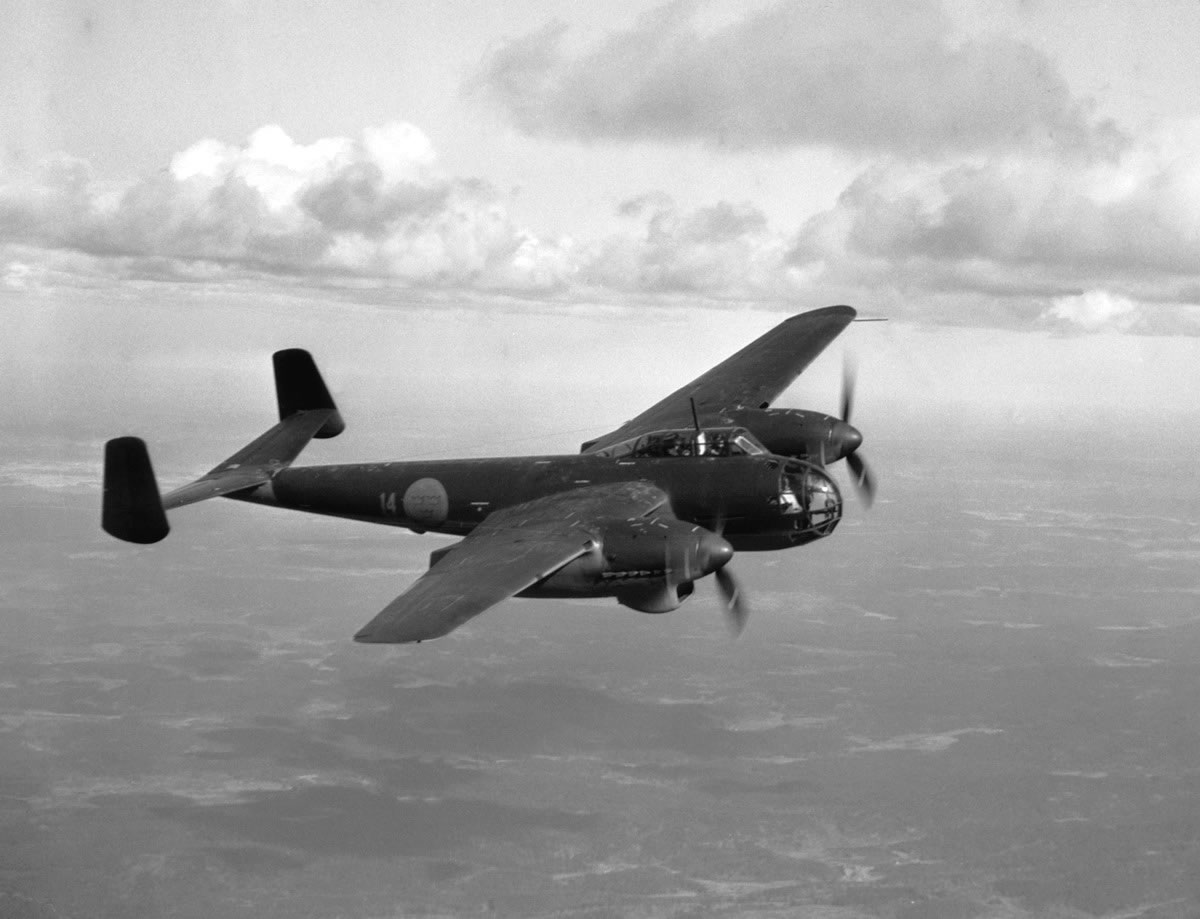
6. Saab 18

Image

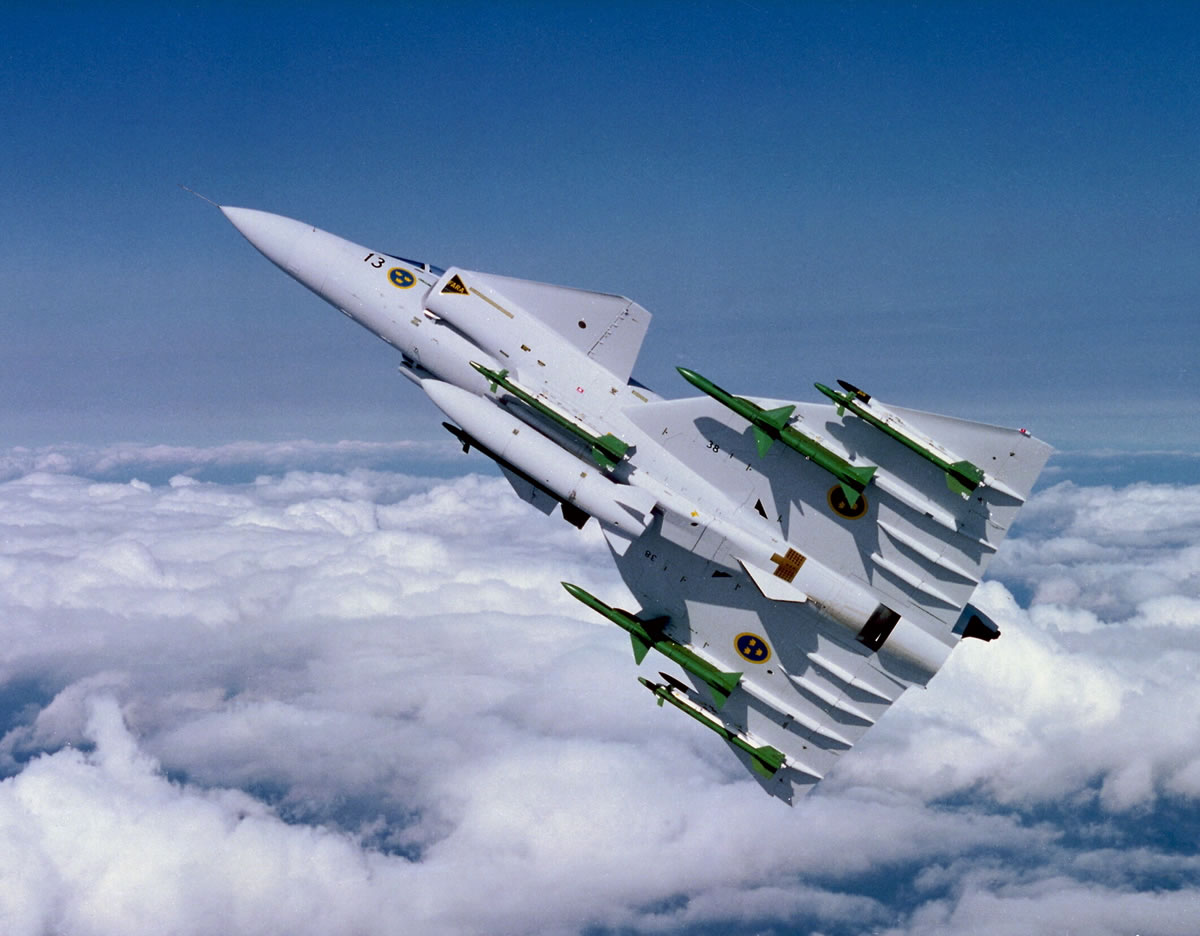
5. Saab 39 Gripen

Image

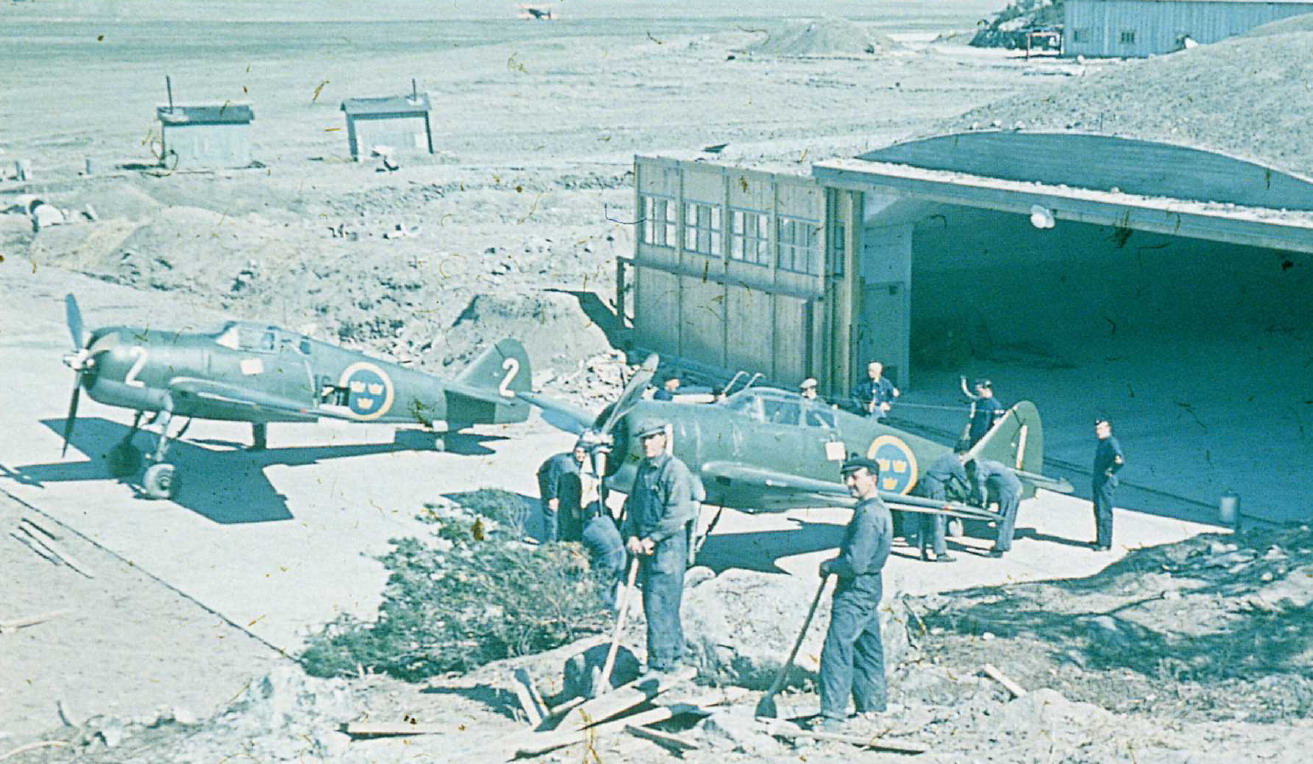
4. Saab 21R

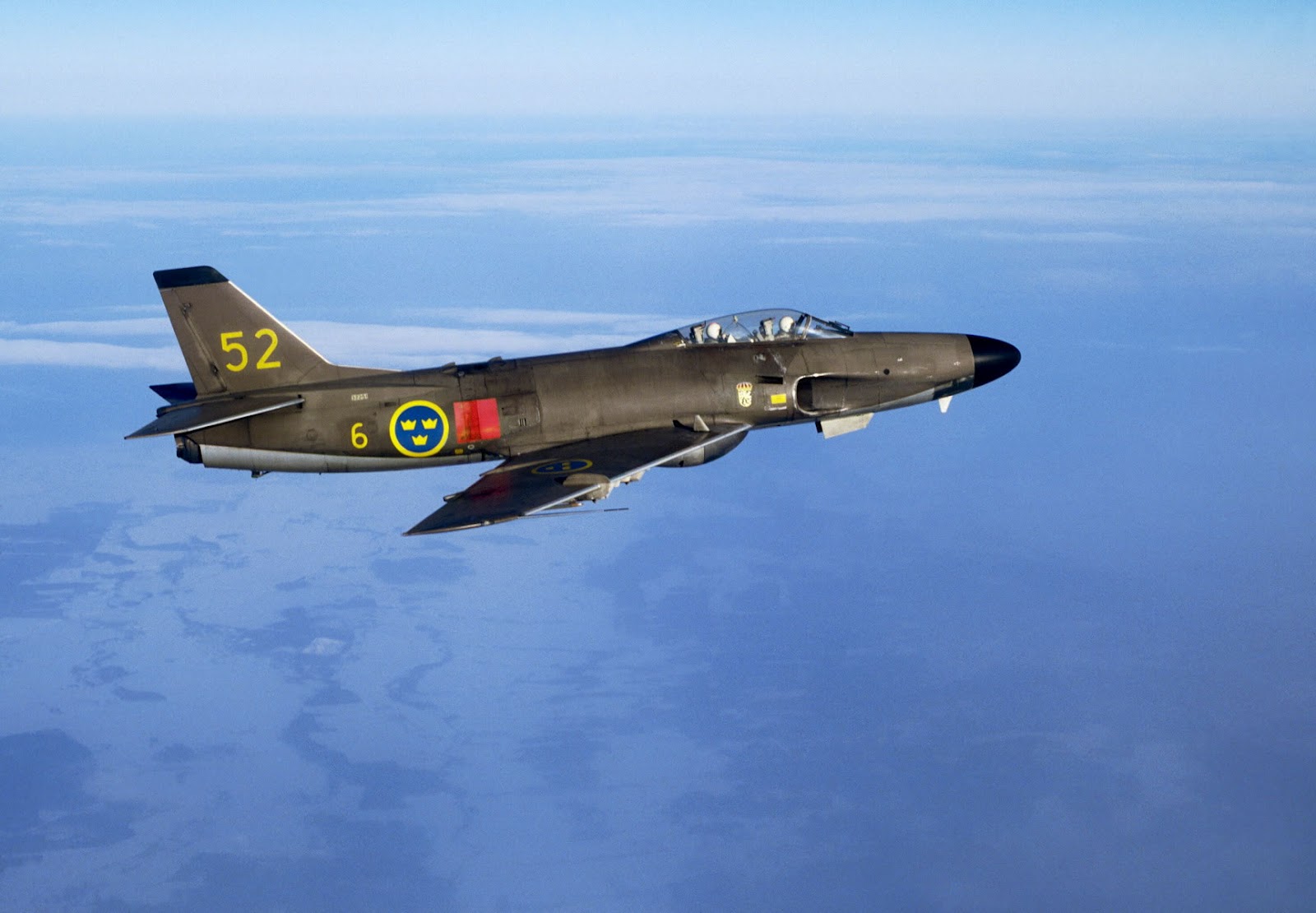
3. Saab Lansen

Image

2. Saab 37 Viggen

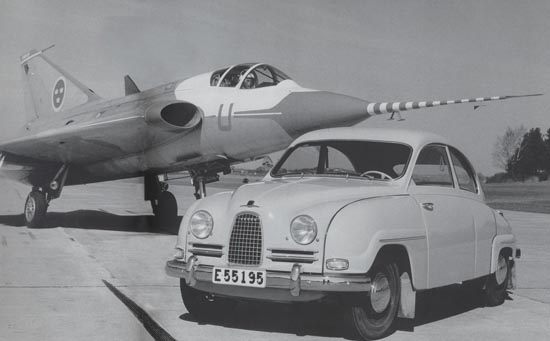
1. Saab 35 Draken

Follow my vapour trail on Twitter: @Hush_kit

Viggen love here

Follow my vapour trail on Twitter: @Hush_kit

Want to see more stories like this: Follow my vapour trail on Twitter: @Hush_kit

Thank you for reading Hush-Kit. Our site is absolutely free and we have no advertisements. If you’ve enjoyed an article you can donate here. At the moment our contributors do not receive any payment but we’re hoping to reward them for their fascinating stories in the future.

Have a look at 10 worst British military aircraft, Su-35 versus Typhoon, 10 Best fighters of World War II , top WVR and BVR fighters of today, an interview with a Super Hornet pilot and a Pacifist’s Guide to Warplanes. Was the Spitfire overrated? Want something more bizarre? The Top Ten fictional aircraft is a fascinating read, as is The Strange Story and The Planet Satellite. The Fashion Versus Aircraft Camo is also a real cracker. Those interested in the Cold Way should read A pilot’s guide to flying and fighting in the Lightning. Those feeling less belligerent may enjoy A pilot’s farewell to the Airbus A340. Looking for something more humorous? Have a look at this F-35 satire and ‘Werner Herzog’s Guide to pusher bi-planes or the Ten most boring aircraft. In the mood for something more offensive? Try the NSFW 10 best looking American airplanes, or the same but for Canadians. 

  If you enjoyed this, have  a look at the top ten British, French, Australian,  Soviet and German aeroplanes. Wanting Something a little more exotic? Try the top ten fictional aircraft.

The top ten Fictional Aircraft


A lot of thought has gone into the fictional aircraft that have appeared in books, films and TV shows. This is a tribute to the clever and imaginative people who have put their aviation know-how to use in producing flying ‘stars’. These aircraft are characters in their own right, and have entered the consciousness of millions. It was hard to select only ten, but here is Hush-Kit’s selection.
Keep this blog alive!

To keep this blog going- allowing us to create new articles- we need donations. We’re trying to do something different with Hush-Kit: give aviation fans something that is both entertaining, surprising and well-informed. Please do help us and click on the donate button above – you can really make a difference (suggested donation £10). You will keep us impartial and without advertisers – and allow us to carry on being naughty. Once you’ve done that we hope you enjoy 10 Incredible Soviet fighter Aircraft that never entered service. A big thank you to all of our readers.

Was the Spitfire overrated? Full story here. A Lightning pilot’s guide to flying and fighting here. Find out the most effective modern fighter aircraft in within-visual and beyond-visual range combat. The greatest fictional aircraft here. An interview with stealth guru Bill Sweetman here. The fashion of aircraft camo here. Interview with a Super Hornet pilot here. Most importantly, a pacifist’s guide to warplanes here. F-35 expose here. 

Hush-kit is reminding the world of the beauty of flight.

Follow my vapour trail on Twitter: @Hush_kit


10. BAC TSR.2MS

Ridiculous and wonderful, the TSR.2MS is featured in the Japanese cartoon Stratos-4. It is a  mad, rocket-assisted tribute to a real-world cancelled bomber. In Stratos-4 the TSR2.MS is an ultra-fast interceptor, that can be launched from the back of a truck. The creators also considered the CF-105 Arrow for the part! Click here for more on TSR.2

9. AT-99 Scorpion

The AT-99 Scorpion featured in Avatar, and was a chimera of several real-world aircraft. The cockpit is reminiscent of the AH-1W, the weapons are based on real types and the fuselage has elements of the Kiowa. The ducted rotors are an interesting touch, and have featured on several small UAVs as well as flying cars, including the Israeli X-Hawk (which looks like it may have been a muse for the AT-99). The tail is similar to that of the He-162 Salamander. The AT-99 is a fascinating ‘mash-up’.

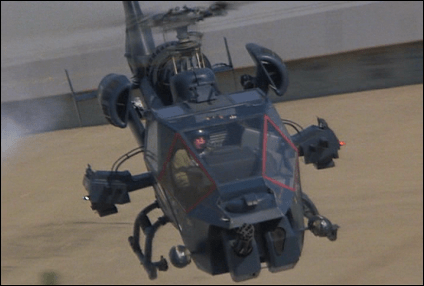
8.  Blue Thunder

Take a Gazelle helicopter, bolt on a load of prosthetics and you have Blue Thunder. The star of the 1983 film was apparently a dog to fly due to the extra weight required to ‘dress’  it to look like an advanced gunship helicopter.

Keep this blog alive!

To keep this blog going- allowing us to create new articles- we need donations. We’re trying to do something different with Hush-Kit: give aviation fans something that is both entertaining, surprising and well-informed. Please do help us and click on the donate button above – you can really make a difference (suggested donation £10). You will keep us impartial and without advertisers – and allow us to carry on being naughty. Once you’ve done that we hope you enjoy 10 Incredible Soviet fighter Aircraft that never entered service. A big thank you to all of our readers.


7. Angel Interceptor

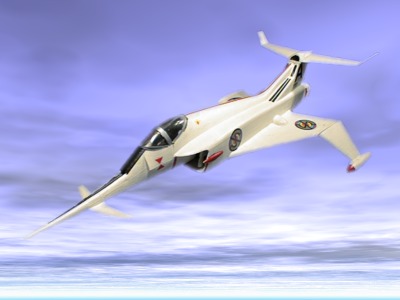
From the British puppet show Captain Scarlet, the Angel interceptor was a VTOL supersonic fighter. The type has an airspike on the nose (a good idea for hypersonic flight) and a ‘wave-riding’ wing. Clever stuff.

6. Air Wolf


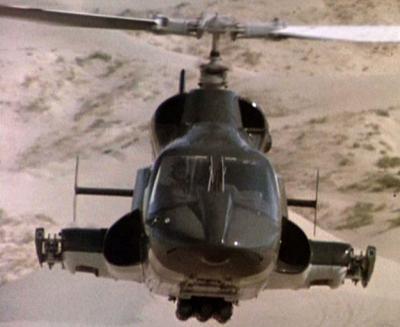
Like Blue Thunder, Air Wolf was another transvestite helicopter (I wish I could think of a good pun to describe that). Air Wolf was a 1980s TV show starring a dressed-up Bell 222. The helicopter was eventually sold after the show ended and became an ambulance helicopter in Germany. Sadly, it crashed in a thunderstorm on June 6, 1992, killing all three on board.

5. F/A-37

The 2005 film Stealth featured the F/A-37 fighter-bomber. The concept is clearly based on the ‘Switchblade’ patent filed by Grumman in 1999 for a Mach 3 capable stealth aircraft. The ‘Switchblade’ used extreme variable-geometry and was a very radical notion. The F/A-37 combines Switchblade-like  features with elements of the YF-23 to produce a visually convincing idea.

4. Mikoyan MiG-37B ‘Ferret-E’

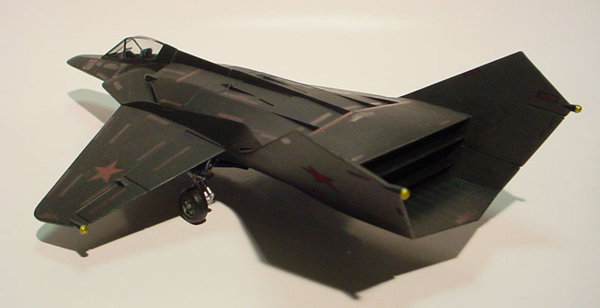
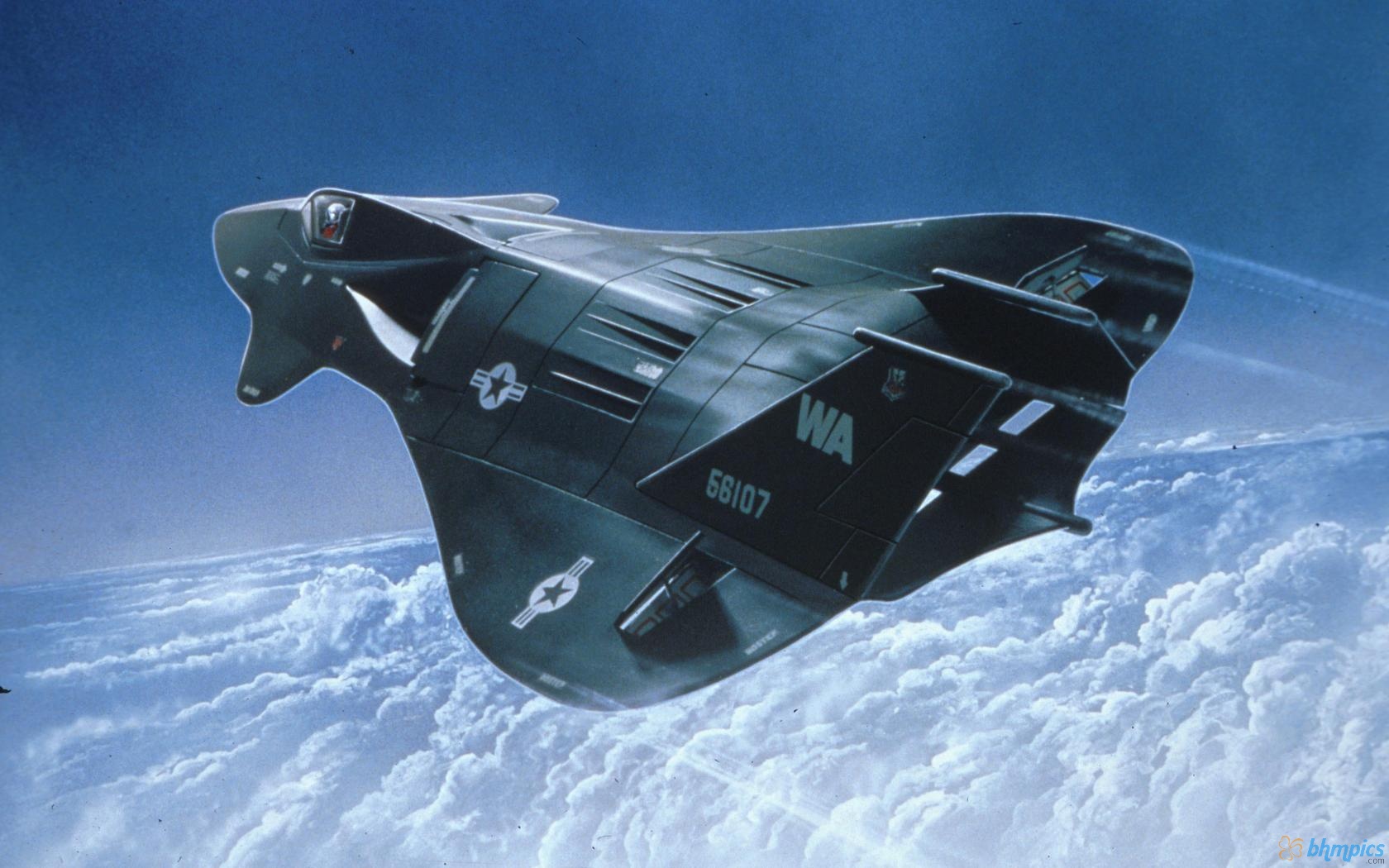
In 1987, the faceted stealth design of the F-117 was highly classified. So, there were some very unhappy people at the Pentagon when model kit maker Testor released their MiG-37. This notional Soviet stealth fighter used a faceted shape to reduce its radar cross-section and a shielding trough to reduce its heat signature, painfully close to the then top-secret F-117. A naughty and well-informed prediction! Click here for the story of Russian stealth.

3. Carreidas 160

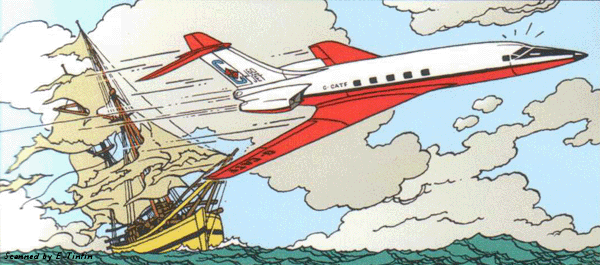
Tintin  featured  many wonderful real-world aircraft, including the Arado Ar 196 and de Havilland Mosquito, it also featured one of the very best fictional aeroplanes. The Tintin book Flight 714 featured a Hergé creation, a gloriously well conceived swing-wing supersonic business jet with three engines. Flight 714 came out in 1968, a year before Concorde flew, at a time when supersonic civil aircraft were a very hot topic. The central engine was fed through a bifurcated intake inboard of the outer inlets.

2. Lockheed F-19 Stealth fighter

In the early 1980s, observers found it odd that the F/A-18 was followed by the F-20. What was the F-19? Rumours of secret stealth aircraft were hot gossip at the time. The two exciting ideas were put together leading to the crypto-aeronautical F-19. It appeared in the 1983 ‘Deal Of The Century’ with Chevy Chase as a cranked delta, with outward canted fins. In 1986 Testor released a model kit, of an aircraft with a plectrum shaped blended wing/body and inward-canted fins, this become the archetypal F-19 image. A ‘Northrop-Loral F-19A Specter’ magazine advert did little to quell the F-19-mania, but the outing of the F-117 ‘stealth fighter’ in 1988 ended this enjoyable trend.

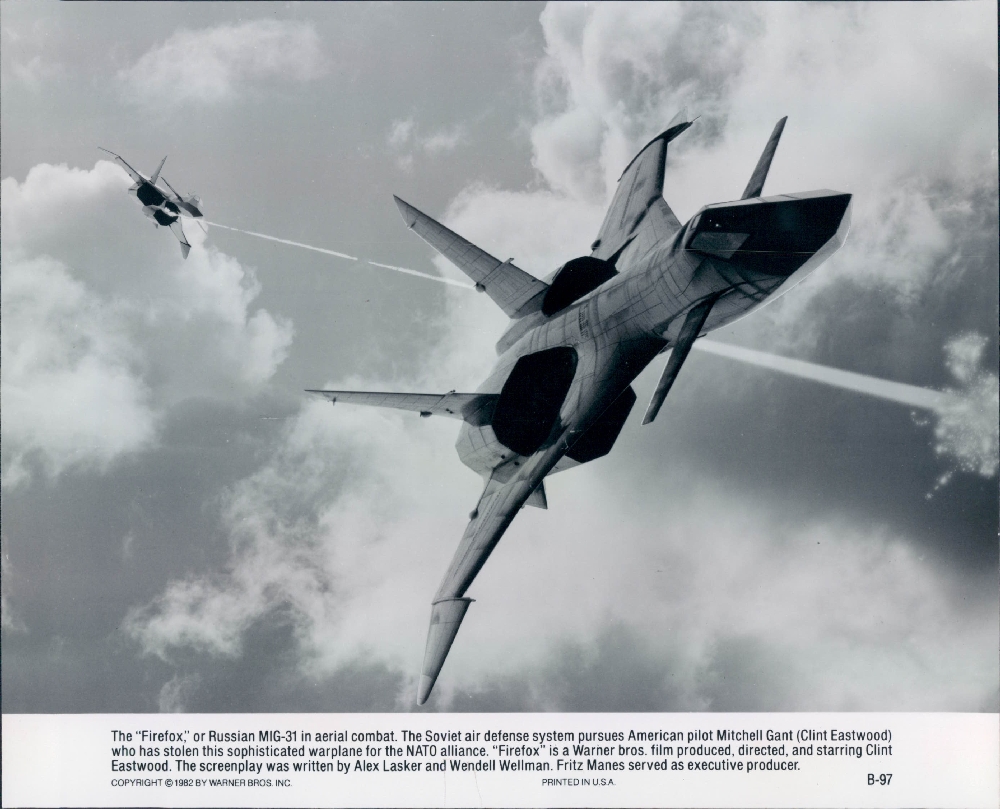
1.Mikoyan MiG-31 ‘Firefox’

The winner is course- Firefox. Rumour has it that Clint Eastwood originally wanted to cast the Saab Viggen, but it proved cheaper to use dodgy special effects. The resultant ‘Firefox’ was an exciting shape, with four engine intakes and a canard and cranked-delta wing design. With thought control and energy weapons, ‘Firefox’ was ahead technologically of even today’s F-35. Our winner also had a small amount of faceting on its nose and transparencies, but this appears to be for aesthetic reasons rather than hinting at a stealth insight. The 1982 film Firefox was based on a novel of the same name by Craig Thomas, in the novel however, the type looked similar to the MiG-25, as does the real MiG-31. Firefox was released at a time when real, new Soviet fighters were secretive and mysterious, and the film perfectly exploited this sexy mystique.

Over 99.8% of our readers ignore our funding appeals. This site depends on your support. If you’ve enjoyed an article donate here. Recommended donation amount £12. Keep this site going.


safe_image.jpg

“If you have any interest in aviation, you’ll be surprised, entertained and fascinated by Hush-Kit – the world’s best aviation blog”. Rowland White, author of the best-selling ‘Vulcan 607’

I’ve selected the richest juiciest cuts of Hush-Kit, added a huge slab of new unpublished material, and with Unbound, I want to create a beautiful coffee-table book. Pre-order your copy now right here  


TO AVOID DISAPPOINTMENT PRE-ORDER YOUR COPY NOW

From the cocaine, blood and flying scarves of World War One dogfighting to the dark arts of modern air combat, here is an enthralling ode to these brutally exciting killing machines.

The Hush-Kit Book of Warplanes is a beautifully designed, highly visual, collection of the best articles from the fascinating world of military aviation –hand-picked from the highly acclaimed Hush-kit online magazine (and mixed with a heavy punch of new exclusive material). It is packed with a feast of material, ranging from interviews with fighter pilots (including the English Electric Lightning, stealthy F-35B and Mach 3 MiG-25 ‘Foxbat’), to wicked satire, expert historical analysis, top 10s and all manner of things aeronautical, from the site described as:

“the thinking-man’s Top Gear… but for planes”.

The solid well-researched information about aeroplanes is brilliantly combined with an irreverent attitude and real insight into the dangerous romantic world of combat aircraft.

FEATURING

      • Interviews with pilots of the F-14 Tomcat, Mirage, Typhoon, MiG-25, MiG-27, English Electric Lighting, Harrier, F-15, B-52 and many more.
      • Engaging Top (and bottom) 10s including: Greatest fighter aircraft of World War II, Worst British aircraft, Worst Soviet aircraft and many more insanely specific ones.
      • Expert analysis of weapons, tactics and technology.
      • A look into art and culture’s love affair with the aeroplane.
      • Bizarre moments in aviation history.
      • Fascinating insights into exceptionally obscure warplanes.

The book will be a stunning object: an essential addition to the library of anyone with even a passing interest in the high-flying world of warplanes, and featuring first-rate photography and a wealth of new world-class illustrations.

Rewards levels include these packs of specially produced trump cards.

Pre-order your copy now right here  


I can only do it with your support.

Once upon a time, a story in no way about the F-35…


Once upon a time a new fighter was planned. It would be a great fighter. It would push the boundaries of technology and it would be all things to all air forces – and navies.

The military knew that it had to ask for every piece of technology and every capability it could think of. It knew this because a responsible government keeps a check on defence procurement, making sure that the military doesn’t spend all the treasure. So the military asked for all the toys it could ever want, expecting that it’d actually get only the toys it needed. That was usually the way of things. It also decided that it’d be really smart to ask for just one type of fighter, but have it built in really different versions.

So the military sat down and made a list of all the magic it wanted in its new fighter. The list said: stealth; a new radar and sensor suite; a helmet-mounted sight that did away with the traditional HUD; a single, widescreen cockpit display; advanced sensor and data fusion; a new propulsion system; the ability to operate from land bases without compromise; the ability to operate from aircraft carriers without compromise; the ability to operate from smaller ships without compromise; weapon bays; supersonic performance; a brand new logistics and maintenance system; world-beating air-to-ground capability; and world-beating air-to-air capability.

It also made a list of all the aeroplanes it wanted to replace. On the list it wrote F-16, F/A-18, A-10, Harrier, Tornado, F-4 and EA-6B, a long list of very different aeroplanes with diverse capabilities. Could the new fighter really take-off like a Harrier, kill tanks like an A-10 and jam mobile phone signals before they could trigger an IED?

Airframe Wizards

Now the aircraft and engine manufacturers, high-tech wizards with great magic in their wands, looked at what the military was asking for and saw treasure. They saw the chance to develop technology beyond their wildest dreams and, if everything went well, to make billions of money from all the fighter jets they would sell to air forces and navies of the world.

It all seemed so possible and soon they were busily at work, crafting and concocting. Each piece of technology was possible, given enough time and resource, but no one stopped to ask if all the technology was possible at the same time and for the same machine. No one stopped to ask if so much technology could be adapted to fit the requirements of the very different versions of that machine. And no one stopped and said to the government, or the military, ‘Yes, we can do all these things, but probably, if we’re entirely honest, not in a useful timescale, certainly not on budget, and maybe not all for just one airframe design.’ Worse still, everybody became so engrossed in trying to make it all work, that nobody thought to ask if they really should be trying to make it all work.

Problems, problems

Many years passed. A great deal of treasure was made and a huge amount lost. Wizards came and went. Dates and deadlines came and went. Some aeroplanes were built while the wizards were still working their magic and although these aeroplanes were upgraded, they were never as good as the aeroplanes that were made years later, when all the magic was finally working.

The problem was that none of the wizards ever lay down his wand and said: ‘What are we doing? This is all going horribly wrong and we should admit that we’re all wrong and fix it.’

The problem was also that the military saw all its wildest dreams coming true and didn’t want to admit that it had set off the wizards on a quest that would stretch their magic so far that it’d keep breaking. It had been allowed almost all of the toys that it had wished for, even though, in the real world, most of those toys were pure luxury most of the time.

The government simply didn’t understand and it didn’t think to ask anybody who did. It started out with a big chest of treasure and although it added a little bit of extra gold, it still wasn’t enough to pay for the fighter programme as it struggled along. So it decided to buy fewer aeroplanes, but it was the development costs using all the treasure up, not the production, so the government actually paid for fewer, much, much, much, much more expensive aeroplanes.

Happily Ever Afters

There were several possible endings to the Fighter Fairy Tail. In one, the whole programme was stopped and the wizards put all their magic and their clever spells into the aeroplanes that the new fighter was supposed to replace, and into much more modern aeroplanes that were already in production, but still evolving. Legend has it that this had been done once before, long, long ago, when a very clever helicopter gave away all its magic. It worked out quite well.

In another ending, the programme was cancelled and the military made do with the fighters it already had in production. This seemed like a very silly ending, because it wasted so much magic and most of the very, very clever wizards disappeared.

Ending number three saw some of the magic requirements relaxed. This meant that the remaining magic could be made to work much better, much more quickly. One of the fighter variants was abandoned, which allowed the others to be much less compromised. The wizards managed to get really, really good aeroplanes to the military without too much more delay. By the time the military got its hands on the jets it had forgotten about all the problems and the aeroplanes worked so well that everyone, even the government, was delighted.

In the final ending, the wizards carried on as they were. The military wriggled and jiggled and although some changes were made, it pretty much got what it wanted. At first the government made the military order far fewer jets, but the aeroplane remained in production for 30 years and because orders kept being added, in the end the military got all its aeroplanes and the wizards made lots and lots of treasure.

The problem was that the first aeroplanes were delivered when their magic was immature. They all needed new spells and some of them had lots of their magic missing for many years. By the time it was ready, they were worn out.

But finally, the military got all the variants of the new fighter into service. Eventually they all worked. All the magic did what it was supposed to do and because the magic was clever, the wizards could keep writing new spells that kept the aeroplanes on top of the world.

But there was a snag. The ending was not entirely happy, although it did take forever after. Almost two decades passed from the time when the wizards delivered the first aeroplanes until all the variants were in service and doing all the things that the wizards had promised and that the military wanted. This was always going to be the ending. The aeroplane was superb. Its technology was superb. Its powerplant was superb. But in combination, they were just too much for the wizards to make quickly and at the same time. For a truly happy ending, somebody should have realised that.

This is a work of fiction. Any similarity to militaries, governments, wizards or fighters, living or dead, is purely coincidental.

Follow the author on @twodrones