7 Worst Aircraft I’ve Flown

Matt in one of his favourite aircraft.

When you’ve flown 52 different aircraft types (and counting), you often get asked what your favourite is. So, it was a welcome change when I was asked to choose the ten worst aircraft. No holds barred, the more brutal, the better, was the brief; but, despite my best efforts, I can only think of seven that truly deserve my savaging.

Sure, I’ve flown aircraft with ‘interesting’ handling characteristics that, if ignored, can cause massive embarrassment massive embarrassment and in some cases a not insignificant amount of paperwork (such as being aggressively flicked out of a turn whilst pushing that little too much and thinking “I’ll just sweeten this shot with a touch of VIFF”, or encountering yaw divergence for the first time after rapid rolling for more than the 360 degree limit you’d read somewhere in the Aircrew Manual but completely forgotten about, that sort of thing), and sat in cockpits that defy all logical design criteria and hide essential switches in the most bizarre of places, or place things like ‘weapon jettison’ buttons adjacent to gear buttons and flap levers (thereby increasing the risk of inadvertent jettison when putting the gear down in the dark and leaving a fuel tank or two in someone’s back garden).

“Hovering a Wessex was like trying to hover a semi-detached house from the upstairs bedroom window.”

But does that make them bad aircraft and, hence, the worst to fly? No, that’s just aviation, and having experienced enough variety so far I can compare and contrast and see that repetitive design faults are not deliberate, they just happen. And aerodynamicists don’t purposely make their aircraft dangerous to fly, it’s more that foibles in aircraft handling come about because design compromises have to be made to satisfy an overall design specification. Also, there’s no such thing as a perfect aircraft. It’s a bit like cars – they’ll all get you from A to B in their own unique way, some faster than others, some with higher levels of comfort, some with no comfort at all, and some will inherently pull to one side when you brake, and there’s no international standard when it comes to which side of the steering wheel the indicator stalk lives on. But you get used to all of that and drive accordingly. And so it is with aircraft, but, like cars, some really do stand out from the crowd as unlovable stinkers. So here goes, in no particular order………

Grob Tutor

As a budding RAF pilot, I cut my teeth on the Scottish Aviation Bulldog back in 1988. I didn’t know much as a pilot back then, having only flown the venerable de Havilland Chipmunk and the Cessna 150. But what I did know was that the Bulldog was a joy to fly – with a compact and easy to manage cockpit, agile handling and enough power to fly aerobatics without having to trade height for speed, what more could I want?

Alas, all good things, like civilisation and a bottle of good whisky, come to an end. When the Bulldog went out of service, in stepped the drearily sluggish Grob Tutor. What a contrast – heavy in roll, festooned with checks despite not having much more in the systems department than a Bulldog except for a GPS navigation control unit that alone took hours to get to grips with (the Harrier was easier to flash up and get going), and it always finished aerobatics lower than where it started.

The first time I flew one was 15 years after the Bulldog, 13 years after I joined the RAF, and I’m glad it didn’t figure in any of my flying training. I’ve said it before – would I buy one even if it was the last aircraft on Earth? No, I’d craft an aircraft from coconuts and old bin bags scratch instead.

However, if, and only if, there is a plus side, I suppose it’s passable as a clipped-wing motor glider.

    Harrier T.Mk.10 ‘The Hump-Jet’

    “What?!” I hear you scream, as you throw your martini at your butler, and spit your tiramisu out in rage,

    “Has he gone mad?”

    Well, not exactly. The T10 was a two-seat training variant of the excellent Harrier GR7, and there are two reasons why the T10 is on my list – its general inability to hover because of its extra airframe weight and the use of a Pegasus 105 engine that was the same as the lighter GR7’s, so unless stripped of weight (wing stores) and flying on cold, high atmospheric pressure days, forget about attempting all that fun VSTOL stuff. Oh, and one too many seats. Enough said.

    Beagle Bassett ‘Shirty Bertie’

    This aircraft goes down as the worst aircraft I never flew. Eh? How can that be? Well, ‘Bertie,’ as the Empire Test Pilots’ School Bassett was affectionately known, was a highly modified, variable stability test bed aircraft that until recently was a stalwart of the ETPS fleet.

    Capable of simulating the flying characteristics of any other aircraft through the intervention into the right-hand seat flying controls of a very complicated box of tricks on the cabin floor that could be fiddled with and adjusted to change performance through control responses, it really was quite a machine. However, due to the limitation of not allowing the box of tricks to have its say below a minimum height in case it ‘threw a wobbly,’ the person in the right hand seat wasn’t allowed to physically fly Bertie anywhere near the ground. In my capacity as the ETPS Multi-engine Instrument Rating Examiner at the time, it was my job to test the person in the left-hand seat (who had an independent, original, non-modified set of flying controls) and make sure he could fly solely on instruments, predominantly in order to return to an airfield and land in inclement weather.

    As a result, the test profile was conducted no higher than about 3000 feet above the ground. And well below the box of tricks minimum height. So despite conducting this annual test around four times at ETPS, I never actually flew Bertie, only in Bertie. And that, as a pilot, is frustrating. Top tip – never fly when you’re angry or frustrated, as it’ll probably mean you rate the experience poorly and end up slagging the aircraft off in an article about the worst ones you’ve flown. (Of course this was not actually Bertie’s fault, bless him, and he’s now enjoying his retirement at the Boscombe Down Aviation Collection).

    Westland Wasp ‘Balancing a pyramid on a castor’

    As a fixed wing pilot, I’ve been lucky enough to have flown eight helicopters over the years. My first experience was the pre-Harrier hover course, a weeklong stint at RAF Shawbury flying the Squirrel helicopter where my brain was taught how to stop then land, as back then it only knew how to land then stop. And I would suggest that’s quite important ahead of being let loose with a Harrier. Since then, I’ve flown the Agusta Westland 109, Lynx, Gazelle, Jet Ranger III, Schweitzer 300 and the US Navy UH-72, all with helicopter instructors and hence all my hands-on from lifting to landing. As I said, I’ve been very lucky. I like helicopters.

    And as luck would have it, one day when I was about to take a Piper Warrior for a flight out of Thruxton airfield near Salisbury, I was offered the opportunity, completely out of the blue, to fly in a Wasp that had just had some maintenance performed on it and needed a check flight after something called ‘blade tracking’. I said I like helicopters, but I don’t profess to understand how they work, but I do appreciate that any angry palm tree/large collection of rotating parts flying in very close formation requires a lot of very special and considered care and attention. So, I wasn’t worried when told that we were going to see how much vibration there might be, and hopefully at acceptable levels. After all, helicopters vibrate even when they stand still, so this was just a matter of keeping it all in check. Anyhow, after a successful take off and flight to assess said vibration, during which I have to say I was quite enamoured by the vintage and overall quirkiness of this little helicopter, I was allowed to fly it back to Thruxton to land. It was during the last four feet of the flight that I began to think, ‘I’m not enjoying this’.

    I knew how to hover, how to pick a ground reference just forward of the nose on which to ‘formate’ and stay steady against, and yet I had to choose one dandelion after another as I proceeded to move randomly across the airfield in a desperate attempt to stay put and land. This was quite frustrating (see advice above about flying frustrated), and it dampened my initial attraction to the Wasp, but after some time seemingly having to totally relearn how to fly a helicopter (it’s not really that easy in the first place when you’re a novice, made even harder when your steed seems to have a mind of its own), I landed. Subsequently I asked some former Wasp pilot mates of mine whether I was alone in my inability to hover the damn thing, and they said “No, to begin with its a bit like trying to balance a pyramid upside down on a single castor, but you get used to it!” Ah well, maybe I’ll be lucky again in the future and have a second chance to get used to it, but until then, it’s definitely on the list.

    (Another favourite helicopter analogy of mine was hearing how hovering a Wessex was like “trying to hover a semi-detached house from the upstairs bedroom window.” Somehow helicopter mates tend to come out with the best analogies, and I add it here for your delectation).

    Boeing 767 ‘The Power Couple’

    I’ve only flown the 767 simulator, but due to the fidelity of modern-day simulation, I can only assume the real thing is just as crap. I currently fly the 787-9 as my day job – which, through its fly-by-wire flight control system allows me to hand fly what feels like a big Cessna – and yet I still have to trim the aircraft when changing speeds or changing flap settings, and there’s plenty of feedback, which for any pilot is vitally important. But at least when I put on loads of power to speed up, or conversely take power off to slow down, the aircraft doesn’t try to reach heaven or bury us all in the nearest part of Mother Earth.

    Because that’s what a 767 tries to do.

    The ‘pitch/power couple’ as it’s called (an aircraft’s want to pitch up with power, or nose down on power reduction) is alarmingly strong on a 767. I’d been warned about it in the briefing before the simulator session (and that alone speaks volumes about this Boeing design), and sure enough, what a handful. There’s something quite alarming about having to dial nose down trim in as you accelerate such that you’re still having to push hard whilst doing so. Let alone pull like a dingbat whilst decelerating as the trim can’t operate fast enough. Overall, sub-optimal, and I’ll stick with my 787, thank you very much.

    (Incidentally, my venerable old 747-400 didn’t behave anywhere near as badly either, so what was going on in the 767 planning meetings is anyone’s guess, and my ex-737 colleagues speak of similar things there).

    Short Tucano TMk 1

    Before I start pulling the Tucano to pieces, I just want to say that I loved flying it. I flew it as a student, so I have some lovely memories of flying solo as high as 25,000ft, strapped to an ejection seat, pulling up to 6g without a g-suit. And I was an instructor on it for my first tour in the RAF, as well as at Empire Test Pilots’ School as their Standards pilot. I flew it to Sweden, Denmark, the Czech Republic, Germany, Belgium, Portugal, France and all over the UK. I thoroughly enjoyed flying aerobatics in it, and never had a major emergency in it.

    So, how come it’s on this list? When I talk to friends and colleagues about their memories of the Tucano, it’s the worst aircraft they’ve ever flown, so by democractic principles, it’s also one of mine. It has to be, right? It wasn’t a jet, so totally inferior to the Jet Provost it replaced, and the secondary effects of being propellor driven meant it never had ‘jet-like handling’ despite what it said in the Embraer sales catalogue. Its build quality was a little suspect, for sure, but it wasn’t my airbrake that fell off. Apparently, it could have done with automatic rudder trim to compensate for the torque effect of 1100 shaft horsepower, but to be fair using the electric rudder trim on the throttle wasn’t exactly arduous. So according to everyone else, the Tucano was one of the worst aircraft I’ve flown. But actually, according to me, she was one of the nicest and I miss her.

    Klemm Kl.25

    In another case of being in the right place at the right time, a very good friend of mine was given the responsibility, and it was a huge one, of periodically airing a Klemm 25 down in Wiltshire. Built in Germany between the wars, the Klemm 25 was officially branded as a ‘light leisure, sports and training aircraft’ and no doubt was used to train quite a few ‘civilian’ pilots to get around those pesky Treaty of Versailles rules that prevented Germany from training pilots for a Luftwaffe it wasn’t supposed to have.

     Removable wings are quite handy if you don’t own an airfield, or if your hangar is a bit on the small side, and especially useful in the ‘30s when you could tow your aircraft home and park it on the drive. I’m pretty sure if you did that today, well, you can probably imagine what would happen, you’d get Arts Council funding granted and be bothered by culture-vultures treading on your flowerbeds, but I digress.

    I found myself standing in a field watching the wings being attached and on closer inspection I began to realise that ‘basic’ is an understatement when it comes to describing the work of Herr Hanns Klemm back in 1928.

    Accustomed as I am to all the mod cons and electronic wizardry of 21st century aviation, the Klemm is akin to comparing a 1969 Hillman Imp to a Bentley Continental GT – in an Imp you’re not sure when you insert the key whether it’ll start or not, electronics hadn’t even been invented for the motor car when it was made, you better have a mechanically sympathetic driving style as well as an ear for impending mechanical doom, and best wear a coat as it’ll be cold (no such worries with a Bentley).

    And so, it was with the Klemm. Noisy, windy, I couldn’t hear a word Charlie was saying in the front seat as there was no intercom, and no instruments to speak of – there was an airspeed indicator, a clock, an engine rpm gauge, a compass, and a rate of climb and descent indicator. That was it. The Klemm is a true seat—of-the-pants aircraft (as well as just being a pants aircraft) and you have to rely on senses you have but rarely call upon in order to fly it, and I freely admit that I was out of my comfort zone. But am I complaining unduly? Probably, as it is of its time and some 600-odd were built, which even by today’s standards of small aircraft production is really quite an achievement. So, is it truly one of the worst aircraft I’ve flown? I suppose only when compared to aircraft that came after it, and that’s like using hindsight when analysing a historical event and suggesting it would have happened differently had one been involved.

    I was very lucky to fly the Klemm, it gave me my one and only insight to date into the very early days of aviation and just how actually cutting edge it would have been almost 100 years ago. And yes, I own a 1969 Hillman Imp that I wouldn’t trade for a Bentley Continental GT even if you paid me because it’s good, clean, honest fun to drive and reminds me of the basics.

    So there you have it, my take on what I think are the worst (and indeed not actually worst at all) aircraft I’ve flown to date. My opinion, my list, and I’m sure I’ll get an email or three from some real Tucano haters, and that’s fine.

    But as Air Marshall of Necromancy in the Hushkonian Air Force, watch out…….

    Matt Doncaster, 787 pilot, former Harrier pilot and Air Marshall of Necromancy in the Hushkonian Air Force

    Keep this site free by using the donation buttons on this page

    Pre-order The Hush-Kit Book of Warplanes Vol 3 here.

    MOSQUITO versus BEAUFIGHTER Round 1

    We take class warfare to 300mph as we pit the aristocratic Mosquito against the no-nonsense proletariat muscle of the Beaufighter to find out who the real war-winning twin is.

    A well-born beauty with two Merlins running on blueblood, the ecstatically swift Mosquito was the most refined fighter in the war. The Mosquito was stealthy enough to choose fights as it wished and had a reputation for invulnerability. Then there was the honest, almost thuggish, functionalism of the Beaufighter, which was all firepower and brute force – a design that seemingly believed streamlining was for cowards. The Beau carried enough ammunition to invade a small nation single-handedly and outgunned everything it faced with its multiple cannons and machine guns. But when push comes to shove, which was actually the war winner, the Mosquito or the Beaufighter? To determine the answer, we’ve developed some unimpeachable criteria based on actual operational usage. We then did a fucking ton of homework. Strap in!

    ROUND 1: Timing

    If World War II had started two years earlier, the Bristol Blenheim would have been legendary, and the Fairey Battle would still be remembered as shite.

    In the crucial aspect of timing, the Beaufighter scores extraordinarily well. Its introduction coincided with the Luftwaffe switch to night bombing in early September, and it was there for the first Airborne Interception radar in the Autumn of 1940. Crucially, it also arrived late enough to avoid being squandered on the hopeless Battle of France or mis-deployed in the Battle of Britain, like its forerunner, the Bristol Blenheim.

    You don’t fear AI as much as the Luftwaffe did.

    The Beaufighter’s presence meant crucial lessons about night-fighter interception were learned in time to later defeat the Blitz in the Spring of 1941. Its contemporaries, such as the Blenheim, simply didn’t have the performance to keep up with German bombers, while the Boulton Paul Defiant was obsolete the moment AI radar was made to work. The perfect timing would play out with its introduction into the Mediterranean Theatre in 1941 and 1942, in time to make a decisive difference. The Beaufighter shone a harsh light on the shortcomings of its predecessors and would revolutionise aerial anti-shipping, as we’ll soon see.

    However, the Mosquito was also well-timed, though somewhat later. Reaching squadrons in early 1942, its arrival as a light bomber coincided with Bomber Command’s building of a strategic air force. There was also a desperate need for a high-performance light bomber for target-marking when losses were soaring, and it was discovered that bombers were missing their targets by miles. Like the Beaufighter, it truly underscored where the RAF was going badly wrong, and had it been available one year earlier, the RAF might have avoided the idiocy of mass-escorted Stirlings, Hampdens and Blenheims on futile and wasteful Circus and Rhubarb raids (small-scale fighter sorties against ground targets of opportunity).

    By the end of the war, both the Mosquito and Beafighter remained effective in what they were tasked to do (even if the Mosquito had some time earlier superseded the Beaufighter as the RAF’s main night fighter).

    The Beaufighter edges it with perfect timing of its introduction at the inception of AI and the Luftwaffe’s switch to night bombing.

    Beaufighter 1, Mosquito 0

    8 MORE BLOODY ROUNDS TO COME…STAY TUNED!

    Eddie Rippeth/Joe Coles

    Eddie Rippeth is Head of Primary Publishing, International schools
    Cambridge University Press

    I flew the Harrier, Andover, Alpha Jet and 747

    Former RAF pilot Matt Doncaster talks us through some of his incredible flying experiences

    The aircraft that is closest to my heart

    ..has to be the Harrier, simply because it was an absolute honour to get selected to fly and operate such an iconic aircraft. And she just looks right as well! It’s also the only aircraft I ever had my name on the side of (ZG509/80) and that jet is now privately owned and I’ve just been invited to visit her at her owner’s house. That will be a great day out for sure. To graduate from Tac Weapons training in the Hawk, all map and stopwatch stuff with a basic weapons system, to a jet that accelerated like a scolded cat, even at heavy weights, climbed better than a Hawk, and was essentially a flying weapons system for both day and night operations, was like the jump to light-speed, to say the least. As a single-seat fast jet pilot in the ‘90s you could want for nothing more. And whilst the rest of the world’s aviators used to complain about the noise of the Pegasus engine at idle, it was music to my ears (and that of every Harrier pilot on the planet!)

    What did taking off in the Harrier feel like?

    OLYMPUS DIGITAL CAMERA

    When you strapped into a Harrier, you knew she meant business – the cockpit was like no other in RAF service at the time because of the McDonnell Douglas influence, all HOTAS, big multifunction displays, a large HUD and a very useful ‘Up Front Controller’ just below the HUD primarily for comms management and data entry. Also, you sat very high up compared to most other aircraft, so lookout was amazing – I could also look down much further that in any previous aircraft I’d flown because of the bulbous shape of the canopy, and this was very useful as you didn’t need to drop a wing as much to see targets or features on the ground from high altitude. All in all, the cockpit was very user friendly having been designed with proper ergonomics in mind, so couple that with what I can only describe as ‘spirited’ performance, it was a joy to fly and operate, operational pressure and stresses notwithstanding. And I think in hindsight, that’s one of my most enduring memories of her – it was an intense working environment because of the tasks we were trained and training for, so there wasn’t much spare time when you were airborne to simply sit back and take in your surroundings and say ‘Wow, this is incredible!’ Which is a bit of a shame really, but when you could, say in the cruise at high level coming back from a low level sortie, or when performing a VSTOL manoeuvre that you knew looked awesome and you were comfortable with, so there was slightly less pressure than normal (hovering never had that feel if I’m honest because you had to be on top of that scenario from start to finish and the slightest error could lead to disaster very quickly – any VSTOL manoeuvre could do the same to be fair, but some were slightly more forgiving than others), it was like nothing else I’d done or have done since.

    What was a typical mission?

    There wasn’t a standard mission as such as the aircraft was so capable in so many areas of operation. Primarily the ground-to-air, or air-to-air threat dictated how we could fly in a given environment, plus the weather factor of course. Also, the weapon arsenal we could carry was very varied, and constantly evolving, and that drove what kind of delivery profile we would employ, which in turn dictated whether we could fly low level to the target (the preferred option to try and deny fighter interception), or had to deliver weapons such as PGMs from higher levels, or from a high angle dive because the surface to air threat dictated, and so on. So never the same day twice. And then we had the ability to do all of that off the aircraft carrier as well.

    What stands out?

    Without a shadow of doubt, carrier operations. My last two months on the squadron were spent at sea in 2000 on board HMS Illustrious on Operation Palliser, flying in Sierra Leone, and I thoroughly enjoyed every minute of it. We’d deployed to the ship via Malta in anticipation of a two week workup in the Mediterranean prior to a co-operative two week exercise with the French Navy in the Bay of Biscay. However, after about two or three days achieving nothing in Biscay because of the weather, we found ourselves steaming south, fast, replenishing the ship’s stores off Gibraltar before arriving in Freetown harbour some time afterwards to announce our presence. The task was to support British troops on the ground who were primarily manning the airport perimeter and the High Commission, and that support came in the form of us at very low level, literally tree top height, putting down noise in order to upset the opposing forces at the time and make them think twice about any planned actions. Normally we’d plan to avoid villages and towns in the UK for reasons of noise pollution and general military PR, but in Sierra Leone we ‘joined the dots’ and flew from one settlement to another, deliberately flying overhead to invoke communications over their radio and mobile phone network, and it worked. Very quickly the Royal Navy, sat in Freetown harbour with a Signal Intelligence Frigate listening to those communications, built up a picture of who was where in country, and we continued to operate in that way for the five weeks of operations. But flying off the carrier, for me, was the most satisfying and exciting aspect of my time with the Harrier. Luckily, flying off and back onto the ship clicked quickly for me, and I don’t want to blow my own trumpet here, but whilst it was always a challenge, knowing that I could hover alongside and land and be relatively comfortable doing so took a lot of pressure off. I found the carrier easier to land on than a pad back home because I could see it – I was never comfortable landing vertically on a pad that I couldn’t see below me. My last flight in a Harrier was an operational sortie in West Africa, landing on a carrier. Personally it didn’t get any better than that.

    The thing you need to know about flying the Harrier is..

    If she does something you didn’t ask her to do, undo what you last did! This was our VSTOL mantra, and one that got me, and most of my friends, out of trouble in the VSTOL environment at some point in our time of the jet. Obviously because I could move the nozzles by design to vector thrust from aft to downwards, and anywhere in between, depending on which manoeuvre I was attempting to fly, there were a myriad of aerodynamic forces at play as well as engine performance parameters to monitor and manage, and flaps moving in conjunction with nozzle angle (or not if the case dictated). So in essence, a lot going on, and with the best will in the world it was easy to move something inadvertently – the nozzle lever being the biggest potential for disaster – not select something such as the engine water injection system (absolutely vital to increase maximum engine thrust in certain scenarios) or not select the required flap schedule (there were three settings, CRUISE – fixed at 5 degrees, AUTO – anywhere between UP and 25 degrees depending on nozzle angle, and STOL – anywhere between UP and 62 degrees again dependent on nozzle angle). Hence, ‘if she does something you didn’t ask her to do, undo what you last did!’, have a think and try again.

    The service or airline I feel closest to is, of course

    The RAF. Twenty seven and a half years of service will do that to a person! Never a day goes by without me marvelling at what I achieved and the variety of aircraft I flew and flying roles that I undertook. I never did the same job twice, and whilst I did three instructional tours they were at Basic, Advanced Fast Jet, and the Empire Test Pilot School, so very varied. When I joined the RAF in 1991, I expected to have a ‘standard’ career path of training, probably two tours flying a frontline aircraft, maybe promotion and staff college and a staff tour, then leave after maybe one more flying job. I should have bet a day’s pay on going from training to being an Instructor on Tucanos, then the Harrier, then a Tactics and Weapons Instructor on the Hawk, then a crossover to the C17 because of a neck injury, then ETPS instructing on Hawk, Alpha Jet, Tucano, King Air and Andover, as well as flying pretty much all the types Boscombe Down had to offer including helicopters, with three ground tours woven in for good measure, as I’d be a very rich man now.

    Virgin Atlantic is in there as well. I joined them in 2017 after I’d left the RAF, flying the Boeing 747. Another privilege. And despite being made redundant during the pandemic because the airline scrapped the 747, I’m back there now flying the Boeing 787 Dreamliner.

    My least favourite aircraft of all that I’ve flown is the Grob Tutor. It replaced the Scottish Aviation Bulldog (a quite lovely aircraft, simple to operate and full of character) at University Air Squadrons, and, quite frankly, the Tutor is too sedate and heavy in roll, over complicated in the checks department, and really quite a bit of an underwhelming experience. Would I fly it again – yes, in the Air Experience role as I’d be giving something back to the young people who aspire to join the RAF and become pilots. Would I buy one? Not if it was the last aircraft on earth – I’ll build something from scratch, thanks!

    The C-17 is…..

    a truly amazing transport aircraft. Again, I was blessed in being able to operate her through a twist of fate that temporarily stopped me from flying fast jets. I sustained a very bad neck injury whilst instructing in the back seat of a Hawk in the summer of 2003 that meant I couldn’t pull high g for the immediate future, so my fast jet flying was over. I was posted to Boscombe Down on a ground tour to look after, edit and publish the Harrier Aircrew Document Set (basically, Flight Reference Cards, Aircrew Manual, and the Aircraft Operating Data Manual) whilst waiting for the RAF to decide what to do with me. Luckily it wasn’t long before my multi-engine crossover took place, and whilst I wanted to go and fly the BAe 146 and HS125 on 32 Sqn at Northolt, there weren’t any slots available that fitted the service’s timescales for me, so they offered me the C17. Having never seen one before, I asked if I could visit 99 Sqn at Brize Norton on a fact finding mission, and this ultimately turned into a trip away to North America on a training flight as an observer, and that was it – I was hooked! The aircraft’s ability to do all that it is asked to do, and more, is already legendary, but to be able to operate an aircraft that had a flight deck designed by pilots and a cargo area designed by loadmasters is simply a recipe for success, and we all loved flying her. I started on the squadron in January 2006 by flying out to Altus AFB, Oklahoma, as the USAF carried out all UK initial training under contract at that time, so that was fun. And on my return I set to with the major task that the squadron had at the time, which was manning the airbridge from the UK to Iraq and Afghanistan. Over 95% of my flying was the airbridge, carrying everything from 9mm rounds to Apache helicopters, the odd Chinook or Harrier (I’m the only Harrier pilot to fly both types and once was the Captain of a C17 bringing home a broken Harrier that was also in my logbook), and of course the critically wounded being recovered to Queen Elizabeth Hospital in Birmingham. There were the odd trips going West and not East, but they were always related to the conflicts in the Middle East, and usually we were picking up something special from the Americans. We all loved the C17 because of her reliability – we didn’t want to get stuck in theatre, nor did we want to be part of the bad PR that other RAF aircraft seemed to feed on a regular basis through either not getting out of Brize Norton, or not getting in on time. We felt safe flying in her as well, and I suppose when flying a large, very obvious and valuable asset like that, that’s important. Lights off, at night, armour on, looking at the world through NVGs and operating with a HUD to increase situational awareness is definitely the way forward.

    Your worst day at work?

    Probably when I was part of a large formation of around 40 aircraft, all fast jets apart from the E-3D AWACS we had in support, running around the North East of England in a ground attack vs air defence with fighter escort scenario, when we all heard ‘Wez, Pull Up, Pull Up, EJECT, EJECT’ followed by ‘Mayday Mayday Mayday’. That was horrible. I thought, as we all did, including Mike who’d put the call out, that Wez (we all had three letter abbreviations of our names and I’ll stick with his) had flown into the ground. In reality he’d glanced forward to see another aircraft coming the other way right in his face, so had instinctively pulled back on the stick, applied full rudder as a survival instinct brace position thinking a mid-air collision was imminent, but that probably saved his life as the jet pulled up and promptly departed controlled flight, such were the nature of his inputs and the speed at which he was flying at the time. He recalled all of this, but also thought it best to eject as the jet was unrecoverable at such a low height, but Mike didn’t see him go out as it was all over in a few seconds. Wez landed in trees just short of where the jet impacted the ground and exploded, so again Mike couldn’t see him, nor did Wez’s location beacon transmit such that we could hear it because of the dense foliage he was hanging in in his parachute. Only after Wez had got himself down from the tree and walked out of the wood onto open ground did we hear his signal on the safety Guard frequency. I can’t recall how long that was, but it seemed like a fortnight – I guess it was probably a few minutes but enough for us to reform the formation in preparation for recovery back to base (there were seven of us initially, Wez was out of the picture, and Mike stayed on scene to manage the search and rescue), but when we did hear his signal, boy was there relief. But those initial minutes were rock bottom, never want to go through that again, horrible minutes. Getting shot at in Afghanistan in a C-17 whilst parked on the tarmac at Kandahar Airport is a risk you accept as part of the job, but being that close to losing a mate during peacetime sucks.

    Your best day at work?

    Same day. Being met after landing in person by the Station Commander, Group Captain David Walker who alas passed away too young last year, to be asked if there was anything we needed in way of support, as well as being given an initial update on Wez’s condition, was leadership and a half. Apparently we all looked like we’d seen a ghost, which I guess was the aftermath of the stress of thinking a mate had just died, but that soon fell away once we were released from the immediate post-crash management processes and we drove to Nottingham to visit Wez in hospital. To see his smiling face was priceless.

    How do you feel about the Andover – and what’s your claim to fame?

    The Andover was an aircraft I never in a million years thought I’d ever fly. As a Combined Cadet Force cadet in the ‘80s I’d had a Summer Camp at Boscombe Down and seen XS606 during a hangar visit, but then in 2009 I joined the Empire Test Pilot School as the Fixed Wing Qualified Flying Instructor and Standards Pilot to be told that in due course I’d convert onto the Andover in order to support the delivery of test pilot course sorties that utilised her. So I do have a soft spot for her – yes she was old, but of an era when aviation was still very much the evolving science it was after the Second World War and into the ‘50s and ‘60s. Plus, big propellors and water-meth injection are a combination rarely seen or used these days, so that was something new. She had a museum quality about her because of her age, but all of us who flew her enjoyed the experience. I flew her as far as Toulouse on a visit to Airbus which was interesting since her navigation equipment was ‘60s vintage as well, so standalone GPSs were suckered to various windows on the flight deck to give us a fighting chance. On the return leg we had to fly in t-shirts, flying suits tied off at the waist, from Toulouse to overhead the Channel Islands on the return leg because the air conditioning was asthmatic – how Andover crews operated in the likes of Yemen and its heat back in the day is a miracle. My claim to fame – I was the very last RAF pilot to convert to the Andover before she was retired, and I’m very proud of that fact

    Tell me something I don’t know about 747s..

    Oh that’s tricky – the 747 is such a venerable old girl, and so much has been written about her over the years. I guess one lesser known fact is that under certain conditions of weight and performance, not only could she continue to destination on three engines instead of diverting in the event of having to shut one engine down due to a mechanical issue, but she could often maintain altitude as well, and in most cases climb higher later on in the cruise on a long haul sector. Now that’s performance worth having when flying over the Himalayas or the Rockies, instead of having to worry about the height of the mountains in today’s large twin-engined airliners where you’re only ever going to descend on one engine.

    Alpha Jet versus Hawk?

    Everyone in the last 50 years who has passed through RAF fast jet training has flown the Hawk. It’s a lovely, sports car of an aircraft, simple to start, operate and fly, with very few handling vices. I flew it as a student, as an instructor, at low level learning and teaching ground attack, at high level learning and teaching air combat and basic air defence techniques, as a bounce aircraft trying to attack formations as they tried to get to a ground target, I dropped my first weapons from a Hawk at Pembrey Range, and it was the one and only aircraft I’ve fired a cannon from, the 30mm Aden. It will always have a place in my heart as an aircraft that was honest, fun and sometimes challenging to operate – some of the best flying I ever did was as an instructor at RAF Valley.

    Not many people in the RAF have flown the Alpha Jet. In fact, the number is probably less than one hundred over the time the jets were based at Boscombe Down, and that includes the ETPS students whose convertion to it for their test pilot courses I was in charge of, about 25 in total during my time there. It was a very tidy jet, compact, low to the ground, with sharper aerodynamics compared to the Hawk, and a much more purposeful look to her. Of course she was twin-engined, so in terms of power to weight she was much better placed than the Hawk – initial climb rate was akin to a clean Harrier if I’m honest as we flew the Alpha Jet at Boscombe Down with no external stores or even pylons, even though the wing could carry four. So in essence she was over powered in the role fit we flew, but that’s not a bad thing. We did fly Alpha Jet vs Hawk air combat, and on paper you’d think the Alpha Jet would win hands down due to her extra performance, but so long as you didn’t get slow in the Hawk, say less that about 300 knots, you had a fighting chance because the Hawk could pull more g (we had a training maximum limit of 7g) versus the Alpha Jet which had a limit of 6g. So you could out (turn) rate the Alpha Jet in a Hawk but you had to be careful and patient – the Hawk bleeds energy very quickly if you’re a bit over zealous and aggressive towards your opponent, and then the Alpha Jet’s ability to regain energy, but more importantly sustain a turn at slower speeds without slowing down, would be the downfall of the Hawk. I always tried to merge into combat fast in a Hawk, at least 400-450knots, and go vertical to try and get lost in the sun and then come back down on the Alpha Jet from above, assuming he hadn’t come up with me. Turning flat at the merge, even with a speed advantage was tricky because of the Hawk’s speed bleeding issue, unless the base height for the combat was lowered to 5000ft above the ground where the Hawk’s Adour engine produced more thrust, but that was a rare occasion – our normal base height was 10,000ft and that made a huge difference to the Hawk, less so to the Alpha Jet with its two engines.

    Overall, it was never a ‘I’m in the Alpha Jet, I’m bound to win’ scenario – air combat should always be flown to maximise your own advantages, never those of your opponent, and that’s what we did regardless of what we were flying or what the outcome might have looked like on paper.

    The most overarted and underrated aircraft I can think of – please explain

    Overrated – Oh what a difficult question. I think I need your help there! Maybe we should get together and discuss this one question and see where it takes us? Good idea, let’s do that

    Underrated – The Hurribomber I think. The long forgotten stalwart of The Battle of Britain that went on to become a very successful air-to-ground aircraft in North Africa prior to the arrival later in the war of aircraft such as the Typhoon and Tempest, and the family of American air-to-grounders. Overshadowed but wrongly so in my opinion. Or maybe the Tucano – I loved flying the Tucano, others didn’t, but I think it did excellent service as a basic trainer for the 30-odd years it did so. Such a shame they all got sold and shipped abroad – I’d have loved to have had the chance to put a syndicate together and buy one.

    What should I have asked you?

    What are your future aviation plans? I’ve got a plan to finally get a civilian flying instructor’s rating this year, which will allow me to fly with Ultimate High at Goodwood, and Aero Legends out of Compton Abbas which is only 20 minutes from my house. I need to have some more dynamic flying back in my life, and formation flying and air combat with Ultimate High will be the conduit for that. Aero Legends have recently re-established the training base at Compton Abbas following the sale of the airfield to Guy Ritchie at the end of 2022, and they also operate one of their Spitfires and Harvards there over a number of weekends in the summer months. Obviously I’d be lying if I said I wasn’t interested in flying warbirds at some point in the future, and I think I’ve got a suitable CV to allow me to do that, but the warbird scene is definitely a right place right time scenario, but I’m hopeful that by starting with Aero Legends as a PPL level instructor on their fleet of PA-28s an opportunity might present itself in the future. Fingers crossed!

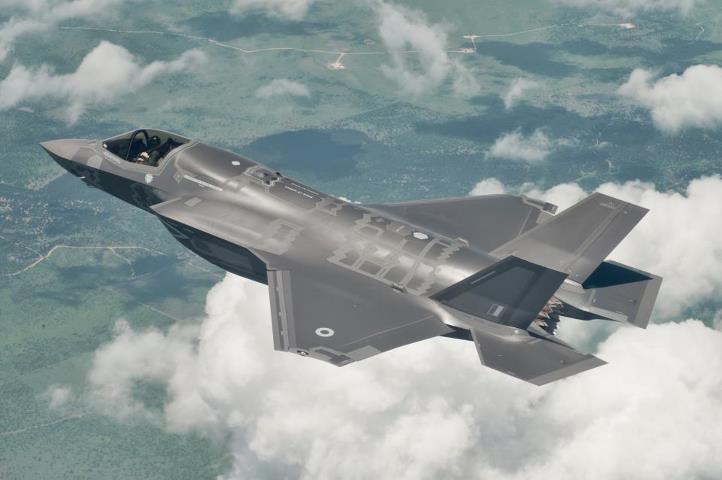
    F-35 Poll: What should the UK do? You decide.

    Follow my vapour trail on Twitter: @Hush_kit

    Do you have an idea for a Hush-Kit article you would like to write?  Are you an editor with pages to fill? Contact: hushkiteditorial@gmail.com