MY FAVOURITE AEROPLANE IN 200 WORDS #11 Bristol 188 by Alexander Shchemelev
  “ When I want to stop feeling inadequate, I think of pole vaulters. Most of us don’t want to be found out to be rubbish, so we stick to the things we’re good at. But pole vaulters, whose only job is to vault over a pole, repeatedly don’t…their only jobâ€Â  Armando Iannucci
The 188 was built to fulfil requirement ER.134. This was intended to support a very high-speed bomber, the Avro 730. When the 730 was cancelled in 1957, work on the 188 continued.
I love the incapable and that’s why I love the Bristol 188. Britain’s ‘SR-71’, was a ‘double-barrelled’ monster made to explore prolonged flight at over Mach 2.6. Aluminium cannot tolerate the heats experienced at such high speeds, so what material should be used?
Faced with the same problem, the US chose titanium for the triumphant SR-71 Blackbird.
Britain had better ideas, and built the 188 from far heavier stainless steel. Instead of adapting the powerful Olympus engine, the rather weedy Gyron was selected.
The Bristol 188 was slower than the RAF’s top fighter of the time the EE Lightning (lined up on the ground). If the 188 had been built from titanium and powered by the Olympus or Avon it may have achieved its goals. The US’ SR-71was built to spy on the Soviet Union, ironically the titanium it was built from was secretly-sourced from the very country it was made to spy on!
It didn’t fly until 14 April 1962 (twelve days before the Lockheed A-12, precursor to the SR-71). The 188 proved barely able to get to Mach 2, let alone flying for extended periods at 2.6. Since its commission in 1954 the project had become the most expensive British research aircraft ever made. It failed to carry out its only job.
The Bristol 188 in flight. Two years after the 188’s first flight, the USSR succeeded in producing a high-speed aircraft from steel; the MiG-25 was capable of flight at speeds exceeding Mach 2.8.
Looking at culture, news and gossip through an aeroplane window. Featuring contributions by the finest writers and artists.
Follow me on Twitter @hush_kit
[…] are usually spectacular and dangerous, sometimes awe-inspiring like the X-15 or less so like the Bristol 188, but invariably exciting right? Picture the scene: you are a hotshot US Naval aviator and […]
[…] “The Bristol 188. Designed to explore flights at sustained bisonic plus speed, it couldn’t go past mach 1.88. To put this in perspective, it was a high-speed research aircraft that first flew three years after a faster aircraft (the EE Lightning) had entered actual frontline service. Still, it looked magnificent with is beautiful stainless steel construction and huge engine pods. At the same the Americans were flying around at over Mach 3 with a titanium aircraft.” Which career of an aircraft design that never entered service do you spend most time thinking about. How did it pan out? “There’s a few here. I’d like to know more about the Nimrod MRA.4. A few billion (perhaps four) spent and nothing much to show for it apart from a ‘capability holiday’ (no fixed-wing maritime patrol aircraft for a nation surrounded by sea) and a later multi-billion order for a US aircraft.” Who – living or dead – would you most like to write a piece for Hush-kit and why? “There’s a question! Brian O’Nolan on the F-35? PG Wodehouse spending an afternoon drinking with RJ Mitchell? Hunter S Thompson on krokodil reporting from Zhukovsky? Leonora Carrington flies with Iranian Tomcats?” […]

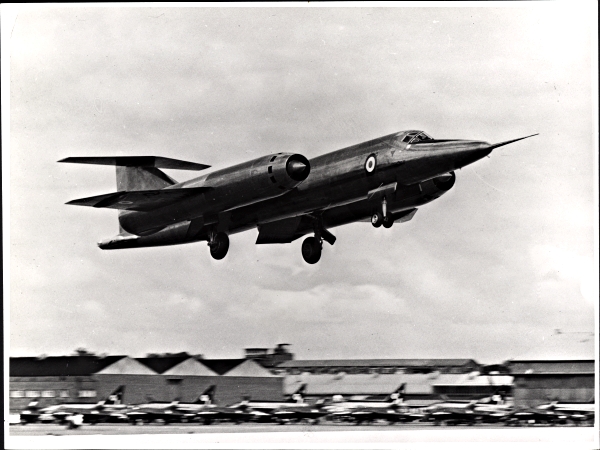
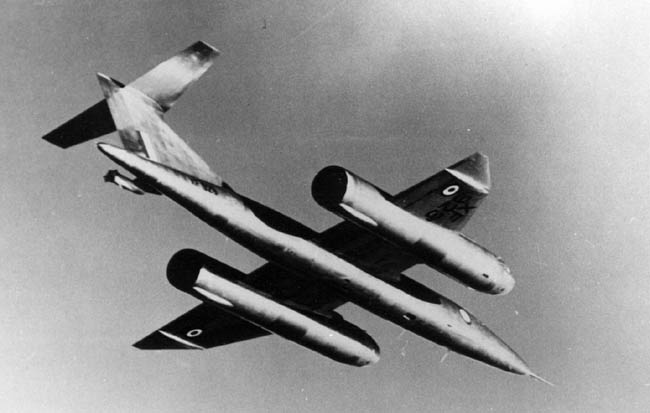

Amazing how you can design a plane thats looks supersonic standing still can struggle to do much more than that when in the air.
[…] More on the Bristol 188 here […]
[…] are usually spectacular and dangerous, sometimes awe-inspiring like the X-15 or less so like the Bristol 188, but invariably exciting right? Picture the scene: you are a hotshot US Naval aviator and […]
[…] 1962 Bristol 188 is undoubtedly an attractive aircraft and was rather fast, briefly hitting an oddly appropriate top […]
It was halfway to supersonic before it even let the ground, such was the required take-off speed.
As a young lad born in Filton Bristol i was brought up with Aircraft, and i saw the 188 several times at the end of the runway by the A 38 main road.
[…] “The Bristol 188. Designed to explore flights at sustained bisonic plus speed, it couldn’t go past mach 1.88. To put this in perspective, it was a high-speed research aircraft that first flew three years after a faster aircraft (the EE Lightning) had entered actual frontline service. Still, it looked magnificent with is beautiful stainless steel construction and huge engine pods. At the same the Americans were flying around at over Mach 3 with a titanium aircraft.” Which career of an aircraft design that never entered service do you spend most time thinking about. How did it pan out? “There’s a few here. I’d like to know more about the Nimrod MRA.4. A few billion (perhaps four) spent and nothing much to show for it apart from a ‘capability holiday’ (no fixed-wing maritime patrol aircraft for a nation surrounded by sea) and a later multi-billion order for a US aircraft.” Who – living or dead – would you most like to write a piece for Hush-kit and why? “There’s a question! Brian O’Nolan on the F-35? PG Wodehouse spending an afternoon drinking with RJ Mitchell? Hunter S Thompson on krokodil reporting from Zhukovsky? Leonora Carrington flies with Iranian Tomcats?” […]