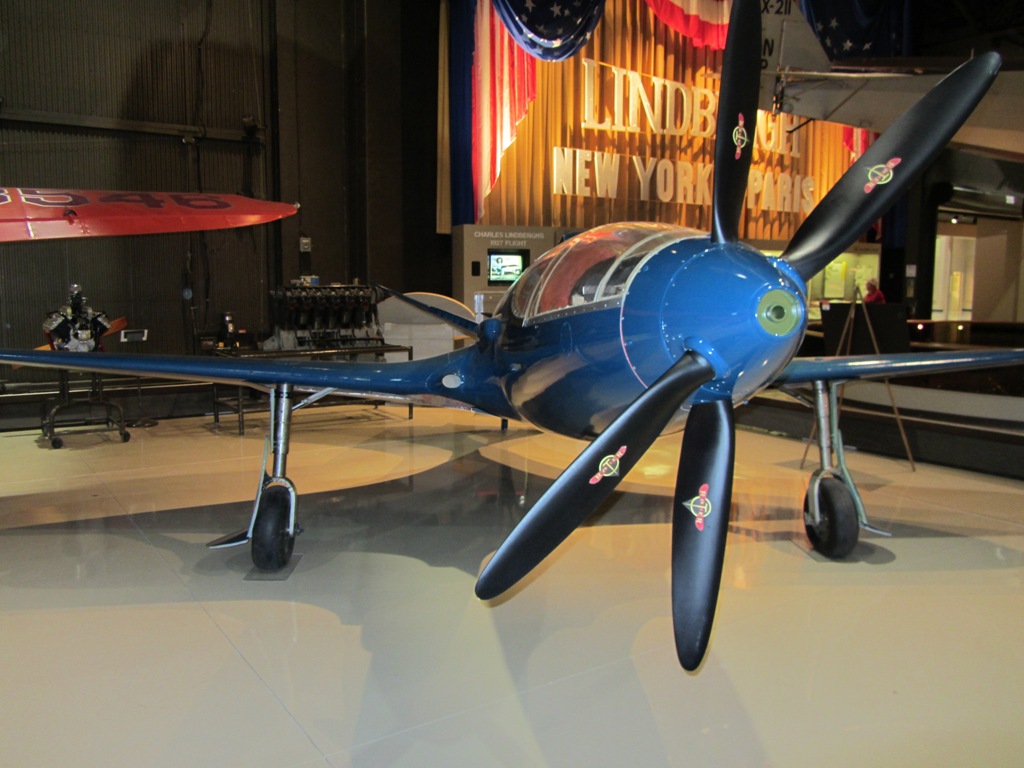
The Bugatti Model 100 is a very sexy plane. Designed to compete in the 1939 Deutsch de la Meurthe Cup Race, it had great aspirations to break world records but like a lot of awesome things, it got waylaid by a fascist Germany and it never made its glorious debut.
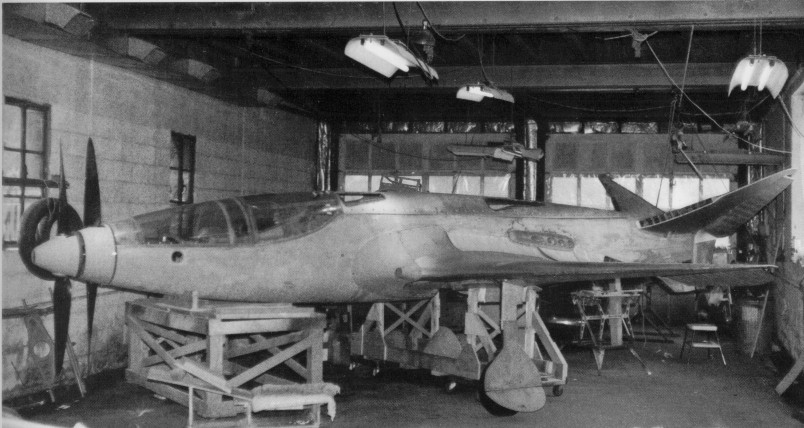
When German soldiers marched towards Paris in June 1940, the Bugatti Model 100 was lowered out of the furniture factory where it was stored onto the street, and driven to the countryside where it would remain, hidden in a barn, for thirty years. Over time, it changed hands. The beautiful modified 50B engines were removed, and it was only in the 1970s that a restoration project got underway. Bugatti died before it ever had the chance to take to the skies.
All is not lost, however. In 2010, a pair of enthusiasts from Oklahoma set about making a working replica. This sexy beast will be in our skies later this year – and due to its light weight, it may still be a record breaker. The replica built will do something the original never could: it will fly. Better hope those Mayans aren’t right about the apocalypse.
Megan Orpwood-Russell is a writer and the Scientific Meetings Coordinator, ZSL London Zoo.  She also has a magnificent blog.
Follow my vapour trail on Twitter:Â @Hush_kit

Do you have an idea for a Hush-Kit article you would like to write? Are you an editor with pages to fill? Contact: hushkiteditorial@gmail.com

I hope they’ve checked the loadings on those forward swept wings.
[…] 4. Bugatti Model 100P Racer […]
[…] presume I am not the only one who sees parallels with certain aspects of the recently resurrected Bugatti racer? Of course, no matter what qualities the aircraft may have it is the human angle that draws us in. […]
[…] This system allowed the upper wing to go from a surface area of 6.30 m2 to 26 m2 with the wing fully unfolded, thus reducing drag and theoretically increasing speed, manoeuvrability and handling characteristics during the take-off and landing phases. After a few flights and the destruction of the plane in an accident, work began on a racer derivative. The resultant Gérin V-6E Varivol was completed in 1938. The aircraft looked, at first glance, quite traditional for a racing plane of that time, but it was much more complex than it looked. After wind tunnel testing, the plane was in the process of finishing its development when the War began. Panicked by the German invasion of France, the engineers hid the plane in a barn where it was forgotten for many decades. It was later re-discovered and was restored by the Angers Marcé air museum. It was a very beautiful plane that unfortunately never flew. Its story bears interesting comparison with another beautiful aeroplane, the Bugatti 100P. […]
[…] This system allowed the upper wing to go from a surface area of 6.30 m2 to 26 m2 with the wing fully unfolded, thus reducing drag and theoretically increasing speed, manoeuvrability and handling characteristics during the take-off and landing phases. After a few flights and the destruction of the plane in an accident, work began on a racer derivative. The resultant Gérin V-6E Varivol was completed in 1938. The aircraft looked, at first glance, quite traditional for a racing plane of that time, but it was much more complex than it looked. After wind tunnel testing, the plane was in the process of finishing its development when the War began. Panicked by the German invasion of France, the engineers hid the plane in a barn where it was forgotten for many decades. It was later re-discovered and was restored by the Angers Marcé air museum. It was a very beautiful plane that unfortunately never flew. Its story bears interesting comparison with another beautiful aeroplane, the Bugatti 100P. […]
[…] beautiful blended forms were studied, notably (as the book mentions) the wonderful somewhat Bugatti 100-like McDonnell-Douglas Model 226 Quiet Attack Aircraft, an early US Navy stealth study that inherited […]
[…] charismatically daft Westland Wyvern made it into service. The French tried a racer, the gorgeous Bugatti 100P, a promising design thwarted by the German invasion of France. The Soviets, managed to get a […]